The European hornet is often confused with Asian hornets, yellowjackets, cicada killers, bald-faced hornets, and other large wasps. While many of these insects share yellow, brown, or black markings, they differ significantly in size, behavior, nesting habits, and appearance. The European hornet (Vespa crabro) is especially recognizable for its large body and reddish-brown coloration. This guide compares European hornets with similar insects so you can identify the differences more easily.
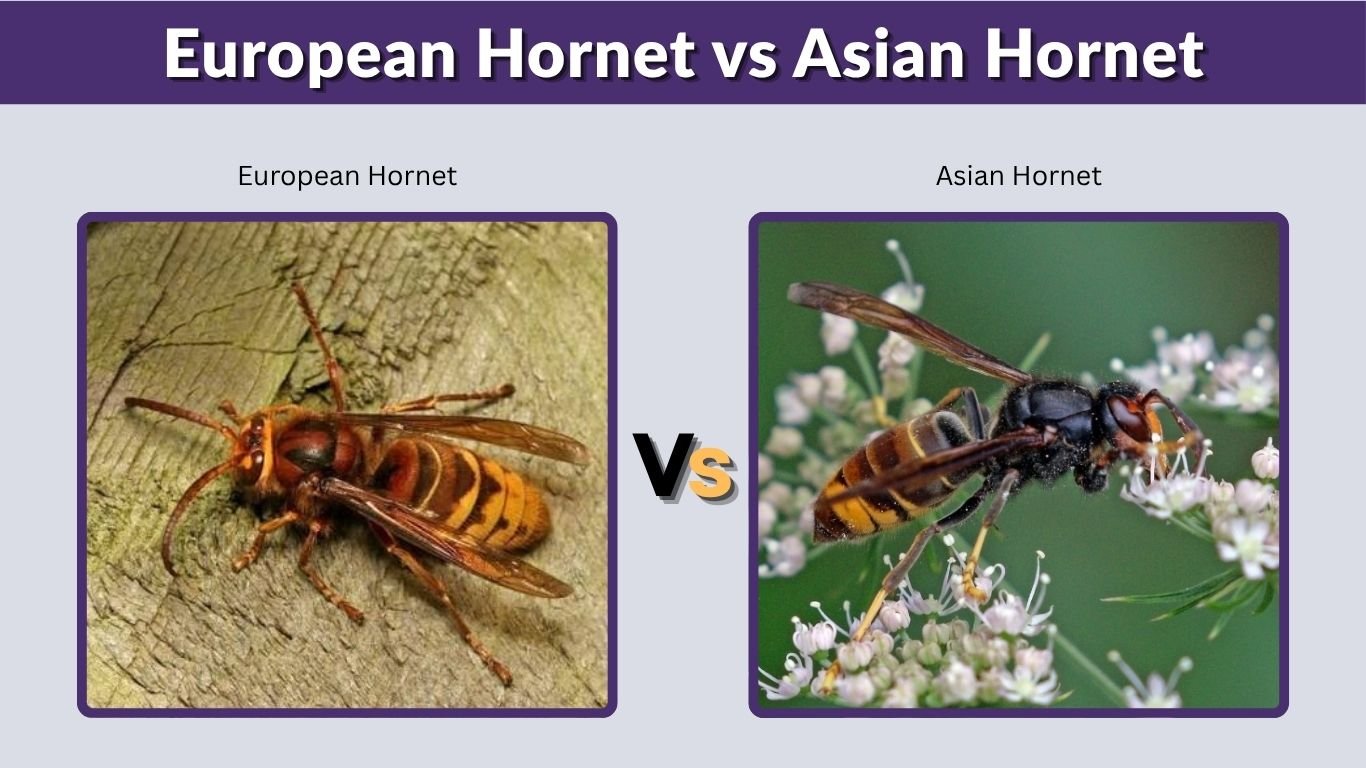
European Hornet vs Asian Hornet
European hornets and Asian hornets are both true hornets, but their coloration provides one of the easiest ways to separate them.
European hornets generally look lighter and more yellow, while the yellow-legged Asian hornet (Vespa velutina) has a much darker overall appearance.
| Feature | European Hornet | Asian Hornet |
| Scientific name | Vespa crabro | Vespa velutina |
| Body color | Yellow and reddish-brown | Mostly dark brown/black |
| Legs | Brownish/reddish | Yellow-tipped legs |
| Abdomen | Several yellow sections | Mostly dark with prominent yellow/orange band |
| Size | Large | Usually somewhat smaller |
| Nesting | Cavities and hollow trees | Often large aerial nests |
| Colony type | Social | Social |
European Hornet vs Asian Hornet Size
European hornet workers are commonly around 0.7–1 inch long, with queens sometimes exceeding 1 inch.
Asian hornet workers are generally somewhat smaller, although size alone should not be used for identification.
Color pattern, leg coloration, and nesting behavior provide better clues.
European Hornet vs Asian Giant Hornet
The Asian giant hornet, now commonly called the northern giant hornet, is substantially larger than the European hornet.
It was also widely called the “murder hornet,” although this nickname can cause unnecessary confusion.
Size Comparison
| Feature | European Hornet | Northern Giant Hornet |
| Typical worker size | About 0.7–1 inch | Around 1.2–1.8 inches |
| Queen size | Up to roughly 1.4 inches | Can approach 2 inches |
| Head | Reddish-brown | Large orange/yellow head |
| Abdomen | Yellow with dark markings | Strong alternating dark and orange/yellow bands |
| Overall build | Large | Extremely large and heavy |
Northern giant hornets have exceptionally large heads and thick bodies. European hornets are large compared with ordinary wasps but generally appear noticeably smaller.
European Hornet vs Yellow Jacket
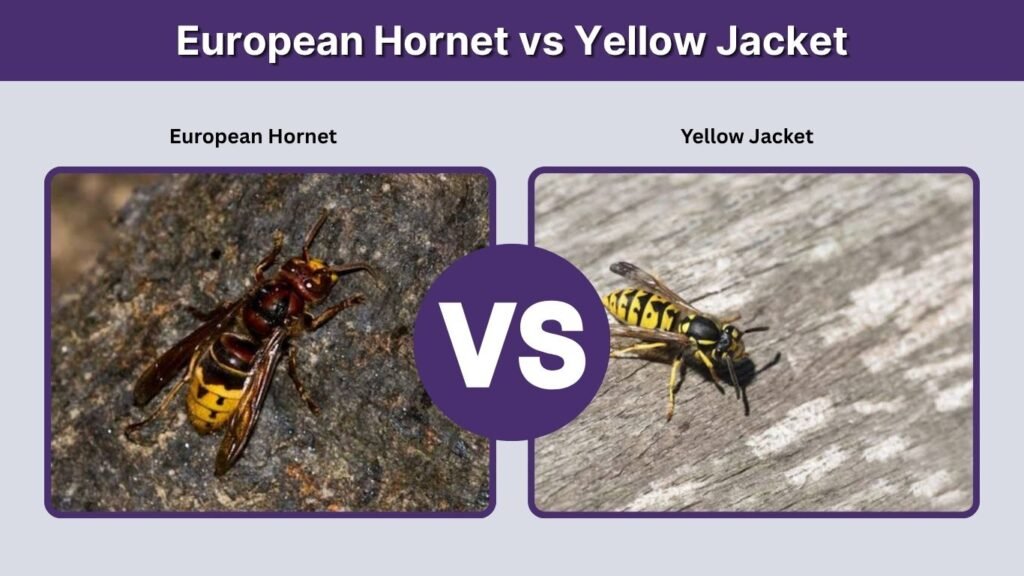
Yellowjackets are among the insects most frequently mistaken for European hornets.
The biggest difference is size.
European hornets are much larger and typically display reddish-brown coloration around the head and thorax. Yellowjackets usually have sharper black-and-yellow patterns.
Key Differences
- European hornets are much larger.
- Yellowjackets have stronger black-and-yellow contrast.
- European hornets show reddish or chestnut-brown coloration.
- Many yellowjackets commonly nest underground.
- European hornets usually prefer hollow trees and enclosed cavities.
- Both species can defend their nests aggressively.
European Hornet vs Yellow Jacket Sting
Both can sting repeatedly because they normally retain their stingers.
A European hornet’s larger size can make its sting feel intimidating, but sting severity varies considerably between individuals.
The greatest concern with either insect is a severe allergic reaction or receiving numerous stings while disturbing a colony.
European Hornet vs Cicada Killer
The cicada killer is another very large wasp commonly mistaken for a European hornet.
However, the two have very different lifestyles.
| Feature | European Hornet | Cicada Killer |
| Lifestyle | Social | Solitary |
| Nest | Hollow trees, walls, cavities | Underground burrows |
| Main prey | Various insects | Cicadas |
| Appearance | Yellow and reddish-brown | Dark body with yellow markings |
| Colony | Hundreds possible | No large social colony |
| Nest defense | Strong | Usually less defensive around people |
European Hornet vs Cicada Killer Size
Cicada killers can equal or even exceed European hornet workers in length, making size alone unreliable.
Cicada killers usually have darker bodies and bold yellow abdominal markings.
They are frequently observed flying close to dry or sandy soil where females dig burrows.
European hornets are more often seen flying between trees, buildings, and food sources.
European Hornet vs Bald-Faced Hornet
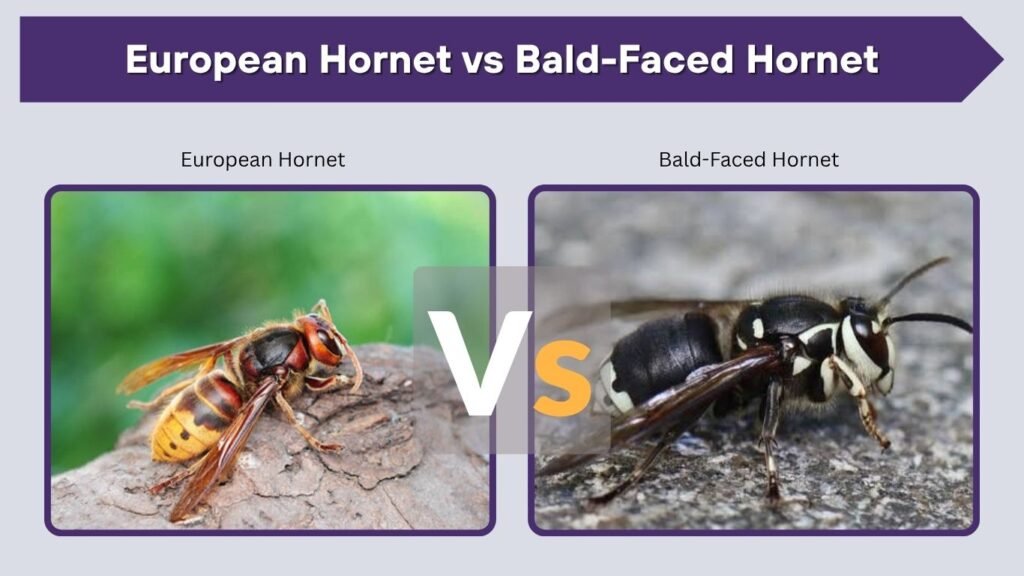
Despite its common name, the bald-faced hornet is technically a type of yellowjacket rather than a true hornet.
Bald-faced hornets are primarily black with white or ivory markings on the face and abdomen.
European hornets have much more yellow and reddish-brown coloration.
Their nests are also different. Bald-faced hornets commonly build large enclosed paper nests hanging from branches, shrubs, buildings, or similar locations.
European hornets usually conceal their nests inside hollow trees or structural cavities.
European Hornet vs Paper Wasp
Paper wasps have noticeably slimmer bodies than European hornets.
A paper wasp typically has a narrow waist and long legs that hang downward during flight.
European hornets are heavier, thicker-bodied, and considerably more powerful-looking.
Paper wasps also commonly build exposed umbrella-shaped combs beneath roof edges, decks, sheds, and other sheltered surfaces.
European hornets usually construct much larger enclosed colonies inside cavities.
European Hornet vs Wasp
A European hornet is actually a type of wasp.
“Wasp” is a broad term covering thousands of species, including hornets, yellowjackets, paper wasps, cicada killers, mud daubers, and many solitary species.
Hornets are therefore wasps, but not all wasps are hornets.
European Hornet vs Wasp Size
European hornets are larger than many common wasps.
Paper wasps and yellowjackets typically appear smaller and slimmer, although certain solitary wasps such as cicada killers can be similar in length.
European Hornet vs Honey Bee
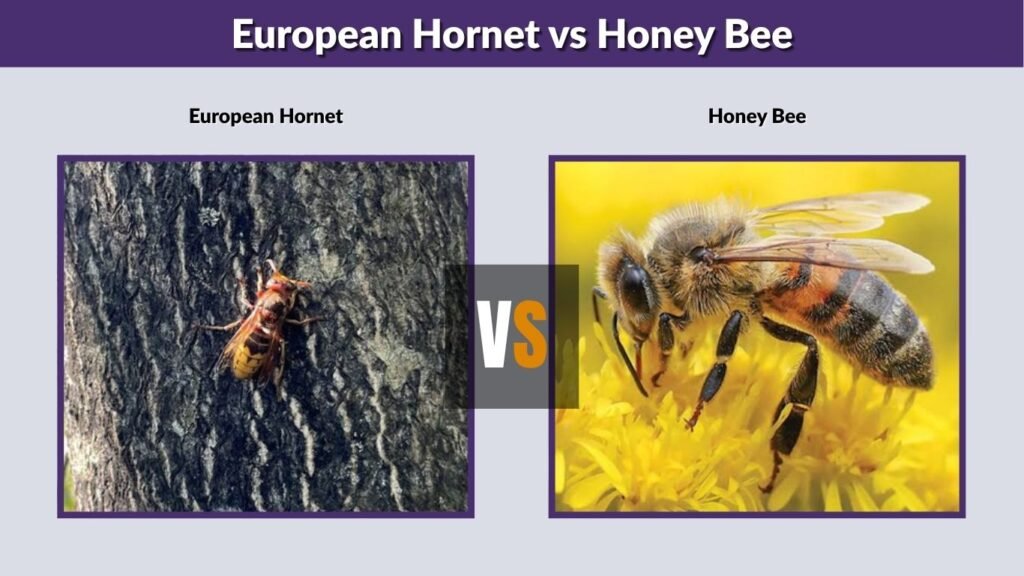
European hornets and honey bees are relatively easy to distinguish once you know what to look for.
Honey bees have hairy, compact bodies with muted yellow, brown, or golden coloration.
European hornets have smoother bodies with sharply defined yellow and reddish-brown patterns.
European hornets are also much larger.
Honey bees generally sting primarily in defense, and a worker honey bee usually leaves its barbed stinger behind after stinging mammals. European hornets can typically sting more than once.
European hornets may occasionally prey upon bees, although they also hunt many other insects.
European Hornet Queen vs Worker
European hornet colonies contain one reproductive queen and numerous female workers.
The queen is usually larger, particularly around the abdomen.
Queen vs Worker Size
European hornet workers commonly measure around 0.7–1 inch, while a queen may exceed 1 inch and sometimes approach approximately 1.4 inches.
Size can overlap, so identification is not always possible from appearance alone.
Role in the Colony
The queen begins the colony during spring.
She initially builds the first nest cells, lays eggs, gathers food, and raises the first generation herself.
Once workers emerge, they perform most outdoor activities, including hunting, collecting materials, feeding larvae, expanding the nest, and defending the colony.
The queen then concentrates primarily on egg production.
European Hornet Male vs Female
Female European hornets include workers and queens. They possess stingers because the stinger evolved from the egg-laying structures of female insects.
Males do not have functional stingers.
Males also tend to have longer antennae and slightly different abdominal structures.
During most of the active season, hornets seen gathering food or defending nests are female workers.
European Hornet vs Japanese Hornet
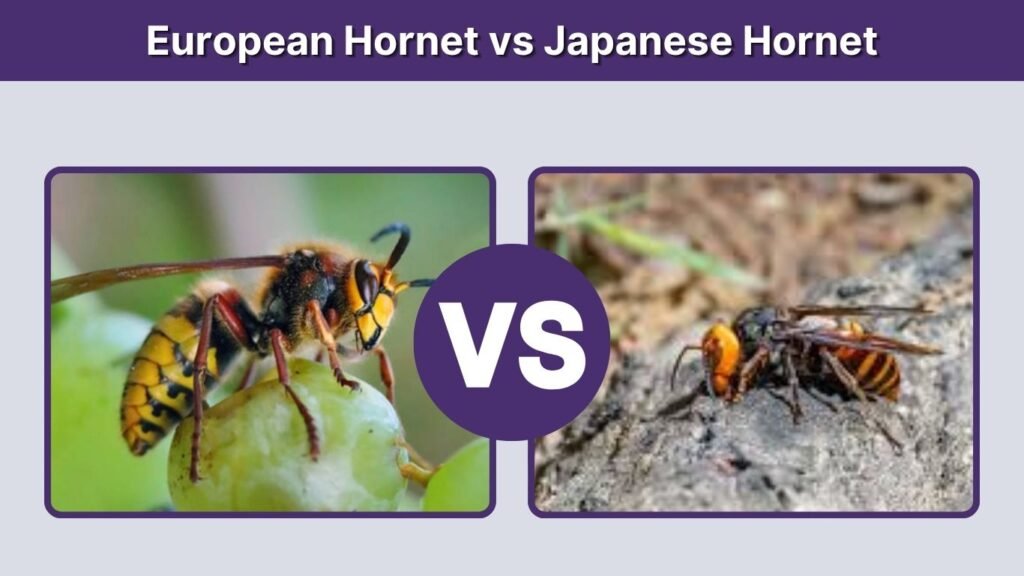
“Japanese hornet” often refers to populations of the northern giant hornet found in Japan.
Compared with the European hornet, the Japanese giant hornet is significantly larger and has a much broader orange or yellow head.
European hornets have more reddish-brown coloration around the head and thorax and are smaller overall.
Therefore, European hornet vs Japanese hornet identification is generally easier when body size and head coloration are considered together.
Quick European Hornet Identification
A European hornet is most likely when you see a large wasp with:
- A reddish-brown head and thorax
- Yellow abdomen with dark markings
- Thick, heavy body
- Brownish wings
- Large size compared with yellowjackets
- Activity around hollow trees or building cavities
A mostly black insect with white markings is more likely a bald-faced hornet, while a dark hornet with yellow-tipped legs may be an Asian hornet.
FAQs
Which is bigger, European hornet or Asian hornet?
The European hornet is generally larger than the yellow-legged Asian hornet. However, the northern giant hornet is considerably larger than both species and can approach 2 inches in queens.
Is a European hornet bigger than a yellowjacket?
Yes. European hornets are substantially larger and heavier-bodied than most yellowjackets. They also have more reddish-brown coloration, while yellowjackets typically display sharp black-and-yellow patterns.
How can you tell a cicada killer from a European hornet?
Cicada killers usually have dark bodies with yellow abdominal markings and nest individually in underground burrows. European hornets are reddish-brown and yellow social wasps that usually establish colonies inside hollow trees or cavities.
Is a bald-faced hornet the same as a European hornet?
No. Bald-faced hornets are black and white and belong to the yellowjacket group. European hornets are true hornets with reddish-brown and yellow coloration.
What is the difference between a European hornet queen and worker?
The queen is generally larger and is responsible for egg production. Workers are smaller sterile females responsible for hunting, feeding larvae, maintaining the nest, and defending the colony.