
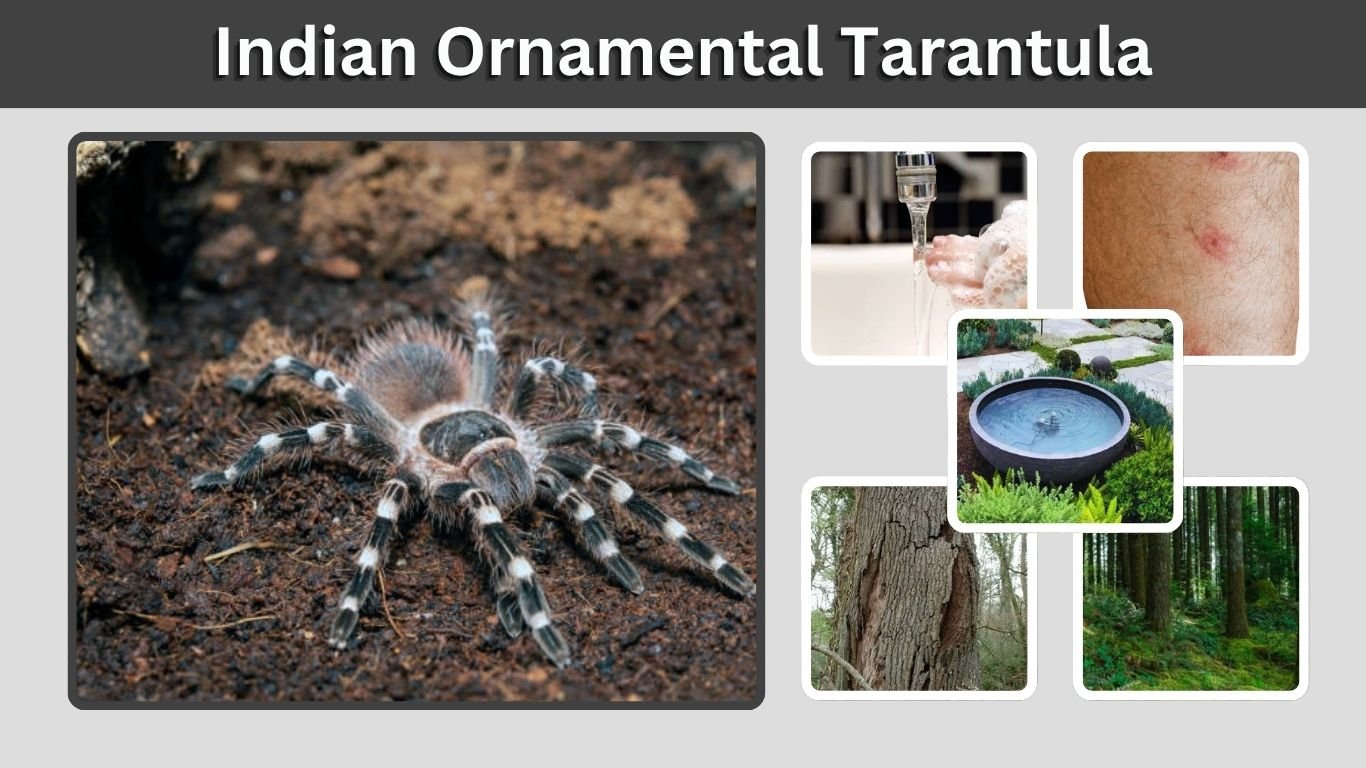
The Indian ornamental tarantula is a large, beautifully patterned tree-dwelling spider from India. Scientifically known as Poecilotheria regalis, it is admired for its silver-gray body, black-and-white markings, impressive size, and remarkable speed. However, its defensive nature and medically significant venom make it unsuitable for inexperienced keepers. Understanding its enclosure, feeding, temperament, lifespan, and safety requirements is essential before adding one to a tarantula collection.
Indian Ornamental Tarantula Quick Facts
| Characteristic | Information |
| Scientific name | Poecilotheria regalis |
| Common names | Indian ornamental tarantula, Indian ornamental tree spider |
| Native range | India |
| Lifestyle | Arboreal |
| Adult leg span | Up to approximately 7 inches |
| Female lifespan | Around 10–12 years |
| Male lifespan | Approximately 3–5 years |
| Temperament | Fast, nervous, potentially defensive |
| Experience level | Advanced |
| Handling | Strongly discouraged |
Poecilotheria regalis is an accepted species in the tarantula family Theraphosidae. Its natural distribution is recorded in India, and international trade is regulated under CITES.
Indian Ornamental Tarantula Appearance and Identification
The Indian ornamental tarantula has an intricate pattern that helps it blend into tree bark. Its long legs and flattened body allow it to move quickly through cracks, tree hollows, and vertical surfaces.
Identification Features
- Silver-gray or brownish-gray body
- Bold black-and-white markings across the legs
- Pale geometric pattern on the abdomen
- Distinctive white band beneath the abdomen
- Yellow warning patches underneath the front legs
- Long, slender legs adapted for climbing
- Adult leg span reaching approximately 6–7 inches
When threatened, it may raise its front legs and display the bright yellow markings underneath. These contrasting colors function as a warning before the spider attempts to escape or defend itself.
Purple and Blue Indian Ornamental Tarantulas
Some Indian ornamentals may appear slightly blue, purple, or metallic under strong lighting. However, P. regalis is primarily silver, gray, black, and white rather than intensely blue.
The spider commonly advertised as the blue Indian ornamental, Indian sapphire ornamental, Gooty sapphire, or peacock tarantula is usually Poecilotheria metallica. It is a separate species recognized for its brilliant blue coloration. Buyers should always check the scientific name instead of relying only on a seller’s common name.
Indian Ornamental Tarantula Natural Habitat and Behavior
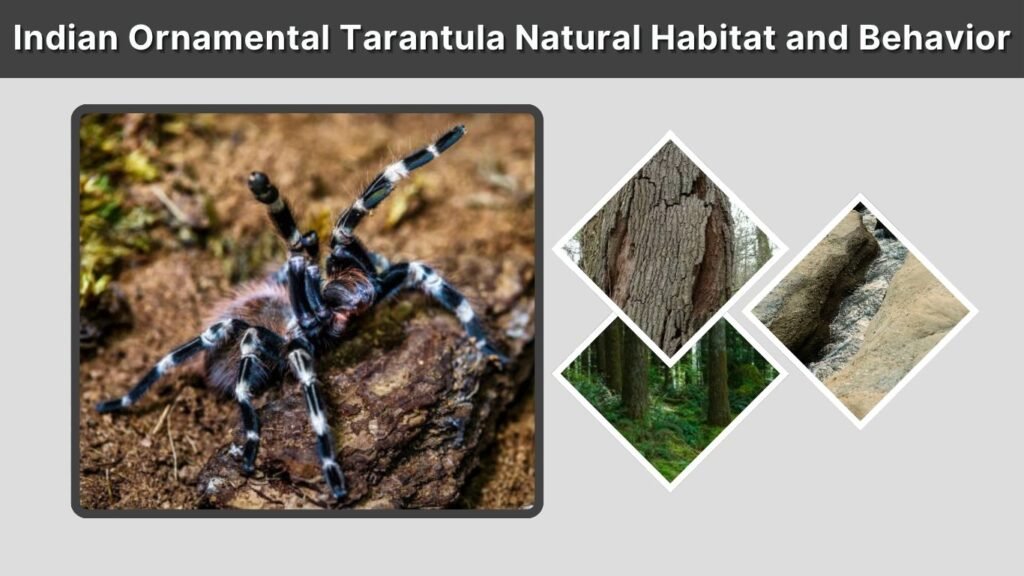
Indian ornamental tarantulas inhabit forested areas of India. They are arboreal spiders that shelter inside tree hollows, loose bark, and narrow crevices. They create silk-lined retreats where they remain hidden during much of the day.
At night, the tarantula becomes more active and waits near the entrance of its retreat for insects. Its gray and white pattern provides effective camouflage against bark and lichen.
Temperament
The Indian ornamental tarantula is not naturally interested in attacking people. Its first response is generally to retreat into its hide. However, it can move extremely quickly and may bite when trapped, cornered, or repeatedly disturbed.
Because it is an Old World tarantula, it does not rely on irritating urticating hairs for defense. Its primary defenses are speed, threat displays, and biting. This combination makes it appropriate only for keepers experienced with fast arboreal species.
Indian Ornamental Tarantula Care
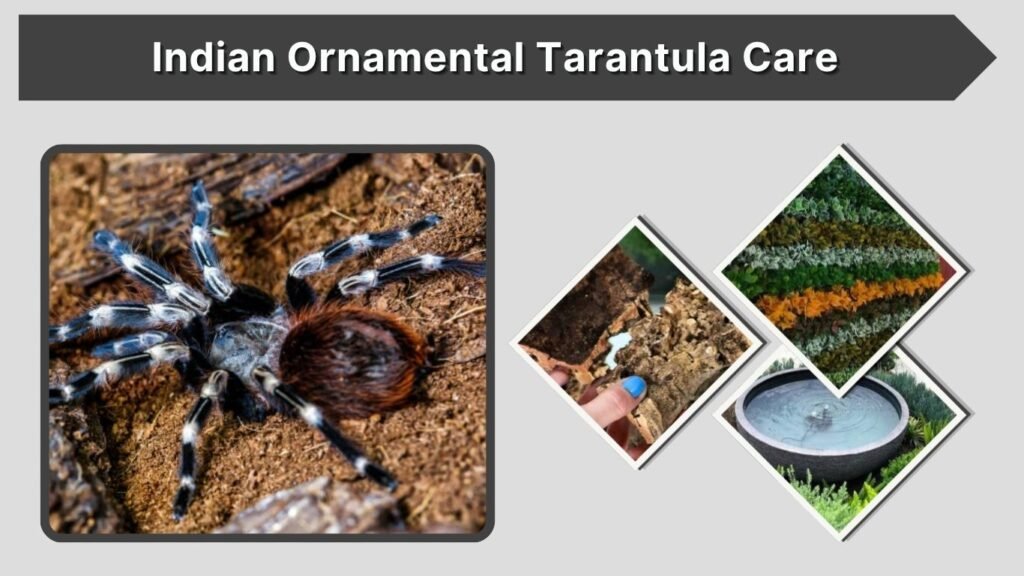
A secure and correctly arranged enclosure is essential. The spider should be able to climb, hide completely, drink safely, and escape overly damp conditions.
Enclosure Setup
An adult needs a tall enclosure because it spends most of its time on vertical surfaces. A well-ventilated enclosure measuring approximately 12 inches long, 12 inches wide, and 18 inches tall can provide suitable space for a mature specimen.
Include:
- A tall piece of cork bark
- Vertical branches or artificial plants
- Approximately 2–3 inches of substrate
- A secure water dish
- Cross-ventilation
- A tightly locking lid
Position cork bark so the spider can hide behind it and construct a webbed retreat. Avoid excessive open space without cover, as an exposed tarantula may remain stressed.
Temperature and Humidity
A temperature of approximately 75–80°F is generally suitable. Humidity may be maintained around 65–75%, but air circulation is more important than constantly wet substrate.
Keep the lower layers of the substrate slightly moist while allowing the surface to become mostly dry. Provide clean water at all times. Constant misting, soaked substrate, and poor ventilation may encourage mold and stagnant conditions.
Feeding
Indian ornamental tarantulas eat live invertebrates. Suitable feeders include crickets, appropriately sized roaches, locusts, and mealworms.
Spiderlings may be fed small prey once or twice weekly. Juveniles commonly eat every 7–10 days, while healthy adults may accept a suitable meal every one to three weeks. Feeding should be adjusted according to the spider’s abdomen size and body condition.
Remove uneaten insects, especially when the tarantula is preparing to molt. Live prey can injure a soft, vulnerable spider during or immediately after molting.
Indian Ornamental Tarantula Bite, Venom, and Safety
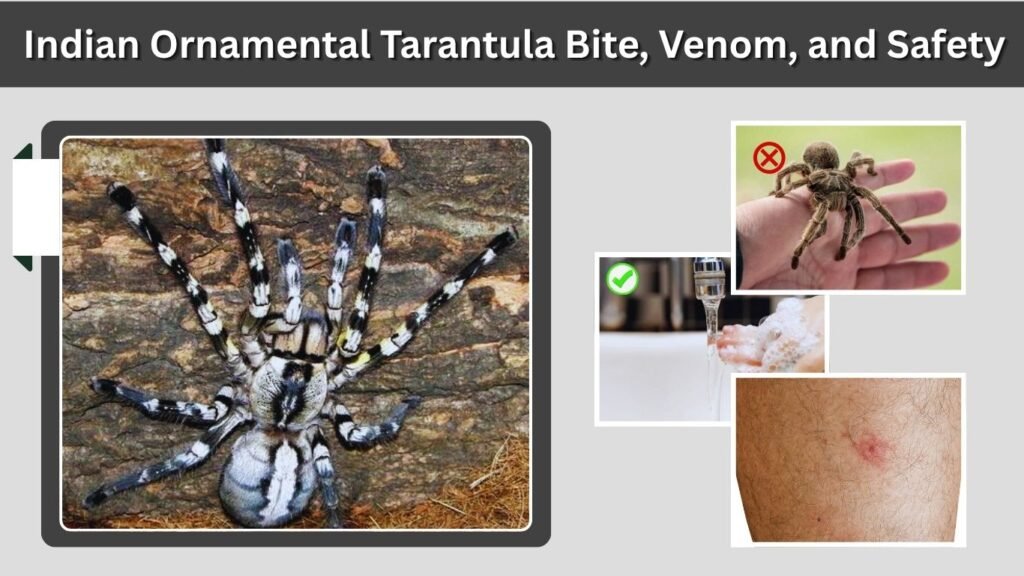
The Indian ornamental tarantula is venomous rather than poisonous. Venom is delivered through its fangs when it bites.
A bite is considered medically significant. Possible effects include severe localized pain, swelling, muscle cramping, nausea, sweating, and prolonged discomfort. Research has also demonstrated that P. regalis venom can produce significant effects on muscle tissue.
Anyone bitten should:
- Move away from the spider calmly.
- Wash the wound with soap and water.
- Avoid attempting to capture the escaped spider by hand.
- Seek prompt medical assessment.
- Tell medical professionals the scientific name, Poecilotheria regalis.
Can You Handle an Indian Ornamental Tarantula?
Handling is strongly discouraged. Even a normally calm individual can bolt unexpectedly, jump between surfaces, or bite when startled.
Handling also creates danger for the spider. A fall can rupture its abdomen and cause fatal injuries. Maintenance should instead be completed with long feeding tongs, catch cups, barriers, and carefully planned rehousing methods.
Size, Growth, and Lifespan
Adult Indian ornamental tarantulas commonly reach a leg span of approximately 6–7 inches. Females generally have heavier bodies, while mature males are slimmer and have proportionally longer legs.
The species has a relatively fast growth rate when kept warm and fed consistently. Females may live for approximately 10–12 years, while males usually survive around three to five years.
Sex cannot be determined reliably from color alone. Examining a properly preserved molt is generally the safest method of confirming whether a juvenile or adult is male or female.
Buying an Indian Ornamental Tarantula
The price depends on the spider’s size, sex, availability, and location. Adult females usually cost more because they live longer and can be used for breeding. Spiderlings are normally less expensive but cannot always be accurately sexed.
Purchase only captive-bred specimens from reputable breeders. Confirm that the seller provides the correct scientific name and follows applicable wildlife and import regulations. Trade in Poecilotheria species is internationally regulated, so documentation may be required when spiders cross national borders.
FAQs
Is the Indian ornamental tarantula suitable for beginners?
No. Its extraordinary speed, climbing ability, defensive potential, and medically significant venom make it an advanced species. Beginners should gain experience with calmer and slower tarantulas before keeping Poecilotheria regalis.
Is the Indian ornamental tarantula aggressive?
It is better described as nervous and defensive rather than aggressive. Most individuals prefer escaping into their retreats. However, a trapped or frightened spider may raise its front legs, expose its warning colors, and bite.
How big does an Indian ornamental tarantula get?
A mature Indian ornamental tarantula can reach approximately 6–7 inches across when measured from the tip of one leg to the opposite leg. Females normally develop heavier bodies than mature males.
How often should it be fed?
Spiderlings can receive small meals once or twice weekly. Juveniles may eat every 7–10 days, while adults can be offered larger prey every one to three weeks. Adjust feeding according to body condition and remove uneaten prey.
Is the purple Indian ornamental tarantula a separate species?
“Purple Indian ornamental” is not a consistently recognized scientific name. It may refer to lighting effects, a seller-created label, or another Poecilotheria species. The intensely blue ornamental tarantula is generally Poecilotheria metallica, not P. regalis.
