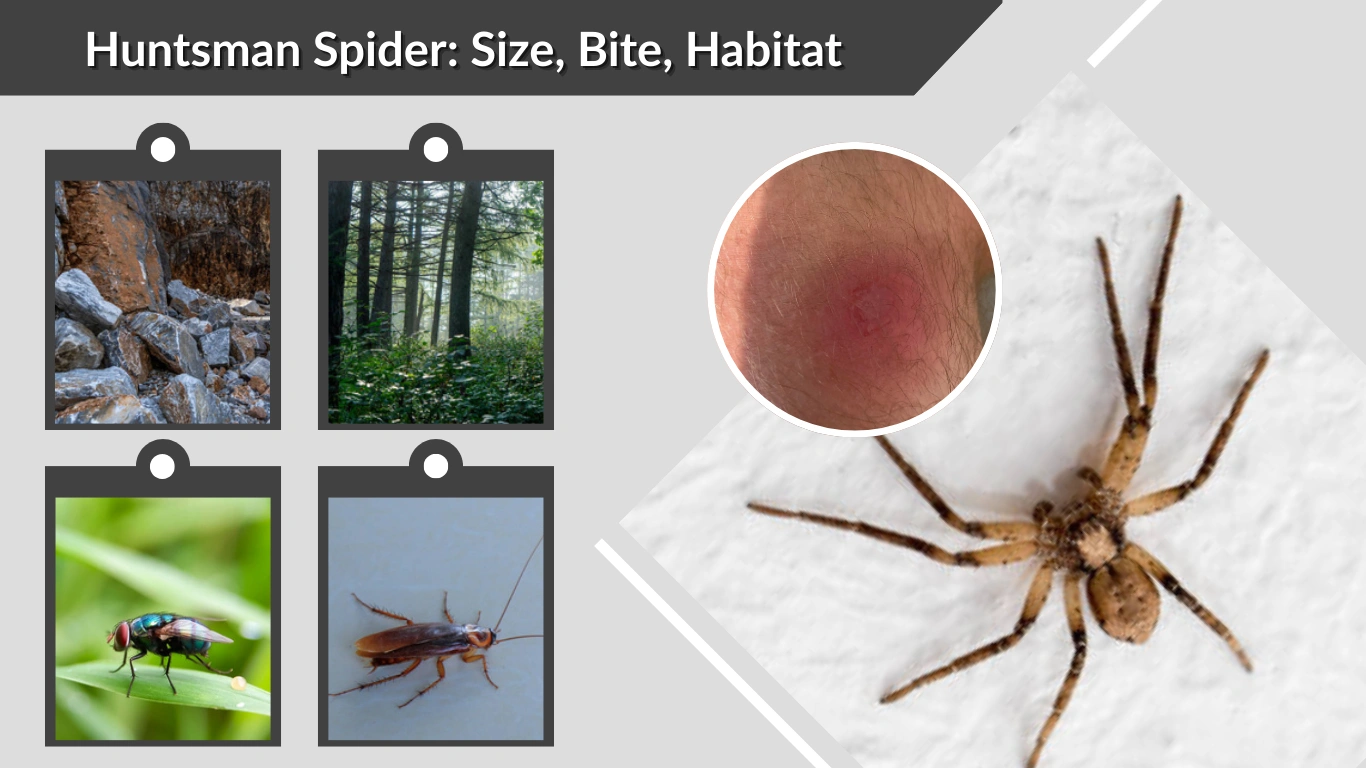
The huntsman spider is one of the largest and most misunderstood spiders in the world. Known for its impressive leg span and lightning-fast movement, this spider often causes panic when spotted indoors. Despite its intimidating appearance, the huntsman spider is generally harmless to humans and plays an important role in controlling insect populations. Understanding its behavior, habitat, and physical traits can help separate fact from fear and explain why this giant spider prefers to avoid people rather than confront them.
What Is a Huntsman Spider?
The huntsman spider belongs to the family Sparassidae, a group of large, fast-moving spiders found mainly in warm climates. Unlike web-building spiders, huntsman spiders actively hunt their prey, which is how they earned their name. They rely on speed and stealth rather than silk traps.
Huntsman spiders are sometimes called giant crab spiders because of their flattened bodies and sideways-oriented legs, which give them a crab-like appearance. There are more than a thousand species of huntsman spiders worldwide, with significant variation in size and color depending on location.
Huntsman Spider Appearance and Size
Body Structure and Color
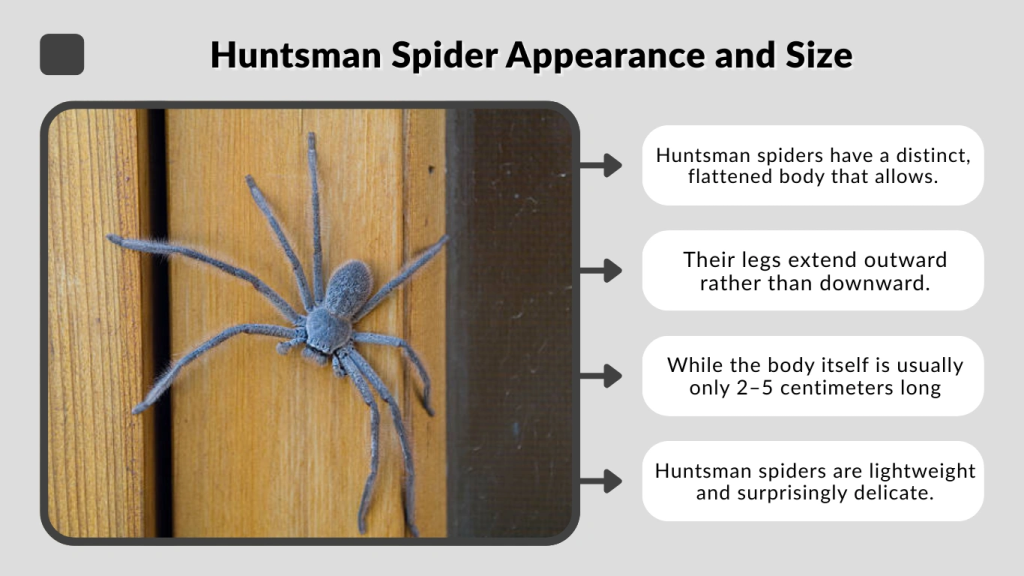
Huntsman spiders have a distinct, flattened body that allows them to squeeze into narrow spaces such as under bark, behind furniture, or inside wall crevices. Their legs extend outward rather than downward, giving them a wide stance and exceptional agility.
Coloration ranges from light brown and gray to darker shades with subtle banding or mottled patterns. This natural camouflage helps them blend into tree bark, rocks, and indoor surfaces. Their bodies are typically smooth rather than hairy, unlike tarantulas.
How Big Do Huntsman Spiders Get?
The most striking feature of a huntsman spider is its size. While the body itself is usually only 2–5 centimeters long, the leg span can reach up to 15–30 centimeters, depending on the species. The giant huntsman spider holds the record for the largest leg span of any spider.
Despite their size, huntsman spiders are lightweight and surprisingly delicate. Their large appearance is mostly due to long legs rather than a bulky body, which allows them to move quickly across walls and ceilings.
Habitat and Geographic Distribution
Where Huntsman Spiders Live Naturally
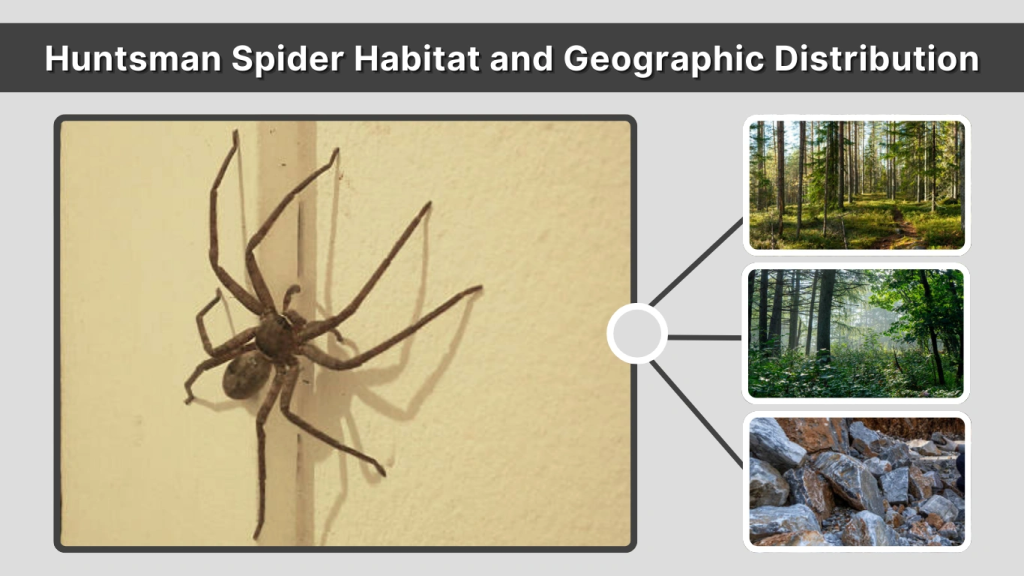
Huntsman spiders are found primarily in tropical and subtropical regions, including Australia, Southeast Asia, Africa, and parts of the Americas. They thrive in forests, woodlands, and rocky environments where they can hide during the day and hunt at night.
In natural settings, huntsman spiders often shelter under loose bark, stones, and fallen logs. Their flattened bodies make these hiding places ideal for avoiding predators and conserving moisture.
Why Huntsman Spiders Enter Houses
Huntsman spiders frequently enter homes in search of food or shelter, especially during hot weather or heavy rainfall. Houses provide stable temperatures and an abundance of insects such as cockroaches, flies, and moths.
They do not build nests or infest homes, and their presence is usually temporary. Most sightings involve a single spider that accidentally wandered indoors rather than a breeding population.
Huntsman Spider Behavior
Speed and Hunting Style
Huntsman spiders are among the fastest spiders on land. They rely on sudden bursts of speed to ambush prey, often pinning insects against surfaces with their long legs. They do not spin webs to catch food, though they may use silk for egg sacs or short retreats.
Their excellent eyesight and sensitivity to vibration make them effective nocturnal hunters, active mainly at night when prey is abundant.
Are Huntsman Spiders Aggressive?
Despite popular belief, huntsman spiders are not aggressive toward humans. They prefer to flee when disturbed and will usually run away rather than bite. Bites typically occur only when the spider is trapped or handled directly.
Their fast movements can be startling, but this behavior is defensive, not predatory.
Huntsman Spider Diet and Natural Role
What Huntsman Spiders Eat
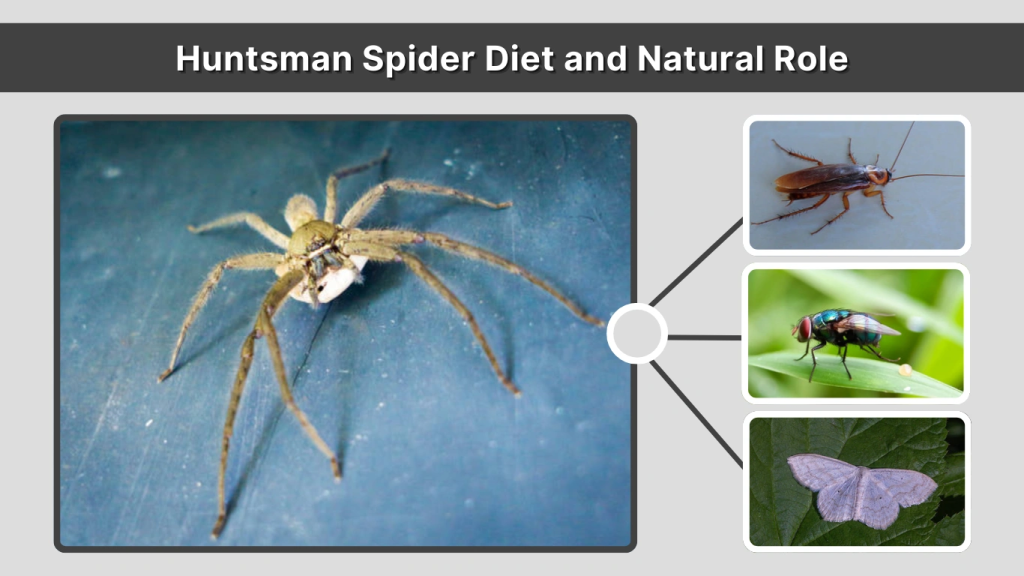
Huntsman spiders are carnivorous predators that feed mainly on insects and other small invertebrates. Their diet commonly includes cockroaches, flies, moths, crickets, and beetles. In some cases, larger species may prey on small lizards or other spiders.
Because they actively hunt rather than rely on webs, huntsman spiders are effective at controlling fast-moving pests. They use their speed and long legs to overpower prey, delivering a quick bite to immobilize it before feeding.
Benefits of Huntsman Spiders
Despite their frightening reputation, huntsman spiders are beneficial to humans. By reducing populations of household pests, they act as natural pest control. Many homeowners in regions where huntsman spiders are common choose to leave them undisturbed because of their role in keeping insect numbers low.
Huntsman Spider Bite and Venom
Is a Huntsman Spider Bite Dangerous?
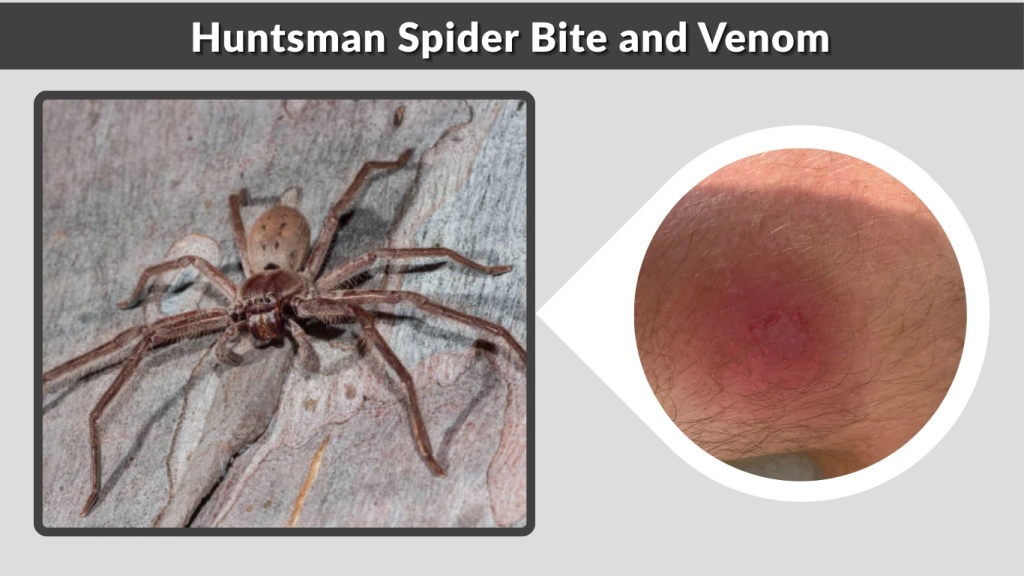
Huntsman spiders possess venom, but it is not considered dangerous to humans. Their venom is designed to subdue insect prey rather than cause serious harm to people. Bites are rare and usually occur only when the spider is provoked or accidentally trapped against the skin.
When bites do happen, symptoms are typically mild and may include localized pain, redness, swelling, or itching. Severe reactions are extremely uncommon and usually related to allergic responses rather than venom toxicity.
What to Do If Bitten
If bitten by a huntsman spider, wash the affected area with soap and water to prevent infection. Applying a cold compress can help reduce swelling and discomfort. Over-the-counter pain relievers or antihistamines may also ease symptoms.
Medical attention is recommended if pain persists, signs of infection develop, or if the person experiences an allergic reaction such as difficulty breathing or severe swelling.
Huntsman Spider Lifespan and Reproduction
Average Lifespan
Huntsman spiders generally live between two and four years, depending on species, environment, and access to food. Females tend to live longer than males, especially after reaching maturity.
Like other spiders, huntsman spiders grow by molting, shedding their exoskeleton multiple times before reaching adulthood.
Mating and Egg Sacs
After mating, female huntsman spiders produce a flat egg sac containing up to several hundred eggs. The female guards the egg sac aggressively until the spiderlings hatch. During this period, she may stop eating entirely.
Once hatched, spiderlings disperse and receive no further parental care. Most do not survive to adulthood due to predation and environmental factors.
Huntsman Spider vs Other Large Spiders
Huntsman Spider vs Tarantula
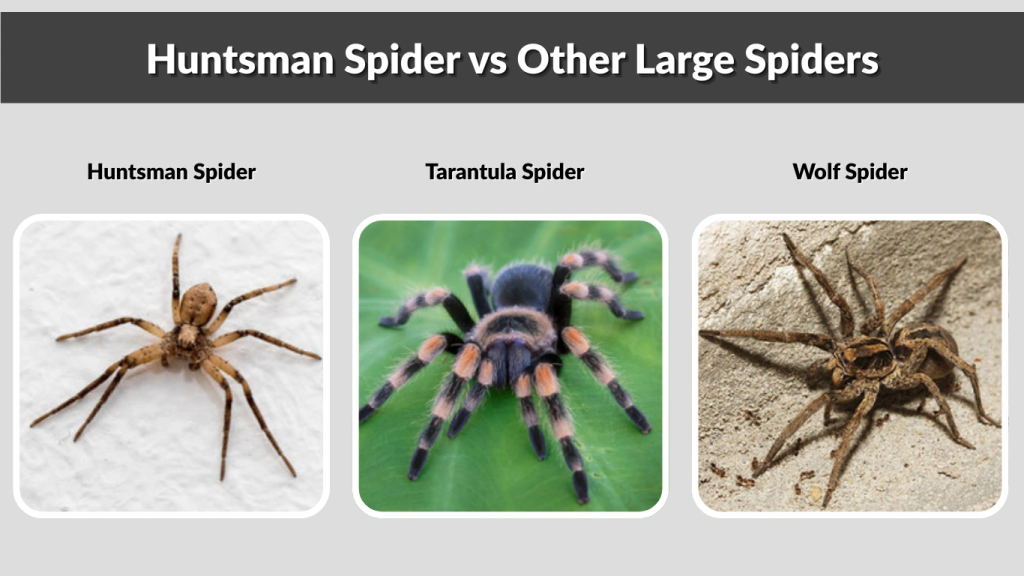
Huntsman spiders are often mistaken for tarantulas, but there are key differences. Tarantulas have thicker, hairier bodies and move more slowly, while huntsman spiders are flatter, less hairy, and significantly faster. Tarantulas also tend to rely more on burrows, whereas huntsman spiders prefer open surfaces.
Huntsman Spider vs Wolf Spider
Wolf spiders are smaller and more compact than huntsman spiders. While both hunt actively, wolf spiders usually stay close to the ground, whereas huntsman spiders frequently climb walls and ceilings. Wolf spider bites are also rare and similarly harmless.
How to Safely Remove a Huntsman Spider
If a huntsman spider enters your home and you prefer not to have it inside, non-lethal removal is recommended. Using a container and a stiff piece of cardboard, the spider can be gently trapped and released outdoors.
To prevent future encounters, reduce indoor insects, seal cracks around doors and windows, and minimize clutter where spiders may hide.
Common Myths About Huntsman Spiders
Many myths surround huntsman spiders, including the belief that they chase humans or are deadly. In reality, their rapid movements are simply attempts to escape. They do not seek out people, and fatalities from huntsman spider bites have not been recorded.
Another common misconception is that they infest homes. Huntsman spiders do not form colonies indoors and are typically solitary visitors.
Conclusion
The huntsman spider may look intimidating, but it is a shy, beneficial predator that poses little risk to humans. Its large size and speed make it impressive rather than dangerous. By understanding its behavior and ecological role, it becomes clear that the huntsman spider is more helpful than harmful, earning its place as a misunderstood giant of the spider world.
FAQs
Are huntsman spiders dangerous to humans?
Huntsman spiders are not dangerous to humans. Although they are large and fast, they are not aggressive and rarely bite. When bites occur, symptoms are usually mild and limited to local pain, redness, or swelling.
Is a huntsman spider poisonous?
Huntsman spiders do have venom, but it is not considered medically significant for humans. Their venom is designed to subdue insect prey rather than cause serious harm to people.
How big can a huntsman spider get?
Huntsman spiders can have a leg span of up to 30 centimeters, making them some of the largest spiders in the world by leg length. However, their bodies are relatively small compared to their leg span.
What should I do if I find a huntsman spider in my house?
If you find a huntsman spider indoors, it is best to remain calm and avoid trying to handle it. You can safely remove it using a container and release it outside. Huntsman spiders do not infest homes and usually enter accidentally.
Do huntsman spiders bite?
Huntsman spiders rarely bite humans. Bites typically occur only when the spider is provoked, trapped, or handled. Most bites cause mild discomfort and resolve without medical treatment.