
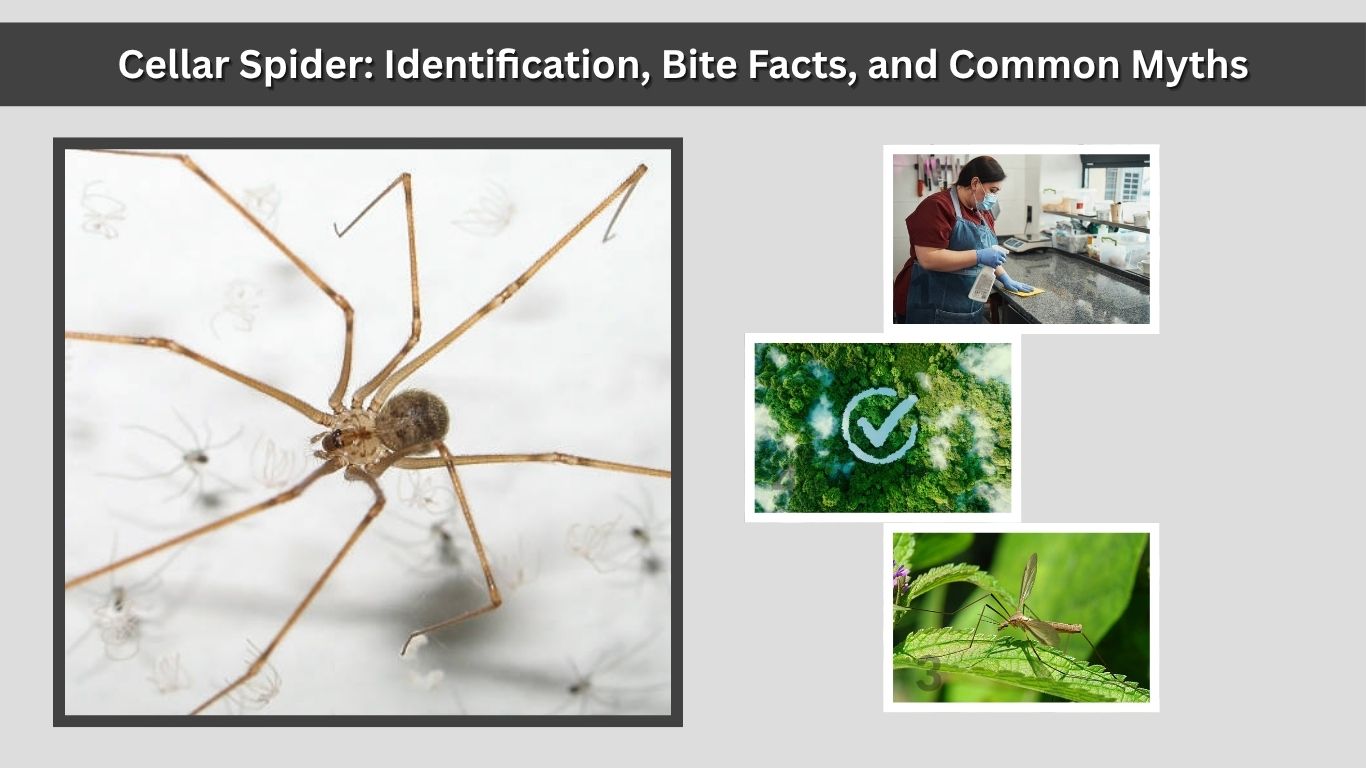
Cellar spiders are one of the most commonly seen household spiders, often found hanging quietly in corners of ceilings, basements, or bathrooms. Despite their harmless nature, they are surrounded by myths—especially the idea that they are dangerously venomous. This article explores what cellar spiders are, how to identify them, whether their bites are a concern, and how they compare to similar creatures.
What Is a Cellar Spider?
A cellar spider belongs to the Pholcidae family, a group of spiders known for their long legs and delicate bodies. They are often referred to as “daddy long legs spiders,” though this name can also apply to other creatures, which causes confusion.
These spiders prefer quiet, undisturbed areas such as basements, garages, attics, and even inside cupboards. Their ability to adapt to indoor environments makes them a familiar sight in many homes worldwide.
What Does a Cellar Spider Look Like?

Cellar spiders have a very distinct and recognizable appearance, making them easy to identify once you know what to look for. They are known for their delicate structure, long legs, and light coloration, often giving them a fragile, almost ghost-like look in dim corners.
- Tiny body: Small, narrow body compared to leg span
- Very long legs: Thin, extended legs that can be several times the body length
- Light color: Usually pale white, light brown, or gray
- Smooth texture: Body appears soft and not hairy
- Hanging posture: Often seen upside down in messy webs
Their overall look may seem unusual, but these features help them survive and move easily within their webs.
Types of Cellar Spiders
There are several types of cellar spiders, though most people encounter only a few common ones indoors.
- Long-bodied cellar spider (Pholcus phalangioides): The most widespread species, known for its extremely elongated body and legs.
- Marbled cellar spider (Holocnemus pluchei): Recognizable by its patterned body and slightly shorter legs.
- Short-bodied or round-bodied types: Less common indoors, with a more compact appearance.
Different regions may have slight variations in species, but their behavior and general appearance remain quite similar.
Cellar Spider Web and Behavior

Web Structure
Cellar spiders build irregular, tangled webs that may look messy compared to the neat designs of orb-weaving spiders. These webs are typically found in corners, ceiling edges, and other undisturbed areas.
Unlike sticky, symmetrical webs, their webs are loose and chaotic, designed more for trapping prey through entanglement than precision.
Hunting and Movement
One of the most interesting behaviors of cellar spiders is their defense mechanism. When disturbed, they rapidly vibrate their bodies in the web, creating a blurred effect that confuses predators.
They are also skilled hunters and will feed on a variety of insects, including flies, mosquitoes, and even other spiders. In some cases, they can capture and consume larger or more dangerous spider species.
Cellar Spider Bite: Should You Be Worried?
Are Cellar Spiders Venomous?
Like most spiders, cellar spiders do produce venom. However, their venom is extremely mild and not harmful to humans. The idea that they are dangerous is largely based on myths rather than scientific evidence.
What Happens If a Cellar Spider Bites You?
A bite from a cellar spider is very rare. Even if it happens, it typically causes little to no reaction. Some people might experience minor redness or irritation, but serious symptoms are not expected.
Why Bites Are Uncommon
Cellar spiders are shy and non-aggressive. They prefer to stay hidden and avoid human contact. Additionally, their mouthparts are not strong enough to easily penetrate human skin, which further reduces the likelihood of a bite.
Common Myth: The “Most Venomous Spider” Claim
One of the most widespread myths about cellar spiders is that they are the “most venomous spider in the world” but cannot bite humans. This claim is false.
Scientific studies have shown that their venom is relatively weak compared to truly dangerous spiders. The confusion likely comes from their association with the name “daddy long legs,” which is used for multiple unrelated species.
In reality, cellar spiders pose no significant threat and are considered harmless household inhabitants.
Cellar Spider vs Daddy Long Legs

Are They the Same?
The term “daddy long legs” is often used incorrectly. While it can refer to cellar spiders, it is also commonly used for harvestmen, which are not true spiders.
This overlap in naming leads to confusion, especially when discussing venom and behavior.
Key Differences
- Body structure: Cellar spiders have two body segments, while harvestmen have a single fused body.
- Venom: Cellar spiders have venom glands; harvestmen do not.
- Webs: Cellar spiders build webs, whereas harvestmen do not produce webs at all.
Understanding these differences helps clear up many misconceptions about cellar spiders and their supposed danger.
Cellar Spider vs Other Spiders
Below is a simple comparison to help you quickly understand how cellar spiders differ from other common spiders found in homes:
| Feature | Cellar Spider | Brown Recluse | House Spider |
| Body Shape | Thin, small body with very long legs | Medium body with thicker legs | Sturdy, compact body |
| Color | Pale white, light brown, or gray | Brown with violin-shaped marking | Brown or dark gray |
| Leg Length | Extremely long and delicate | Medium length | Shorter and thicker |
| Web Type | Messy, irregular webs | Irregular but more hidden | More structured webs |
| Danger Level | Harmless to humans | Potentially dangerous bite | Mostly harmless |
| Behavior | Shy, vibrates when disturbed | Reclusive, hides in dark areas | Active, builds webs in corners |
| Common Location | Ceilings, basements, corners | Closets, storage areas | Corners, near floors and furniture |
This comparison shows that cellar spiders are among the least harmful spiders you may encounter indoors.
Life Cycle and Reproduction
Lifespan
Cellar spiders usually live for about one to two years, depending on environmental conditions such as temperature, food availability, and safety from predators. Indoor environments often help them survive longer due to stable conditions.
Eggs and Reproduction
Female cellar spiders have a unique way of handling their eggs. Instead of wrapping them in thick silk sacs like many spiders, they carry a cluster of eggs in their mouthparts until they hatch.
After hatching, the young spiders stay near the mother for a short time before dispersing. This behavior increases their chances of survival in the early stages of life.
Are Cellar Spiders Helpful or Harmful?
Cellar spiders are generally considered beneficial rather than harmful. They feed on a variety of household pests, including flies, mosquitoes, and even other spiders. This natural pest control can be useful in maintaining a balanced indoor environment.
However, they can become a nuisance if their webs accumulate over time, especially in corners or ceilings that are not cleaned regularly. In such cases, their presence may be more of a cosmetic concern than a real problem.
How to Get Rid of Cellar Spiders

If you prefer not to have cellar spiders in your home, there are simple and effective ways to manage them.
- Regular cleaning: Remove webs and dust from corners, ceilings, and hidden areas.
- Decluttering: Reduce storage piles where spiders can hide.
- Seal entry points: Close gaps in windows, doors, and walls to prevent entry.
- Natural control: Reduce insects in your home, which removes their food source.
In most cases, chemical treatments are unnecessary because cellar spiders are harmless and easy to control through basic maintenance.
FAQs
Are cellar spiders dangerous to humans?
Cellar spiders are not dangerous to humans. Although they do have venom, it is very weak and not capable of causing harm. They are non-aggressive and prefer to stay hidden, making them one of the safest spider species to have around the home.
What happens if a cellar spider bites you?
A cellar spider bite is extremely rare and usually harmless. If it occurs, it may cause mild irritation or slight redness, but serious symptoms are not expected. Most bites go unnoticed and do not require any medical attention.
Are cellar spiders the same as daddy long legs?
Not exactly. The name “daddy long legs” can refer to different creatures. Cellar spiders are true spiders, while harvestmen—also called daddy long legs—are a separate group of arachnids that do not produce venom or build webs.
Do cellar spiders kill other spiders?
Yes, cellar spiders often prey on other spiders, including species that may be more harmful. This makes them beneficial in controlling spider populations and reducing the presence of unwanted pests indoors.
Conclusion
Cellar spiders are harmless, quiet residents that commonly share indoor spaces with humans. While their long legs and unusual appearance may seem unsettling, they pose no real threat and can even help control other pests.
Understanding their behavior, appearance, and differences from more dangerous spiders can help reduce unnecessary fear. Whether you choose to keep them or remove them, cellar spiders are far more helpful than harmful in most situations.
