
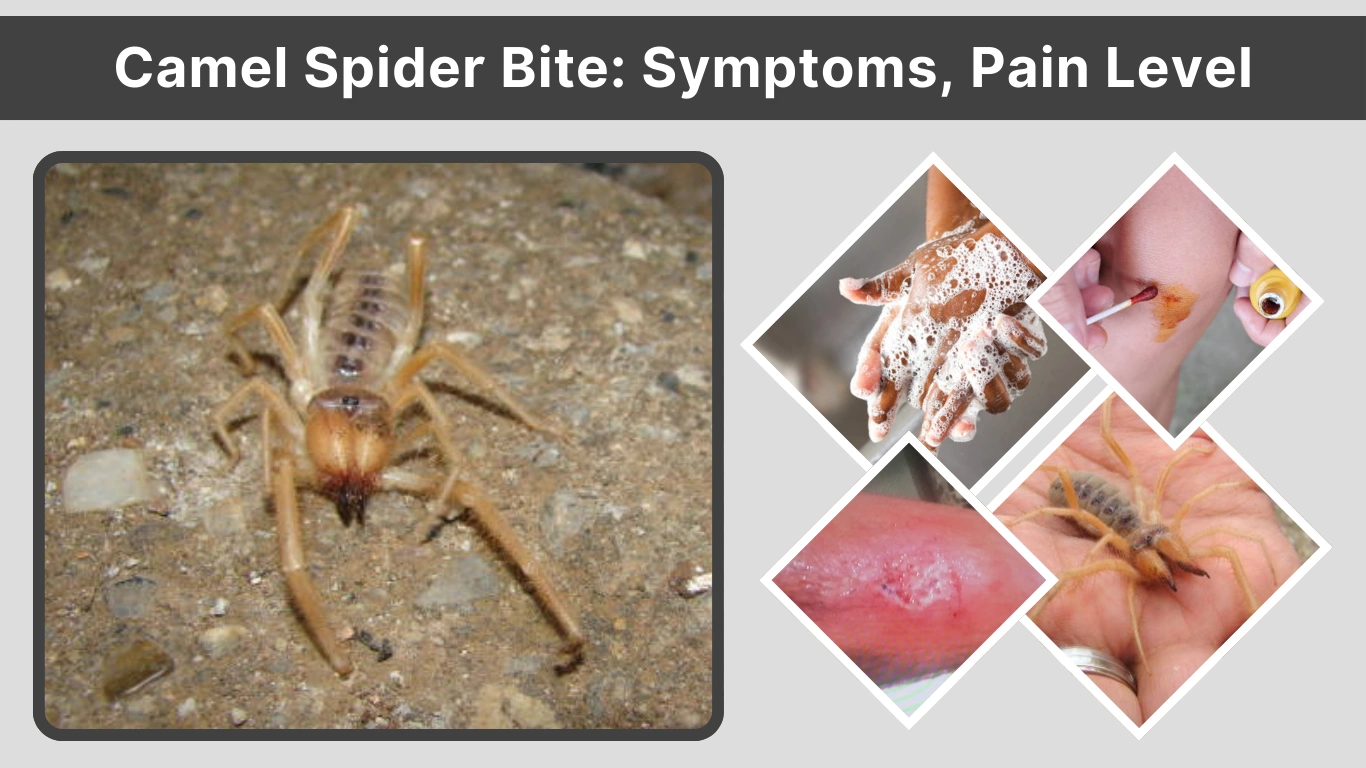
Camel spider bites are often surrounded by fear and misinformation, largely fueled by exaggerated stories and viral images online. These desert-dwelling arachnids are commonly portrayed as highly dangerous, yet the reality is far less alarming. While camel spiders can bite in rare situations, their bites are generally not life-threatening. Understanding when camel spider bites occur, what symptoms to expect, and how to treat them properly helps separate myth from fact and reduces unnecessary panic.
Can a Camel Spider Bite Humans?
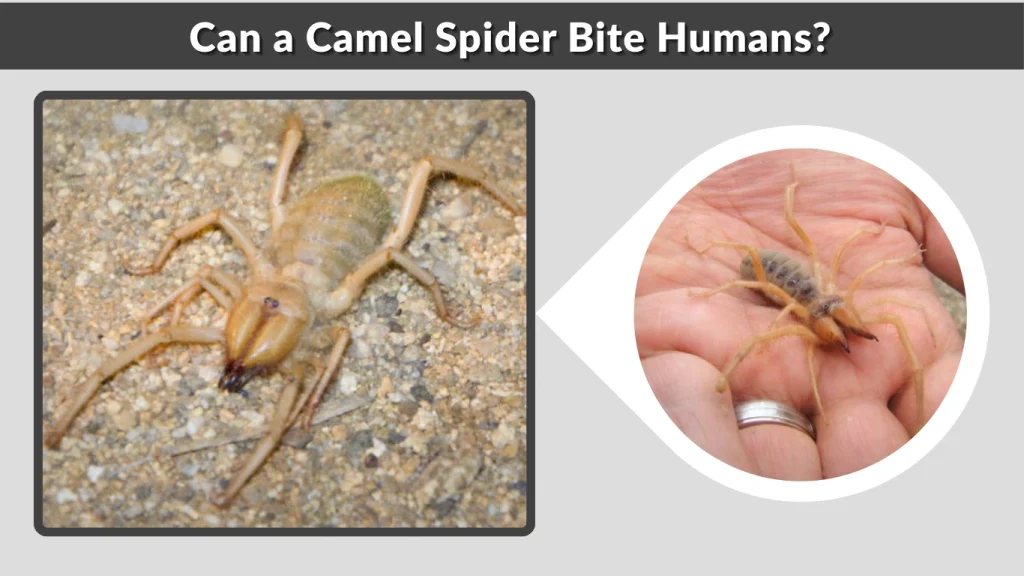
Yes, a camel spider can bite a human, but such incidents are uncommon. Camel spiders are not aggressive toward people and do not seek out human contact. Most bites occur accidentally, usually when a camel spider is handled, trapped, or feels threatened.
These arachnids rely on speed and avoidance rather than confrontation. If given space, they almost always choose to escape instead of bite.
Why Camel Spiders Bite
Camel spiders bite primarily as a defensive reaction, not as an attack. Common scenarios include:
- Being accidentally stepped on
- Being picked up or handled
- Becoming trapped in clothing, bedding, or shoes
In natural conditions, camel spiders use their jaws to hunt prey, not to defend against large animals like humans.
What Does a Camel Spider Bite Look Like?
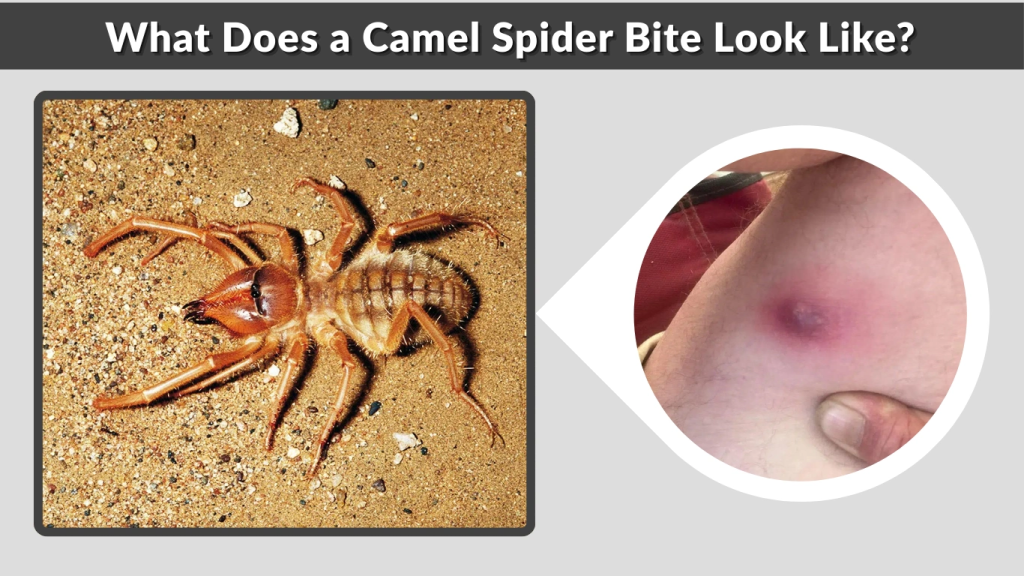
A camel spider bite usually appears as a small puncture wound or shallow cut, depending on the size of the animal. Because camel spiders have strong jaws rather than fangs, the bite may look more like a minor tear in the skin than a typical spider bite.
In most cases, the bite area shows mild redness and localized swelling. Severe skin damage is extremely rare and is often linked to poor wound care rather than the bite itself.
Common Camel Spider Bite Symptoms
Symptoms of a camel spider bite are typically mild and may include:
- Sharp or stinging pain at the bite site
- Redness around the affected area
- Minor swelling
- Slight bleeding in some cases
Infections can occur if the wound is not cleaned properly, but this risk is similar to any small cut or scratch.
How Painful Is a Camel Spider Bite?
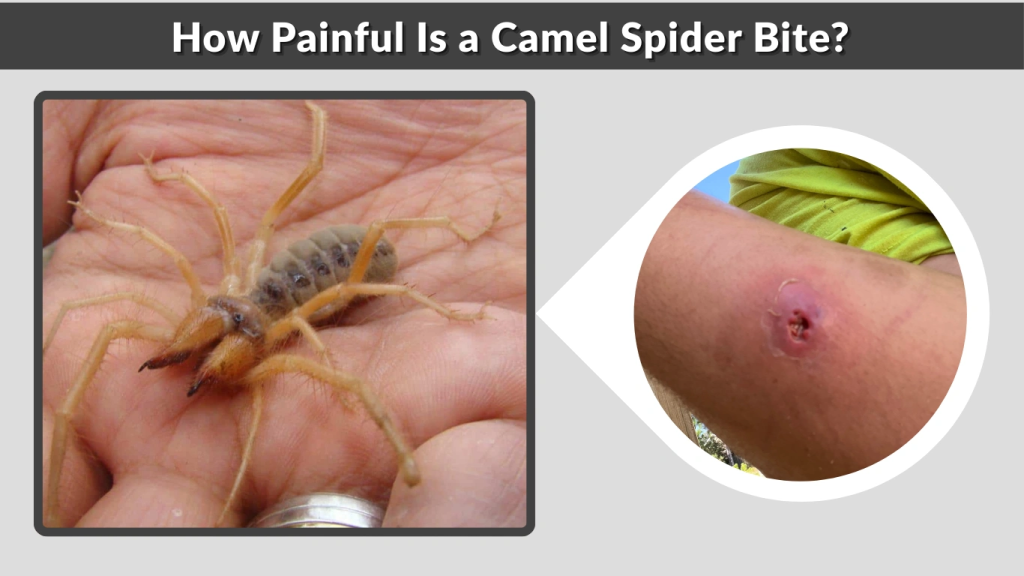
The pain from a camel spider bite is generally described as moderate and short-lived. Most people compare it to a bee sting or a painful pinch. The intensity of pain can vary depending on factors such as the size of the camel spider, the location of the bite, and individual pain tolerance.
Pain usually subsides within a few hours, though mild tenderness may last longer. Severe or long-lasting pain is not typical and may indicate infection or irritation rather than bite severity.
Are Camel Spider Bites Venomous?
One of the most persistent myths is that camel spiders inject venom or anesthetic substances when they bite. In reality, camel spiders are not venomous. They lack venom glands entirely and do not produce toxins capable of harming humans.
Any pain or discomfort caused by a bite results purely from mechanical injury created by their powerful jaws.
Do Camel Spiders Inject Toxins?
No, camel spiders do not inject toxins or anesthetics. Stories claiming that camel spider bites cause numbness or flesh damage are unfounded and not supported by scientific evidence. These myths often originate from misidentified wounds or untreated infections.
Camel Spider Bite Treatment and First Aid
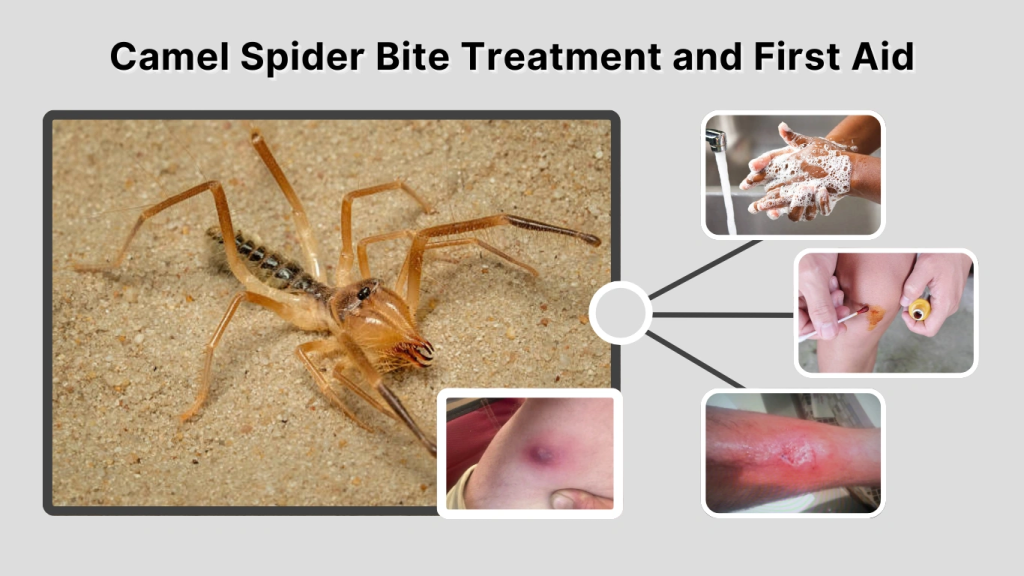
Proper first aid can help prevent infection and promote quick healing after a camel spider bite. Immediate care is simple and similar to treating minor cuts or insect bites.
Basic treatment steps include:
- Washing the bite area with soap and clean water
- Applying an antiseptic solution
- Keeping the area clean and dry
In most cases, no additional treatment is required.
When Should You See a Doctor?
Although camel spider bites are usually harmless, medical attention may be necessary in certain situations. You should see a doctor if the bite area becomes increasingly painful, swollen, or red after several days, or if signs of infection appear. These signs may include pus, warmth around the wound, or red streaks spreading from the bite.
People with weakened immune systems, diabetes, or known allergies to insect bites should be especially cautious. Fever or persistent pain following a camel spider bite is not normal and should be evaluated by a healthcare professional.
How Long Does a Camel Spider Bite Take to Heal?
Most camel spider bites heal within a few days to one week. Mild tenderness or redness may last slightly longer, depending on skin sensitivity and wound care. Keeping the bite area clean significantly reduces healing time and prevents complications.
Scratching the bite or exposing it to dirt and moisture can slow recovery and increase the risk of infection. In rare cases where infection develops, healing may take longer and require medical treatment.
Camel Spider Bite Myths vs Facts
Camel spider bites are often misunderstood due to widespread myths that exaggerate their danger. These misconceptions have contributed to unnecessary fear and misinformation.
Common Misconceptions About Camel Spider Bites
- Myth: Camel spiders inject venom or anesthetic
Fact: They are non-venomous and rely only on their jaws. - Myth: Bites cause severe tissue damage
Fact: Tissue damage usually results from untreated infection, not the bite itself. - Myth: Camel spider bites are deadly
Fact: There are no confirmed deaths caused by camel spider bites.
Understanding these facts helps reduce fear and encourages appropriate responses to encounters.
How to Prevent Camel Spider Bites
Preventing camel spider bites is simple and largely involves avoiding direct contact. In regions where camel spiders are common, a few precautionary measures can significantly reduce the risk of bites.
- Avoid handling camel spiders
- Shake out shoes, clothing, and bedding before use
- Seal gaps in doors and windows
- Use gloves when moving rocks or debris
Camel spiders are not attracted to humans and typically leave on their own when undisturbed.
FAQs
Is a camel spider bite dangerous?
Camel spider bites are not considered dangerous. They are typically mild and do not involve venom or toxins.
Can a camel spider bite cause infection?
Yes, infection is possible if the bite is not cleaned properly, but the risk is similar to that of any small cut or scratch.
Do camel spider bites leave scars?
Most camel spider bites do not leave scars. Scarring is usually the result of infection or excessive scratching during healing.
Are camel spider bites common?
No, camel spider bites are rare. Most people living in camel spider habitats never experience a bite.
What should I do immediately after a camel spider bite?
Clean the wound with soap and water, apply antiseptic, and monitor the area for signs of infection.
Conclusion
Camel spider bites may look alarming, but they are far less dangerous than commonly believed. These arachnids are non-venomous and bite humans only in rare, defensive situations. With proper first aid and basic precautions, camel spider bites heal quickly and rarely lead to complications. By understanding the facts and ignoring exaggerated myths, people can approach camel spider encounters with confidence rather than fear.