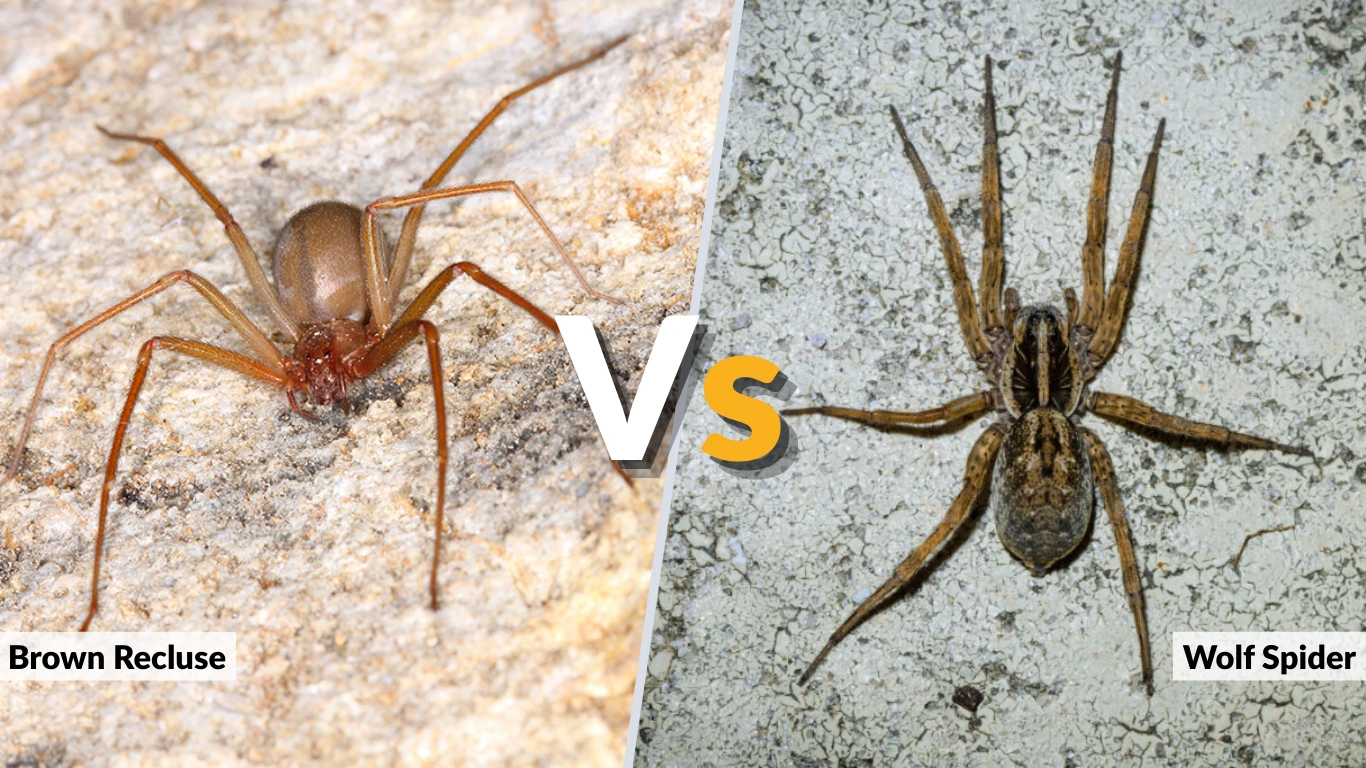
Brown spiders are among the most feared household pests, and two names come up more than any others: the brown recluse and the wolf spider. Because they share similar colors and are often found indoors, many people struggle to tell them apart. Searches like wolf spider vs brown recluse or brown recluse spider vs wolf spider usually happen after a sudden encounter or a suspected bite.
Correct identification matters. While both spiders can bite, only the brown recluse is considered medically significant. Misidentifying a harmless wolf spider as a brown recluse can cause unnecessary panic, while missing a true brown recluse bite can delay proper treatment. This article explains the key differences in appearance, size, behavior, and habitat so you can confidently tell them apart.
Brown Recluse vs Wolf Spider: Quick Comparison
At a glance, brown recluses and wolf spiders differ in several important ways. Brown recluse spiders are smaller, less hairy, and have a distinctive six-eye pattern. Wolf spiders are usually larger, visibly hairy, and have eight eyes arranged in rows. Brown recluses prefer undisturbed indoor spaces, while wolf spiders are active hunters often found outdoors.
In terms of danger, wolf spiders are generally harmless to humans, whereas brown recluse venom can cause tissue damage in rare cases. Understanding these core differences helps eliminate much of the confusion surrounding these two spiders.
What Is a Brown Recluse Spider?
Appearance and Size
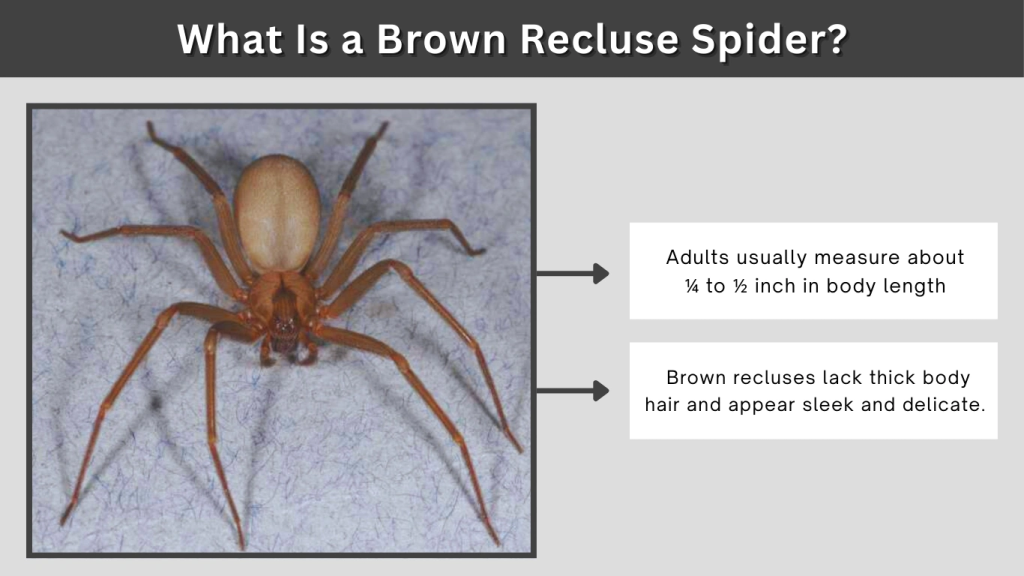
The brown recluse spider (Loxosceles reclusa) is typically light to dark brown with a smooth body and long, thin legs. Adults usually measure about ¼ to ½ inch in body length, with a leg span reaching up to 1 inch. One commonly mentioned feature is the violin-shaped marking on the back, but this marking can be faint or misleading and should not be used alone for identification.
Unlike wolf spiders, brown recluses lack thick body hair and appear sleek and delicate.
Habitat and Where They Live
Brown recluse spiders are primarily found in the central and southern United States. They prefer dark, dry, and undisturbed areas such as closets, cardboard boxes, attics, and storage spaces. Indoors, they hide during the day and emerge at night.
They are not aggressive and rarely roam openly, which is why many people are bitten accidentally when reaching into stored items or putting on clothing.
Behavior and Temperament
As their name suggests, brown recluse spiders are shy and avoid human contact whenever possible. Bites typically occur only when the spider feels trapped or pressed against skin. This reclusive behavior is one reason confirmed brown recluse bites are less common than people assume.
What Is a Wolf Spider?
Appearance and Size
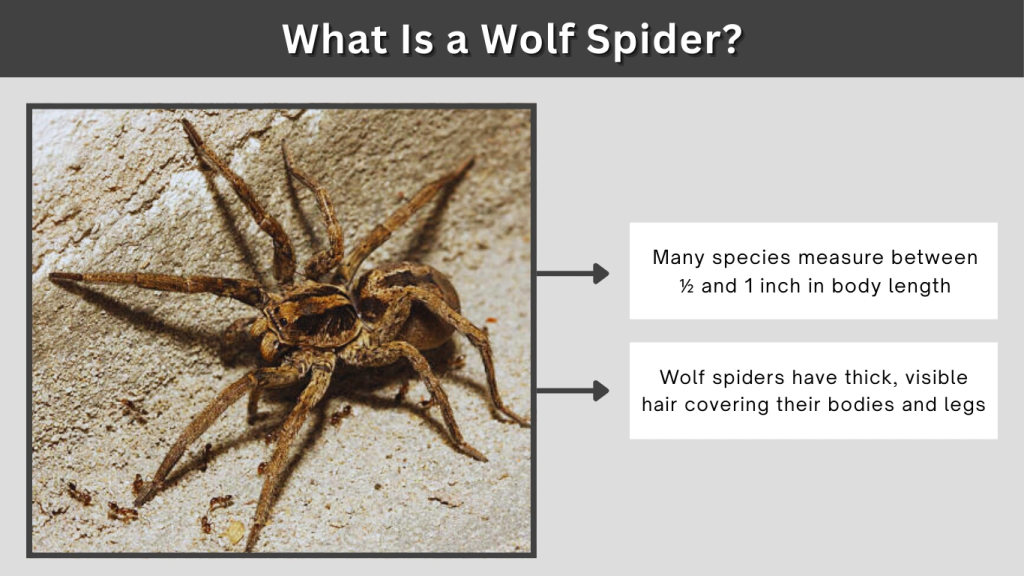
Wolf spiders belong to the Lycosidae family and are noticeably larger and more robust than brown recluses. Many species measure between ½ and 1 inch in body length, with leg spans exceeding 2 inches in some cases. Their bodies are often brown, gray, or tan with darker stripes or patterns.
A key distinction is hair. Wolf spiders have thick, visible hair covering their bodies and legs, giving them a heavier, more intimidating appearance.
Habitat and Range
Wolf spiders are found throughout the United States, including regions where brown recluse spiders do not exist. This nationwide distribution explains why many “brown recluse sightings” are actually wolf spiders.
They typically live outdoors in grass, leaf litter, gardens, and under rocks. However, wolf spiders may wander indoors accidentally, especially during colder months or heavy rain.
Wolf Spider Behavior
Unlike brown recluses, wolf spiders are active hunters. They do not build webs to catch prey but instead chase insects on foot. Despite their size, they are not aggressive toward humans and usually flee when disturbed. Bites are rare and usually occur only when the spider is handled or trapped.
Brown Recluse vs Wolf Spider Size and Identification
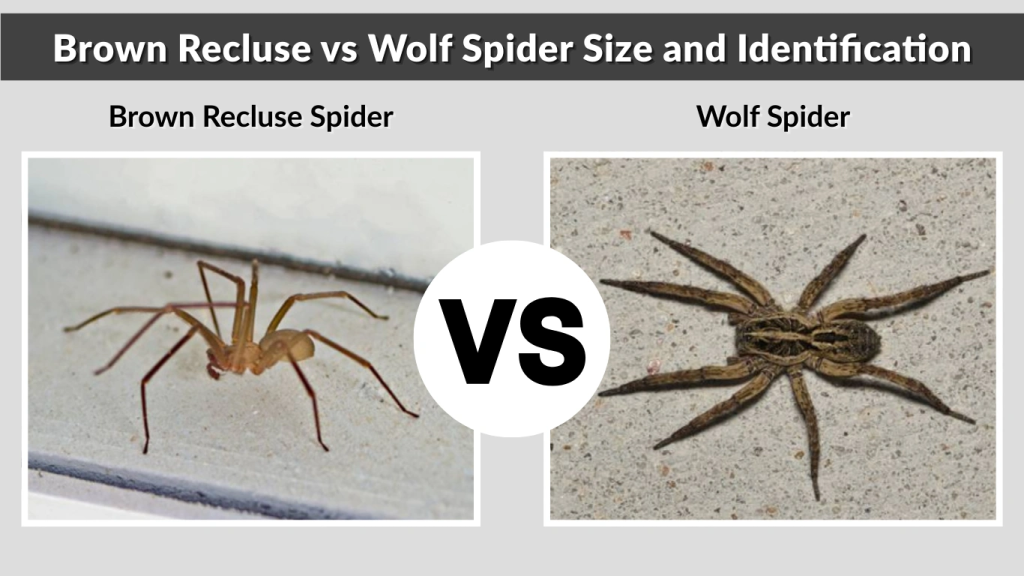
| Feature | Brown Recluse Spider | Wolf Spider |
| Average Body Size | ¼–½ inch | ½–1 inch |
| Leg Span | Up to ~1 inch | Up to 2 inches or more |
| Body Shape | Slim, delicate | Stocky, robust |
| Body Hair | Smooth, hairless | Hairy, thick legs |
| Color | Light to dark brown | Brown, gray, or tan with markings |
| Distinct Markings | Faint violin shape (not always visible) | Stripes or mottled patterns |
| Eye Count | 6 eyes (3 pairs) | 8 eyes (rows with large center eyes) |
| Eye Visibility | Small, hard to see | Large, reflective eyes |
| Movement Style | Slow, cautious | Fast, active runner |
| Common Misidentification | Mistaken for many brown spiders | Often mistaken for brown recluse |
Wolf Spider vs Brown Recluse: Geographic Confusion
Many spider encounters turn into a panic because of misunderstanding where brown recluse spiders actually live. Brown recluses are native mainly to the central and south-central United States. Outside this region, confirmed populations are rare.
Wolf spiders, on the other hand, are found in every U.S. state. This wide distribution explains why many reported brown recluse sightings—especially in coastal or northern areas—turn out to be wolf spiders or other harmless species.
Wolf Spider Florida vs Brown Recluse
Florida is a prime example of geographic confusion. Brown recluse spiders are extremely rare in Florida, with only isolated, non-established sightings. Wolf spiders, however, are common throughout the state and frequently enter homes. As a result, most “brown recluse” spiders found in Florida are almost always wolf spiders.
Wolf Spider Bite vs Brown Recluse Bite
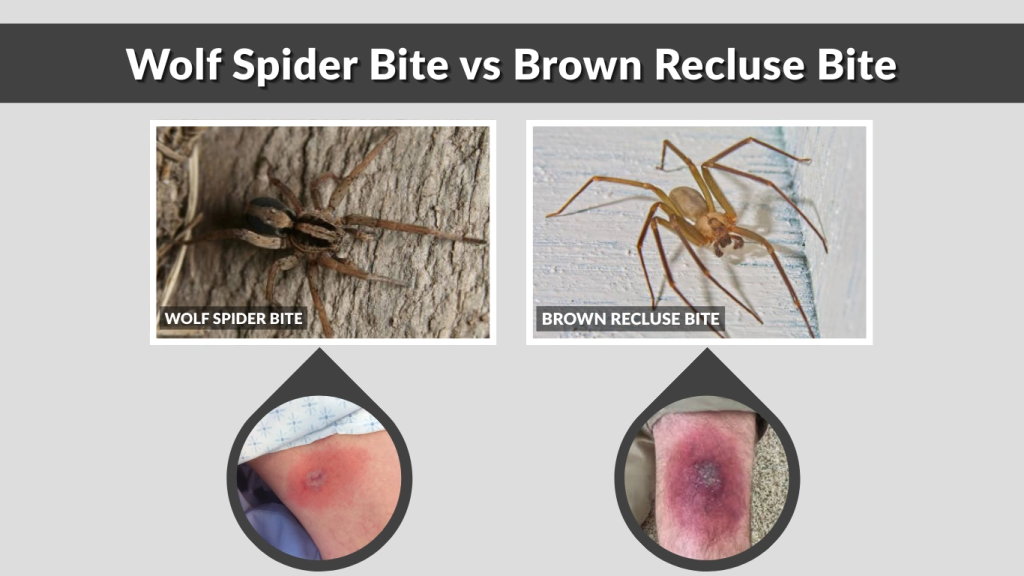
Bite comparisons are one of the most searched topics related to these spiders, largely due to fear surrounding brown recluse venom.
Wolf Spider Bite Symptoms
Wolf spider bites are uncommon and usually mild. When they occur, symptoms may include localized pain, redness, and minor swelling. The discomfort is often comparable to a bee sting and typically resolves within a few days. Serious medical complications from wolf spider bites are extremely rare.
Brown Recluse Bite Symptoms
Brown recluse bites are also uncommon, but their venom can be medically significant. In many cases, the bite is initially painless. Over several hours or days, symptoms may include redness, blistering, and in rare cases, tissue damage. Severe reactions are uncommon but may require medical attention, particularly in children or individuals with compromised immune systems.
Wolf Spider vs Brown Recluse Bite Comparison
When comparing a wolf spider bite vs brown recluse bite, severity is the main difference. Wolf spider bites heal quickly with minimal treatment, while brown recluse bites may worsen over time. Importantly, many skin lesions blamed on brown recluse bites are later found to be infections or other medical conditions.
Brown Recluse vs Wolf Spider: Which Is More Dangerous?
Wolf spiders are not considered dangerous to humans. Their size may be intimidating, but their venom poses little risk. Brown recluse spiders, while not aggressive, have venom capable of causing tissue damage in rare cases.
However, actual risk is often exaggerated. Brown recluse bites are infrequent, and serious outcomes are rare. Understanding this distinction helps reduce unnecessary fear while still encouraging proper caution.
Hobo Spider vs Wolf Spider vs Brown Recluse
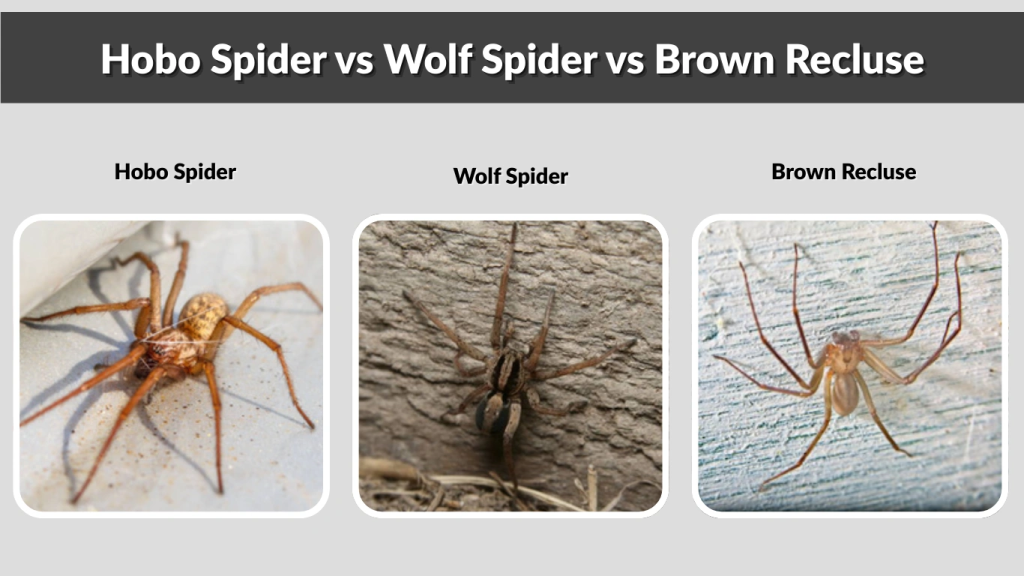
Hobo spiders are often included in spider identification debates due to outdated claims about their venom. Like wolf spiders, hobo spiders are frequently mistaken for brown recluses because of their brown coloration.
Unlike brown recluse spiders, hobo spiders lack medically significant venom. Distinguishing among these three species requires attention to eye patterns, body hair, and geographic location rather than color alone.
Common Myths About Brown Recluse and Wolf Spiders
One widespread myth is that all brown spiders are dangerous. In reality, most brown spiders are harmless. Another misconception is that wolf spiders cause necrotic wounds, which is false.
Photos circulating online often misidentify wolf spiders as brown recluses, contributing to confusion and fear. Proper identification relies on physical traits, not viral images.
What to Do If You Find One in Your Home
Safe Identification Tips
Avoid handling any spider directly. Observe its size, hair, and behavior from a safe distance. Taking a clear photo can help professionals or extension services identify the species accurately.
Bite Response and First Aid
If bitten, clean the area with soap and water and monitor symptoms. Seek medical attention if pain worsens, a lesion develops, or systemic symptoms appear. When possible, accurate identification helps healthcare providers assess risk.
Conclusion
The confusion between brown recluse and wolf spiders is understandable, but clear differences exist. Wolf spiders are larger, hairier, and harmless, while brown recluses are smaller, smoother, and medically significant in rare cases. Understanding size, eye patterns, behavior, and geographic range allows for accurate identification and peace of mind. In most encounters, the spider in question is far less dangerous than assumed.
FAQs
Is a wolf spider more dangerous than a brown recluse?
No. Wolf spiders are not considered dangerous to humans. While they can bite if handled or threatened, their venom causes only mild, short-term symptoms. Brown recluse spiders, although not aggressive, have venom that can cause tissue damage in rare cases, making them medically more significant than wolf spiders.
How can you tell a brown recluse from a wolf spider?
The easiest way to tell them apart is by eye arrangement and body texture. Brown recluse spiders have six eyes and smooth, hairless bodies, while wolf spiders have eight eyes and are visibly hairy. Wolf spiders are also generally larger and more robust than brown recluses.
Are wolf spider bites often mistaken for brown recluse bites?
Yes. Many skin irritations and minor spider bites are incorrectly blamed on brown recluse spiders. Wolf spider bites are mild and heal quickly, but infections or other skin conditions are often misidentified as brown recluse bites, even in areas where brown recluses do not live.
Do brown recluse spiders live in Florida?
Brown recluse spiders are extremely rare in Florida and do not have established populations there. Most brown spiders found in Florida homes are wolf spiders or other harmless species. Confirmed brown recluse sightings in Florida are uncommon and usually involve transported individuals.
What should I do if I think I was bitten by a brown recluse or wolf spider?
Wash the bite area with soap and water and monitor it closely. Seek medical attention if pain increases, a blister or open wound forms, or symptoms worsen over time. Accurate identification of the spider, when possible, can help medical professionals determine the appropriate treatment.