
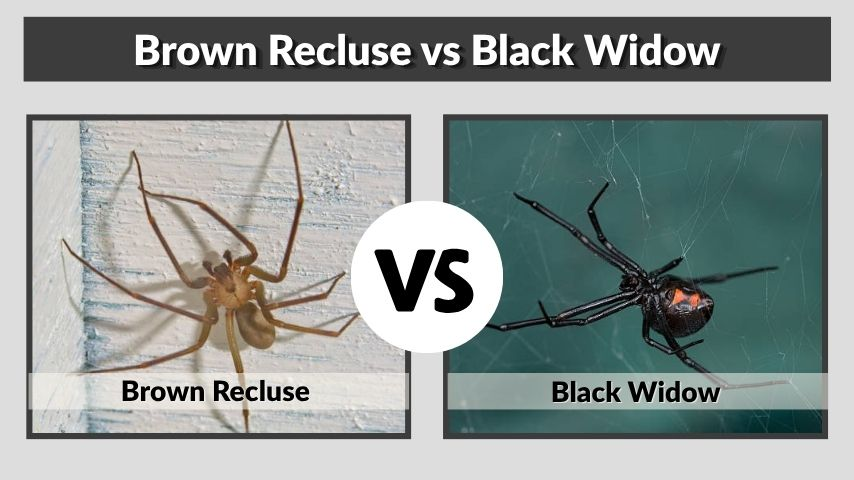
Brown recluse and black widow spiders are two of the most feared venomous spiders in the United States. Both can bite humans, but they look different, behave differently, and cause different symptoms. A brown recluse bite is more likely to affect the skin, while a black widow bite often affects the muscles and nervous system. Understanding these differences helps with identification, prevention, and safer first aid.
Brown Recluse vs Black Widow: Quick Overview
Brown recluse spiders and black widow spiders are both medically important, but they are not the same type of threat. Brown recluse spiders are shy hunters that hide in dark, dry places. Black widows are web-building spiders that often stay near messy webs in sheltered areas.
Main Difference at a Glance
Brown recluse spiders are usually light brown to dark brown with a violin-shaped marking on the upper body. Black widow spiders are usually shiny black, and adult females often have a red hourglass marking under the abdomen. The CDC lists both brown recluse and black widow spiders as venomous spiders found in the United States, and notes that spiders usually bite when trapped or touched.
| Feature | Brown Recluse | Black Widow |
|---|---|---|
| Common color | Tan, brown, dark brown | Shiny black |
| Famous marking | Violin-shaped mark | Red hourglass mark |
| Body shape | Slim, flat-looking body | Round abdomen |
| Web style | Irregular retreat web, not for prey catching | Messy cobweb |
| Main bite effect | Skin damage, local wound | Muscle pain, cramps, nerve symptoms |
| Temperament | Shy and hidden | Defensive when web is disturbed |
| Common hiding area | Boxes, closets, attics, basements | Garages, sheds, woodpiles, corners |
How to Identify a Brown Recluse Spider
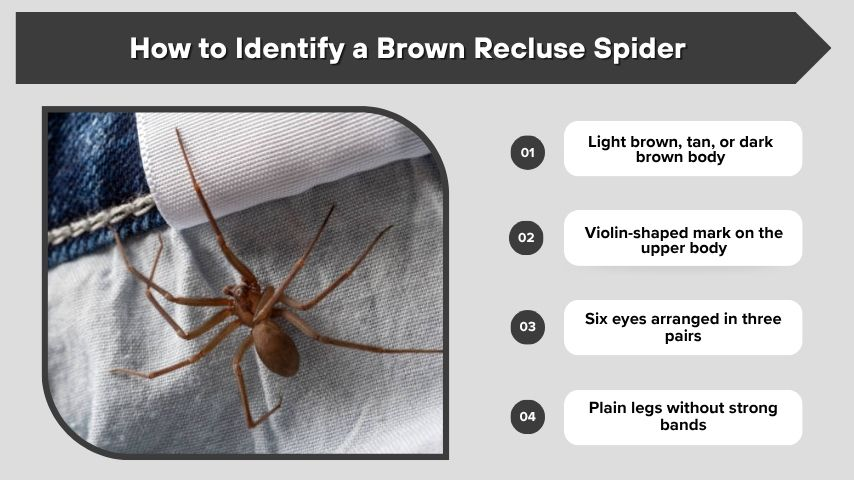
Brown recluse spiders are often misidentified. Many harmless brown spiders are blamed for bites or infestations. A true brown recluse has a simple brown body, long thin legs, and a distinct eye arrangement that helps separate it from many look-alikes.
Identification Features
A brown recluse is not usually large or hairy. It has a plain body and does not have bold stripes, colorful patterns, or spiny legs. Its most famous feature is the dark violin-shaped marking on the cephalothorax, but this mark can sometimes be faint.
Important brown recluse identification signs include:
- Light brown, tan, or dark brown body
- Violin-shaped mark on the upper body
- Six eyes arranged in three pairs
- Plain legs without strong bands
- Fine body hairs, not thick hair
- Body length usually less than half an inch
- Secretive behavior and nighttime activity
The six-eye pattern is a strong clue because most spiders have eight eyes. However, the eyes are small, so you may need a magnifying glass or clear close-up photo to confirm it. Merck Manual notes that serious systemic reactions are most often associated with widow spiders and brown spiders such as the brown recluse.
How to Identify a Black Widow Spider
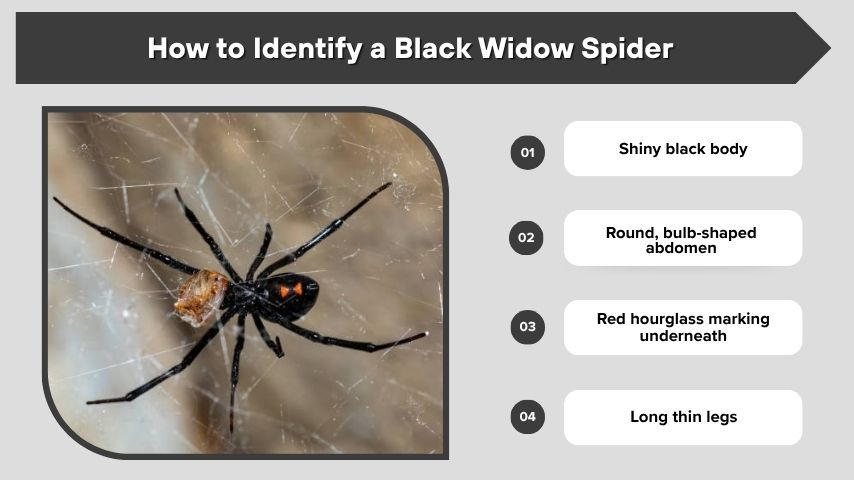
Black widow spiders are usually easier to recognize than brown recluse spiders, especially adult females. They have a glossy black body and a rounded abdomen. The red hourglass marking is commonly found on the underside of the abdomen.
Identification Features
Black widows belong to the widow spider group, also known as Latrodectus spiders. Female black widows are the most recognized because they are larger and more venomous than males. Males and young widows can look different, sometimes having lighter markings or less obvious color.
Key black widow identification signs include:
- Shiny black body
- Round, bulb-shaped abdomen
- Red hourglass marking underneath
- Long thin legs
- Messy, irregular cobweb
- Webs in quiet sheltered places
- Female larger than male
The Missouri Department of Conservation describes female black widows as glossy black spiders with red markings on the underside of the abdomen, often shaped like an hourglass.
Brown Recluse vs Black Widow Bite
The biggest difference between these spiders is how their bites usually affect the body. A brown recluse bite is mainly known for local skin damage. A black widow bite is more famous for pain, cramps, sweating, and muscle symptoms.
Bite Symptom Comparison
A brown recluse bite may start as mild pain, redness, or a blister. In some cases, the skin can become dark, damaged, or ulcer-like. A black widow bite may feel like a pinprick at first, but pain can spread and cause muscle cramps, stiffness, sweating, nausea, or abdominal pain.
| Bite Feature | Brown Recluse Bite | Black Widow Bite |
|---|---|---|
| First feeling | Mild sting or unnoticed | Sharp pinprick or mild pain |
| Main symptom area | Skin around bite | Muscles and whole body |
| Skin reaction | Redness, blister, dark wound | Small bite marks, less tissue damage |
| Pain pattern | Local pain may worsen over hours | Pain can spread from bite area |
| Common severe signs | Skin ulcer, tissue damage, fever | Muscle cramps, sweating, nausea |
| Medical concern | Necrotic wound in some cases | Nervous system reaction |
| First aid need | Clean wound, cold pack, medical check if worse | Medical care if cramps or severe pain appear |
Many suspected spider bites are actually other skin problems, including infections. Merck Manual notes that people often mistakenly think they were bitten by a spider when another condition is responsible.
Which Bite Is Worse?
There is no simple answer because the danger depends on the person, bite severity, and how quickly symptoms are treated. Brown recluse bites can look worse on the skin, while black widow bites can feel worse throughout the body.
Which Is More Dangerous?
Black widow venom affects the nervous system and can cause strong muscle pain, cramps, and body-wide symptoms. Brown recluse venom can damage skin tissue and may create a slow-healing wound. Both bites can be serious, but deaths are rare with modern medical care.
For most healthy adults, a black widow bite is more likely to cause intense pain and systemic symptoms. A brown recluse bite is more likely to cause local skin breakdown. Children, elderly people, and people with weak immune systems should be treated with extra caution.
You should seek medical help quickly if symptoms become severe, spread, or worsen. This is especially important if there is strong pain, muscle cramping, fever, vomiting, breathing trouble, a growing wound, or dark skin around the bite.
Brown Recluse vs Black Widow Venom
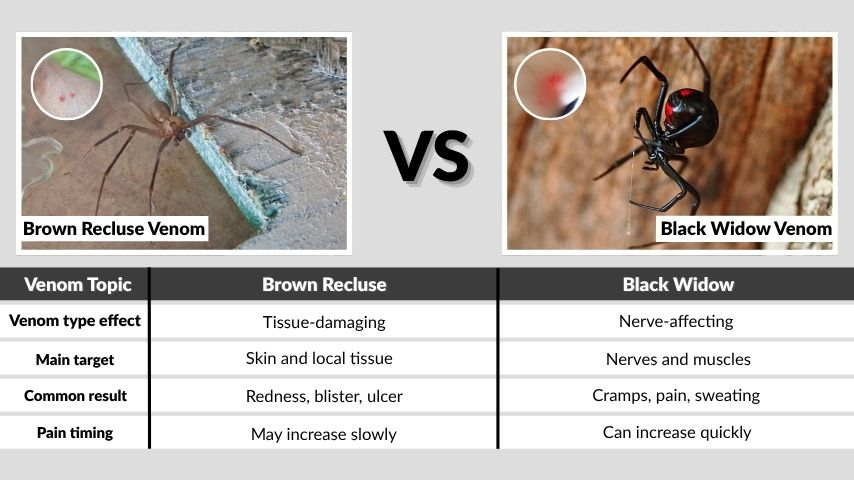
The venom of these two spiders works differently. That is why their bite symptoms are different. A brown recluse bite usually affects tissue near the bite. A black widow bite can affect nerves and muscles.
Venom Difference Explained
Brown recluse venom is associated with local tissue injury. In serious cases, it can damage skin and create a wound that heals slowly. Black widow venom affects nerve signals, which is why muscle cramps, stiffness, and pain can occur.
| Venom Topic | Brown Recluse | Black Widow |
|---|---|---|
| Venom type effect | Tissue-damaging | Nerve-affecting |
| Main target | Skin and local tissue | Nerves and muscles |
| Common result | Redness, blister, ulcer | Cramps, pain, sweating |
| Wound appearance | Can become dark or open | Usually less skin breakdown |
| Pain timing | May increase slowly | Can increase quickly |
| Treatment focus | Wound care and monitoring | Pain control and symptom care |
| Antivenom topic | Not commonly used | Antivenom may be used in selected severe cases |
Do not try to diagnose venom type by pain alone. Skin infections, allergic reactions, tick bites, and other insect bites can look similar to spider bites.
Habitat and Hiding Places
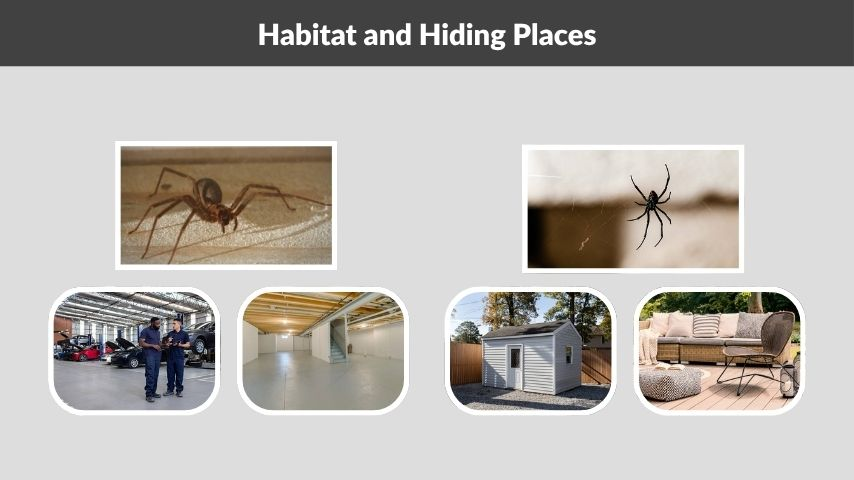
Brown recluse and black widow spiders both like quiet areas, but they do not always hide in the same way. Brown recluse spiders usually hide inside objects or storage areas. Black widows often stay in webs.
Where You May Find Them
Brown recluse spiders often live indoors in dry, undisturbed spaces. They may hide inside cardboard boxes, shoes, clothing, closets, basements, attics, and garages. They are hunting spiders, so they move around at night.
Black widows are commonly found in garages, sheds, crawl spaces, woodpiles, outdoor furniture, meter boxes, and cluttered corners. They build messy webs and often stay near them. A black widow is more likely to bite when someone accidentally touches the web or presses against the spider.
To avoid bites, always wear gloves when moving firewood, stored boxes, old tools, or outdoor furniture.
Web Difference Between Brown Recluse and Black Widow
Webs can help with identification. Brown recluse spiders do not build large prey-catching webs like orb weavers. Black widows, however, are known for strong, messy cobwebs.
Brown Recluse Web vs Black Widow Web
A brown recluse web is usually small, irregular, and hidden. It may be used as a retreat rather than a trap for flying insects. You may find it behind boxes, furniture, or inside cracks.
A black widow web is messy, tough, and irregular. It is often built close to the ground or in sheltered corners. If you see a strong tangled web in a garage, shed, or woodpile, avoid putting your hand into it.
Black widow webs are one of the easiest warning signs. Brown recluse spiders are harder to notice because they hide more and wander at night.
Brown Recluse vs Black Widow Size
Size is not always the best way to identify them, but it can help when combined with color and body shape. Black widow females often look heavier because of their round abdomen. Brown recluse spiders look flatter and slimmer.
Size and Body Shape
Brown recluse spiders usually have a smaller, flatter body with long plain legs. Their body is not shiny, and their abdomen is not round like a widow spider.
Female black widows have a more rounded, glossy abdomen. They may look more noticeable because of their black color and red marking. Males are smaller and less commonly noticed.
Do not rely only on size. Young black widows, male widows, and other house spiders can confuse identification.
First Aid for Brown Recluse and Black Widow Bites
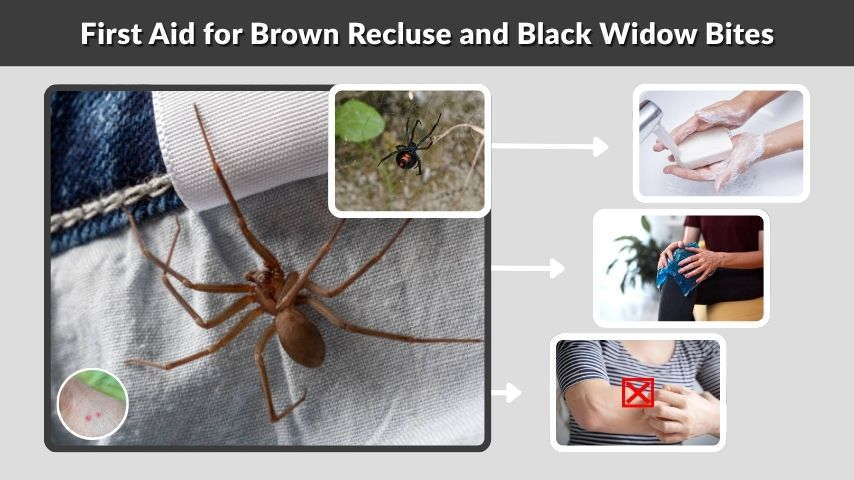
First aid is important, but it should not replace medical care if symptoms are serious. The safest approach is to clean the area, reduce swelling, and monitor symptoms closely.
What to Do After a Suspected Bite
Follow these steps:
- Wash the bite area with soap and water
- Apply a cold pack wrapped in cloth
- Keep the bite area elevated if possible
- Avoid scratching the bite
- Do not cut the wound
- Do not try to suck out venom
- Take a clear photo of the spider if safe
- Seek medical care if symptoms worsen
Get urgent medical help if there is severe pain, muscle cramps, trouble breathing, fever, vomiting, spreading redness, a dark wound, or signs of infection. Do not wait for a bite to become severe before asking for help.
How to Prevent Brown Recluse and Black Widow Spiders
Prevention is the best protection. Both spiders like quiet, cluttered places where they can hide safely. Reducing clutter and wearing gloves in risky areas can lower the chance of accidental bites.
Home Prevention Tips
Use these prevention methods:
- Remove clutter from garages, closets, sheds, and basements
- Store items in sealed plastic bins instead of cardboard boxes
- Shake out shoes, gloves, towels, and clothes before use
- Wear gloves when moving firewood or stored items
- Seal cracks around doors, windows, and foundations
- Install door sweeps
- Vacuum corners, baseboards, and storage areas
- Place sticky traps along walls
- Keep beds away from walls
- Reduce insects that spiders eat
If you repeatedly find brown recluse or black widow spiders indoors, contact a licensed pest control professional.
FAQs
Which is more dangerous, brown recluse or black widow?
Both can be dangerous, but they affect the body differently. A black widow bite often causes stronger body-wide symptoms such as muscle cramps and sweating. A brown recluse bite is more likely to cause local skin damage. The risk depends on the person, bite severity, and treatment timing.
How can you tell a brown recluse from a black widow?
A brown recluse is usually tan to dark brown with a violin-shaped marking and six eyes. A black widow is usually shiny black with a round abdomen and red hourglass marking underneath. Brown recluse spiders hide and wander, while black widows usually stay near messy webs.
What does a brown recluse bite look like compared to a black widow bite?
A brown recluse bite may become red, blistered, dark, or ulcer-like over time. A black widow bite may show small marks but often causes muscle pain, cramps, sweating, nausea, and stiffness. Because symptoms can overlap with infections, medical evaluation is important if symptoms worsen.
Can a black widow kill a brown recluse?
In a fight, a black widow may have an advantage if the brown recluse gets trapped in its web. However, spider fights are not useful for pest control. In real homes, the bigger concern is avoiding bites, removing clutter, sealing gaps, and using safe control methods.
Should I go to the doctor for a brown recluse or black widow bite?
Yes, seek medical care if the bite causes severe pain, muscle cramps, fever, vomiting, spreading redness, dark skin, an open wound, or breathing problems. Children, elderly people, pregnant people, and people with weak immune systems should be checked quickly after a suspected venomous spider bite.
