
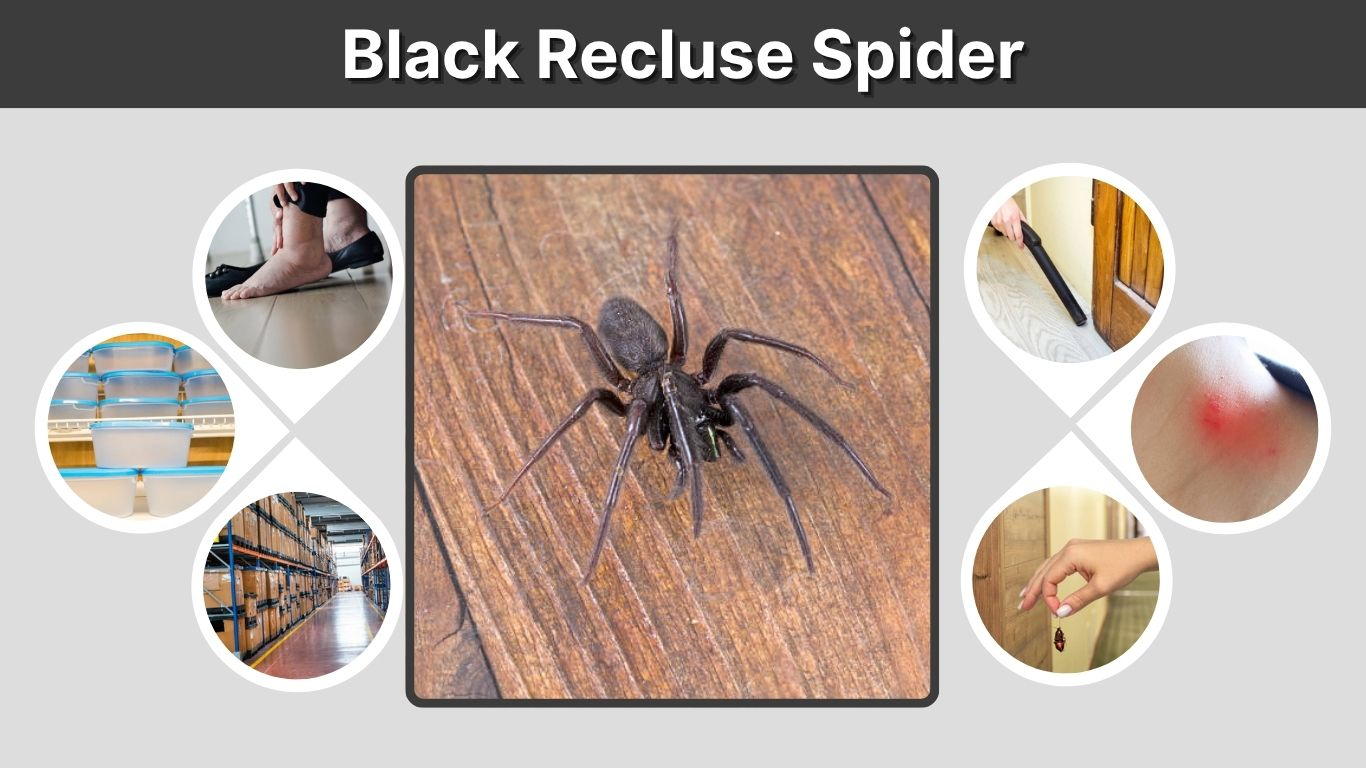
The term “black recluse spider” can be confusing because it is not usually used as the official common name for one specific spider. Most people use it when they see a very dark brown recluse, a black-looking house spider, or another recluse-like spider hiding indoors. Since brown recluse spiders can range from tan to dark brown, this article explains how to identify them, where they hide, bite risks, and how to prevent problems safely.
What Is a Black Recluse Spider?
A “black recluse spider” is often a mistaken name for a dark brown recluse spider. The true brown recluse is scientifically known as Loxosceles reclusa. It is also called the fiddleback spider or violin spider because of the violin-shaped marking on the top of its body. OSHA describes brown recluse spiders as secluded spiders that avoid open spaces.
Is It a Separate Species?
In most cases, no. “Black recluse spider” is not the standard official name for a separate common spider species. People usually use this phrase when the spider looks darker than normal or when lighting makes it appear black.
Brown recluse spiders can vary in color from tan to dark brown. Virginia Tech notes that they are often golden brown, but darker individuals can occur. Their body color is generally uniform, and their legs do not have clear bands or stripes.
This is important because many harmless spiders are misidentified as recluses. Wolf spiders, nursery web spiders, funnel weavers, and common house spiders may look similar at first glance. However, most of them are not medically significant and do not have the same recluse-style body features.
How to Identify a Black-Looking Recluse Spider
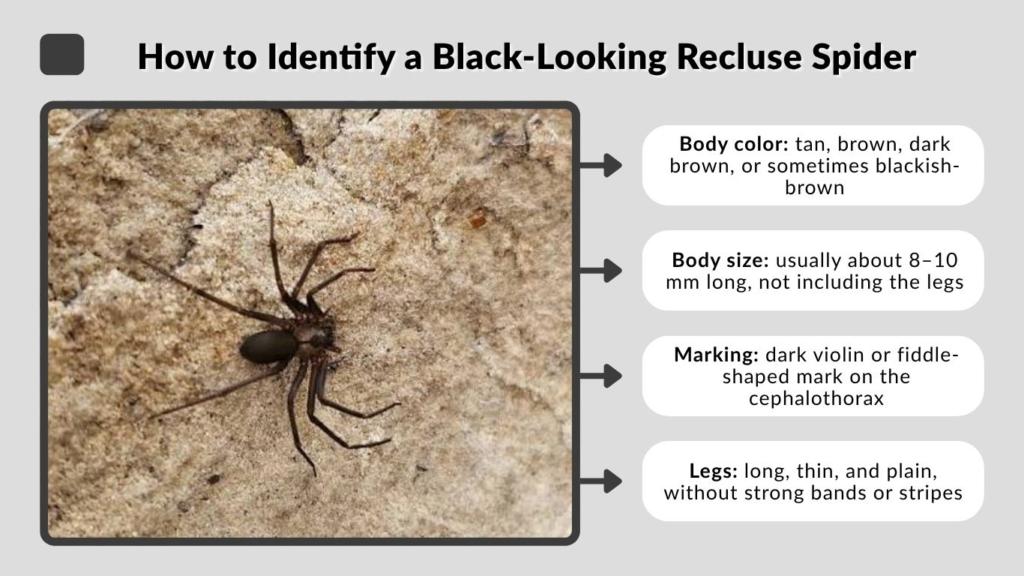
Correct identification matters because fear often causes people to assume every dark spider is dangerous. A true recluse has a specific body shape, eye pattern, and markings. Color alone is not enough for identification.
Key Identification Features
Look for several features together instead of depending on one sign. A brown recluse may look dark brown or almost black in poor light, but it still has the same basic characteristics.
Identification signs include:
- Body color: tan, brown, dark brown, or sometimes blackish-brown
- Body size: usually about 8–10 mm long, not including the legs
- Marking: dark violin or fiddle-shaped mark on the cephalothorax
- Legs: long, thin, and plain, without strong bands or stripes
- Body texture: fine hairs, not spiny or hairy like some wolf spiders
- Eyes: six eyes arranged in three pairs
- Behavior: shy, secretive, and usually active at night
The six-eye pattern is one of the best identification features. Most spiders have eight eyes, but brown recluse spiders have six eyes in three paired groups. Virginia Tech explains that this eye arrangement is useful for identification, although it usually needs magnification to see clearly.
Black Recluse Spider vs Brown Recluse Spider
The main difference is usually appearance, not species. A spider called a “black recluse” may simply be a darker brown recluse, or it may be a different spider altogether. That is why body structure and markings matter more than color.
Quick Comparison Table
| Feature | Black Recluse Spider | Brown Recluse Spider |
|---|---|---|
| Official common name | Usually not official | Yes |
| Scientific name | Often confused with Loxosceles reclusa | Loxosceles reclusa |
| Color | Dark brown or blackish-looking | Tan to dark brown |
| Violin marking | May be visible if it is a recluse | Usually present |
| Eye pattern | Six eyes if true recluse | Six eyes in three pairs |
| Risk level | Depends on species | Medically important |
| Common issue | Often misidentified | Often feared and misreported |
A true brown recluse does not need to be light brown. Some individuals may look dark. However, a shiny black spider with a round body is more likely to be a black widow or another black house spider, not a brown recluse.
Where Black Recluse Spiders Hide
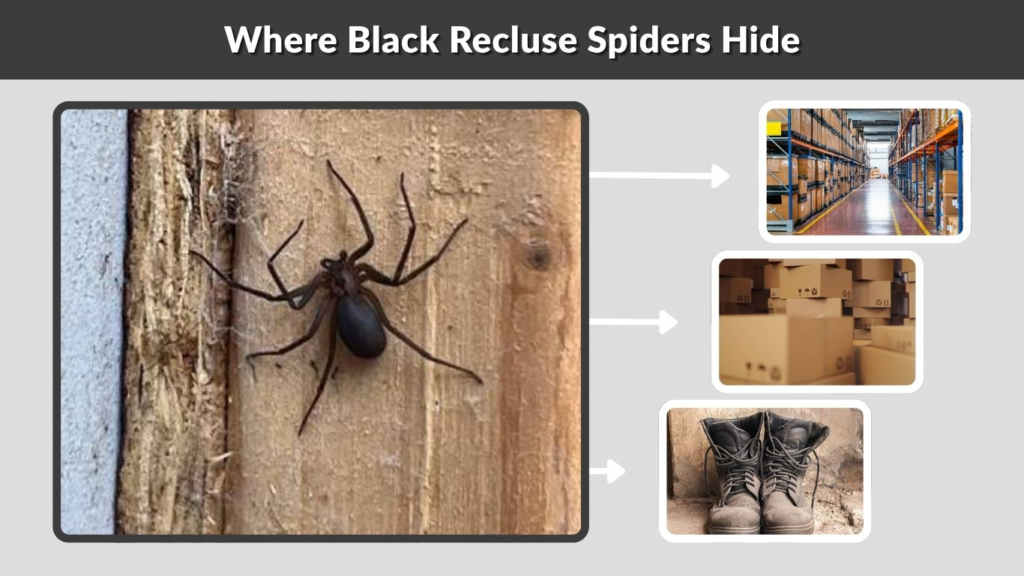
Recluse spiders prefer quiet places where they are not disturbed. They do not usually sit in the open like some web-building spiders. Instead, they hide in storage areas, clothing piles, shoes, cardboard boxes, basements, garages, and attics.
Common Indoor Hiding Places
Brown recluse spiders are named “recluse” for a reason. They usually avoid people and open spaces. They like dry, dark, hidden areas where insects are available as food.
Common hiding spots include:
- Closets and storage rooms
- Cardboard boxes
- Shoes and boots
- Clothes left on the floor
- Basements and crawl spaces
- Garages and sheds
- Attics and unused furniture
- Behind baseboards
- Under beds and dressers
- Inside work gloves or towels
Many bites happen when a spider is trapped against the skin. For example, a spider may hide in clothing, shoes, bedding, or gloves and bite when pressed. The spider is not trying to attack; it is reacting because it is trapped.
Are Black Recluse Spiders Dangerous?
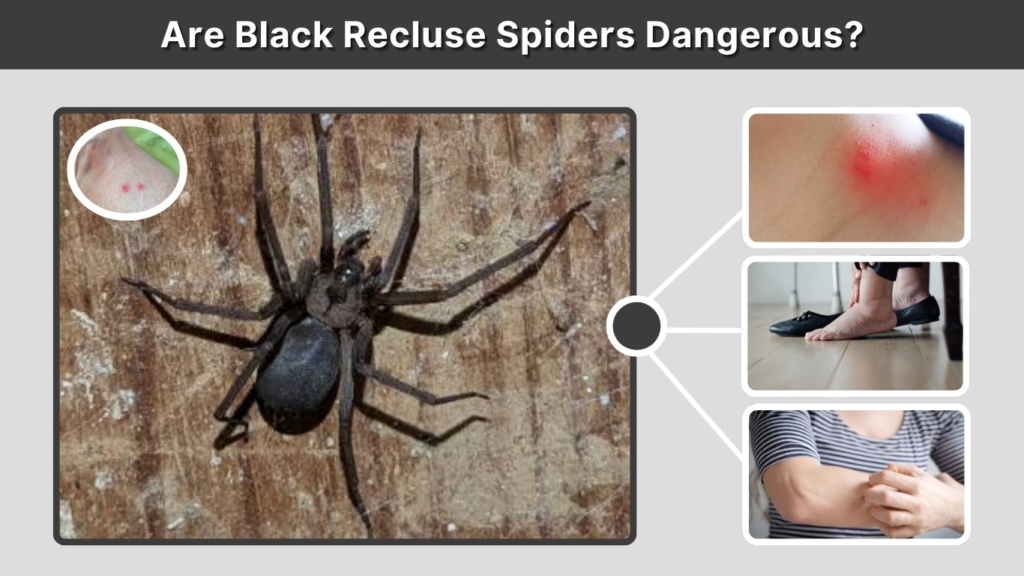
If the spider is actually a brown recluse, it can be medically important. However, bites are less common than many people think. Brown recluse spiders are shy and usually bite only when crushed or trapped against the body.
Bite Risk and Symptoms
Brown recluse venom can sometimes damage skin tissue. The CDC lists brown recluse spiders among venomous spiders of concern for outdoor and certain work environments.
Possible symptoms may include:
- Mild pain or burning
- Redness around the bite
- Swelling
- Itching
- A blister
- Skin discoloration
- A sore that slowly worsens
- Fever or body aches in more serious cases
Not every bite becomes severe. Some bites remain mild and heal without major problems. However, suspected brown recluse bites should be watched carefully, especially if pain, swelling, blistering, fever, or spreading skin damage appears.
Seek medical help quickly if the bite area becomes dark, painful, blistered, or infected-looking. Also get help if the person is a child, elderly, pregnant, or has a weak immune system.
What to Do If You Find One Indoors
Finding one dark recluse-like spider does not always mean you have an infestation. Still, you should remove it safely and inspect the area. Avoid handling the spider with bare hands.
Safe Removal Steps
Use a jar, stiff paper, vacuum, or sticky trap. If possible, take a clear photo before removing it. A photo can help with identification later.
After removal, check nearby hiding spots. Look inside shoes, boxes, clothes, bedding, closets, and corners. Place sticky traps along walls to monitor activity. If you catch several similar spiders, the problem may be larger than one accidental visitor.
Do not crush a spider with your bare hand. Wear gloves when cleaning dark storage areas.
How to Get Rid of Black Recluse Spiders
The best control method is not just spraying one spider. Recluse control works best when you combine cleaning, trapping, sealing, and reducing insect prey. Chemical sprays alone often fail because recluse spiders hide deep in cracks and clutter.
Practical Control Methods
Start with the areas where spiders are most likely to hide. Basements, garages, closets, and storage rooms should be cleaned first.
Use these steps:
- Remove clutter from floors and corners
- Replace cardboard boxes with sealed plastic bins
- Vacuum under furniture, behind shelves, and along baseboards
- Place sticky traps along walls and behind storage items
- Seal gaps around doors, windows, pipes, and baseboards
- Keep beds away from walls
- Shake out shoes, clothes, towels, and gloves before use
- Reduce insects inside the house
- Store firewood away from the home
- Keep garages and sheds organized
Sticky traps are especially helpful because recluse spiders wander at night. Put traps along edges, not in the middle of rooms. Check them regularly to see where activity is highest.
Natural Ways to Reduce Recluse Spiders
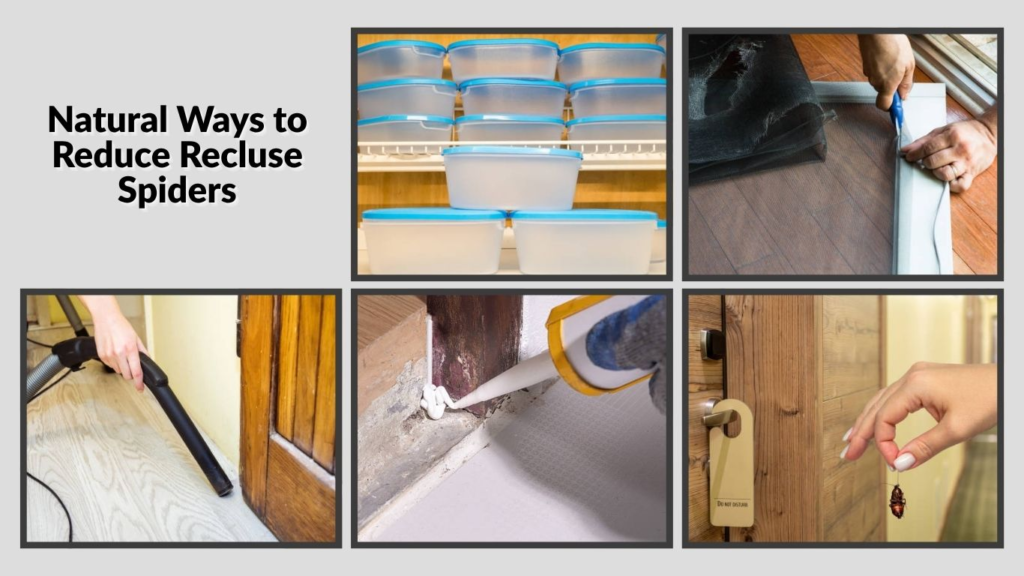
Natural control methods can help if the problem is small. The main goal is to make your home less attractive to spiders. Essential oils and vinegar sprays may repel some spiders for a short time, but they are not reliable for a serious infestation.
Home Prevention Tips
The most effective natural methods are cleaning and exclusion. Spiders need hiding places and food. Remove both, and the home becomes less suitable for them.
Helpful natural prevention methods include:
- Keep storage areas clean
- Use tight-lid plastic containers
- Vacuum regularly
- Remove dead insects
- Seal cracks and gaps
- Install door sweeps
- Repair window screens
- Keep laundry off the floor
- Reduce clutter near beds
- Move outdoor debris away from walls
Natural control should be consistent. A one-time cleaning may help, but long-term prevention requires regular monitoring.
When to Call Pest Control
Call a professional if you repeatedly find recluse-like spiders indoors, especially in bedrooms, closets, basements, or garages. Professional pest control can confirm the species and treat hidden areas more safely.
Signs You Need Professional Help
You may need expert help if:
- Sticky traps catch multiple recluse spiders
- You find them in several rooms
- You see spiders near sleeping areas
- You have children or pets at home
- You are unsure about the spider species
- You find egg sacs or repeated spider activity
- Cleaning and traps do not reduce sightings
A licensed pest control professional can use targeted treatments instead of random spraying. This is safer and usually more effective.
FAQs
Is there really a black recluse spider?
“Black recluse spider” is not usually an official common name for a separate species. Most people use it for a dark brown recluse or a spider that looks like one. Since many spiders are misidentified, it is better to check body shape, eye pattern, leg markings, and the violin mark.
Can a brown recluse look black?
Yes, a brown recluse can look very dark in poor lighting or against certain backgrounds. Brown recluse spiders range from tan to dark brown, and the violin marking may appear blackish. However, a truly shiny black spider may be another species, such as a black widow or house spider.
How dangerous is a black recluse spider bite?
If the spider is truly a brown recluse, the bite can sometimes cause skin damage and medical problems. Many bites are mild, but some worsen over time. Seek medical care if the bite becomes painful, blistered, dark, swollen, or if fever and body aches appear.
Where do black recluse spiders live in the house?
Recluse-like spiders hide in dark, quiet places such as closets, basements, garages, attics, storage boxes, shoes, clothing piles, and under furniture. They prefer areas that are rarely disturbed and usually come out at night to hunt insects.
How do I keep black recluse spiders away?
Keep your home clean, sealed, and organized. Use plastic storage bins, vacuum hidden spaces, seal cracks, install door sweeps, repair screens, reduce insects, and place sticky traps along walls. Avoid leaving shoes, clothes, towels, or gloves on the floor in dark areas.
