
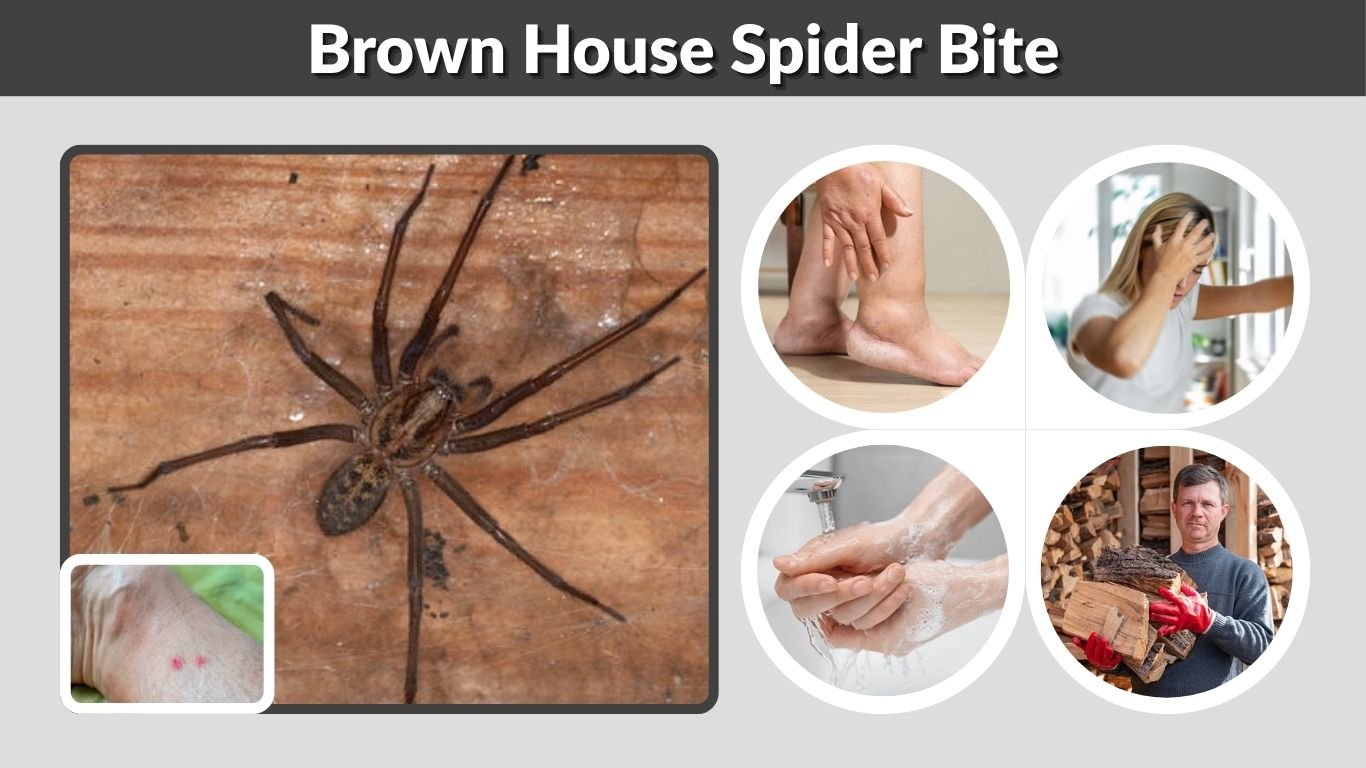
A brown house spider bite is usually a defensive bite that occurs when a spider is trapped against the skin, disturbed in clothing, or accidentally handled. The term “brown house spider” can be confusing because it is used for different brown spiders in different regions. In Australia, it commonly refers to cupboard spiders in the genus Steatoda, including Steatoda grossa, while similar spiders occur in the UK and elsewhere. Most spider bites cause localized pain, redness, or swelling, but proper identification matters because a brown recluse bite can behave very differently.
What Is a Brown House Spider?
The name brown house spider is commonly associated with Steatoda grossa, also called the cupboard spider, dark comb-footed spider, or false black widow. These spiders frequently occupy dark, protected areas around houses and create irregular tangled webs.
However, simply seeing a small brown spider indoors does not prove that it is Steatoda grossa. Many unrelated spiders are brown and commonly enter homes.
Brown House Spider Identification
A typical Steatoda brown house spider may have:
- Brown to purplish-black coloration
- Rounded or bulbous abdomen
- Small cephalothorax
- Thin brown legs
- Pale abdominal markings in some individuals
- Irregular tangled web
- Body around several millimeters to roughly 1 cm long
Australian Museum information describes brown house or cupboard spiders as small Steatoda spiders commonly associated with human buildings.
Where Do Brown House Spiders Hide?
Common hiding locations include:
- Cupboards
- Garages
- Sheds
- Beneath furniture
- Dark corners
- Storage boxes
- Under plant pots
- Woodpiles
- Undisturbed outdoor areas
They generally prefer remaining hidden rather than interacting with people.
What Does a Brown House Spider Bite Look Like?
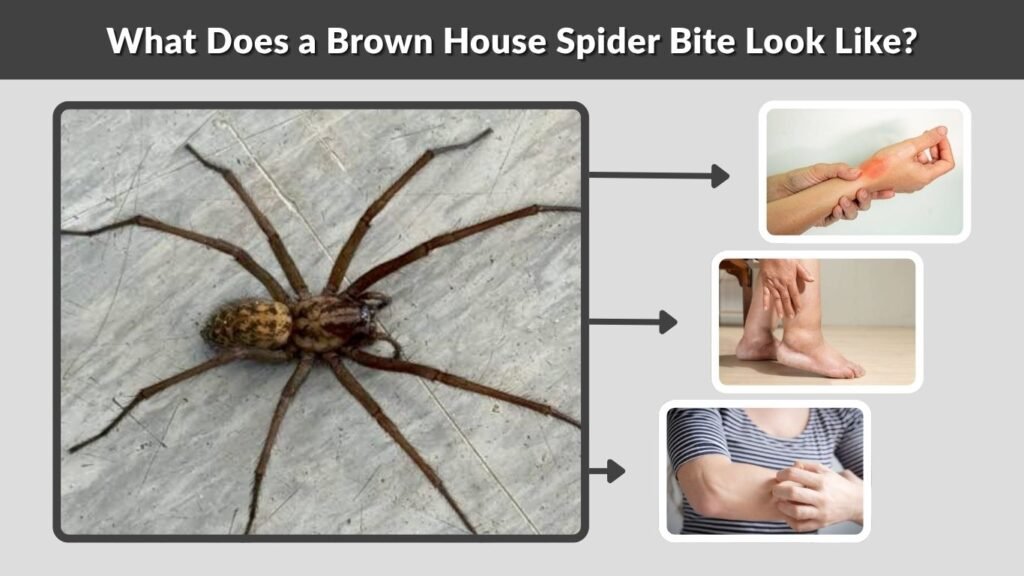
There is no single appearance that can reliably identify a spider bite. Many skin problems—including insect bites, bacterial infections, allergic reactions, and irritation—can produce similar red or swollen marks.
A confirmed spider bite may initially resemble a small insect sting.
Brown House Spider Bite Symptoms
Possible localized symptoms include:
- Immediate or delayed pain
- Redness
- Mild swelling
- Tenderness
- Itching
- Burning sensation
- Small blister near the bite
- Temporary discomfort around the area
Museum Victoria reports that bites from Australian brown house Steatoda spiders can sometimes produce small blisters and more general symptoms such as headache, nausea, vomiting, or muscle pain.
Can You Identify a Bite From a Picture?
A brown house spider bite picture cannot reliably confirm which spider caused a skin lesion.
Unless someone actually sees the spider bite and the spider is accurately identified, diagnosing a particular species based solely on the wound is difficult. This is especially important with suspected brown recluse bites, because many unrelated skin conditions are mistakenly attributed to recluse spiders.
Does a Brown House Spider Bite Hurt?
A bite may cause a sharp sting, burning sensation, or localized pain, although the intensity varies.
Many spider bites produce only mild local symptoms. MedlinePlus notes that most spider bites are harmless and may cause redness, pain, and swelling similar to other bites or stings.
How Long Do Symptoms Last?
Mild localized symptoms may improve over hours to several days.
Persistent or worsening pain, increasing redness, significant swelling, fever, or other general symptoms deserve medical attention rather than simply waiting for them to disappear.
Can You Get Sick From a Brown House Spider Bite?
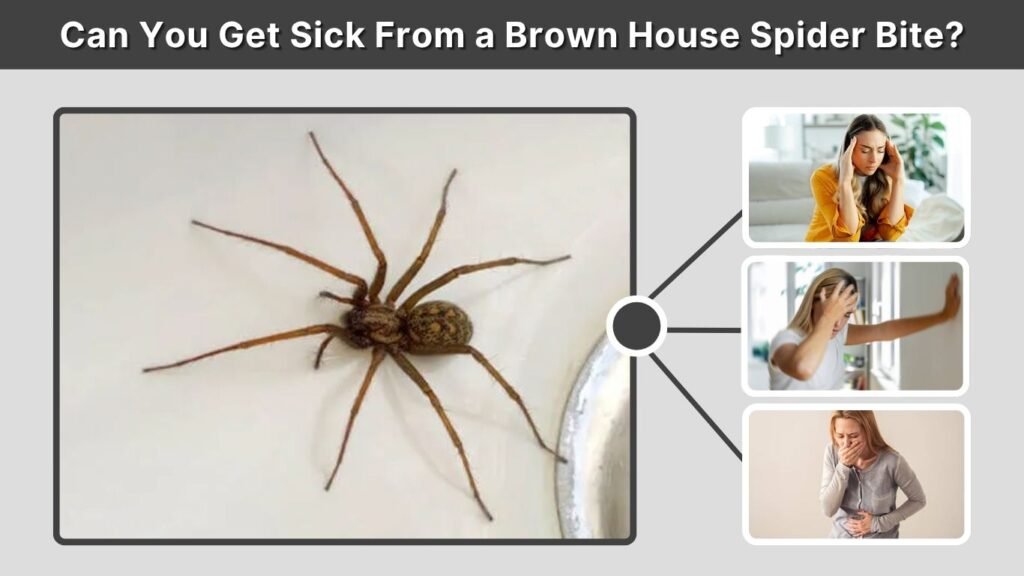
Most bites from ordinary household spiders do not result in serious illness.
However, Steatoda bites can occasionally cause symptoms beyond the immediate bite site. These may include headache, nausea, vomiting, malaise, or muscle discomfort.
Possible General Symptoms
Watch for:
- Headache
- Nausea
- Vomiting
- Muscle pain
- Feeling generally unwell
- Increasing pain
- Significant swelling
The presence of systemic symptoms is a reason to contact a healthcare professional.
Allergic Reaction to a Brown House Spider Bite
As with other bites and stings, an allergic reaction is possible.
Mild allergic responses may produce increased itching or swelling, while anaphylaxis is a rare but potentially life-threatening emergency.
Signs of a Severe Allergic Reaction
Seek emergency medical help if the person develops:
- Difficulty breathing
- Swelling of the tongue or throat
- Difficulty swallowing
- Dizziness or fainting
- Widespread hives
- Rapidly worsening symptoms
Anaphylaxis following a bite requires immediate emergency treatment.
Brown House Spider Bite Treatment
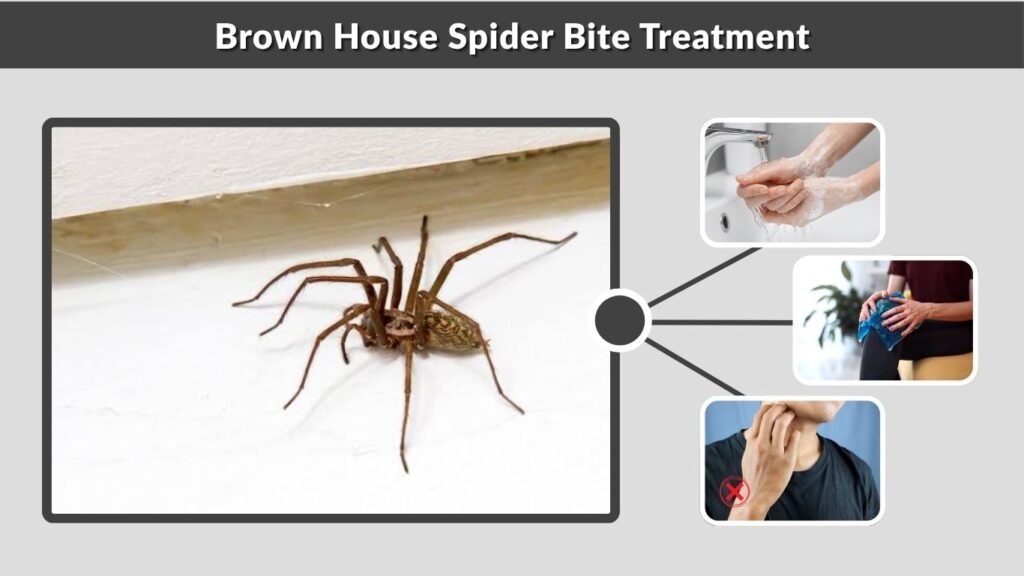
For an uncomplicated spider bite, basic first aid usually focuses on keeping the area clean and controlling discomfort.
Basic First Aid
For most ordinary spider bites:
- Wash the area with soap and water.
- Apply a cold pack wrapped in cloth.
- Rest the affected area.
- Avoid scratching the bite.
- Monitor redness and swelling.
- Use appropriate over-the-counter pain relief if normally safe for you.
Healthdirect recommends soap and water, a wrapped ice pack, and appropriate pain relief for most non-dangerous spider bites.
When Should You See a Doctor?
Seek medical advice if:
- Pain is severe
- Symptoms worsen after several hours
- Swelling or itching continues to increase
- Redness spreads
- The area becomes hot or very tender
- Pus or other signs of infection develop
- You experience vomiting or significant weakness
- The person bitten is a young child
- You cannot identify a potentially dangerous spider
- The wound does not improve
In Australia, suspected bites from funnel-web spiders or unidentified large black spiders require emergency assessment rather than routine home treatment.
Brown House Spider vs. Brown Recluse Bite
One of the most important keyword-related distinctions is brown house spider vs. brown recluse.
They are not the same spider.
The brown recluse is Loxosceles reclusa, a medically important North American species. Brown house spiders commonly called Steatoda grossa belong to an entirely different spider family.
Main Differences
| Feature | Brown House Spider (Steatoda) | Brown Recluse |
| Abdomen | Rounded and bulbous | More oval |
| Color | Brown to dark purplish | Tan to brown |
| Markings | Variable pale markings | Often violin-shaped marking |
| Eyes | Typical Steatoda arrangement | Six eyes in three pairs |
| Web | Irregular tangled web | Retreats in secluded areas |
| Bite | Usually localized, sometimes systemic | Can occasionally damage tissue |
Brown recluse venom can injure skin and blood vessels, and severe cases can result in ulceration and systemic illness.
Brown Recluse Bite Symptoms
A brown recluse bite may initially cause little or no pain. Pain can develop over the following hours.
Potential symptoms include:
- Increasing pain
- Itching
- Red or purple discoloration
- Blistering
- Fever
- Chills
- Nausea
- Ulceration in more serious cases
Rare severe cases can involve destruction of skin tissue and systemic complications.
A worsening wound should therefore not automatically be treated as an ordinary “house spider bite.”
Brown House Spider Bite in Australia
In Australia, brown house spider is an established alternative name for cupboard spiders in the genus Steatoda. They are commonly found indoors in dark locations and outside around sheds, pot plants, and other undisturbed places.
Are Australian Brown House Spiders Dangerous?
Their bites can cause pain and occasionally more widespread symptoms, but they should not be confused with Australia’s more medically significant spiders.
If the spider is large, black, hairy, or possibly a funnel-web, Australian guidance recommends treating the situation as a medical emergency.
Brown House Spider Bites in the UK
The UK has several Steatoda species commonly called false widows, including Steatoda grossa, the cupboard spider.
The Natural History Museum notes that false widow bites usually cause relatively minor effects, most commonly pain at the bite site, and severe reports are uncommon.
UK Brown House Spider Identification
UK homes may contain:
- Steatoda grossa
- Noble false widow (Steatoda nobilis)
- Rabbit hutch spider (Steatoda bipunctata)
- Various harmless house spiders
Because several species have brown bodies and rounded abdomens, identification based only on color is unreliable.
Small or Tiny Brown House Spider Bite
A tiny brown spider found indoors is not automatically dangerous.
Many harmless species are small and brown. Spider size or color alone cannot determine venom significance.
If a tiny spider appears to have bitten you, clean the area and monitor symptoms rather than attempting to diagnose the species solely from the bite mark.
How to Prevent Brown House Spider Bites
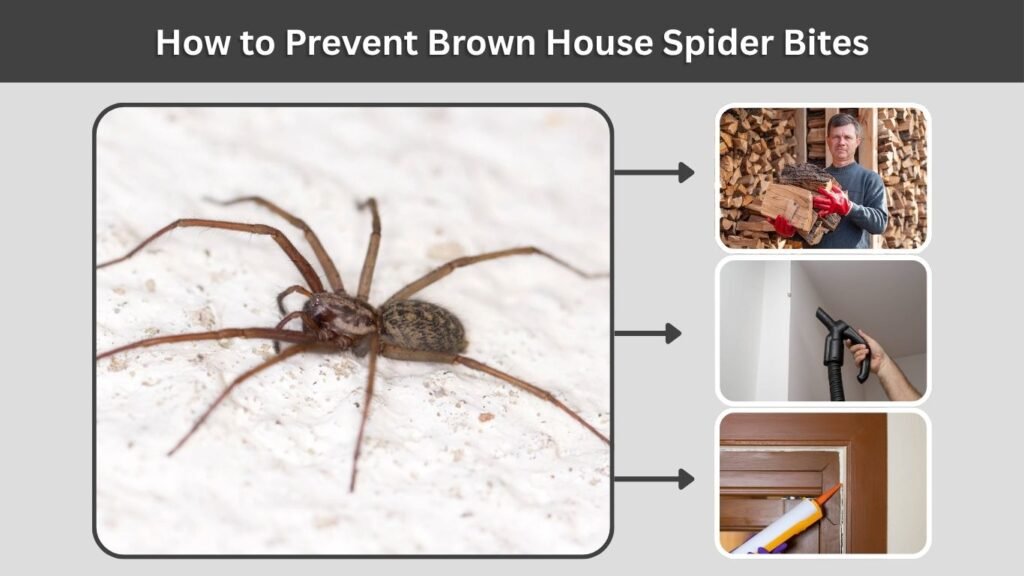
Most spiders bite only when trapped, squeezed, or handled. Reducing accidental contact is therefore one of the simplest prevention strategies.
Prevention Tips
- Shake out stored clothing.
- Check shoes before putting them on.
- Wear gloves when moving boxes or firewood.
- Reduce household clutter.
- Vacuum webs in unused corners.
- Seal cracks around doors and windows.
- Avoid handling unidentified spiders.
- Move stored boxes carefully.
- Keep beds away from heavily cluttered walls.
FAQs
Are brown house spider bites dangerous?
Most cause only localized symptoms, but some Steatoda bites can cause stronger pain or general symptoms. Severe or worsening reactions should be medically assessed.
What does a brown house spider bite look like?
It may appear red, swollen, tender, or itchy and occasionally develop a small blister. Appearance alone cannot reliably identify the spider species.
How do you treat a brown house spider bite?
Wash it with soap and water, use a cold pack wrapped in cloth, avoid scratching, and monitor the symptoms. Seek medical care if the reaction becomes severe or continues worsening.
Can a brown house spider bite make you sick?
Occasionally. Reported Steatoda bite symptoms can include headache, nausea, vomiting, muscle pain, and general discomfort.
Is a brown house spider the same as a brown recluse?
No. They are different spiders. A brown recluse (Loxosceles reclusa) has medically important venom that can occasionally cause tissue injury, whereas spiders commonly called brown house spiders usually cause much milder effects.
