
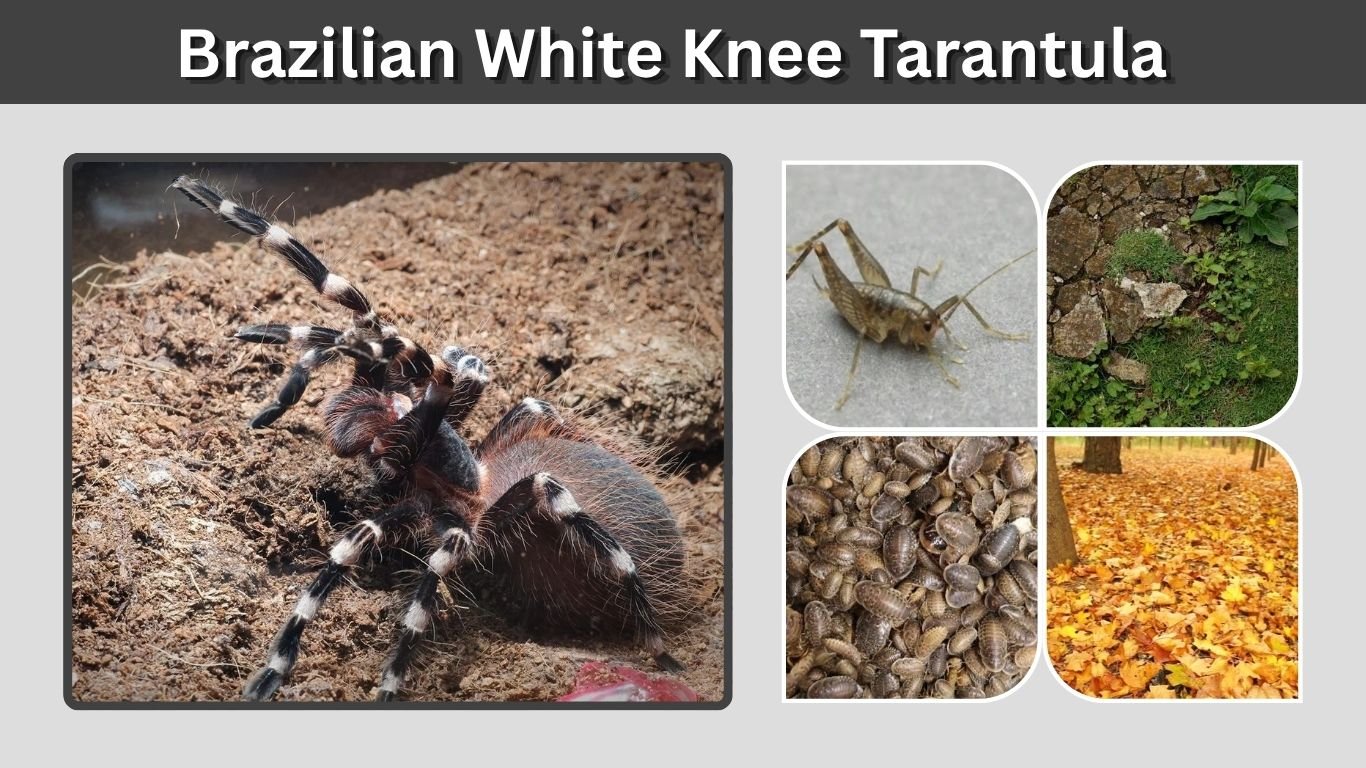
The Brazilian white knee tarantula is a large terrestrial spider recognized by its dark body, bold white leg bands, rapid growth, and powerful feeding response. Also called the Brazilian giant white knee, it is popular as a display tarantula because adults are impressive and frequently remain visible. However, its speed, defensive hairs, strong appetite, and unpredictable temperament make routine handling unsafe. Successful care requires a secure low enclosure, deep substrate, moderate moisture, good ventilation, fresh water, and appropriately sized insect prey.
What Is a Brazilian White Knee Tarantula?
The Brazilian white knee tarantula’s accepted scientific name is Acanthoscurria geniculata. It belongs to the family Theraphosidae and is naturally distributed in Brazil. The species is also commonly called the Brazilian giant white knee or giant white knee tarantula.
It is a New World terrestrial tarantula, meaning it spends most of its time at ground level rather than living in trees. It may excavate shallow retreats or modify an existing shelter beneath roots, bark, or other ground cover.
Identification
A Brazilian white knee tarantula has several distinctive features:
- Dark brown or nearly black body
- Thick, powerful legs
- Bright white bands around the leg joints
- Reddish or brown abdominal hairs
- Dense covering of body hairs
- Large, heavy-bodied adult appearance
The contrasting black-and-white pattern becomes increasingly striking as the spider grows. Females usually develop heavier bodies, while mature males become leggier and slimmer.
Common names can be confusing. Sellers may use terms such as Brazilian black and white knee, Brazilian white-kneed tarantula, or giant white knee. Buyers should confirm the scientific name Acanthoscurria geniculata before purchasing.
Brazilian White Knee Tarantula Size
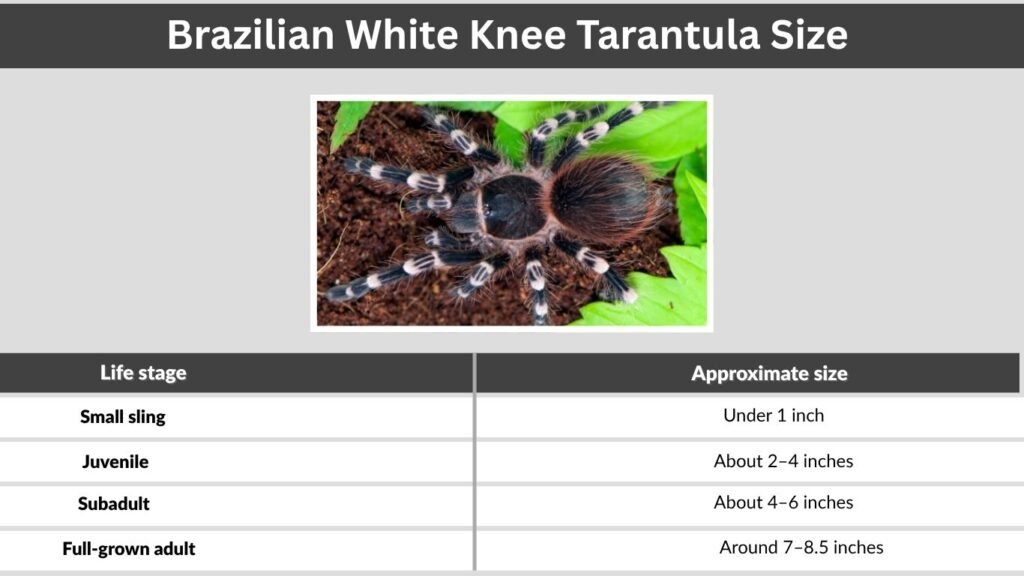
This is one of the larger commonly kept terrestrial tarantulas. Adults usually reach approximately 18–22 centimeters, or about 7–8.5 inches, in diagonal leg span. Body length may reach roughly 8–10 centimeters.
| Life stage | Approximate size |
| Small sling | Under 1 inch |
| Juvenile | About 2–4 inches |
| Subadult | About 4–6 inches |
| Full-grown adult | Around 7–8.5 inches |
Its growth rate is relatively fast under warm conditions with regular feeding. Slings and juveniles may molt frequently, while adult females grow much more slowly.
Natural Habitat
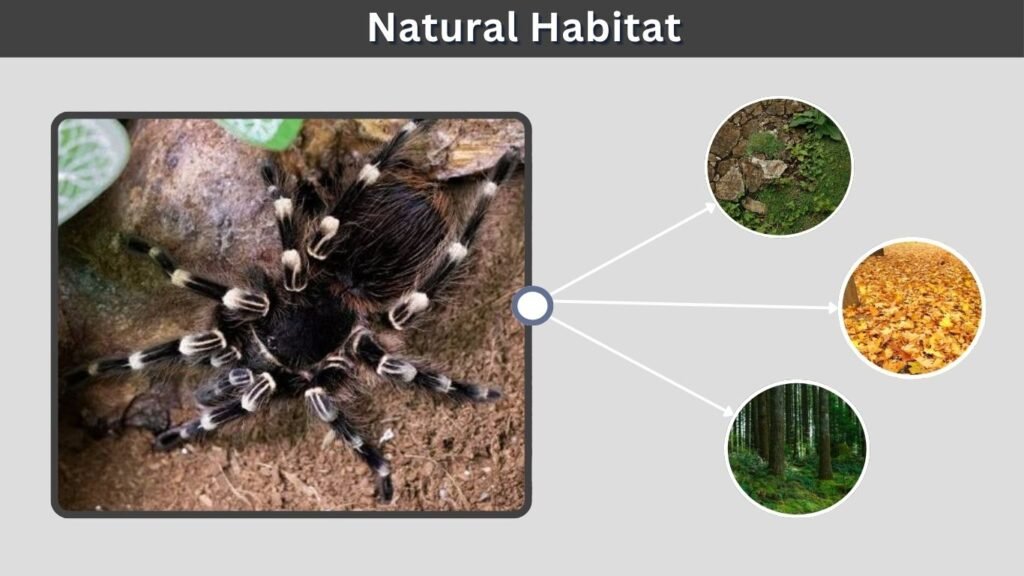
The species comes from warm Brazilian habitats and is associated with ground-level areas containing soil, leaf litter, shelter, and moderate environmental moisture. Current taxonomic records list Brazil as its natural distribution, while zoo and husbandry sources associate it with Amazonian or tropical forest environments.
It is not arboreal. Although an individual may climb an enclosure wall, its heavy body is designed for life on the ground. Falls can rupture the abdomen and cause fatal injuries.
Brazilian White Knee Tarantula Enclosure
An adult requires a low, escape-proof terrestrial enclosure with more floor space than height. A practical adult enclosure is approximately 35 × 30 × 25 centimeters or larger, depending on the spider’s leg span.
Essential Enclosure Features
- Secure, well-fitting lid
- Cross-ventilation
- At least 4 inches of substrate
- Cork bark or another stable hide
- Shallow water dish
- Open floor space
- No high rocks or climbing decorations
The distance between the substrate and lid should remain limited. A large terrestrial tarantula can be seriously injured by falling only a short distance onto a hard object.
Suitable substrate options include unfertilized topsoil, coco fiber, or a soil-based mixture that holds the shape of a shallow burrow. Keep decorations stable so the spider cannot become trapped beneath them.
Temperature and Moisture
A steady room temperature of approximately 72–82°F works for most individuals, with warmer daytime conditions around 75–82°F. Avoid temperatures near or above 86°F because overheating can quickly become dangerous.
The substrate should not remain soaked. Keep the lower layers slightly moist while allowing much of the surface to dry. Occasionally overflowing the water dish can maintain one damp corner without turning the enclosure into a swamp.
Good ventilation is as important as moisture. Permanently wet substrate and stagnant air can encourage mold, mites, and unhealthy conditions.
Brazilian White Knee Sling Care
Slings should begin in small, secure containers where prey and hydration can be monitored easily. An oversized enclosure may make it difficult for a tiny spider to locate food.
Provide:
- Slightly moist substrate
- A small starter burrow
- Good ventilation
- A few drops of water on the enclosure wall
- Pre-killed or very small insect prey
Move the spider into larger housing gradually as it grows. Never place a tiny sling directly into an adult enclosure.
Slings may eat every three to five days, depending on size and body condition. Small cricket pieces, roach nymphs, or other appropriately sized captive-raised feeders can be used. Remove uneaten prey promptly.
What Do Brazilian White Knee Tarantulas Eat?
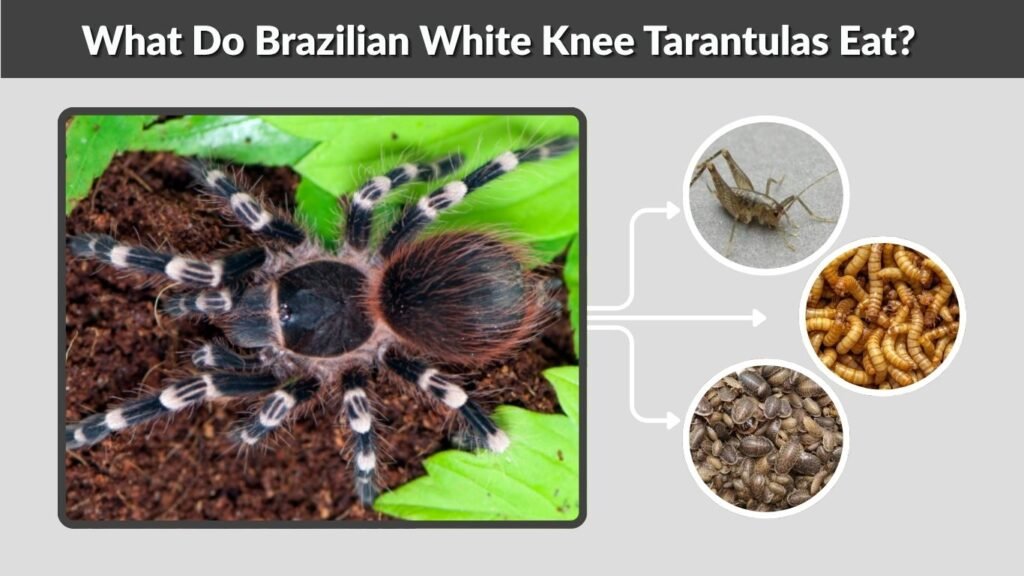
Brazilian white knees are insectivorous predators with powerful feeding responses. In captivity, suitable foods include:
- Crickets
- Dubia or other legal feeder roaches
- Locusts
- Mealworms
- Superworms
- Other captive-raised feeder insects
Adults can usually be fed every 7–14 days, while growing juveniles may eat more often. Adjust feeding according to abdomen size rather than following a rigid schedule.
Avoid wild-caught insects because they may carry pesticides, parasites, or other contaminants. Vertebrate prey such as mice is unnecessary and may injure the tarantula, create excessive waste, and contribute to overfeeding.
Why Is My Tarantula Not Eating?
A healthy Brazilian white knee may refuse food before molting. Premolt signs can include:
- Darkening abdomen
- Reduced activity
- Sealing the hide
- Increased webbing
- Refusal of food
- Enlarged abdomen
Remove live prey when premolt is suspected. Crickets and other insects can injure a defenseless tarantula during the molting process.
A tarantula lying on its back is usually preparing to molt and should not be touched or turned over.
Temperament and Handling
Brazilian white knees are often bold and highly food-responsive. An individual may rush toward movement because it expects prey, making enclosure maintenance more challenging.
They may defend themselves by:
- Retreating into a hide
- Flicking urticating hairs
- Raising the front legs
- Displaying the fangs
- Striking or biting
Routine handling is not recommended. Apart from the risk of a defensive reaction, dropping a heavy terrestrial tarantula can cause a fatal abdominal rupture. Use a catch cup and long tools when rehousing or performing enclosure maintenance.
Brazilian White Knee Tarantula Bite and Venom
Brazilian white knees possess venom and can deliver a painful bite. Tarantula venom does not usually cause serious systemic illness in humans, but reactions vary, and any bite should be cleaned and monitored. Severe pain, spreading swelling, breathing difficulty, vomiting, muscle symptoms, or signs of an allergic reaction require medical attention.
The urticating hairs may be a more common hazard than the venom. These tiny defensive hairs can cause itching, redness, inflammation, and persistent eye injuries. Never place your face near an open enclosure, and avoid touching your eyes after maintenance.
Brazilian White Knee Tarantula Lifespan
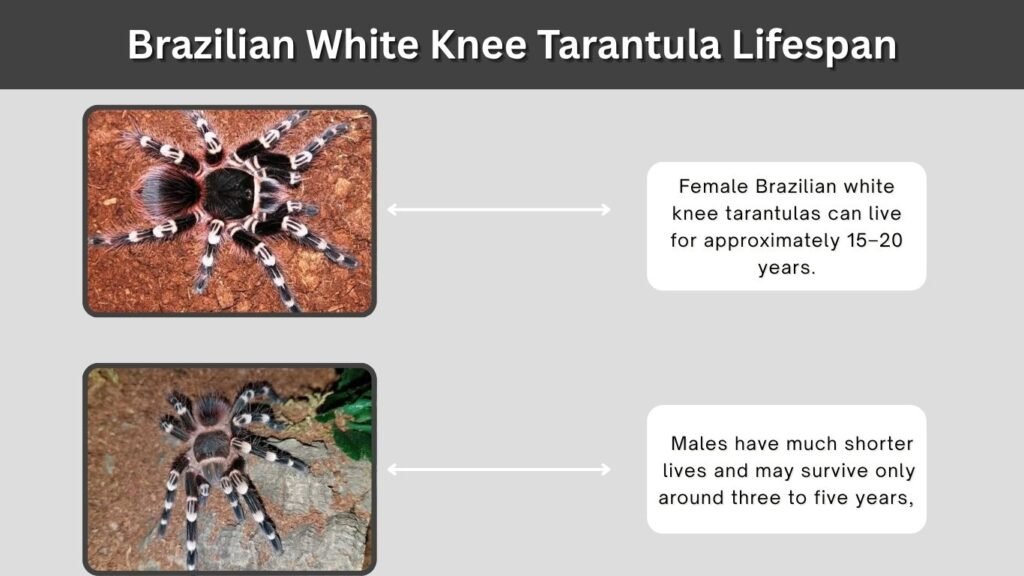
Female Brazilian white knee tarantulas can live for approximately 15–20 years under suitable care. Males have much shorter lives and may survive only around three to five years, often dying within a relatively short period after reaching maturity.
Because an unsexed sling may become a long-lived female, purchasing one should be considered a long-term commitment.
Is It Good for Beginners?
A Brazilian white knee can be manageable for a well-prepared beginner who understands tarantula behavior and does not plan to handle it. Its hardy nature, strong appetite, and visible behavior make basic observation straightforward.
However, it is less forgiving than calmer beginner species because it can move quickly, respond strongly to food, flick irritating hairs, and become defensive. It is often better described as an intermediate display tarantula.
Buying a Brazilian White Knee Tarantula
Brazilian white knees are regularly captive-bred and may be sold as slings, juveniles, sexed females, or mature males. Price varies according to size, sex, location, availability, and the seller’s reputation.
Before buying, confirm:
- The correct scientific name
- Captive-bred or legal origin
- Approximate size and molt history
- Whether the spider is sexed
- Current feeding condition
- Shipping temperature and policy
- Local ownership regulations
A confirmed female normally costs more than an unsexed sling because females grow larger and live considerably longer.
FAQs
Do Brazilian white knee tarantulas burrow?
Yes. Slings and juveniles commonly dig, while adults may excavate shallow retreats or remain beneath cork bark. Deep, shape-holding substrate allows the spider to choose whether to burrow.
Are Brazilian white knee tarantulas aggressive?
They are better described as defensive and highly food-responsive rather than actively aggressive. Their quick movements and strong feeding reactions can make them challenging during maintenance.
How often should a Brazilian white knee eat?
Slings may eat every three to five days, juveniles approximately once or twice weekly, and adults every one to two weeks. Feeding should always be adjusted according to abdomen condition.
Can Brazilian white knees live together?
No. They should be housed individually. Keeping multiple tarantulas together can lead to stress, injury, or cannibalism.
How can you tell if a Brazilian white knee is full-grown?
A full-grown specimen may have a leg span of approximately 7–8.5 inches. Mature males develop visible reproductive structures, while females usually retain a heavier body and continue molting throughout their lives.
