
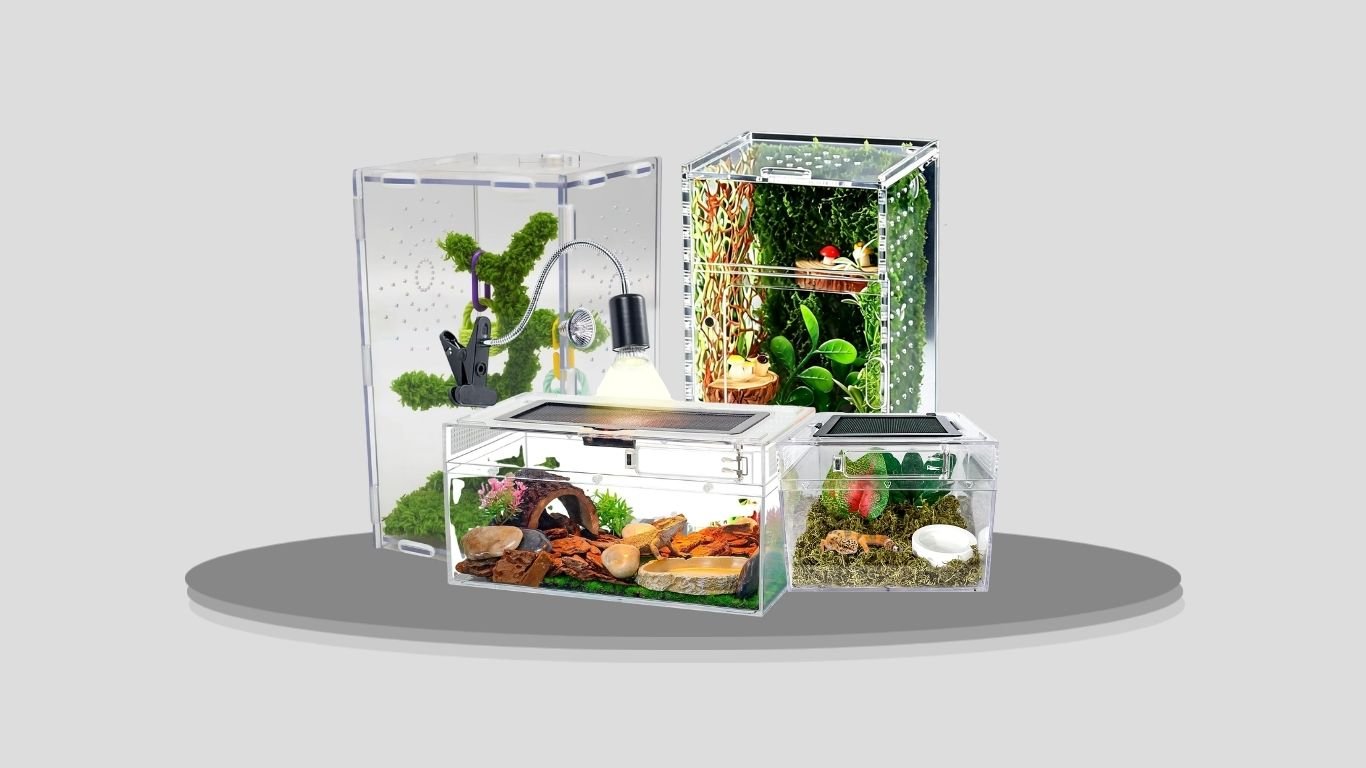
A good spider habitat kit can make enclosure setup much easier by combining a secure terrarium with useful accessories for climbing, hiding, feeding, and daily care. Whether you keep a jumping spider, tarantula, or another small arachnid, the right kit should provide proper ventilation, clear visibility, safe access, and enough room for natural behavior. In this guide, we review 7 of the best spider habitat kits for beginners and experienced keepers who want a practical, organized, and comfortable setup.
1. AZV Transparent Spider & Tarantula Habitat Kit
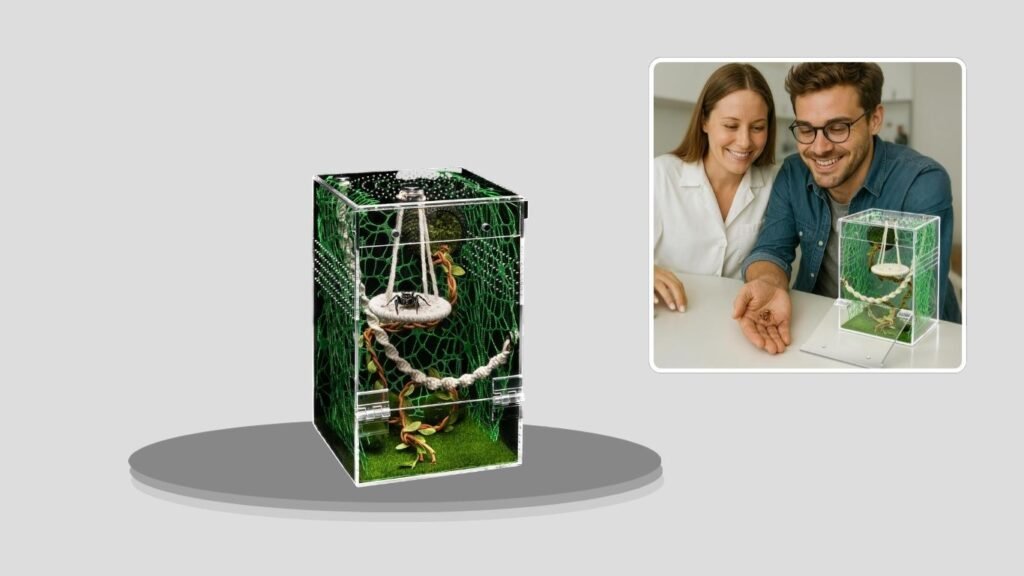
The AZV Spider Habitat Kit is designed for keepers who want a clear, organized enclosure for jumping spiders, small tarantulas, and other invertebrates. Its transparent terrarium-style construction makes observation easy while giving you room to create climbing areas, resting spots, and hiding places. The enclosed design also helps keep feeding and routine maintenance controlled, making it particularly appealing as a starter habitat.
Key Features
- Transparent terrarium construction
- Designed for spiders and small invertebrates
- Ventilated enclosure layout
- Secure access for feeding
- Clear multi-angle viewing
- Space for climbing accessories
- Lightweight indoor design
- Suitable for customized décor
Why It’s Best for First-Time Spider Keepers
A beginner-friendly habitat should make observation and maintenance straightforward. The AZV enclosure does that by giving you a clear view of the interior without requiring frequent opening.
This is particularly helpful with jumping spiders because their hunting, web-building, and climbing behavior is one of the most enjoyable parts of keeping them.
The enclosure can also be customized with cork, artificial plants, webbing anchors, and lightweight decorations depending on the species.
Ventilation and Everyday Performance
Ventilation is important because spiders generally need fresh airflow rather than a completely sealed container. The ventilated structure helps reduce stagnant conditions while still allowing humidity to be managed through careful misting and substrate choice.
Its transparent construction also makes condensation easy to notice.
Because the enclosure is lightweight, repositioning it for cleaning or changing the surrounding setup is relatively convenient.
Overall Verdict
The AZV Spider Habitat Kit is a practical starting point for anyone who wants a visually clear and manageable spider enclosure.
Its combination of ventilation, visibility, secure housing, and customizable interior space gives beginners plenty of flexibility without making the setup unnecessarily complicated. For a compatible jumping spider, juvenile tarantula, or similar invertebrate, it offers the essential features needed to create an attractive and functional habitat.
2. Clioran Tarantula & Spider Terrarium Starter Kit
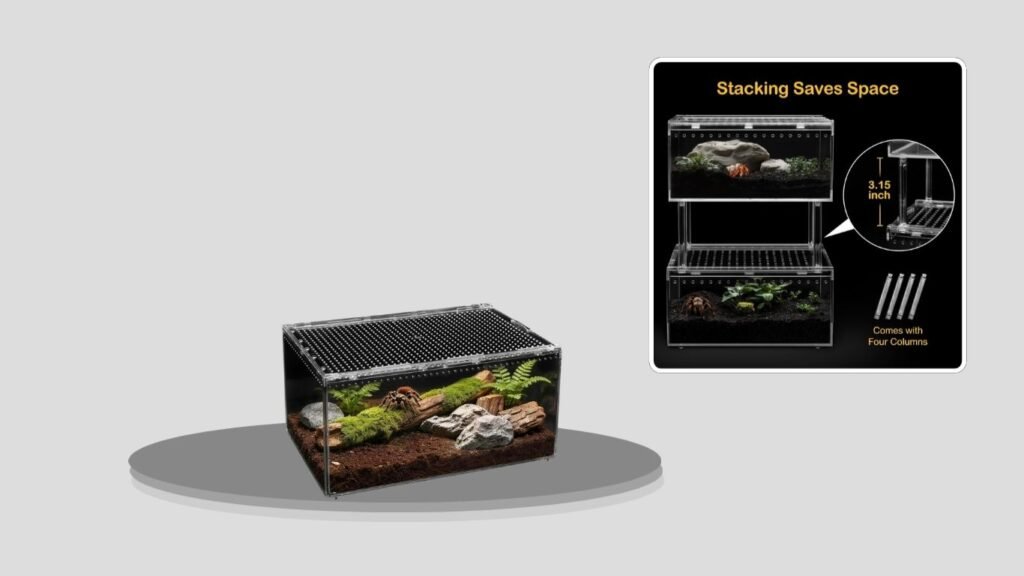
The Clioran Spider Terrarium is designed as a spacious habitat container for tarantulas, spiders, and other small invertebrates. Its clear construction allows close observation while providing enough interior room for substrate, a hide, water access, and species-appropriate décor. The starter-style layout makes it especially useful for keepers who want a versatile enclosure that can be arranged differently for terrestrial or semi-arboreal inhabitants.
Key Features
- Clear terrarium-style enclosure
- Suitable for tarantulas and spiders
- Ventilated habitat construction
- Space for deep substrate
- Room for hides and décor
- Secure enclosure format
- Easy visual monitoring
- Suitable for several small invertebrates
Why It’s Best for Flexible Habitat Designs
Not all spiders use an enclosure in the same way. Terrestrial tarantulas generally need secure floor space and substrate, while other spiders benefit from additional climbing structure.
The Clioran enclosure gives the keeper enough flexibility to shape the interior around the species rather than relying on permanently installed decorations.
A cork hide can create a secure retreat, while artificial plants and leaf litter can make the enclosure feel more natural.
Habitat Performance and Maintenance
The clear walls make routine checks easier because leftover prey, molts, substrate condition, and animal activity remain visible.
Ventilation helps maintain air exchange while the enclosure’s interior can be adjusted for moisture requirements.
For terrestrial tarantulas, owners should keep excessive open height to a minimum by using sufficient substrate. Heavy-bodied tarantulas can be injured by falls, so interior planning is more important than simply maximizing empty space.
Overall Verdict
The Clioran Spider Terrarium Starter Kit is particularly appealing for keepers who want flexibility rather than a highly specialized enclosure.
Its clear design supports easy observation, while the interior provides room for customized substrate, hides, and decorative elements.
For keepers who enjoy designing habitats around individual species, the combination of adaptable space and straightforward construction makes this a practical choice for a dedicated spider setup.
3. Duluvop Spider Enclosure With Terrarium Accessories
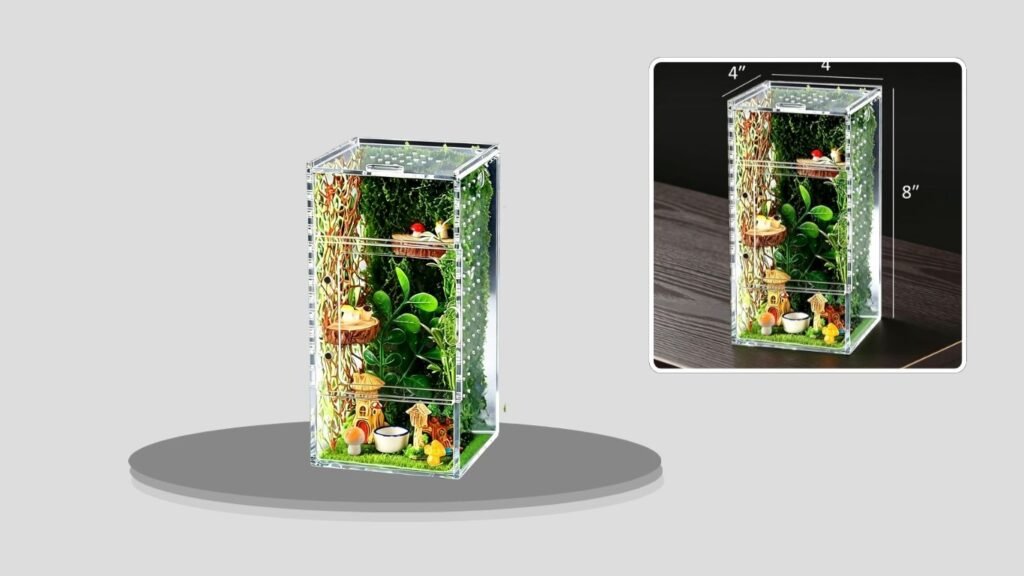
The Duluvop Spider Enclosure combines a dedicated terrarium with accessories that help turn an empty container into a more complete habitat. Designed for spiders and tarantulas, it gives keepers a convenient starting point for adding shelter, climbing structure, and visual enrichment. The transparent enclosure also keeps the animal easy to observe, making it well suited to display-oriented spider setups.
Key Features
- Spider and tarantula enclosure
- Terrarium accessories included
- Transparent viewing area
- Space for climbing and hiding
- Ventilated habitat design
- Customizable interior layout
- Lightweight construction
- Suitable for beginner setups
Why It’s Best for an All-in-One Setup
Buying an empty terrarium often means purchasing décor and basic habitat accessories separately. A kit that already includes terrarium pieces can make the first setup easier and more organized.
This is particularly helpful for new keepers who may not yet know which decorations are useful.
The included elements can be positioned to create climbing paths, resting locations, or visual cover while leaving open space for feeding and maintenance.
For jumping spiders and other active species, environmental complexity can also make the enclosure more interesting to observe.
Setup Quality and Daily Use
The clear walls make it easy to check whether your spider is feeding normally, building webs, or preparing to molt.
Accessories should always be positioned securely. Heavy or sharp décor is unnecessary for most spider enclosures and may create avoidable risks.
Keepers should also make sure decorations do not block ventilation openings.
Routine spot cleaning is relatively easy in a transparent enclosure because waste, leftover prey, and food remains can be identified quickly.
Overall Verdict
The Duluvop Spider Enclosure is a strong choice for someone who prefers a more complete package instead of starting with an empty terrarium.
The inclusion of habitat accessories adds convenience, while the transparent structure supports enjoyable everyday observation.
For a beginner building their first spider habitat—or an experienced keeper who wants a quick secondary setup—the combination of enclosure and accessories can save time while still leaving plenty of room for personalization.
4. Acsist Ventilated Spider & Reptile Terrarium Kit
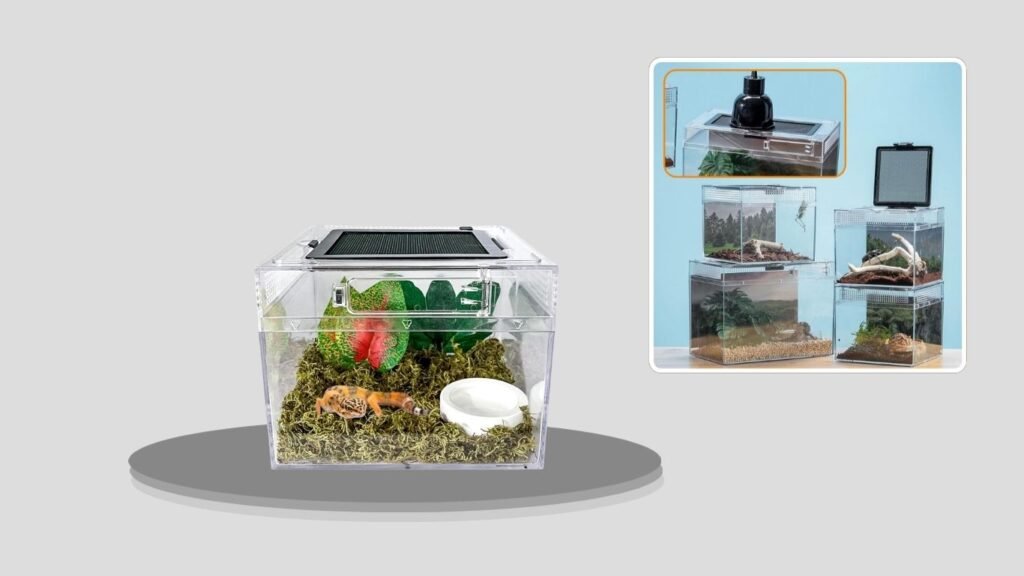
The Acsist Terrarium Kit offers a clear enclosure designed for spiders, tarantulas, insects, and other small terrarium animals. Its emphasis on ventilation makes it particularly useful for keepers concerned about maintaining fresh airflow inside a compact habitat. The clear construction also provides broad visibility, while the interior can be customized with substrate, plants, hides, and other lightweight habitat accessories.
Key Features
- Clear terrarium design
- Multiple ventilation areas
- Suitable for spiders and small invertebrates
- Secure enclosure structure
- Space for substrate and décor
- Easy viewing from several angles
- Convenient feeding access
- Versatile habitat layout
Why It’s Best for Airflow-Focused Housing
Poor ventilation can create stagnant, overly damp conditions inside small terrariums. An enclosure with multiple ventilation points gives keepers more control over airflow.
This is particularly useful for spiders that prefer moderate humidity rather than consistently wet surroundings.
The open visual design also lets you monitor condensation, which can be a useful indication that moisture levels need adjustment.
For keepers learning how to balance humidity and airflow, that visibility can make day-to-day management easier.
Performance and Habitat Versatility
The Acsist enclosure can be adapted for different invertebrates by changing the internal layout.
Terrestrial spiders can be given deeper substrate and a hide, while climbing species can use lightweight branches or artificial plants.
The clear walls also make it useful for educational observation or desk-top displays.
Because spider care varies considerably between species, owners should still tailor moisture, substrate depth, and interior height to the animal rather than treating the enclosure as one universal setup.
Overall Verdict
The Acsist Terrarium Kit is best suited to keepers who consider airflow, visibility, and versatility equally important.
Its ventilated design helps support a fresher enclosure environment, while the clear body makes feeding and behavioral observation simple.
For a small tarantula, jumping spider, or other compatible invertebrate, it provides a practical foundation that can be adjusted as needed rather than locking the keeper into one specific habitat arrangement.
5. BINANO Spider & Small Reptile Habitat Kit
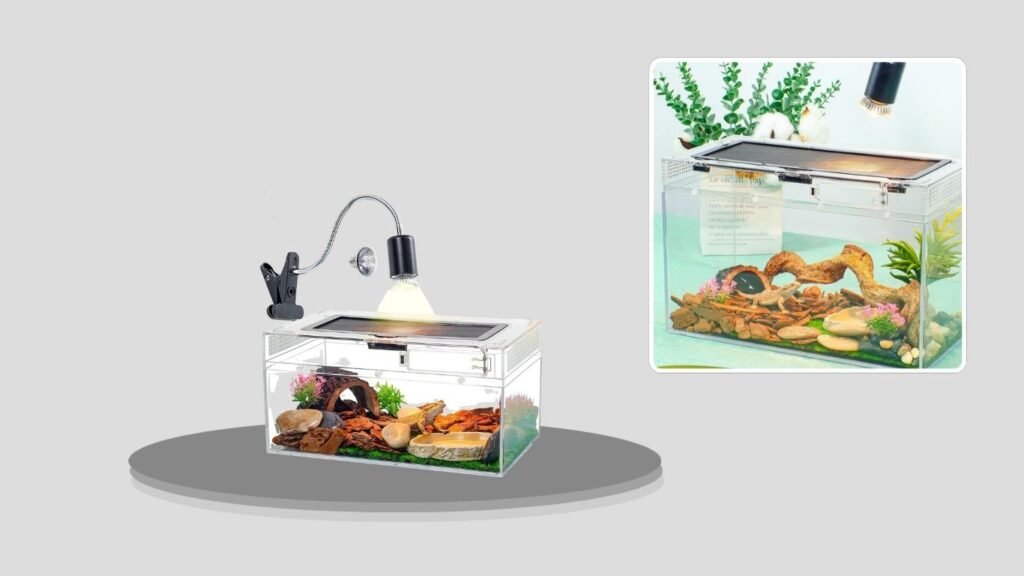
The BINANO Habitat Kit offers a more spacious terrarium-style setup for spiders, small reptiles, and other invertebrates. Its enclosure format provides room for substrate, shelter, feeding equipment, and environmental décor, while included care accessories such as tweezers can make feeding and maintenance more controlled. This makes it an attractive option for keepers who want more than a bare container.
Key Features
- Spacious terrarium-style enclosure
- Suitable for spiders and small animals
- Feeding tweezers included
- Transparent viewing panels
- Ventilation for regular airflow
- Room for substrate and hides
- Space for naturalistic décor
- Useful for feeding and maintenance routines
Why It’s Best for Hands-On Habitat Management
Feeding tweezers are one of the most useful tools for spider keeping. They make it easier to remove prey remains, rearrange lightweight decorations, or place food without putting fingers too close to the animal.
Having care tools included with the enclosure makes the setup more practical from the beginning.
The larger interior also provides more room to build distinct areas for hiding, feeding, and movement rather than crowding everything into a tiny container.
Performance and Interior Space
A relatively roomy enclosure gives keepers flexibility, but the spider’s size should always determine whether that space is appropriate.
Very small spiders may struggle to find prey in oversized habitats, whereas larger juveniles may benefit from additional room.
The clear panels simplify observation, and ventilation helps maintain fresh airflow.
For terrestrial spiders, substrate depth should be used to reduce potentially dangerous fall distances. Arboreal species instead need climbing structure and secure upper-level anchor points.
Overall Verdict
The BINANO Habitat Kit works well for keepers who want an enclosure plus useful maintenance equipment in one package.
The included tweezers add practical value, while the terrarium format leaves plenty of room for customizing substrate, hides, and decorative features.
For someone who plans to be actively involved in feeding, cleaning, and habitat arrangement, this kit provides more of the basic tools needed to establish an organized spider-keeping routine.
6. Jinymral Jumping Spider Enclosure Kit
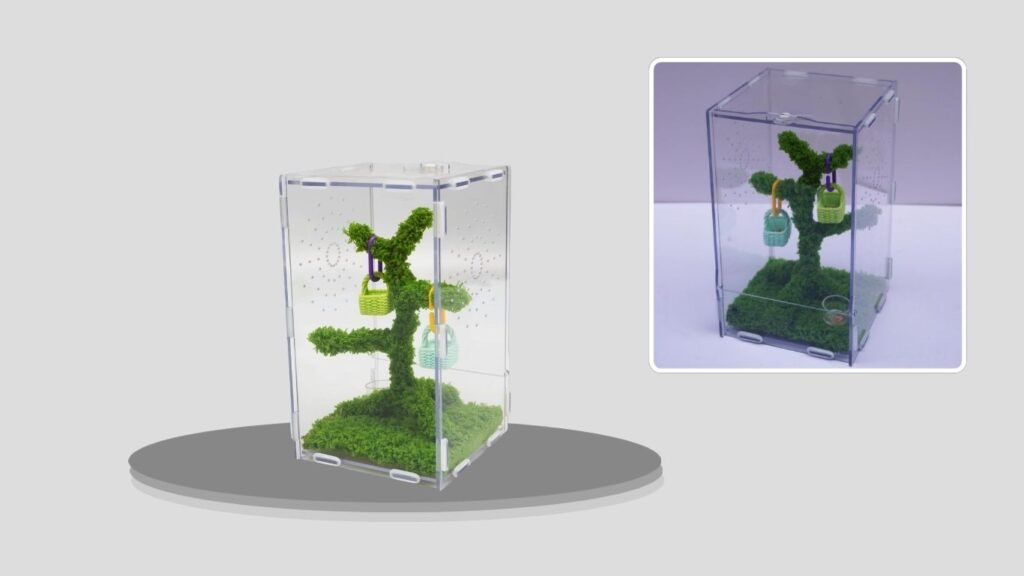
The Jinymral Jumping Spider Enclosure Kit is designed specifically around the needs of small climbing spiders. Rather than providing only an empty container, it combines a transparent enclosure with terrarium accessories that can be arranged for climbing, resting, feeding, and enrichment. Its vertical-oriented setup makes it particularly attractive for keepers who want to create a more decorative and engaging jumping spider habitat.
Key Features
- Designed for jumping spiders
- Transparent acrylic enclosure
- Terrarium accessories included
- Climbing-focused interior
- Ventilation openings
- Feeding accessories
- Space for decorative enrichment
- Lightweight indoor setup
Why It’s Best for Jumping Spider Owners
Jumping spiders are active, curious animals that spend considerable time climbing and exploring. An enclosure designed around vertical activity can therefore provide a better experience than a shallow generic container.
Included décor makes it easier to create web-anchor points and elevated resting areas.
This also gives owners more opportunities to observe natural hunting and climbing behavior.
For anyone primarily interested in jumping spiders rather than larger terrestrial tarantulas, the species-focused setup is a meaningful advantage.
Enrichment and Everyday Performance
Environmental enrichment is particularly useful in jumping spider habitats because these spiders actively investigate their surroundings.
Climbing decorations, small platforms, and lightweight accessories can create multiple routes through the enclosure.
The transparent acrylic walls provide excellent observation while ventilation supports airflow.
Owners should leave the spider’s main web retreat undisturbed during cleaning whenever possible. Since jumping spiders commonly construct sleeping or molting retreats near the upper portion of an enclosure, thoughtful door access and decoration placement can make routine maintenance less disruptive.
Overall Verdict
The Jinymral Jumping Spider Kit is one of the more complete options for anyone specifically setting up a jumping spider habitat.
Its combination of transparent viewing, ventilation, climbing accessories, and enrichment potential goes beyond what a basic container provides.
For keepers who want their spider habitat to look attractive while also encouraging natural climbing and exploration, this kit offers a strong balance between convenience, functionality, and display value.
7. Reptile Growth Mini Spider & Tarantula Starter Kit
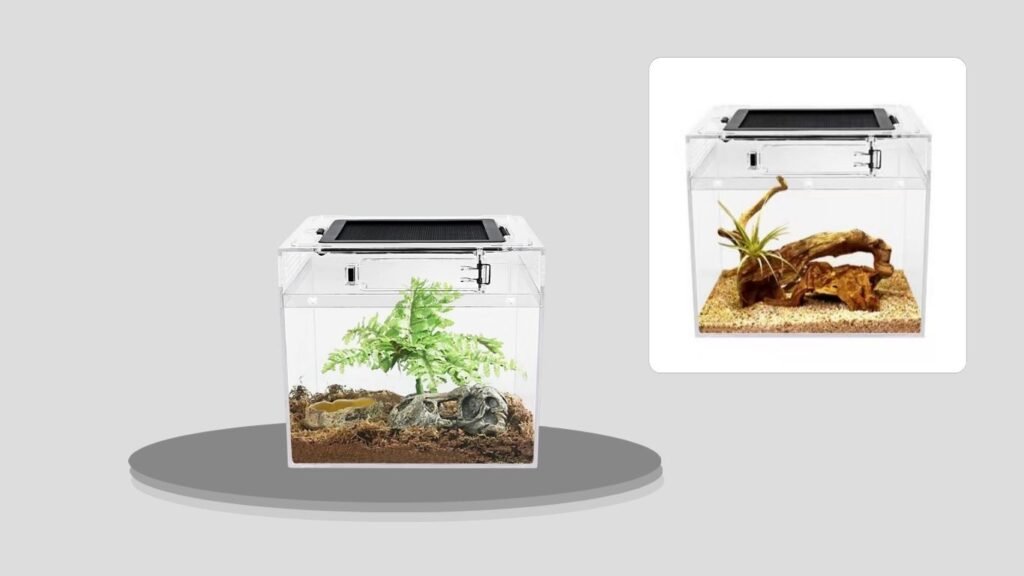
The Reptile Growth Mini Terrarium is a versatile compact habitat that can accommodate tarantulas, jumping spiders, insects, and several other small terrarium animals when properly configured. Its roughly 8 × 8 × 7-inch format provides useful interior space without requiring a large shelf or table. The transparent design also gives keepers a clear view while supporting straightforward daily feeding and habitat monitoring.
Key Features
- Approximately 8 × 8 × 7-inch enclosure
- Clear terrarium construction
- Suitable for spiders and invertebrates
- Ventilated habitat design
- Compact desktop-friendly footprint
- Space for substrate and décor
- Easy observation
- Multipurpose starter enclosure
Why It’s Best for Compact Terrarium Setups
Not every spider needs a tall or oversized habitat. A compact enclosure can make feeding easier while still providing enough room for essential furnishings.
The 8-inch footprint offers space for a hide, water source, and substrate while remaining convenient for shelves or small animal rooms.
This makes the enclosure particularly appealing to keepers who maintain several invertebrates and need habitats that can be organized efficiently.
Performance and Species Flexibility
The clear construction helps you monitor molts, feeding activity, and substrate condition without unnecessarily opening the enclosure.
Its interior can be adjusted for different species, but the orientation should be considered carefully. Terrestrial spiders may benefit from deeper substrate, while truly arboreal species generally need more vertical space than a low enclosure provides.
The compact format also makes prey easier to locate, which can be helpful for smaller animals.
Regular cleaning and attention to ventilation will help maintain good enclosure conditions.
Overall Verdict
The Reptile Growth Mini Terrarium offers an appealing balance of usable space and compact dimensions.
It is especially practical for keepers who want a versatile starter enclosure without dedicating a large area to one spider.
For terrestrial or smaller species that fit the enclosure’s proportions, the combination of transparency, ventilation, and customizable interior space makes it a convenient option for both beginner and established collections.
FAQs
Spider habitat kits can simplify setup, but the best enclosure still depends on the species, size, and behavior of the spider. Ventilation, substrate depth, climbing space, security, and access for feeding all matter when creating a safe and practical habitat.
1. What should a good spider habitat kit include?
A useful spider habitat kit should include a secure enclosure with proper ventilation and enough space for the species being kept. Helpful extras can include feeding tweezers, hides, climbing décor, artificial plants, substrate accessories, and water dishes. Jumping spiders generally benefit from vertical climbing features, while terrestrial tarantulas need deeper substrate and secure hiding areas.
2. Are spider habitat kits good for jumping spiders?
Yes, especially kits with vertical space, good cross-ventilation, and lightweight climbing accessories. Jumping spiders spend much of their time climbing and often build silk retreats near the top of the enclosure, so a vertically oriented habitat is usually more suitable than a shallow horizontal setup.
3. Can I use the same habitat kit for a tarantula?
Some kits can work for tarantulas, but the enclosure must match the species. Terrestrial tarantulas generally need plenty of substrate and limited fall height, while arboreal species require more vertical space. Always consider the spider’s adult size, ventilation needs, and natural behavior before selecting a habitat.
4. How often should I clean a spider habitat?
Spot-clean the enclosure whenever you notice leftover prey, mold, waste, or spoiled food. A complete deep cleaning is not usually necessary very often because excessive disturbance can stress the spider and destroy useful webbing. Remove uneaten feeder insects promptly and keep water dishes clean.
5. Do spider habitats need ventilation?
Yes. Proper ventilation helps prevent stagnant air, excess condensation, and mold growth. Many spiders do well with cross-ventilation, but humidity requirements vary by species. The goal is to provide adequate airflow while still maintaining the moisture level appropriate for the particular spider.
