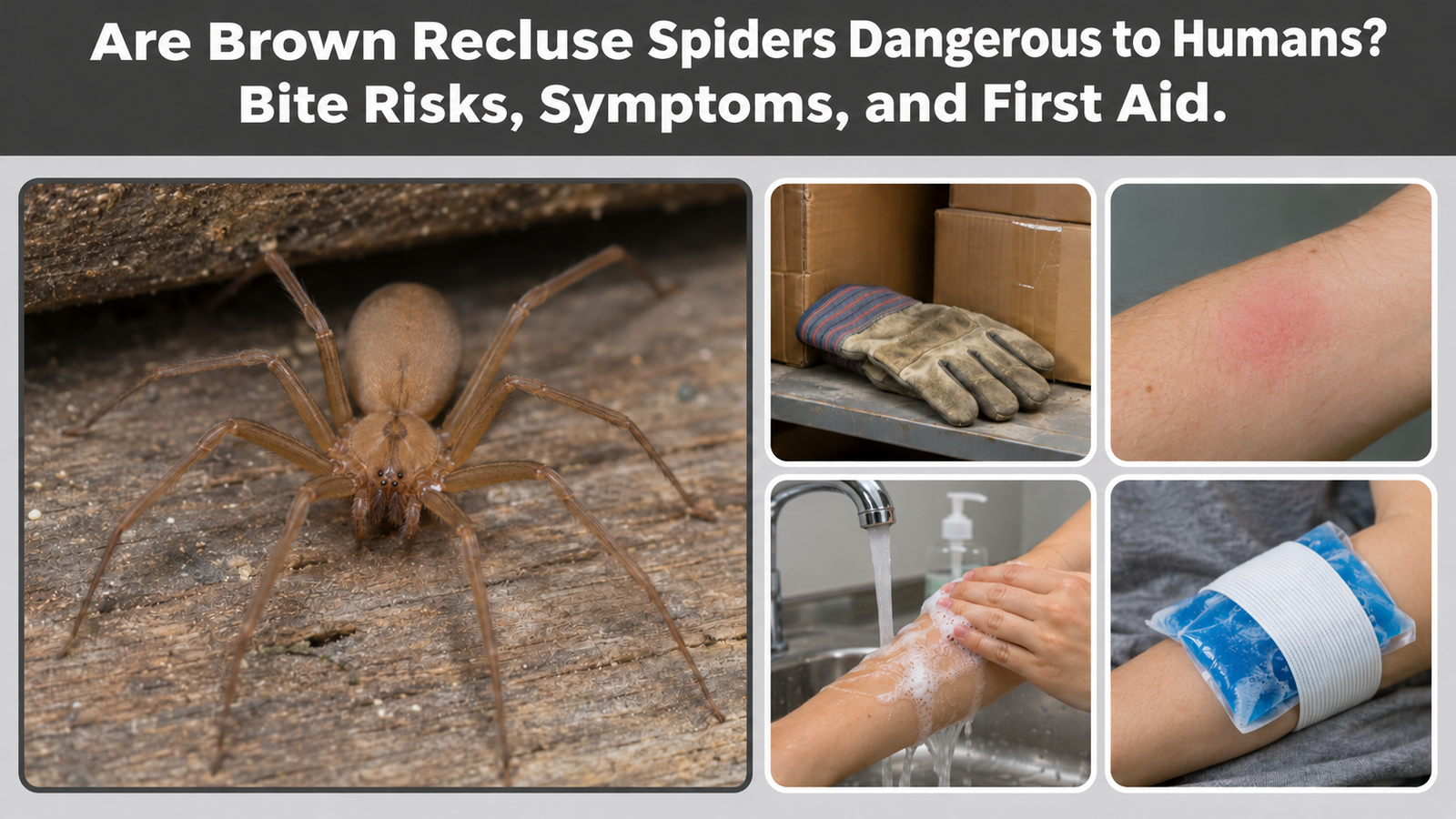
Yes, brown recluse spiders can be dangerous to humans. Their venom can damage the skin, and in rare cases, a bite can cause serious illness that affects the whole body. Many bites, however, cause only a mild reaction near the bite site. Brown recluses usually hide from people and tend to bite when trapped against the skin, such as inside a shoe, glove, or piece of clothing. If you suspect a bite, wash the area and contact Poison Control or a healthcare professional promptly for guidance, even if it looks mild at first.
How Dangerous Is a Brown Recluse Bite?
The danger depends on how your body reacts. A mild bite may leave a small, irritated patch that heals with basic wound care. In a more serious case, the surrounding skin can break down and form an open sore. Rarely, the venom can trigger problems beyond the skin that require hospital treatment.
Can the Venom Damage Your Skin?
Brown recluse venom can injure skin cells and the small blood vessels that supply them. In some cases, this leads to necrosis, the medical term for tissue death. The center of the bite may darken over several days, form a crust, and eventually leave an open sore. A deeper wound can take weeks or longer to heal and may leave a scar.
Many bites never reach that stage. Pain, redness, or a small blister can occur without extensive skin damage. The first few hours may give you little information about how the bite will develop, so pay attention to changes in pain, swelling, and skin color.
Can a Brown Recluse Bite Make You Seriously Ill?
Rarely, a bite can cause a whole-body reaction known as systemic loxoscelism. One possible complication is hemolysis, in which red blood cells break down faster than the body can replace them. This can cause anemia and may contribute to kidney injury. Warning signs include unusually dark urine, yellowing of the skin or eyes, and marked weakness.
Symptoms can develop days after the bite, including when the wound itself looks relatively small. Children can develop severe reactions and should receive prompt medical guidance after a suspected bite. Tell the clinician when the exposure may have happened and whether any new symptoms have appeared since then.
What Does a Brown Recluse Spider Bite Look Like?
A brown recluse bite can be painless at first, and you may only notice it when the area starts to itch, sting, or hurt. The appearance varies from person to person. Changes in the wound over time can help a clinician assess its severity, while the circumstances of the bite help them evaluate the likely cause.
| Time after a suspected bite | Changes you may notice |
|---|---|
| At first or within a few hours | Little or no pain, followed by itching, redness, tenderness, or mild swelling |
| Over the next day or two | Increasing pain, a blister, or a dusky patch near the center in some cases |
| Over the following several days | A dark crust or open sore if tissue damage develops |
Can You Identify a Brown Recluse Bite by Looking at It?
A photo or a description of the wound alone cannot confirm a brown recluse bite. Bacterial skin infections and other conditions can cause similar redness, blistering, and sores. A clinician can assess the wound alongside where you live, what you were doing when symptoms began, and whether you saw a spider at the time.
Finding a brown spider in your home after you notice a sore may be a coincidence. If a wound grows, drains pus, or becomes increasingly painful, get it checked. A skin infection may need treatment, and assuming the wound came from a spider can delay care.
What to Do if You Suspect a Brown Recluse Bite
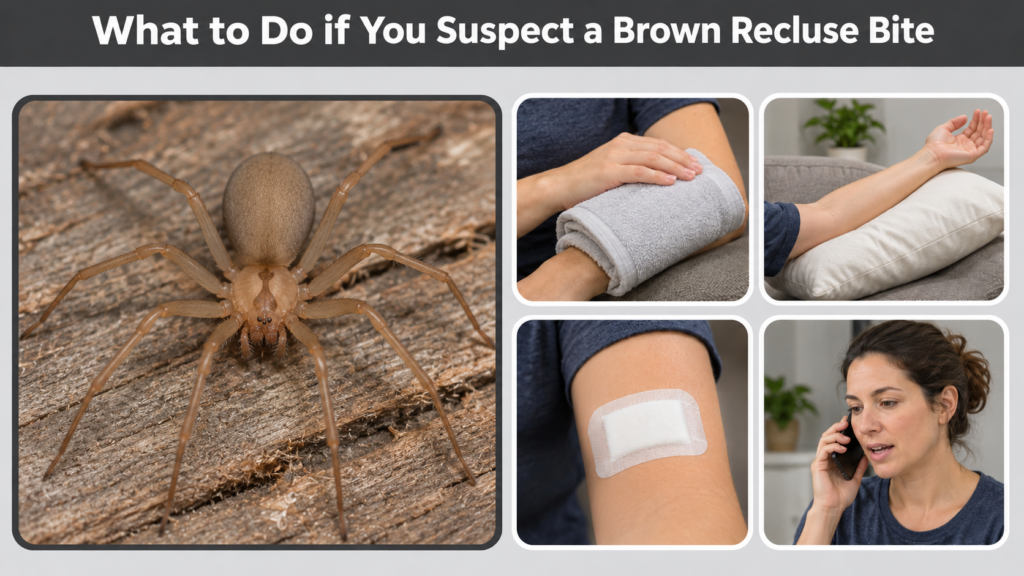
Wash the area with soap and water and contact a poison center or healthcare professional promptly. In the United States, you can call Poison Control at 1-800-222-1222. While you arrange care, these first-aid steps can help protect the skin and ease discomfort.
Give Basic First Aid
- Wash the bite gently. Use soap and water, then pat the area dry without scrubbing.
- Apply a cool compress. Wrap a cold pack in a thin cloth and use it for short intervals. Keep ice from touching the skin directly.
- Elevate the area if practical. If the bite is on an arm or leg, raise the limb comfortably to help with swelling.
- Protect broken skin. Cover an open area with a clean, nonstick dressing. Avoid scratching the bite, popping a blister, or picking at a scab.
- Note when symptoms started. A dated photo of the area can help you show a clinician how the wound has changed.
Avoid cutting or squeezing the skin, trying to suck out venom, or applying a tourniquet. If the spider is visible and you can photograph it safely from a distance, the picture may help with identification. Leave the spider alone and prioritize getting medical advice.
Know When to Get Urgent or Emergency Help
Call emergency services immediately if the person has trouble breathing, becomes confused, feels faint, or collapses. Seek urgent medical care if they develop dark urine, yellowing of the eyes or skin, marked weakness, fever, or repeated vomiting after a possible bite. These symptoms can appear even when the wound seems minor.
Also seek prompt care if pain is increasing, redness is spreading, or the bite develops a blister, a dark center, or an open sore. A clinician can check for infection, review whether a tetanus booster is needed, and decide whether blood or urine tests are appropriate.
When Are Brown Recluse Spiders Most Likely to Bite?
Brown recluse spiders spend much of their time in sheltered, undisturbed places. Bites usually happen during ordinary activities, such as pulling on clothes left on the floor, putting your hand into a stored glove, or moving an old box. The spider may bite if it gets pressed between the material and your skin.
Where Are Brown Recluse Spiders Found?
In the United States, the brown recluse (Loxosceles reclusa) lives mainly in the south-central region and parts of the Midwest. It is established in states such as Missouri, Arkansas, Kansas, and Oklahoma, as well as parts of surrounding states. Location matters when assessing a possible bite, because many spiders that resemble the brown recluse are common well beyond its established range.
Indoors, brown recluses may hide in basements, attics, closets, garages, and stacks of cardboard boxes. Outdoors, they can shelter under loose bark, boards, or firewood. Their hiding habits make accidentally disturbing one more likely when you move stored objects or reach into a dark space.
How Can You Recognize a Brown Recluse?
A brown recluse usually has a plain tan or brown body and slender, uniformly colored legs. It may have a darker, violin-shaped mark on the front part of its body. That mark can vary in intensity, and other spiders have markings that look similar.
Recluse spiders have six eyes arranged in three pairs, a feature that is easier for a specialist to assess from a clear close-up photo or specimen. For a spider found indoors, the location and several physical features together are more informative than a single marking.
How to Reduce the Risk of Brown Recluse Bites at Home
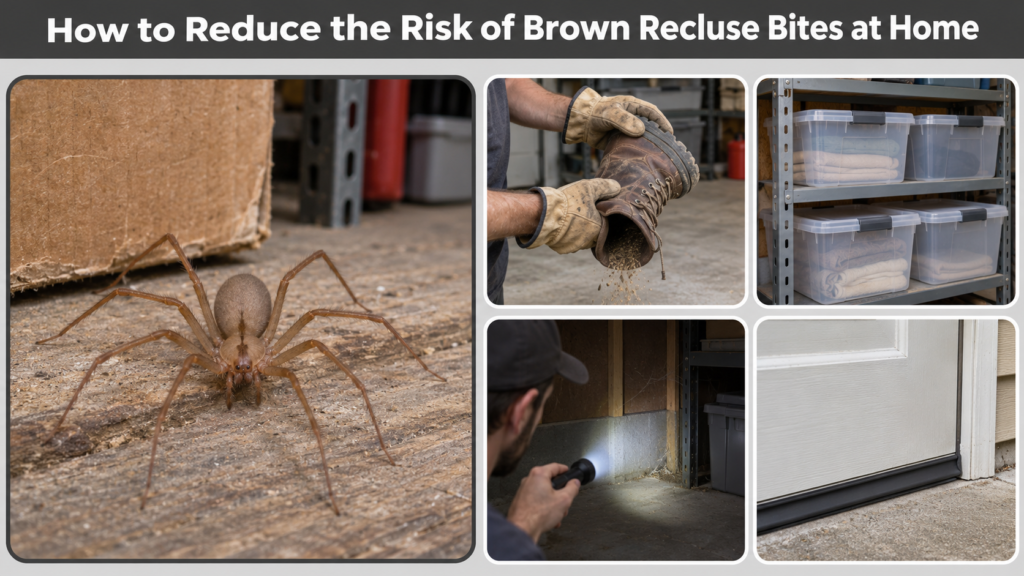
Focus on the places where your hands, feet, or clothing might come into contact with a hidden spider. A few changes to how you store and handle items can reduce those encounters, especially if you live within the brown recluse’s range.
Check Shoes, Clothing, and Gear
Shake out shoes, boots, gloves, and clothing that have been sitting unused, especially in a garage, shed, or basement. Keep clothes and towels off the floor. Wear work gloves and closed shoes when moving firewood, sorting boxes, or cleaning a storage area. Use a flashlight before reaching behind shelves or into dark corners.
Make Storage Areas Easier to Inspect
Use lidded containers for items you keep in storage and reduce piles of cardboard on the floor. Store firewood away from the house and seal gaps around doors or utility openings where practical. If you repeatedly find spiders that may be brown recluses, a pest professional can identify them and check where they are hiding.
Frequently Asked Questions
Can a brown recluse spider bite kill a human?
Deaths are rare. Severe reactions can involve red blood cell breakdown and kidney injury. Dark urine, yellowing of the eyes, or marked weakness after a suspected bite requires urgent medical evaluation.
Are brown recluse spiders aggressive?
Brown recluses generally avoid people and retreat into sheltered spaces. They usually bite when trapped or pressed against the skin, which can happen when someone puts on a shoe or handles a stored item.
Does a brown recluse bite always leave a scar?
Mild bites can heal without a lasting scar. A scar is more likely when the skin breaks down and forms a deep ulcer. Wound depth and healing complications can affect how noticeable a scar becomes.
Can a brown recluse bite get worse after a few days?
Yes. A blister or darkened patch can develop gradually, and symptoms such as fever or dark urine may appear days after the bite. Seek medical advice promptly if the wound or your overall condition worsens.
Can you feel a brown recluse spider bite right away?
You may feel a slight sting, or you may feel nothing at first. Pain, tenderness, or itching can develop later. The sensation alone gives little information about which spider, if any, caused the bite.
