
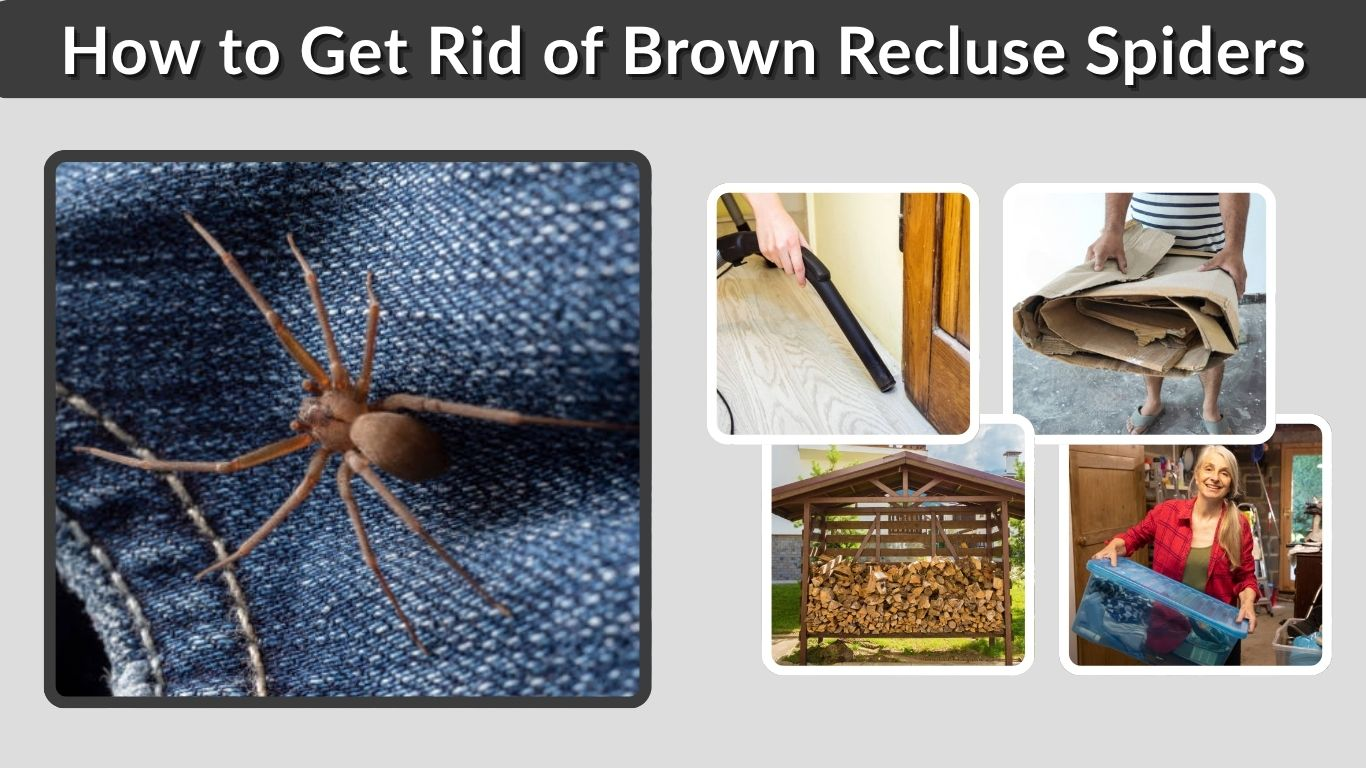
Brown recluse spiders are one of the most feared house spiders because their bites can sometimes cause serious skin reactions. They prefer dark, quiet, undisturbed places such as closets, basements, garages, attics, and storage boxes. Getting rid of them requires cleaning, sealing, trapping, and reducing hiding spots. This guide explains practical ways to remove brown recluse spiders from your home safely.
What Attracts Brown Recluse Spiders to Your Home?
Brown recluse spiders do not come indoors to attack people. They enter homes because they find shelter, insects to eat, and quiet places to hide. Understanding what attracts them helps you remove the conditions that allow them to survive.
Common Reasons They Stay Indoors
Brown recluse spiders like cluttered and undisturbed areas. They often hide where people rarely clean or move items. Unlike web-building spiders that stay in visible corners, brown recluse spiders usually stay low and hidden.
Common attractants include:
- Cardboard boxes stored for a long time
- Piles of clothes, shoes, or towels
- Dark closets and under-bed storage
- Basements, garages, and attics
- Cracks around doors, windows, and walls
- Other small insects that serve as food
- Firewood, tools, and outdoor clutter near the house
If your home has many hiding places and insect activity, brown recluse spiders may stay and reproduce.
How to Identify Brown Recluse Spider Hiding Spots
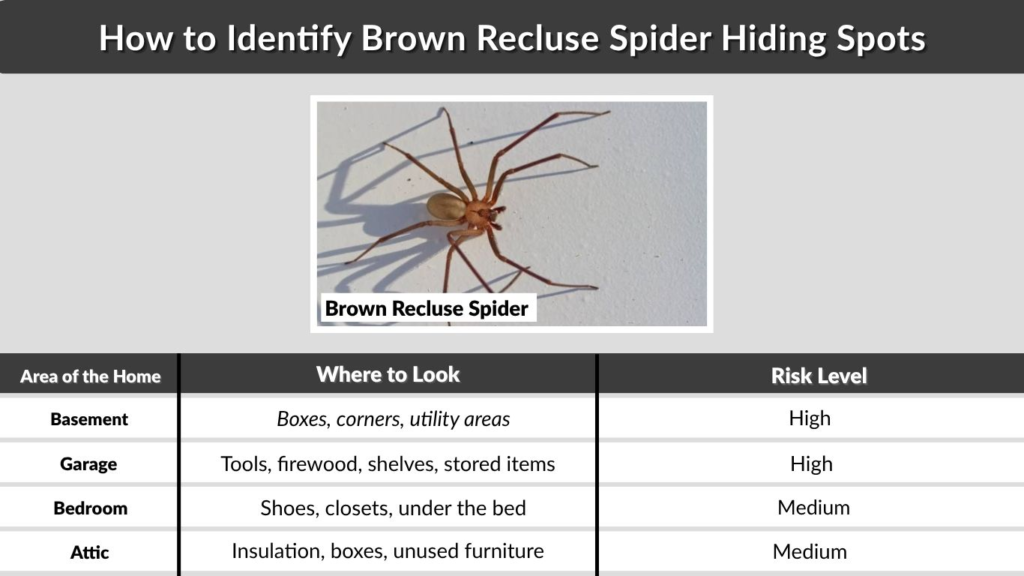
Before you try to remove them, you need to know where they are most likely hiding. Brown recluse spiders are secretive and usually active at night. They are often found in places that are dry, dark, and rarely disturbed.
Best Places to Check First
Brown recluse spiders are commonly found in storage areas. Use a flashlight and wear gloves when checking these spots. Do not place your bare hands into boxes, shoes, or dark gaps.
| Area of the Home | Where to Look | Risk Level |
|---|---|---|
| Basement | Boxes, corners, utility areas | High |
| Garage | Tools, firewood, shelves, stored items | High |
| Bedroom | Shoes, closets, under the bed | Medium |
| Attic | Insulation, boxes, unused furniture | Medium |
| Living room | Behind furniture, baseboards | Low to Medium |
Check sticky traps regularly to learn where spider activity is strongest. If you catch several brown recluse spiders in one room, focus your cleaning and sealing work there first.
Step-by-Step Guide to Get Rid of Brown Recluse Spiders
Removing brown recluse spiders takes more than killing one spider. You need to reduce hiding places, block entry points, remove prey insects, and use traps. A complete approach works better than a single home remedy.
1. Declutter Storage Areas
Start by removing clutter from basements, garages, closets, and attics. Brown recluse spiders love hiding behind old boxes, unused clothes, papers, and stored furniture.
Replace cardboard boxes with sealed plastic containers. Cardboard has gaps and folds that give spiders perfect hiding spaces. Plastic bins with tight lids make it harder for spiders to enter and nest.
Move storage items away from walls. This makes cleaning easier and reduces protected hiding zones.
2. Vacuum Cracks, Corners, and Hidden Spaces
Vacuuming is one of the fastest ways to remove spiders, egg sacs, webs, and insects. Use a vacuum with a hose attachment to clean corners, baseboards, behind furniture, under beds, and inside closets.
After vacuuming, empty the vacuum bag or canister outside in a sealed trash bag. This helps prevent any captured spiders from escaping back into the home.
Vacuum regularly for several weeks, especially in rooms where you have seen spiders.
3. Use Sticky Traps
Sticky traps are very useful for brown recluse spiders because they move around at night. Place traps along walls, behind furniture, under beds, in closets, and near garage corners.
Do not place traps in the middle of a room. Brown recluse spiders usually travel along edges and baseboards.
Good trap locations include:
- Behind storage boxes
- Along basement walls
- Under beds and dressers
- Inside closets
- Near garage doors
- Around attic entrances
- Behind appliances
Check traps every few days. If one area catches many spiders, increase cleaning and sealing in that location.
4. Seal Entry Points
Brown recluse spiders can enter through small cracks and gaps. Sealing your home helps prevent new spiders and other insects from entering.
Use caulk, weatherstripping, and door sweeps to close gaps. Focus on exterior doors, windows, vents, pipes, and foundation cracks.
Important areas to seal include:
- Gaps under doors
- Cracks around windows
- Holes around plumbing lines
- Foundation openings
- Garage door gaps
- Torn window screens
- Wall gaps near baseboards
Sealing also helps reduce other pests, which lowers the food supply for spiders.
5. Reduce Insects Inside the House
Brown recluse spiders feed on insects. If your home has many ants, flies, roaches, crickets, or other small bugs, spiders may stay because food is available.
Keep your home clean and dry. Store food in sealed containers, fix moisture problems, and take out trash regularly.
Use insect control methods if needed. When the insect population drops, spiders have less reason to remain indoors.
How to Get Rid of Brown Recluse Spiders Naturally
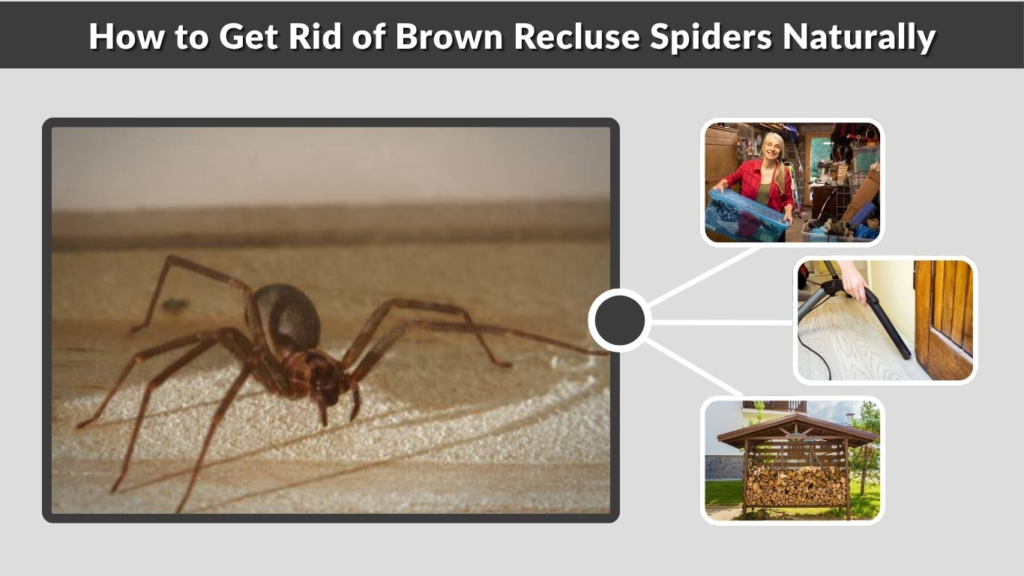
Many people prefer natural methods before using chemical sprays. Natural control can help, but it works best when combined with cleaning, sealing, and sticky traps.
Natural Methods That Can Help
Natural spider control focuses on making your home less comfortable for spiders. These methods may not kill all brown recluse spiders immediately, but they reduce hiding places and spider activity over time.
Helpful natural methods include:
- Remove clutter from closets, basements, and garages
- Use sealed plastic storage bins instead of cardboard
- Vacuum floors, corners, and hidden spaces often
- Keep beds away from walls
- Shake out shoes, clothes, and towels before use
- Store firewood away from the house
- Install door sweeps and repair screens
- Use sticky traps without chemical pesticides
Some people use peppermint oil or vinegar sprays, but these are not reliable for serious infestations. They may repel some spiders for a short time, but they will not solve the problem if your home has clutter, insects, and entry gaps.
How to Get Rid of Brown Recluse Spiders in the Garage
Garages are one of the most common places for brown recluse spiders. They are dark, cluttered, and often connected to outdoor areas. Tools, boxes, shoes, and stored items give spiders many hiding spaces.
Garage Cleaning and Prevention Tips
Start by removing unnecessary items. Keep tools on wall racks instead of the floor. Store seasonal items in sealed containers. Avoid leaving shoes, gloves, or clothing on the garage floor.
Sweep and vacuum the garage regularly. Pay attention to corners, shelves, behind appliances, and around the garage door.
To reduce garage spiders:
- Seal gaps around the garage door
- Keep storage boxes off the floor
- Move firewood away from garage walls
- Use sticky traps along edges
- Remove dead insects and webs
- Keep outdoor lights off when not needed
- Repair cracks in walls and floors
If the garage has heavy spider activity, consider calling a pest control professional.
How to Get Rid of Brown Recluse Spiders in the Basement
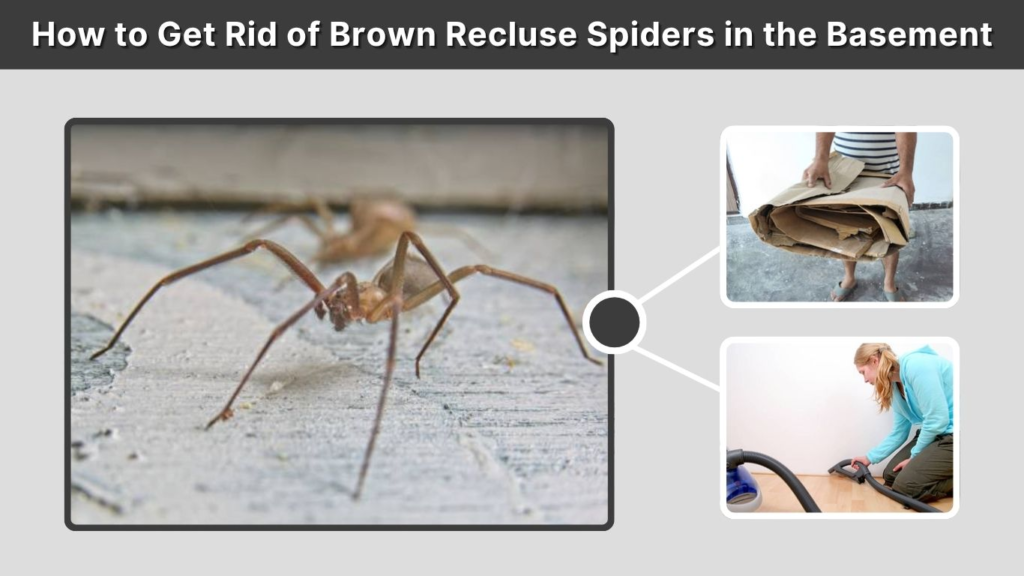
Basements are attractive to brown recluse spiders because they are quiet and often full of storage. Unfinished basements are especially common hiding areas.
Basement Control Steps
Begin by organizing storage and removing old cardboard. Keep items in sealed plastic bins and place them on shelves instead of directly on the floor.
Vacuum around pipes, baseboards, corners, and utility areas. Place sticky traps along basement walls and near storage zones.
Use a dehumidifier if your basement is damp. Brown recluse spiders prefer dry areas, but moisture can attract insects that become spider food. Reducing insects helps reduce spiders too.
Check basement windows and doors for gaps. Seal cracks in the foundation and repair torn screens.
Should You Use Sprays or Professional Pest Control?
Sprays can help in some cases, but they are not always the best first step. Brown recluse spiders hide deep inside cracks, boxes, and wall gaps where sprays may not reach. Sticky traps and cleaning are often more useful for finding and reducing them.
When Professional Help Is Best
Call a licensed pest control professional if you keep finding brown recluse spiders inside your home or if sticky traps catch several spiders in different rooms. A professional can confirm the spider species, locate hiding areas, and apply targeted treatments safely.
Professional help is especially useful when:
- You find spiders often in bedrooms
- Sticky traps catch many brown recluse spiders
- You see spiders in multiple rooms
- You have children or pets at home
- You are unsure if the spider is truly a brown recluse
- You have a large basement, attic, or garage infestation
Avoid spraying pesticides randomly around the house. Incorrect use can be unsafe and may not reach the spiders.
How to Prevent Brown Recluse Spiders from Coming Back
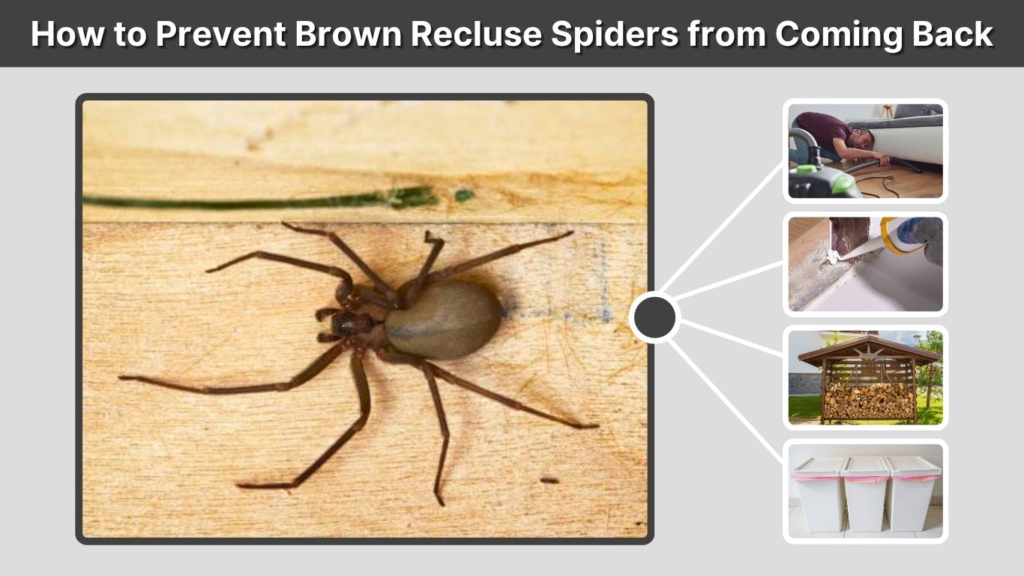
Prevention is the most important part of long-term control. Once you reduce the spider population, you need to keep your home clean, sealed, and less attractive to insects.
Long-Term Prevention Checklist
Brown recluse spiders are easier to prevent than remove after they spread. Simple habits can lower the risk of future infestations.
Use this checklist regularly:
- Keep storage areas clean and organized
- Use plastic bins with tight lids
- Shake out shoes, gloves, and clothes before wearing
- Keep beds and furniture slightly away from walls
- Vacuum hidden areas weekly
- Place sticky traps in basements and garages
- Seal cracks, gaps, and door openings
- Reduce insects inside the home
- Store firewood away from the house
- Avoid leaving clothes or towels on the floor
Consistent cleaning and monitoring are the best ways to keep brown recluse spiders under control.
What to Do If You Find a Brown Recluse Spider
Finding one brown recluse spider does not always mean you have a serious infestation. However, you should take it seriously, especially if you find it in a bedroom, closet, basement, or garage.
Safe Removal Steps
Do not pick up the spider with your bare hands. Use a jar, thick gloves, vacuum, or sticky trap. If possible, take a clear photo for identification.
After removing the spider, inspect nearby areas. Check shoes, clothing, boxes, and corners. Place sticky traps around the room to see if more spiders are present.
If you find several spiders, begin a full cleaning and sealing plan immediately.
FAQs
How do I get rid of brown recluse spiders fast?
The fastest method is to vacuum hiding areas, remove clutter, and place sticky traps along walls and corners. Focus on basements, garages, closets, and bedrooms. Fast control also requires sealing gaps and reducing insects. If you see many spiders, contact a licensed pest control professional.
What naturally keeps brown recluse spiders away?
Clean storage areas, sealed plastic bins, regular vacuuming, door sweeps, and sticky traps are the most effective natural methods. Essential oils may give a short-term repellent effect, but they are not strong enough for serious infestations. Removing clutter and entry points works much better.
Where do brown recluse spiders hide in a house?
Brown recluse spiders hide in dark, quiet, dry places. Common hiding spots include closets, basements, attics, garages, shoes, cardboard boxes, under beds, behind furniture, and storage rooms. They usually avoid open areas and are most active at night.
Can brown recluse spiders live in the yard?
Yes, they can live outside in woodpiles, sheds, rocks, debris, and clutter near the home. However, they become a bigger problem when they move indoors. Keep outdoor storage away from the house and remove debris to reduce the chance of them entering.
Should I kill every brown recluse spider I see?
You should remove brown recluse spiders safely, but avoid touching them directly. Use a vacuum, sticky trap, or container method. More importantly, inspect the area for hiding spots and other spiders. One spider may be a warning sign that more are nearby.
