
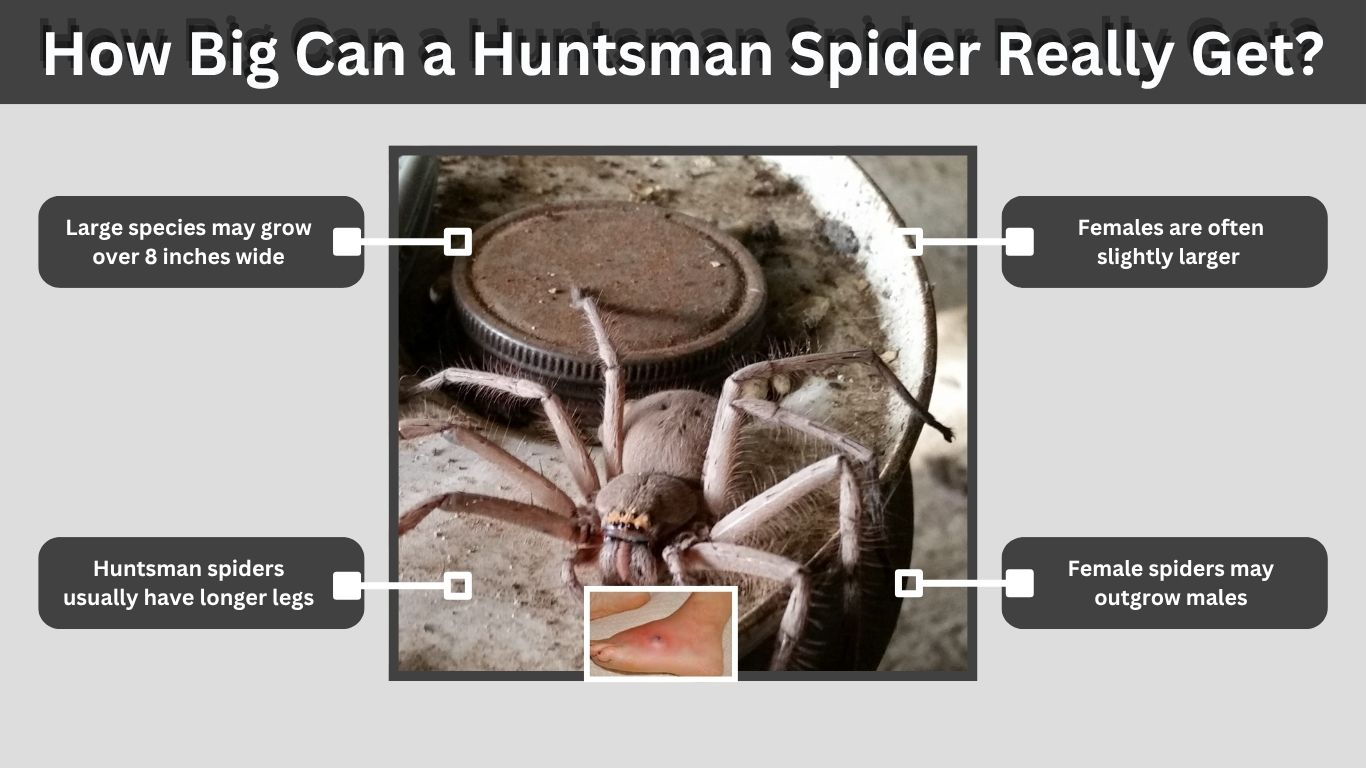
Huntsman spiders are famous for their huge leg span and fast movements. Many people become shocked after seeing one crawling across a wall, ceiling, or car dashboard. Their long legs often make them appear much larger than they actually are. Because of this, huntsman spiders are commonly considered some of the biggest house spiders in the world.
The size of a huntsman spider depends on its species, age, and environment. Some huntsman spiders stay fairly small, while giant species can grow surprisingly large. In this guide, you will learn the average huntsman spider size, the largest species ever recorded, and why Australian huntsman spiders grow so big.
What Is the Average Size of a Huntsman Spider?
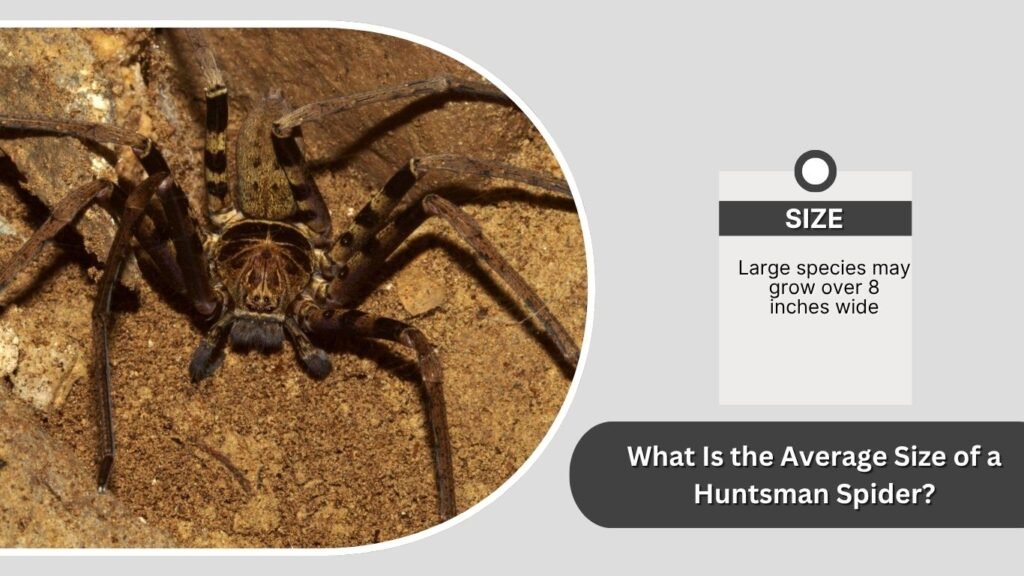
Huntsman spiders vary greatly in size depending on where they live and which species they belong to. Most huntsman spiders are known more for their long legs than their body size. Their flat shape and sideways leg position make them look larger and more intimidating than many other spiders found inside homes.
Average Huntsman Spider Leg Span
- Most huntsman spiders have a leg span between 4 and 6 inches
- Large species may grow over 8 inches wide
- Their long legs spread sideways like a crab
- Leg span is usually much larger than body length
- Females are often slightly larger than males
Huntsman Spider Body Size
The body of a huntsman spider is much smaller than many people expect. Most species have a body length of around 1 to 2 inches. Even giant huntsman spiders mainly appear huge because of their long, stretched legs rather than a massive body.
Their flat bodies help them squeeze into tight spaces behind bark, furniture, and rocks. This body shape also allows them to hide inside homes more easily than thicker-bodied spiders such as tarantulas.
Why Huntsman Spiders Look Bigger Than They Are
Huntsman spiders often appear enormous because their legs stretch outward instead of downward. When spread across a wall or ceiling, their wide stance creates the illusion of a much larger spider. Fast movement can also make them seem even bigger during sudden encounters indoors.
How Big Can a Huntsman Spider Get?
Some huntsman spiders can grow to impressive sizes, especially giant tropical species. Although most species remain moderate in size, a few are known for having one of the largest leg spans among all spiders. These giant spiders often become popular online because of their shocking appearance.
Largest Huntsman Spider Ever Recorded
- Giant huntsman spiders can reach around 12 inches in leg span
- Some of the largest specimens were discovered in Asia
- Their bodies remain relatively flat and lightweight
- They are considered among the widest spiders in the world
- Large females usually grow bigger than males
How Big Can a Giant Huntsman Spider Get?
The giant huntsman spider can grow large enough to cover a dinner plate with its legs fully spread. Despite this size, the body itself is still much smaller than the overall span. Many people compare its width to an adult human hand or even a small pizza.
Large huntsman spiders may appear frightening, but they are usually shy hunters that prefer avoiding humans. Their impressive size mainly helps them capture insects and move quickly through trees, rocks, and buildings.
Do Huntsman Spiders Keep Growing?
Like other spiders, huntsman spiders grow by molting. During molting, they shed their old exoskeleton and develop a larger one underneath. Young huntsman spiders molt several times before reaching full adult size.
Growth depends on food supply, climate, and species type. Warm tropical regions often produce larger huntsman spiders because insects are plentiful and conditions support faster growth.
How Big Can Huntsman Spiders Get in Australia?
Australia is home to some of the world’s largest and most famous huntsman spiders. Warm temperatures, abundant insects, and natural habitats allow many Australian species to grow quite large. Huntsman spiders are commonly found in homes, garages, forests, and even vehicles across the country.
Common Large Australian Huntsman Species
- Badge huntsman spider
- Brown huntsman spider
- Tropical huntsman spider
- Giant huntsman spider
- Green huntsman spider
Why Australian Huntsman Spiders Grow So Large
Australian huntsman spiders benefit from warm climates and plentiful prey throughout much of the year. Large insect populations provide steady food sources that support healthy spider growth. Natural hiding places like tree bark, sheds, and rocky areas also protect them from predators.
Many Australian species have adapted well to living near humans. Homes and buildings often provide warmth and insects, helping huntsman spiders survive and continue growing in urban environments.
Huntsman Spider Size Compared to Other Spiders
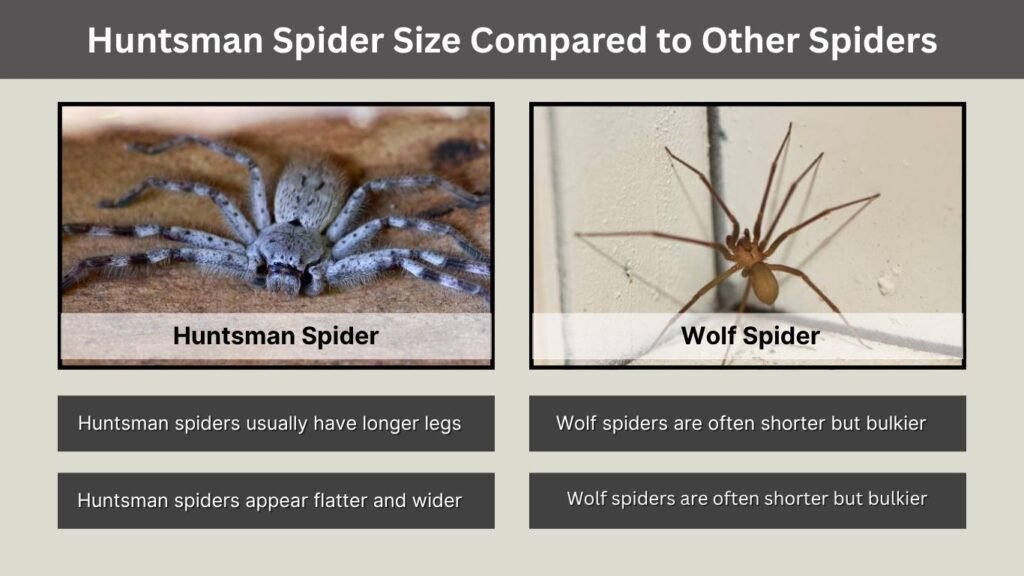
Huntsman spiders are often compared to other large spiders because of their enormous leg span. While they may not always have the heaviest bodies, their wide appearance makes them look much bigger than many common spiders. Comparing them with wolf spiders and tarantulas helps people better understand their true size.
Huntsman Spider vs Wolf Spider Size
- Huntsman spiders usually have longer legs
- Wolf spiders have thicker and heavier bodies
- Huntsman spiders appear flatter and wider
- Wolf spiders are often shorter but bulkier
- Both spiders are active hunters instead of web builders
Huntsman Spider vs Tarantula Size
Tarantulas are generally heavier and hairier than huntsman spiders. Their bodies are much thicker, giving them a more powerful appearance. Huntsman spiders, however, often have a wider leg span, making them seem larger when stretched across a wall or ceiling.
Another major difference is movement speed. Huntsman spiders are extremely fast and agile, while tarantulas usually move more slowly. This sudden speed often makes huntsman spiders appear even more intimidating during encounters indoors.
Huntsman Spider vs Giant Crab Spider
Huntsman spiders are sometimes called giant crab spiders because of their sideways leg position. Both spiders share a similar flattened shape and wide stance. However, true crab spiders are usually much smaller and rely more on ambush hunting than speed.
What Affects Huntsman Spider Size?
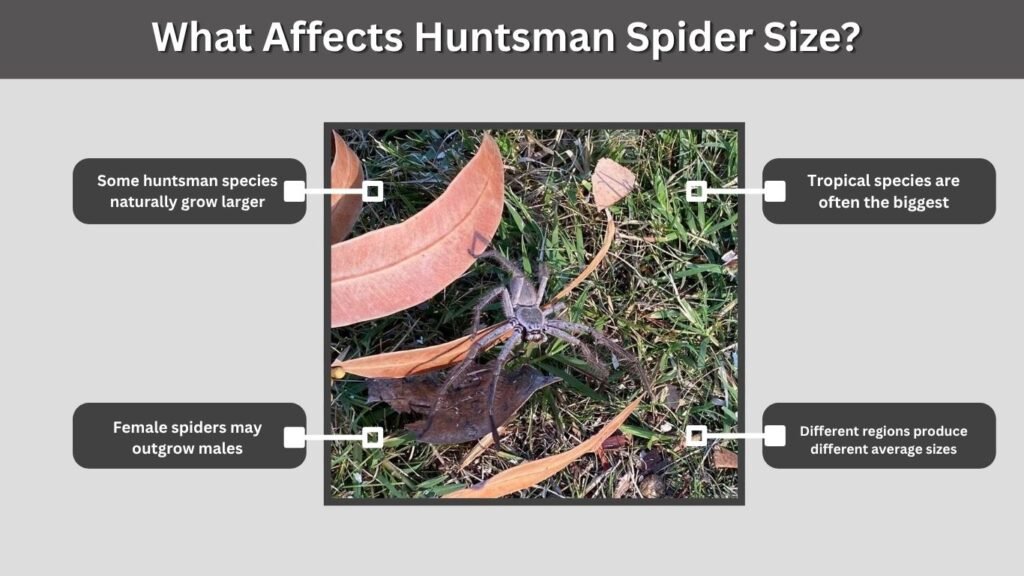
Several factors influence how large a huntsman spider can grow. Genetics play the biggest role, but environmental conditions also affect growth. Spiders living in warm regions with plenty of food often become larger than those living in colder or harsher environments.
Species Differences
- Some huntsman species naturally grow larger
- Tropical species are often the biggest
- Female spiders may outgrow males
- Forest species sometimes develop wider leg spans
- Different regions produce different average sizes
Diet and Hunting Success
Huntsman spiders grow best when food is easy to find. Their diet mainly includes insects such as cockroaches, moths, flies, and crickets. Large spiders usually need more food to maintain energy and continue growing properly.
Spiders that hunt successfully on a regular basis often molt more effectively and reach larger adult sizes. Limited food sources may slow growth and reduce maximum size potential.
Habitat and Climate
Warm temperatures help huntsman spiders stay active throughout the year. Humid climates also improve survival rates and support insect populations. Safe hiding spaces inside forests, homes, and rock crevices protect spiders while they grow and molt.
Are Bigger Huntsman Spiders More Dangerous?
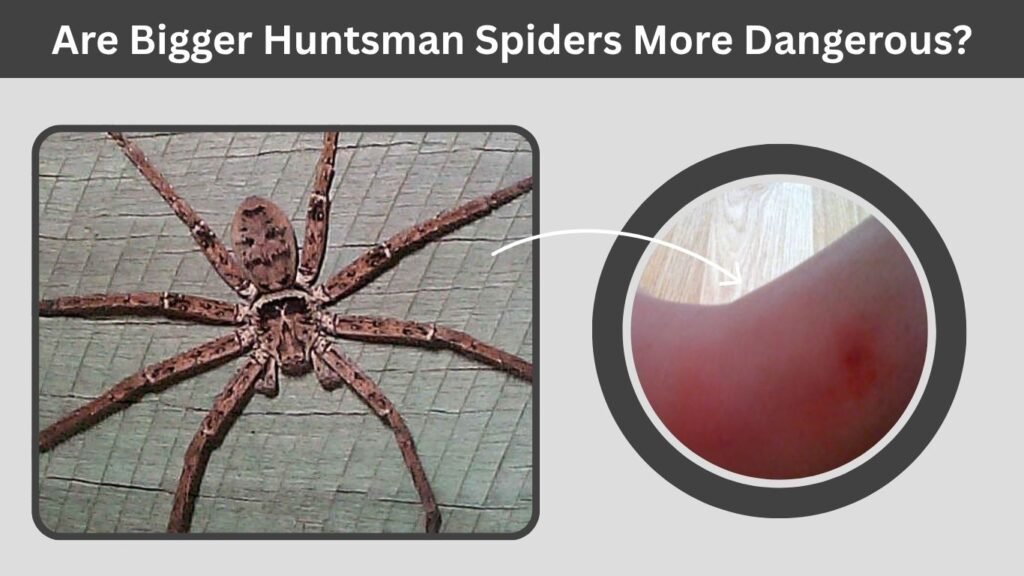
Many people assume a larger huntsman spider must also be more dangerous. In reality, size does not necessarily mean stronger venom or more aggressive behavior. Most large huntsman spiders remain shy hunters that avoid conflict whenever possible.
Does Size Affect Venom Strength?
Large huntsman spiders may deliver a more noticeable bite simply because they have bigger fangs. However, their venom is still considered mild compared to medically dangerous spiders. Venom strength depends more on spider species than body size alone.
Most huntsman spider bites result in temporary pain, redness, and swelling rather than serious health problems. Severe reactions are very uncommon in healthy adults.
Why Large Huntsman Spiders Scare People
- Extremely long legs
- Fast running speed
- Sudden appearances indoors
- Wide crab-like stance
- Ability to climb walls and ceilings
Do Giant Huntsman Spiders Bite More Often?
Giant huntsman spiders are not naturally aggressive toward humans. They usually bite only when cornered, trapped, or handled roughly. Their first reaction is normally to escape instead of attack.
Because these spiders move quickly, people sometimes believe they are chasing them. In most cases, the spider is simply searching for a hiding place or trying to flee from danger.
Fun Facts About Huntsman Spider Size
Huntsman spiders have several unique features that make them stand out among large spiders. Their size, flexibility, and movement abilities help them survive in forests, houses, and rocky habitats around the world.
Largest Leg Span Among Common House Spiders
Some huntsman spiders have one of the widest leg spans of any spider commonly found inside homes. Their stretched legs can easily cover a large dinner plate.
How Huntsman Spiders Fit Into Small Spaces
Despite their large appearance, huntsman spiders can flatten their bodies to squeeze behind bark, inside cracks, and under furniture. Their flexible legs help them move through narrow hiding places.
Why Their Legs Spread Sideways
Their sideways legs improve climbing ability and speed. This crab-like stance also helps them quickly capture insects while moving across walls, trees, and ceilings.
FAQs
What is the biggest huntsman spider ever found?
The biggest huntsman spider ever recorded had a leg span of around 12 inches. This giant species was discovered in Asia and became famous for its enormous width. Even though it looks frightening, it is not considered highly dangerous to humans.
How big can a huntsman spider get in Australia?
Australian huntsman spiders can grow between 4 and 8 inches wide depending on the species. Some giant huntsman spiders may become even larger in warm tropical regions where food is abundant and environmental conditions support faster growth.
Are huntsman spiders bigger than tarantulas?
Huntsman spiders usually have longer legs and a wider span than many tarantulas. However, tarantulas often have thicker and heavier bodies. Huntsman spiders appear larger because of their flat bodies and sideways leg position.
Can huntsman spiders grow bigger indoors?
Huntsman spiders can survive indoors if food and shelter are available, but indoor spiders do not always grow larger than outdoor ones. Growth mainly depends on species, climate, and access to insects rather than simply living inside a house.
Why do huntsman spiders look so large?
Huntsman spiders look extremely large because their legs spread outward in a crab-like position. Their fast movement and wide stance create an even bigger appearance, especially when they crawl across walls or ceilings indoors.
