
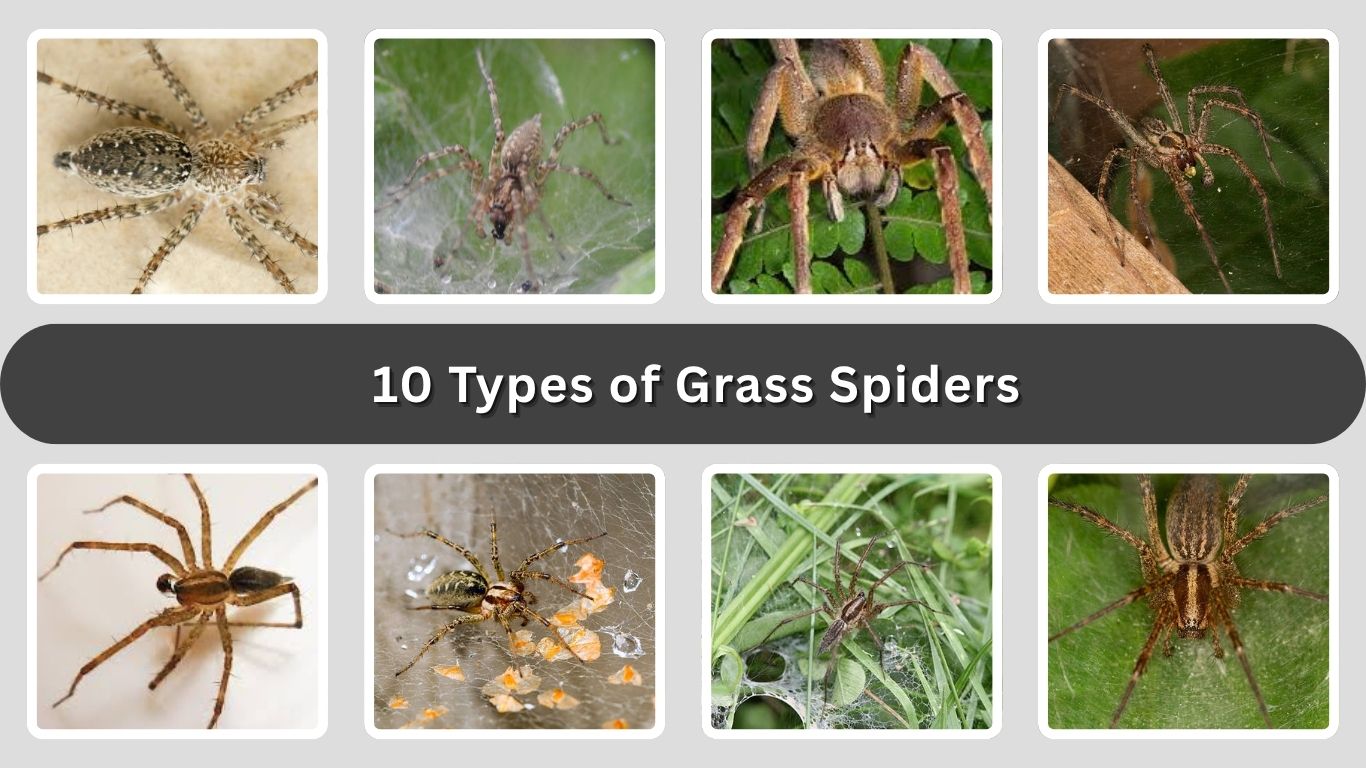
Grass spiders are a group of fast-moving, funnel-weaving spiders commonly found in lawns, gardens, and grassy fields. Belonging to the genus Agelenopsis, these spiders are easily recognized by their flat sheet webs with a distinctive funnel retreat where they hide and wait for prey. Although their appearance may seem intimidating, grass spiders are harmless to humans and rarely bite.
These spiders play an important ecological role by helping control insect populations, feeding on pests such as flies, ants, and beetles. Known for their speed and sensitivity to vibrations, grass spiders rely more on quick movements than strong venom to capture their prey. In this list, we explore ten different types of grass spiders, highlighting their unique characteristics and behaviors.
1. Agelenopsis pennsylvanica

Agelenopsis pennsylvanica, commonly known as the Pennsylvania grass spider, is one of the most recognizable funnel-weaving spiders found across North America. It is often seen in lawns, gardens, and grassy fields where it builds its signature funnel-shaped web. This species is harmless to humans and plays an important role in controlling insect populations.
Identification
- Medium-sized spider with a body length of about 10–20 mm
- Brown to tan coloration with two dark longitudinal stripes on the cephalothorax
- Abdomen features a pattern of chevrons or herringbone markings
- Long, slender legs with fine hairs
- Notable long spinnerets extending from the rear, often visible to the naked eye
Habitat and Behavior
Agelenopsis pennsylvanica thrives in grassy environments such as lawns, meadows, and gardens. It constructs a horizontal sheet web with a funnel retreat on one side, where the spider hides. When an insect lands on the web, the spider quickly rushes out, captures its prey, and drags it back into the funnel. These spiders are fast runners and rely more on speed than venom strength to subdue prey.
Diet
This species primarily feeds on small insects, including flies, ants, beetles, and other arthropods that accidentally wander onto its web. The spider does not actively hunt but instead waits for vibrations on its web to detect prey. Its diet makes it beneficial for natural pest control in outdoor environments.
Reproduction
Mating typically occurs in late summer to early fall. Males wander in search of females and perform cautious courtship to avoid being mistaken for prey. After mating, females produce egg sacs that are often hidden within the funnel web or nearby vegetation. The young spiders hatch and disperse, continuing the cycle.
2. Agelenopsis potteri

Agelenopsis potteri is another species of grass spider commonly found in North America. Like others in its genus, it is known for building funnel-shaped webs in grassy or low vegetation areas. It is a fast-moving and non-aggressive spider that helps control insect populations.
Identification
- Medium-sized spider with a slender body
- Brownish coloration with darker stripes on the cephalothorax
- Abdomen marked with subtle chevron patterns
- Long legs adapted for quick movement
- Prominent, elongated spinnerets visible from behind
Habitat and Behavior
This species prefers open grassy habitats such as lawns, fields, and roadside vegetation. It constructs sheet webs with a distinct funnel retreat where it waits for prey. Agelenopsis potteri is highly sensitive to vibrations and reacts quickly when an insect gets trapped. It rarely leaves its web unless disturbed.
Diet
Agelenopsis potteri feeds mainly on small insects like flies, grasshoppers, and ants. It relies on its web to capture prey and quickly immobilizes them before retreating to its funnel. This feeding behavior makes it beneficial for reducing pest insects in natural and residential areas.
Reproduction
During the breeding season, males actively search for females and cautiously approach their webs. After mating, females lay eggs in silken sacs placed within protected areas of the web. The spiderlings hatch and disperse into nearby vegetation to establish their own webs.
3. Agelenopsis naevia

Agelenopsis naevia is a widely distributed grass spider species known for its distinctive funnel webs and quick movements. It is commonly found in gardens, grasslands, and shrubs, where it plays an important ecological role as a predator of small insects.
Identification
- Slender, medium-sized spider
- Light brown to gray coloration with darker markings
- Distinct longitudinal stripes on the cephalothorax
- Abdomen with patterned markings, often chevron-like
- Long spinnerets extending beyond the abdomen
Habitat and Behavior
This species inhabits grassy fields, gardens, and low shrubs. It builds flat sheet webs with a funnel retreat, usually positioned close to the ground. Agelenopsis naevia remains inside the funnel until prey disturbs the web, then rushes out with impressive speed to capture it.
Diet
The diet consists mainly of small flying and crawling insects such as flies, mosquitoes, and beetles. It depends on web vibrations to detect prey and uses speed rather than strong venom to subdue it. This makes it an effective natural pest controller.
Reproduction
Mating occurs in late summer, with males approaching females carefully to avoid aggression. Females produce egg sacs that are hidden within the web or nearby sheltered areas. After hatching, spiderlings disperse and begin building their own funnel webs in suitable habitats.
4. Agelenopsis aperta

Agelenopsis aperta is a common grass spider species found in open habitats across North America. It is well known for its speed and its ability to construct efficient funnel-shaped webs. This species is harmless to humans and contributes to controlling insect populations in its environment.
Identification
- Medium-sized spider with a slim body structure
- Light brown to yellowish coloration
- Two darker stripes running along the cephalothorax
- Abdomen with faint chevron or mottled patterns
- Long, visible spinnerets extending from the rear
Habitat and Behavior
Agelenopsis aperta prefers dry, open areas such as grasslands, fields, and roadside vegetation. It builds horizontal sheet webs with a funnel retreat, typically hidden among grass blades or debris. The spider stays inside the funnel and quickly emerges when vibrations signal trapped prey. It is extremely fast and relies on quick bursts of movement.
Diet
This species feeds on a variety of small insects including flies, ants, and beetles. It captures prey using its web and swiftly drags it into the funnel retreat. Its feeding habits make it useful in reducing pest insect populations naturally.
Reproduction
Mating usually occurs in late summer. Males wander in search of females and perform cautious courtship behavior. After mating, females lay egg sacs within their webs. The young spiders hatch and disperse into surrounding vegetation to establish new territories.
5. Agelenopsis kastoni

Agelenopsis kastoni is another species of grass spider known for its funnel webs and quick movements. It is typically found in grassy and lightly vegetated areas, where it plays a role in maintaining ecological balance by preying on insects.
Identification
- Slender, medium-sized spider
- Brown to gray body coloration
- Dark longitudinal stripes on the cephalothorax
- Abdomen with patterned markings
- Long spinnerets that are clearly visible
Habitat and Behavior
This species inhabits grassy fields, gardens, and areas with low vegetation. It builds sheet webs with a funnel-shaped retreat where it hides. Agelenopsis kastoni is highly responsive to vibrations and quickly captures prey that lands on its web. It is generally shy and avoids human interaction.
Diet
Agelenopsis kastoni feeds mainly on small insects such as flies, ants, and other arthropods. It depends on its web to trap prey and uses speed to subdue them. Its presence helps control insect populations in its habitat.
Reproduction
During the breeding season, males actively seek out females and carefully approach their webs. After mating, females produce egg sacs that are placed in protected areas within or near the web. The spiderlings hatch and disperse, continuing the life cycle.
6. Agelenopsis emertoni

Agelenopsis emertoni is a lesser-known grass spider species found in North America. Like other members of its genus, it is recognized for its funnel-shaped web and rapid movements. It is non-dangerous to humans and contributes to natural pest control.
Identification
- Medium-sized spider with a slender build
- Brownish body with darker longitudinal stripes
- Abdomen marked with faint chevron patterns
- Long legs adapted for speed
- Noticeable elongated spinnerets
Habitat and Behavior
This species prefers grassy areas, gardens, and low vegetation. It constructs a sheet web with a funnel retreat, usually hidden among grass or debris. Agelenopsis emertoni stays within the funnel and quickly rushes out when prey is detected through vibrations. It is shy and retreats quickly if disturbed.
Diet
Its diet mainly consists of small insects such as flies, ants, and beetles. The spider relies on its web to trap prey and uses quick movements to capture and subdue it. This feeding behavior helps regulate insect populations in its habitat.
Reproduction
Mating occurs in late summer, with males seeking out females and carefully approaching their webs. After mating, females lay egg sacs within protected areas of the web. The spiderlings hatch and disperse into nearby vegetation.
7. Agelenopsis actuosa

Agelenopsis actuosa is another species of grass spider known for its speed and funnel-web construction. It is commonly found in grassy and shrubby environments where it plays an important ecological role.
Identification
- Slender, medium-sized spider
- Light to dark brown coloration
- Distinct stripes on the cephalothorax
- Abdomen with patterned or mottled markings
- Long spinnerets extending beyond the abdomen
Habitat and Behavior
This species inhabits grasslands, gardens, and areas with dense low vegetation. It builds a horizontal sheet web with a funnel retreat where it waits for prey. Agelenopsis actuosa is highly responsive to vibrations and quickly captures insects that land on its web.
Diet
It feeds on a variety of small insects, including flies, mosquitoes, and ants. The spider depends on its web for trapping prey and uses speed to subdue them. Its presence is beneficial for natural pest management.
Reproduction
During the breeding season, males wander in search of females and perform cautious courtship. Females produce egg sacs that are hidden within or near the web. After hatching, the young spiders disperse and establish their own webs.
8. Agelenopsis utahana

Agelenopsis utahana is a grass spider species commonly found in North America, especially in open grassy environments. Like others in its genus, it is known for constructing funnel-shaped webs and for its quick, darting movements. It is harmless to humans and beneficial in controlling insect populations.
Identification
- Medium-sized spider with a slender body
- Light brown to tan coloration
- Dark longitudinal stripes on the cephalothorax
- Abdomen with subtle chevron or patterned markings
- Long, clearly visible spinnerets extending from the rear
Habitat and Behavior
Agelenopsis utahana prefers grassy fields, lawns, and areas with low vegetation. It builds a flat sheet web with a funnel retreat, often hidden among grass or debris. The spider remains inside the funnel and rushes out when it senses vibrations from trapped prey. It is very fast and avoids confrontation.
Diet
This species feeds on small insects such as flies, ants, and beetles. It relies on its web to capture prey and quickly immobilizes them before retreating to the funnel. Its feeding behavior makes it an effective natural pest controller.
Reproduction
Mating typically takes place in late summer. Males approach females cautiously to avoid being attacked. After mating, females lay egg sacs within protected areas of the web. The spiderlings hatch and disperse into surrounding vegetation.
9. Agelenopsis spatula

Agelenopsis spatula is another species of grass spider known for its funnel web and swift hunting style. It is typically found in grassy and lightly vegetated areas, contributing to the ecosystem by preying on insects.
Identification
- Slender, medium-sized spider
- Brown to gray coloration
- Distinct dark stripes on the cephalothorax
- Abdomen with patterned markings, often chevron-like
- Long spinnerets extending beyond the abdomen
Habitat and Behavior
This species inhabits grasslands, gardens, and roadside vegetation. It builds sheet webs with a funnel retreat where it hides. Agelenopsis spatula is highly sensitive to vibrations and quickly captures prey that lands on its web. It is generally shy and retreats when disturbed.
Diet
Agelenopsis spatula feeds mainly on small insects such as flies, ants, and other arthropods. It depends on its web to trap prey and uses speed to subdue them. This helps maintain balance in insect populations.
Reproduction
During the breeding season, males actively search for females and carefully approach their webs. After mating, females produce egg sacs that are hidden within or near the web. The spiderlings hatch and disperse, continuing the life cycle.
10. Agelenopsis aleenae

Agelenopsis aleenae is a grass spider species belonging to the funnel-weaver family, commonly found in grassy and lightly vegetated areas. Like other Agelenopsis species, it is known for its distinctive funnel-shaped web and quick movements. It is harmless to humans and plays a useful role in controlling insect populations.
Identification
- Medium-sized spider with a slender body
- Brownish coloration with darker stripes on the cephalothorax
- Abdomen with subtle patterned markings
- Long, thin legs adapted for speed
- Prominent spinnerets extending beyond the abdomen
Habitat and Behavior
Agelenopsis aleenae typically lives in grassy fields, gardens, and areas with low vegetation. It constructs a flat sheet web with a funnel retreat where it stays hidden. When an insect touches the web, the spider rapidly emerges, captures the prey, and pulls it back into the funnel. It is fast-moving and generally avoids human contact.
Diet
This species feeds on small insects such as flies, ants, and beetles. It relies on vibrations in its web to detect prey and uses speed rather than strong venom to subdue it. Its presence helps reduce pest insect populations naturally.
Reproduction
Mating occurs during late summer or early fall. Males approach females cautiously to avoid being mistaken for prey. After mating, females lay egg sacs in protected areas within or near the web. The spiderlings hatch and disperse into nearby vegetation, continuing the species lifecycle.
FAQs
1. Are grass spiders dangerous to humans?
No, grass spiders are not dangerous. They are generally shy and avoid human contact. While they can bite if provoked, their bites are rare and typically harmless.
2. How can you identify a grass spider?
Grass spiders can be identified by their long spinnerets, slender bodies, and funnel-shaped webs. They also often have two dark stripes running along their cephalothorax.
3. Where are grass spiders commonly found?
They are commonly found in grassy areas such as lawns, gardens, fields, and along roadsides. They prefer places with low vegetation where they can build their funnel webs.
4. What do grass spiders eat?
Grass spiders mainly feed on small insects like flies, ants, beetles, and other arthropods that get trapped in their webs.
5. Do grass spiders come inside homes?
They usually live outdoors, but occasionally they may wander indoors by accident. They do not typically infest homes and prefer outdoor habitats.
