
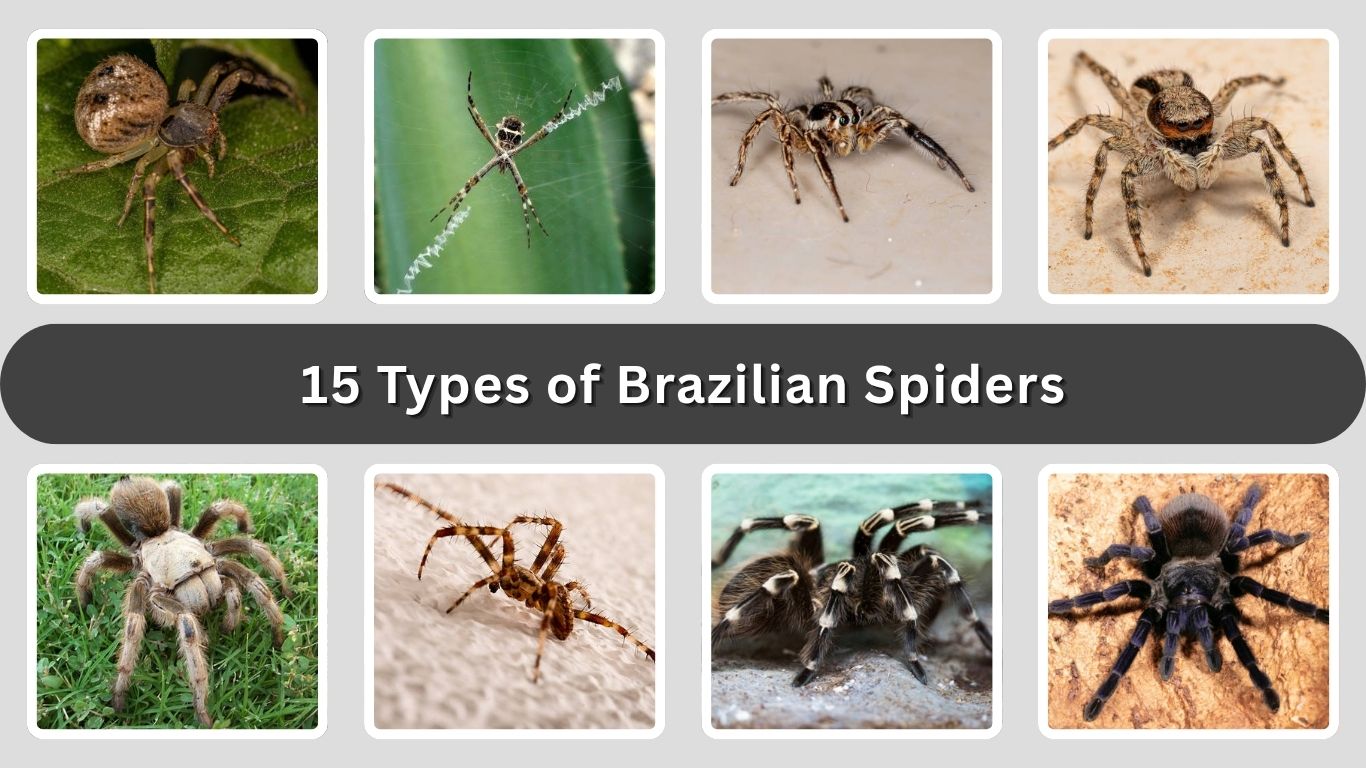
Brazil is home to an incredible diversity of spider species, ranging from large, ground-dwelling hunters to colorful tarantulas and delicate web builders. Many of these spiders may look intimidating due to their size, speed, or striking patterns, but only a few are considered medically significant.
This list explores 15 types of Brazilian spiders, highlighting their unique characteristics, behaviors, and habitats. By understanding these species better, you can separate myths from facts and appreciate the important role spiders play in maintaining natural ecosystems and controlling insect populations.
1. Brazilian Wandering Spider

The Brazilian Wandering Spider is considered one of the most dangerous spiders in the world due to its potent venom and highly active nature. Unlike many spiders, it does not stay in a web but instead roams the ground at night, which increases the chances of human encounters.
Identification
- Large, robust body
- Brown coloration with darker markings
- Long, hairy legs
- Distinctive red hairs near the fangs (in some species)
- Body length up to 5 cm, leg span up to 15 cm
Behavior
This spider is known for its defensive and aggressive posture. When threatened, it raises its front legs and displays its fangs. It is a nocturnal hunter, actively roaming in search of prey rather than waiting in a web.
Habitat
Brazilian Wandering Spiders are found in tropical regions, forests, and sometimes in human dwellings. They often hide in dark places such as logs, leaf litter, shoes, and even banana bunches, which is why they are sometimes called “banana spiders.”
Risk to Humans
This species is medically significant and can deliver a serious bite. Symptoms may include intense pain, sweating, and other systemic effects. Immediate medical attention is important if bitten. Despite this, bites are relatively rare and usually occur when the spider is accidentally disturbed.
2. Brazilian Salmon Pink Birdeater

The Brazilian Salmon Pink Birdeater is one of the largest tarantulas in the world. Despite its intimidating size, it is generally calm and more defensive than aggressive, making it less dangerous than it appears.
Identification
- Very large, hairy body
- Pinkish or salmon-colored hairs on legs
- Dark brown to black base color
- Thick, sturdy legs
- Leg span up to 25–28 cm
Behavior
This tarantula is mostly docile but can become defensive if threatened. It may flick irritating hairs from its abdomen as a defense mechanism. It is a nocturnal hunter, feeding on insects and small animals.
Habitat
It is commonly found in tropical rainforests, living in burrows or under logs and rocks. It prefers humid environments with plenty of cover.
Risk to Humans
Its bite is not considered dangerous, though it can be painful. The urticating hairs can cause skin and eye irritation. Overall, it poses low risk to humans.
3. Brazilian Black Tarantula

The Brazilian Black Tarantula is known for its striking jet-black appearance and calm temperament. It is a popular species in captivity due to its gentle nature.
Identification
- Solid black, velvety body
- Thick, hairy legs
- Robust and compact build
- Minimal patterning
- Leg span around 15–18 cm
Behavior
This species is generally calm and slow-moving. It prefers to avoid confrontation and will usually retreat if disturbed. Like other tarantulas, it is a nocturnal hunter.
Habitat
Found in grasslands and forested areas, it lives in burrows or natural shelters. It prefers dry to moderately humid environments.
Risk to Humans
The Brazilian Black Tarantula is not dangerous to humans. Bites are rare and typically mild, similar to a bee sting. It is considered one of the more harmless large spiders.
4. Brazilian Whiteknee Tarantula

The Brazilian Whiteknee Tarantula is a striking and popular species known for its bold black and white coloration. Despite its large size and dramatic appearance, it is generally not aggressive.
Identification
- Black body with bright white bands on legs
- Thick, hairy legs
- Robust body structure
- Contrasting coloration makes it easy to recognize
- Leg span up to 20–23 cm
Behavior
This tarantula is usually calm but can become defensive if provoked. It may rear up or flick urticating hairs when threatened. It is a nocturnal hunter that feeds on insects and small prey.
Habitat
It is commonly found in tropical forests, living in burrows or hiding under logs and debris. It prefers warm, humid environments with plenty of shelter.
Risk to Humans
Its bite is not dangerous but can be painful. The main defense is its irritating hairs, which can cause itching and discomfort. Overall, it poses low risk to humans.
5. Brazilian Giant Tawny Red Tarantula

The Brazilian Giant Tawny Red Tarantula is one of the largest tarantulas in Brazil, known for its reddish-brown coloration and impressive size.
Identification
- Reddish-brown or tawny body
- Large, hairy legs
- Thick and heavy build
- Slight color variations across body
- Leg span up to 25 cm
Behavior
This species is generally calm but will defend itself if threatened. It may flick urticating hairs or adopt a defensive posture. It is a nocturnal predator that hunts insects and small animals.
Habitat
Found in rainforests and humid regions, it lives in burrows or natural shelters such as under rocks and logs. It prefers areas with high humidity and cover.
Risk to Humans
It is not considered dangerous to humans. Bites are rare and typically mild, but the urticating hairs can cause irritation. It is more defensive than aggressive.
6. Brazilian Jewel Tarantula

The Brazilian Jewel Tarantula is admired for its unique and colorful appearance. Although it looks exotic and eye-catching, it is generally shy and prefers to stay hidden.
Identification
- Dark body with subtle metallic or jewel-like sheen
- Fine hairs covering the legs
- Slender yet slightly robust build
- Muted but attractive coloration
- Leg span around 12–15 cm
Behavior
This species is reclusive and avoids confrontation. It is mostly nocturnal and spends much of its time in hiding. When threatened, it may flick urticating hairs rather than bite.
Habitat
It is found in forested areas, living in burrows or under logs and leaf litter. It prefers humid environments with plenty of cover.
Risk to Humans
The Brazilian Jewel Tarantula is not dangerous. Bites are rare and mild, but its hairs can cause irritation to skin and eyes.
7. Brazilian Red and White Tarantula

The Brazilian Red and White Tarantula is known for its contrasting coloration and large size. Its bold appearance makes it stand out among other tarantula species.
Identification
- Dark body with reddish and white markings
- Thick, hairy legs
- Strong, bulky build
- Distinct color contrast on legs and body
- Leg span up to 18–22 cm
Behavior
This tarantula is generally calm but may become defensive if disturbed. It uses urticating hairs as its primary defense and prefers to retreat rather than attack.
Habitat
It inhabits tropical forests and warm regions, often living in burrows or sheltered ground spaces. It prefers humid conditions with access to hiding spots.
Risk to Humans
It poses little risk to humans. Bites are uncommon and typically mild, while the hairs can cause irritation. It is more defensive than aggressive.
8. Brazilian Blue Tarantula

The Brazilian Blue Tarantula is a visually striking species known for its subtle bluish tones and calm nature. Although not as brightly colored as some other tarantulas, its appearance is still quite impressive.
Identification
- Dark body with bluish or steel-blue sheen
- Hairy legs with slight color variation
- Medium to large size
- Smooth, velvety appearance
- Leg span around 14–18 cm
Behavior
This tarantula is generally calm and slow-moving. It prefers to avoid confrontation and will retreat to its shelter when disturbed. Like other tarantulas, it is a nocturnal hunter.
Habitat
It is found in forested and semi-humid regions, often living in burrows or under natural cover such as logs and rocks. It prefers stable, sheltered environments.
Risk to Humans
The Brazilian Blue Tarantula is not dangerous. Bites are rare and mild, and its urticating hairs may cause minor irritation.
9. Brazilian Striped Tarantula

The Brazilian Striped Tarantula is known for its patterned appearance, with visible striping that helps distinguish it from other species. It is a relatively calm spider despite its size.
Identification
- Brown or dark body with striped leg patterns
- Hairy, thick legs
- Robust body structure
- Noticeable striping on legs
- Leg span up to 16–20 cm
Behavior
This species is typically docile but can become defensive if provoked. It may flick irritating hairs or raise its front legs in a warning posture. It is mainly active at night.
Habitat
It inhabits forests and grassy regions, living in burrows or natural shelters. It prefers warm climates with moderate humidity.
Risk to Humans
It poses little threat to humans. Bites are uncommon and mild, while urticating hairs can cause irritation. It is generally harmless unless disturbed.
10. Brazilian Blonde Tarantula

The Brazilian Blonde Tarantula is known for its lighter coloration compared to other tarantulas. Its calm nature and attractive appearance make it one of the more approachable large spider species.
Identification
- Light brown to blonde body color
- Thick, hairy legs
- Slight golden or tan tones
- Robust body structure
- Leg span around 15–18 cm
Behavior
This tarantula is generally calm and slow-moving. It prefers to avoid threats and will retreat to its shelter when disturbed. Like most tarantulas, it is nocturnal and hunts insects and small prey.
Habitat
It is commonly found in warm, tropical environments, living in burrows or under logs and rocks. It prefers areas with stable temperatures and moderate humidity.
Risk to Humans
The Brazilian Blonde Tarantula is not dangerous. Bites are rare and usually mild, while its hairs may cause slight irritation. It is considered low risk to humans.
11. Brazilian Brown Spider

The Brazilian Brown Spider is a smaller but more medically significant species compared to tarantulas. It belongs to the recluse group and is known for its potent venom.
Identification
- Light to medium brown coloration
- Slender body with long legs
- Smooth, non-hairy appearance
- Violin-shaped marking on the back (in some cases)
- Body length around 1–2 cm
Behavior
This spider is shy and reclusive, preferring to hide in quiet, undisturbed areas. It is mostly active at night and avoids human contact whenever possible.
Habitat
Commonly found in homes, storage areas, and dry, sheltered places such as closets, boxes, and behind furniture. It prefers warm environments.
Risk to Humans
This species can be medically significant. Bites are rare but may cause skin irritation or more serious reactions in some cases. Immediate medical attention is recommended if symptoms develop.
12. Brazilian Wolf Spider

The Brazilian Wolf Spider is a fast-moving ground hunter known for its strong vision and active hunting style. It does not rely on webs, which often makes it appear more aggressive than it really is.
Identification
- Brown or gray body with patterns
- Hairy, robust legs
- Prominent forward-facing eyes
- Stout body structure
- Body length up to 3 cm
Behavior
This spider is an active hunter that chases its prey instead of trapping it. It is mostly nocturnal and relies on speed and eyesight. Although it may seem bold, it usually avoids humans and runs away when disturbed.
Habitat
It is commonly found in forests, grasslands, and sometimes near homes. It prefers ground-level habitats such as leaf litter, soil, and under rocks or debris.
Risk to Humans
Wolf spiders are not dangerous to humans. Bites are rare and usually mild, causing minor pain or swelling. They are beneficial as they help control insect populations.
13. Brazilian Jumping Spider

The Brazilian Jumping Spider is a small, active spider known for its excellent vision and quick, jumping movements. It is one of the most curious and less threatening spider types.
Identification
- Small, compact body
- Bright or patterned coloration
- Large, forward-facing eyes
- Short, strong legs
- Body length around 5–10 mm
Behavior
Jumping spiders are active during the day and rely on their vision to hunt. They stalk prey and leap onto it with precision. They are curious but not aggressive and often observe their surroundings.
Habitat
They are found in a variety of environments, including gardens, walls, and inside homes. They prefer areas with good lighting and surfaces for movement.
Risk to Humans
They pose no significant risk. Bites are extremely rare and harmless. They are beneficial spiders that help reduce small insect populations.
14. Brazilian Garden Spider

The Brazilian Garden Spider is a colorful and web-building species commonly found in outdoor environments. It is known for its intricate webs and striking appearance, making it easy to spot in gardens.
Identification
- Bright yellow and black patterned body
- Rounded abdomen
- Long, slender legs with banding
- Distinct symmetrical markings
- Medium to large size
Behavior
This spider is non-aggressive and spends most of its time in its web. It waits for insects to become trapped before quickly immobilizing them. It rarely leaves its web unless necessary.
Habitat
It is commonly found in gardens, bushes, and open spaces where it can build large orb-shaped webs. It prefers sunny areas with plenty of flying insects.
Risk to Humans
The Brazilian Garden Spider is harmless to humans. Bites are very rare and mild. It is highly beneficial as it helps control pest insects.
15. Brazilian Crab Spider

The Brazilian Crab Spider is named for its crab-like stance and sideways movement. It is a stealthy ambush predator that blends well with its surroundings.
Identification
- Flattened body shape
- Legs extend sideways like a crab
- Colors vary from white to brown or yellow
- Short, thick front legs
- Small to medium size
Behavior
This spider does not build webs to catch prey. Instead, it waits in ambush, often on flowers or leaves, and quickly grabs insects that come close. It is not aggressive and relies on camouflage.
Habitat
Found in gardens, forests, and vegetation. It prefers flowers and leaves where it can blend in and ambush prey.
Risk to Humans
It poses no danger to humans. Bites are extremely rare and harmless. It plays a useful role in controlling insect populations naturally.
