
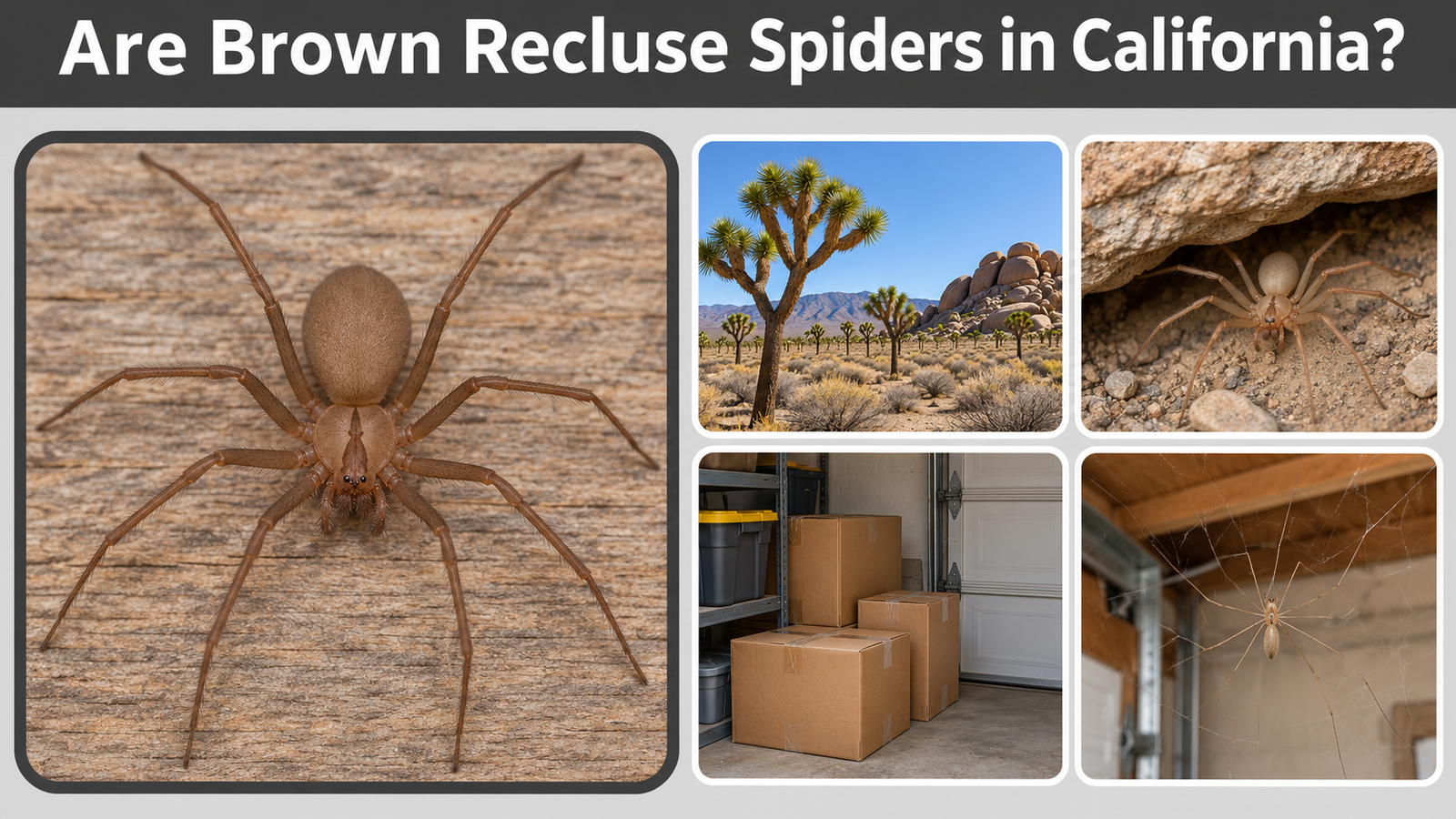
California has no known established populations of the brown recluse spider (Loxosceles reclusa). An occasional individual can arrive in a shipment or among belongings moved from another state, but the species does not normally live or reproduce in California. The state does have related spiders, including the native desert recluse in southeastern California and the Chilean recluse in a small part of Los Angeles County. If you find a brown spider in your home, where you found it and what its body looks like are more useful clues than its color alone.
Do Brown Recluse Spiders Live in California?
The brown recluse’s established U.S. range is mainly in the south-central states and parts of the Midwest. California lies well outside that range. The distinction matters because a rare spider transported into the state tells you little about what is likely to be living in your garage, attic, or closet.
How Could a Brown Recluse Reach California?
Brown recluses hide in undisturbed places and can be carried in boxes, furniture, or other stored belongings. For example, a spider could shelter in a carton packed in Missouri and emerge after the box is opened in California. Documented finds of individual spiders in the state have been rare.
If you discover a spider in belongings that just arrived from an area where brown recluses live, mention that detail when asking for identification. If you find one in a box that has been in your California garage for years, the box itself offers little evidence. Many local spiders use dark, sheltered spaces.
What About Northern California and the Bay Area?
The brown recluse has no established populations in Northern California, including the San Francisco Bay Area and Sacramento. The California desert habitats where encounters with native recluses are more plausible lie much farther southeast. A brown spider found in a Bay Area bathroom, basement, or garage is more likely to be a local look-alike than a recluse.
Location is a starting point for identification. A clear photo of the spider’s body and legs, plus details about where you found it, can help an entomologist narrow down the possibilities. If the spider has already disappeared, a description such as “small, brown, and fast” fits too many species to make a reliable identification.
Which Recluse Spiders Are Found in California?
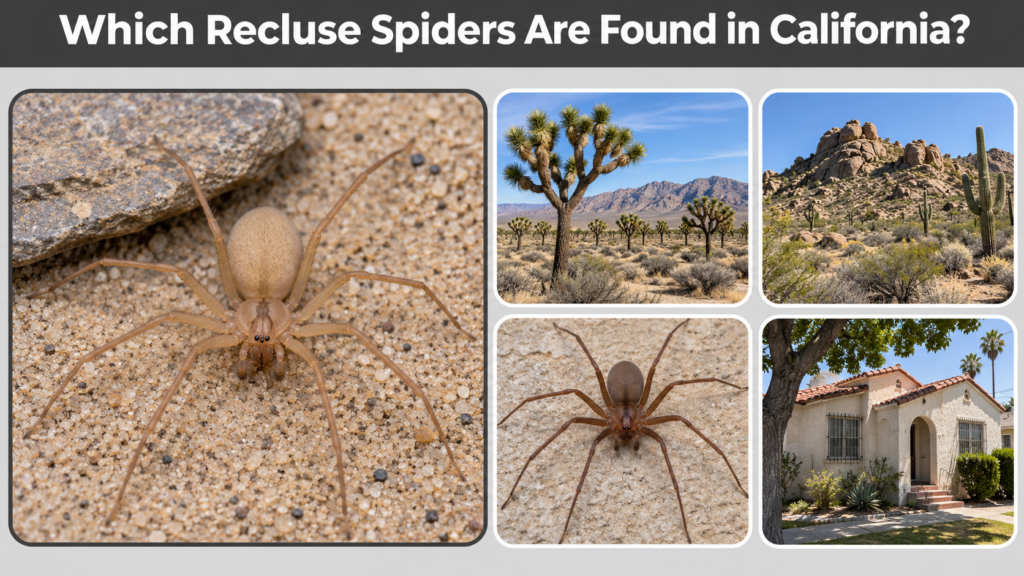
The term recluse spider describes a group of related species. The brown recluse is one member of that group. Several native recluses occur in southern California, and an introduced species has a foothold in part of Los Angeles County. Knowing which species people are referring to helps make sense of apparently conflicting reports.
| Spider | Status in California | Where it occurs |
|---|---|---|
| Brown recluse (Loxosceles reclusa) | No known established population | Rare individual introductions are possible |
| Desert recluse (Loxosceles deserta) | Native | Mainly in the Mojave and Sonoran deserts, with records in the foothills of the lower San Joaquin Valley |
| Chilean recluse (Loxosceles laeta) | Introduced and locally established | A limited part of Los Angeles County |
Desert Recluse in Southern California
The desert recluse is the native species most relevant to people living in or visiting southeastern California’s desert areas. It shelters in protected places, including beneath rocks and in crevices. Contact is more plausible when moving objects that provide shelter or working in undisturbed areas where the spider might hide.
Desert recluses can look similar to brown recluses. Both can have a tan body and long, slender legs, and the familiar violin marking may be faint on a desert recluse. A suspected bite deserves medical attention based on the circumstances and symptoms, since the venom can damage skin.
Chilean Recluse in Los Angeles County
UC Integrated Pest Management has documented the Chilean recluse in a limited area that includes records from Alhambra, Monterey Park, San Gabriel, and Sierra Madre. Its presence helps explain why reports of recluse spiders in Los Angeles can be accurate even though the true brown recluse has no established California population.
These records describe a localized occurrence. An address somewhere in Los Angeles County is too broad to identify a spider. If you find a recluse-like specimen in one of the documented areas, a clear photo or expert identification is more useful than guessing from its color.
What Spiders Look Like Brown Recluses in California?
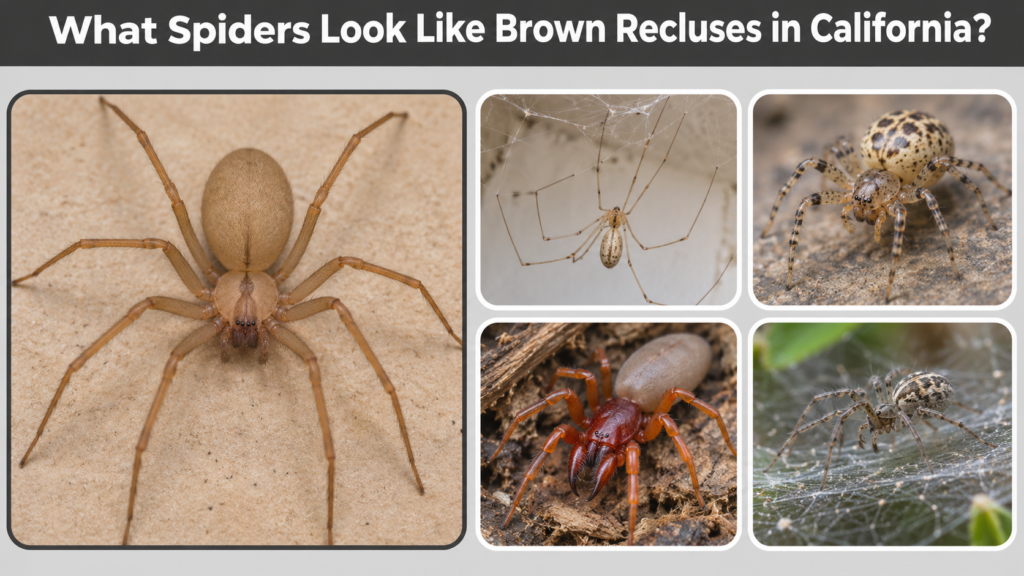
Many California spiders are brown or tan. Long legs, a dark mark, and a habit of appearing indoors can make some of them look like recluses at a glance. A useful first step is to look at the whole spider, including its legs, abdomen, and the shape of the front part of its body.
| Look-alike | Features that can help distinguish it |
|---|---|
| Cellar spider | Extremely long, thin legs and often found hanging in a loose indoor web |
| Spitting spider | Rounded, domed front body with dark spots or lines |
| Woodlouse spider | Reddish front body and legs, pale abdomen, and large jaws |
Check More Than the Violin Mark
A recluse typically has slender, unbanded legs and a fairly plain abdomen. A darker patch on the front part of the body may resemble a violin. The mark varies among recluse species, and some unrelated spiders have markings that look similar. A shadow or reflection in a phone photo can make the resemblance even stronger.
Recluses have six eyes arranged in three pairs. Eye arrangement is useful under magnification, particularly alongside other body features. Spitting spiders can also have six eyes in a similar arrangement, so eye count alone has limits. Keep your distance and photograph the spider only if you can do so safely.
Could a Skin Sore Be a Brown Recluse Bite in California?
A true brown recluse bite acquired in California would be unusual. A bite from a related recluse is possible in parts of the state where those spiders occur. Skin infections and other medical conditions can produce similar redness, swelling, blisters, or sores, so the appearance of the wound alone cannot confirm a spider bite.
What to Do if You Suspect a Spider Bite
Wash the area gently with soap and water. If you suspect a recluse bite, contact a healthcare professional or U.S. Poison Control at 1-800-222-1222. Tell them when you noticed the symptoms, where you were, and whether you saw a spider at the time. If you recently traveled outside California, share that detail too.
Seek prompt medical care for worsening pain, spreading redness, fever, or a developing open sore. Call 911 if the person has trouble breathing, feels faint, becomes confused, or collapses. Getting the wound assessed is more important than capturing a spider or waiting for the skin to change.
How to Handle a Suspected Recluse in Your California Home
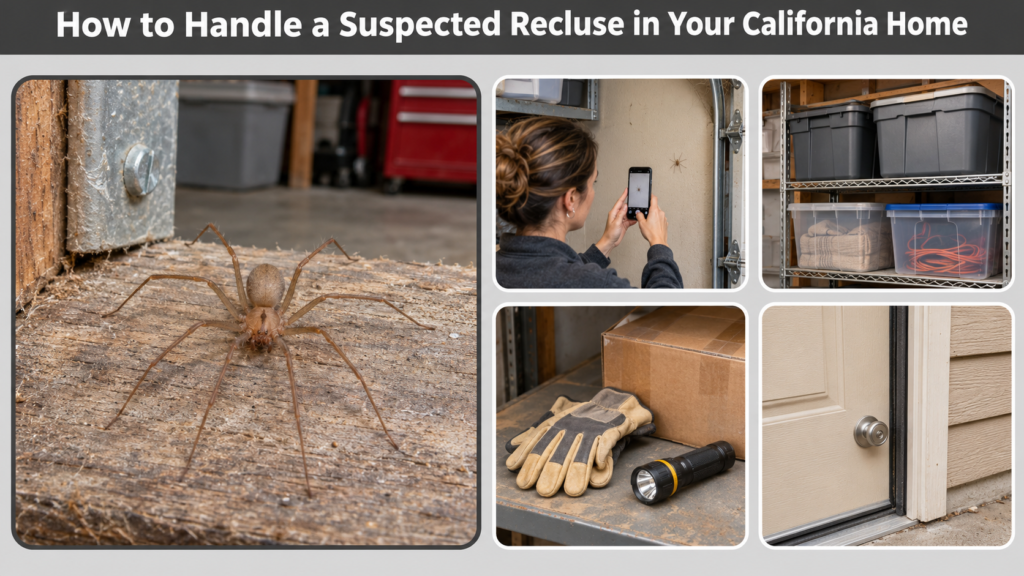
If you find a recluse-like spider, note the room, the exact spot, and whether it was near recently shipped items. Take a clear photo from a safe distance if possible. A county agricultural office, university extension office, or pest professional may be able to help with identification. If similar spiders keep appearing, those details can help someone determine where to inspect.
Reduce Encounters in Garages and Storage Areas
Use lidded bins for items you rarely open, wear gloves when moving old boxes or firewood, and shake out work boots and gloves that have been sitting in storage. Use a flashlight before reaching into dark corners or behind shelves. These habits reduce the chance of accidentally pressing a hidden spider against your skin.
Check garage and exterior doors for gaps and replace worn weather stripping where needed. If you find one unfamiliar spider, start with identification before deciding whether pest treatment is needed. A photo and an accurate location can tell you more than the number of times a spider has appeared in the same corner.
Frequently Asked Questions
Are brown recluse spiders in Los Angeles?
There is no known established population of the true brown recluse in Los Angeles. A related species, the Chilean recluse, has been documented in a small part of Los Angeles County.
Are brown recluse spiders in San Diego?
San Diego has no known established population of the true brown recluse. Native recluses occur in parts of Southern California’s desert region, so the precise location matters when identifying a specimen.
Can a brown recluse come to California in a package?
Yes. An individual can travel in a shipment, moving box, or stored item from within its established range. Finding a transported spider does not establish that a local breeding population exists.
Is a desert recluse the same as a brown recluse?
They are two related species. The desert recluse (Loxosceles deserta) is native to parts of the Southwest, including California. The brown recluse (Loxosceles reclusa) is established mainly in the south-central and Midwestern United States.
What venomous spider is more common in California?
The western black widow is widespread in California and is more likely to be encountered than the true brown recluse. Adult females are typically glossy black with a red or orange hourglass mark on the underside of the abdomen.
