
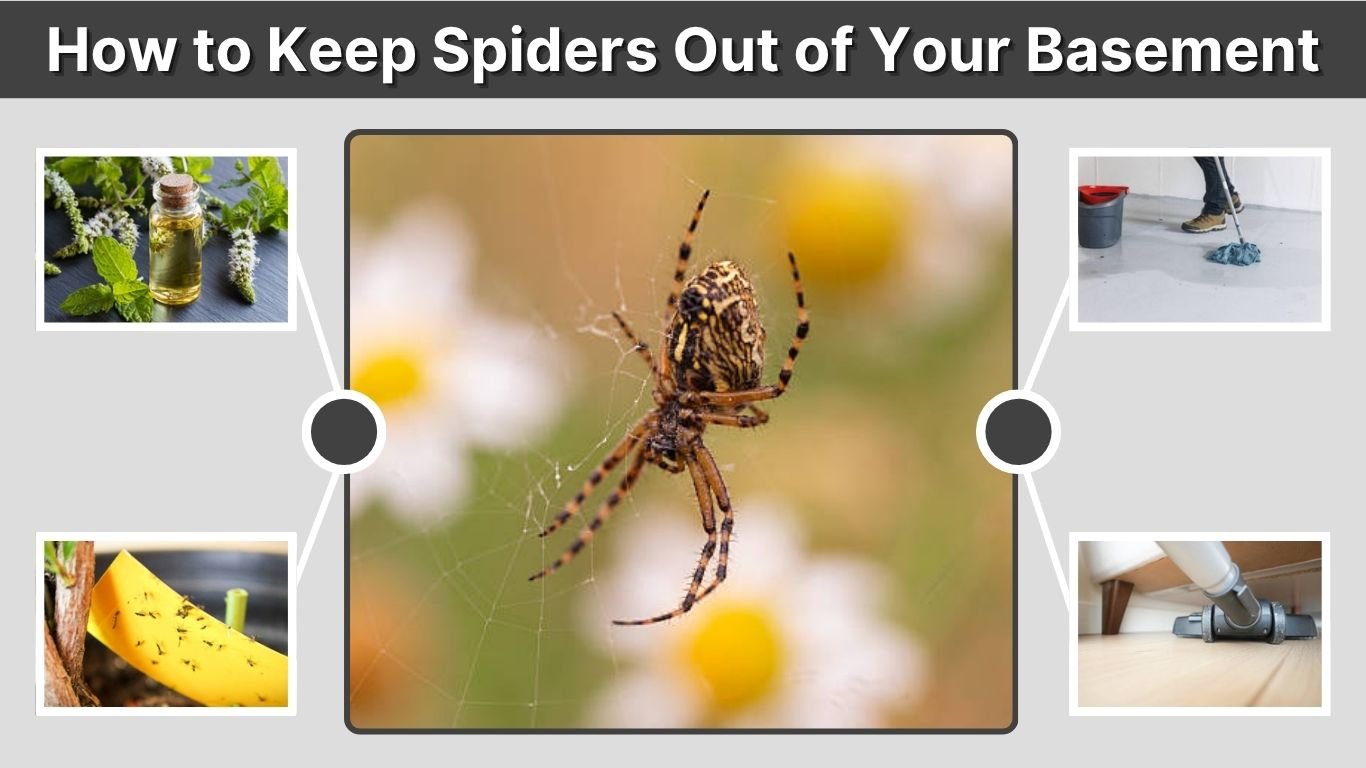
Spiders are common in basements because these spaces often provide dark corners, undisturbed storage areas, and plenty of insects to eat. Although most basement spiders are harmless, discovering webs behind furniture or spiders crawling across the floor can be uncomfortable. Fortunately, learning how to keep spiders out of your basement does not require expensive pest control treatments. Simple improvements, including sealing cracks, reducing moisture, and removing clutter, can significantly reduce spider activity. This guide explains practical methods to keep spiders away and maintain a cleaner, more comfortable basement.
Why Do Spiders Keep Coming Into Your Basement?
Basements provide conditions that suit many spider species. Small foundation cracks, poorly sealed windows, and gaps around utility pipes allow spiders to enter. Once inside, they may find suitable shelter and insects to eat. Understanding why spiders appear in your basement helps you address the underlying causes instead of repeatedly removing individual spiders.
Dark and Undisturbed Areas
Spiders frequently occupy quiet corners, storage spaces, and areas behind furniture. These locations offer protection from disturbance and provide suitable places to build webs or hide.
Unfinished basements may contain additional hiding places around exposed pipes, wooden framing, and stored equipment.
Moisture and Insect Activity
Damp basements often support insects and other small arthropods that spiders eat. Moisture itself does not attract every spider species, but the insects associated with damp conditions can provide food.
Addressing leaks and controlling humidity may reduce these prey populations.
10 Effective Ways to Keep Spiders Out of Your Basement
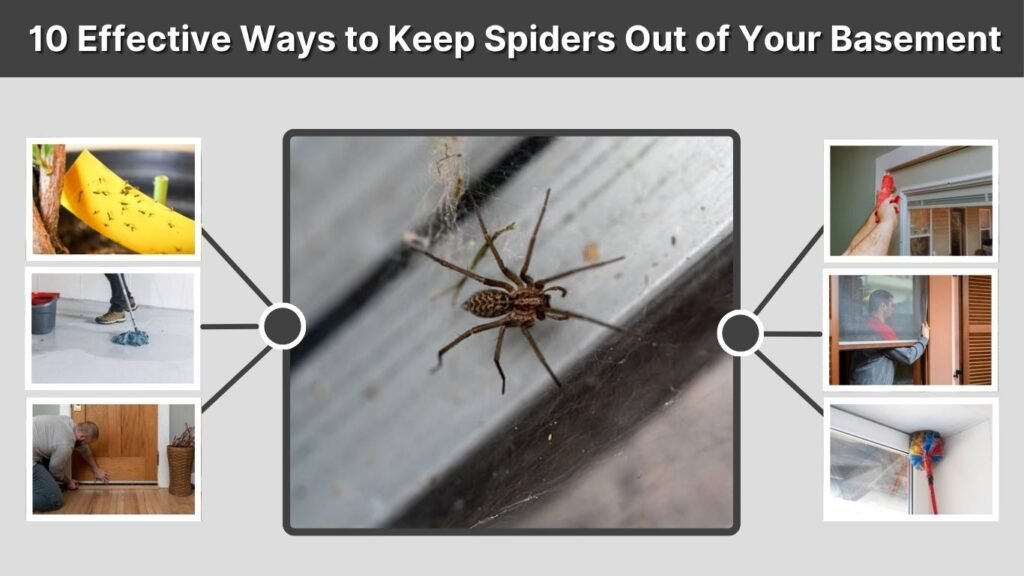
The best basement spider prevention methods involve removing hiding places, limiting food sources, and blocking entry points. Using several strategies together is usually more effective than relying on a single treatment. Regular cleaning and basic home maintenance can discourage spiders from settling indoors while reducing other common basement pests.
1. Seal Cracks and Foundation Gaps
Small openings around basement walls and foundations allow spiders and insects to enter.
- Seal suitable cracks with appropriate caulk or sealant.
- Close gaps around plumbing and utility lines.
- Repair damaged window frames.
- Install weatherstripping around exterior basement doors.
Have significant structural cracks or active water leaks evaluated before attempting repairs.
2. Install Proper Window Screens
Basement windows are common entry points for crawling insects and spiders.
Inspect screens for holes, loose edges, or damaged frames. Replace broken screens and check that windows close properly.
Well-maintained screens help prevent spiders from entering while also limiting the insects they feed on.
3. Remove Spider Webs Regularly
Vacuum basement corners, ceiling edges, windowsills, and areas behind furniture.
Remove visible webs and egg sacs when possible. Use a vacuum attachment to reach difficult locations without touching spiders directly.
Regular web removal helps reduce spider numbers and makes it easier to identify areas with repeated activity.
4. Reduce Basement Clutter
Clutter creates hiding places for spiders and makes regular cleaning difficult.
- Replace unnecessary cardboard boxes with sealed plastic containers.
- Keep storage items elevated on shelves.
- Remove unused furniture and household materials.
- Leave accessible space between storage boxes and walls.
Organized storage makes it easier to inspect for spiders and other pests.
5. Use a Dehumidifier When Needed
Excess humidity may encourage moisture-loving insects that attract spiders.
Use a hygrometer to monitor conditions. Aim for approximately 30–50% relative humidity where practical, and address leaks or water intrusion.
A properly sized dehumidifier can help manage humidity, but it will not eliminate spiders by itself.
6. Control Other Basement Insects
Spiders depend on other small animals for food. Basements containing crickets, flies, silverfish, or other insects may provide attractive hunting opportunities.
Seal insect entry points, remove food debris, repair leaks, and keep trash containers closed.
Reducing available prey can make your basement less suitable for spiders.
7. Keep Basement Floors Clean
Dust, debris, and stored objects make it harder to detect spiders and their hiding places.
Sweep unfinished concrete floors and vacuum finished basement flooring regularly.
Pay particular attention to baseboards, stairs, storage shelves, and the spaces beneath furniture.
8. Install Door Sweeps
Exterior basement doors often have small gaps beneath them.
Install tightly fitting door sweeps and repair damaged weatherstripping. Check door frames for cracks or openings.
These improvements help stop crawling spiders and insects from entering at ground level.
9. Use Sticky Traps for Monitoring
Sticky monitoring traps can reveal where wandering spiders are active.
Place suitable traps along walls or behind furniture where children and pets cannot reach them.
Inspect traps regularly to identify problem locations. They are useful for monitoring but cannot replace sealing, cleaning, and insect control.
10. Maintain the Area Around Your Foundation
Outdoor conditions can influence spider activity inside your basement.
Keep leaves, woodpiles, and unused equipment away from foundation walls. Trim dense vegetation touching the building.
Inspect exterior basement windows and entrances regularly for gaps and accumulated debris.
How to Keep Spiders Out of Your Basement Naturally
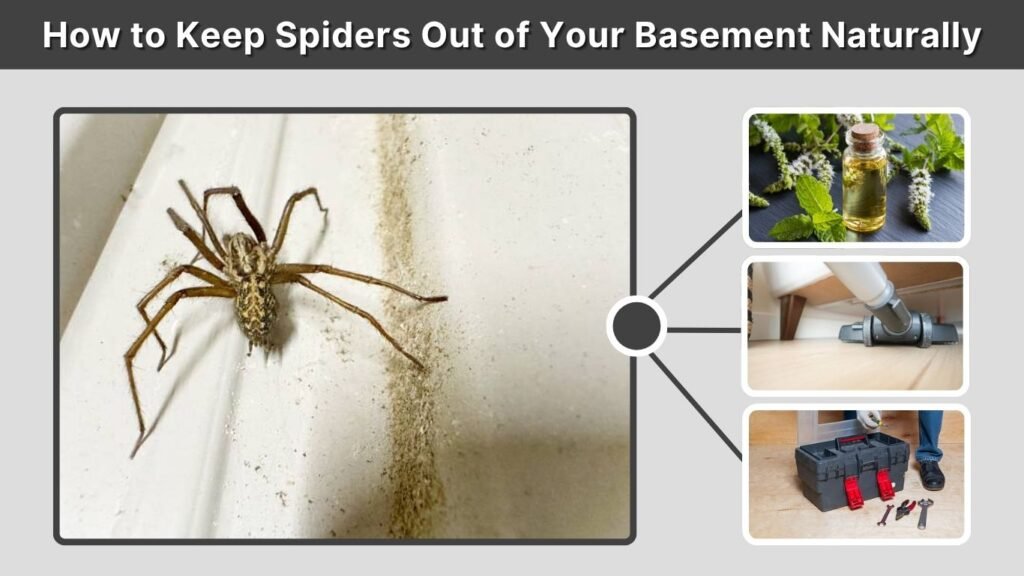
Natural spider prevention focuses on physical barriers and changing environmental conditions rather than routine pesticide applications. These approaches are particularly useful in living spaces where children or pets spend time. While many household substances are advertised as spider repellents, their effectiveness varies. Proven cleaning and exclusion practices generally offer more dependable long-term results.
Does Peppermint Oil Keep Basement Spiders Away?
Peppermint oil may repel some spider species under certain conditions, but evidence for reliable basement-wide prevention is limited.
Essential oils can irritate people and may be harmful to pets, particularly cats. Avoid relying on scented sprays as your primary spider-control method.
Natural Prevention Without Chemicals
Simple household maintenance provides effective nonchemical prevention.
- Vacuum corners and remove webs frequently.
- Seal cracks and damaged window frames.
- Reduce insects and excess moisture.
- Keep storage areas organized.
These measures address the shelter and food sources that allow spiders to remain indoors.
How to Keep Spiders Out of Basement Bedrooms
Basement bedrooms require additional attention because people sleep, store clothing, and spend considerable time in these spaces. Keeping spiders away involves reducing hiding places near beds, maintaining well-sealed windows, and cleaning frequently. Finished basement bedrooms can still experience spider activity if insects enter through structural gaps or concealed openings.
Keep Your Bed Area Clean
Vacuum beneath and behind your bed regularly. Avoid leaving clothing, shoes, and unnecessary belongings on the floor.
Keep bedding from touching the floor and inspect nearby baseboards for openings.
These precautions reduce hiding places and help limit accidental encounters with wandering spiders.
Protect Basement Windows and Closets
Check bedroom windows for damaged screens and gaps around frames.
Store seasonal clothing in closed containers and inspect infrequently used closets. Regularly clean corners where spider webs might develop.
Common Types of Spiders Found in Basements
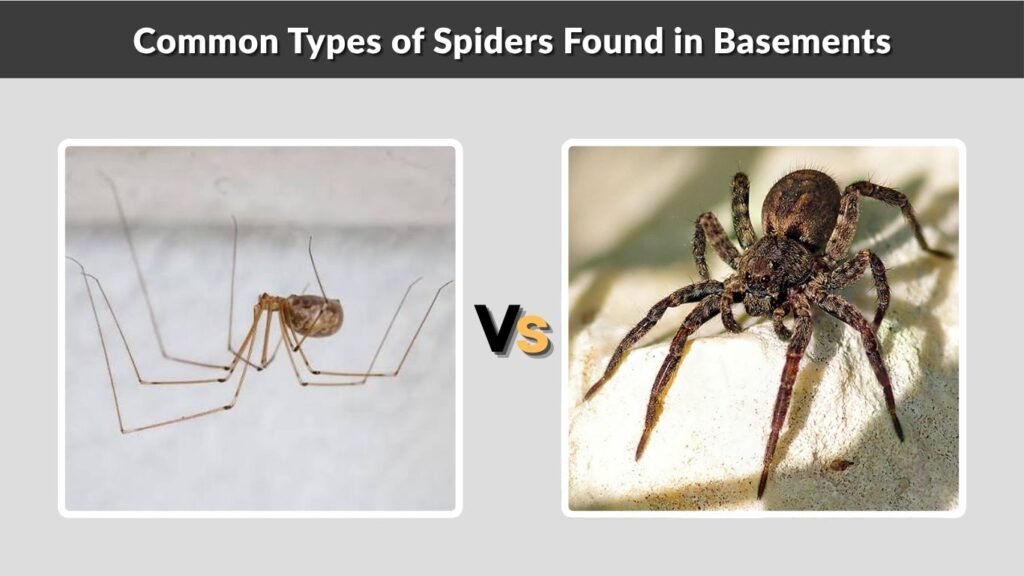
Several spider species regularly appear in basements because these spaces offer shelter and opportunities to capture prey. Correct identification can help determine whether a spider is harmless or requires additional caution. Most basement spiders are not dangerous, although medically significant species may occur in certain geographic regions.
Cellar Spiders
Cellar spiders have small bodies and unusually long, thin legs. They commonly construct loose, irregular webs in basement corners, crawl spaces, and around pipes.
They feed on small insects and other spiders and are generally considered harmless to people.
Wolf Spiders
Wolf spiders are active hunters that usually move across floors instead of building capture webs.
They may enter basements through foundation gaps or exterior doors while searching for insects.
Sealing ground-level openings and reducing prey can help limit encounters.
How to Keep Your Basement Spider-Free Long-Term
Preventing spiders is an ongoing process because occasional spiders can enter even well-maintained buildings. Establishing a routine helps identify new entry points, insect activity, and developing webs before they become persistent problems. Consistent maintenance is more dependable than applying temporary repellent treatments whenever a spider appears.
Follow a Regular Cleaning Schedule
Inspect your basement every few weeks for webs, gaps, and stored-item clutter.
Check window seals seasonally and address moisture problems promptly.
If you repeatedly discover large numbers of spiders or potentially dangerous species, consider consulting a qualified pest management professional.
FAQs
1. What Is the Best Way to Keep Spiders Out of a Basement?
The most effective approach combines sealing foundation cracks, removing webs, controlling insects, and reducing clutter. Maintaining appropriate humidity levels can also help limit moisture-related pests that spiders feed on.
2. Does a Dehumidifier Keep Spiders Away?
A dehumidifier does not directly eliminate spiders. However, controlling excess moisture may reduce insects that thrive in damp environments. Combining humidity management with cleaning and sealing entry points provides better results than dehumidification alone.
3. How Do I Keep Spiders Out of an Unfinished Basement?
Inspect exposed walls, foundation cracks, pipes, and storage areas. Seal suitable openings, remove webs regularly, and organize stored belongings. Unfinished basements benefit particularly from reducing clutter and keeping cardboard boxes off the floor.
4. What Smell Keeps Spiders Out of the Basement?
No household scent has been proven to reliably prevent all basement spiders. Peppermint oil has shown limited repellent effects against certain species, but physical barriers, insect control, and cleaning remain more dependable prevention methods.
5. Can I Permanently Get Rid of Basement Spiders?
Complete permanent elimination is unlikely because spiders may enter through doors, windows, or overlooked gaps. Nevertheless, consistent exclusion, cleaning, moisture management, and insect control can substantially reduce basement spider activity throughout the year.
