
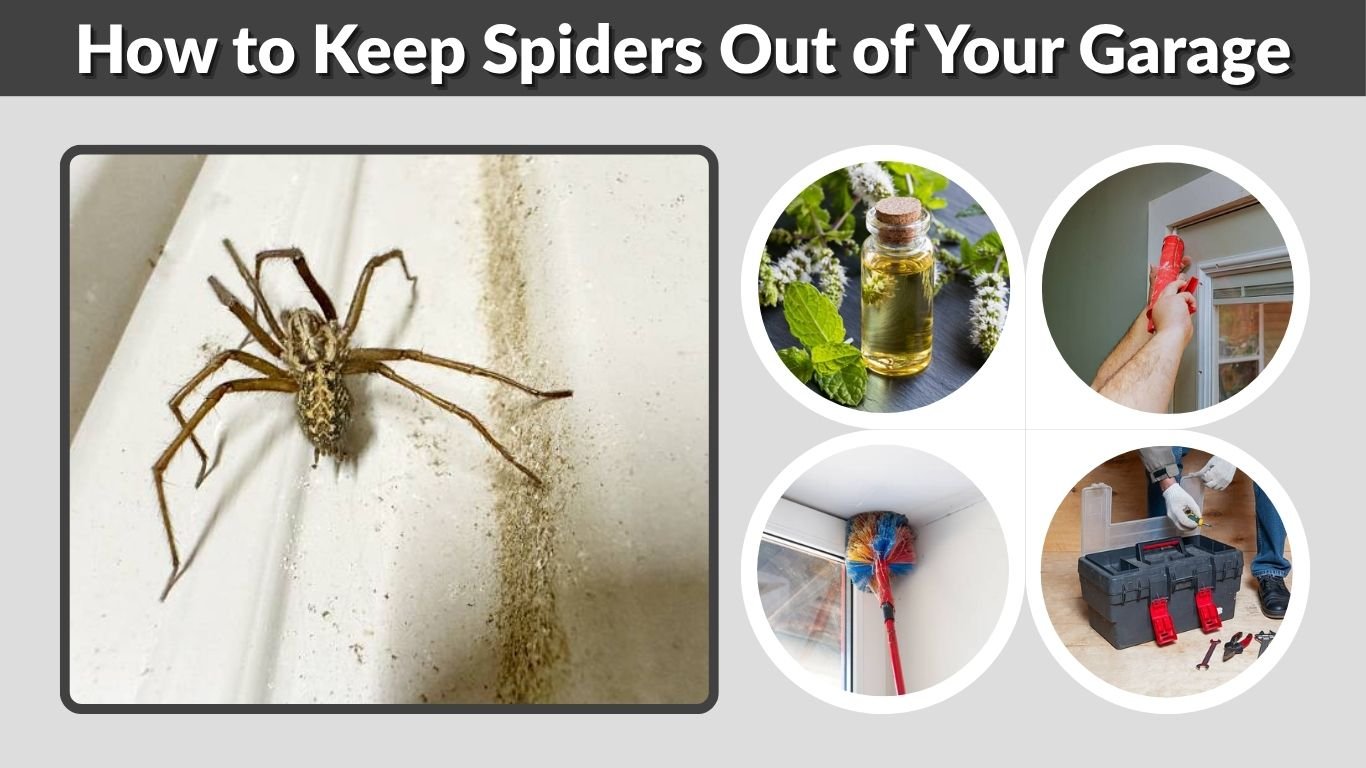
Finding spiders in your garage can be frustrating, especially when they build webs around storage boxes, tools, and doorways. Garages provide ideal hiding places because they often contain clutter, insects, and dark corners. Although most spiders are harmless, you probably don’t want them living near your belongings. Fortunately, learning how to keep spiders out of your garage is easier than you might think. By sealing entry points, cleaning regularly, and removing food sources, you can reduce spider activity and keep your garage cleaner, safer, and more comfortable.
Why Do Spiders Keep Coming Into Your Garage?
Garages attract spiders because they offer shelter, hiding places, and access to insects. Unlike living rooms, garages are frequently left undisturbed for extended periods. Open garage doors, small structural gaps, and stored belongings also create opportunities for spiders to enter. Understanding these conditions helps you identify problem areas and develop effective prevention strategies.
Dark and Cluttered Spaces
Spiders often hide behind storage boxes, cabinets, shelving units, and unused equipment. These areas provide protection from disturbance and suitable locations for building webs.
Cardboard boxes, old furniture, and piles of clothing can make garages particularly attractive to spiders.
Easy Access to Insects
Spiders feed on insects such as flies, moths, mosquitoes, and crickets. When these insects enter your garage, they create a food source for spiders.
Outdoor lighting, open doors, and gaps around windows can increase insect activity, indirectly attracting more spiders.
10 Effective Ways to Keep Spiders Out of Your Garage
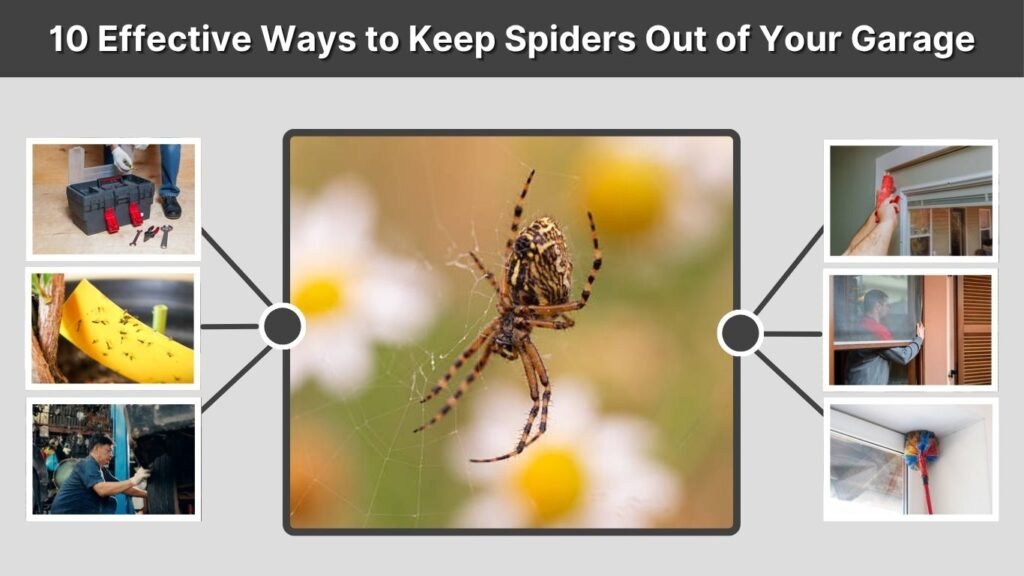
Keeping spiders away requires a combination of cleaning, maintenance, and prevention. Rather than relying on a single treatment, focus on removing hiding places and making your garage harder to enter. The following practical methods can help reduce spider activity without requiring expensive equipment or frequent chemical applications.
1. Seal Gaps Around the Garage Door
Small openings around garage doors are common entry points for spiders and insects. Inspect the bottom, sides, and top of your garage door for visible gaps.
- Install a properly fitting garage door bottom seal.
- Replace damaged weatherstripping.
- Seal cracks around door frames with suitable caulk.
- Repair gaps around pipes and utility openings.
Make sure seals do not interfere with the door’s safe operation.
2. Install Screens and Repair Cracks
Garage windows, vents, and exterior openings can allow spiders to enter. Repair damaged window screens and ensure ventilation openings have appropriate protective screening.
Seal cracks in walls and foundations with suitable materials. Avoid blocking required ventilation, particularly around fuel-burning appliances.
These improvements help prevent both spiders and the insects they eat from entering.
3. Remove Clutter and Organize Storage
A cluttered garage provides numerous hiding places for spiders. Organizing your belongings makes these areas less attractive and easier to inspect.
- Replace unnecessary cardboard boxes with sealed plastic containers.
- Store seasonal decorations on elevated shelves.
- Remove unused furniture and equipment.
- Keep storage containers away from walls when possible.
Regular organization also helps you identify webs and egg sacs before spider activity increases.
4. Remove Spider Webs and Egg Sacs
Regular cleaning is one of the most effective ways to control spiders in garages.
Use a vacuum with an extension attachment to clean ceiling corners, shelving units, window frames, and spaces behind stored items.
Remove visible webs and egg sacs carefully. Empty the vacuum according to its instructions after collecting spiders or egg sacs.
Repeating this process prevents webs from accumulating and reduces established spider populations.
5. Control Insects Inside Your Garage
Spiders are more likely to remain where food is available. Reducing insects is therefore an essential part of garage spider prevention.
Keep garbage containers closed and clean up spilled food or pet food promptly. Repair window screens and avoid leaving garage doors open unnecessarily.
Consider using warm-colored exterior lighting that attracts fewer flying insects than some conventional bulbs.
6. Store Shoes, Gloves, and Tools Properly
Shoes, gardening gloves, and equipment stored in garages can provide shelter for spiders.
- Keep shoes inside closed cabinets or containers.
- Store gardening gloves in sealed bags.
- Inspect infrequently used equipment before handling it.
- Shake out stored footwear before putting it on.
These precautions are especially important in regions where potentially dangerous spiders, including black widows, occur.
7. Keep Vegetation Away From Garage Walls
Overgrown shrubs, vines, and nearby vegetation can provide shelter for spiders and their insect prey.
Trim plants touching garage walls and remove accumulated leaves around the foundation.
Keep firewood, unused flowerpots, and outdoor equipment away from garage entrances whenever possible.
Maintaining a clear area around the structure helps discourage spiders from settling nearby.
8. Reduce Moisture and Improve Ventilation
Damp garages may attract moisture-loving insects, which can become food for spiders.
Repair leaking pipes, address water intrusion, and improve airflow where appropriate.
A dehumidifier may help in garages with persistent humidity, provided it is suitable for the conditions.
Reducing excess moisture supports insect control and makes stored belongings less vulnerable to damage.
9. Use Sticky Traps for Monitoring
Sticky monitoring traps can help identify where crawling spiders and insects are active.
Place suitable traps along walls or behind storage units, following the manufacturer’s directions.
Keep traps inaccessible to children, pets, and wildlife. Check them regularly and replace them when necessary.
Traps are most useful for monitoring activity and locating problem areas rather than providing complete spider prevention.
10. Inspect Your Garage Regularly
Consistent maintenance helps prevent spider problems from becoming established.
Inspect door seals, storage shelves, window corners, and other sheltered locations every few weeks.
Remove webs promptly, check for insects, and repair newly discovered openings.
A short inspection routine can reduce the need for more extensive cleaning or pest treatments later.
How to Keep Spiders Out of Your Garage Naturally
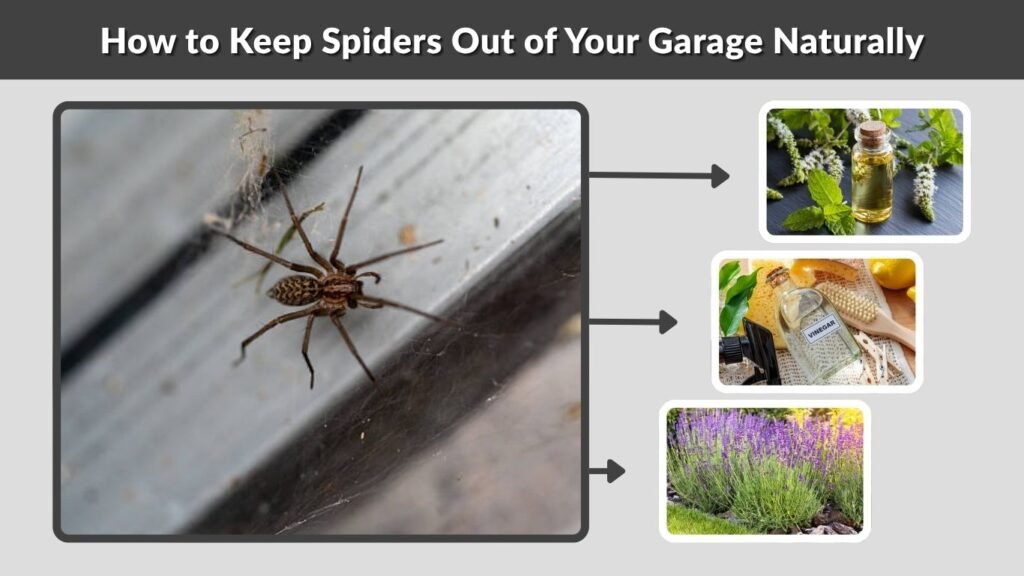
Natural spider prevention focuses on changing the conditions that attract spiders rather than using chemical pesticides. The most reliable methods include physical exclusion, frequent cleaning, and insect control. Although several household substances are promoted as spider repellents, many lack strong scientific evidence. Understanding their limitations helps you choose safer, more dependable solutions.
Does Peppermint Oil Keep Garage Spiders Away?
Peppermint oil has demonstrated repellent effects against certain spiders in laboratory studies, but its effectiveness varies by species.
There is insufficient evidence that peppermint oil reliably protects an entire garage. Essential oils can also pose risks to pets and may irritate people.
For dependable results, prioritize sealing openings and removing hiding places.
Do Vinegar, Lavender, and Mothballs Work?
Vinegar and lavender are popular household remedies, but evidence for reliable garage-wide spider repellency is limited.
Mothballs should not be scattered around garages to deter spiders. They are pesticides intended for specific labeled uses, and their vapors can be harmful.
Physical barriers and cleanliness remain better first-line strategies.
How to Keep Wolf Spiders and Black Widows Out of Garages
Different spiders behave differently, so identification can help determine appropriate prevention methods. Wolf spiders typically wander while hunting prey, whereas black widows often remain in sheltered locations with irregular webs. Garages may provide suitable conditions for both in areas where these species occur. Removing clutter and limiting insects can help reduce encounters.
Preventing Wolf Spiders in Your Garage
Wolf spiders are active hunters that generally do not build capture webs. They may wander into garages while searching for insects.
Install door sweeps, seal ground-level openings, and reduce insect activity.
Keep stored belongings organized so wandering spiders have fewer places to hide.
Preventing Black Widow Spiders
Black widows may occupy sheltered spaces behind boxes, beneath shelves, and inside undisturbed equipment.
Wear gloves when moving stored items, and avoid reaching blindly into dark spaces.
If you suspect significant black widow activity, consider professional identification and targeted pest management instead of handling spiders directly.
How to Keep Your Garage Spider-Free Year-Round
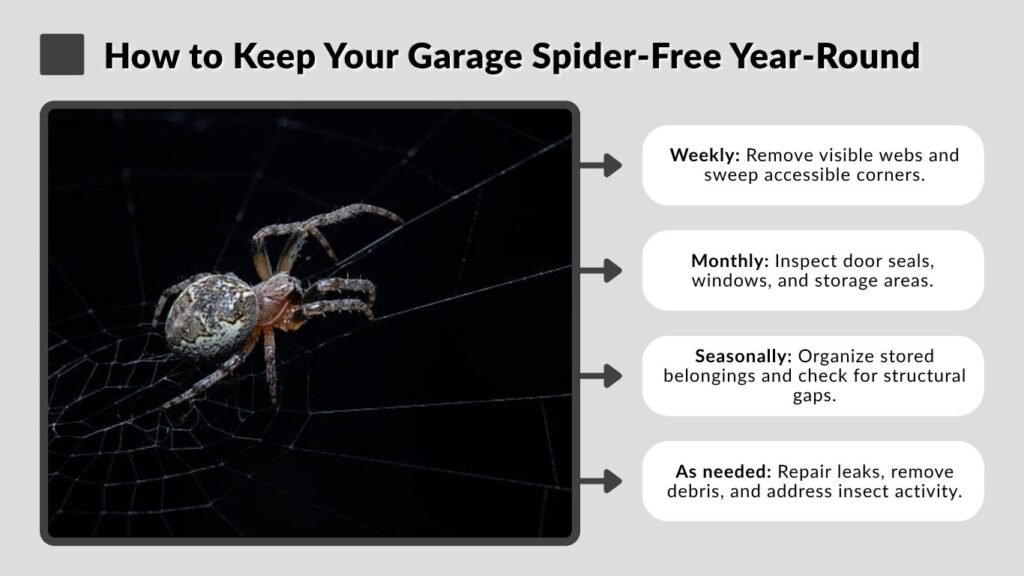
Long-term spider prevention depends on maintaining good habits throughout the year. Seasonal weather changes, open garage doors, and accumulating belongings can introduce new opportunities for spiders. A consistent maintenance routine is more effective than occasional intensive cleaning because it addresses entry points, insects, and hiding places before they become persistent problems.
Follow a Simple Garage Maintenance Routine
- Weekly: Remove visible webs and sweep accessible corners.
- Monthly: Inspect door seals, windows, and storage areas.
- Seasonally: Organize stored belongings and check for structural gaps.
- As needed: Repair leaks, remove debris, and address insect activity.
When Should You Call Pest Control?
Professional assistance may be useful when large numbers of spiders repeatedly appear despite preventive measures or when potentially dangerous species are present.
A qualified pest control professional can identify spiders, inspect entry points, and recommend targeted treatments when necessary.
FAQs
1. What Is the Best Way to Keep Spiders Out of a Garage?
The best approach combines sealing entry points, removing clutter, vacuuming webs, and controlling insects. Install door seals and keep belongings organized. Regular maintenance reduces hiding places and makes it harder for spiders to establish themselves indoors.
2. How Do I Keep Bugs and Spiders Out of My Garage?
Repair damaged screens, seal openings, control moisture, and keep garbage containers closed. Reduce unnecessary outdoor lighting that attracts insects. Removing insect food sources and spider hiding places can help control both pests simultaneously.
3. What Smell Keeps Spiders Away From a Garage?
Peppermint oil has shown limited repellent effects against certain spiders, but no household scent is proven to keep garages spider-free. Essential oils should not replace cleaning, door sealing, and insect control as primary prevention methods.
4. How Do I Keep Spiders Out of Shoes Stored in My Garage?
Store shoes in sealed containers or closed cabinets instead of leaving them on the floor. Inspect and shake out footwear before wearing it, especially if the shoes have been stored for several weeks.
5. Can I Keep Spiders Out of My Garage Permanently?
Permanent exclusion is difficult because garages are frequently opened and spiders can enter through small gaps. However, consistent cleaning, proper storage, weatherstripping, insect control, and regular inspections can significantly reduce spider activity throughout the year.
