
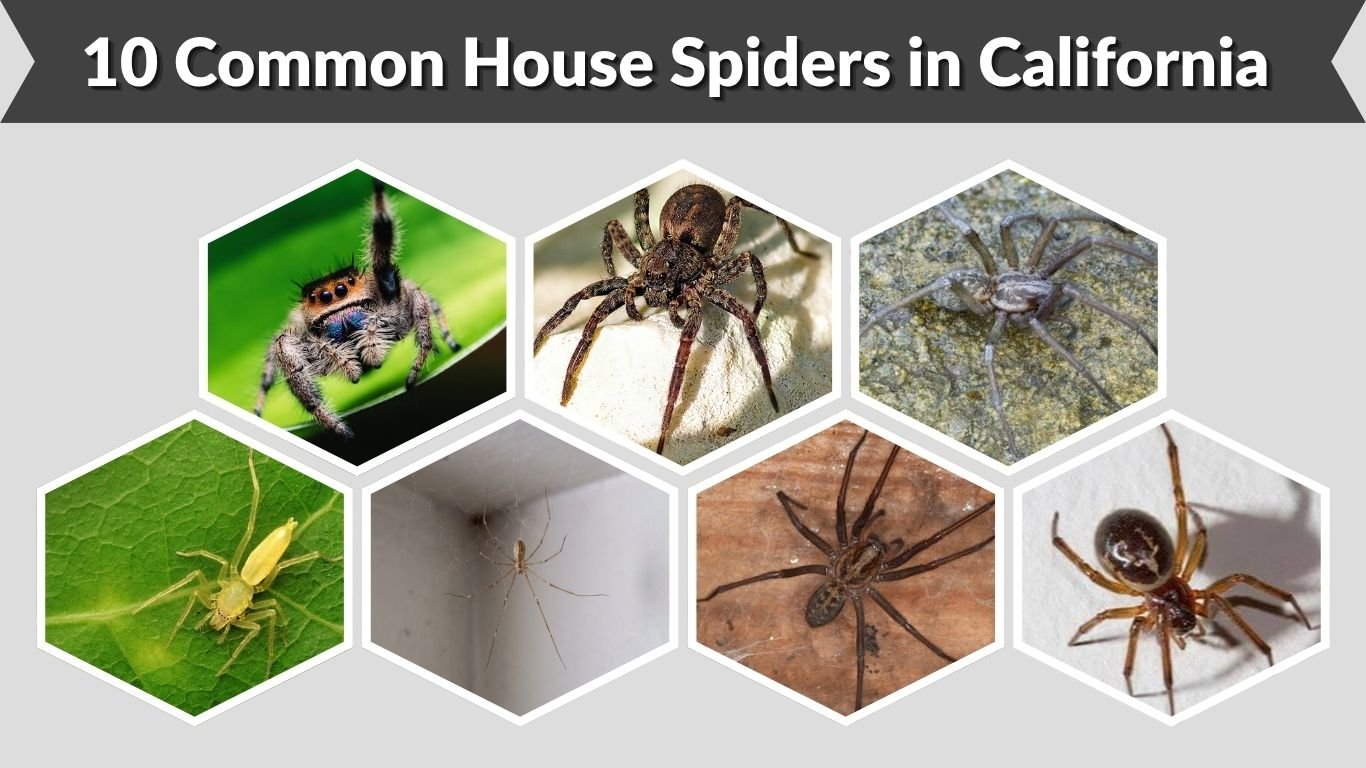
California is home to hundreds of spider species, and many can be found living inside or around houses. From tiny jumping spiders to long-legged cellar spiders, these eight-legged creatures often hide in corners, garages, basements, and windowsills. Most common house spiders in California are harmless and help control insects. However, some species, particularly black widows, require caution. Knowing how to identify different spiders can help homeowners understand which ones are beneficial and which may pose a risk. This guide covers 10 familiar spiders found around California homes.
10 Most Common House Spiders in California
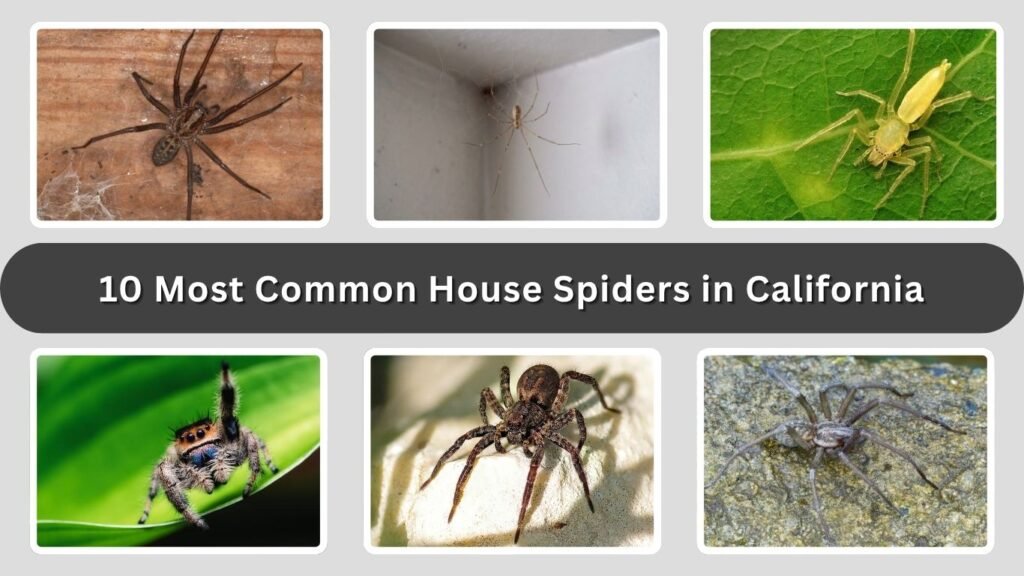
Different types of house spiders live throughout California, depending on climate, vegetation, and available shelter. Some prefer dark indoor spaces, while others enter houses accidentally while searching for food or mates. The following spiders are regularly encountered inside homes or around residential buildings.
1. Common House Spider (Parasteatoda tepidariorum)
The common house spider is a familiar indoor species in California. It has a small, rounded abdomen with mottled brown, gray, and cream markings.
These spiders build irregular cobwebs in quiet locations, including ceiling corners, windows, garages, and storage rooms. They usually remain close to their webs, waiting for insects.
Common house spiders are not considered dangerous to humans. Their presence can help reduce flies, mosquitoes, and other small household insects.
2. Cellar Spider (Holocnemus pluchei)
Cellar spiders are recognizable by their extremely long, thin legs and relatively small bodies. The marbled cellar spider is particularly widespread in California buildings.
They commonly occupy ceiling corners, garages, basements, and sheltered outdoor areas. Their loose, tangled webs can become dusty over time.
When disturbed, cellar spiders may vibrate rapidly in their webs. Although their appearance can be alarming, these spiders are not considered medically dangerous.
3. Yellow Sac Spider (Cheiracanthium mildei)
Yellow sac spiders are small, pale yellow or cream-colored spiders with slender legs. They are frequently seen crawling along walls and ceilings at night.
Unlike spiders that capture insects in large webs, yellow sac spiders actively hunt their prey. During the day, they hide inside small silk retreats.
These spiders occasionally bite when trapped against the skin. Their bites may cause localized pain, redness, or swelling but generally do not produce severe reactions.
4. Jumping Spider (Family Salticidae)
Jumping spiders are small, compact spiders with short legs and prominent forward-facing eyes. Their colors range from brown and gray to black with white markings.
Unlike web-building spiders, jumping spiders actively hunt insects. They are often spotted on windowsills, walls, furniture, and sunny surfaces.
Their excellent eyesight allows them to track prey before jumping. Jumping spiders are generally harmless to humans and rarely bite unless handled or trapped.
5. Wolf Spider (Family Lycosidae)
Wolf spiders are relatively large, brown or gray spiders with strong legs and darker stripes or patterns. Their size and fast movements often frighten homeowners.
They primarily live outdoors but occasionally wander into California homes, especially garages, ground-floor rooms, and areas near gardens.
Wolf spiders do not construct capture webs. Instead, they chase insects across the ground. Although they can bite when threatened, their bites are generally not medically serious.
6. Domestic House Spider (Tegenaria domestica)
The domestic house spider is a brown funnel-weaving spider found throughout California. It typically has a patterned abdomen and relatively long legs.
These spiders construct flat, sheetlike webs leading into a funnel-shaped retreat. Their webs may appear near foundations, storage spaces, garages, and sheltered corners.
Domestic house spiders usually retreat when disturbed. They are not considered dangerous to humans, despite occasionally being confused with more concerning spider species.
7. False Black Widow (Steatoda grossa)
The false black widow resembles a true black widow but usually has a dark chocolate-brown body rather than glossy black coloration.
It has a rounded abdomen and builds messy cobwebs underneath furniture, inside cupboards, and behind household appliances.
Unlike the western black widow, this spider lacks the distinctive red hourglass marking. Its bites can cause localized discomfort, but serious reactions are uncommon.
False black widows are especially well adapted to indoor environments and occur throughout much of coastal California.
8. Western Black Widow (Latrodectus hesperus)
The western black widow is one of California’s most recognizable spiders. Adult females have shiny black bodies and typically display a red hourglass marking underneath the abdomen.
They prefer quiet, sheltered places, including garages, woodpiles, outdoor storage areas, and spaces beneath furniture.
Black widows rarely bite unless disturbed or accidentally pressed against the skin. However, their venom can cause significant pain, muscle cramps, and other serious symptoms. Suspected black widow bites require prompt medical advice.
9. Brown Widow (Latrodectus geometricus)
Brown widow spiders are established in Southern California, particularly around residential buildings and outdoor furniture.
They usually have mottled tan, brown, and gray bodies with darker markings. Their distinctive egg sacs are covered with small, pointed projections.
Brown widows frequently build webs beneath patio chairs, outdoor equipment, and protected structures.
Although related to black widows, brown widow bites typically cause milder symptoms. Nevertheless, homeowners should avoid handling these spiders directly.
10. Mediterranean Spider (Zoropsis spinimana)
The Mediterranean spider, sometimes called the false wolf spider, is a relatively large brown spider with patterned markings and long legs.
It has become established in parts of Northern California, particularly around the San Francisco Bay Area.
Unlike funnel-weaving spiders, Mediterranean spiders actively hunt insects without building capture webs.
They occasionally wander across floors, walls, and indoor furniture. Despite their intimidating appearance, these spiders are not considered dangerous to people.
Common House Spiders in Southern California
Southern California’s warm climate provides suitable conditions for numerous spider species. Residents of Los Angeles, San Diego, Riverside, and surrounding communities may encounter both indoor spiders and species living around outdoor structures.
Frequently encountered spiders include common house spiders, cellar spiders, yellow sac spiders, jumping spiders, and false black widows.
Brown widows are particularly associated with Southern California residential environments, while western black widows also occupy protected outdoor spaces.
Spider populations vary according to local temperatures, landscaping, building conditions, and available insects.
Common House Spiders in Northern California
Northern California supports many of the same house spiders found elsewhere in the state, including cellar spiders, jumping spiders, domestic house spiders, and false black widows.
One notable regional species is Zoropsis spinimana, which has become established around the San Francisco Bay Area.
Homes near forests, gardens, and other vegetation may experience occasional visits from wolf spiders and other outdoor hunters.
However, species distribution varies considerably between coastal regions, inland valleys, mountain communities, and northern forests.
Are House Spiders in California Dangerous?
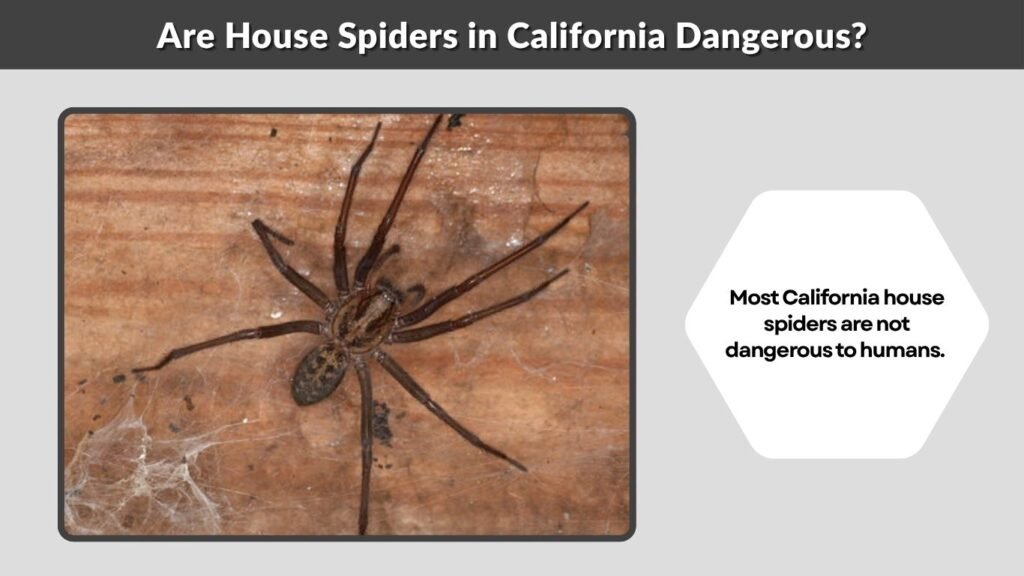
Most California house spiders are not dangerous to humans. Many species help control insects and avoid direct contact with people.
The western black widow is the main spider of medical concern around California homes.
Another important distinction involves brown recluse spiders. Despite frequent claims, California does not have established populations of the brown recluse. Native desert recluse species do occur in some southern desert regions, but they are not typical household spiders.
If a suspected spider bite causes severe pain, muscle cramps, breathing difficulties, or other serious symptoms, seek medical attention.
How to Keep House Spiders Away in California
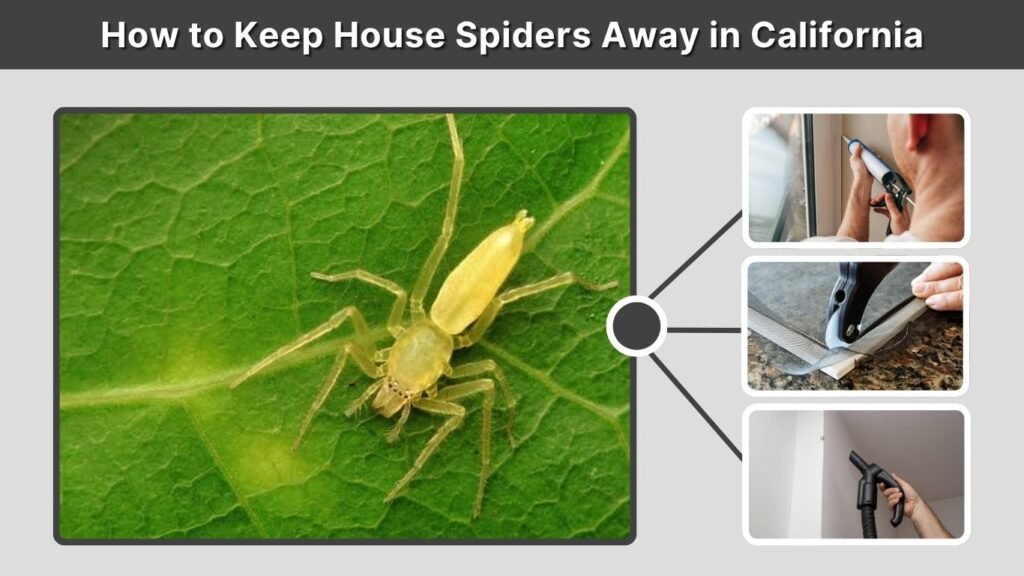
Preventing spider problems usually involves removing hiding places and reducing the insects that attract them.
- Seal entry points: Repair gaps around doors, windows, foundations, and utility openings.
- Remove clutter: Keep garages, closets, and storage rooms organized.
- Clean regularly: Vacuum webs, corners, and areas behind furniture.
- Repair window screens: Prevent insects and spiders from entering.
- Maintain outdoor areas: Move firewood and unnecessary materials away from the house.
- Reduce insect activity: Remove food sources and maintain good sanitation.
According to the University of California Integrated Pest Management Program, routine cleaning and habitat management are often more useful than pesticide applications for ordinary spider problems.
FAQs
What is the most common house spider in California?
Common house spiders, cellar spiders, and yellow sac spiders are frequently encountered indoors. The species most commonly seen depends on the location and building environment.
Are brown house spiders in California dangerous?
Most brown house spiders are harmless. Color alone cannot identify a dangerous species, so examine its body shape, markings, and behavior.
Do California house spiders bite humans?
Most house spiders avoid humans. Bites are uncommon and generally happen when a spider is accidentally trapped against the skin.
Are black widows common in Southern California?
Yes. Western black widows occur throughout California, including Southern California. They frequently occupy sheltered outdoor structures and garages.
Why are there so many spiders in my California house?
Spiders may enter homes because insects, shelter, or suitable hiding places are available. Openings around doors and windows also allow them to enter.
