
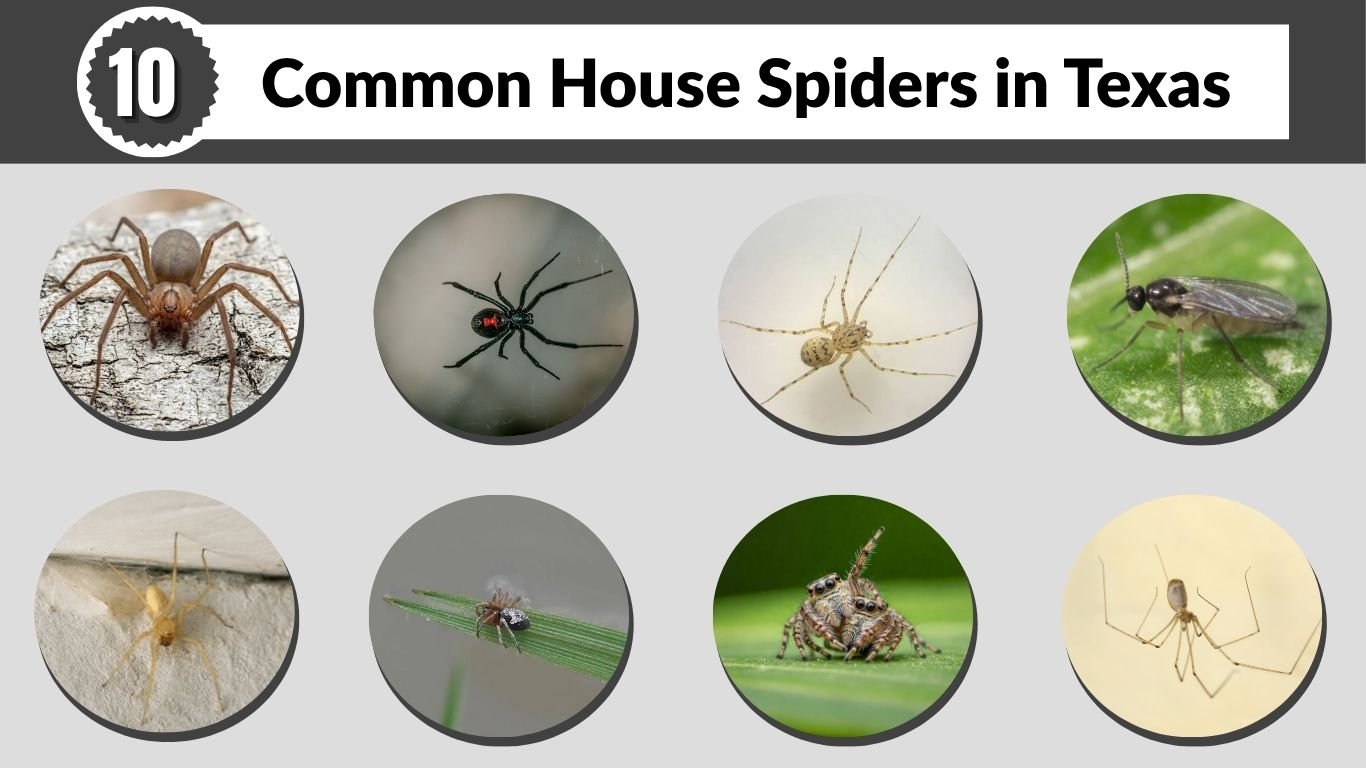
Texas is home to hundreds of spider species, and several commonly appear inside houses, garages, and other buildings. These common house spiders in Texas range from tiny cellar spiders to large wolf spiders that occasionally wander indoors. While most are harmless and help control household insects, some species require extra caution because of their venomous bites. Understanding their appearance, behavior, and preferred hiding places makes identification easier. This guide explores ten spiders found in and around Texas homes, including brown, black, and medically significant species.
10 Most Common House Spiders in Texas
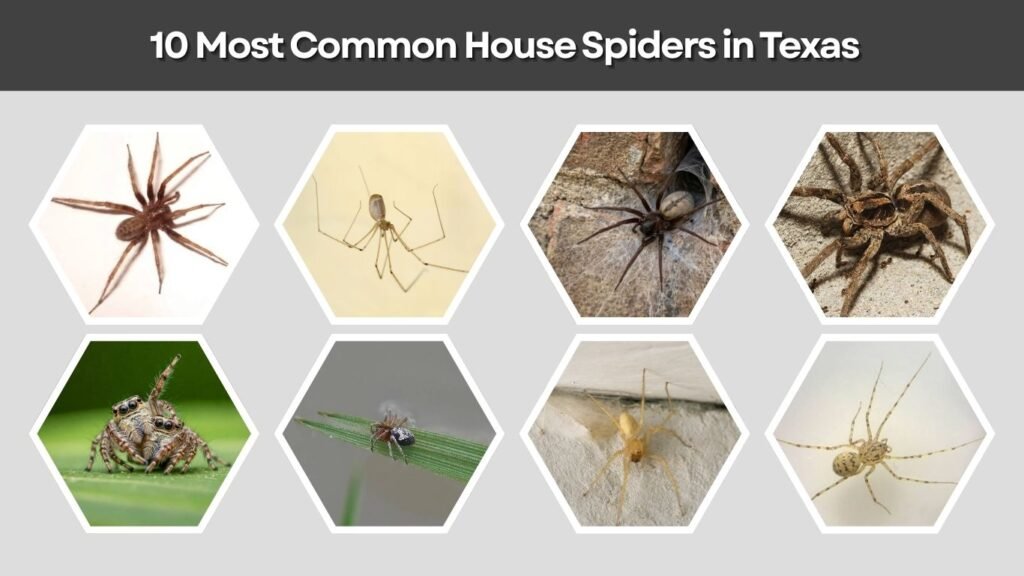
Texas homes provide shelter, moisture, and access to insects, making them attractive to different spider species. Some spiders establish permanent webs indoors, while others accidentally enter through doors and windows. These ten spiders are commonly encountered in or around Texas buildings, although their frequency varies depending on location, season, and surrounding habitat.
1. American House Spider
The American house spider (Parasteatoda tepidariorum) is a small cobweb-building species commonly found around residential buildings.
Its rounded abdomen typically displays brown, gray, and cream-colored patterns, while its slender legs have darker bands.
These spiders construct irregular webs around window frames, ceiling corners, garages, and storage areas. They primarily capture flies, mosquitoes, and other household insects.
American house spiders rarely bite humans and are not considered medically dangerous.
2. Long-Bodied Cellar Spider
The long-bodied cellar spider (Pholcus phalangioides) is recognized by its extremely thin legs and small, elongated body.
Its coloration ranges from pale yellowish brown to gray, making it difficult to notice against indoor walls.
Cellar spiders prefer protected spaces with little disturbance, including basements, bathrooms, garages, and ceiling corners.
When threatened, they sometimes vibrate rapidly in their webs. Despite their fragile appearance and unusual movements, cellar spiders are harmless to humans.
3. Southern House Spider
The southern house spider (Kukulcania hibernalis) is one of the larger brown spiders found around Texas buildings.
Females have dark brown, velvety bodies, while males have lighter brown coloration and longer legs.
These spiders often inhabit wall crevices, wooden structures, barns, and older buildings. Their webs extend outward from protected openings.
Male southern house spiders are frequently mistaken for brown recluses. However, they have different eye arrangements and are not considered medically significant.
4. Wolf Spider
Wolf spiders belong to the family Lycosidae and are among the most noticeable large brown spiders around Texas homes.
Their hairy bodies display brown, gray, or black markings, often with distinctive longitudinal stripes.
Unlike web-building spiders, wolf spiders actively hunt insects across lawns, gardens, and floors.
They occasionally enter houses through gaps beneath doors. Female wolf spiders carry their egg sacs attached to their spinnerets and later transport young spiderlings on their backs.
5. Jumping Spider
Jumping spiders belong to the family Salticidae and are recognizable by their compact bodies and large forward-facing eyes.
Common jumping spiders in Texas may have black, brown, gray, or brightly colored markings.
These spiders frequently appear around windows, walls, patios, and indoor plants.
Instead of constructing capture webs, they hunt insects using excellent eyesight and powerful jumps.
Their movements may surprise homeowners, but jumping spiders are generally harmless and rarely bite unless threatened.
6. Grass Spider
Grass spiders (Agelenopsis species) are brown or gray funnel-web spiders often found around Texas lawns and houses.
They have elongated bodies, striped patterns, and noticeably protruding spinnerets.
Grass spiders build horizontal sheet webs with funnel-shaped retreats in vegetation, window wells, and areas near building foundations.
Occasionally, they wander indoors during seasonal changes.
Although grass spiders resemble wolf spiders, their funnel-shaped webs and longer spinnerets help distinguish them.
7. Yellow Sac Spider
Yellow sac spiders (Cheiracanthium species) are small, pale spiders with cream, yellowish, or light tan bodies.
They have relatively long legs and frequently move around walls and ceilings at night.
During daylight hours, these spiders hide inside small silken retreats constructed in corners, wall cracks, or behind furniture.
Yellow sac spiders can deliver painful bites when trapped against the skin. However, serious complications are uncommon, and they are not generally grouped with Texas’s most medically significant spiders.
8. Spitting Spider
Spitting spiders (Scytodes species) are unusual indoor spiders with small bodies, slender legs, and rounded, dome-shaped front body regions.
Their tan or yellowish bodies often feature dark spots and irregular markings.
They move slowly around walls, ceilings, and hidden indoor spaces.
Unlike other hunting spiders, spitting spiders capture prey by projecting a sticky silk-like substance toward insects.
They are harmless to humans and sometimes get confused with brown recluses because both have six eyes.
Dangerous House Spiders Found in Texas
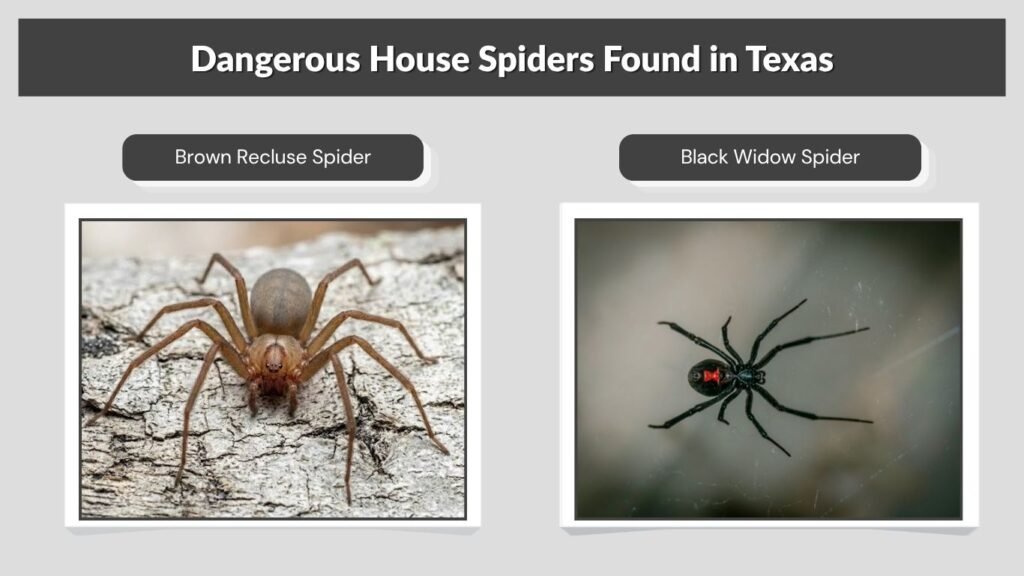
Most Texas house spiders do not pose a serious threat to people. However, recluse spiders and widow spiders have medically significant venom. Both generally avoid human contact and usually bite only when disturbed, trapped, or pressed against the skin. Recognizing these spiders is especially important when cleaning storage areas or handling neglected household items.
9. Brown Recluse Spider
The brown recluse (Loxosceles reclusa) is a medically significant brown spider found in parts of Texas.
It has a light-to-dark brown body, six eyes arranged in three pairs, and often a dark violin-shaped marking on its front body region.
Brown recluses prefer quiet, undisturbed locations such as closets, attics, garages, and storage boxes.
Their bites may cause localized pain and, occasionally, serious tissue injury. A violin-like marking alone is insufficient for reliable identification.
10. Black Widow Spider
Black widow spiders (Latrodectus species) are among the most recognizable venomous spiders found around Texas homes.
Adult females often have shiny black bodies with reddish hourglass-shaped markings beneath their rounded abdomens.
They construct irregular webs in garages, sheds, woodpiles, and protected outdoor structures.
Black widow venom can cause severe pain, muscle cramps, sweating, and other symptoms.
Although they generally avoid confrontation, suspected black widow bites require prompt medical assessment.
Common House Spiders in Texas Identification Chart
Identifying Texas house spiders becomes easier when comparing their body colors, shapes, and preferred hiding places. The following chart summarizes the key characteristics of ten species or groups found around residential properties.
| Spider | Typical color | Common location |
| American House Spider | Brown or gray | Windows, corners |
| Cellar Spider | Pale brown | Ceilings, garages |
| Southern House Spider | Dark brown | Wall crevices |
| Wolf Spider | Brown or gray | Floors, entrances |
| Jumping Spider | Black or brown | Windows, walls |
| Grass Spider | Brown with stripes | Foundations, lawns |
| Yellow Sac Spider | Pale yellow | Walls, ceilings |
| Spitting Spider | Tan with spots | Indoor corners |
| Brown Recluse | Light to dark brown | Closets, storage |
| Black Widow | Usually black | Garages, sheds |
Coloration varies between species, sexes, and life stages. Photographs or professional identification may be necessary when spiders look similar.
Common House Spiders Across Different Texas Regions
House spider populations vary across Texas because of differences in climate, vegetation, and building conditions. Houston and other humid East Texas communities provide suitable environments for cellar spiders, cobweb spiders, and several other indoor species.
North Texas cities such as Dallas and Fort Worth also experience encounters with wolf spiders, jumping spiders, and brown recluses.
Southern Texas communities may encounter southern house spiders and several widow species around sheltered buildings.
In West Texas, spiders frequently seek protected locations that provide relief from hot, dry outdoor conditions. Actual species presence varies by property, and geographic location alone cannot confirm identification.
How to Prevent House Spiders in Texas
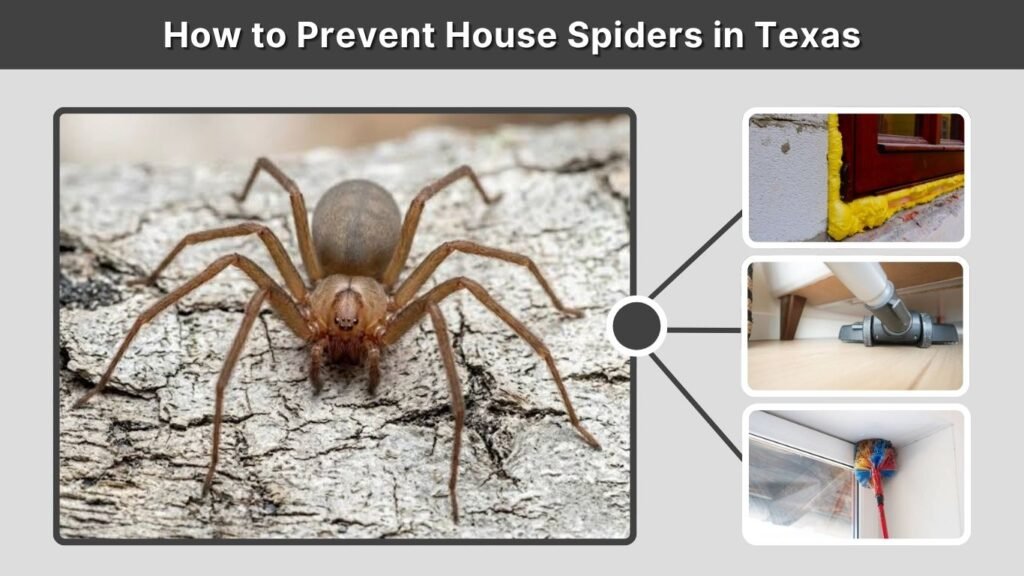
The best way to reduce indoor spider activity is to eliminate hiding places, control insects, and prevent entry through structural gaps. Most spiders enter houses while searching for shelter or prey rather than intentionally seeking human contact.
Practical Spider Prevention Tips
- Seal openings: Repair window screens, install door sweeps, and close gaps around pipes and foundations.
- Remove clutter: Organize garages, closets, and storage rooms to reduce sheltered hiding places.
- Control insects: Reduce indoor flies and other pests that attract hunting spiders.
- Clean regularly: Vacuum corners, remove abandoned webs, and inspect rarely used areas.
- Store items carefully: Keep clothing and shoes away from cluttered floors, and shake out items stored in spider-prone places.
Professional pest control may be appropriate when medically significant spiders repeatedly appear indoors.
FAQs
What Is the Most Common House Spider in Texas?
American house spiders, cellar spiders, jumping spiders, and southern house spiders are among those commonly found around Texas homes. Their frequency varies by region and building conditions.
Are Brown House Spiders in Texas Dangerous?
Most brown house spiders are harmless. However, brown recluse spiders can cause medically significant bites. Identification should involve more than body color alone.
What Are the Common Black House Spiders in Texas?
Black jumping spiders, dark-colored house spiders, and black widow spiders may occur around Texas houses. Most are harmless, but black widows require caution.
Do House Spiders in Texas Bite Humans?
Most spiders avoid people and bite only when trapped or threatened. Serious reactions are uncommon, although suspected widow or recluse bites should receive medical attention.
How Do I Identify a House Spider in Texas?
Examine the spider’s body shape, markings, legs, web structure, and hiding location. Avoid handling unfamiliar spiders and consult an identification expert when uncertain.
