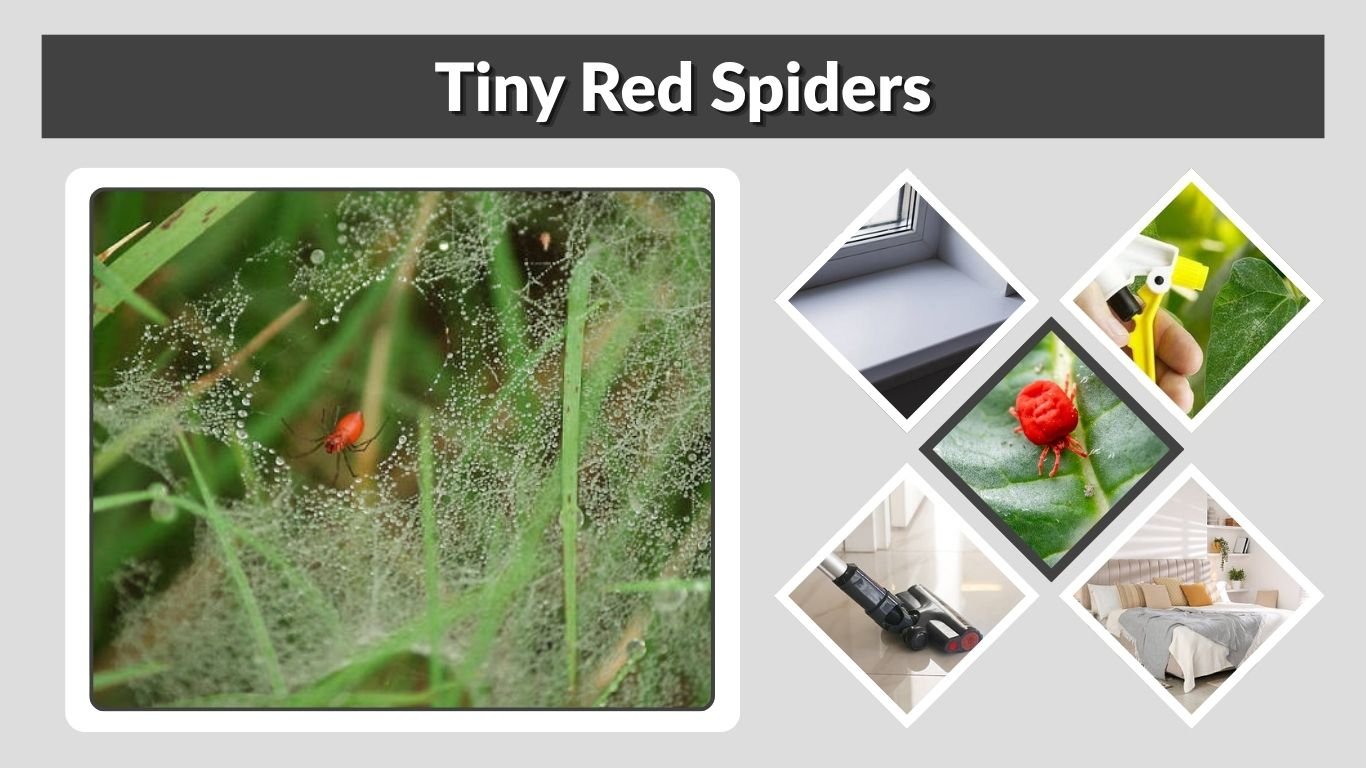
Have you noticed tiny red spiders crawling across your windowsills, walls, bricks, or garden plants? These small, bright-red creatures may look alarming, especially when they appear in large numbers. However, most are harmless mites rather than actual spiders. Tiny red spiders are often clover mites, spider mites, or red velvet mites, depending on their appearance and location. Understanding what these tiny creatures are, whether they bite, and how to get rid of them can help you protect your home and garden without unnecessary chemical treatments.
What Are Tiny Red Spiders?
Tiny red spiders are usually mites, small arachnids closely related to spiders and ticks. Although they resemble miniature spiders, mites belong to different groups within the arachnid family tree.
Most tiny red mites have eight legs as adults, oval-shaped bodies, and reddish coloration. Their size often makes identification difficult without magnification.
The most common types include clover mites, red spider mites, and red velvet mites. Each has different feeding habits and environmental preferences.
What Do Tiny Red Spiders Look Like?
Identifying tiny red spiders becomes easier when you examine their physical characteristics.
- Size: Many common red mites measure less than 1 millimeter, although velvet mites can be larger.
- Color: Bright red, orange-red, or reddish-brown.
- Body shape: Usually rounded or oval.
- Legs: Most adults have eight legs.
- Movement: Often crawl across walls, plants, and concrete surfaces.
- Appearance: Some have smooth bodies, while others appear slightly fuzzy.
Clover mites are particularly recognizable because their front legs are unusually long and resemble antennae.
3 Common Types of Tiny Red Spiders
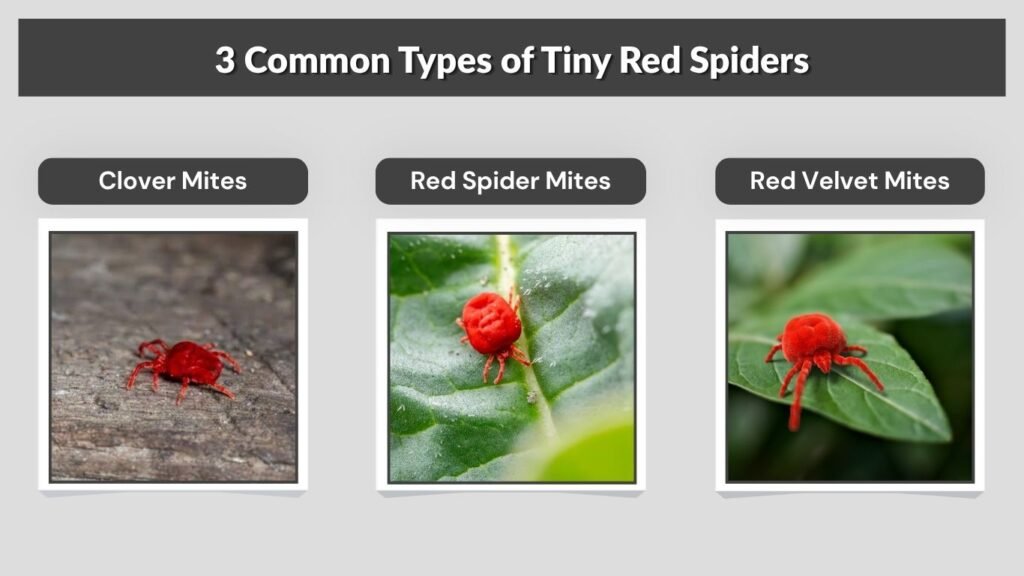
Several mite species are commonly mistaken for tiny red spiders. Understanding their differences helps determine whether they are harmless visitors or potentially damaging plant pests.
1. Clover Mites
Clover mites (Bryobia praetiosa) are among the most common tiny red bugs found around homes.
These reddish-brown mites frequently appear on sunny windowsills, walls, foundations, and outdoor concrete surfaces.
They feed on grasses, clover, and other vegetation rather than humans.
Clover mites do not bite people or pets. However, crushing them can leave reddish stains on walls, furniture, and fabrics.
They are especially noticeable during spring and fall.
2. Red Spider Mites
Red spider mites are tiny plant-feeding arachnids often found in gardens, greenhouses, and indoor plants.
Depending on their species and life stage, spider mites may appear red, yellow, green, or brown.
They feed on plant cells, producing pale spots and discoloration on leaves.
Heavy infestations can cause yellowing, premature leaf drop, and fine webbing around affected plants.
Spider mites usually become more troublesome during hot, dry weather.
3. Red Velvet Mites
Red velvet mites belong to the family Trombidiidae and have bright-red, velvety bodies.
They are generally larger and more visibly fuzzy than clover mites.
These mites usually inhabit soil, leaf litter, gardens, and other outdoor environments.
Adult red velvet mites are beneficial predators that feed on small arthropods and their eggs.
Unlike plant-feeding spider mites, red velvet mites generally help maintain ecological balance and are harmless to people and plants.
Are Tiny Red Spiders Dangerous?
Most tiny red spiders found around homes are not dangerous to humans.
Clover mites and red velvet mites do not pose a significant health threat, and common plant-feeding spider mites are not human parasites.
However, not every tiny red arachnid is harmless. Some other mites can bite humans and cause skin irritation.
Do Tiny Red Spiders Bite?
Clover mites do not bite humans or animals. Likewise, common spider mites feed on plants rather than human skin.
However, chigger larvae are tiny mites that can bite humans, producing intensely itchy red bumps.
Chigger bites commonly occur around ankles, waistbands, and other areas where clothing fits tightly.
If you experience unexplained bites, avoid assuming clover mites are responsible. Proper identification is important because different mites require different treatments.
Are Tiny Red Spiders Poisonous?
The tiny red mites commonly found on bricks, patios, and windowsills are not poisonous to humans.
They do not inject venom through dangerous bites, and clover mites are not known to transmit diseases.
The main concern is staining from crushed clover mites or damage caused by plant-feeding spider mites.
Why Are Tiny Red Spiders in My House?
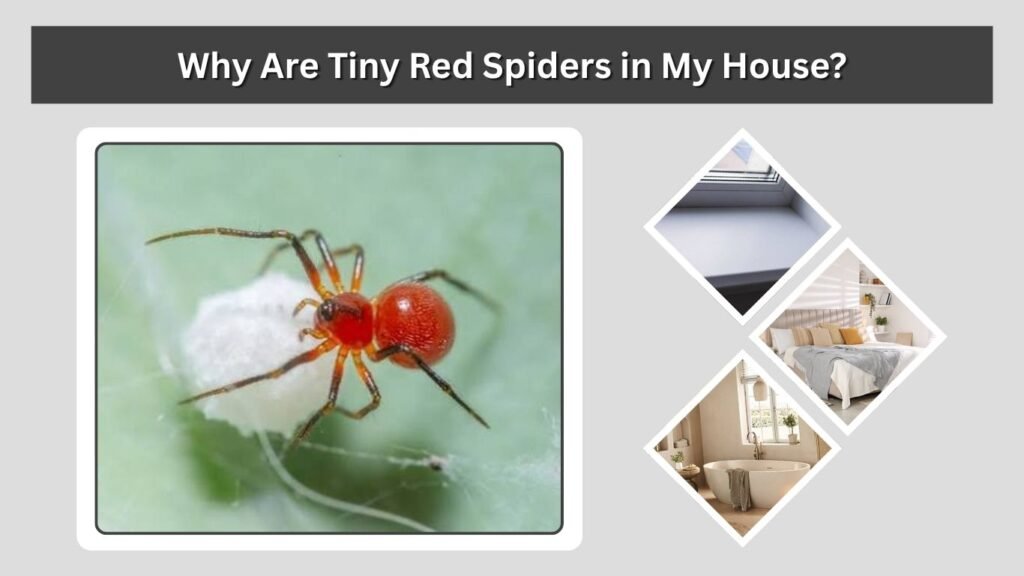
Finding tiny red spiders inside your home can be surprising, especially when dozens appear simultaneously.
Clover mites frequently enter homes through small gaps around windows, doors, foundations, and exterior walls.
They are often attracted to protected spaces near sun-warmed surfaces.
Common locations include:
- Windowsills: Clover mites gather around sunny windows and frames.
- Bedrooms: They may enter through gaps around exterior windows.
- Bathrooms: Small mites can wander into bathrooms through openings.
- Walls: Exterior walls provide pathways toward indoor entry points.
- Front doors: Poorly sealed doorframes allow mites to crawl inside.
Unlike household pests that reproduce indoors, clover mites generally cannot establish lasting populations inside homes because they depend on outdoor vegetation for food.
Why Are Tiny Red Spiders on Bricks and Concrete?
Tiny red spiders on bricks, patios, sidewalks, and concrete surfaces are frequently clover mites.
These mites often gather on warm, sun-exposed surfaces, particularly near lawns and garden beds.
You might notice large numbers moving across brick walls during mild spring or autumn weather.
Their presence does not necessarily indicate poor sanitation or structural damage.
Red velvet mites may also appear on outdoor surfaces, especially near soil and gardens, but they are generally larger and more noticeable individually.
How to Get Rid of Tiny Red Spiders
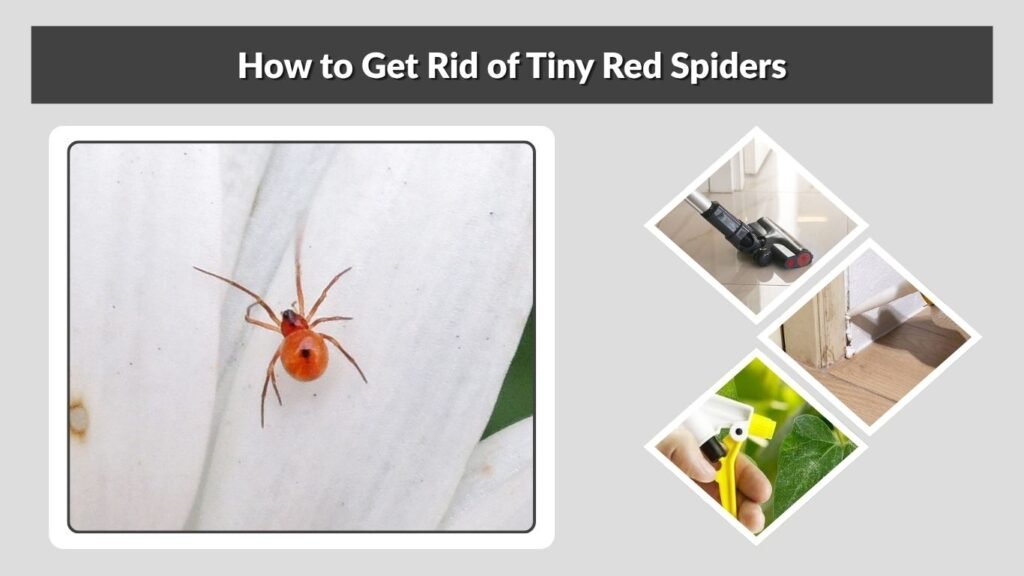
Getting rid of tiny red spiders depends on whether they are clover mites invading your home or spider mites damaging your plants.
Fortunately, most infestations can be managed using simple preventive measures and appropriate cleaning techniques.
1. Vacuum Tiny Red Spiders Indoors
Vacuuming is one of the easiest ways to remove clover mites from windowsills, floors, and walls.
Use a vacuum hose with a soft attachment to collect the mites without crushing them.
Empty the vacuum contents into a sealed bag and dispose of them outside.
Avoid rubbing or smashing clover mites because their body pigments can leave stubborn reddish stains.
2. Seal Cracks Around Windows and Doors
Small openings provide convenient entry points for clover mites.
Inspect window frames, doorframes, exterior walls, and foundation gaps for cracks.
Apply suitable caulk or weatherstripping to reduce entry.
Pay particular attention to windows facing sunny lawns or gardens, where clover mites often gather.
3. Remove Vegetation Near Foundations
Clover mites frequently live in lawns and vegetation growing close to buildings.
Creating a vegetation-free strip approximately 18–24 inches wide around affected foundations can help reduce indoor invasions.
Gravel or other suitable nonvegetated materials can provide a useful barrier.
Avoid overfertilizing grass near your home’s foundation because lush growth can favor clover mite populations.
4. Treat Spider Mites on Plants
If tiny red spiders are damaging your houseplants, a different approach is necessary.
Rinse affected leaves with water, concentrating on their undersides.
For persistent infestations, consider insecticidal soap or horticultural oil labeled for the affected plants.
Follow product instructions carefully and repeat treatment only as directed.
Avoid unnecessary broad-spectrum insecticides because they may kill beneficial predators that naturally control spider mites.
How to Prevent Tiny Red Spiders From Coming Back
Preventing tiny red spiders requires regular home maintenance and careful monitoring of outdoor vegetation.
Keeping entry points sealed and reducing favorable conditions around foundations can minimize recurring problems.
For indoor plants, inspect leaves regularly for discoloration, webbing, and moving mites.
Maintain appropriate watering conditions and isolate infested plants when necessary.
Remember that clover mites and spider mites require different control strategies. Correct identification prevents unnecessary treatments.
FAQs
1. What Are the Tiny Red Spiders in My House?
Most tiny red creatures crawling on windowsills, walls, or floors are clover mites, not true spiders. Their long front legs resemble antennae. They typically enter through small cracks from nearby lawns and cannot establish permanent populations indoors without suitable food.
2. Do Tiny Red Spiders Bite Humans?
Common clover mites and plant-feeding spider mites do not bite people or pets. However, some other mites, including chigger larvae, can cause itchy skin reactions. If bites are occurring, identify the pest rather than assuming visible red mites are responsible.
3. Are Tiny Red Spiders Dangerous or Poisonous?
Tiny red clover mites are not poisonous or venomous to people, and they are not known to spread diseases. Their biggest indoor nuisance is the reddish stain left when crushed. Plant-feeding spider mites, however, can weaken houseplants and garden crops.
4. How Do You Get Rid of Tiny Red Spiders in Your House?
Use a vacuum to remove visible mites without crushing them. Seal gaps around windows, doors, and foundations, and reduce vegetation touching exterior walls. If they keep returning, identify the species before using treatment, because different mites need different control methods.
5. Why Are There Tiny Red Spiders on Bricks and Concrete?
Sunlit bricks, patios, and concrete are common gathering spots for clover mites, particularly near grass or flower beds. They crawl across these surfaces while moving around a building. They do not damage brickwork, concrete, or the structure of your home.
