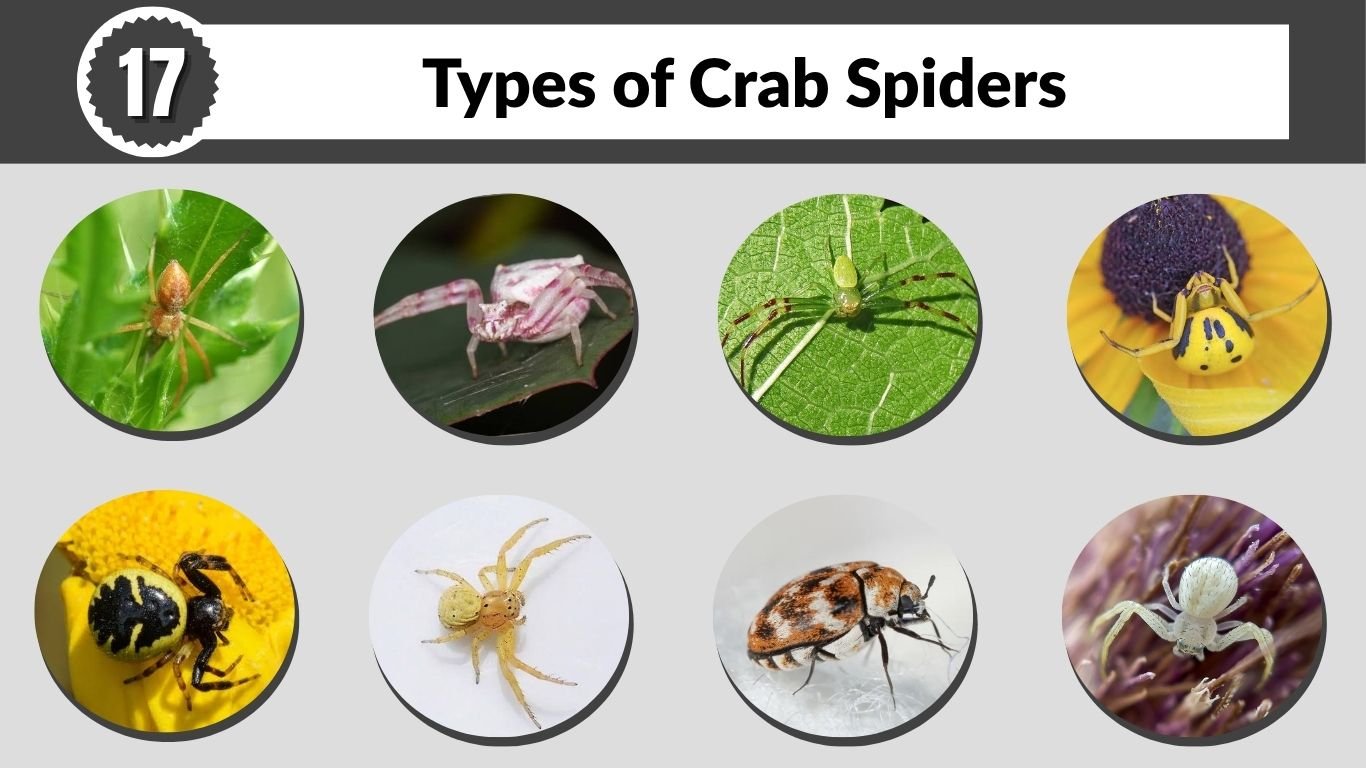
Crab spiders are fascinating arachnids known for their crab-like legs, sideways movements, and remarkable camouflage. Found in gardens, forests, grasslands, and flowering plants, these spiders come in various colors, sizes, and patterns. Unlike web-building spiders, most crab spiders rely on ambush hunting to capture insects. Some even change color to blend with flowers. In this guide, we’ll explore 17 types of crab spiders, including their identification features, natural habitats, feeding behaviors, and unique characteristics.
1. Goldenrod Crab Spider (Misumena vatia)
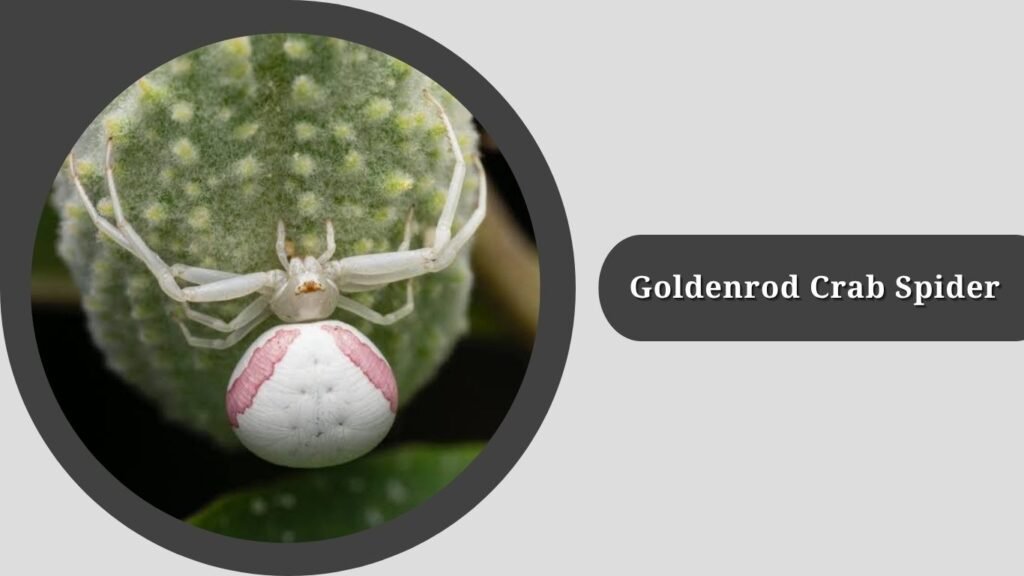
The Goldenrod Crab Spider is a fascinating flower-dwelling spider known for its ability to change color between white and yellow. Commonly found in gardens, meadows, and grasslands, this spider uses camouflage to ambush unsuspecting insects. Its crab-like appearance and sideways movements make it one of the most recognizable members of the crab spider family.
Identification
- Scientific Name: Misumena vatia
- Family: Thomisidae
- Color: White, yellow, or pale cream, sometimes with reddish markings.
- Size: Females measure approximately 6–9 mm, while males are 3–4 mm long.
- Body Shape: Broad, rounded abdomen with a relatively small cephalothorax.
- Legs: The first two pairs are longer and extend sideways, resembling crab claws.
- Special Feature: Females can gradually change between white and yellow to blend with flowers.
Habitat and Distribution
Goldenrod Crab Spiders inhabit gardens, wildflower meadows, grasslands, and woodland edges across much of North America and Europe. They commonly rest on goldenrod, daisies, and other flowering plants where pollinating insects frequently visit. Their ability to blend with flower petals provides effective camouflage, helping them remain concealed while waiting for prey.
Behavior and Feeding Habits
Unlike web-building spiders, Goldenrod Crab Spiders hunt by ambushing insects directly on flowers. They remain motionless until a fly, bee, butterfly, or other suitable insect approaches. Using their powerful front legs, they quickly grab prey and inject venom to immobilize it. Their color-changing ability improves camouflage, although the transformation takes several days rather than occurring instantly.
Reproduction and Life Cycle
Female Goldenrod Crab Spiders typically reproduce during the warmer months. After mating, the female folds a leaf and secures it with silk to create a protective egg sac. She guards the developing eggs until the spiderlings emerge, often dying around the time they hatch. Young spiders gradually develop through several molts before reaching adulthood.
2. White-Banded Crab Spider (Misumenoides formosipes)
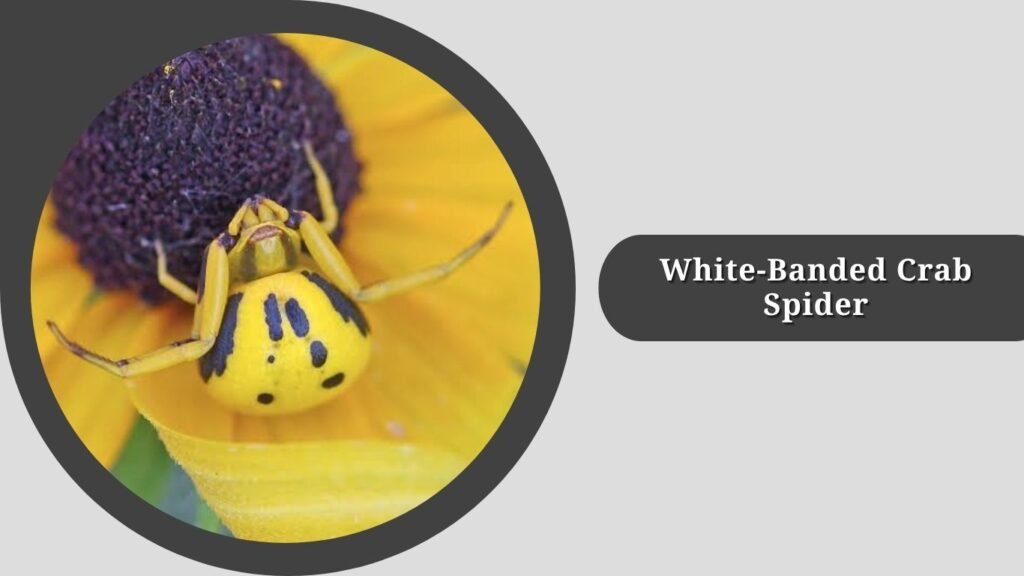
The White-Banded Crab Spider is a colorful flower-dwelling spider commonly found throughout North America. It is recognized by the distinctive pale ridge across its face and its ability to blend with surrounding flowers. This species is an ambush predator that waits patiently for visiting insects rather than constructing webs to capture prey.
Identification
- Scientific Name: Misumenoides formosipes
- Family: Thomisidae
- Color: White, yellow, cream, or pale green with reddish or brown markings.
- Size: Approximately 2–8 mm in body length.
- Body Shape: Broad, rounded abdomen with a relatively flattened body.
- Legs: Long front legs extending sideways in a crab-like position.
- Special Feature: Distinctive white or yellowish ridges beneath the eye region help distinguish this species from similar flower crab spiders.
Habitat and Distribution
White-Banded Crab Spiders inhabit gardens, grasslands, meadows, and woodland edges throughout much of the United States. They commonly rest on flowering plants, including daisies and goldenrod, where bees, butterflies, and flies gather. Their pale coloration allows them to blend with flower petals, making them difficult for prey to detect.
Behavior and Feeding Habits
This species hunts without building a prey-catching web. Instead, it remains motionless on flowers until an insect approaches. Its strong front legs quickly grasp the prey, and a venomous bite helps immobilize it. White-Banded Crab Spiders can capture insects larger than themselves, including bees and butterflies. Their camouflage and patience make them effective hunters.
Reproduction and Life Cycle
During the breeding season, males search for females among flowering plants. Males sometimes guard immature females before they become ready to mate. After mating, females produce silk egg sacs containing developing spiderlings. The young emerge and gradually grow through several molts before reaching adulthood.
3. Northern Crab Spider (Mecaphesa asperata)
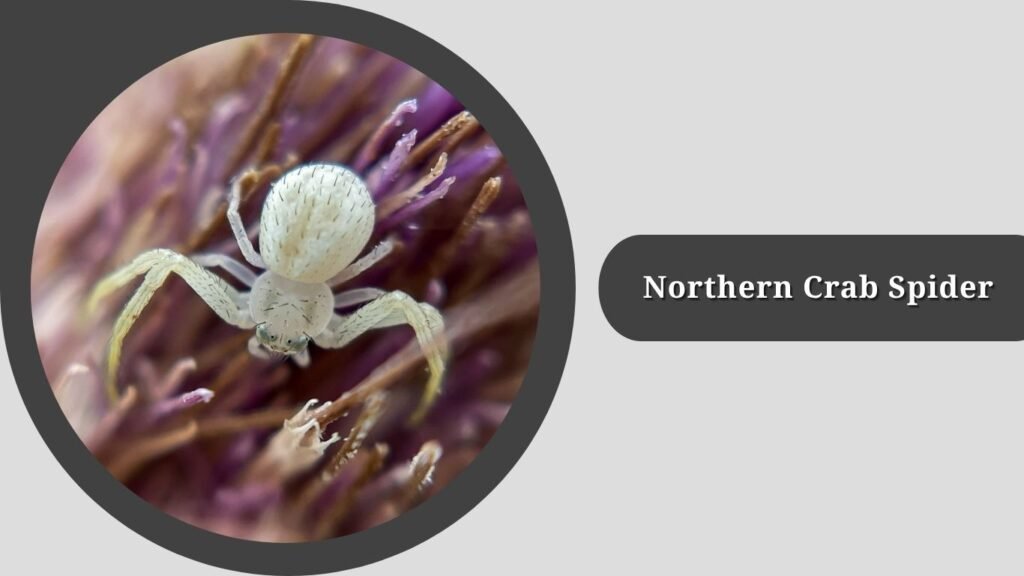
The Northern Crab Spider is a small flower-dwelling spider found across parts of North and Central America. Its pale body, reddish markings, and spiny appearance help distinguish it from other crab spiders. This species commonly rests on flowers and vegetation, where it waits for insects to approach before capturing them with its powerful front legs.
Identification
- Scientific Name: Mecaphesa asperata
- Family: Thomisidae
- Color: Pale yellow, cream, or whitish with reddish-brown markings.
- Size: Females measure approximately 5.5 mm, while males reach around 3.3 mm.
- Body Shape: Compact body with a somewhat angular abdomen.
- Legs: Pale legs with reddish or brown bands and small spines.
- Special Feature: The abdomen frequently displays reddish stripes or a V-shaped pattern, while stiff hairs cover parts of the body.
Habitat and Distribution
Northern Crab Spiders are found in meadows, gardens, grasslands, and woodland margins. Their geographic range includes much of eastern and central North America, with populations also recorded farther south. They commonly occupy flowers and low-growing vegetation where small insects are abundant. Their body coloration provides camouflage against petals and plant surfaces.
Behavior and Feeding Habits
Northern Crab Spiders are ambush hunters that depend on patience rather than elaborate webs. They remain concealed among flowers and grab insects that approach within striking distance. Their prey includes small flies, bees, and other flower-visiting insects. Strong front legs allow them to hold captured prey while venom immobilizes it.
Reproduction and Life Cycle
Northern Crab Spiders reproduce sexually, and females produce silk egg sacs to protect their eggs. After hatching, young spiderlings disperse into nearby vegetation. They feed on small insects and undergo several molts as they develop. Their growth and reproductive activity are influenced by seasonal temperatures and available food.
4. American Green Crab Spider (Misumessus oblongus)
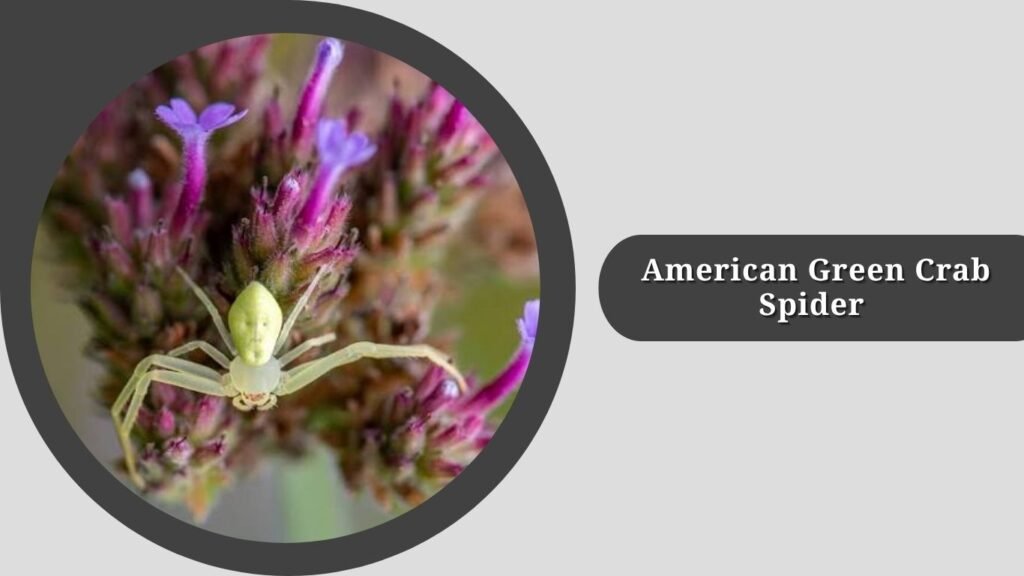
The American Green Crab Spider is a delicate, pale-green spider commonly found on leaves, shrubs, and flowering plants. Its slender legs and green coloration help it blend naturally with surrounding vegetation. Unlike many web-building spiders, this species relies on camouflage and quick movements to capture insects. It is frequently observed in gardens, parks, and wooded environments.
Identification
- Scientific Name: Misumessus oblongus
- Family: Thomisidae
- Color: Pale green, yellowish-green, or silvery white, sometimes with pink markings.
- Size: Females measure approximately 6 mm, while males are around 3 mm.
- Body Shape: Slender body with a somewhat elongated abdomen.
- Legs: Long, thin legs, with the front pairs extending sideways.
- Special Feature: Its smooth, pale-green appearance provides excellent camouflage among leaves.
Habitat and Distribution
American Green Crab Spiders are widespread across parts of North America, particularly in gardens, woodlands, grasslands, and shrub-covered areas. They commonly inhabit leafy plants, small trees, and vegetation near woodland edges. Their green coloration allows them to remain nearly invisible against foliage, protecting them from predators while improving their hunting success.
Behavior and Feeding Habits
This species hunts by remaining concealed among leaves and waiting for small insects to approach. Its prey includes flies, mosquitoes, moths, and other insects. Rather than spinning a capture web, it uses its strong front legs to seize prey before delivering a venomous bite. American Green Crab Spiders contribute to natural insect control in gardens and other vegetated environments.
Reproduction and Life Cycle
Female American Green Crab Spiders create silk egg sacs within folded leaves, providing protection for developing offspring. After hatching, the spiderlings disperse into surrounding vegetation and begin hunting small insects. They undergo several molts as they grow, eventually developing into mature spiders capable of reproduction.
5. Bark Crab Spider (Bassaniana versicolor)
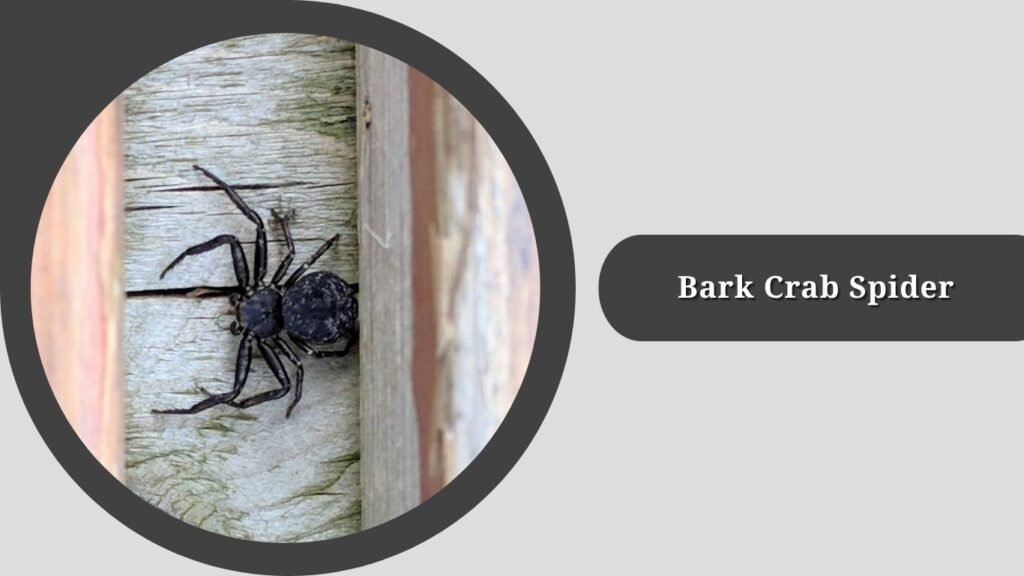
The Bark Crab Spider is a well-camouflaged species known for its flattened body and mottled coloration. Unlike flower-dwelling crab spiders, it spends much of its time on tree trunks, branches, and bark-covered surfaces. Its brown, gray, and black markings help it blend with rough tree bark, making it difficult for both predators and prey to detect.
Identification
- Scientific Name: Bassaniana versicolor
- Family: Thomisidae
- Color: Dark brown, gray, or black with cream or whitish speckles.
- Size: Small, with females generally larger than males.
- Body Shape: Broad, flattened body with a relatively wide abdomen.
- Legs: Stout front legs with mottled markings.
- Special Feature: Its bark-like coloration provides effective camouflage against tree trunks and branches.
Habitat and Distribution
Bark Crab Spiders occur in North America, where they inhabit woodlands, forests, parks, and tree-covered landscapes. They are frequently found resting against rough bark, under loose pieces of wood, and around fallen branches. Their flattened bodies allow them to occupy narrow spaces, while their mottled appearance helps conceal them from predators.
Behavior and Feeding Habits
Unlike spiders that construct elaborate webs, Bark Crab Spiders actively search for small insects across tree surfaces. They may capture ants, flies, beetles, and other arthropods encountered while hunting. Their powerful front legs help restrain prey while venom immobilizes it. These spiders can also move sideways, making them effective hunters across uneven bark.
Reproduction and Life Cycle
Like other crab spiders, Bark Crab Spiders reproduce sexually and protect their developing eggs within silk sacs. Spiderlings emerge from the eggs and begin hunting small prey as they mature. Young spiders molt repeatedly while growing, gradually developing the flattened bodies and strong front legs characteristic of adults.
6. Black-Tailed Crab Spider (Synema parvulum)
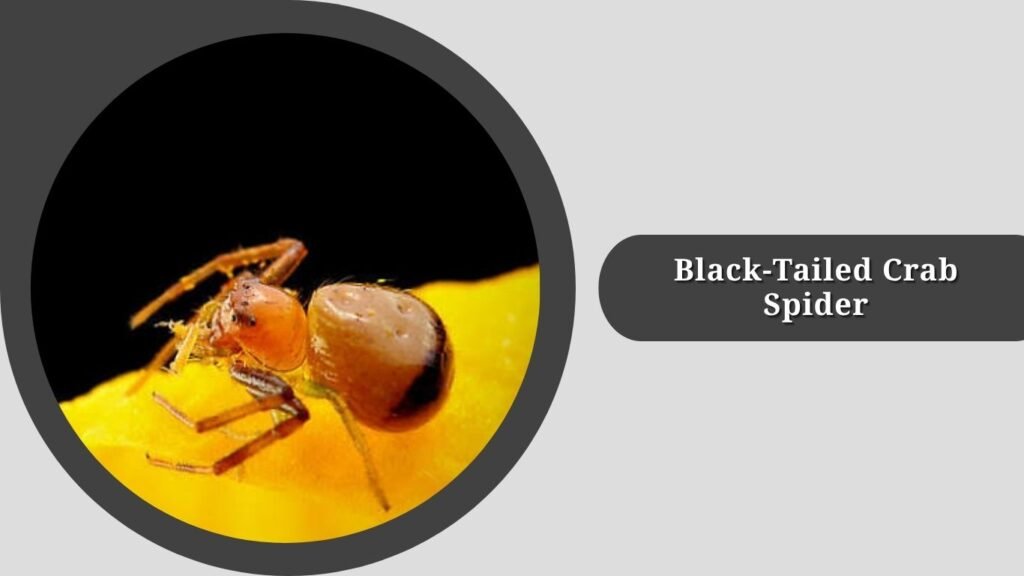
The Black-Tailed Crab Spider is a tiny North American species recognized by the dark marking near the rear of its abdomen. Its small size and contrasting body colors distinguish it from many other crab spiders. This species usually inhabits vegetation, where it captures small insects and remains concealed among leaves and flowering plants.
Identification
- Scientific Name: Synema parvulum
- Family: Thomisidae
- Color: Pale brown, cream, or reddish tones with a dark marking on the abdomen.
- Size: Approximately 2.5–2.8 mm in body length.
- Body Shape: Compact body with a rounded abdomen.
- Legs: Sideways-projecting front legs adapted for grasping prey.
- Special Feature: A prominent dark patch toward the rear of the otherwise pale abdomen gives this species its common name.
Habitat and Distribution
Black-Tailed Crab Spiders occur in the United States and Mexico, with records across parts of the eastern and southern United States. They inhabit shrubs, leafy vegetation, and other plant-covered environments. Their small bodies allow them to remain hidden among leaves and stems, where they encounter tiny insects and other suitable prey.
Behavior and Feeding Habits
Black-Tailed Crab Spiders are ambush predators that capture small arthropods without constructing prey-catching webs. They remain positioned on vegetation and use their front legs to seize insects that move within reach. Their relatively small size means they typically hunt small prey. Like other crab spiders, they use venom to subdue captured animals before feeding.
Reproduction and Life Cycle
Detailed reproductive observations of this particular species are limited. Like other members of the crab spider family, females produce eggs protected by silk. Young spiderlings develop through several molts before reaching adulthood. Their growth depends on environmental conditions, food availability, and seasonal changes in temperature.
7. Heather Crab Spider (Thomisus onustus)
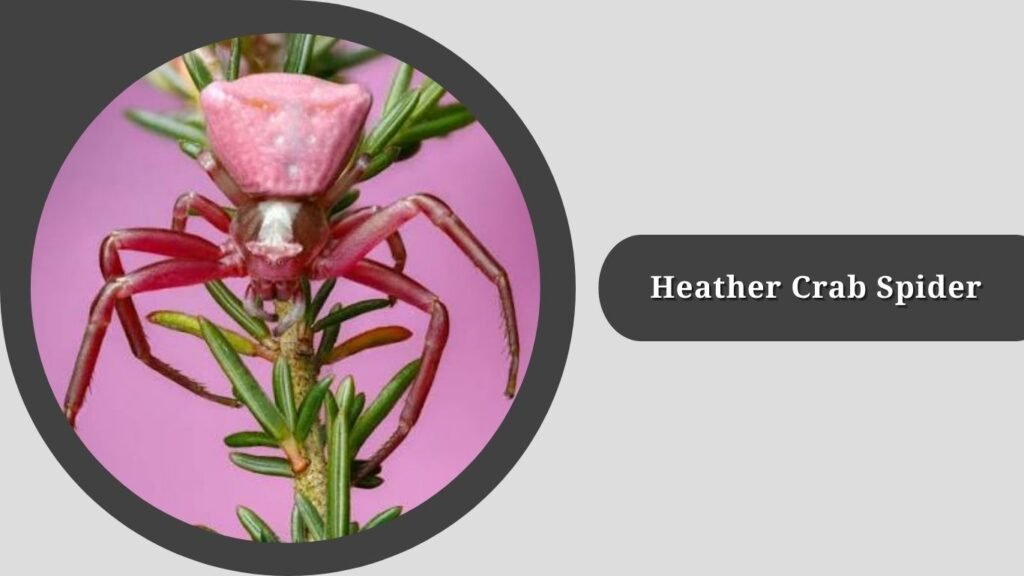
The Heather Crab Spider is a colorful flower-dwelling species known for its remarkable camouflage and distinctive triangular abdomen. It commonly appears in shades of pink, white, and yellow, allowing it to blend with flowering plants. This spider belongs to the crab spider family and primarily hunts insects through ambush rather than constructing prey-catching webs.
Identification
- Scientific Name: Thomisus onustus
- Family: Thomisidae
- Color: Pink, white, yellow, or combinations of these colors.
- Size: Females measure approximately 6–10 mm, while males are around 2.5–3.5 mm.
- Body Shape: Broad, flattened body with a distinctly triangular abdomen.
- Legs: Strong front legs extending sideways in a crab-like position.
- Special Feature: Its coloration can gradually change to match different flowers, providing effective camouflage.
Habitat and Distribution
Heather Crab Spiders occur across Europe, North Africa, and parts of Asia. They inhabit heathlands, grasslands, meadows, and other sunny environments with abundant flowering plants. In southern England, they are particularly associated with heather-covered habitats. Their preferred hunting locations include flowers visited by bees, butterflies, and other pollinating insects.
Behavior and Feeding Habits
Heather Crab Spiders are patient ambush predators that remain concealed among flower petals. When an insect approaches, the spider rapidly grabs it using its powerful front legs. Their prey includes bees, hoverflies, butterflies, and other small insects. They can capture animals considerably larger than their own bodies, making them effective flower-dwelling hunters.
Reproduction and Life Cycle
Female Heather Crab Spiders create protective silk egg sacs attached to leaves or vegetation. They may produce multiple egg sacs during their reproductive period. After hatching, spiderlings develop through several molts before reaching adulthood. Some young spiders overwinter in vegetation, while others remain protected inside egg sacs until suitable conditions return.
8. Napoleon Spider (Synema globosum)
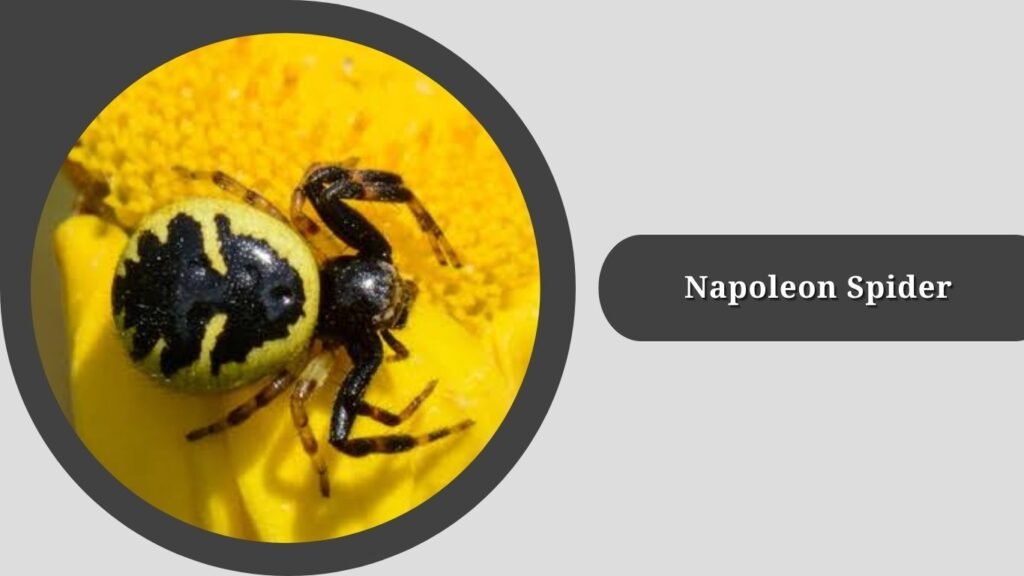
The Napoleon Spider is a distinctive crab spider named after the dark marking on its abdomen, which resembles Napoleon Bonaparte’s famous bicorne hat. Its striking color combinations and unusual pattern make it easy to recognize. Found mainly around flowers and low vegetation, this species uses camouflage and powerful front legs to capture unsuspecting insects.
Identification
- Scientific Name: Synema globosum
- Family: Thomisidae
- Color: Red, yellow, orange, or white abdomen with bold black markings.
- Size: Females measure approximately 6.8–8 mm, while males are around 4 mm.
- Body Shape: Compact body with a rounded, slightly flattened abdomen.
- Legs: Dark brown or black legs, with the front pairs stronger than the rear pairs.
- Special Feature: A distinctive black, hat-shaped pattern on the abdomen resembles Napoleon’s iconic headwear.
Habitat and Distribution
Napoleon Spiders inhabit much of Europe, North Africa, and parts of Asia. They are especially widespread around the Mediterranean region. These spiders prefer sunny meadows, grasslands, woodland edges, and gardens with flowering plants. Adults are frequently observed on blossoms during warmer months, where their contrasting colors help them remain concealed among vegetation.
Behavior and Feeding Habits
Napoleon Spiders hunt by waiting motionless on flowers for visiting insects. When bees, flies, butterflies, or other arthropods approach, they seize them with their front legs and inject venom. Unlike orb-weaving spiders, they do not construct webs to capture prey. Their hunting success depends on careful positioning and rapid attacks.
Reproduction and Life Cycle
During the breeding season, males search for females among flowering plants. Following mating, females produce eggs enclosed in protective silk sacs. Young spiderlings emerge and begin hunting small insects as they develop. Their growth involves several molts, and reproductive activity generally occurs during warmer periods when insect prey is abundant.
9. Elegant Crab Spider (Xysticus elegans)
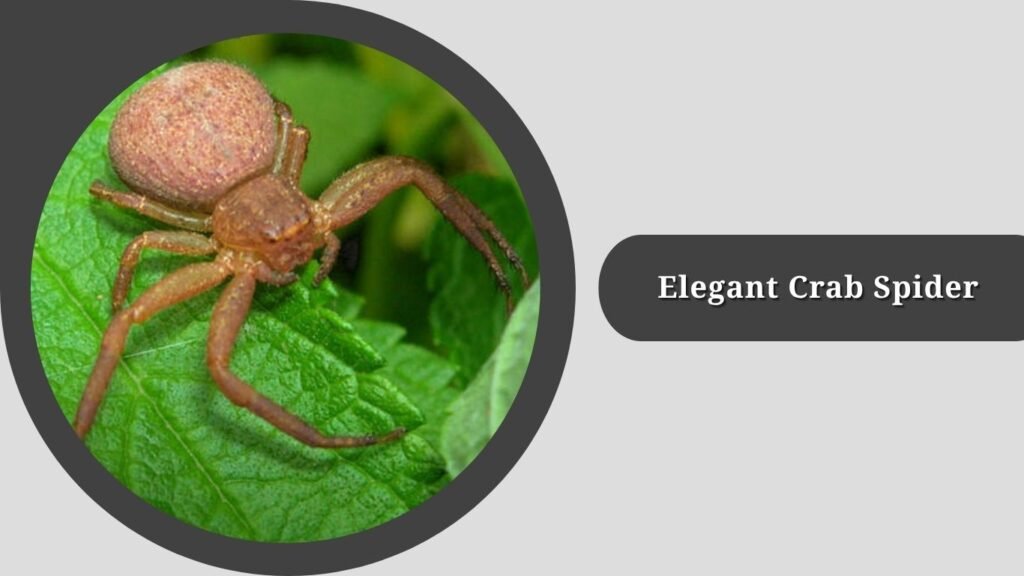
The Elegant Crab Spider is a medium-sized ground-dwelling spider recognized by its patterned brown body and powerful front legs. Unlike brightly colored flower crab spiders, this species blends naturally with soil, dried leaves, and other ground surfaces. It is an ambush predator that captures insects without building webs and is widely distributed across parts of North America.
Identification
- Scientific Name: Xysticus elegans
- Family: Thomisidae
- Color: Light brown, reddish-brown, or tan with darker markings.
- Size: Females measure approximately 7.5–10 mm, while males are around 5.5–7 mm.
- Body Shape: Broad, compact body with a flattened, oval abdomen.
- Legs: Stout, spiny legs with the first two pairs extending forward and sideways.
- Special Feature: Dark abdominal spots and contrasting pale markings create a distinctive patterned appearance.
Habitat and Distribution
Elegant Crab Spiders occur throughout much of the United States and southern Canada. They inhabit forests, grasslands, woodland edges, and other environments with ground vegetation. These spiders commonly hide beneath fallen leaves, logs, stones, and other natural debris. Their brown coloration helps them blend with their surroundings, providing camouflage against both predators and prey.
Behavior and Feeding Habits
Elegant Crab Spiders are slow-moving ambush predators that rely on camouflage rather than speed. They remain motionless until small insects or other spiders approach within striking distance. Their strong front legs allow them to seize and restrain prey while delivering venom. They may also move sideways when navigating uneven ground.
Reproduction and Life Cycle
Female Elegant Crab Spiders construct protective silk egg sacs, sometimes folding leaves around them. The eggs develop within these sheltered structures until the spiderlings emerge. Young spiders pass through several molts before becoming adults. Immature individuals can survive winter in protected locations and resume development when temperatures become favorable.
10. Emerton’s Crab Spider (Xysticus emertoni)
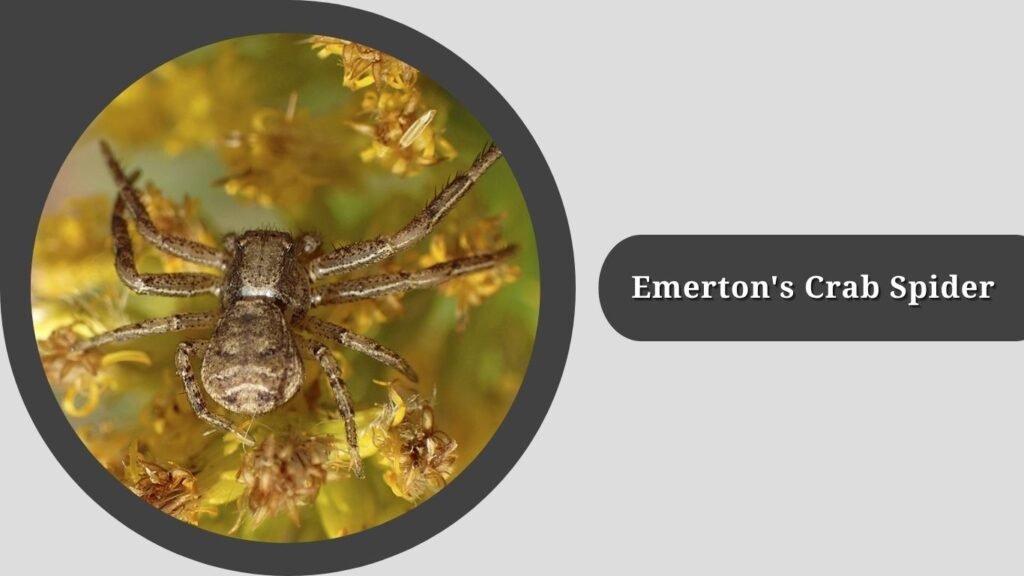
Emerton’s Crab Spider is a ground-dwelling species known for its reddish-brown coloration and distinctive mottled markings. Named in honor of arachnologist James Henry Emerton, this spider belongs to the genus Xysticus. It typically inhabits fields, meadows, and other natural environments, where it uses camouflage and ambush hunting techniques to capture small insects.
Identification
- Scientific Name: Xysticus emertoni
- Family: Thomisidae
- Color: Reddish-brown with pale cream or whitish markings.
- Size: Females measure approximately 7.8 mm, while males are around 6.4 mm.
- Body Shape: Broad body with a flattened, rounded abdomen.
- Legs: Strong, mottled reddish-brown legs with enlarged front pairs.
- Special Feature: Pale central markings on the carapace and contrasting patterns across the abdomen help distinguish this species.
Habitat and Distribution
Emerton’s Crab Spiders occur across Canada, the United States, and parts of northern and central Asia. They occupy fields, meadows, bogs, and low-growing vegetation. These spiders are frequently associated with ground-level habitats where vegetation provides shelter. Their mottled coloration allows them to blend with soil, plant debris, and surrounding vegetation.
Behavior and Feeding Habits
Like other ground crab spiders, Emerton’s Crab Spiders are primarily ambush predators. They wait for suitable insects or other small arthropods to approach before capturing them with their strong front legs. Rather than constructing elaborate capture webs, they rely on concealment and sudden attacks. Their sideways movements help them navigate vegetation and uneven ground surfaces.
Reproduction and Life Cycle
Detailed reproductive information about Emerton’s Crab Spider is limited. However, members of the genus Xysticus generally produce protective silk egg sacs. After hatching, the spiderlings develop through several molts while feeding on small prey. Their growth and seasonal activity depend on environmental conditions, including temperature and available food.
11. Oak Crab Spider (Mecaphesa quercina)
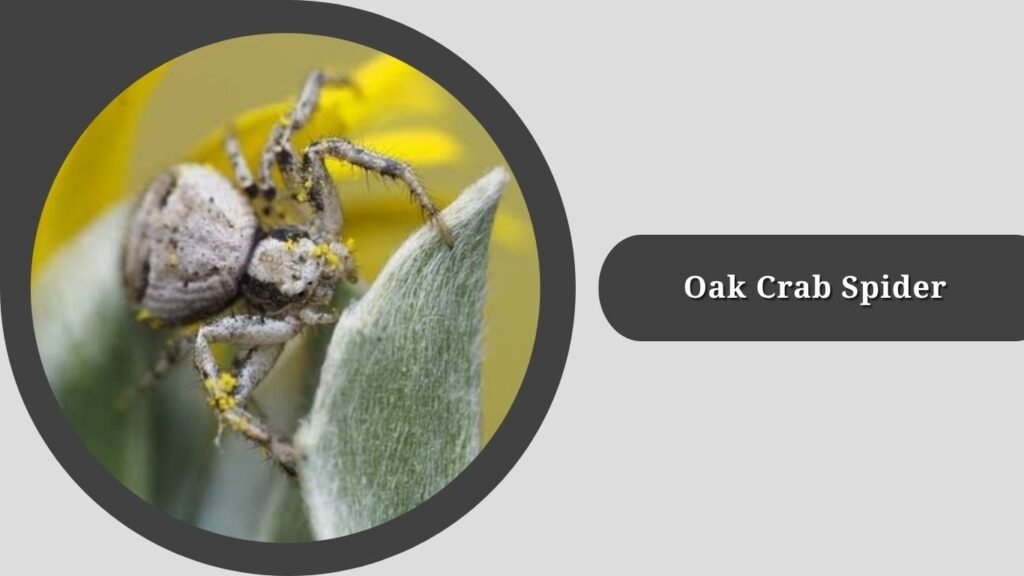
The Oak Crab Spider is a small species closely associated with oak woodlands and tree-covered environments. Its scientific name reflects its relationship with oak trees, where it commonly lives and hunts. This spider belongs to the crab spider family and uses its powerful front legs to capture insects. Its compact body and patterned appearance help it remain concealed among vegetation.
Identification
- Scientific Name: Mecaphesa quercina
- Family: Thomisidae
- Color: Brownish or pale tones with darker markings.
- Size: Small-bodied; a documented adult male measured approximately 2.5 mm.
- Body Shape: Compact body with a rounded abdomen.
- Legs: Front legs extend sideways and may display darker bands.
- Special Feature: Dark spots around the bases of abdominal hairs and contrasting leg markings can assist identification, although close examination is often necessary.
Habitat and Distribution
Oak Crab Spiders are known from California, particularly foothill woodlands and northern oak woodland habitats. They are closely associated with oak trees, where they live among branches, foliage, and surrounding vegetation. These environments provide suitable shelter and access to small insects. Mature specimens have been recorded from April through August, suggesting greater adult activity during warmer months.
Behavior and Feeding Habits
Oak Crab Spiders use ambush hunting techniques characteristic of the crab spider family. They do not construct prey-catching webs but instead wait for suitable insects to approach. Their front legs help them seize prey, while venom assists in immobilizing captured animals. Their small size allows them to move among leaves and branches while remaining relatively inconspicuous.
Reproduction and Life Cycle
Species-specific reproductive observations of Oak Crab Spiders are limited. Like other members of the crab spider family, females produce eggs protected by silk. The emerging spiderlings grow through successive molts before reaching maturity. Their development likely depends on seasonal temperature changes and the availability of suitable prey within woodland environments.
12. Pink Flower Spider (Tharrhalea evanida)
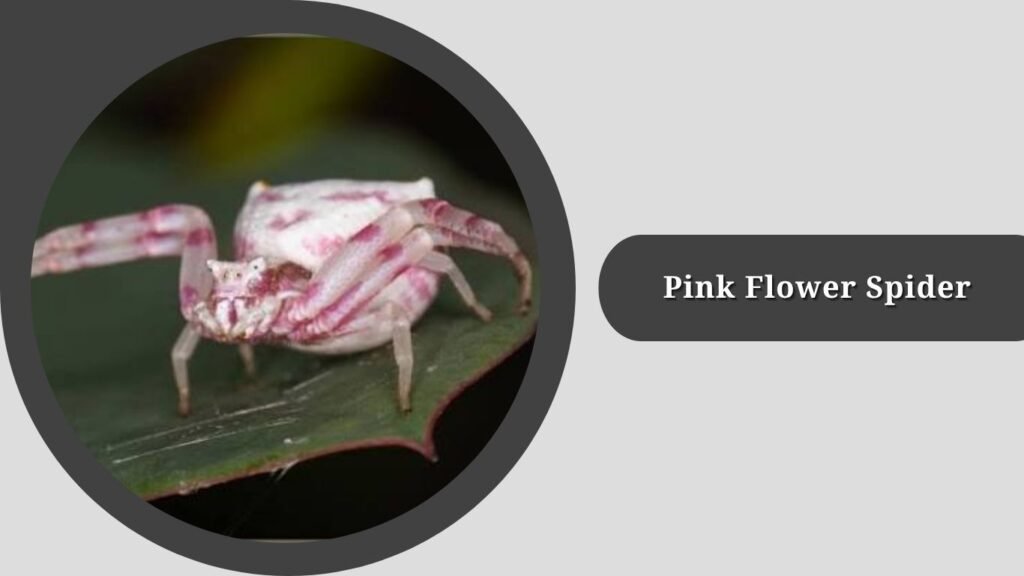
The Pink Flower Spider is a small, colorful crab spider commonly associated with flowering plants and leafy vegetation. Native to Australia and New Guinea, this species uses its delicate appearance and natural camouflage to remain hidden while hunting insects. Also called the Northern Flower Spider, it belongs to the family Thomisidae and is known for its distinctive sideways leg movements.
Identification
- Scientific Name: Tharrhalea evanida
- Family: Thomisidae
- Color: Pale pink, cream, or yellowish tones with darker markings.
- Size: Small-bodied, generally only a few millimeters long.
- Body Shape: Compact body with a rounded or slightly elongated abdomen.
- Legs: Long front legs extending outward in a crab-like position.
- Special Feature: Its coloration helps it blend with flowers and surrounding vegetation. It closely resembles several related Tharrhalea species.
Habitat and Distribution
Pink Flower Spiders occur in northern and eastern Australia, including Queensland, the Northern Territory, and New South Wales, as well as New Guinea. They inhabit gardens, shrubs, flowering plants, and other vegetated environments. They are commonly associated with native flowering plants such as wattles and grevilleas. Their small size allows them to remain concealed among leaves and flower petals.
Behavior and Feeding Habits
Pink Flower Spiders are ambush predators that do not construct webs to capture insects. They remain motionless on flowers or foliage until suitable prey approaches. Using their powerful front legs, they quickly grab small flies and other insects before injecting venom. Their camouflage provides protection from predators while allowing them to hunt effectively.
Reproduction and Life Cycle
Female Pink Flower Spiders produce protective silk egg sacs, which may be attached to vegetation. Females have been observed guarding their developing eggs. After hatching, young spiderlings gradually develop through several molts before becoming adults. Their growth and reproduction depend on environmental conditions and food availability.
13. Swift Crab Spider (Mecaphesa celer)
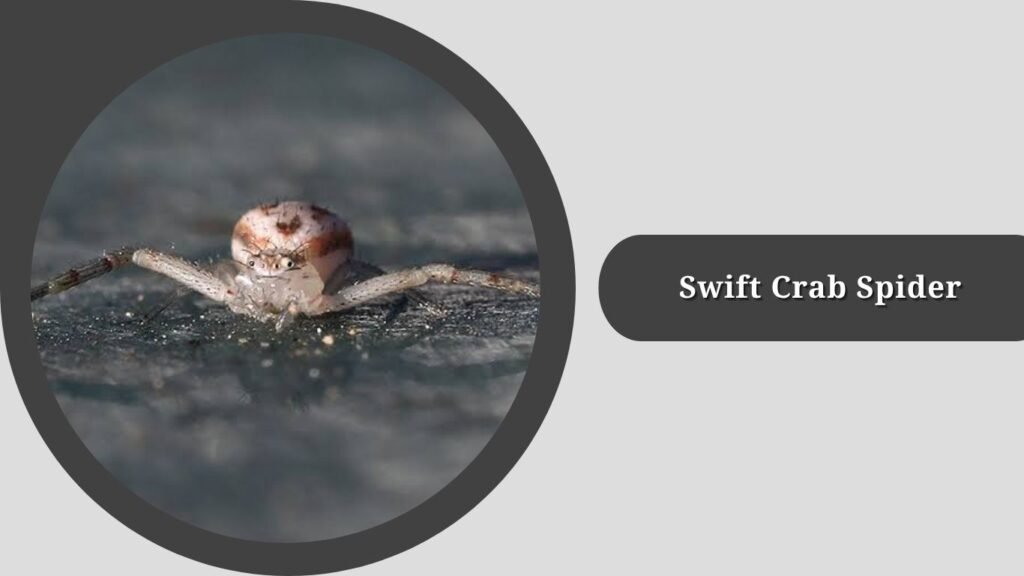
The Swift Crab Spider is a small flower-dwelling spider widely distributed throughout North and Central America. It is recognized by its pale coloration, spiny body, and exceptionally long front legs. This species commonly waits on flowers and vegetation for insects to approach, making it an effective ambush hunter in gardens, grasslands, and natural landscapes.
Identification
- Scientific Name: Mecaphesa celer
- Family: Thomisidae
- Color: Pale yellow, cream, or yellowish-white with reddish-brown markings.
- Size: Small-bodied, with females considerably larger than males.
- Body Shape: Compact body with an oval abdomen and prominent spines.
- Legs: Long front legs with fine spines and occasional reddish bands.
- Special Feature: Females often display rows of reddish abdominal spots, while males may have darker V-shaped markings.
Habitat and Distribution
Swift Crab Spiders inhabit the United States, southern Canada, Mexico, and parts of Central America. They are commonly found in gardens, meadows, forests, agricultural fields, and coastal dunes. These spiders frequently rest on flowers, shrubs, and low-growing plants where insect activity is high. Their pale bodies provide camouflage against vegetation.
Behavior and Feeding Habits
Swift Crab Spiders are patient predators that rely on surprise attacks rather than constructing capture webs. They wait for flies, bees, and other small insects to approach before grabbing them with their front legs. Their venom helps immobilize prey, allowing the spider to feed. Despite their name, they often spend long periods remaining motionless.
Reproduction and Life Cycle
During the breeding season, males search for receptive females among vegetation. Females produce silk egg sacs containing developing eggs. Young spiderlings emerge and undergo several molts before reaching adulthood. Swift Crab Spiders show noticeable sexual size differences, with females usually much larger than males.
14. Tan Crab Spider (Xysticus ferox)
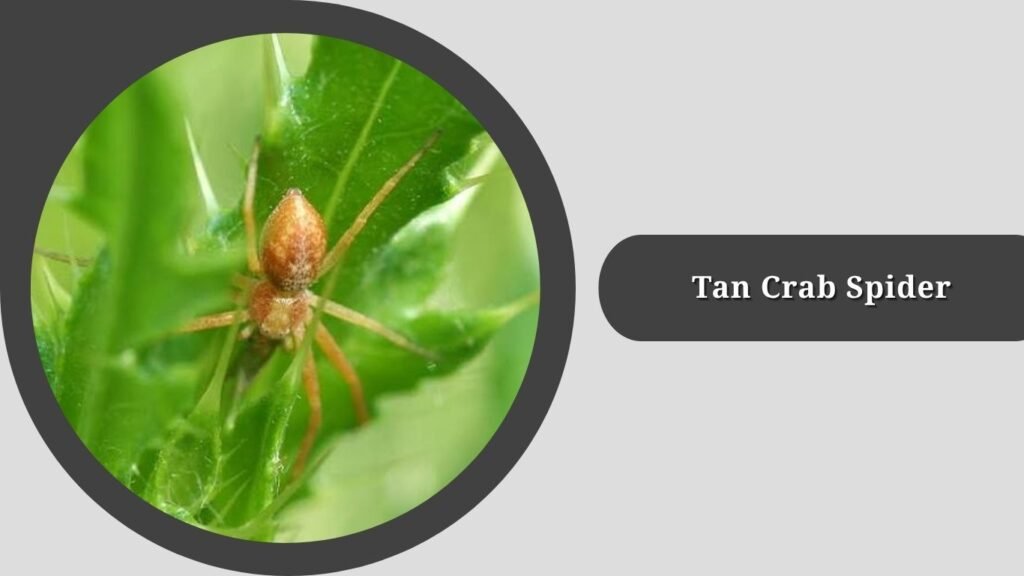
The Tan Crab Spider is a ground-dwelling species recognized by its brownish coloration and flattened body. It belongs to the genus Xysticus, a group of crab spiders commonly found among grass, leaf litter, and low vegetation. Its mottled appearance provides excellent camouflage, allowing it to remain hidden from predators while waiting for unsuspecting insects.
Identification
- Scientific Name: Xysticus ferox
- Family: Thomisidae
- Color: Tan, brown, or grayish-brown with darker patterns.
- Size: Females measure approximately 6–7 mm, while males are around 5–6 mm.
- Body Shape: Broad, flattened body with a rounded abdomen.
- Legs: Stout, spiny legs with the first two pairs longer and stronger.
- Special Feature: A dark triangular marking on the carapace, accompanied by additional dark patches, helps distinguish this species.
Habitat and Distribution
Tan Crab Spiders occur throughout much of North America, including Canada and the United States. They inhabit old fields, grasslands, woodland margins, and areas with low-growing vegetation. These spiders commonly remain close to the ground, hiding among dried leaves, grass, and other natural debris. Their earth-toned bodies help conceal them within their surroundings.
Behavior and Feeding Habits
Tan Crab Spiders use ambush hunting techniques rather than constructing webs to trap prey. They remain motionless until insects or other small arthropods approach within striking distance. Their powerful front legs allow them to seize prey while venom helps immobilize it. They may also move sideways or backward when disturbed, resembling the movements of a crab.
Reproduction and Life Cycle
Female Tan Crab Spiders produce eggs enclosed within protective silk sacs. Young spiderlings emerge and develop through several molts before reaching maturity. Their growth depends on seasonal conditions and access to suitable prey. Like other ground crab spiders, immature individuals may shelter among vegetation and leaf litter during unfavorable weather.
15. Three-Banded Crab Spider (Xysticus triguttatus)
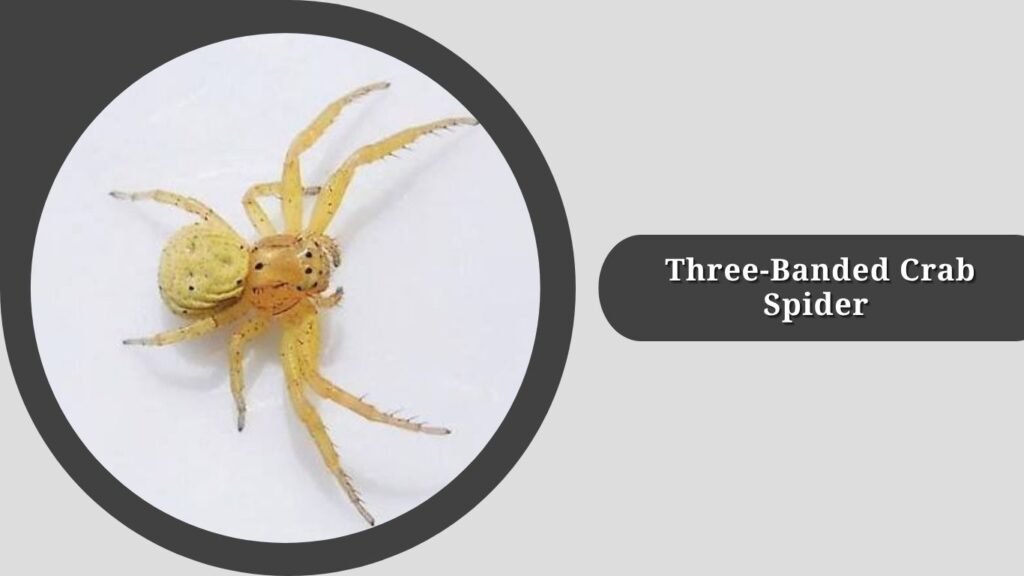
The Three-Banded Crab Spider is a small North American species known for the distinctive arrangement of dark markings across its abdomen. Unlike brightly colored flower crab spiders, it usually displays pale yellow, brown, and cream tones. This spider primarily inhabits low vegetation, where it patiently waits to capture insects using its strong front legs.
Identification
- Scientific Name: Xysticus triguttatus
- Family: Thomisidae
- Color: Yellowish-brown, cream, or pale gray with dark brown markings.
- Size: Females measure approximately 4–6 mm, while males measure 3–5 mm.
- Body Shape: Flattened body with a broad, oval abdomen.
- Legs: Stout legs with dark flecks and strong spines.
- Special Feature: Three transverse arrangements of dark spots or bands on the abdomen give this species its common name.
Habitat and Distribution
Three-Banded Crab Spiders are found throughout the United States and parts of Canada. They inhabit grasslands, meadows, woodlands, and bogs where low-growing vegetation provides suitable shelter. Unlike many other members of the genus Xysticus, this species frequently occupies grasses and small plants rather than remaining exclusively on the ground.
Behavior and Feeding Habits
This spider relies on camouflage and ambush hunting to capture insects and other small arthropods. It waits quietly among vegetation until prey comes within reach, then quickly extends its front legs to grab the animal. Three-Banded Crab Spiders do not construct prey-catching webs and can move sideways when navigating plants or escaping disturbances.
Reproduction and Life Cycle
Female Three-Banded Crab Spiders protect their eggs by folding the edge of a leaf and securing it with silk. The egg sac remains sheltered inside this structure while the young develop. After hatching, spiderlings grow through several molts. Adults are most active during the warmer months, particularly from late spring through summer.
16. Tuberculated Crab Spider (Tmarus angulatus)
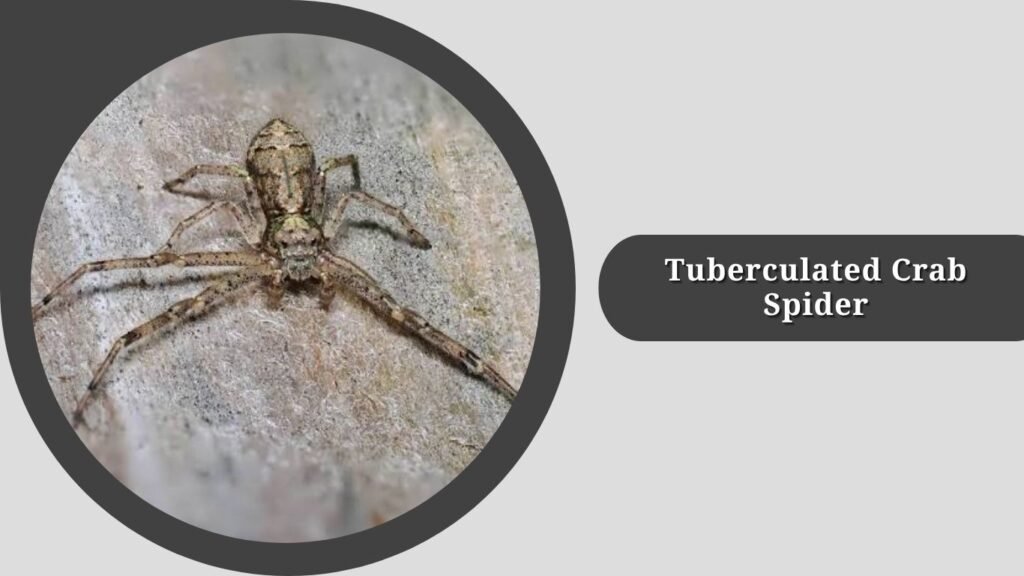
The Tuberculated Crab Spider is a distinctive North American species recognized by the raised projection on its abdomen and its unusual body shape. Unlike many flower-dwelling crab spiders, this species often inhabits twigs, shrubs, and other vegetation. Its mottled coloration allows it to blend with plant surfaces, making it difficult to notice while resting or hunting.
Identification
- Scientific Name: Tmarus angulatus
- Family: Thomisidae
- Color: Brown, grayish-brown, or tan with darker speckles.
- Size: Females reach approximately 6 mm, while males measure around 4 mm.
- Body Shape: Angular body with a prominent raised abdominal projection.
- Legs: Long, slender legs displaying brown speckles and markings.
- Special Feature: A noticeable abdominal tubercle gives the spider its distinctive profile and common name.
Habitat and Distribution
Tuberculated Crab Spiders occur across parts of North America, including the United States and Canada. They inhabit deciduous woodlands, mixed forests, grasslands, shrubs, and vegetation near wetlands. These spiders are often discovered resting on twigs, branches, and plant stems. Their unusual body shape and mottled markings help disguise them against natural surfaces.
Behavior and Feeding Habits
Tuberculated Crab Spiders are ambush predators that hunt small insects and other arthropods. They remain concealed on vegetation, relying on camouflage to avoid detection. When suitable prey approaches, they use their front legs to capture and immobilize it. Their flattened, angular appearance helps them blend with twigs and irregular plant surfaces.
Reproduction and Life Cycle
Detailed reproductive observations of this species are limited. Like other members of the crab spider family, females produce eggs enclosed in silk. Young spiderlings develop through several molts before reaching adulthood. Their activity and development are influenced by seasonal temperatures and prey availability.
17. Knobbly Crab Spider (Stephanopis altifrons)
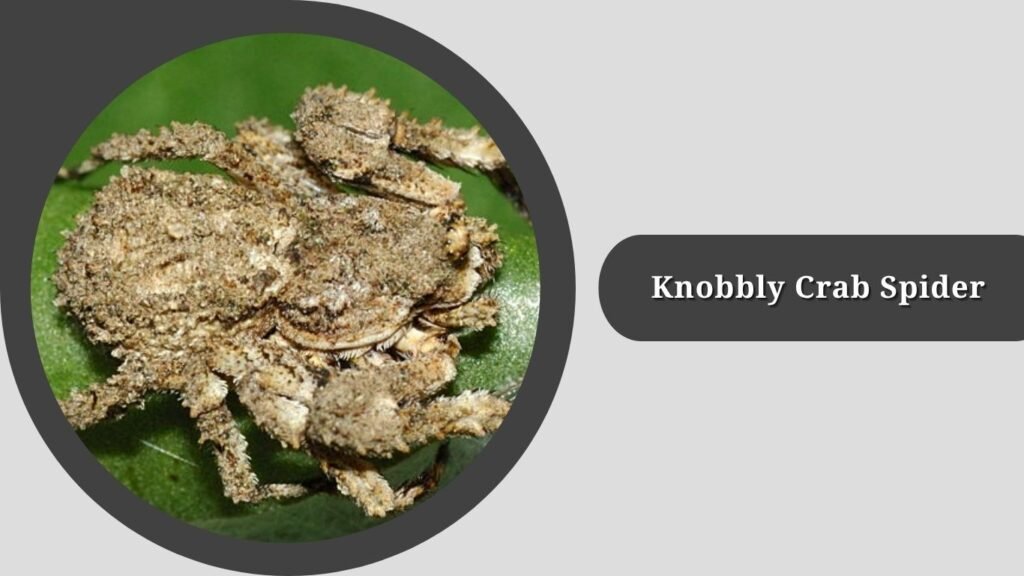
The Knobbly Crab Spider is an unusual Australian species known for its rough, bark-like appearance and irregular body surface. Unlike brightly colored flower crab spiders, this species is specially adapted for camouflage against tree trunks and branches. Its mottled brown and gray body allows it to remain almost invisible while resting on bark and waiting for prey.
Identification
- Scientific Name: Stephanopis altifrons
- Family: Thomisidae
- Color: Brown, gray, dark brown, or nearly black.
- Size: Females reach approximately 10 mm, while males are smaller, reaching around 6 mm.
- Body Shape: Broad, flattened body with irregular projections and a rough surface.
- Legs: Strong, laterally positioned legs with textured markings.
- Special Feature: Its knobbly body and bark-like coloration provide exceptional camouflage against tree trunks.
Habitat and Distribution
Knobbly Crab Spiders are native to Australia, with records from Queensland, New South Wales, and Tasmania. They commonly inhabit forests, woodlands, gardens, and other areas with trees. These spiders rest against rough bark, inside crevices, and along branches where their irregular body shapes blend with the surrounding surfaces. Their camouflage provides protection from potential predators.
Behavior and Feeding Habits
Knobbly Crab Spiders are relatively slow-moving predators that rely heavily on concealment. Unlike many flower crab spiders that frequently capture pollinating insects, this species has been observed preying on other spiders. They may capture jumping spiders and other species that move across tree bark. Their powerful front legs allow them to seize prey quickly despite their generally slow movements.
Reproduction and Life Cycle
Female Knobbly Crab Spiders produce protective egg sacs, often concealing them within bark crevices. These sacs may be covered with debris to improve camouflage. Females have been observed remaining near their eggs to guard them. After hatching, the young spiders develop through several molts before reaching adulthood.
FAQs
1. Are Crab Spiders Poisonous to Humans?
Crab spiders are venomous predators, but most are not considered medically significant to humans. Their venom helps immobilize insects and other small prey. Crab spider bites are uncommon, and most species prefer to escape rather than confront people. Individual reactions to bites can vary.
2. Where Do Crab Spiders Usually Live?
Crab spiders inhabit gardens, forests, grasslands, meadows, and shrub-covered environments. Flower crab spiders commonly rest on blossoms, while ground crab spiders hide among leaf litter and low vegetation. Bark-dwelling species prefer tree trunks and branches, where their camouflage helps them remain concealed.
3. What Do Crab Spiders Eat?
Crab spiders primarily eat insects and other small arthropods, including flies, bees, moths, beetles, and butterflies. Some species also hunt other spiders. They capture prey using their strong front legs and immobilize it with venom before feeding.
4. Can Crab Spiders Change Their Color?
Some crab spiders can gradually change color to match their surroundings. The Goldenrod Crab Spider is a well-known example that can change between white and yellow. However, not all crab spider species possess this ability, and color changes usually take several days rather than happening instantly.
5. Do Crab Spiders Build Webs?
Crab spiders generally do not construct webs to capture prey. Instead, they use camouflage, patience, and ambush hunting techniques. However, they still produce silk for other purposes, including creating egg sacs, securing retreats, and supporting reproductive activities.
