
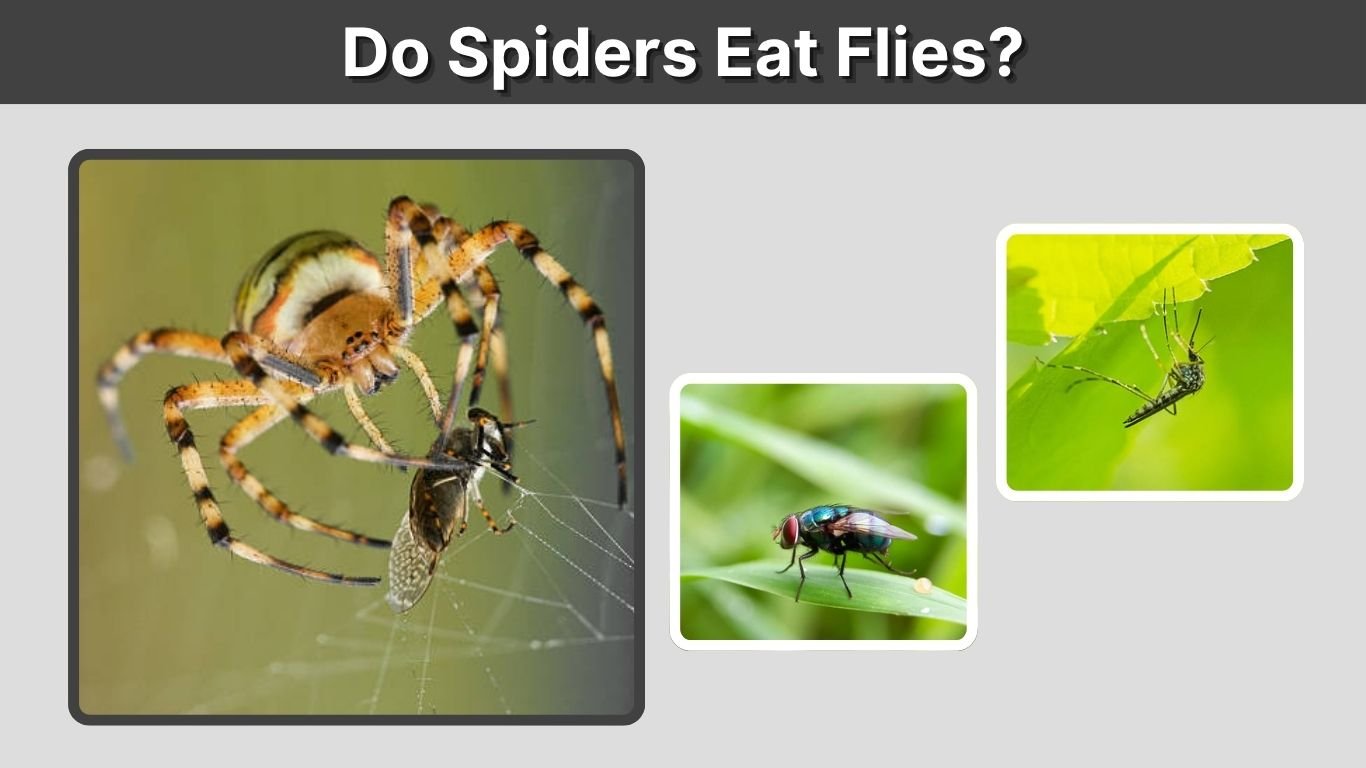
Have you ever watched a fly become trapped in a spider’s web and wondered what happens next? Yes, spiders eat flies, and these flying insects are a common food source for many spider species. From tiny fruit flies to larger house flies, spiders capture and consume different types of insects to survive. Some use sticky webs, while others actively chase their prey. Understanding how spiders catch flies, what types they prefer, and how often they feed reveals their important role in controlling insect populations.
Do Spiders Eat Flies?
Spiders are primarily carnivorous predators that feed on insects and other small animals. Flies are common prey because they occur in many of the same habitats as spiders. Although different species have unique hunting strategies, most spiders can consume suitable flies whenever they successfully capture them.
What Types of Flies Do Spiders Eat?
Spiders eat various fly species depending on their size, habitat, and hunting abilities. Common examples include:
- House flies: Frequently captured by house spiders, orb-weavers, and jumping spiders.
- Fruit flies: Small prey commonly eaten by spiderlings and smaller jumping spiders.
- Drain flies: Tiny insects that may become trapped in indoor spider webs.
- Crane flies: Larger flying insects sometimes captured by appropriately sized spiders.
- Horse flies: Powerful flying insects that some larger spiders may successfully capture.
- Gnats: Small flying insects commonly caught in delicate webs.
Spiders do not necessarily prefer one particular fly species. Their feeding habits often depend on which insects are available and manageable.
Why Do Spiders Eat Flies?
Flies provide proteins, fats, and other nutrients necessary for spider growth, development, and reproduction.
Capturing flies also allows spiders to obtain energy without searching for plant-based food.
For many spiders, flies are simply convenient prey rather than an essential or exclusive part of their diet.
How Do Spiders Catch and Eat Flies?
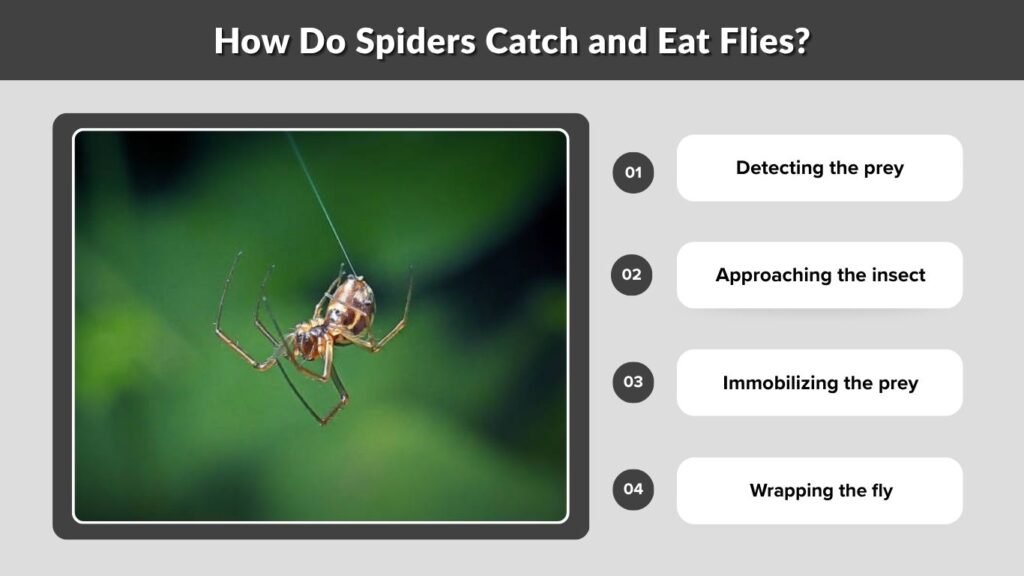
Spiders use different hunting methods to capture flying insects. Web-building species rely on silk traps, while active hunters pursue insects directly. Regardless of their hunting strategy, most spiders use venom and digestive fluids to process their prey before consuming it.
How Spiders Catch Flies
Web-building spiders generally follow a sequence when capturing flies:
- Detecting the prey: A fly becomes trapped in a sticky web and creates vibrations.
- Approaching the insect: The spider senses the movement and moves toward the trapped fly.
- Immobilizing the prey: The spider may bite the fly and inject venom.
- Wrapping the fly: Some species secure the insect using silk to prevent escape.
- Beginning digestion: The spider introduces digestive fluids that help break down the fly’s tissues.
Not every spider follows these exact steps. Hunting spiders may capture prey without using a web.
Do Spiders Eat Flies Whole?
Spiders generally cannot swallow solid prey the way many larger animals do.
Instead, they use digestive enzymes to break down soft tissues into liquid material that can be consumed through their specialized mouthparts.
The fly’s harder external structures usually remain after feeding, sometimes leaving behind a dry, hollow-looking body.
What Types of Spiders Eat Flies?
Numerous spider species consume flies, but their hunting techniques differ considerably. Some construct webs in areas where flying insects frequently pass, while others rely on sharp eyesight, speed, or camouflage to capture prey.
Common Spiders That Eat Flies
Several familiar spider groups regularly capture flying insects:
- Jumping spiders: Actively stalk and leap onto flies using excellent vision.
- House spiders: Trap house flies, gnats, and other small insects in webs.
- Cellar spiders: Capture flies and other insects using irregular webs.
- Orb-weaver spiders: Build circular webs that intercept flying insects.
- Wolf spiders: Hunt on the ground and sometimes capture resting flies.
- Huntsman spiders: Chase insects and occasionally capture larger flies.
Do Jumping Spiders Eat Flies?
Yes, jumping spiders frequently eat flies, including house flies and fruit flies.
Unlike typical web-building spiders, jumping spiders actively search for prey. They approach insects carefully before making a rapid jump.
Their excellent eyesight helps them judge distances and identify moving prey.
Small jumping spiders often hunt fruit flies, while larger individuals may capture house flies and other appropriately sized insects.
Do House Spiders Eat Flies and Mosquitoes?
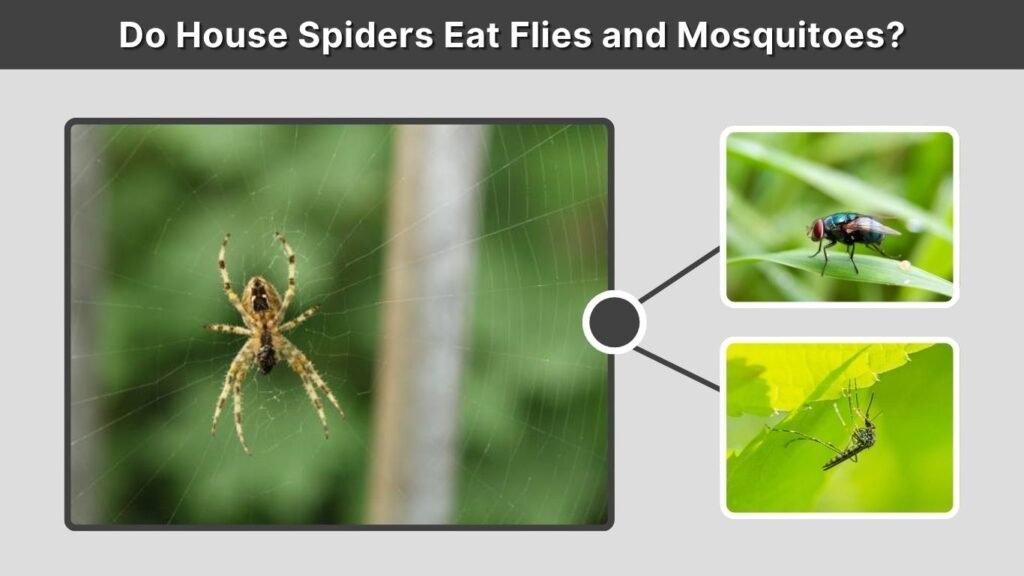
House spiders commonly feed on insects that enter homes. Flies, mosquitoes, gnats, and small moths may become trapped in indoor webs. Their presence near windows, ceilings, and corners often allows spiders to encounter flying insects regularly.
Do Spiders Eat Fruit Flies and Drain Flies?
Yes, many spiders consume fruit flies and drain flies when these insects become accessible.
Small web-building spiders may capture them around kitchens, windows, or other areas where flying insects gather.
Jumping spiders can also hunt fruit flies, making them common prey for smaller species.
However, spiders do not specifically eliminate the breeding sources responsible for indoor fly infestations.
Will Spiders Eat Dead Flies?
Some spiders can consume recently dead flies, although many prefer live prey.
Web-building spiders frequently respond to vibrations, making motionless insects less likely to trigger their hunting behavior.
Certain hunting spiders may accept freshly killed prey, but responses vary among species.
Old, dried, or contaminated flies are generally unsuitable food for captive spiders.
How Often Do Spiders Eat Flies?
Spiders do not follow a fixed daily feeding schedule. Their food requirements depend on species, body size, age, temperature, and reproductive condition. Some feed frequently when insects are abundant, while others survive relatively long periods between meals.
How Many Flies Do Spiders Eat a Day?
There is no universal number of flies that spiders consume daily.
A small spider may capture several tiny insects under favorable conditions, while a larger spider might consume one substantial meal and remain inactive afterward.
Some spiders eat every few days rather than daily.
Food availability, prey size, and the spider’s energy requirements determine how frequently feeding occurs.
What Do Spiders Eat When There Are No Flies?
When flies are unavailable, spiders may capture mosquitoes, moths, beetles, ants, or other suitable arthropods.
Some also eat other spiders when opportunities arise.
Many species can survive periods without food by reducing activity and conserving energy.
However, access to suitable prey remains necessary for long-term survival.
Can Venus Flytraps Eat Spiders?
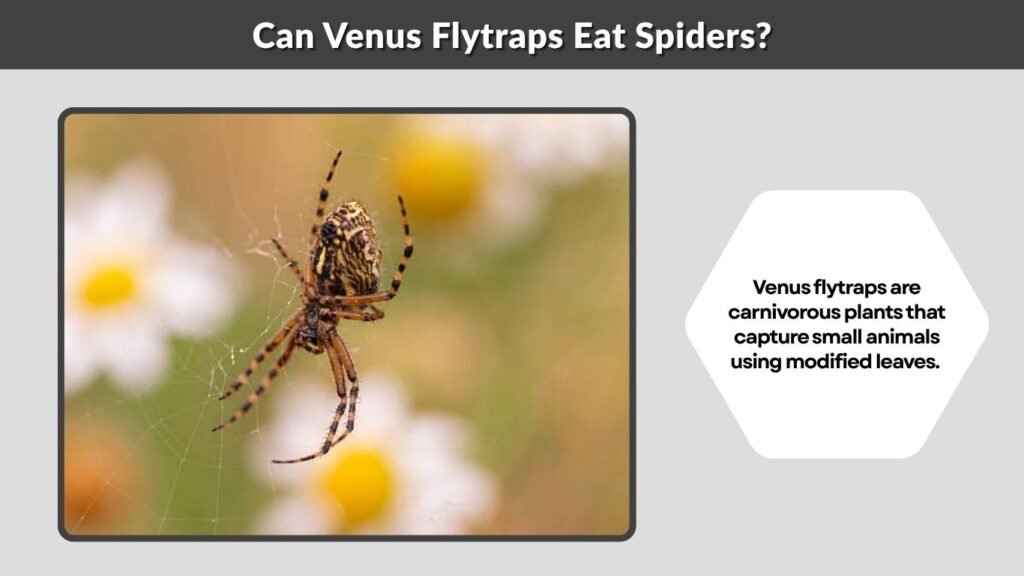
Venus flytraps are carnivorous plants that capture small animals using modified leaves. Despite their name, these plants do not exclusively eat flies. They can also capture spiders, ants, beetles, and other appropriately sized creatures that trigger their traps.
How Do Venus Flytraps Catch Spiders?
When a spider touches sensitive trigger hairs inside a Venus flytrap, the leaves may snap shut.
If the spider remains trapped and continues moving, the plant can begin producing digestive enzymes.
These enzymes break down the captured animal, allowing the plant to absorb nutrients.
However, spiders that are too large or escape before the trap seals may avoid being digested.
Do Flies Ever Eat Spiders?
Although spiders commonly eat flies, some fly species can attack spiders.
Certain robber flies capture and consume spiders, while some other specialized flies develop as parasites or parasitoids associated with spiders.
However, ordinary house flies and fruit flies do not typically hunt spiders.
Why Are Spiders Important for Fly Control?
Spiders contribute to natural insect population control in gardens, forests, agricultural environments, and homes. By feeding on flies and other insects, they help regulate local prey populations and maintain ecological balance.
Benefits of Spiders Eating Flies
Spiders provide several ecological benefits:
- Natural insect control: They capture house flies, mosquitoes, and other flying insects.
- Reduced pest activity: Predation can lower the number of insects in certain locations.
- Balanced ecosystems: Spiders help regulate insect populations within food webs.
- Food for other animals: Birds, reptiles, and other predators also depend on spiders as prey.
However, spiders alone cannot reliably eliminate major indoor fly infestations.
FAQs
1. Do all spiders eat flies?
Not all spiders regularly eat flies. Many capture them opportunistically, but diets vary by species, hunting strategy, habitat, and prey availability.
2. Do spiders eat flies alive?
Yes. Spiders commonly capture live flies, immobilize them with venom, and digest their tissues before consuming the resulting liquid nutrients.
3. Do jumping spiders eat house flies?
Yes. Larger jumping spiders can capture house flies, although smaller individuals may prefer fruit flies or other manageable insects.
4. Can spiders eat dead fruit flies?
Some spiders accept freshly dead fruit flies, but many respond more readily to moving prey. Feeding behavior varies between species.
5. Do spiders drink fly blood?
Spiders do not simply drink fly blood. They use digestive enzymes to liquefy internal tissues and consume the resulting nutrient-rich fluids.
