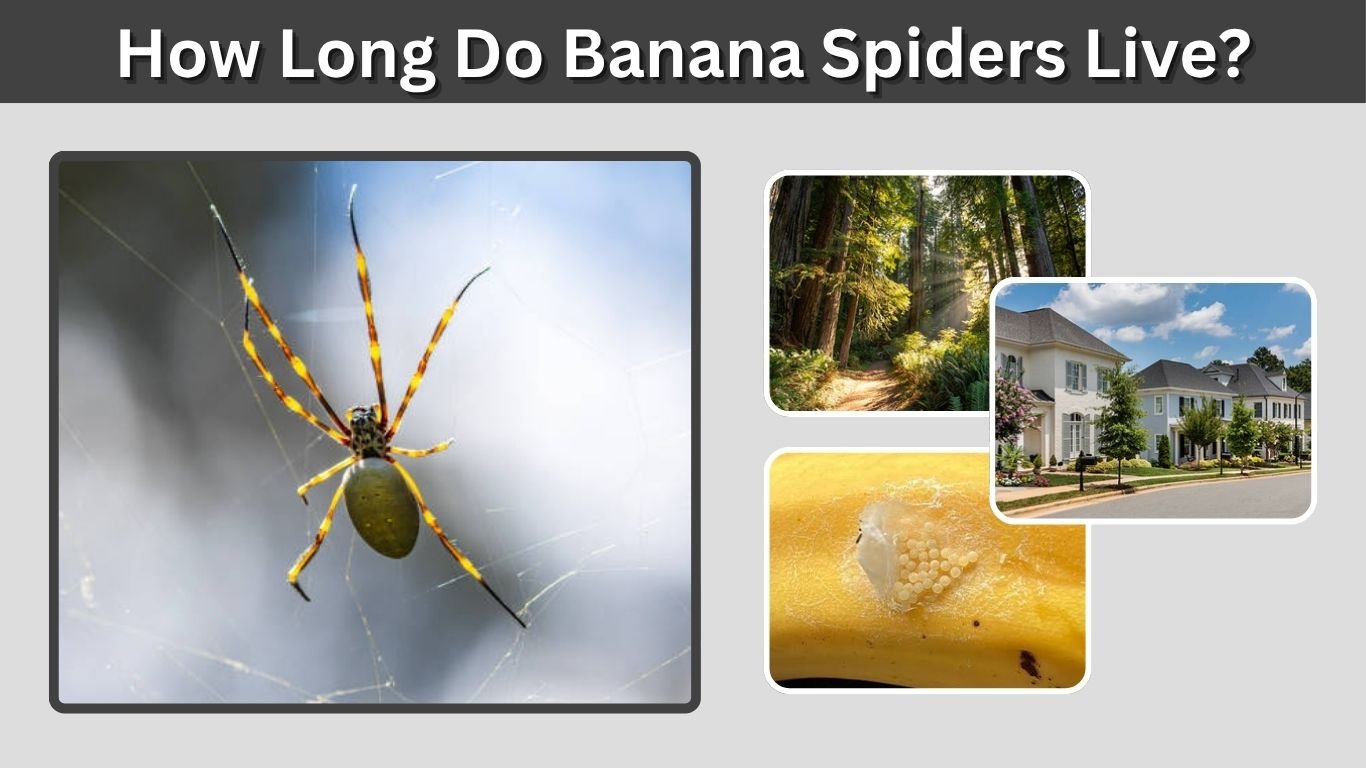
How long do banana spiders live, and where can you find them? Most golden silk orb-weavers, commonly called banana spiders in the southeastern United States, complete their life cycle in about one year. However, their lifespan varies depending on species, sex, climate, and environmental conditions. These remarkable spiders are known for their large golden webs, colorful bodies, and impressive size. Some people also confuse them with dangerous spiders found around banana plants. This guide explains banana spider lifespan, natural habitat, reproduction, seasonal behavior, and whether they actually live inside bananas.
How Long Do Banana Spiders Live?
Banana spiders generally live for approximately one year, although their lifespan depends on which species the name describes. The golden silk orb-weaver (Trichonephila clavipes) follows a seasonal life cycle in much of North America. Females typically survive longer than males, often remaining active into autumn. Tropical temperatures and favorable environmental conditions can influence their development and survival.
Female Banana Spider Lifespan
Female golden silk orb-weavers commonly live for most of a year, reaching adulthood during the warmer months.
They spend considerable time building large webs, capturing insects, and preparing for reproduction.
In cooler regions, adult females often die during autumn or early winter after producing egg sacs. However, egg-laying does not necessarily cause immediate death.
Male Banana Spider Lifespan
Male banana spiders usually have shorter lives than females.
They reach maturity at a much smaller size and focus primarily on finding receptive females.
Adult males are commonly observed between July and September in temperate North America. They may die after mating or from predation and other environmental causes.
Factors Affecting Banana Spider Lifespan
Several conditions influence how long banana spiders survive.
- Species: Different spiders called banana spiders have different life histories.
- Temperature: Cold conditions can end the adult breeding season.
- Food availability: Abundant insect prey supports growth and reproduction.
- Predators: Birds, lizards, and hunting wasps may kill spiders.
- Weather: Strong storms can damage webs and disrupt feeding.
- Habitat quality: Suitable vegetation provides protected web-building locations.
Where Do Banana Spiders Live?
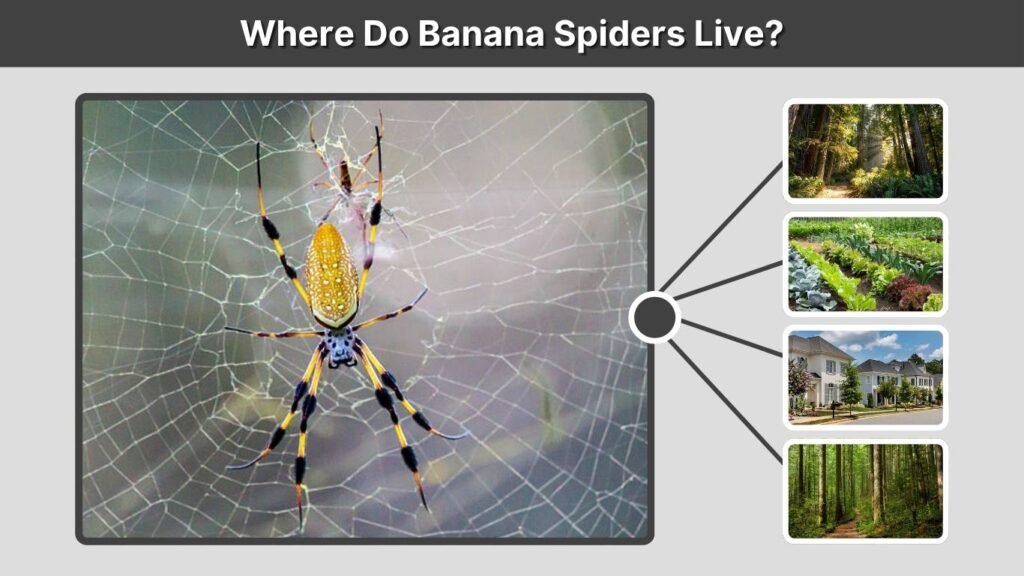
Golden silk orb-weavers inhabit warm, humid environments across the southeastern United States, Central America, and South America. These spiders generally prefer wooded landscapes where trees and shrubs provide support for their large webs. They are especially noticeable during late summer and autumn. Their distribution depends on climate, vegetation, and the availability of flying insects.
Where Do Banana Spiders Live in the United States?
Golden silk orb-weavers occur most commonly in southeastern states.
- Florida: Frequently observed in forests, gardens, and wooded landscapes.
- Georgia: Found in suitable woodland and suburban habitats.
- Alabama: Present in warm, vegetated environments.
- Louisiana: Common in wooded areas and humid landscapes.
- Mississippi: Found in forests, gardens, and sheltered vegetation.
- South Carolina: Occur in suitable coastal and inland habitats.
- North Carolina: Found within suitable areas of their northern regional range.
- Texas: Occur in parts of the state, especially warmer eastern and coastal habitats.
They are not established throughout every part of these states, and occasional sightings outside their usual range do not necessarily indicate permanent populations.
Where Do Banana Spiders Build Their Webs?
Banana spiders commonly construct large circular webs between trees, shrubs, and other vegetation.
Their webs often stretch across woodland trails, forest openings, or spaces between branches.
Golden silk orb-weaver webs can reach approximately 3–6 feet across, sometimes appearing even larger because of surrounding support threads.
Where Do Banana Spiders Live During Winter?
In regions with cold winters, adult golden silk orb-weavers usually disappear as temperatures drop.
Egg sacs provide protection for the next generation, which becomes active when suitable conditions return.
In tropical environments, seasonal development may be less restricted by cold weather.
Do Banana Spiders Actually Live in Bananas?
The name banana spider creates confusion because it describes several unrelated or distantly related spiders. In North America, it commonly refers to golden silk orb-weavers, which normally inhabit outdoor vegetation. In tropical regions, other spiders occasionally hide among banana plants or harvested fruit. Understanding this distinction is important because these spiders differ considerably in appearance, behavior, and medical significance.
Do Banana Spiders Live Inside Bananas?
Golden silk orb-weavers do not normally live inside bananas. They build webs between vegetation rather than burrowing into fruit.
However, spiders may occasionally hide between bananas in harvested bunches or packaging.
These encounters do not mean that spiders naturally develop or reproduce inside the fruit itself.
What Spiders Live in Banana Plants?
Several kinds of spiders may shelter among banana leaves and fruit clusters.
Brazilian wandering spiders of the genus Phoneutria are sometimes associated with banana plantations in tropical South America.
Other spiders, including wandering spiders from the genus Cupiennius, may also occur around banana plants.
These species should not be confused with the common golden silk orb-weaver.
Are Brazilian Wandering Spiders Found in Bananas?
Brazilian wandering spiders occasionally shelter among banana plants and may be transported accidentally with agricultural products.
However, dangerous spiders in commercial banana shipments are uncommon, and many reported encounters involve misidentified species.
If you discover an unfamiliar spider in imported fruit, avoid handling it directly and contact a qualified local professional for identification.
Banana Spider Life Cycle and Reproduction
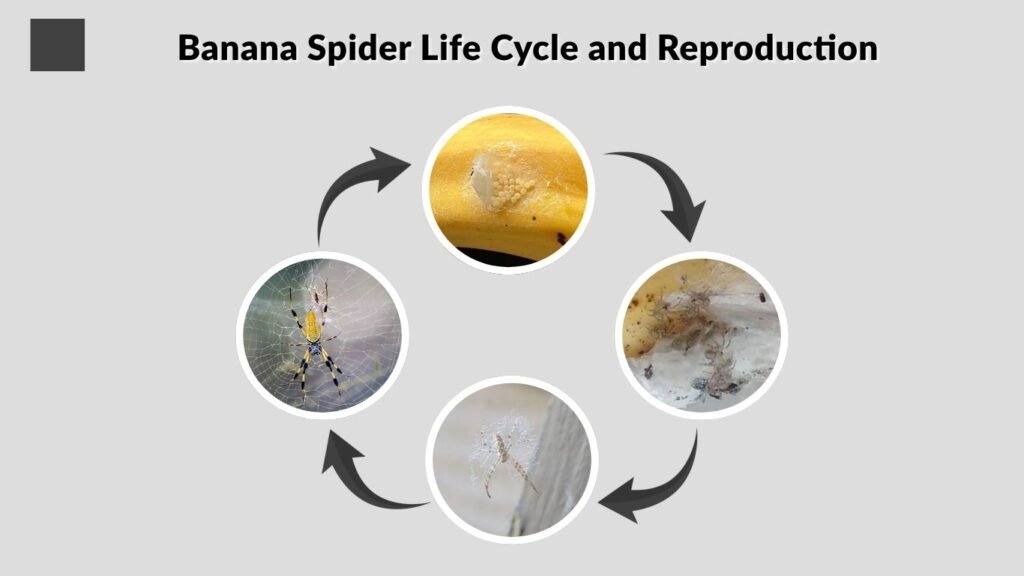
The banana spider life cycle includes egg development, spiderling growth, maturity, mating, and reproduction. Golden silk orb-weavers generally produce one generation annually in temperate North America. Their development follows seasonal changes, with adult males appearing during summer and females reproducing later. Understanding these stages helps explain why large banana spiders are especially visible during autumn.
Main Stages of the Banana Spider Life Cycle
- Egg stage: Females deposit hundreds of eggs inside protective silk sacs.
- Spiderling stage: Young spiders emerge and begin dispersing into surrounding vegetation.
- Juvenile stage: Growing spiders molt repeatedly while developing larger bodies.
- Adult stage: Mature spiders establish reproductive behavior and seek mates.
- Reproductive stage: Females produce egg sacs that support the next generation.
How Long Do Banana Spiders Live After Laying Eggs?
Female golden silk orb-weavers may survive for some time after producing their first egg sac.
In temperate areas, many die as the breeding season ends and colder temperatures arrive.
The exact survival period varies. Therefore, it is inaccurate to assume every female dies immediately after laying eggs.
How Many Eggs Do Banana Spiders Lay?
Female golden silk orb-weavers can produce multiple egg sacs.
Each sac may contain several hundred eggs enclosed in protective golden silk.
The number of eggs and egg sacs depends on the female’s condition, reproductive success, and environmental circumstances.
How to Identify a Banana Spider
Golden silk orb-weavers are recognizable by their distinctive colors, unusually long legs, and large golden webs. Female spiders are considerably larger than males, a characteristic known as sexual size dimorphism. Their impressive appearance sometimes causes unnecessary concern, although these spiders are generally not dangerous to humans. Examining their body patterns and web structure helps distinguish them from other species.
Golden Silk Orb-Weaver Identification
Common identification features include:
- Scientific name: Trichonephila clavipes.
- Female body length: Approximately 24–40 millimeters.
- Male body length: Commonly around 5–8 millimeters.
- Body color: Yellow, orange, tan, and silvery markings.
- Legs: Long, dark-banded legs with noticeable hair tufts.
- Web: Large, circular, and often golden-colored.
- Habitat: Woodlands, gardens, and tropical or subtropical vegetation.
Why Are Female Banana Spiders Bigger?
Female golden silk orb-weavers grow substantially larger than males.
Their larger bodies support egg production and allow them to capture insects in extensive webs.
Males remain comparatively small and may be observed near the edges of female webs during mating periods.
Are Banana Spiders Dangerous to Humans?
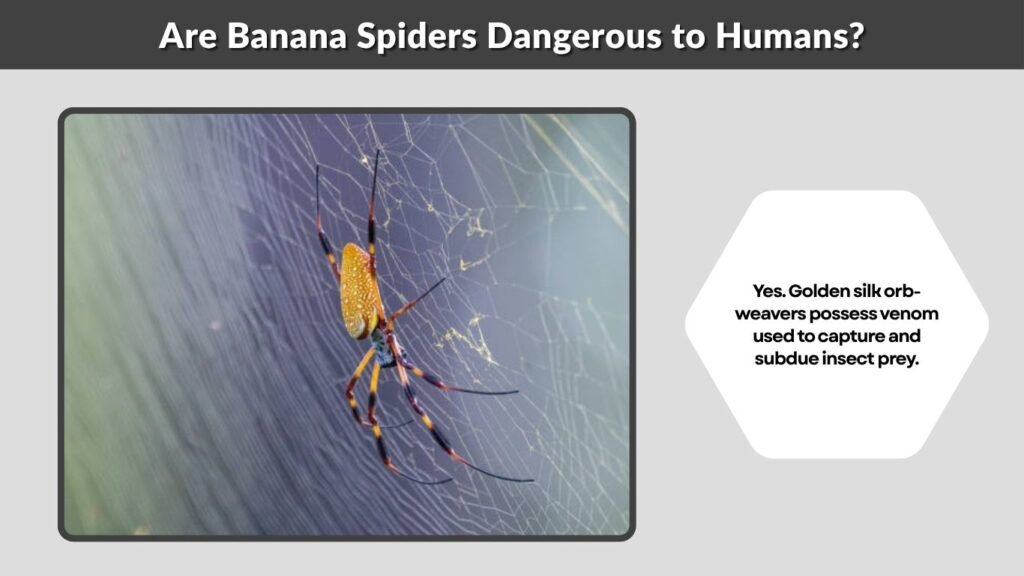
The danger posed by a banana spider depends on the species being discussed. Golden silk orb-weavers are generally harmless and rarely bite unless directly threatened or squeezed. However, Brazilian wandering spiders are medically significant and should never be handled. Learning to distinguish between these groups helps prevent unnecessary fear while encouraging safe interactions with unfamiliar spiders.
Are Golden Silk Banana Spiders Venomous?
Yes. Golden silk orb-weavers possess venom used to capture and subdue insect prey.
However, their bites are generally not medically significant to healthy adults.
Most encounters do not involve bites, and these spiders usually remain in their webs rather than approaching people.
Do Banana Spiders Help Control Insects?
Golden silk orb-weavers capture flies, grasshoppers, moths, and other flying insects.
Their webs help regulate local insect populations, making them beneficial components of natural ecosystems.
When possible, leaving their webs undisturbed allows these spiders to continue their ecological role.
FAQs
Banana spiders are often misunderstood because the name applies to several different species. Their lifespan, geographical distribution, and relationship with banana plants generate particular curiosity among homeowners and nature enthusiasts. The following questions explain how long these spiders live, where they occur, and whether encounters with them should cause concern.
1. How Long Do Banana Spiders Live in Florida?
Golden silk orb-weavers commonly complete their life cycle within approximately one year. Florida’s warmer conditions may affect seasonal activity, but lifespan still depends on environmental conditions.
2. Do Banana Spiders Live in Texas?
Yes. Golden silk orb-weavers occur in parts of Texas, particularly areas with warm weather and suitable wooded habitats.
3. Do Banana Spiders Live Inside Banana Trees?
Some tropical spiders shelter among banana leaves or fruit bunches. However, golden silk orb-weavers typically build webs between vegetation rather than living inside banana plants.
4. How Long Do Female Banana Spiders Live?
Female golden silk orb-weavers commonly live for most of a year in temperate regions. They generally survive longer than males and may remain active into autumn.
5. Can Banana Spiders Survive the Winter?
Adult golden silk orb-weavers generally do not survive prolonged freezing conditions. Their next generation can persist through protected egg sacs, while warmer regions may support longer periods of activity.
