
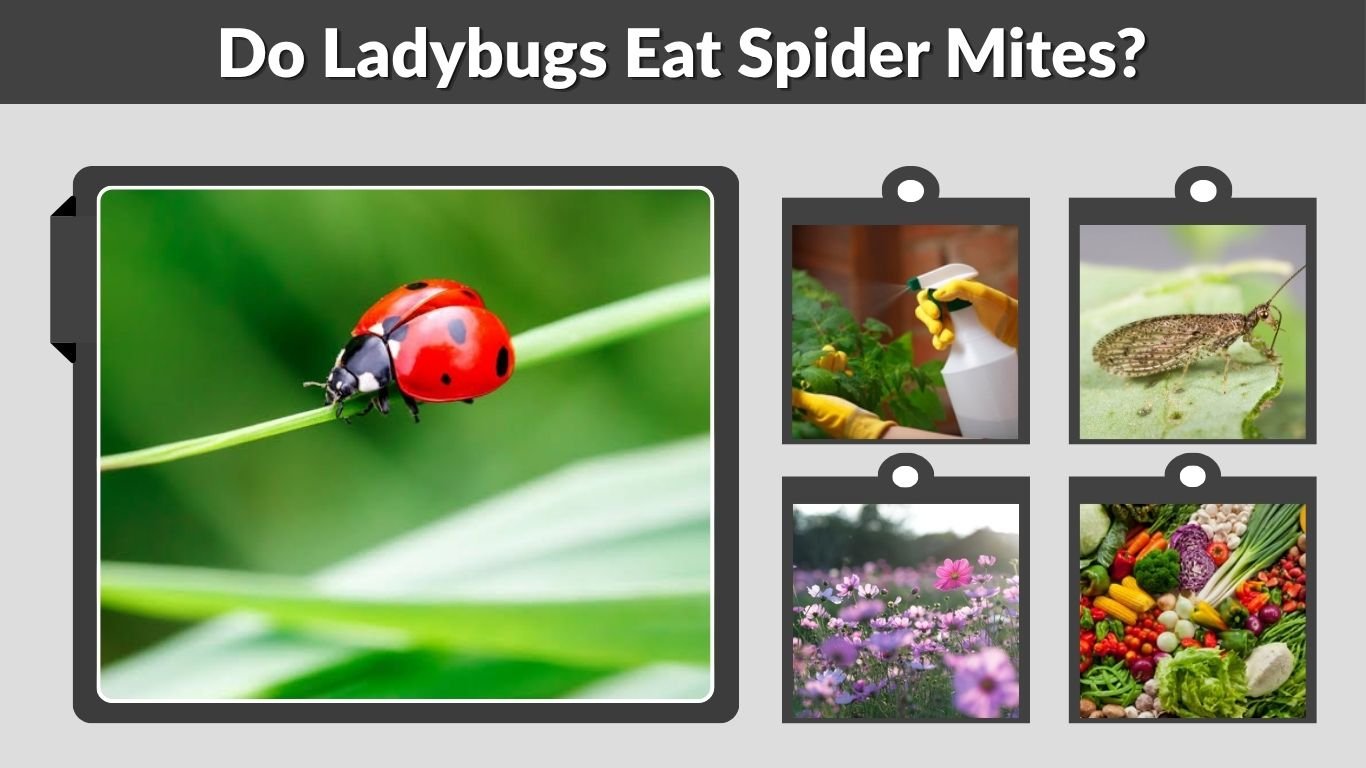
Yes, ladybugs can eat spider mites, but some species are far better at it than others. Specialized lady beetles such as Stethorus—often called spider mite destroyers—actively hunt spider mites and can consume large numbers of them. Other common ladybugs may eat spider mites occasionally but often prefer aphids and similar prey. If mites are damaging your plants, understanding which beneficial insects attack them can help you choose a more effective, garden-friendly control strategy without unnecessarily harming natural predators.
Do Ladybugs Eat Spider Mites?
Ladybugs, also called ladybirds or lady beetles, are predatory insects that consume many small garden pests. Spider mites can be part of their diet, although feeding preferences vary among species. Some lady beetles are generalists, whereas specialized Stethorus beetles depend heavily on plant-feeding mites and are particularly valuable wherever spider mite populations become established.
The Short Answer
Important points to remember include:
- Yes, some ladybugs eat spider mites.
- Both adult and larval lady beetles can be predatory.
- Stethorus species specialize in feeding on spider mites.
- Common ladybugs generally prefer aphids and other soft-bodied insects.
- Ladybugs alone may not control a severe spider mite infestation.
- Predatory mites are often among the most important natural enemies of spider mites.
UC IPM specifically identifies the spider mite destroyer lady beetle as an important mite predator.
Do Ladybug Larvae Eat Spider Mites?
Yes. Ladybug larvae can eat spider mites, although effectiveness depends on the ladybug species.
The larvae of the spider mite destroyer, Stethorus picipes, actively search mite colonies and feed on multiple life stages. Adult females even lay their eggs among spider mite colonies so newly hatched larvae have prey immediately available.
This makes the larval stage just as valuable as the adult stage for biological control.
Which Ladybugs Eat Spider Mites Best?
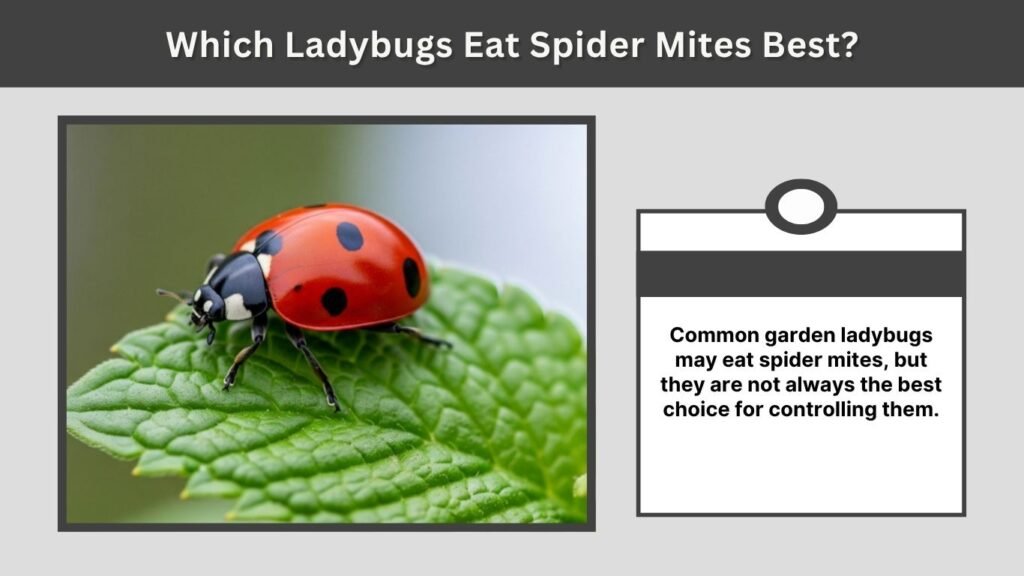
Not every red-and-black ladybug is equally useful against mites. Many familiar garden lady beetles are generalist predators that concentrate heavily on aphids. A much smaller black lady beetle called the spider mite destroyer is specifically adapted to finding and consuming mites, making it considerably more important when spider mites are the main pest.
Spider Mite Destroyer Lady Beetles
Stethorus species are among the best ladybugs for spider mite control.
The adult Stethorus picipes is only about 1.5 mm long, much smaller than the familiar spotted ladybugs commonly seen in gardens. Despite its size, both adults and larvae are voracious predators.
UC IPM reports that an individual adult or larva can consume up to 75 mites per day. These beetles feed on spider mite eggs, immature stages, and adults and can locate colonies efficiently once mite numbers become moderate.
Several Stethorus species occur in the United States, and all are predators of spider mites.
What About Regular Ladybugs?
Common garden ladybugs may eat spider mites, but they are not always the best choice for controlling them.
For example, the convergent lady beetle, Hippodamia convergens, feeds mainly on aphids, along with other soft-bodied insects and insect eggs. Oregon State University also notes that lady beetles are generally most effective as aphid predators, although spider mites can occur in the diets of some species.
So, if your main problem is spider mites, purchasing ordinary aphid-eating ladybugs may produce inconsistent results.
What Eats Spider Mites?
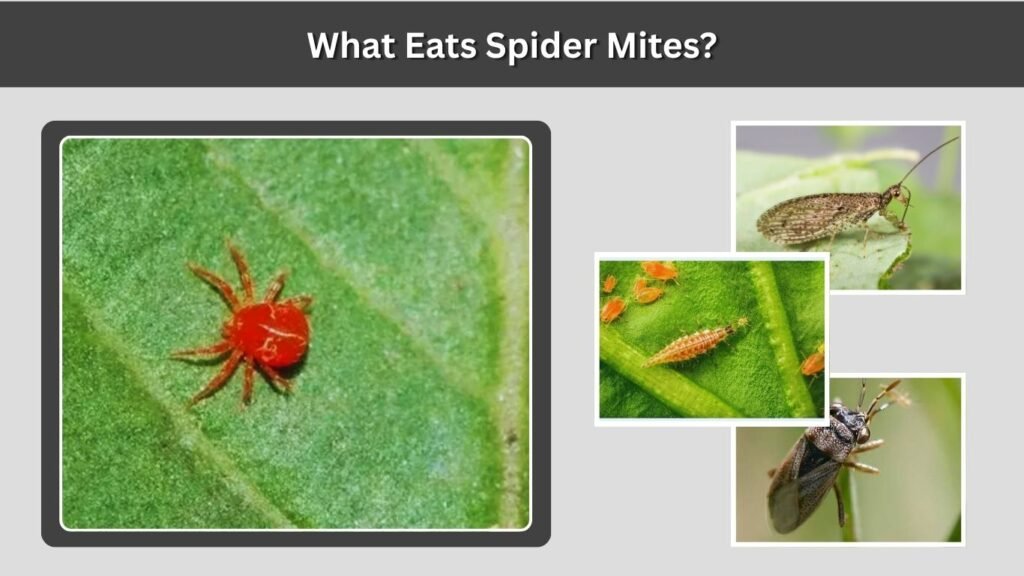
Spider mites have many natural predators, and healthy gardens often contain several of them at once. These predators are important because spider mites reproduce quickly, particularly during hot, dry weather. Protecting beneficial arthropods can sometimes prevent small mite populations from developing into damaging outbreaks without requiring broad-spectrum pesticide treatments.
Beneficial Insects That Eat Spider Mites
Natural enemies can include:
- Spider mite destroyer lady beetles
- Green lacewing larvae
- Brown lacewings
- Minute pirate bugs
- Big-eyed bugs
- Sixspotted thrips
- Predatory midges
- Rove beetles
- Some generalist lady beetles
- Predatory mites
UC IPM identifies predatory mites, lacewings, minute pirate bugs, sixspotted thrips, Stethorus lady beetles, and several other predators as important natural enemies of pest mites.
Are Predatory Mites Better Than Ladybugs?
For spider mite control specifically, predatory mites are often among the most effective biological-control organisms.
Species and genera used against pest mites include Phytoseiulus, Neoseiulus, Amblyseius, and Galendromus. These predators are roughly similar in size to spider mites but typically move faster and actively hunt them.
For an established spider mite problem on houseplants or greenhouse plants, an appropriate predatory mite may therefore be more targeted than releasing general-purpose ladybugs.
Do Spiders, Mantises, or Ants Eat Spider Mites?
A variety of predators may occasionally consume spider mites, but that does not mean all of them provide useful control. The size of the predator, its preferred prey, and where it hunts all influence whether it encounters enough spider mites to make a meaningful difference.
Do Spiders Eat Spider Mites?
Spiders eat insects and other small arthropods, so some spiders can potentially consume mites they encounter. However, ordinary garden spiders are generally much larger than spider mites and are not considered the primary biological-control agents for these pests.
Predatory mites and specialized tiny insects are better adapted to hunting prey on leaf surfaces where spider mites live.
Do Praying Mantises Eat Spider Mites?
Praying mantises are poor choices for spider mite control.
Oregon State University notes that mantises prefer relatively large insects and are less likely to control tiny garden pests such as mites, aphids, thrips, and whiteflies.
A mantis might consume many insects in a garden, but releasing one is unlikely to solve a spider mite infestation.
Do Ants Eat Spider Mites?
Ant behavior varies greatly among species, and some ants may eat tiny arthropods. However, ants are not normally considered dependable spider mite predators.
For biological control, it is better to focus on documented mite predators such as predatory mites, Stethorus lady beetles, lacewings, pirate bugs, and predatory thrips.
What Do Spider Mites Eat?
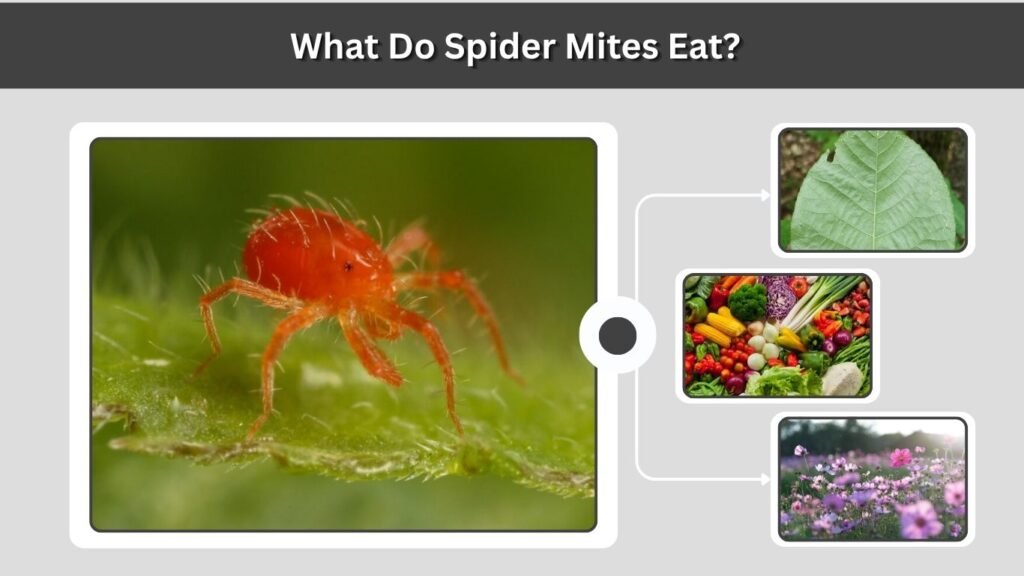
Spider mites are not predatory. They are plant-feeding arachnids that damage leaves by piercing plant cells and removing their contents. The twospotted spider mite, Tetranychus urticae, attacks a particularly wide range of vegetables, fruits, ornamentals, and houseplants. Severe feeding can weaken plants and cause extensive discoloration.
Plants and Leaves They Feed On
Spider mites commonly feed on plant tissues rather than other insects.
Their feeding can occur on:
- Leaf undersides
- Young and mature leaves
- Vegetables
- Fruit crops
- Flowers
- Ornamental plants
- Houseplants
- Trees and shrubs
They puncture cells and remove their contents, producing pale speckling or stippling across foliage.
Signs Spider Mites Are Feeding
Early damage often appears as tiny pale or yellow spots. As populations increase, leaves may become gray, bronze, yellow, dry, or prematurely fall from the plant.
Fine silk webbing is another classic sign, particularly during heavy infestations. Mites and their eggs are frequently concentrated on the undersides of leaves.
How to Control Spider Mites With Natural Predators
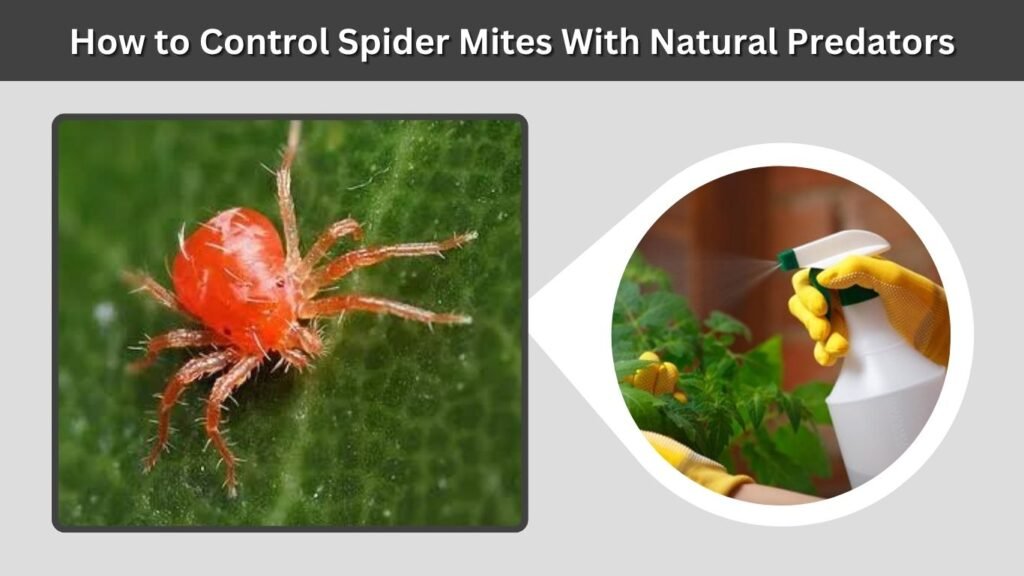
Beneficial insects work best when the garden environment allows them to survive. Repeated use of broad-spectrum pesticides can kill predators faster than it kills mites, sometimes allowing spider mite populations to rebound. Combining predator conservation with good watering, monitoring, and physical removal usually produces a more balanced long-term approach.
Help Beneficial Predators Survive
To encourage natural control:
- Avoid unnecessary broad-spectrum insecticides.
- Keep plants adequately watered and reduce drought stress.
- Reduce dusty conditions around plants.
- Grow flowers that provide nectar and pollen for beneficial insects.
- Check leaf undersides regularly for mites and predators.
- Spray plants with water to physically remove mites where practical.
- Preserve existing lacewings, pirate bugs, predatory mites, and lady beetles.
Hot, dusty, drought-stressed conditions often favor spider mite outbreaks, while conserving natural enemies can help suppress their populations.
When Ladybugs Are Not Enough
If spider mite numbers are already very high, predators may struggle to catch up quickly enough to prevent damage.
Start by isolating heavily infested houseplants where appropriate and washing mites from foliage with water. In some situations, insecticidal soap or horticultural oil may be considered while carefully following the product label.
Avoid unnecessary broad-spectrum insecticides because some can kill beneficial predators and actually contribute to later spider mite outbreaks.
FAQs
Ladybugs are useful beneficial insects, but their effectiveness depends strongly on species and pest type. These quick answers address the most common questions about using ladybugs and other predators against spider mites.
1. Will ladybugs eat spider mites and their eggs?
Some lady beetles will. Specialized Stethorus lady beetles feed on multiple spider mite life stages, including mites within colonies where the beetles reproduce.
2. How many spider mites can a ladybug eat?
The specialized spider mite destroyer Stethorus picipes can consume up to about 75 mites per day as either an adult or larva under suitable conditions.
3. Do green lacewings eat spider mites?
Yes. Lacewing larvae are generalist predators and are recognized as natural enemies of spider mites as well as aphids, thrips, and several other small pests.
4. What is the best predator for spider mites?
Predatory mites are among the most important natural enemies of spider mites. Specialized Stethorus lady beetles, sixspotted thrips, lacewings, and minute pirate bugs can also provide valuable control.
5. Are ladybugs enough to eliminate a spider mite infestation?
Not always. Specialized lady beetles can significantly reduce mite populations, but severe infestations may require a combination of predator conservation, washing plants, improving plant health, and other appropriate control measures.
