
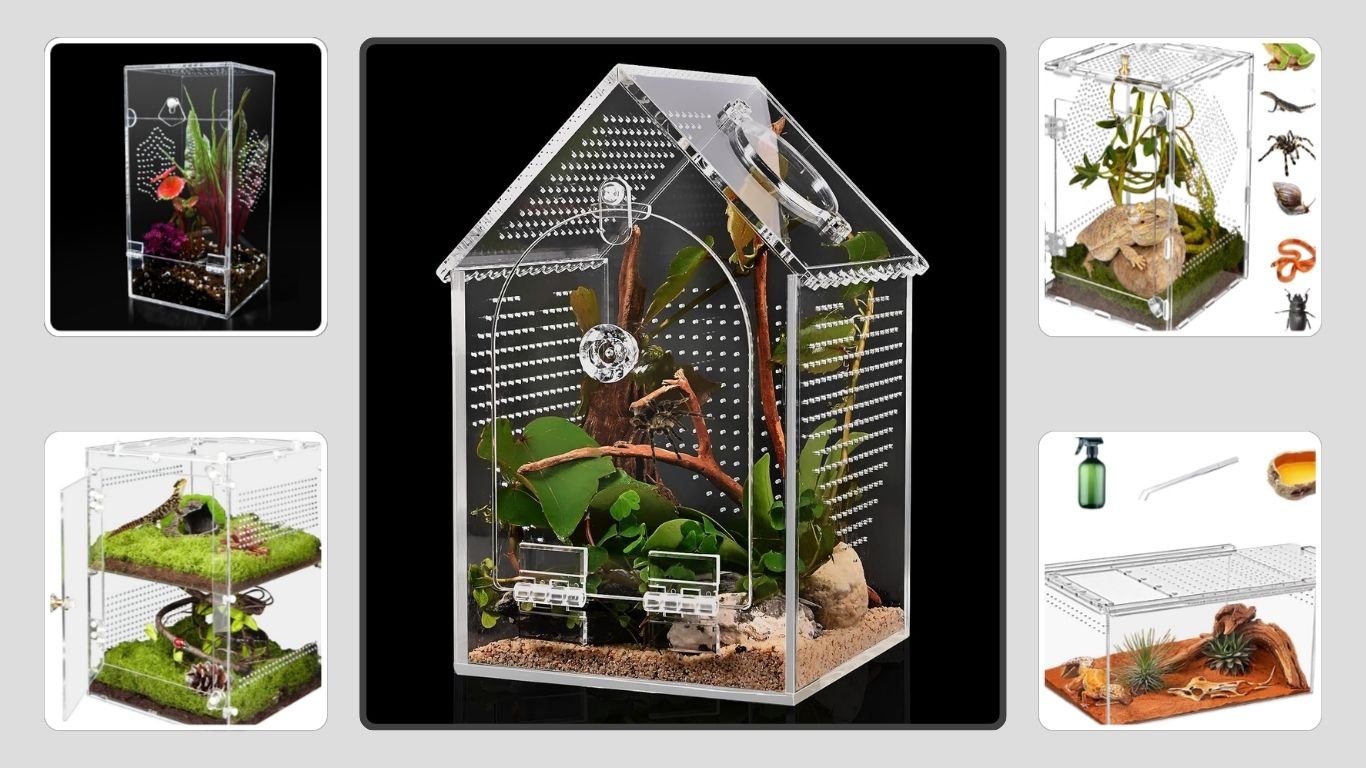
A good acrylic spider enclosure provides clear visibility, reliable ventilation, secure access, and enough space for your spider to move naturally. Whether you keep a jumping spider, tarantula, or another small arachnid, the right enclosure can make daily care easier while helping maintain a safer habitat. Acrylic designs are especially popular because they are lightweight, transparent, and easy to clean. In this guide, we review 9 of the best acrylic spider enclosures for different species, enclosure sizes, ventilation needs, and terrarium setups.
1. Acrylic Reptile Terrarium for Tarantulas & Spiders
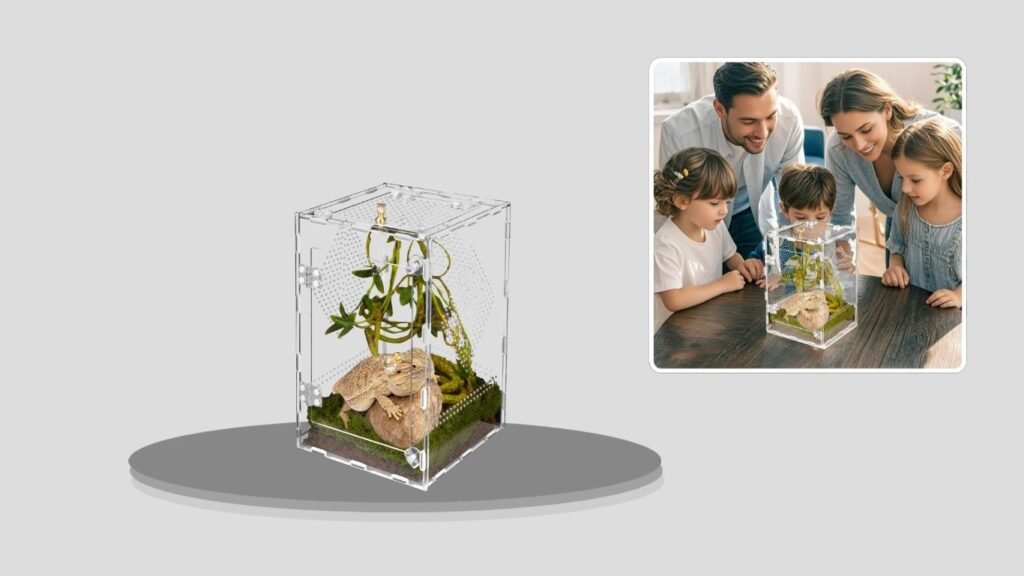
This acrylic reptile terrarium is a practical option for keepers who want a clear, secure, and well-ventilated habitat for tarantulas, jumping spiders, and other small invertebrates. Its transparent acrylic construction provides an unobstructed view of the enclosure while keeping the setup lightweight and easy to position. With ventilation built into the design and a scratch-resistant structure, it works well for creating an attractive display without sacrificing everyday functionality.
Key Features
- Transparent acrylic construction
- Designed for spiders and small invertebrates
- Ventilation openings for airflow
- Scratch-resistant viewing panels
- Lightweight and easy to position
- Clear visibility from multiple angles
- Secure enclosed habitat design
- Suitable for customized substrate and décor
Why It’s Best for Clear Spider Viewing
One of the strongest advantages of this enclosure is visibility. Acrylic walls make it easy to observe your spider’s natural behavior, feeding activity, web building, and movement without constantly opening the habitat.
That makes it particularly appealing for jumping spider owners who enjoy watching active behavior throughout the day. Tarantula keepers can also benefit from the clear construction when checking burrows, feeding responses, or general condition.
Because acrylic is lighter than traditional glass, the enclosure is also easier to move when reorganizing a shelf or cleaning the surrounding area.
Ventilation and Everyday Performance
Proper airflow is one of the most important considerations in spider husbandry. The ventilation openings help exchange stale air while supporting a more stable enclosure environment.
Good ventilation is especially useful when substrate retains moisture, as excessive stagnant humidity can create undesirable conditions. At the same time, the transparent design makes it easier to monitor condensation and adjust misting or watering practices.
The enclosure can also be customized with cork bark, artificial plants, climbing branches, hides, and appropriate substrate depending on the species being housed.
Overall Verdict
This acrylic reptile terrarium is a well-rounded choice for keepers who prioritize visibility, ventilation, and straightforward maintenance. Its transparent panels create an attractive display while making routine observation much easier.
The lightweight construction also makes it convenient for shelves, desks, or dedicated spider-keeping areas. For a jumping spider, tarantula, or similar invertebrate that fits the enclosure dimensions and ventilation style, the combination of clear viewing, airflow, and customizable interior space gives this habitat the practical qualities needed for a comfortable and visually appealing setup.
2. Clear Acrylic Spider Enclosure Terrarium
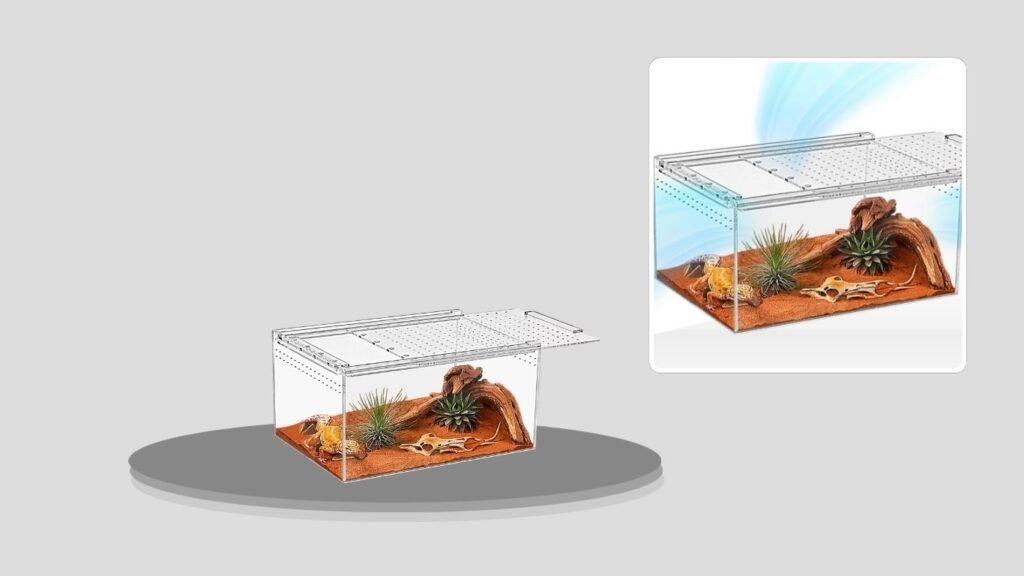
This clear acrylic spider enclosure is a practical choice for keepers who want a simple habitat that makes daily observation easy. Its transparent walls provide a clear view of feeding, climbing, web building, and resting behavior, while the compact terrarium format works well for small spiders and other invertebrates. The enclosure can also be customized with substrate, cork bark, plants, and climbing décor to create a more natural setup.
Key Features
- Transparent acrylic construction
- Compact terrarium design
- Suitable for small spiders and invertebrates
- Clear viewing from multiple angles
- Space for substrate and décor
- Lightweight construction
- Easy-to-monitor interior
- Suitable for customized habitat layouts
Why It’s Best for Simple Spider Setups
Not every spider keeper needs an elaborate terrarium. A straightforward acrylic enclosure can be especially useful for jumping spiders, spiderlings, and smaller terrestrial species when the enclosure dimensions match their requirements.
The clear walls make routine checks quick because you can monitor food, webbing, moisture, and activity without opening the enclosure repeatedly.
For beginners, this uncomplicated design also makes it easier to understand how a spider uses its habitat before adding more elaborate accessories.
Everyday Performance and Visibility
Acrylic provides excellent visibility while remaining considerably lighter than comparable glass habitats. This makes the enclosure convenient for shelves, desks, and dedicated invertebrate racks.
The interior can be arranged differently depending on the species. Arboreal spiders benefit from vertical climbing surfaces, while terrestrial species require appropriate substrate depth and hiding areas.
Correct ventilation and enclosure size should always be matched to the particular spider rather than chosen by appearance alone.
Overall Verdict
This clear acrylic spider enclosure works best for keepers who value visibility, customization, and an uncomplicated habitat.
Its transparent construction makes spider watching especially enjoyable, while the lightweight format makes routine handling of the enclosure more convenient.
For small species whose space and ventilation requirements match the terrarium, it provides a clean foundation that can be personalized with hides, climbing material, plants, and appropriate substrate.
3. Cycodo Warp-Proof Acrylic Tarantula Enclosure
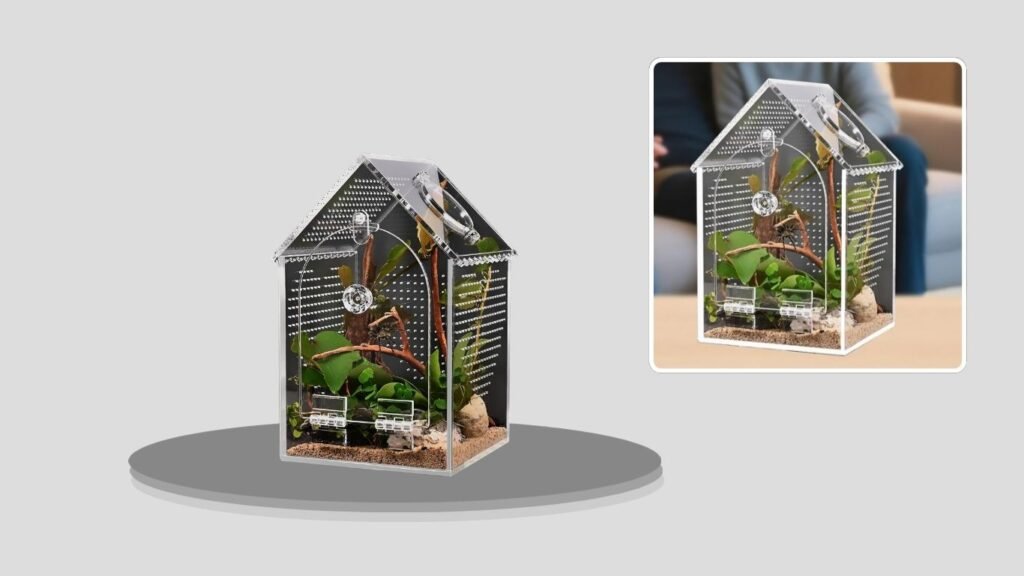
The Cycodo Acrylic Tarantula Enclosure focuses on structural stability, clear viewing, and practical ventilation. Its warp-resistant acrylic design is intended to maintain a clean enclosure shape while giving keepers broad visibility into the habitat. This makes it suitable for tarantulas and other invertebrates that benefit from a secure, controlled setup with enough space for substrate, hides, and species-appropriate environmental features.
Key Features
- Warp-resistant acrylic construction
- Transparent terrarium walls
- Designed for tarantulas and invertebrates
- Ventilation openings
- Lightweight compared with glass
- Space for substrate and hiding areas
- Clear observation from multiple angles
- Suitable for customized terrarium décor
Why It’s Best for Long-Term Enclosure Stability
Thin acrylic can sometimes flex or distort over time, particularly when exposed to changing temperatures or moisture. A warp-resistant design helps maintain a better-fitting enclosure structure and more consistent appearance.
That matters for tarantula keepers because secure panel alignment reduces unwanted gaps and keeps the habitat easier to manage.
The clear format also means you can observe feeding responses, molts, burrowing behavior, and overall activity without disturbing the animal unnecessarily.
Ventilation and Habitat Performance
Tarantulas need species-appropriate airflow rather than an overly sealed environment. Ventilation openings help reduce stagnant conditions while allowing you to manage humidity through substrate moisture and water placement.
The enclosure can be adapted with cork bark, artificial foliage, leaf litter, and hides depending on whether the spider is terrestrial or semi-arboreal.
Keepers should also avoid excessive fall height for heavy-bodied terrestrial tarantulas, making careful interior arrangement important.
Overall Verdict
The Cycodo enclosure is a strong choice for keepers who want a clear acrylic terrarium with an emphasis on structural stability.
Its combination of transparency, ventilation, and customizable space makes it suitable for carefully planned tarantula setups.
For long-term display use, the warp-resistant construction is particularly appealing because it adds confidence that the enclosure will maintain a neat, secure shape while still giving excellent views of the animal inside.
4. CourtyardAid Pre-Assembled Acrylic Spider Enclosure
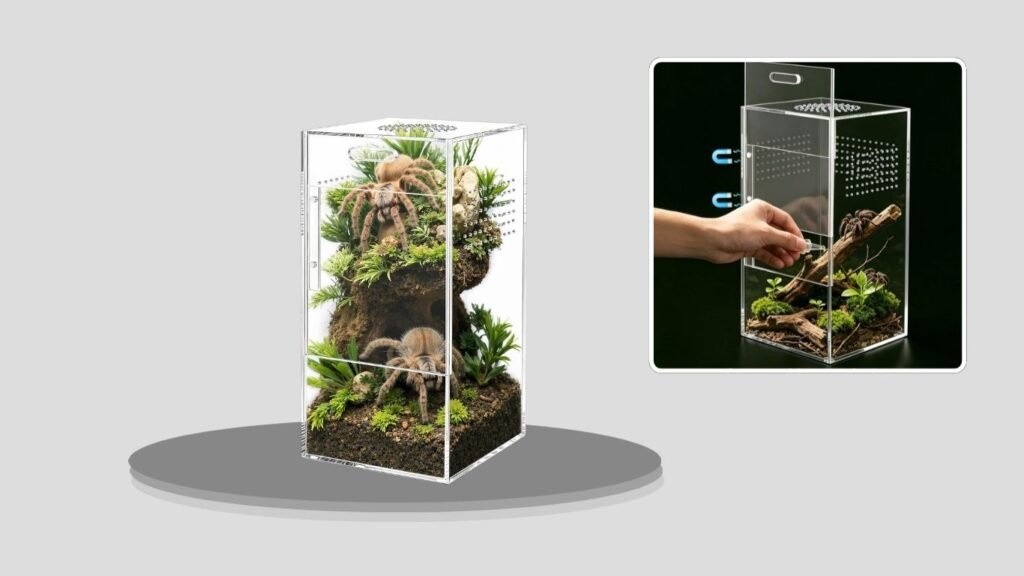
The CourtyardAid Pre-Assembled Spider Enclosure is designed for keepers who want to avoid putting together acrylic panels themselves. Its ready-to-use construction and all-side ventilation make setup quicker, while transparent walls provide excellent observation. This type of enclosure is particularly useful for jumping spiders and other small arboreal invertebrates that benefit from dependable airflow and plenty of visible interior space.
Key Features
- Pre-assembled construction
- Transparent acrylic panels
- Ventilation on multiple sides
- Ready for immediate habitat setup
- Suitable for spiders and small invertebrates
- Lightweight enclosure body
- Good visibility
- Space for climbing décor and hides
Why It’s Best for Easy Setup
Acrylic enclosures that require assembly can occasionally be frustrating if panels do not align perfectly or fasteners are difficult to install. A pre-assembled design removes that extra step.
You can focus on preparing substrate, anchor points, plants, and hides instead of building the enclosure itself.
This makes the CourtyardAid especially convenient for first-time keepers or anyone adding several enclosures to an existing spider shelf.
Airflow and Daily Performance
Ventilation on several sides encourages cross-flow rather than relying on one small group of air holes. That can be beneficial for species that prefer good airflow and helps reduce stagnant interior conditions.
The clear panels make monitoring moisture and condensation straightforward. They also provide excellent visibility during feeding.
For jumping spiders, adding vertical and upper-level décor is important because these spiders frequently spend much of their time near the top of the enclosure.
Overall Verdict
The CourtyardAid Pre-Assembled Spider Enclosure is a convenient option for keepers who prioritize ease of setup and strong airflow.
Its ready-made structure eliminates assembly concerns, while all-side ventilation and clear acrylic walls support practical day-to-day observation.
For a keeper who wants to create a habitat quickly without sacrificing viewing quality or ventilation, this enclosure offers a particularly user-friendly starting point.
5. Jumping Spider Acrylic Enclosure With Accessories
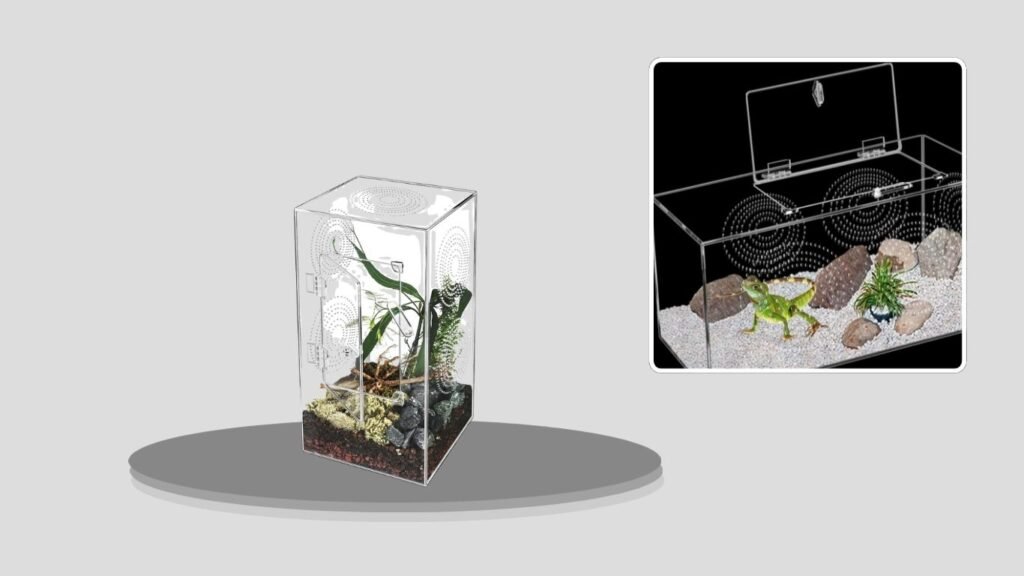
This Jumping Spider Enclosure stands out by including terrarium accessories that can help create a more stimulating interior without requiring every decorative component to be purchased separately. Its clear acrylic walls provide excellent visibility, while the vertical layout is suitable for active jumping spiders that naturally climb, explore, and build resting retreats near the upper areas of their habitat.
Key Features
- Designed for jumping spiders
- Clear acrylic construction
- Includes terrarium accessories
- Vertical climbing space
- Suitable for arboreal behavior
- Lightweight enclosure
- Easy visual monitoring
- Customizable interior arrangement
Why It’s Best for Jumping Spider Keepers
Jumping spiders are highly visual and active animals, so they benefit from an enclosure with multiple surfaces to explore. Included accessories can make it easier to create climbing routes, resting areas, and visual barriers from the beginning. The vertical layout also suits their natural tendency to move upward and build silk retreats near higher portions of the enclosure. This gives the setup a more species-focused feel than a generic horizontal container.
Habitat Design and Everyday Use
Clear acrylic makes observing hunting, grooming, and web-building behavior easy. That is one reason jumping spider enclosures are popular as display habitats. The interior should still be arranged carefully. Décor should be stable, and sharp or heavy objects should be avoided. Ventilation must remain unobstructed even after adding plants or decorations. Because jumping spiders often build retreats near the top, access doors should ideally allow maintenance without repeatedly destroying their webbing.
Overall Verdict
This enclosure is particularly appealing to new jumping spider keepers who want a more complete starting setup.
The combination of clear acrylic, vertical interior space, and included accessories reduces the amount of extra equipment needed before introducing the spider. For a small arboreal species, it offers an attractive balance of display quality, enrichment potential, and straightforward daily observation.
6. Acrylic Jumping Spider & Tarantula Terrarium
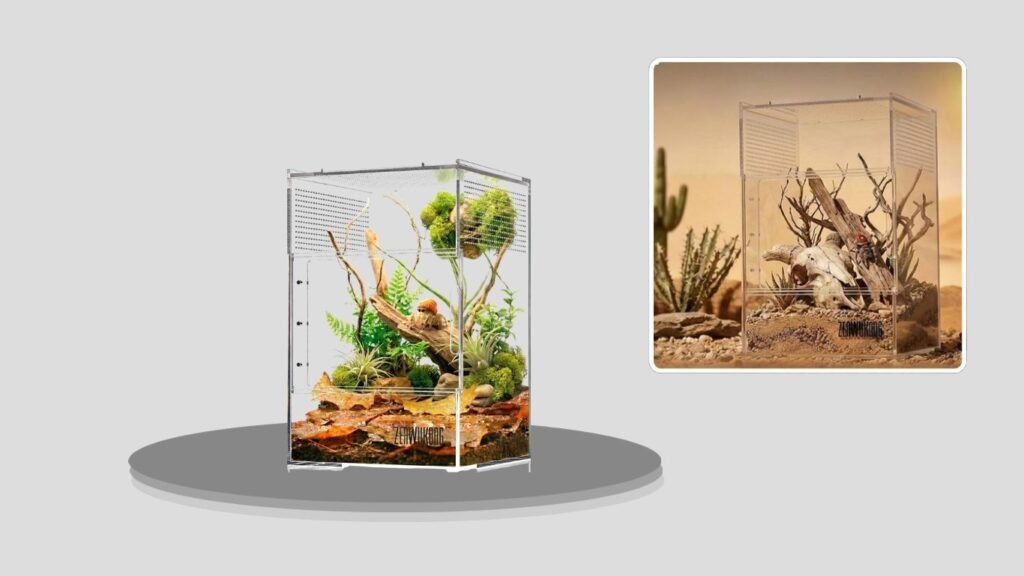
This Acrylic Jumping Spider and Tarantula Terrarium offers a versatile habitat format intended for several small arachnids. Its transparent walls make observation easy, while the enclosure can be decorated for different lifestyles depending on the animal being housed. The design is particularly useful for keepers who want a multipurpose acrylic enclosure rather than a habitat limited to only one type of spider.
Key Features
- Clear acrylic terrarium
- Suitable for jumping spiders and some tarantulas
- Transparent viewing panels
- Lightweight enclosure body
- Customizable interior
- Space for substrate and climbing décor
- Indoor display-friendly design
- Suitable for small invertebrates
Why It’s Best for Flexible Habitat Planning
Different spiders use space differently. Jumping spiders need vertical climbing opportunities, while terrestrial tarantulas may need deeper substrate and less open fall height.
A flexible terrarium allows you to modify the interior instead of forcing every spider into the same layout. This can be useful for keepers who maintain multiple species and want a similar enclosure style across their collection.
Performance and Interior Customization
The clear walls provide excellent visibility from several angles, helping with feeding checks and general health observation.
For an arboreal setup, cork bark and artificial plants can create upper-level anchor points. For terrestrial species, deeper substrate and a secure hide are more important. Ventilation, dimensions, and door position should always be checked against the specific species before use.
The enclosure should never be considered universally suitable simply because both tarantulas and jumping spiders are mentioned in the product description.
Overall Verdict
This acrylic terrarium is best suited to keepers who appreciate versatility and enjoy customizing habitats around individual species. Its transparent construction creates a clean display, while the open interior provides room for different décor arrangements.
When matched carefully to the spider’s adult size and behavior, it can serve as a practical enclosure for several types of small arachnids without requiring a completely different cage style for each setup.
7. MaryCarrie 8.5 × 8.5 × 12-Inch Spider Enclosure
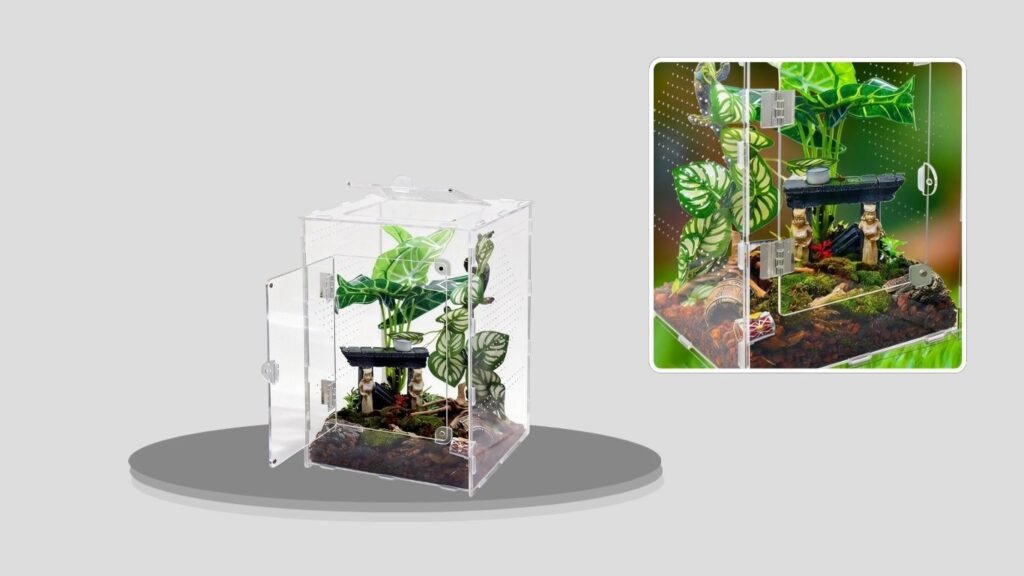
The MaryCarrie Spider Enclosure offers a taller 8.5 × 8.5 × 12-inch format that gives arboreal spiders more vertical room than many compact acrylic habitats. Its transparent construction and ventilation system make it particularly suitable for jumping spiders and other climbing invertebrates. The additional height also provides more space for branches, cork bark, plants, and elevated resting points.
Key Features
- Approximate 8.5 × 8.5 × 12-inch dimensions
- Tall vertical enclosure
- Transparent acrylic walls
- Ventilation openings
- Suitable for climbing spiders
- Room for branches and plants
- Clear viewing area
- Spacious customizable interior
Why It’s Best for Vertical Climbing Space
Height matters for arboreal spiders because much of their activity occurs above the substrate.
The 12-inch vertical dimension provides more opportunities to build layered climbing structures, making the habitat feel less restrictive than a short container. Jumping spiders can explore branches and plants at several levels, while compatible arboreal species can use cork bark positioned vertically. The larger interior also allows the enclosure to become a more visually appealing display.
Ventilation and Habitat Performance
Ventilation openings help support airflow through the taller enclosure. This is important when plants, substrate, and occasional misting add moisture to the environment. Because the enclosure provides substantial height, décor should be securely positioned so that nothing falls onto the spider. A larger space also means feeders should monitor whether prey insects are being captured rather than disappearing into inaccessible areas. For small juveniles, oversized habitats can sometimes make feeding harder, so the spider’s current size should be considered.
Overall Verdict
The MaryCarrie enclosure is one of the more attractive options for keepers seeking extra vertical room.
Its 8.5 × 8.5 × 12-inch format provides enough space to build a visually interesting habitat with multiple climbing levels while retaining the clear-view benefits of acrylic. For an appropriately sized arboreal spider, the combination of height, ventilation, and display space makes this enclosure a particularly strong choice.
8. Ventilated Acrylic Jumping Spider & Tarantula Enclosure
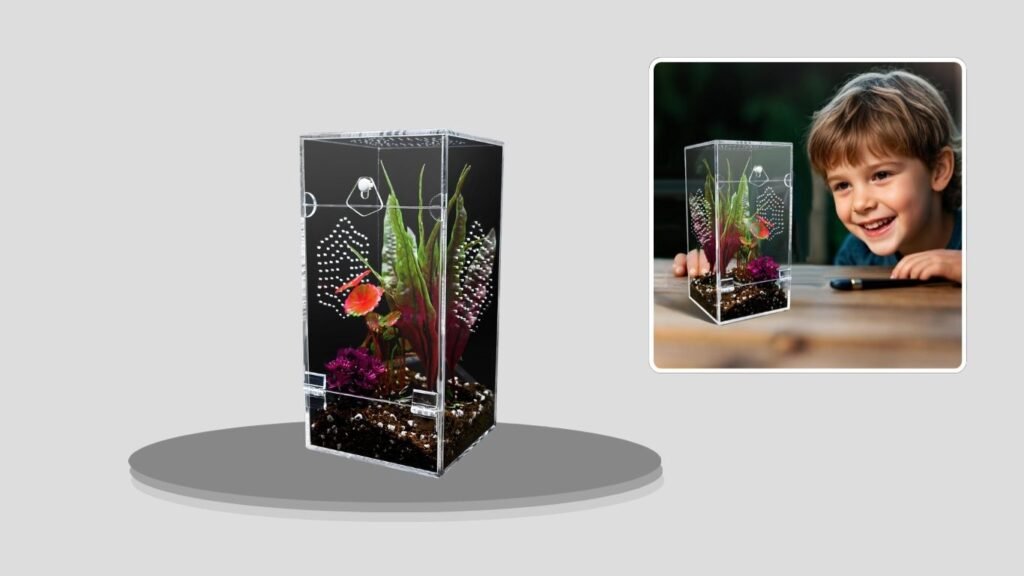
This ventilated acrylic enclosure combines clear viewing with airflow-focused construction, making it suitable for keepers who want to monitor their spider without creating a closed, stagnant habitat. Its transparent walls work well for display purposes, while multiple ventilation points help maintain air exchange. The interior can be adapted for jumping spiders, small tarantulas, and other invertebrates when the dimensions suit the species.
Key Features
- Transparent acrylic structure
- Multiple ventilation openings
- Suitable for small spiders and tarantulas
- Lightweight construction
- Clear multi-angle viewing
- Customizable interior space
- Suitable for substrate and décor
- Indoor terrarium format
Why It’s Best for Airflow-Focused Setups
Proper ventilation can be just as important as humidity. An enclosure that remains too damp and stagnant may encourage mold or poor substrate conditions.
Multiple ventilation points encourage better air movement and make it easier to balance moisture. This is particularly useful for jumping spiders and other species that do not require constantly saturated environments.
The clear walls also allow keepers to see when condensation builds up, providing a useful visual clue that ventilation or moisture levels may need adjustment.
Everyday Performance and Maintenance
Acrylic surfaces are straightforward to wipe clean and make routine inspections easy. The enclosure can be arranged with vertical décor for arboreal species or a more substrate-focused layout for terrestrial ones. Care should be taken not to block ventilation holes with moss, decorations, or substrate. Because acrylic can scratch more easily than glass, using soft cleaning materials will help maintain the clear display appearance over time.
Overall Verdict
This ventilated acrylic enclosure is a solid choice for keepers who consider airflow one of their main priorities. The combination of clear visibility, lightweight construction, and multiple ventilation points gives it the basic qualities needed for a carefully managed spider habitat.
For species that benefit from good air exchange and a customizable interior, it provides a practical balance between display quality and functional enclosure design.
9. TCooSo Ventilated Tarantula & Spider Enclosure
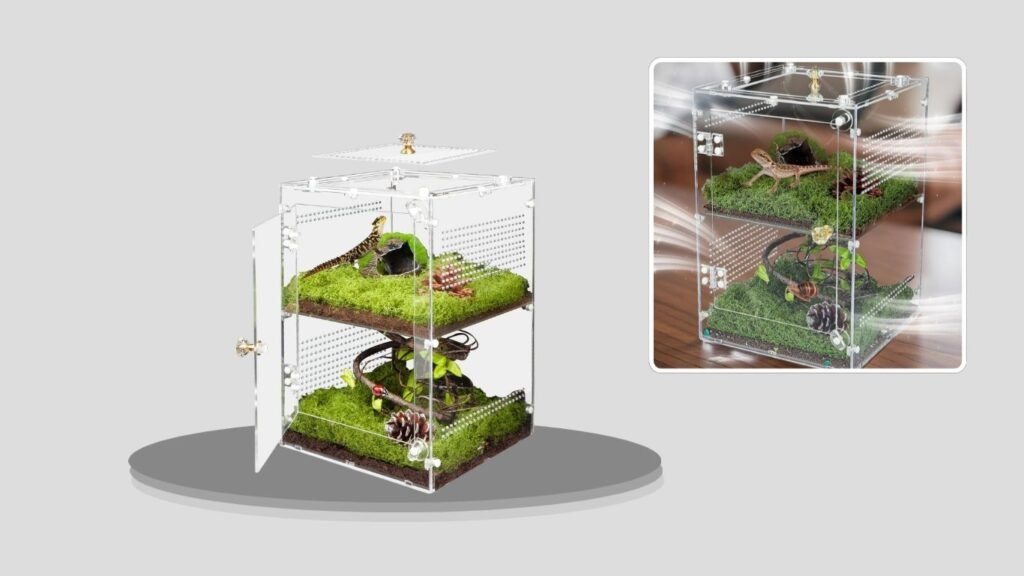
The TCooSo Ventilated Spider Enclosure is designed as a transparent terrarium for tarantulas, jumping spiders, and other small invertebrates. Its ventilation-focused acrylic construction provides broad visibility while supporting airflow through the enclosure. The straightforward habitat style leaves plenty of room for owners to customize the interior based on whether the spider prefers climbing, hiding, burrowing, or exploring.
Key Features
- Transparent acrylic construction
- Ventilated terrarium design
- Suitable for spiders and small invertebrates
- Lightweight and easy to position
- Clear observation panels
- Customizable habitat space
- Suitable for hides and substrate
- Designed for indoor display use
Why It’s Best for Custom Terrarium Builds
Some keepers prefer an enclosure that acts as a blank canvas rather than arriving with permanent decorations. The TCooSo design makes it possible to create a setup around the species instead of working around fixed accessories. Cork bark, moss, artificial foliage, branches, hides, and substrate can be positioned according to the animal’s behavior. That flexibility can be particularly useful for hobbyists who enjoy creating naturalistic or themed invertebrate displays.
Ventilation and Daily Performance
Ventilation supports regular air exchange and can help prevent excessive condensation when humidity is managed correctly.
The transparent panels allow you to check moisture levels, leftover prey, webbing, and molts without opening the enclosure frequently. Its lightweight acrylic construction also makes moving the habitat easier when necessary. Keepers should confirm that ventilation holes are too small for the spider to escape through, particularly when housing tiny juveniles or spiderlings.
Overall Verdict
The TCooSo enclosure is a good all-around option for hobbyists who enjoy designing their own terrarium interiors.
Its biggest strengths are transparency, ventilation, and flexibility. Rather than forcing one particular habitat arrangement, it lets the keeper decide how much substrate, climbing space, and cover the spider needs. For an appropriately sized tarantula, jumping spider, or other invertebrate, it provides a useful foundation for building a functional and attractive enclosure.
FAQs
Acrylic spider enclosures are popular because they combine visibility, lightweight construction, and easy customization. However, enclosure size, ventilation, door placement, substrate depth, and interior height should always be chosen according to the species rather than selecting a cage based only on appearance.
1. Are acrylic enclosures good for spiders?
Yes. Acrylic enclosures can work very well for jumping spiders, tarantulas, and other invertebrates when they provide adequate ventilation, secure closures, and appropriate dimensions. They are lightweight and offer excellent visibility.
2. What size enclosure does a jumping spider need?
The correct size depends on the species and life stage. Adult jumping spiders generally benefit from a vertically oriented enclosure with enough room for climbing and hunting. Very young spiderlings may do better in smaller habitats where prey is easier to locate.
3. Do tarantulas need ventilation in an acrylic enclosure?
Yes. Good ventilation helps reduce stagnant air and excessive moisture. Many keepers prefer cross-ventilation, especially for species that do not require constantly humid conditions.
4. Is acrylic better than glass for spider enclosures?
Neither material is universally better. Acrylic is lighter, easier to modify, and less likely to break, while glass is more scratch-resistant. For small spider habitats, acrylic is often preferred because it is lightweight and can include numerous ventilation holes.
5. What should I put inside an acrylic spider enclosure?
The setup depends on the species. Jumping spiders usually benefit from branches, cork bark, artificial plants, and upper-level anchor points. Terrestrial tarantulas generally need deeper substrate and a secure hide. Always leave enough open space for natural movement and keep heavy décor stable.
