

Spider mites usually come from infested plants, outdoor vegetation, contaminated gardening materials, or tiny mites carried indoors on clothing, pets, tools, or air currents. Because they are extremely small, they can arrive unnoticed and multiply rapidly when conditions are warm and dry. Indoor plants are especially vulnerable because spider mites can move easily from one plant to another. Understanding where spider mites come from, how they spread, and what conditions favor them makes it much easier to prevent serious infestations.
What Are Spider Mites and Where Do They Come From?
Spider mites are tiny plant-feeding arachnids related to spiders and ticks. They live naturally outdoors on many plants, weeds, shrubs, trees, and crops. Problems begin when they reach garden plants or houseplants and find suitable conditions. They feed by piercing plant cells and removing their contents, often causing pale spots, yellowing, and fine webbing.
Common Sources of Spider Mites
Spider mites may come from:
- Newly purchased plants
- Outdoor plants brought inside
- Nearby infested houseplants
- Garden weeds and shrubs
- Cut flowers
- Gardening tools
- Clothing and shoes
- Pets brushing against vegetation
- Wind carrying mites short distances
A single infested plant can introduce spider mites into an otherwise healthy collection.
Why Spider Mites Are Hard to Notice
Adult spider mites are extremely small and may look like tiny moving dots. Eggs and young mites are even harder to detect.
Early infestations often remain unnoticed because damage can resemble drought stress, nutrient problems, or natural leaf discoloration.
By the time fine webbing appears, the population may already be large. Regularly checking leaf undersides helps detect mites before they spread.
Where Do Spider Mites Come From Indoors?
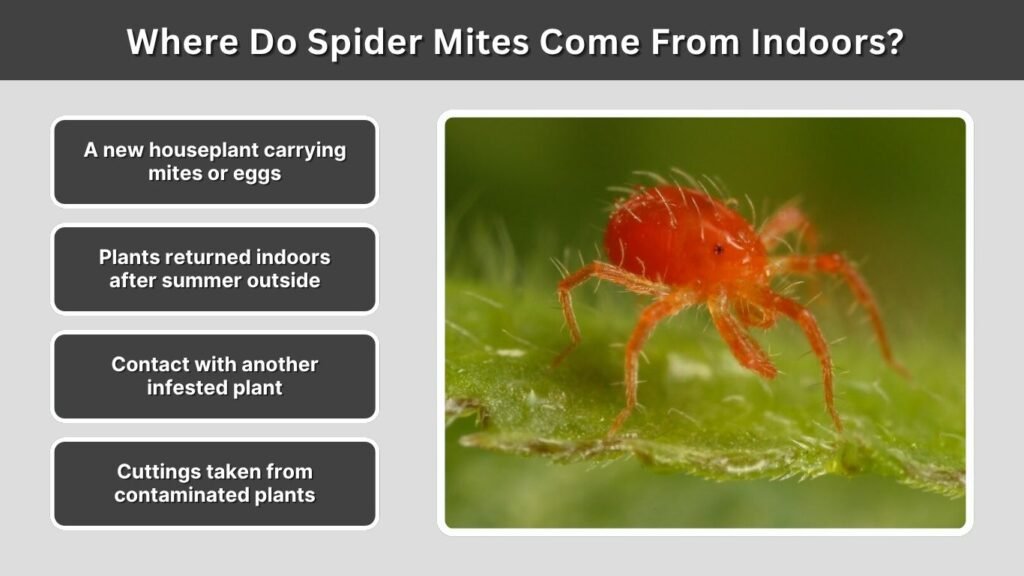
Indoor infestations generally begin when spider mites are carried inside rather than appearing spontaneously. Houseplants purchased from stores, plants that spent summer outdoors, and cut flowers are common entry points. Because indoor environments can remain warm throughout the year, mites may continue reproducing even when outdoor temperatures become unfavorable.
Where Do Spider Mites Come From on Indoor Plants?
Indoor plants often become infested through:
- A new houseplant carrying mites or eggs
- Plants returned indoors after summer outside
- Contact with another infested plant
- Cuttings taken from contaminated plants
- Open windows near infested outdoor vegetation
- Clothing or tools that contacted mites
Spider mites can move between plants when leaves touch. They may also crawl across nearby surfaces or become carried by air movement.
Why Spider Mites Thrive in Houses
Warm, dry environments often favor spider mites. Heated homes, sunny windows, low humidity, and stressed plants can create excellent conditions for rapid population growth.
Plants suffering from inconsistent watering may also be more vulnerable.
Indoor infestations can persist because there are fewer natural predators than outdoors. Without predatory mites, insects, rain, or changing weather, spider mite populations may increase quickly.
Where Do Spider Mites Come From on Plants?

Spider mites are naturally present in many outdoor environments, so garden plants can become infested when mites move from surrounding vegetation. They often prefer plants growing in warm, sunny, dusty, or drought-stressed locations. Infestations may start on only a few leaves before spreading across an entire plant.
Common Outdoor Sources
Outdoor spider mites may originate from:
- Weeds growing near gardens
- Infested shrubs and trees
- Neighboring vegetable plants
- Ornamental plants
- Greenhouse plants
- Nursery stock
- Crop fields
- Plant debris containing eggs
Spider mites may overwinter as eggs or adults, depending on the species. Populations can increase quickly when temperatures become warm.
How Spider Mites Move Between Plants
Spider mites do not fly, but they can still spread effectively. They crawl from leaf to leaf and from one plant to another when vegetation touches.
Very small mites can also be carried on silk threads by air currents, a process similar to ballooning in spiders.
Human activity contributes as well. Moving plants, pruning, watering, or handling infested leaves can accidentally transfer mites to healthy plants.
Where Do Red Spider Mites Come From?
The term “red spider mite” can refer to several mite species, including plant-feeding mites that appear reddish or orange. Their origin is similar to that of other spider mites: they naturally occur outdoors and spread from infested vegetation. Some species overwinter on bark, plant debris, or protected areas before becoming active again when conditions improve.
Why Red Spider Mites Suddenly Appear
Red spider mites may become noticeable because:
- Warm temperatures speed reproduction
- Dry weather reduces natural suppression
- Plants become stressed by drought
- Eggs hatch in large numbers
- Natural predators decline
- Nearby vegetation becomes heavily infested
Their sudden appearance does not usually mean they arrived overnight. Small populations may have been present for some time before becoming visible.
Are All Tiny Red Mites Spider Mites?
No. Not every tiny red mite seen outdoors or indoors is a plant-damaging spider mite.
Clover mites, predatory mites, and other small arachnids may also appear red.
Spider mites are most strongly associated with leaf damage such as stippling, bronzing, yellowing, and fine webbing. Examining the undersides of leaves can help determine whether plant-feeding spider mites are present.
How Spider Mite Infestations Start and Spread
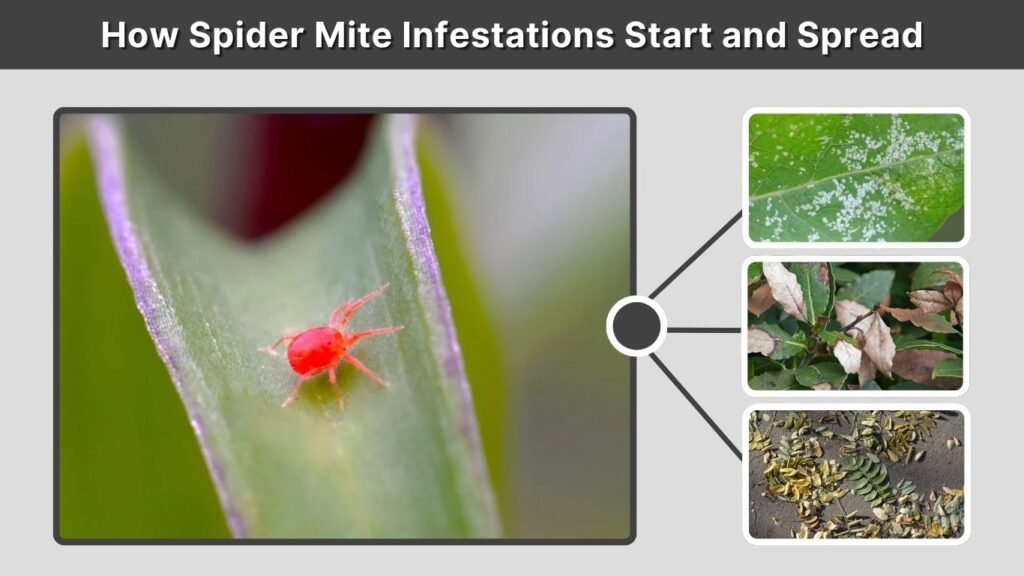
Spider mite outbreaks usually begin with only a small number of mites or eggs. Under favorable conditions, populations can increase extremely quickly. Their short life cycle allows several generations to develop in a relatively short period, especially during warm weather or inside climate-controlled homes.
Signs an Infestation Is Starting
Early warning signs include:
- Tiny pale dots on leaves
- Yellow or bronze discoloration
- Speckled leaf surfaces
- Dry-looking foliage
- Fine webbing under leaves
- Tiny moving dots
- Premature leaf drop
- Reduced plant growth
A white sheet of paper can help with detection. Gently tap a suspect leaf over the paper and watch for tiny moving specks.
Why Infestations Spread So Fast
Spider mites reproduce quickly when temperatures are favorable. Females lay numerous eggs, and young mites begin feeding soon after hatching.
Crowded plants allow easy movement between leaves. Once multiple plants become infested, control becomes more difficult because mites can repeatedly move back into treated areas.
Separating affected plants early can significantly reduce spread.
How to Prevent Spider Mites From Entering Your House
Preventing spider mites is usually easier than controlling a heavy infestation. The most important step is avoiding accidental introductions and regularly inspecting plants. New houseplants should be checked carefully before being placed beside an established collection.
Spider Mite Prevention Tips
Use these practices to reduce risk:
- Inspect new plants before bringing them home
- Quarantine new plants for one to two weeks
- Check the undersides of leaves regularly
- Wash plants before moving them indoors
- Keep plants adequately watered
- Avoid excessively dusty conditions
- Clean gardening tools between plants
- Remove heavily infested leaves
- Prevent unnecessary contact between plants
A magnifying glass can make early detection much easier.
Should You Increase Humidity?
Many common spider mites prefer hot, dry conditions, so moderate humidity may make conditions somewhat less favorable.
However, increasing humidity alone will not eliminate an infestation. Excess humidity can also encourage fungal problems in some plants.
Good prevention depends on healthy plants, inspection, sanitation, and rapid response when mites first appear.
How to Stop Spider Mites After They Arrive
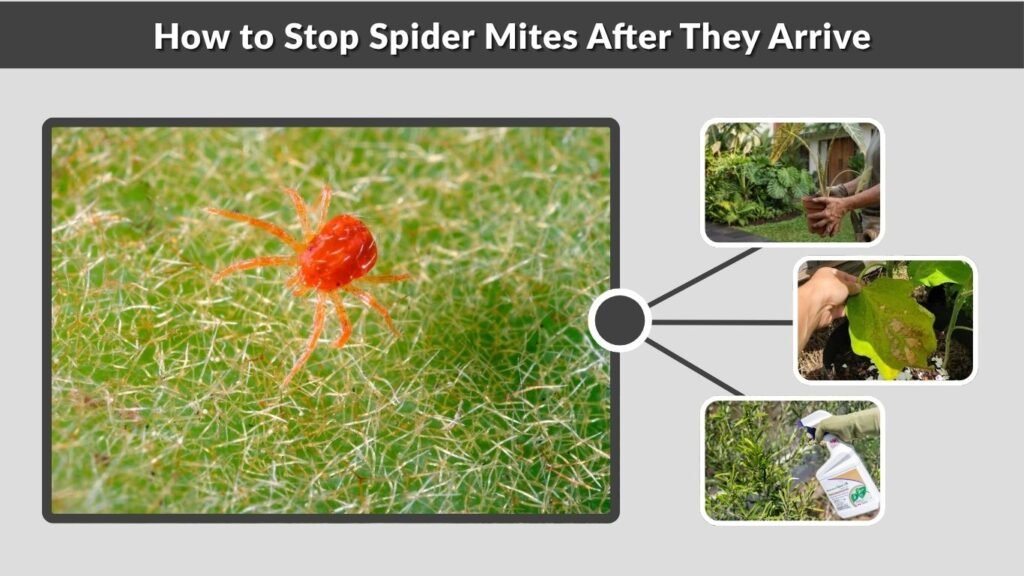
Once spider mites are present, act quickly. Isolate affected plants first, then inspect nearby plants. Washing foliage can physically remove many mites, particularly from leaf undersides. Repeated treatment is usually necessary because eggs may survive the first attempt.
Simple Control Steps
Useful actions include:
- Isolate infested plants
- Rinse leaves with water
- Remove badly damaged foliage
- Wipe large leaves carefully
- Use insecticidal soap when appropriate
- Apply horticultural oil according to directions
- Repeat treatment at recommended intervals
- Inspect nearby plants regularly
Thorough coverage of leaf undersides is important because mites frequently hide and feed there.
Why One Treatment May Not Work
Spider mite eggs can survive some treatments and hatch several days later. This is why infestations may seem to return even after adult mites have been reduced.
Repeating treatments according to the product label helps target newly hatched mites.
Heavy infestations may require removing a severely damaged plant to protect the rest of a collection.
FAQs
Spider mites often seem to appear suddenly because they are difficult to see during the early stages of an infestation. Knowing their common entry routes and environmental preferences makes them much easier to manage.
1. Where do spider mites come from in the house?
They usually enter infested plants, cut flowers, clothing, pets, tools, or plants brought indoors after spending time outside.
2. Do spider mites come from soil?
Spider mites mainly live and feed on plant foliage rather than soil. However, mites or eggs may occasionally be present on plant debris or containers associated with an infested plant.
3. Can spider mites come through an open window?
Yes. Tiny mites can sometimes be carried short distances by wind or air currents, particularly when infested vegetation grows close to the window.
4. Why do spider mites keep coming back?
Recurring infestations may result from surviving eggs, untreated nearby plants, repeated outdoor exposure, or incomplete coverage during treatment.
5. Can spider mites spread from one plant to another?
Yes. Spider mites can crawl between touching plants, move across nearby surfaces, or be carried by people, tools, pets, and air currents.
