
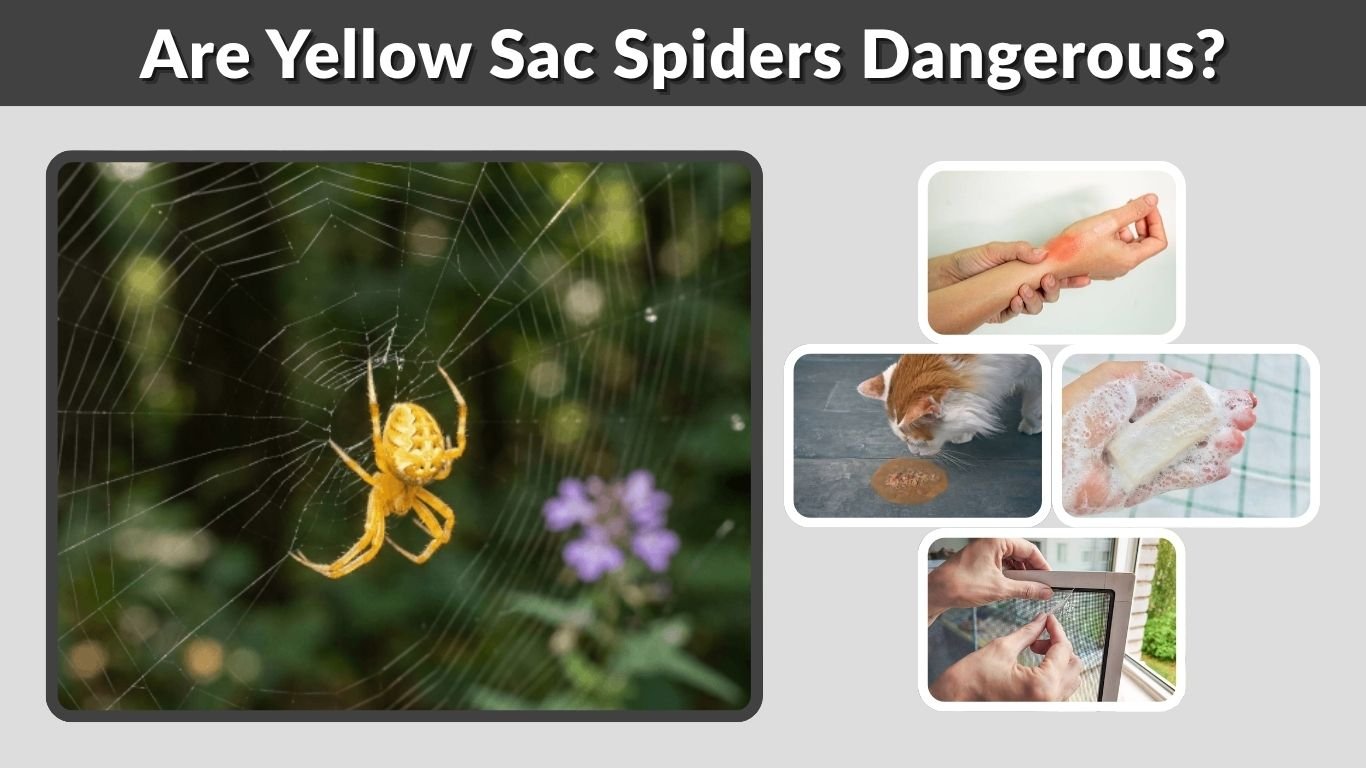
Yellow sac spiders are common around homes, gardens, and vegetation, and their pale appearance can make them difficult to identify. So, are yellow sac spiders dangerous? They are venomous and can bite humans, but most verified bites cause localized pain, redness, itching, or swelling rather than a serious medical emergency. Severe reactions appear to be uncommon. Understanding what these spiders look like, how their bites behave, and when medical care is appropriate can help you respond without unnecessary alarm.
Are Yellow Sac Spiders Dangerous to Humans?
Yellow sac spiders belong to the genus Cheiracanthium. Like most spiders, they possess venom that helps them capture prey. However, being venomous does not automatically mean that a spider is highly dangerous to people.
For most healthy adults, a yellow sac spider bite is expected to cause a mild to moderate local reaction rather than life-threatening poisoning. Verified bite studies have found pain and discomfort to be much more typical than severe tissue injury.
How Dangerous Is a Yellow Sac Spider?
Yellow sac spiders should be treated with reasonable caution, but they do not belong in the same general medical-risk category as notorious spiders such as widow spiders or medically significant recluse species.
A bite may be painful, and reactions vary among individuals. Some species also differ in venom effects. For example, reports involving the European species Cheiracanthium punctorium describe painful bites with temporary skin or neurological symptoms, and occasional systemic effects requiring medical attention.
For the yellow sac spiders commonly encountered around homes in North America, serious complications appear uncommon.
Why Yellow Sac Spiders Bite
Yellow sac spiders do not normally seek people out to bite them. Bites are more likely when a spider becomes trapped between skin and clothing, bedding, shoes, towels, or another object.
They may enter houses and wander across walls or ceilings at night. During the day, they commonly retreat into small silken sacs in protected locations.
Because spiders generally bite defensively when trapped or threatened, avoiding direct handling greatly reduces the likelihood of being bitten. Most spider bites overall cause only minor injury.
What Does a Yellow Sac Spider Bite Feel Like?
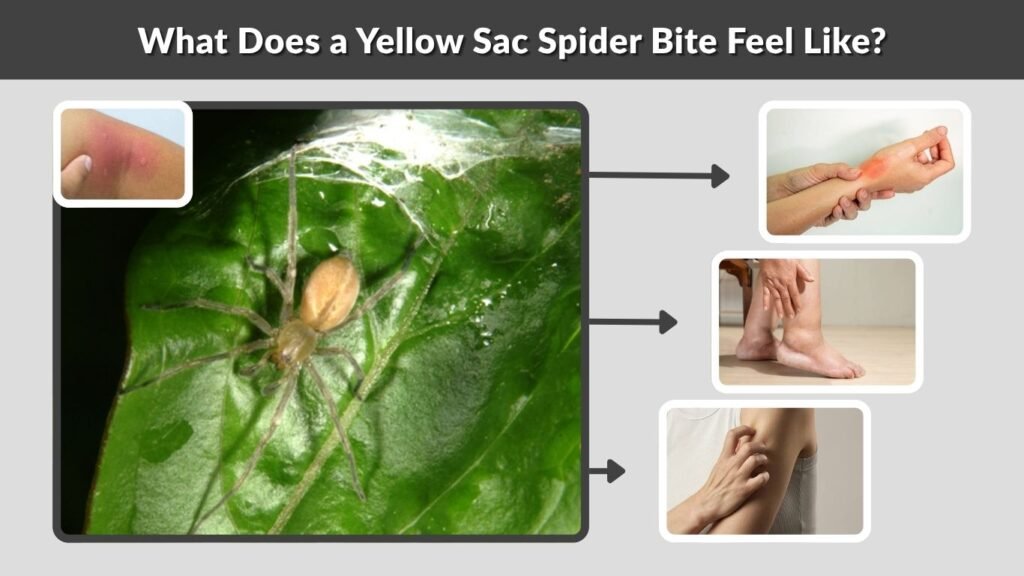
A yellow sac spider bite may initially feel like a sharp sting, pinprick, or burning sensation. Some people may not immediately realize that they have been bitten.
The appearance alone is not enough to identify the responsible spider because many insect bites, bacterial infections, allergic reactions, and skin conditions can look similar.
Common Yellow Sac Spider Bite Symptoms
Possible localized symptoms include:
- Pain or burning near the bite
- Redness around the affected area
- Mild to moderate swelling
- Itching or tenderness
- A small raised bump
- Local warmth or irritation
Symptoms can vary depending on the amount of venom delivered, the spider species, the bite location, and individual sensitivity.
A skin lesion should not automatically be diagnosed as a yellow sac spider bite unless the spider was actually observed biting or reliably identified. Many unexplained wounds are incorrectly attributed to spiders.
Can a Yellow Sac Spider Bite Cause Necrosis?
Yellow sac spiders have historically been blamed for necrotic wounds, but modern evidence provides important context.
A study examining 20 verified Cheiracanthium bites in the United States and Australia found no necrosis. The researchers also reviewed 39 additional verified bites reported internationally and found only one case involving mild necrosis from the European species C. punctorium.
Other laboratory research found that Cheiracanthium mildei venom did not produce the same type of necrotic lesions associated with brown recluse venom in an experimental model.
Rare severe cases have nevertheless been described, so an enlarging, blistering, discolored, or deteriorating wound deserves medical assessment rather than being dismissed as harmless.
Broad-Faced Sac Spider: Is It Dangerous?
The broad-faced sac spider is another spider frequently included in searches about dangerous sac spiders, but it is not the same type as a yellow sac spider.
Broad-faced sac spiders belong to the genus Trachelas. They typically have a reddish-brown front portion of the body with a paler gray or yellowish abdomen.
Broad-Faced Sac Spider Bite Risk
Broad-faced sac spiders can bite, and their bites have been reported as painful. Penn State Extension notes reports of severe secondary infection associated with broad-faced sac spider bites.
That does not mean everyone bitten will develop an infection. Any break in the skin can potentially become infected, particularly if it is scratched, contaminated, or not kept clean.
Increasing redness, warmth, pus, worsening swelling, fever, or red streaks spreading away from a wound are reasons to contact a healthcare professional.
Is the Long-Legged Sac Spider Dangerous?
The name long-legged sac spider is commonly associated with species in the Cheiracanthium group, including species found in and around buildings.
Like other yellow sac spiders, they possess venom and can bite when trapped against the skin.
Long-Legged Sac Spider Bite
For most people, a bite is more likely to produce localized pain and irritation than severe systemic illness. The historical reputation of Cheiracanthium spiders for routinely producing necrotic wounds is not strongly supported by verified bite evidence.
Still, individual reactions differ, and any rapidly worsening bite should receive appropriate medical attention.
Are Yellow Sac Spiders Dangerous to Cats?
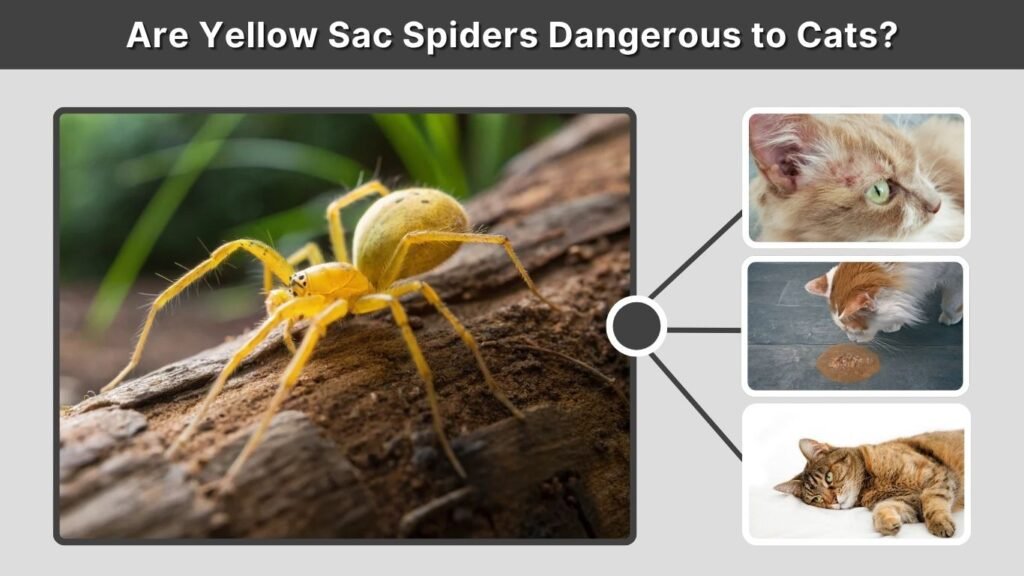
There is limited clinical evidence showing that yellow sac spiders represent a major poisoning risk specifically to cats. Veterinary references identify relatively few spider groups as capable of causing important clinical envenomation in companion animals, with much greater concern generally placed on widows and recluse spiders in the United States.
A curious cat may paw at or attempt to eat a spider, potentially provoking a bite.
Signs to Watch for in Cats
After a suspected spider bite, watch for unusual:
- Swelling or redness
- Tenderness or obvious pain
- Facial or muzzle swelling
- Vomiting
- Weakness or unusual lethargy
- Trembling or muscle problems
- Difficulty breathing
Significant facial or throat swelling or breathing difficulty requires urgent veterinary attention.
Because spider bites can be extremely difficult to identify through fur, veterinary assessment is preferable when significant symptoms develop.
Are Yellow Sac Spiders Dangerous to Dogs?
As with cats, there is little evidence that ordinary yellow sac spider encounters routinely cause severe poisoning in dogs.
A dog that noses, paws at, or lies on a spider could nevertheless receive a defensive bite. Local swelling, discomfort, licking, or redness may occur.
Severe swelling around the face or neck, breathing difficulty, vomiting, widespread hives, excessive drooling, weakness, or other major changes require prompt veterinary care because pets can occasionally experience serious reactions following arthropod bites.
Do not give human medications to a dog or cat for a suspected spider bite unless a veterinarian specifically advises doing so.
What to Do After a Yellow Sac Spider Bite
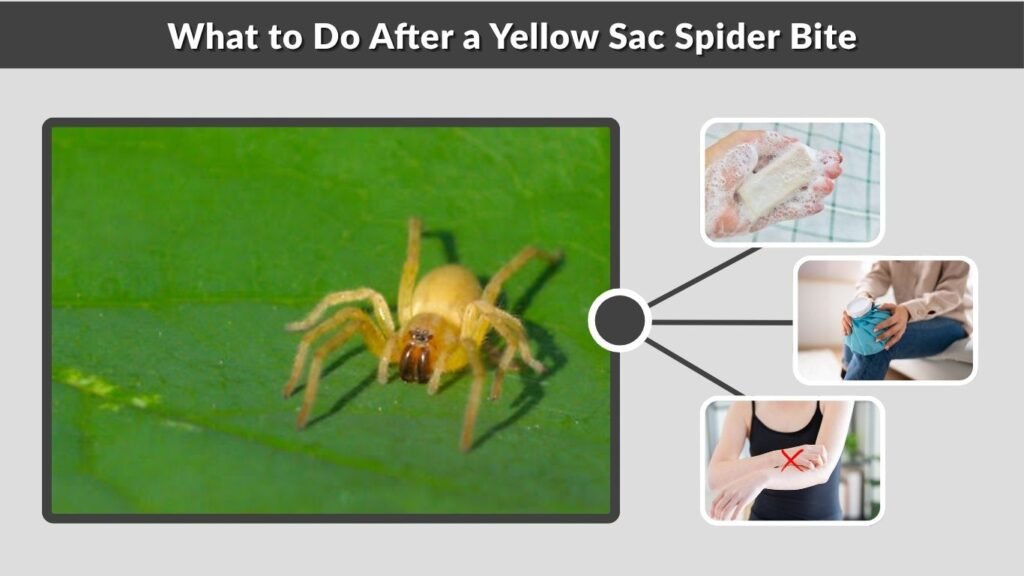
Most minor spider bites can initially be managed with basic first aid while symptoms are monitored.
Basic First Aid
- Wash the bite gently with mild soap and water.
- Apply a cool compress to reduce discomfort and swelling.
- Elevate the affected limb when practical.
- Avoid scratching or squeezing the bite.
- Monitor the area for increasing redness, swelling, or other changes.
- If safe, take a clear photograph of the spider rather than attempting to handle it.
Medical guidance recommends cleaning spider bites and using cool compresses while watching carefully for worsening symptoms.
When Should You See a Doctor?
Seek prompt medical attention if you develop:
- Severe or rapidly increasing pain
- Difficulty breathing or swallowing
- Extensive swelling
- A wound that continues growing
- Redness spreading away from the bite
- Red streaks around the affected area
- Fever or significant illness
- Blistering or major skin discoloration
- Signs of infection
Serious allergic symptoms or breathing difficulties are emergencies.
How to Keep Yellow Sac Spiders Out of Your Home
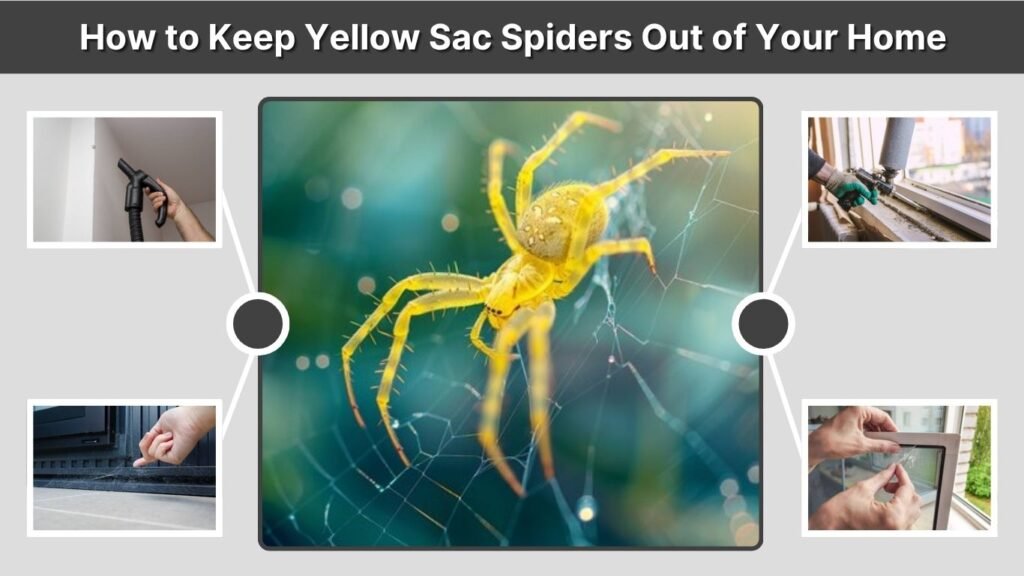
Yellow sac spiders can enter houses through small cracks and openings while searching for prey or protected resting sites. Preventing entry and reducing their food supply are useful long-term strategies.
Practical Prevention Tips
- Seal cracks around windows and doors.
- Repair damaged window screens.
- Install weather stripping where necessary.
- Vacuum spiders, egg sacs, and silk retreats.
- Remove indoor cobwebs regularly.
- Reduce clutter in garages and storage areas.
- Shake out shoes and clothing stored for long periods.
- Avoid leaving bedding or clothing piled on floors.
- Reduce insects around doors and windows.
- Keep exterior lighting from unnecessarily attracting insects near entrances.
Remember that spiders are predators. If large numbers continually appear indoors, an abundant insect population may be providing them with food.
Final Verdict: Should You Be Afraid of Yellow Sac Spiders?
Yellow sac spiders are capable of biting and their bites can hurt, but they are generally not considered highly dangerous to healthy humans. Most verified bites involve temporary localized symptoms, and strong evidence does not support the idea that yellow sac spiders routinely cause severe tissue necrosis.
Broad-faced sac spiders can also produce painful bites, while long-legged sac spiders generally carry similar concerns to other Cheiracanthium species.
The sensible approach is simple: avoid handling sac spiders, remove them carefully from living spaces, use basic first aid after a suspected minor bite, and seek medical or veterinary attention when symptoms are severe or worsening.
FAQs
1. Is a Yellow Sac Spider Dangerous?
Yellow sac spiders are venomous, but most bites are not medically serious. They can produce pain, redness, swelling, and irritation, while severe reactions appear to be uncommon.
2. Are Yellow Sac Spider Bites Dangerous?
Most verified yellow sac spider bites cause localized symptoms rather than severe illness. However, worsening pain, major swelling, breathing difficulty, spreading redness, or an enlarging wound should be assessed by a healthcare professional.
3. Is a Broad-Faced Sac Spider Dangerous?
Broad-faced sac spiders can deliver painful bites, and secondary infections have been reported. They are different from yellow sac spiders and should be handled with the same basic caution used around other biting spiders.
4. Are Yellow Sac Spiders Dangerous to Cats and Dogs?
There is limited evidence that yellow sac spiders routinely cause serious illness in pets. However, any suspected bite followed by severe swelling, vomiting, weakness, tremors, breathing difficulty, or unusual behavior warrants prompt veterinary advice.
5. Can a Yellow Sac Spider Bite Kill You?
Fatal yellow sac spider bites are not considered a typical risk. Most reported and verified bites cause localized effects. Serious or unusual symptoms should still receive medical attention because reactions vary and an unidentified wound may have another cause.
