
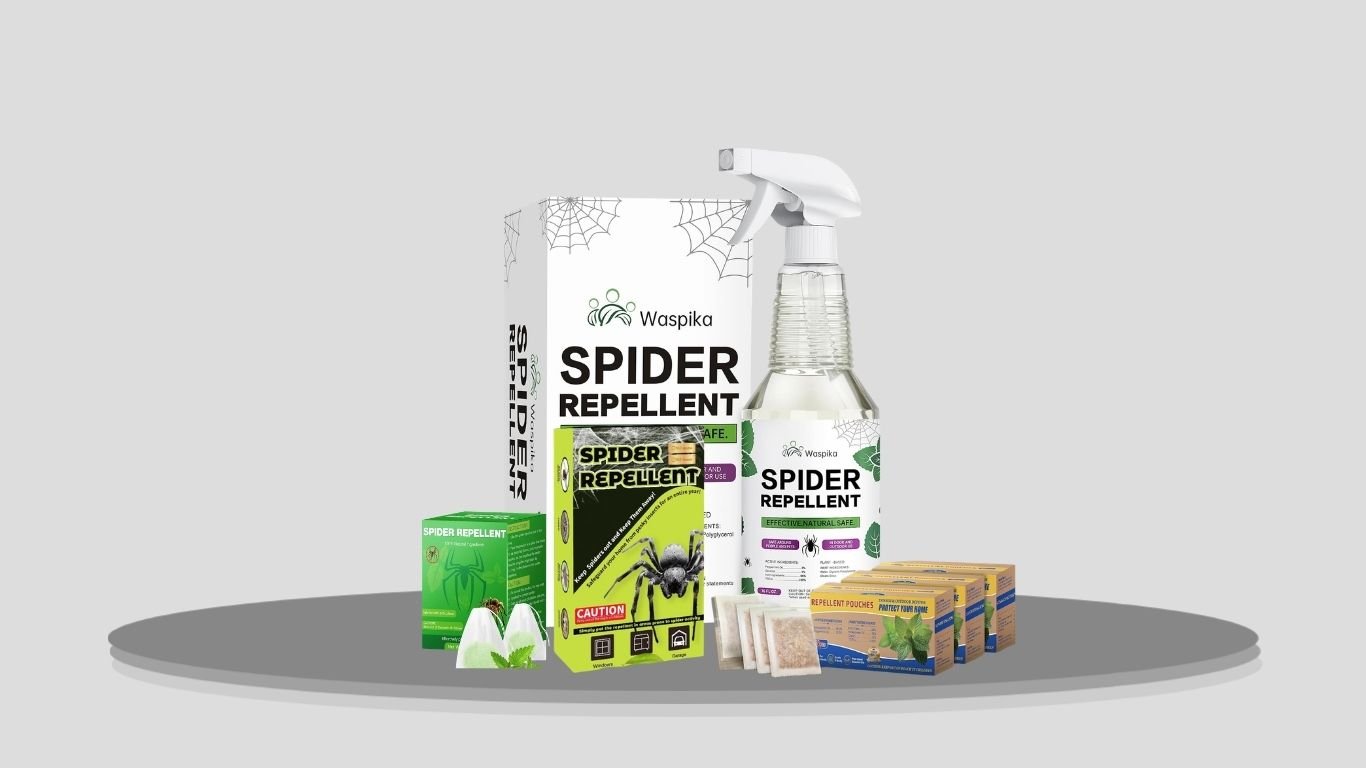
Choosing the best spider repellent for a garage can help reduce unwanted webs and spider activity around corners, storage shelves, doors, windows, and other dark spaces. Many garage repellents use peppermint, lemongrass, or other plant-based ingredients, while others come as convenient pouches that provide ongoing protection without spraying. The right option depends on your garage size, preferred application method, and how often spiders appear. In this guide, we review 11 practical spider repellents for garages based on convenience, coverage, formula type, and overall usefulness.
1. Peppermint & Lemongrass Spider Repellent

The Peppermint & Lemongrass Spider Repellent is designed for garages, storage spaces, basements, and other areas where spiders frequently build webs around corners and entry points. Its plant-based repellent approach makes it particularly useful for people who prefer prevention rather than waiting for spiders to establish themselves. The combination of easy placement and long-lasting deterrent positioning makes it a convenient addition to a regular garage pest-control routine.
Key Features
- Peppermint and lemongrass-based repellent
- Designed to discourage spider activity
- Suitable for garage and storage areas
- Plant-based pest-control approach
- Requires no electrical connection
- Useful near corners and entry points
- Convenient for preventive treatment
- Suitable for enclosed spaces
Why It’s Best for Garage Spider Prevention
Garages provide spiders with dark corners, shelving, stored boxes, and easy access to insects. A repellent designed for continuous placement can help make these areas less attractive without requiring frequent direct spraying.
This option makes particular sense around garage doors, windows, shelving, and storage zones where webs repeatedly return. It can also complement physical prevention such as sealing cracks and reducing clutter.
Performance & Garage Suitability
The strongest advantage is simplicity. Once positioned in spider-prone areas, the repellent can work without daily attention. This makes it useful for garages that are not occupied continuously.
Plant-based repellents generally perform best when used in protected locations where airflow and weather exposure are limited. Large or frequently opened garages may require several placements or more frequent replacement to maintain useful coverage.
Pros, Cons & Overall Verdict
Pros: Plant-based approach, easy placement, no spraying required, useful for enclosed garages, and convenient preventive coverage.
Cons: Repellent strength may gradually decline, and severe spider activity may require additional control methods.
Overall Verdict: This peppermint and lemongrass option is well suited to homeowners who want a simple preventive product for common garage spider zones. Its biggest value comes from low-maintenance placement around areas where webs repeatedly appear.
2. Waspika Peppermint Spider Repellent
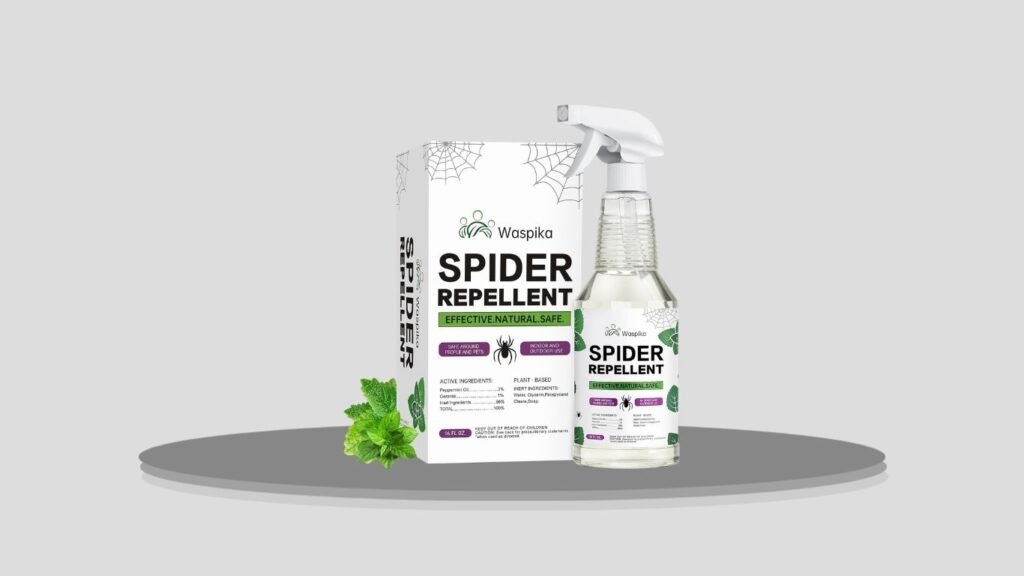
The Waspika Peppermint Spider Repellent is another plant-based option designed for homeowners who want to discourage spiders from garages, sheds, storage rooms, and similar spaces. Its peppermint-focused formula is intended for preventive use rather than functioning like a conventional contact insecticide. That makes it especially practical for garages where spiders tend to return to predictable corners, shelves, windows, and door frames.
Key Features
- Peppermint-based repellent
- Designed specifically for spider deterrence
- Suitable for garage environments
- Plant-based formula
- Convenient for indoor storage spaces
- Useful near walls and corners
- No powered device required
- Supports routine pest-prevention programs
Why It’s Best for Peppermint-Based Protection
Peppermint products are popular with homeowners who want to avoid strong conventional pesticide odors in enclosed spaces.
This Waspika option is particularly useful where garage doors, storage cabinets, and wall corners create recurring spider hotspots. Instead of reacting each time a web appears, users can establish several preventive treatment points around the room.
It can also be a practical choice in garages connected directly to the house, where reducing spider movement near the entry door is especially important.
Performance & Long-Term Use
Like most scent-based repellents, performance depends on maintaining an effective concentration around the treatment area. Ventilation from regularly opened garage doors can reduce how long the repellent remains noticeable.
For that reason, positioning it in protected corners or near known spider activity is generally more efficient than placing it in the center of a large open garage.
Reducing insects, clutter, and exterior entry gaps will further improve the overall strategy.
Pros, Cons & Overall Verdict
Pros: Peppermint-based formula, simple use, good for targeted garage areas, and suitable for preventive treatment.
Cons: May require multiple units in larger garages and should not be considered a complete solution for heavy infestations.
Overall Verdict: Waspika is a practical choice for targeted garage prevention, particularly for people who prefer a peppermint-based deterrent and want straightforward treatment around specific spider-prone areas.
3. Grandpa Gus’s Spider Repellent Pouches

The Grandpa Gus’s Spider Repellent Pouches provide a convenient no-spray solution for garages, sheds, basements, closets, and other enclosed spaces. The manufacturer uses peppermint and lemongrass oils and recommends placing the pouches around walls or corners where spider activity occurs. Because there is no liquid application, they are especially useful around shelving, stored tools, boxes, and other areas where spraying would be inconvenient.
Key Features
- 10 pouches per package
- Peppermint and lemongrass oil ingredients
- Specifically designed to repel spiders
- Suitable for garages and sheds
- No spraying or mixing required
- Can be positioned along walls and corners
- Fresh aromatic scent
- Manufacturer states approximately 30–90 days of use depending on airflow
Why It’s Best for No-Spray Garage Protection
The pouch format is the main advantage. Garages often contain tools, equipment, cardboard boxes, automotive supplies, and stored household items that owners may not want to coat with liquid repellent.
These pouches can simply be placed near spider-prone locations without creating wet surfaces or overspray.
The manufacturer specifically lists garages among the intended indoor locations, making this one of the most directly garage-oriented options in the group.
Performance & Longevity
Grandpa Gus states that limiting airflow can help extend pouch life. This is useful information for garages because frequently opening the main door naturally increases ventilation.
Placing pouches in corners, cabinets, shelving areas, or other relatively protected spots may therefore provide better longevity than positioning them directly beside the main garage opening.
Replacement is recommended once the scent diminishes.
Pros, Cons & Overall Verdict
Pros: No spraying, 10-pack coverage, peppermint and lemongrass oils, garage-specific use, easy placement, and potentially long-lasting performance.
Cons: Open-air garages can shorten pouch life, and larger spaces may require multiple placements.
Overall Verdict: Grandpa Gus’s pouches are one of the strongest choices for homeowners who want simple, mess-free garage protection. Their biggest advantage is continuous passive use without spraying equipment, power outlets, or complicated setup.
4. Natural Spider Repellent for Garage & Basement

The Natural Spider Repellent for Garage & Basement is designed around spaces where spiders commonly benefit from darkness, clutter, and lower human activity. Its plant-based positioning makes it particularly suitable for preventive treatment in garages, basements, sheds, and storage rooms. Rather than targeting individual spiders after they appear, this type of repellent is intended to create a less welcoming environment around common nesting and web-building locations.
Key Features
- Designed for garage and basement use
- Plant-based repellent approach
- Suitable for indoor and selected outdoor areas
- Useful around dark storage spaces
- Easy placement or application
- Targets common spider activity zones
- No electrical equipment required
- Appropriate for routine prevention
Why It’s Best for Garages and Basements
This option stands out because its intended use closely matches two of the most common spider-prone areas in a home.
Both garages and basements provide insects with sheltered conditions, and spiders follow that food supply. Using a dedicated repellent around wall edges, shelving, utility openings, and storage sections can help reduce the number of attractive hiding locations.
It is especially practical for homeowners who have spider activity in more than one low-traffic area.
Performance & Practicality
Repellents provide better results when combined with basic garage maintenance. Removing old webs, vacuuming corners, controlling insects, and sealing gaps can reduce the conditions that continually attract new spiders.
A plant-based deterrent can then serve as an additional preventive layer.
Because garages vary dramatically in size and airflow, homeowners with larger spaces may need several treatment points rather than expecting one product to cover the entire area.
Pros, Cons & Overall Verdict
Pros: Garage-focused design, plant-based positioning, versatile use, convenient preventive strategy, and suitable for multiple storage areas.
Cons: Coverage can vary with garage size and ventilation, and it does not physically remove existing spiders.
Overall Verdict: This natural garage and basement repellent is best suited to routine prevention. It offers the most value when paired with cleaning, exclusion, and reduction of the insects spiders feed on.
5. Spider Repellent Pouches for Indoor & Outdoor Use

The Spider Repellent Pouches for Indoor & Outdoor Use provide a passive alternative to sprays and electronic devices. Their pouch format makes them particularly convenient for garage corners, storage shelves, cabinets, sheds, and other spider-prone areas where liquid application may be inconvenient. Because they can be distributed throughout the space, users can target several potential hiding locations instead of relying on a single treatment point.
Key Features
- Convenient repellent pouch format
- No liquid spraying required
- Suitable for indoor and outdoor locations as directed
- Easy to place around garage corners
- Useful near shelves and storage areas
- No electricity needed
- Supports continuous passive protection
- Simple replacement process
Why It’s Best for Multiple Garage Hotspots
Spider activity is rarely distributed evenly across an entire garage. Webs often concentrate near windows, lights, boxes, corners, and shelving where prey insects are available.
Pouches make it easy to treat those areas individually. One can be positioned beside a garage entry door, another near storage shelves, and additional units in corners where webs repeatedly appear.
This distributed approach can be more practical than spraying broad surfaces unnecessarily.
Performance & Ease of Maintenance
Pouch-style repellents require very little maintenance once positioned. There is no battery to charge and no wet treatment to dry.
Their effectiveness, however, can gradually decline as active aromatic ingredients dissipate. High airflow near open garage doors can accelerate this process.
Positioning them inside relatively protected areas and replacing them according to package instructions can help maintain more consistent performance over time.
Pros, Cons & Overall Verdict
Pros: No-mess application, easy distribution, no electricity, convenient for shelves and corners, and suitable for passive prevention.
Cons: May require several pouches for complete garage coverage, and effectiveness can decline faster in highly ventilated spaces.
Overall Verdict: These spider repellent pouches are a practical option for homeowners who want to establish several low-maintenance treatment points throughout a garage. Their simple design is especially attractive for storage-heavy areas where sprays would be awkward or undesirable.
6. Peppermint Oil Spider Repellent & Deterrent

The Peppermint Oil Spider Repellent & Deterrent is designed for homeowners who want a simple plant-based option for reducing spider activity around garages, basements, sheds, and storage spaces. Its peppermint-focused approach works best as a preventive measure around the places where spiders repeatedly build webs or enter from outdoors. It can be particularly useful around garage-door edges, shelving, window frames, stored boxes, and darker corners where spiders tend to remain undisturbed.
Key Features
- Peppermint-oil-based repellent approach
- Designed to discourage spider activity
- Suitable for garage problem areas
- Useful around doors and windows
- Convenient for storage spaces
- Plant-based positioning
- Requires no electronic device
- Suitable for routine preventive use
Why It’s Best for Targeted Garage Protection
This product makes the most sense when spider activity is concentrated in specific areas rather than spread throughout an entire property.
Garage corners, windows, door frames, cabinets, and storage shelves can be treated strategically, allowing the repellent to focus on the places where spiders are most likely to establish webs.
Its peppermint-based design also fits well into a prevention program that includes removing existing webs and reducing the insects spiders feed on.
Performance & Long-Term Use
Scent-based repellents generally perform best when the treatment remains noticeable in the target area. Garages with strong airflow from frequently opened doors may require more regular attention than enclosed storage rooms.
For better results, concentrate treatment in sheltered locations rather than broad open floor areas.
Sealing cracks around doors and windows can further improve performance by physically reducing the number of entry routes available.
Pros, Cons & Overall Verdict
Pros: Peppermint-based approach, easy targeted use, good for garage corners, no electronic equipment, and useful for routine prevention.
Cons: May require periodic renewal, and substantial spider populations may need additional pest-management measures.
Overall Verdict: This peppermint oil repellent is best for homeowners who want straightforward treatment around known spider hotspots. Its value comes from targeted, low-complexity prevention rather than attempting to control an entire garage with one placement.
7. GoneNaturally Peppermint Spider Repellent
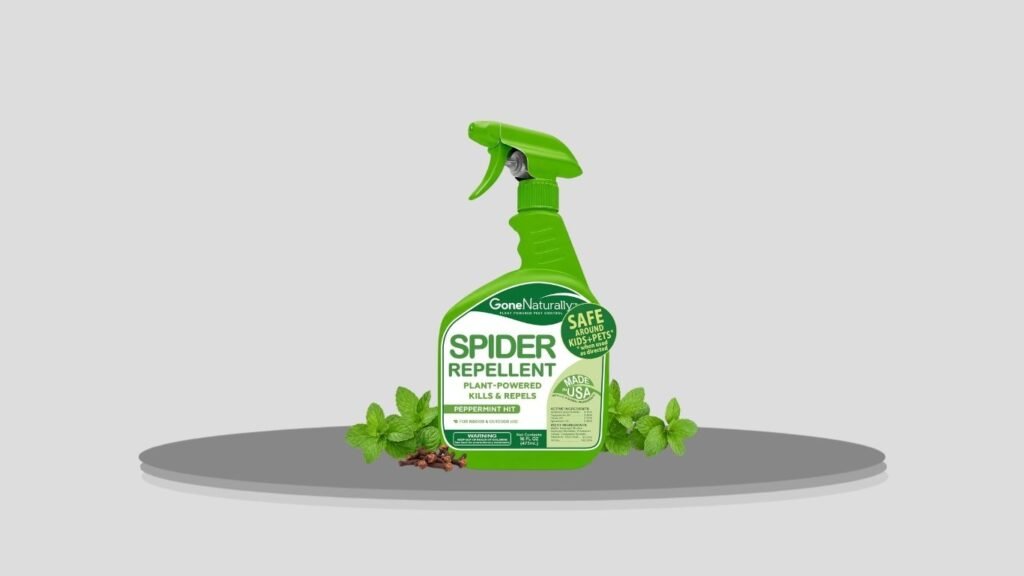
The GoneNaturally Peppermint Spider Repellent is another botanical-style option intended to make garages and other indoor spaces less attractive to spiders. Its peppermint-focused solution is particularly relevant for areas where webs repeatedly develop, such as shelving corners, windows, storage cabinets, and garage entry doors. Instead of functioning as a conventional contact insecticide, it is better suited to preventive use alongside cleaning, exclusion, and reduction of insect prey.
Key Features
- Peppermint-based repellent solution
- Designed for spider deterrence
- Suitable for garage use
- Useful around storage areas
- Plant-based pest-control approach
- Easy targeted application
- Works without electricity
- Suitable for recurring spider hotspots
Why It’s Best for Routine Preventive Use
GoneNaturally is particularly appropriate for people who regularly remove webs but find spiders returning to the same locations.
Applying a repellent after cleaning those areas can add an extra preventive step. Garage windows, ceiling corners, tool-storage sections, and areas behind shelving are logical places to focus attention.
This approach is especially useful when only occasional spiders are present and a full insecticide treatment would be unnecessary.
Performance & Garage Durability
Performance depends heavily on the environment. An enclosed garage with limited airflow can retain aromatic repellents better than a carport or garage that remains open for much of the day.
Regular cleaning can also remove the treatment, so areas that are frequently wiped or washed may need more attention.
For long-term results, the repellent should complement structural measures such as weather stripping, sealing gaps, and repairing window screens.
Pros, Cons & Overall Verdict
Pros: Simple peppermint-based formula, targeted application, good for recurring web locations, and easy to incorporate into routine maintenance.
Cons: Primarily preventive, and strong airflow can shorten how long scented treatment remains effective.
Overall Verdict: GoneNaturally works best as part of a consistent garage-maintenance routine. It is particularly suitable for homeowners who want to discourage recurring spider activity without relying solely on conventional chemical treatments.
8. Plant-Based Spider Repellent Pouches for Garage

The Plant-Based Spider Repellent Pouches for Garage offer a completely different application style from liquid sprays. Instead of coating walls, floors, or shelving, these pouches can be positioned directly in corners, storage sections, cabinets, or near garage entry points. Their passive design is especially convenient in garages filled with tools, boxes, vehicles, and equipment where overspray would be inconvenient or undesirable.
Key Features
- Plant-based repellent pouch design
- Developed for garage placement
- No spraying required
- No electricity needed
- Suitable around storage shelves
- Easy to position in corners
- Passive ongoing repellent approach
- Simple replacement when effectiveness declines
Why It’s Best for Mess-Free Garage Use
The biggest advantage is convenience. A pouch can be placed near a spider-prone area without leaving wet residue on tools, flooring, stored boxes, or automotive equipment.
Multiple pouches can also be distributed throughout the garage rather than relying on one central treatment point.
For example, separate units can be placed near a garage door, storage shelving, interior house entrance, and utility corner to create more focused coverage.
Performance & Placement Flexibility
Passive pouches generally work best in partially enclosed areas where their aromatic ingredients are not immediately dispersed by strong airflow.
This makes shelves, cabinets, storage corners, and wall edges more practical locations than directly beside a constantly open garage door.
Their greatest strength is flexibility. Owners can move individual pouches as spider activity changes without cleaning or respraying surfaces.
Pros, Cons & Overall Verdict
Pros: No spraying, no electricity, easy repositioning, clean application around stored items, and suitable for multiple garage hotspots.
Cons: Larger garages may require several pouches, and strong ventilation may shorten effective life.
Overall Verdict: These plant-based pouches are one of the most convenient options for storage-heavy garages. They are particularly useful when users want passive spider prevention without applying liquid treatments around valuable tools or belongings.
9. Lemongrass Plant-Based Spider Repellent

The Lemongrass Plant-Based Spider Repellent provides an alternative for homeowners who prefer a botanical deterrent but do not specifically want a peppermint-focused formula. Its lemongrass-based positioning makes it suitable for garages, storage spaces, sheds, basements, and similar low-traffic areas. It works best around spider entry routes and recurring web locations as part of an ongoing prevention strategy.
Key Features
- Lemongrass-based repellent approach
- Plant-derived positioning
- Designed to discourage spiders
- Suitable for garage spaces
- Useful around windows and doors
- Appropriate for corners and storage areas
- No electronic equipment required
- Supports preventive pest control
Why It’s Best for a Lemongrass-Based Alternative
Many spider repellents rely heavily on peppermint. This option provides a different botanical scent profile while serving the same general preventive purpose.
It can be useful for treating garage areas where spiders repeatedly establish themselves, particularly around windows, exterior doors, wall corners, and shelving.
For someone already using peppermint products elsewhere in the home, a lemongrass-based product may also provide a useful alternative for garage-specific applications.
Performance & Practical Garage Use
As with other aromatic repellents, consistent coverage matters. High airflow, dust, outdoor exposure, and routine cleaning can all reduce how long treatment remains noticeable.
Using the repellent in combination with regular web removal helps prevent old webs from attracting continued activity.
Reducing insects around outdoor lights and keeping food or trash properly contained can also indirectly make a garage less attractive to spiders.
Pros, Cons & Overall Verdict
Pros: Lemongrass-based alternative, plant-based approach, suitable for targeted areas, simple use, and useful for preventive treatment.
Cons: May require repeated application and will not physically eliminate existing spider webs or egg sacs.
Overall Verdict: This lemongrass repellent is a useful alternative to peppermint-heavy products. It fits best into a preventive garage strategy where spider activity is moderate and concentrated around predictable locations.
10. Long-Lasting Spider Repellent & Deterrent

The Long-Lasting Spider Repellent & Deterrent is designed for users who prioritize extended preventive coverage rather than frequent direct treatment. Garage spider problems often recur because insects continually enter through doors, vents, and small structural gaps. A longer-lasting repellent can reduce the amount of routine maintenance required when positioned around stable, protected areas that are repeatedly affected.
Key Features
- Designed for extended repellent protection
- Targets spider activity
- Suitable for garage problem zones
- Useful around corners and entry areas
- Preventive rather than contact-kill approach
- No complicated pest-control equipment
- Appropriate for storage spaces
- Convenient for low-maintenance use
Why It’s Best for Low-Maintenance Protection
This product is best suited to people who do not want to reapply a repellent every few days.
A longer-lasting deterrent can be placed or applied around stable garage areas such as shelving, upper corners, storage rooms, and wall edges where it is less likely to be disturbed.
This makes it particularly attractive for garages that are not inspected daily or for secondary storage areas that receive relatively little foot traffic.
Performance & Durability
Longevity depends on environmental conditions. Any repellent will generally maintain its effect better in a dry, protected corner than directly beside an open garage door exposed to wind and weather.
For that reason, placement is just as important as the product itself.
Periodic inspection remains worthwhile. If new webs appear in treated areas, refreshing or repositioning the repellent can help restore coverage.
Pros, Cons & Overall Verdict
Pros: Designed for longer-lasting deterrence, low-maintenance use, suitable for garage storage areas, and convenient for preventive protection.
Cons: Environmental conditions affect longevity, and it does not replace sealing openings or reducing insect prey.
Overall Verdict: This long-lasting deterrent is particularly appealing for homeowners who prioritize convenience. It offers the most value in protected garage areas where a passive or extended treatment can remain undisturbed.
11. Peppermint Plant-Based Spider Repellent
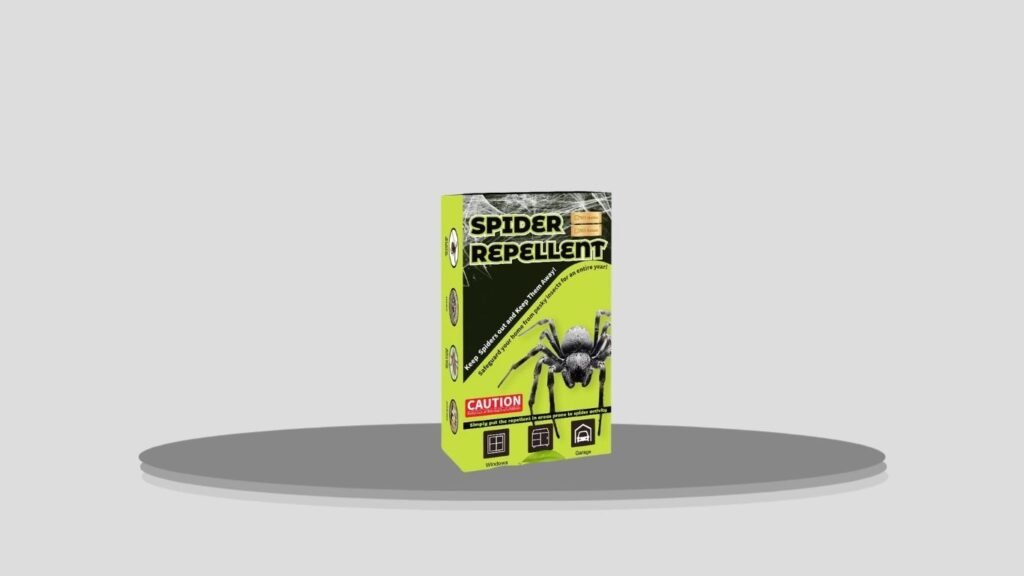
The Peppermint Plant-Based Spider Repellent rounds out the list with another straightforward botanical approach to garage spider prevention. Peppermint-based deterrents are commonly positioned around doors, windows, corners, shelving, and storage areas where spiders are likely to travel. This option is best suited to routine prevention and light-to-moderate spider activity rather than serving as the only response to a major infestation.
Key Features
- Peppermint-based repellent
- Plant-based ingredient positioning
- Designed for spider deterrence
- Suitable for garage use
- Useful around common entry points
- Easy preventive application
- Appropriate for storage spaces
- No powered equipment required
Why It’s Best for Simple Everyday Prevention
The main advantage is simplicity. There are no complicated devices, wiring, or pest-control procedures involved.
Homeowners can concentrate treatment around the places where spider activity is most noticeable and combine it with routine web removal.
It is particularly practical for garages attached to living spaces because doors connecting the garage and home can be treated as important prevention zones.
Performance & Everyday Garage Use
Peppermint repellents work best when used consistently. Treatment may need to be refreshed after strong airflow, cleaning, or extended use.
Rather than treating the entire garage indiscriminately, focusing on spider travel routes can make the product more efficient.
Pairing it with weather stripping, sealed wall gaps, and reduced insect activity provides a more complete long-term strategy than relying on scent alone.
Pros, Cons & Overall Verdict
Pros: Straightforward peppermint formula, easy application, useful around entry points, plant-based approach, and suitable for routine prevention.
Cons: Requires ongoing maintenance and may not be sufficient for a heavy spider population.
Overall Verdict: This peppermint plant-based repellent is a practical finishing option for homeowners who want uncomplicated garage spider prevention. Its simple design works best when targeted at specific hotspots and supported by good garage maintenance.
FAQs
What is the best spider repellent for a garage?
The best option depends on the size and layout of the garage. Repellent pouches are convenient for corners, cabinets, and storage shelves, while sprays are better for treating window frames, doors, baseboards, and larger surfaces. For recurring spider activity, combine repellents with cleaning and sealing entry gaps.
Does peppermint really repel spiders from garages?
Peppermint-based products are commonly marketed as spider deterrents and may help make treated areas less attractive. Results can vary, especially in large or highly ventilated garages. They generally work best as part of a broader prevention plan rather than as the only control method.
Where should I place spider repellent in my garage?
Focus on garage-door corners, windows, shelving, storage cabinets, ceiling corners, wall gaps, and the doorway connecting the garage to the house. Also target places where webs repeatedly appear. Pouches usually work best in protected locations, while sprays can cover cracks and structural edges where permitted by the label.
How often should I replace or reapply spider repellent?
It depends on the product and environmental conditions. Sprays may need periodic reapplication after cleaning or weather exposure, while pouches can remain useful until their scent or repellent effect noticeably declines. Always follow the manufacturer’s replacement or reapplication instructions.
How can I keep spiders out of my garage permanently?
Reduce the conditions that attract them. Remove webs and egg sacs, vacuum corners, reduce clutter, store boxes off the floor, seal gaps around doors and windows, repair screens, and reduce insects around exterior lights. Repellents can then provide an additional preventive layer rather than acting as the sole solution.
