
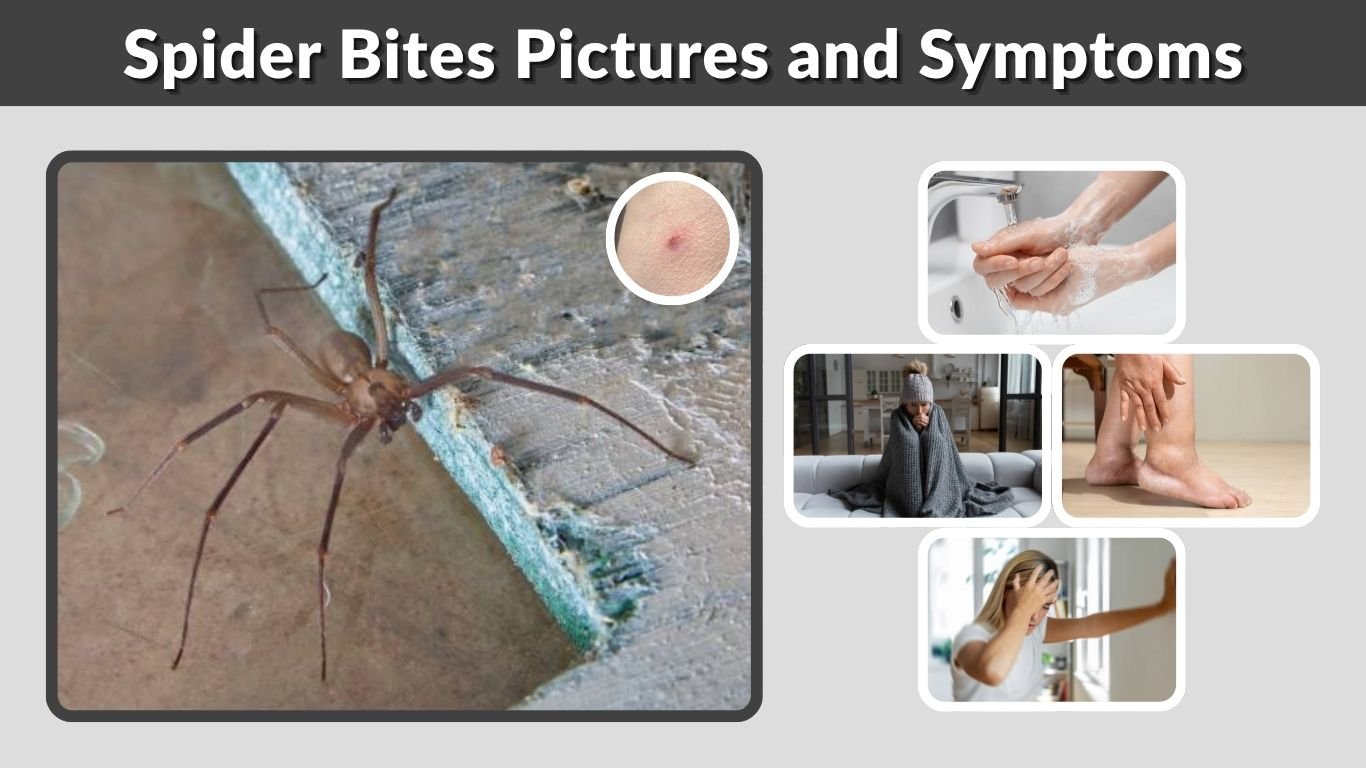
Spider bites pictures and symptoms can help you understand what a suspected bite may look like, but appearance alone usually cannot confirm that a spider caused the wound. Many spider bites begin as a small red, swollen, or painful bump, while other skin conditions, insect bites, and infections can look almost identical.
Most spider bites are mild and cause only localized redness, pain, itching, or swelling. However, bites from medically important spiders such as black widows and recluse spiders can sometimes cause more serious symptoms.
What Does a Spider Bite Look Like?
A typical spider bite may initially resemble an ordinary insect bite.
The skin reaction varies according to the spider species, amount of venom delivered, bite location, and the individual’s response.
Common Spider Bite Appearance
A suspected spider bite may show:
- Small red or pink bump
- Mild swelling
- Redness around the bite
- Tenderness
- Itching
- Burning or stinging
- Tiny puncture marks in some cases
- Small blister in some reactions
Some people may barely notice the bite, while others experience immediate discomfort. Spider bites commonly produce redness, swelling, and pain similar to other insect bites or stings.
Spider Bite Pictures: What Should You Look For?
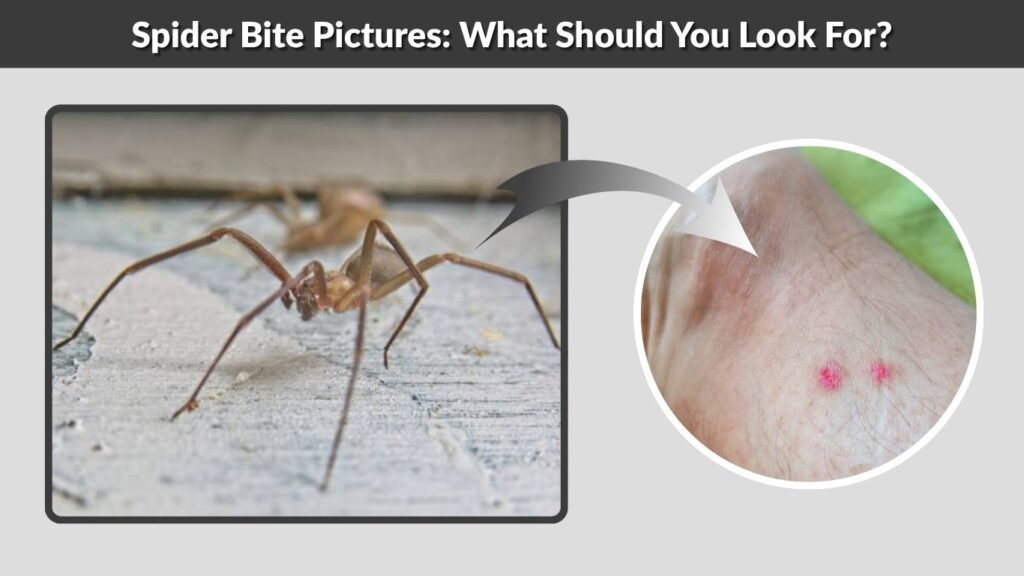
When comparing your skin to pictures of spider bites, focus on how the affected area changes rather than trying to match one photograph exactly.
Different people can develop very different-looking reactions from similar bites.
Useful features to observe include:
- Size of the redness
- Whether swelling is increasing
- Color changes
- Blister formation
- Pain level
- Development of an open wound
- Whether the redness spreads
- Changes over several hours or days
Taking a picture of the area each day can help you notice whether the bite is improving or becoming worse.
However, doctors often cannot identify a spider bite from a skin lesion alone unless the spider was actually seen and reliably identified. Many other conditions produce similar redness, swelling, and sores.
Early Stage Spider Bite Pictures and Symptoms
During the early stages of a spider bite, the affected skin may not look dramatic.
A small red spot may be the only visible sign.
First Few Minutes
Possible early symptoms include:
- Pinching or stinging sensation
- Small red dot
- Mild burning
- Slight tenderness
- Minimal swelling
Some spider bites are initially painless and may not be noticed immediately.
First Few Hours
As the local reaction develops, you may notice:
- Increasing redness
- Mild swelling
- Itching
- Burning
- Tenderness
- Warm skin around the bite
Most uncomplicated bites remain localized.
Spider Bite Symptoms
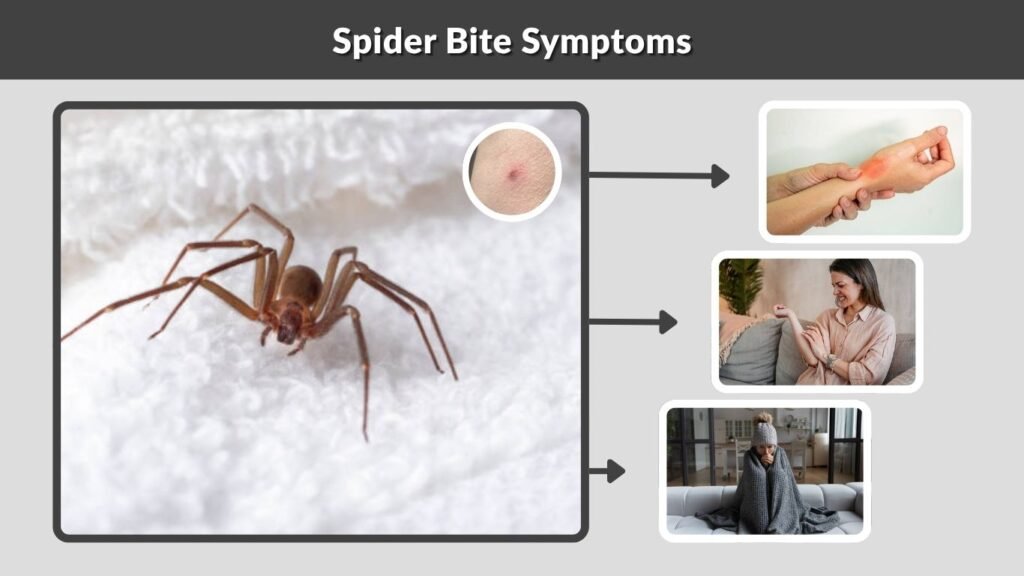
Symptoms can range from almost nothing to significant pain or systemic illness, depending on the spider and individual reaction.
Mild Spider Bite Symptoms
Common mild symptoms include:
- Redness
- Pain
- Swelling
- Itching
- Mild burning
- Tenderness
Most spider bites are harmless and improve without major complications.
More Serious Symptoms
More significant envenomation can potentially cause:
- Severe or spreading pain
- Muscle cramps
- Headache
- Sweating
- Fever
- Chills
- Nausea
- Vomiting
- Rash
- Difficulty breathing
The CDC lists muscle pain or cramping, rash, sweating, fever, chills, breathing problems, headache, nausea, and vomiting among possible symptoms associated with more serious spider bites.
Brown Recluse Spider Bite Pictures and Symptoms
Brown recluse bites receive considerable attention because some can damage skin tissue.
A bite may initially cause little pain or a sharp sting. Pain can then increase during the following hours.
Early Brown Recluse Bite Appearance
Early signs may include:
- Small red area
- Mild swelling
- Tenderness
- Itching
- Burning
- Increasing pain
Some bites remain mild.
Later Brown Recluse Bite Appearance
More severe reactions can potentially develop:
- Reddish or purplish discoloration
- Blistering
- Darker center
- Open sore or ulcer
- Surrounding tissue damage
Recluse spider bites can sometimes progress from redness to blistering, dark discoloration, and ulcer formation.
However, not every brown recluse bite develops necrosis or an open wound.
Black Widow Spider Bite Pictures and Symptoms
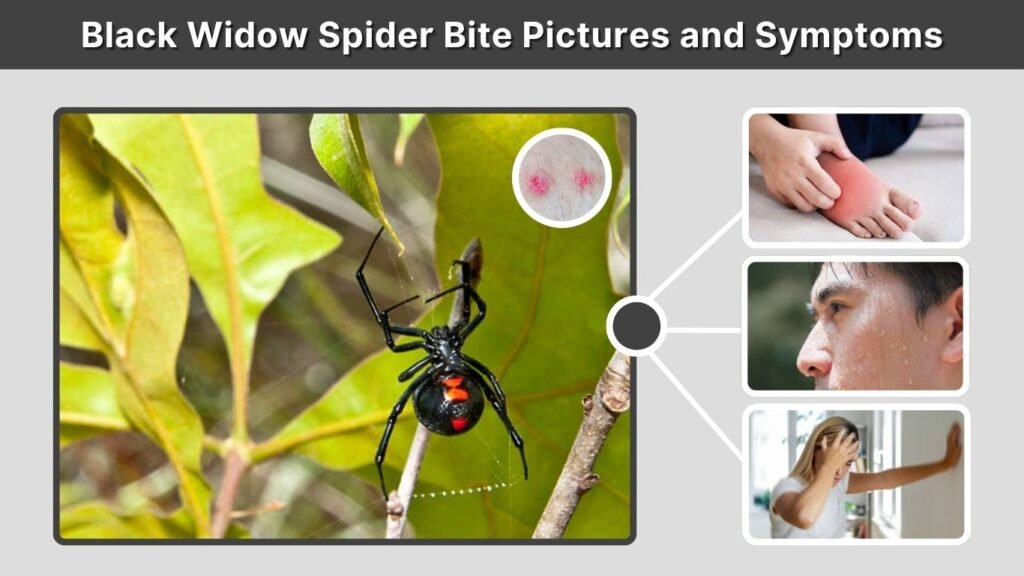
A black widow spider bite may look much less dramatic on the skin than people expect.
The first symptom is often a sensation similar to a pinprick. Minor swelling, redness, or a target-like lesion may develop at the bite location.
The more important signs can involve symptoms elsewhere in the body.
Black Widow Bite Symptoms
Possible symptoms include:
- Pain at the bite
- Redness
- Minor swelling
- Muscle pain
- Muscle cramping
- Abdominal cramps
- Sweating
- Nausea
- Restlessness
Pain can spread from the bite area into nearby muscles or throughout the body.
Because the visible bite itself may look minor, severity should not be judged from the skin’s appearance alone.
Wolf Spider Bite Pictures and Symptoms
Wolf spider bites generally produce a localized reaction rather than severe systemic illness.
The bite may resemble a small insect bite.
Typical appearance can include:
- Red bump
- Mild swelling
- Tenderness
- Itching
- Burning
- Possible tiny puncture points
A wolf spider bite cannot usually be identified confidently from a photograph alone because mosquito bites, ant bites, irritated hair follicles, and other skin problems can look very similar.
Spider Bite With Two Puncture Marks
People commonly associate two fang marks with spider bites.
Spiders have two fangs, so tiny puncture marks can occasionally be visible. However, the marks may be extremely small or completely invisible.
Two dots are also not reliable proof of a spider bite.
Scratches, hair follicles, other insects, and minor skin injuries can create similar-looking marks.
Spider Bite With a Blister
Some suspected spider bites develop a blister.
The blister may contain clear fluid or, in more significant reactions, blood.
Blisters and tissue damage can occur with spider bites, but similar reactions can also result from insect bites and other conditions.
Watch carefully if the blister:
- Becomes rapidly larger
- Turns dark
- Becomes extremely painful
- Breaks into an open wound
- Develops surrounding redness
- Produces pus or drainage
Medical evaluation is advisable when a blistering lesion is worsening.
What Does an Infected Spider Bite Look Like?
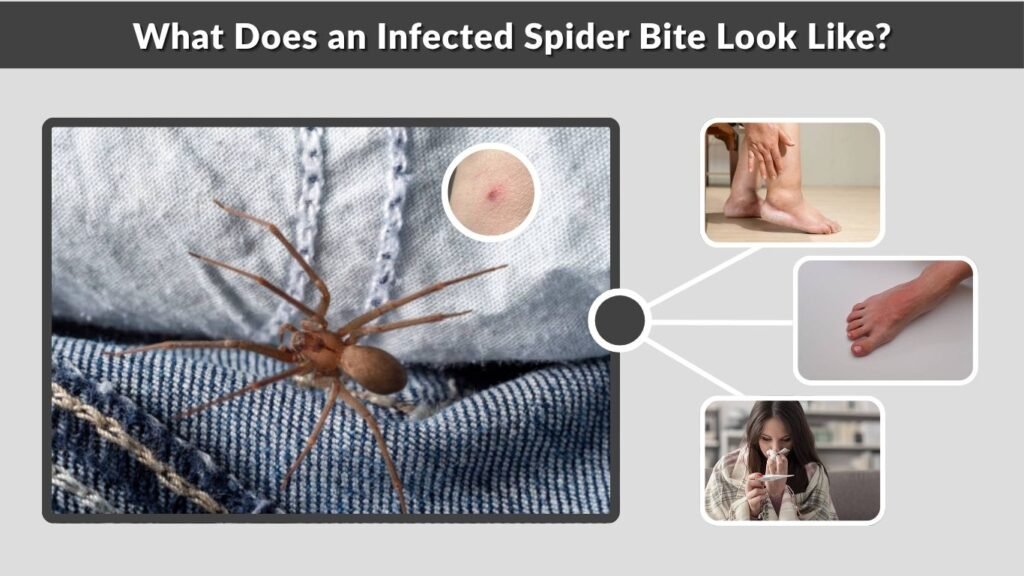
A bite or skin lesion can develop a bacterial infection, particularly if it is scratched or the skin becomes damaged.
Possible infection signs include:
- Increasing redness
- Increasing swelling
- Warm skin
- Worsening pain
- Pus
- Cloudy drainage
- Red streaking
- Fever
One reason spider bites are difficult to diagnose visually is that bacterial infections may resemble them.
For example, staph infections, including MRSA, can begin as swollen, painful red bumps that resemble pimples or suspected spider bites and may later develop into abscesses.
Spider Bite Healing Stages
Healing varies depending on the cause and severity of the reaction.
A mild spider bite generally improves gradually.
Stage 1: Redness and Swelling
During the first several hours, redness, pain, tenderness, or swelling may become noticeable.
Stage 2: Local Reaction
For the next day or two, itching and inflammation may remain present.
The affected area should normally begin stabilizing rather than rapidly expanding.
Stage 3: Improvement
Redness and swelling gradually decrease.
Tenderness and itching also become less noticeable.
Stage 4: Healing
The skin returns toward its normal appearance.
Many uncomplicated spider bites heal on their own in approximately a week, although recovery time varies.
A wound that continues enlarging, darkening, or becoming more painful should not be considered normal healing.
Spider Bite vs. Mosquito Bite
Mosquito bites and spider bites can look very similar.
| Feature | Spider Bite | Mosquito Bite |
|---|---|---|
| Red bump | Common | Common |
| Itching | Possible | Very common |
| Pain | Possible | Usually mild |
| Swelling | Possible | Common |
| Puncture marks | Sometimes | Usually not visible |
| Multiple bites | Possible | Common |
| Serious symptoms | Rare but possible | Usually uncommon |
Mosquito bites usually produce itching and generally heal within several days.
Spider Bite vs. Bed Bug Bite
Bed bug bites frequently appear in groups rather than as one isolated lesion.
They may be:
- Red
- Itchy
- Slightly raised
- Clustered
- Arranged in groups or lines
Bed bug bites usually resolve without treatment within approximately one or two weeks.
A single painful lesion therefore may be less characteristic of bed bugs, although appearance alone still cannot provide certainty.
Spider Bite vs. Tick Bite
A tick bite may leave a small red area that resembles many other bites.
Ticks can also transmit illnesses that produce fever, chills, body aches, and rashes.
An expanding circular rash, sometimes described as a bullseye pattern, can occur with Lyme disease and should not automatically be labeled a spider bite.
How to Treat a Mild Spider Bite
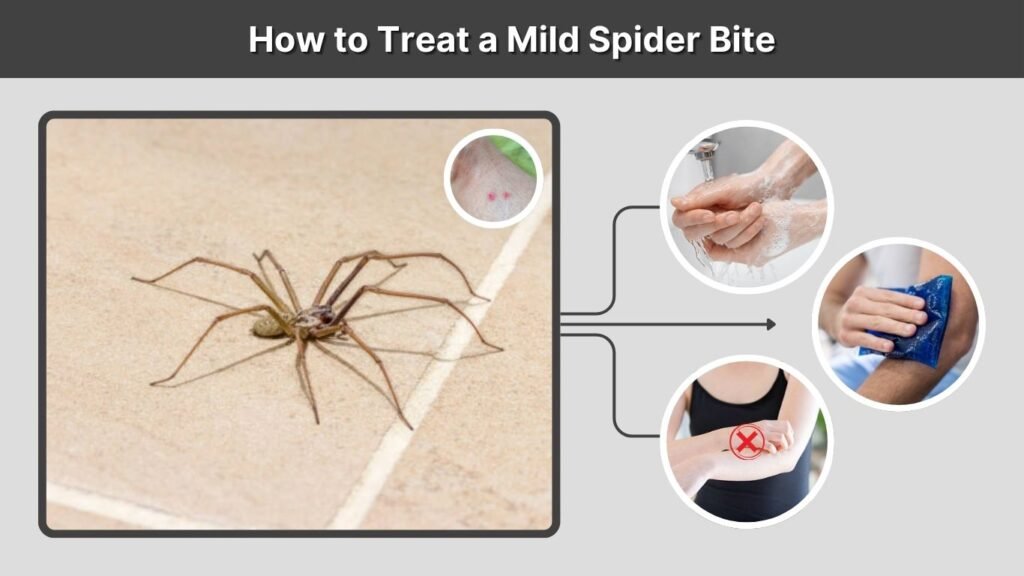
For a mild suspected spider bite, simple first aid is generally appropriate.
Basic Care
You can:
- Wash the area gently with soap and water.
- Apply a cool compress.
- Elevate the affected limb when practical.
- Avoid scratching the bite.
- Monitor the area for changes.
Mayo Clinic recommends cleaning the bite, using a cool compress, and elevating the affected area when appropriate.
When Should You Seek Medical Attention?
Do not rely solely on spider bite pictures when the symptoms are severe or rapidly changing.
Get prompt medical care if you experience:
- Severe pain
- Rapidly increasing swelling
- Spreading redness
- Large blister
- Dark or purple skin
- Growing open sore
- Muscle cramps
- Fever or chills
- Persistent vomiting
- Significant weakness
- Signs of infection
Seek emergency care for difficulty breathing, facial or mouth swelling, fainting, or other signs of a severe allergic reaction.
Can You Identify a Spider Bite From a Picture?
Usually, no.
A photograph can show whether a lesion is red, swollen, blistered, infected, or worsening, but it generally cannot establish that a spider caused it.
Many conditions resemble spider bites, including:
- Mosquito bites
- Bed bug bites
- Tick bites
- Flea bites
- Ant bites
- Skin infections
- Inflamed hair follicles
- Allergic reactions
- Boils and abscesses
Unless a spider was observed biting and correctly identified, determining the exact cause from appearance alone can be difficult.
FAQs
What does a normal spider bite look like?
A mild spider bite commonly appears as a small red or pink bump with slight swelling, tenderness, itching, or pain. Some bites may show tiny puncture marks, although these are often impossible to see.
What does a dangerous spider bite look like?
Warning signs can include rapidly increasing swelling, blistering, purple or dark discoloration, an enlarging ulcer, or significant tissue damage. Severe muscle cramps, vomiting, fever, breathing difficulty, or widespread symptoms are also reasons to seek medical care.
How do you know if a spider bite is infected?
Increasing redness, warmth, swelling, worsening pain, pus, drainage, fever, or red streaks can indicate infection. A lesion that becomes progressively worse instead of improving should be evaluated by a healthcare professional.
How long do spider bite symptoms last?
Minor spider bites often improve over several days and may heal within about a week. More severe reactions can take considerably longer. Symptoms that worsen instead of improving should not simply be assumed to be part of normal healing.
Can you identify spider bites from pictures?
Pictures can help track changes but usually cannot identify the exact cause. Numerous insect bites, infections, and skin conditions resemble spider bites. Seeing and correctly identifying the spider provides much stronger evidence than the appearance of the skin alone.
