
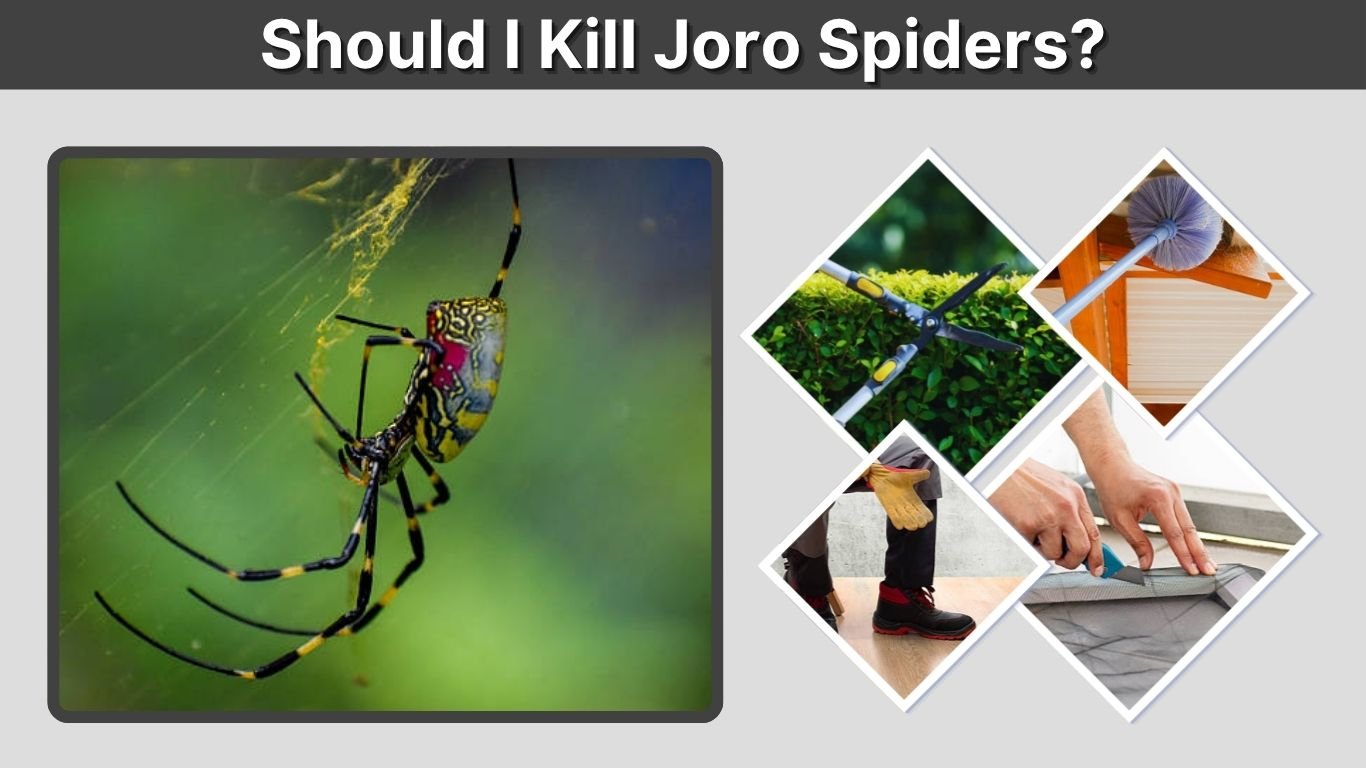
You usually do not need to kill every Joro spider you find. These large orb-weavers are timid, rarely bite, and help reduce insect numbers. However, removing them may be reasonable when their large, sticky webs block doors, decks, walkways, play areas, flower gardens, or beehives. Because Joro spiders are already established across parts of the southeastern United States, killing a few individuals is unlikely to stop their regional spread. The most practical approach is targeted removal rather than spraying an entire yard.
Should You Kill Joro Spiders?
A Joro spider at the edge of a yard, high in a tree, or in an unused shrub can generally be left alone. It is unlikely to chase or attack anyone, and its web captures flying insects.
Removal makes more sense when the spider or web is:
- Blocking a doorway or walkway
- Hanging over a deck or porch
- Close to a child’s play area
- Repeatedly built across a frequently used path
- Positioned around a beehive
- Catching pollinators in a flower garden
- Located where pets or people cannot avoid it
University of Georgia Extension recommends concentrating control on spiders whose webs make contact with people unavoidable. Spiders in peripheral landscaping or locations where nobody regularly walks can be tolerated.
| Location | Recommended response |
| High in a tree | Leave it alone |
| Quiet edge of the yard | Usually leave it |
| Across a doorway | Remove it |
| Over a walkway | Remove it |
| Near a beehive | Remove it |
| Around pollinator flowers | Remove or relocate it |
| Inside the house | Capture and remove it |
Are Joro Spiders Dangerous?
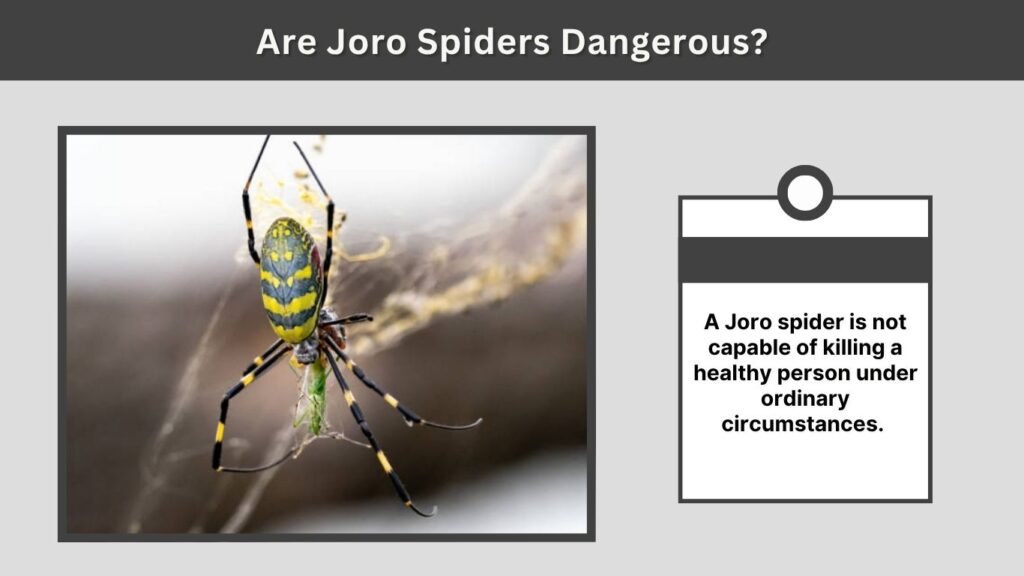
Joro spiders look intimidating because mature females have long legs, bright yellow markings, and enormous golden webs. Despite their appearance, they are remarkably timid.
They usually retreat, freeze, or remain motionless when disturbed. UGA researchers report that even spiders handled during collection rarely attempt to bite. Their venom is used to subdue insect prey and is not considered medically important to humans.
A bite is possible when a spider is trapped against the skin or deliberately handled, but serious reactions are not expected in most people. Wash a suspected bite with soap and water, apply a cold compress, and obtain medical help for breathing difficulty, facial swelling, severe pain, or rapidly worsening symptoms.
Can a Joro Spider Kill You?
A Joro spider is not capable of killing a healthy person under ordinary circumstances. It does not hunt humans, jump at people, or deliberately enter homes to attack occupants.
As with any animal bite, someone with an unusual allergy could potentially experience a stronger reaction. However, the spider itself is considered virtually harmless to people and pets.
Why Are Joro Spiders Considered Invasive?
The Joro spider, Trichonephila clavata, is native to East Asia and was first documented in Georgia in 2014. As of the University of Georgia’s June 2026 update, established populations occur in Georgia, North Carolina, South Carolina, Tennessee, and Alabama, with isolated populations reported in Maryland, Virginia, and Pennsylvania.
Young spiders can disperse by releasing silk that catches the wind, a behavior called ballooning. They may also travel unintentionally on vehicles, plants, trailers, shipping materials, and outdoor equipment.
Scientists are still studying whether Joro spiders significantly displace native spiders or disrupt local ecosystems. UGA states that the full ecological impact remains uncertain, which is another reason to avoid assuming that either total eradication or complete protection is scientifically required.
Do Joro Spiders Provide Any Benefits?
Joro spiders catch numerous flying insects in their webs. Their prey can include flies, mosquitoes, moths, beetles, stink bugs, wasps, and other spiders.
This does not make them automatically beneficial in every situation. A large web near flowering plants may also trap bees, butterflies, and other pollinators. Their value therefore depends partly on where they build their webs.
A spider catching insects at an unused woodland edge is less concerning than one repeatedly building beside a beehive or across a butterfly garden.
How to Remove a Joro Spider Without Killing It
Relocation is an option when you simply want the spider away from a door, porch, or pathway.
Use a Long Broom or Stick
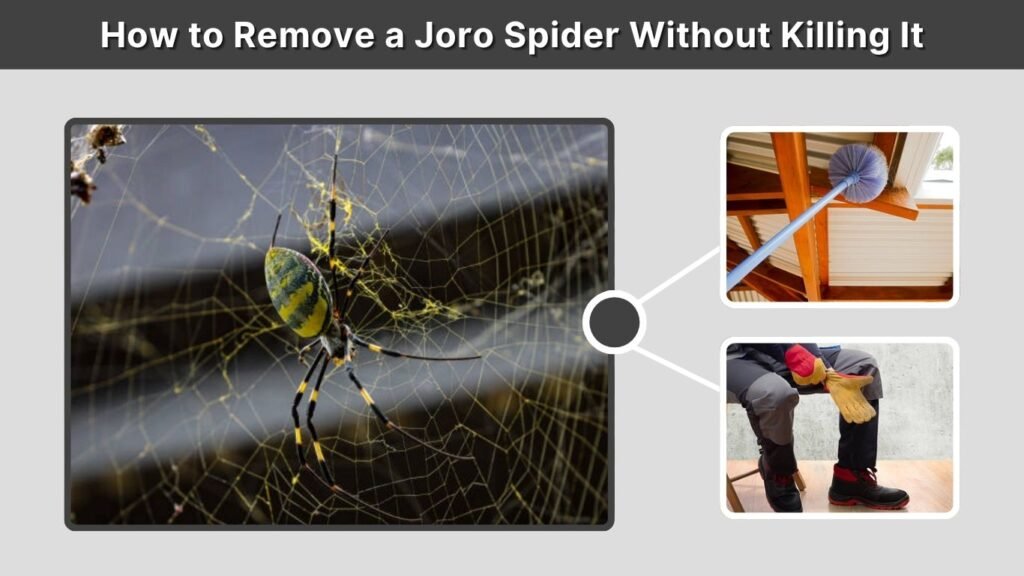
Use a broom, rake, long stick, or telescoping pole to gather the web around the spider. Move slowly so the spider remains within the bundled silk.
Carry it to a quiet wooded edge or another location far from frequently used spaces. Moving it only a few feet may not work because the spider can return and rebuild.
UGA notes that breaking the web alone is often ineffective because Joro spiders can rebuild it quickly. Removing the spider with the web is more reliable.
Wear Basic Protection
Wear closed shoes, long sleeves, and work gloves if you are uncomfortable handling the web. Keep your face away from the silk and avoid working directly beneath high webs because the spider could fall.
Do not pick up the spider with bare hands or squeeze it against your skin.
How to Kill a Problem Joro Spider
When relocation is impractical, physical removal is generally the simplest targeted control method.
UGA recommends wrapping the spider and its web around a broom, rake, or stick before disposing of it. This method avoids applying chemicals throughout the landscape.
Remove Egg Sacs
Joro egg sacs are usually dense, silk-covered masses attached to tree bark, leaves, buildings, outdoor furniture, or other protected surfaces. Each sac may contain hundreds of eggs.
Where practical, scrape reachable egg sacs into a sealed bag and dispose of them. Wear gloves and confirm that the structure is actually a Joro egg sac before removing it, since native spiders also produce silk egg cases.
Use Pesticides Only When Necessary
Products specifically labelled for spiders can kill Joro spiders when applied directly. However, broad yard spraying is not recommended simply because one or two spiders are present.
Broad-spectrum insecticides can also kill:
- Bees and other pollinators
- Butterflies
- Native spiders
- Predatory insects
- Parasites that naturally control garden pests
UGA advises against large-area insecticide use while researchers continue evaluating Joro spiders’ ecological effects. When chemical treatment is necessary, use a product labelled for spiders and the intended location, apply it only to the individual target, and follow every label direction.
Methods to Avoid
Do not use gasoline, bleach, fire, boiling water, or unlabelled household chemicals. These methods can harm people, plants, pets, beneficial insects, and surrounding soil without providing meaningful long-term control.
Avoid repeatedly spraying an entire yard. Residual sprays often provide poor control of web-building spiders because the spiders spend much of their time suspended in webs rather than walking across treated surfaces.
Destroying the web without removing the spider also offers only temporary relief.
How to Reduce Joro Webs Around Your Home
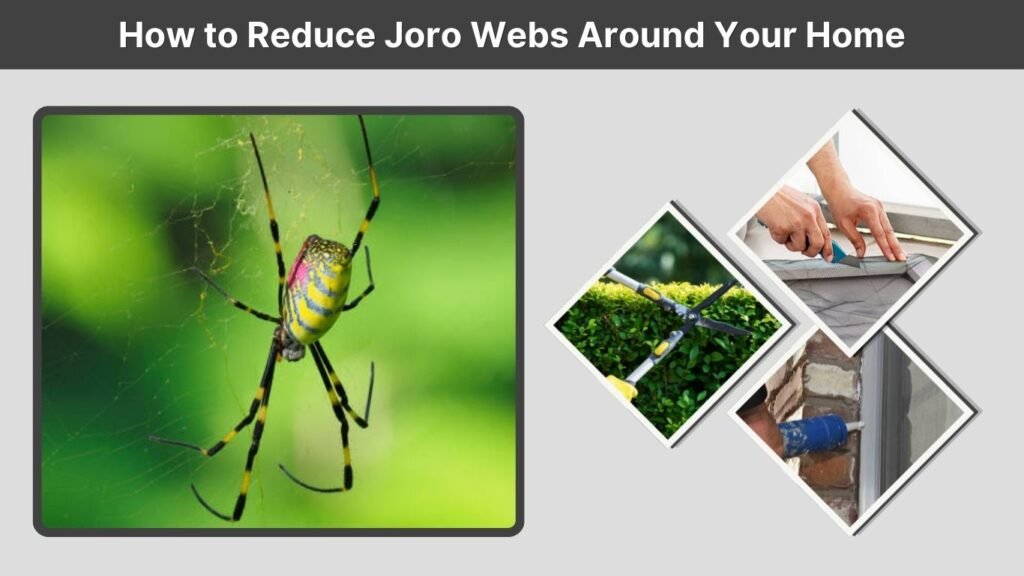
You cannot guarantee a completely spider-free property, but several changes can make entrances and outdoor living areas less attractive:
- Remove abandoned webs promptly.
- Trim vegetation away from doors and porches.
- Reduce bright outdoor lighting at night.
- Use motion-activated lights where practical.
- Repair damaged window and door screens.
- Seal gaps around frames and utility openings.
- Move outdoor seating away from dense shrubs.
- Remove accessible egg sacs during winter.
Outdoor lights attract moths and other flying insects, which provide food for web-building spiders. Reducing unnecessary lighting may therefore reduce repeated web construction near doors and decks.
Should You Kill Joro Spiders in Georgia?
There is no need for Georgia homeowners to search their entire property and kill every Joro spider. The species is already widely established, and individual control cannot eradicate it from the region.
A reasonable Georgia strategy is:
- Leave distant spiders alone.
- Remove webs that interfere with daily activities.
- Remove spiders near beehives and pollinator gardens.
- Avoid broad insecticide applications.
- Report unusual or new sightings through Joro Watch or EDDMapS.
This approach reduces nuisance webs while limiting harm to native insects and other beneficial wildlife.
FAQs
Is it better to kill or relocate a Joro spider?
Relocation is appropriate when you simply need the spider away from a doorway, deck, or path. Killing it is an option when relocation is unsafe or impractical. Neither action is necessary for spiders living in distant, unused areas.
What kills Joro spiders instantly?
Direct physical removal is usually the quickest method. Spider-labelled contact sprays may also work, but they should be used only according to the label. Avoid unapproved chemicals and broad landscape spraying that can kill pollinators and native predators.
Will destroying the web get rid of the spider?
Usually not. A surviving Joro spider can rebuild its web, sometimes in the same location. Remove or relocate the spider together with the web when you need longer-lasting relief.
Do Joro spiders come inside houses?
They normally prefer outdoor locations where they can anchor large webs between trees, buildings, utility lines, and other structures. Occasional indoor entry is possible, but they are not considered typical house-infesting spiders.
Should Joro egg sacs be destroyed?
Removing accessible egg sacs can reduce the number of spiders immediately around a home. However, it will not stop the species’ wider spread. Confirm identification first to avoid destroying the egg sacs of harmless native spiders.
