
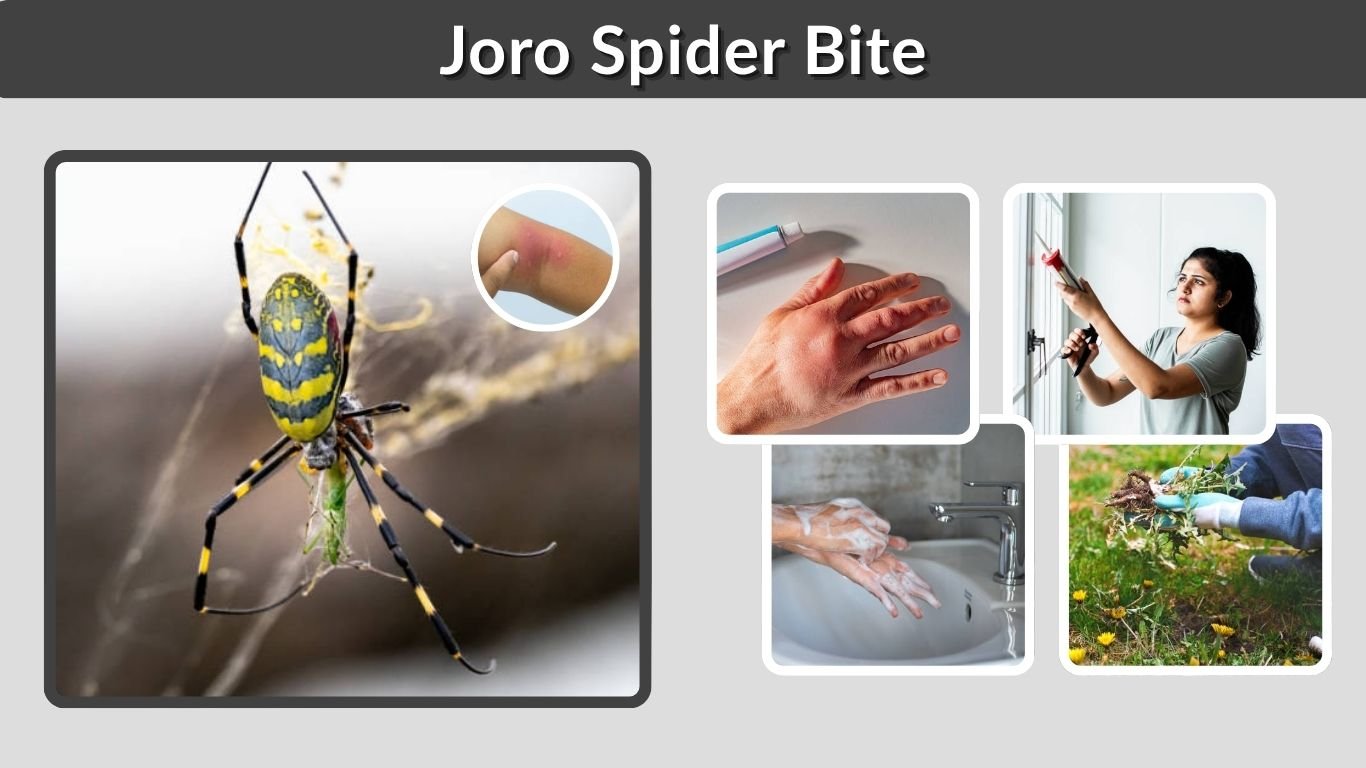
A Joro spider bite is possible, but it is uncommon. Despite their large size and bright yellow-and-black coloring, Joro spiders are generally docile and usually retreat or remain still when disturbed. A bite is most likely when someone grips, squeezes, or traps the spider against their skin. Its venom is used to immobilize insect prey and is not considered medically significant to people or pets. Most reported reactions involve temporary pain, redness, itching, or mild swelling.
Do Joro Spiders Bite Humans?
Female Joro spiders have fangs and are physically capable of biting. However, they do not pursue people or bite without a reason.
Clemson University Extension reports that researchers have handled hundreds of Joro spiders without being bitten during ordinary contact. Even when restrained, these spiders may attempt to escape rather than defend themselves by biting.
Situations that could increase the chance of a bite include:
- Squeezing a spider in your hand
- Trapping one inside clothing
- Accidentally pressing against a web
- Handling the spider by its abdomen or legs
- Reaching into vegetation without seeing the web
Walking through a web does not mean the spider will automatically bite. It will usually drop, run away, or hide.
What Does a Joro Spider Bite Look Like?
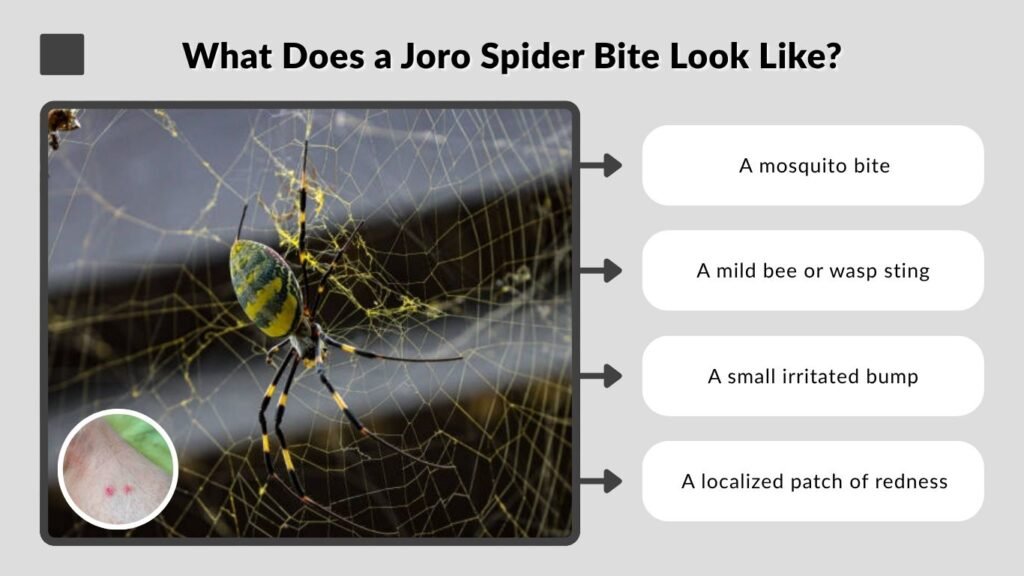
A confirmed Joro spider bite may produce a small red mark or itchy welt. Mild swelling can develop around the area, and two faint fang punctures may occasionally be visible.
The reaction may resemble:
- A mosquito bite
- A mild bee or wasp sting
- A small irritated bump
- A localized patch of redness
- Two closely positioned puncture marks
Clemson Extension documented a bite that initially produced swelling, followed by only faint red puncture marks approximately 24 hours later. Reactions are expected to vary between individuals.
Can Pictures Confirm a Joro Spider Bite?
A photograph of a skin mark cannot reliably confirm that a Joro spider caused it. Many insect bites, allergic reactions, infected hair follicles, and bacterial skin infections look similar.
Unless the spider was actually seen biting, a painful or swollen lesion should not automatically be identified as a spider bite. Some bacterial infections mistaken for spider bites become increasingly red, warm, painful, swollen, or filled with pus.
Joro Spider Bite Symptoms
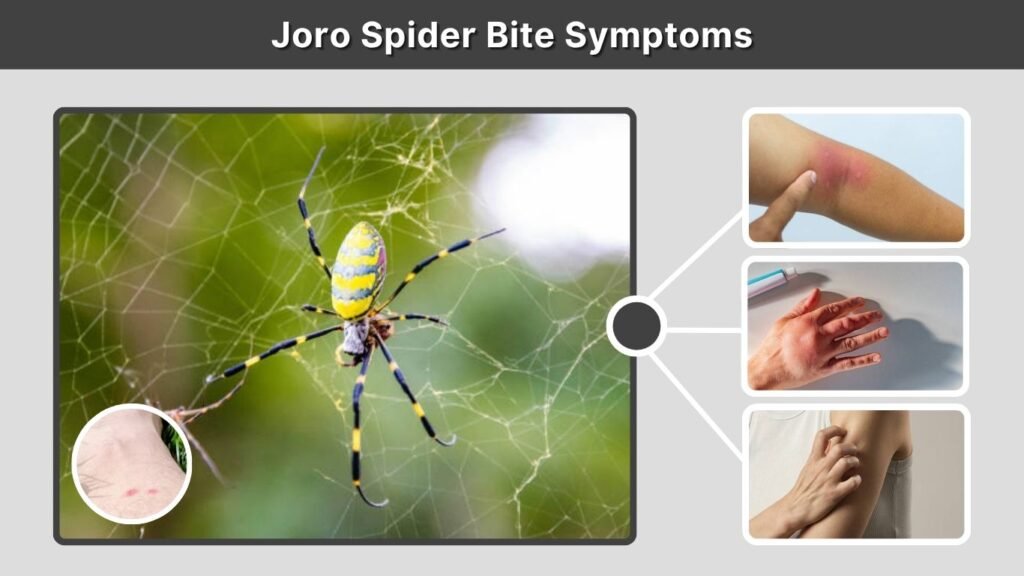
Most reactions are expected to remain localized around the bite site.
Common Mild Symptoms
Possible symptoms include:
- Brief stinging or pain
- A small red bump
- Mild swelling
- Itching
- Tenderness
- Temporary warmth around the bite
A typical mild reaction should begin improving within a day or two rather than becoming progressively worse. Clemson Extension describes the expected reaction as similar to a mosquito bite or bee sting.
Signs of Infection
Scratching can damage the skin and allow bacteria to enter. Contact a healthcare professional when the area develops:
- Increasing redness or swelling
- Worsening pain
- Significant warmth
- Pus or other drainage
- Red streaks extending from the bite
- Swollen lymph nodes
- Fever
- Symptoms that do not improve within 48 hours
These signs may indicate an infection or another skin condition rather than a direct effect of Joro spider venom.
Signs of a Serious Allergic Reaction
Any bite or sting can potentially trigger an allergic reaction in a sensitive person. Seek emergency medical help for:
- Difficulty breathing
- Swelling of the lips, tongue, face, or throat
- Widespread hives
- Severe dizziness
- Fainting
- Repeated vomiting
- Rapidly spreading swelling
These symptoms are not considered typical of a Joro spider bite, but they require immediate treatment regardless of the cause.
How Bad Is a Joro Spider Bite?
A Joro spider bite is not regarded as medically dangerous under ordinary circumstances. Its venom can subdue insects but is not known to cause serious envenomation in humans.
The spider’s intimidating appearance often creates more concern than its actual bite risk. University Extension sources describe Joro spiders as shy, skittish, and unlikely to bite unless physically restrained.
| Possible reaction | Expected response |
| Brief pain or stinging | Usually mild and temporary |
| Small red welt | May resemble a mosquito bite |
| Localized swelling | Often improves within one or two days |
| Mild itching | May respond to basic home care |
| Worsening pain, pus, or fever | Requires medical evaluation |
| Breathing trouble or facial swelling | Requires emergency care |
Joro Spider Bite Treatment
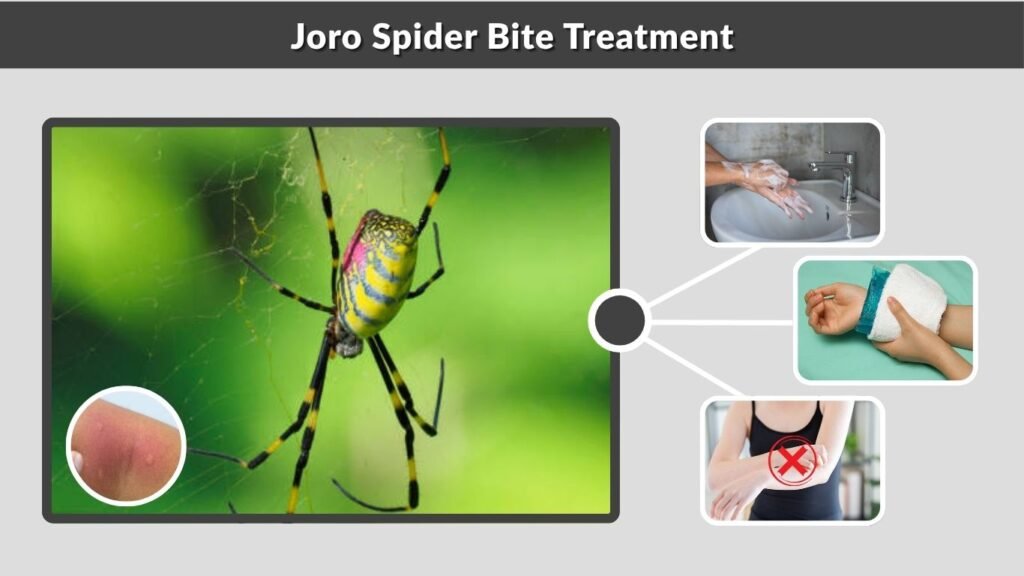
Most mild bites can be managed with basic first aid. The goals are to clean the skin, reduce swelling, and prevent infection.
Immediate First Aid
- Move away from the spider and web.
- Wash the affected area with soap and water.
- Apply a cold, damp cloth or wrapped ice pack for 10–20 minutes.
- Elevate the affected arm or leg when possible.
- Avoid scratching, squeezing, or picking at the bite.
- Monitor the area for increasing redness, pain, or swelling.
Do not cut the skin, attempt to suck out venom, or apply a tourniquet. These actions do not remove venom and can cause additional injury.
Managing Itching and Swelling
Calamine lotion or a low-strength hydrocortisone cream may help with itching when used according to the label. A nonprescription antihistamine may also be appropriate for some people.
Ask a doctor or pharmacist before using medication for a young child, during pregnancy, or when the person has allergies, chronic medical conditions, or takes other medicines.
When to See a Doctor
Seek medical advice when:
- Pain or swelling continues to worsen
- The bite is near an eye, inside the mouth, or on the throat
- Redness spreads beyond the original area
- Pus, fever, or red streaks appear
- Symptoms persist beyond a few days
- The affected person has a weakened immune system
- You are uncertain which spider caused the injury
When safe, take a clear photograph of the spider from a distance. Do not capture it by hand or risk another bite.
Can You Die From a Joro Spider Bite?
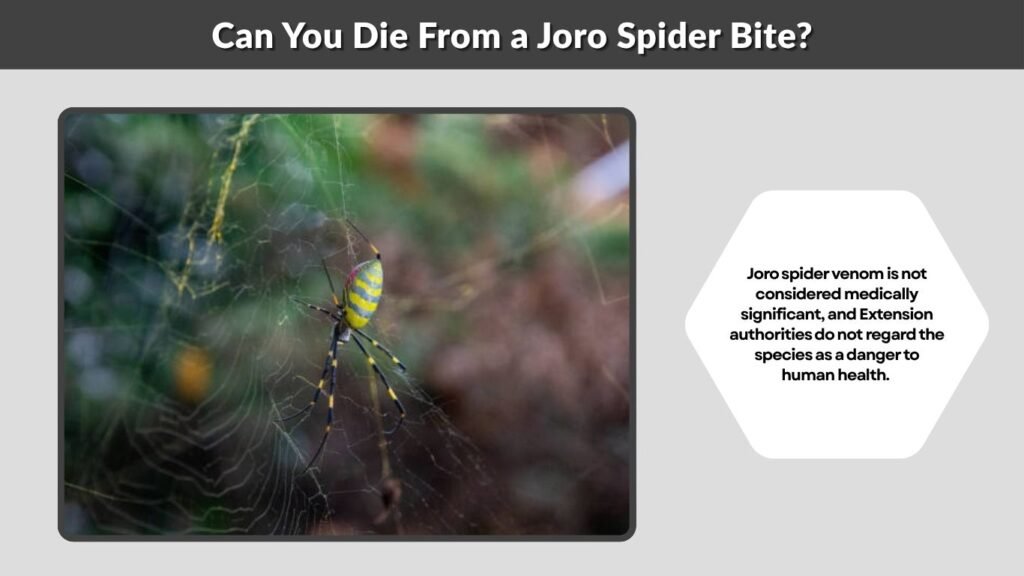
Joro spider venom is not considered medically significant, and Extension authorities do not regard the species as a danger to human health. A mild localized reaction is much more likely than severe poisoning.
Nevertheless, emergency care is necessary if any bite is followed by trouble breathing, facial swelling, fainting, confusion, or another severe whole-body reaction. These symptoms could indicate an allergy or a different medical problem.
Are “Flying” Joro Spiders More Dangerous?
Joro spiders cannot fly with wings. Young spiderlings can release silk strands that carry them on air currents, a dispersal behavior called ballooning.
Ballooning spiders are very small and do not intentionally fly toward or attack people. Adult females remain in large orb webs and are not carried through the air in the same manner.
Joro Spider Bites on Dogs
Joro spiders are not known to pose a significant threat to dogs or other pets. A curious dog could potentially be bitten after putting its nose or paw against a spider, but a serious reaction is not expected.
Contact a veterinarian when a dog develops:
- Significant facial or paw swelling
- Persistent licking or pain
- Vomiting
- Weakness
- Difficulty breathing
- Hives
- Collapse
- A worsening skin lesion
Do not give a dog human antihistamines, pain relievers, creams, or other medications unless a veterinarian provides the correct product and dose.
How to Avoid a Joro Spider Bite
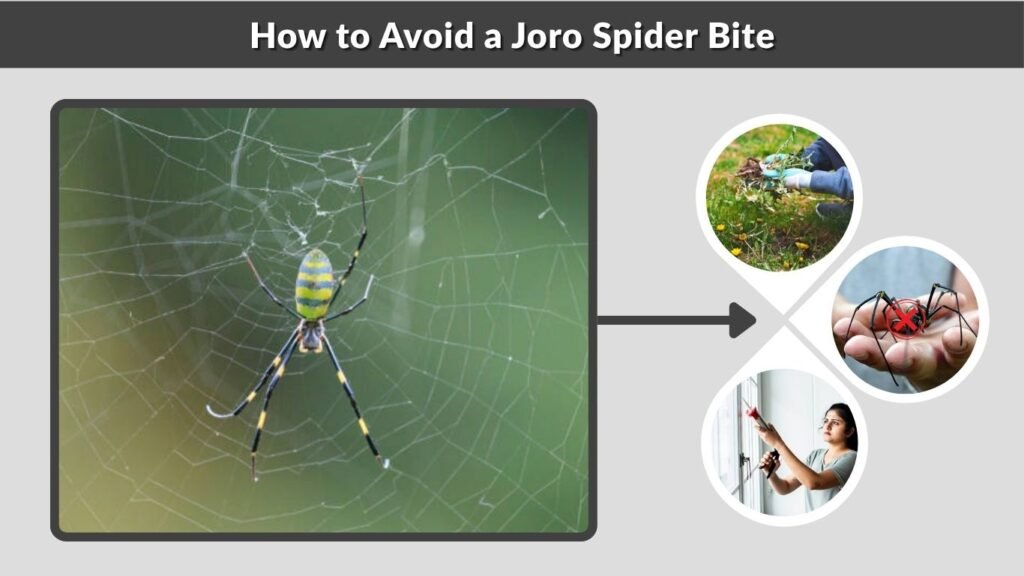
Joro spiders frequently build large webs between trees, shrubs, buildings, utility structures, and other sturdy supports. The central portion of the web may be around two feet wide, while supporting strands can extend several feet.
To reduce accidental encounters:
- Wear gloves when clearing vegetation.
- Look ahead when walking through wooded areas.
- Shake out outdoor clothing and equipment.
- Do not handle Joro spiders with bare hands.
- Use a broom or long tool to relocate an unwanted web.
- Keep children and pets from disturbing large spiders.
- Seal gaps around windows and doors.
Joro spiders catch many flying insects and generally do not need to be removed when their webs are away from walkways and entrances.
FAQs
Does a Joro spider bite hurt?
A bite may produce brief stinging, tenderness, or discomfort, but severe pain is not expected. The resulting mark may resemble a mosquito bite or mild bee sting and usually begins fading within a day or two.
Are Joro spiders poisonous or venomous?
Joro spiders are venomous because they inject venom into insect prey. They are not poisonous to touch, and their venom is not considered medically important to humans. Touching a web or accidentally brushing against a spider does not inject venom.
What happens when a Joro spider bites you?
You may develop a small red welt, localized swelling, itching, or temporary pain. Wash the skin, apply a cold compress, and observe the area. Seek medical care if symptoms spread, worsen, become infected, or affect breathing.
How long does a Joro spider bite last?
A mild reaction may fade within one or two days. Persistent or worsening redness, pain, warmth, drainage, or swelling is not typical and should be evaluated, especially when symptoms fail to improve within 48 hours.
Will a Joro spider chase or attack a person?
No. Joro spiders do not chase people. They are generally docile and more likely to freeze, retreat, drop from the web, or attempt to escape when disturbed. Bites are mainly associated with squeezing or physically restraining the spider.
