
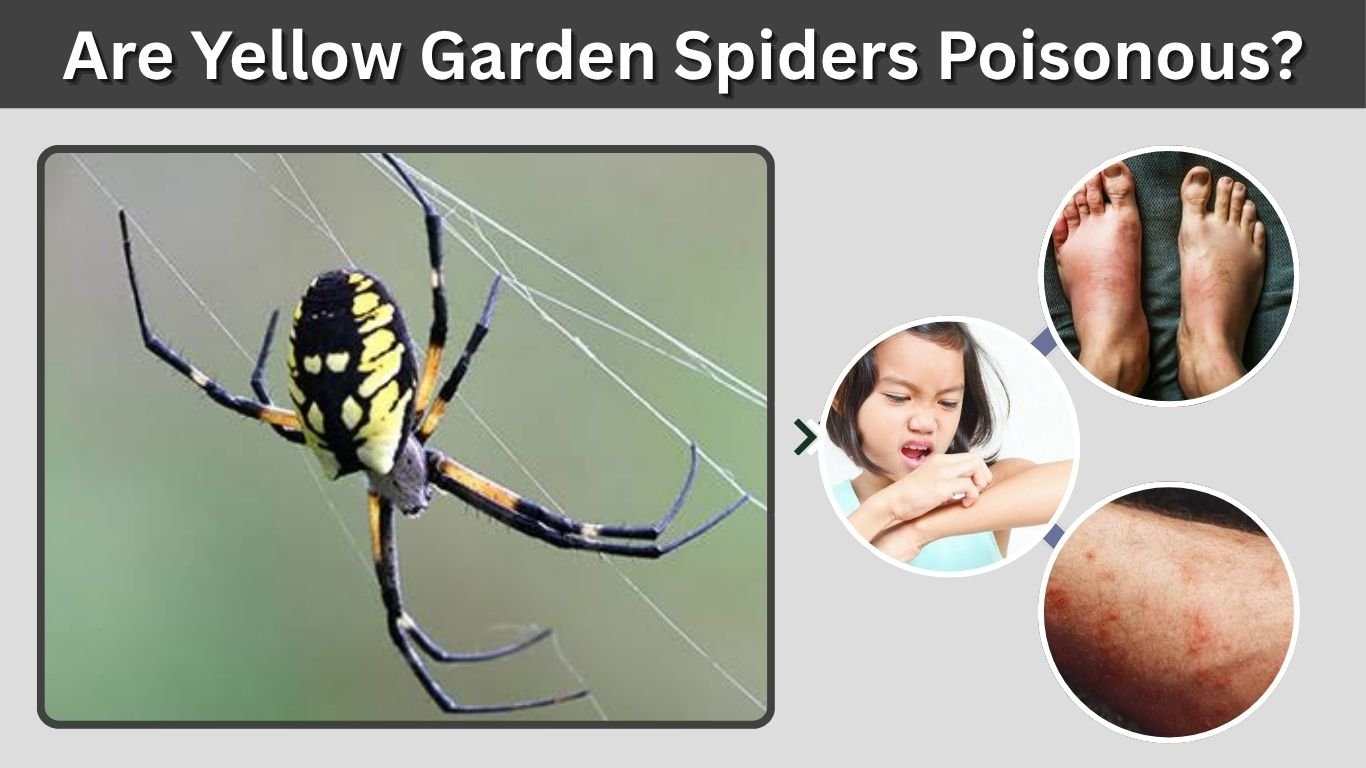
Yellow garden spiders are large orb-weavers recognized by their striking black-and-yellow bodies and zigzag-decorated webs. Their appearance can be alarming, especially when a full-grown female builds a web near a porch, garden path, or children’s play area. However, yellow garden spiders are not considered dangerous to people. They possess venom for capturing insects, but they rarely bite, and their venom is not medically significant for most humans.
Are Yellow Garden Spiders Poisonous?
Yellow garden spiders are venomous rather than poisonous. The two words describe different ways a toxin enters the body:
- Venomous: The animal injects a toxin through a bite or sting.
- Poisonous: The animal causes harm when touched, eaten, or absorbed.
The yellow garden spider, Argiope aurantia, injects venom through its fangs to immobilize insects caught in its web. That venom helps liquefy the prey’s internal tissues so the spider can feed. It is effective against insects but is not considered a serious threat to humans.
Simply touching the web, walking near the spider, or brushing against nearby vegetation will not poison you. A bite is possible, but the spider normally attempts to escape instead of defending its web aggressively.
Are Black and Yellow Garden Spiders Dangerous?
Black and yellow garden spiders are generally harmless to people. They are shy, non-aggressive orb-weavers that usually flee, drop from the web, or hide in nearby vegetation when disturbed. A person would normally need to grab, squeeze, or trap the spider against the skin before it would bite.
The large females look particularly intimidating because their bodies can approach an inch in length, excluding the legs. Males are much smaller and less noticeable. Large size does not mean the spider has dangerously powerful venom.
| Question | Answer |
| Is it poisonous to touch? | No |
| Does it have venom? | Yes |
| Is its venom medically significant? | Generally no |
| Does it commonly bite people? | No |
| Is a bite usually serious? | No |
| Should it be removed from gardens? | Usually not |
What Happens If a Yellow Garden Spider Bites You?
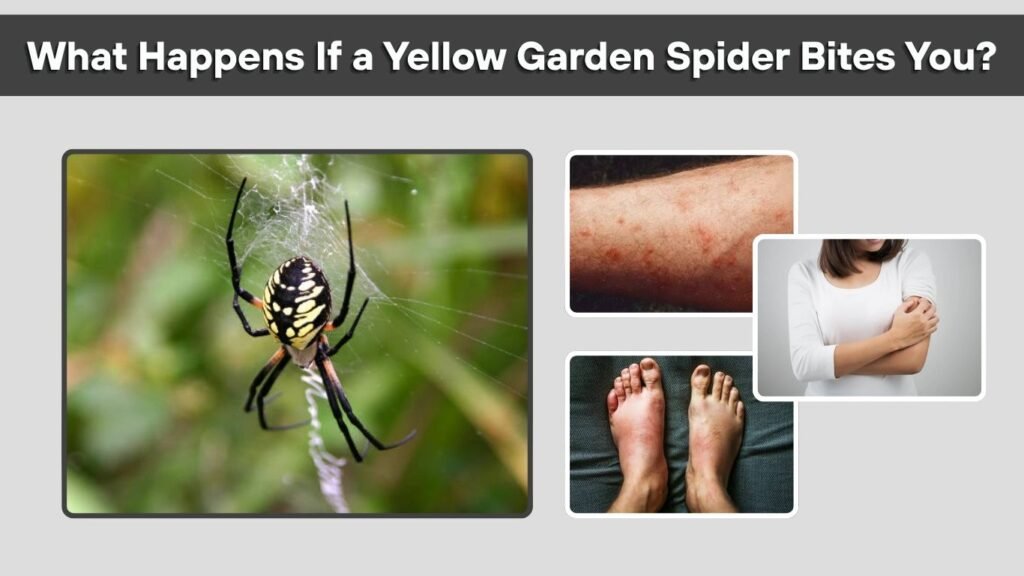
A verified yellow garden spider bite is uncommon. When one occurs, it is generally expected to cause a localized reaction rather than widespread illness. Penn State Extension reports that a bite would likely produce no more discomfort than a bee or wasp sting for most people.
Possible symptoms may include:
- Immediate mild or moderate pain
- Redness around the bite
- Minor swelling
- Itching or irritation
- Tenderness at the bite site
- Two small puncture marks
The symptoms should remain near the bite area and gradually improve. Individual reactions vary, however, and any break in the skin can become infected if it is repeatedly scratched or not kept clean.
Many unexplained red bumps are incorrectly blamed on spiders. Bacterial skin infections, insect bites, allergic reactions, and irritation from plants can resemble a spider bite. Unless the spider was seen biting and then identified, it can be difficult to confirm the cause.
Yellow Garden Spider Bite Treatment
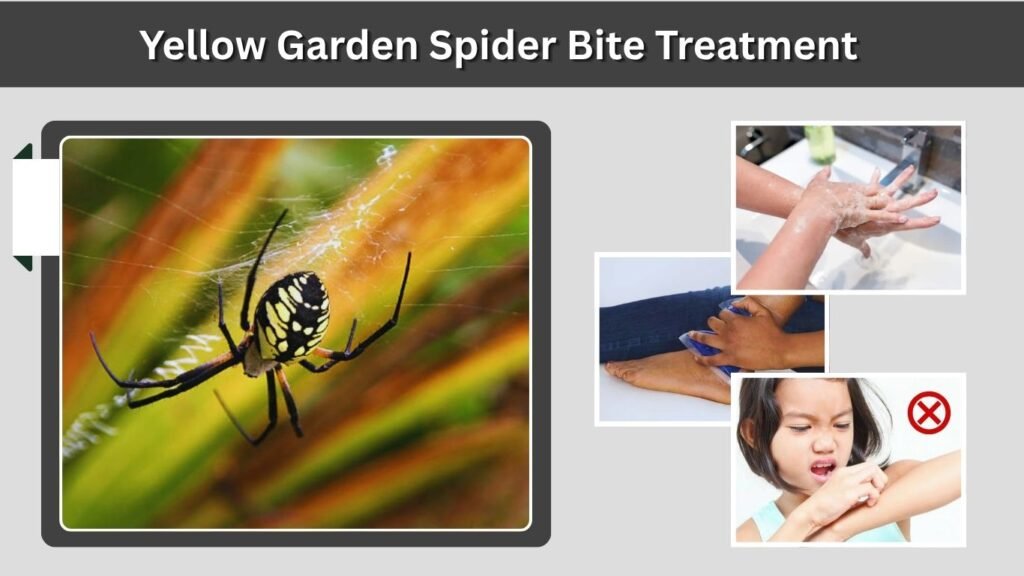
Most mild reactions can be managed with basic first aid. Wash the area with soap and water, then place a cold cloth or wrapped ice pack over it for approximately 10–20 minutes. The cold can help reduce pain and swelling.
After a suspected bite:
- Move away from the spider without trying to handle it.
- Wash the skin thoroughly with soap and water.
- Apply a wrapped cold pack.
- Avoid scratching the affected area.
- Monitor the bite for worsening pain, swelling, or infection.
- Photograph the spider from a safe distance when identification is necessary.
Do not cut the bite, attempt to suck out venom, or place ice directly against bare skin. Contact a healthcare professional before using medication when the person is pregnant, very young, has an existing medical condition, or takes other medicines.
When to Seek Medical Help
Seek prompt medical advice when redness or swelling continues spreading, the pain becomes severe, the wound produces pus, or symptoms do not begin improving. Poison Control also recommends seeking help when local symptoms worsen significantly or when symptoms affect areas beyond the bite site.
Emergency treatment is appropriate if the person develops:
- Difficulty breathing
- Swelling of the face, tongue, or throat
- Dizziness or fainting
- Widespread hives
- Severe weakness
- Repeated vomiting
- Rapidly worsening symptoms
These reactions would be unusual following a yellow garden spider bite, but severe allergic reactions can occur after many types of bites and stings.
Are Yellow Garden Spiders Poisonous to Dogs?
Yellow garden spiders are not poisonous to dogs simply because a pet walks near one, touches its web, or sniffs the surrounding plants. A bite could occur if a dog traps the spider in its mouth or presses it against the skin.
A dog may experience localized discomfort, redness, or swelling around a bite. Because dogs vary greatly in size and sensitivity, watch the pet carefully and contact a veterinarian if it develops facial swelling, breathing difficulty, weakness, repeated vomiting, severe pain, or unusual behavior.
Do not give a dog human painkillers or antihistamines unless a veterinarian provides the correct medication and dosage.
Are Yellow Garden Spiders Poisonous to Cats?
Yellow garden spiders are not considered poisonous to cats through normal contact. Most cats can approach or disturb a web without being harmed, although a spider may bite when trapped against the mouth, paw, or face.
Monitor a cat after suspected contact, particularly if it begins pawing at its mouth, drooling, limping, hiding, or showing visible swelling. Serious effects are not expected, but veterinary care is appropriate when symptoms are strong or continue worsening.
How to Identify a Yellow Garden Spider
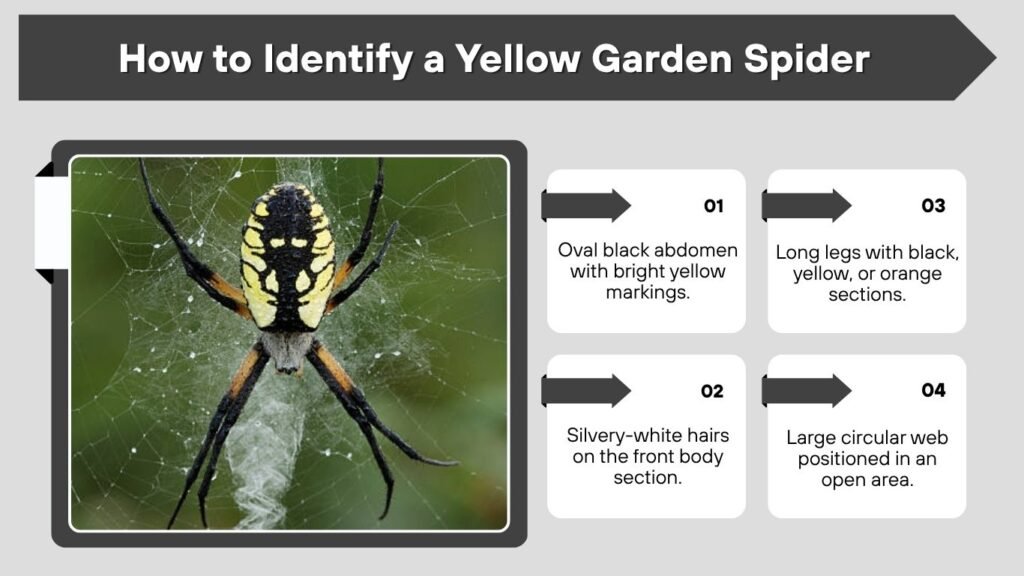
The yellow garden spider is also called the black-and-yellow garden spider, writing spider, zipper spider, corn spider, and yellow garden orb-weaver. Its scientific name is Argiope aurantia.
Identification
- Oval black abdomen with bright yellow markings
- Silvery-white hairs on the front body section
- Long legs with black, yellow, or orange sections
- Large circular web positioned in an open area
- Thick white zigzag pattern through the web
- Female usually rests head-down at the center
- Mature female much larger than the male
The thick zigzag silk is known as a stabilimentum. Researchers have proposed that it may attract insects, make the spider appear larger to predators, or help prevent birds and other animals from accidentally destroying the web.
Why Do Yellow Garden Spiders Have Venom?
The spider depends on venom to subdue grasshoppers, crickets, flies, moths, beetles, and other insects that become trapped in its web. After sensing vibrations, it approaches the prey, wraps it in silk, and bites it.
This makes yellow garden spiders beneficial predators. They help control insects without damaging flowers, vegetables, shrubs, or other garden plants. Their presence generally indicates that the area provides enough vegetation and insect activity to support a healthy web-building predator.
Should You Remove a Yellow Garden Spider?
A yellow garden spider normally does not need to be killed or removed. It does not seek people, invade food, damage buildings, or attack garden plants. It usually remains in or near its web while insects are available.
Leave the spider alone when its web is located among flowers, shrubs, or vegetables. Temporary signs or barriers can prevent people from accidentally walking through a large web.
Relocation may be reasonable when the web blocks:
- A frequently used doorway
- A narrow walkway
- Children’s play equipment
- A pet enclosure
- An area that must be maintained regularly
Rather than handling the spider, gently disturb or remove the web with a long object while the spider has moved away. It may rebuild in a quieter location.
Yellow Garden Spider vs Dangerous Spiders
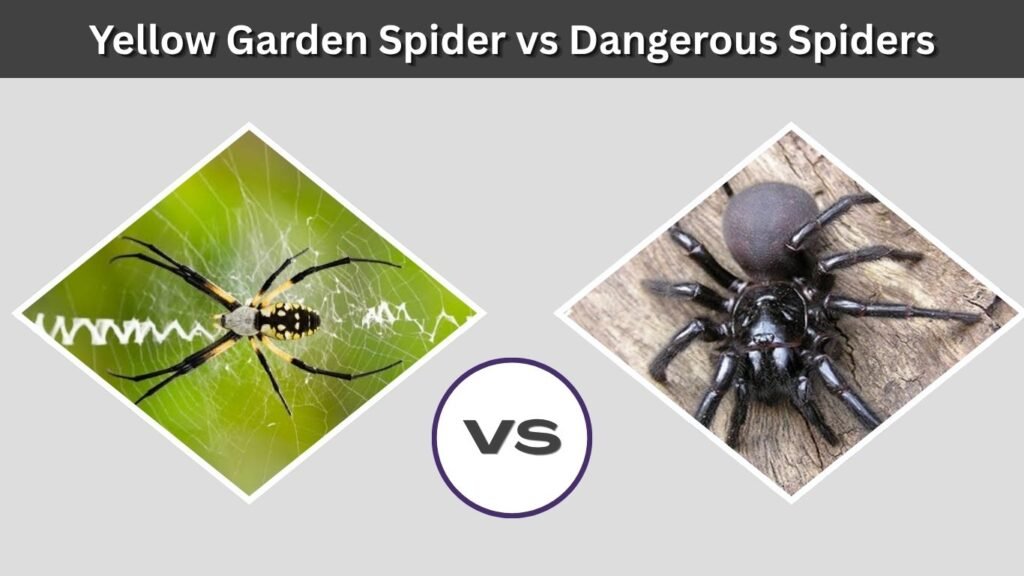
Yellow garden spiders are sometimes feared because their coloring resembles warning coloration. However, they differ clearly from medically important widow spiders.
| Feature | Yellow Garden Spider | Black Widow |
| Web | Large, organized orb web | Irregular, tangled web |
| Main colors | Yellow and black | Shiny black |
| Common marking | Yellow abdominal pattern | Red hourglass underneath |
| Typical location | Open gardens and fields | Sheltered, dark locations |
| Behavior | Visible at web center | Usually hidden |
| Medical concern | Low | Venom can be medically significant |
Never rely on color alone when identifying a spider. Web structure, body shape, markings, location, and behavior should all be considered.
FAQs
Can a yellow garden spider kill a human?
A yellow garden spider is not expected to kill a healthy person. Its venom is designed for insect prey and is not considered medically significant to humans. Bites are uncommon because the spider normally escapes rather than attacks.
Does a yellow garden spider chase people?
No. It is a web-building spider rather than an active hunter of humans. When frightened, it may shake the web, drop to the ground, or retreat into vegetation.
Can you touch a yellow garden spider?
Touching or handling one is not recommended. Although it is not aggressive, trapping it against the skin can provoke a defensive bite. Observe it without placing your hands near its body or egg sac.
Are baby yellow garden spiders poisonous?
Young yellow garden spiders possess venom for capturing tiny prey, but they are not considered dangerous to people. Their small size and fangs make a meaningful bite even less likely than a bite from an adult female.
Are yellow garden spiders beneficial?
Yes. They capture grasshoppers, crickets, flies, beetles, moths, and other insects. They neither eat nor injure garden plants, so leaving them undisturbed can provide natural pest control.
