
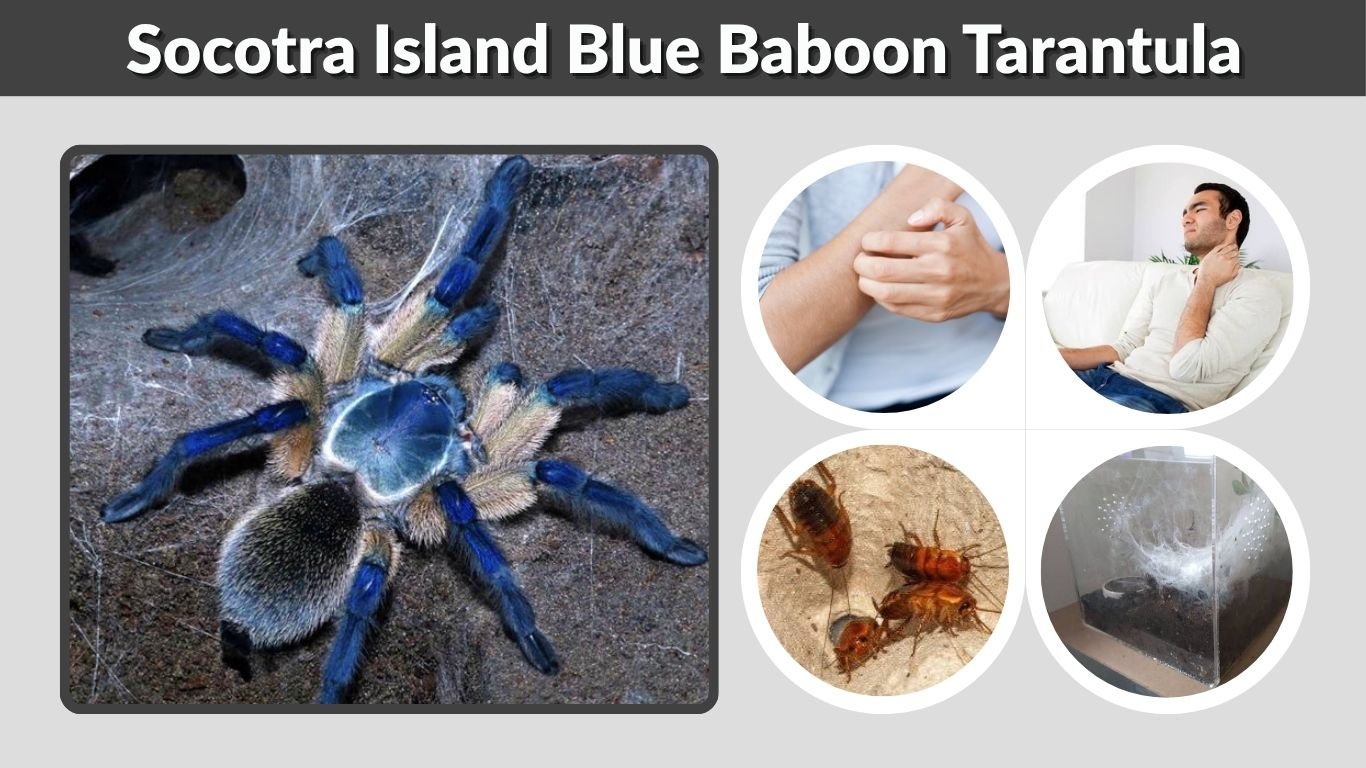
The Socotra Island Blue Baboon Tarantula (Monocentropus balfouri) is a striking Old World tarantula known for its metallic-blue legs, pale carapace, heavy webbing, and burrowing behavior. Native only to Yemen’s Socotra Island, it has become popular among experienced keepers because several individuals may sometimes tolerate communal housing. However, this fast, venomous species should never be handled. It requires a secure enclosure, deep substrate, excellent ventilation, and careful maintenance.
Socotra Island Blue Baboon Overview
The World Spider Catalog recognizes Monocentropus balfouri as an accepted species in the tarantula family Theraphosidae. Its recorded natural distribution is limited to Socotra, Yemen.
| Feature | Details |
| Scientific name | Monocentropus balfouri |
| Common name | Socotra Island Blue Baboon |
| Family | Theraphosidae |
| Native range | Socotra Island, Yemen |
| Adult leg span | Approximately 5–6 inches |
| Lifestyle | Terrestrial and fossorial |
| Temperament | Fast and defensive |
| Diet | Live invertebrates |
| Female lifespan | Commonly estimated at 12–15 years |
| Male lifespan | Commonly estimated at 3–5 years |
| Care level | Intermediate to advanced |
Socotra Island Blue Baboon Appearance and Identification
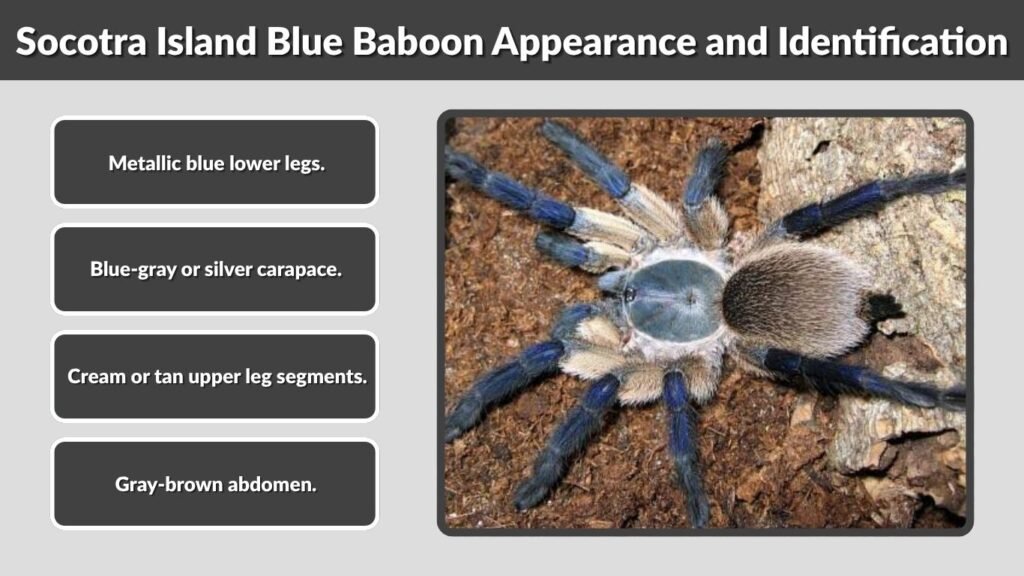
The Socotra Island Blue Baboon is one of the most distinctive African tarantulas. Adults display a combination of cool metallic colors and sandy neutral tones.
Identification Features
- Metallic blue lower legs
- Blue-gray or silver carapace
- Cream or tan upper leg segments
- Gray-brown abdomen
- Thick, heavily built body
- Dense covering of short hairs
- Large, downward-pointing fangs
- Extensive silk webbing around the burrow
Adults generally reach a diagonal leg span of around 5–6 inches. Spiderlings do not immediately display the intense blue coloration of mature specimens; the contrast normally becomes more noticeable as they grow and molt.
Is Its Blue Color Natural?
Yes. The blue coloration is natural and is produced by the microscopic structure of the spider’s hairs rather than by artificial dye. Lighting and viewing angle can influence how intense the blue appears.
Labels such as “high blue” or “metallic blue” are sometimes used by breeders for specimens with particularly vivid coloration. These are usually trade descriptions rather than separate scientifically recognized species.
Natural Habitat and Behavior
Monocentropus balfouri comes from Socotra Island, an isolated region with dry, rocky landscapes. In captivity, it behaves as a terrestrial burrower that constructs retreats beneath cork bark, rocks, or compact substrate.
The spider frequently covers its enclosure with dense layers of silk. It may connect its burrow, feeding area, hide, and nearby decorations with web tunnels. Once established, an individual may spend long periods out of sight.
Remaining hidden for days or weeks is usually normal. Digging into the enclosure to locate the tarantula can damage its burrow and expose the keeper to an unnecessary bite risk.
Socotra Island Blue Baboon Enclosure
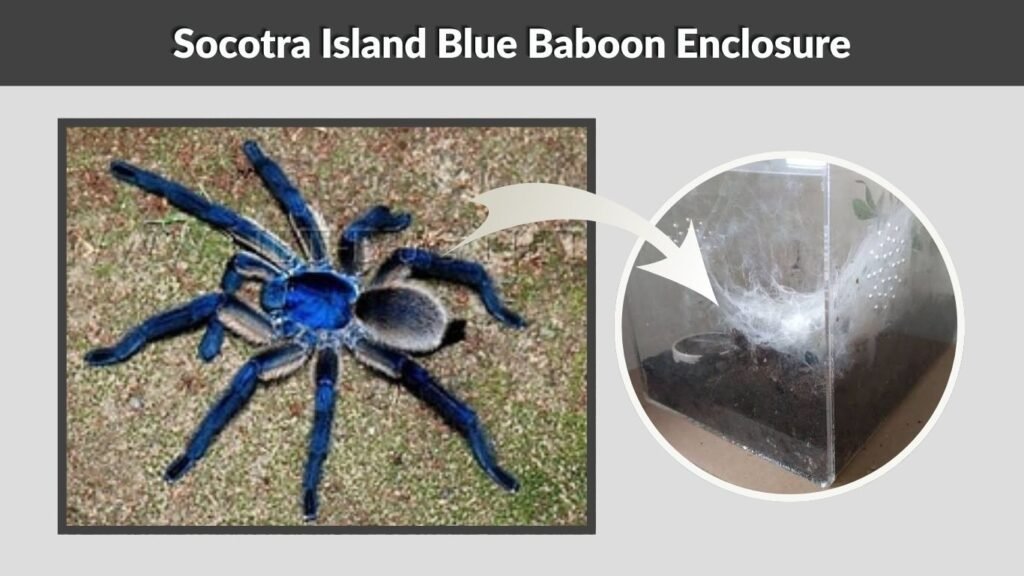
A secure terrestrial enclosure with a deep substrate is more important than a tall enclosure. This species needs space to burrow and create web tunnels but should not have enough open height to suffer a dangerous fall.
Recommended Setup
An adult can be housed in a well-ventilated enclosure measuring roughly three to four times its leg span across. Provide approximately 4–6 inches of compactable substrate, a cork-bark hide, webbing anchors, and a shallow water dish.
Suitable enclosure features include:
- A tightly closing, escape-resistant lid
- Cross-ventilation
- Deep substrate
- A partially buried cork-bark hide
- Artificial plants or branches for web anchors
- A clean water dish
- Limited open climbing height
Avoid sharp stones, unstable decorations, and wire-mesh lids that could catch the spider’s claws.
Substrate
A mixture of pesticide-free topsoil, coconut fiber, and a small amount of sand can hold burrows better than loose coconut fiber alone. Press the substrate down gently so the tarantula can construct stable tunnels.
The lower layers may remain slightly moist, but the surface should generally be allowed to dry. A permanently wet substrate can promote mold, mites, and unhealthy conditions.
Temperature and Moisture
Care recommendations vary among experienced keepers, but ordinary warm room temperatures are generally suitable. Published husbandry guides commonly recommend approximately 70–82°F, with good ventilation and moderate rather than swampy moisture.
Keep a water dish available at all times. Instead of soaking the whole enclosure, occasionally overflow the dish or moisten one corner. This creates a moisture gradient and allows the spider to select its preferred conditions.
Socotra Island Blue Baboon Feeding
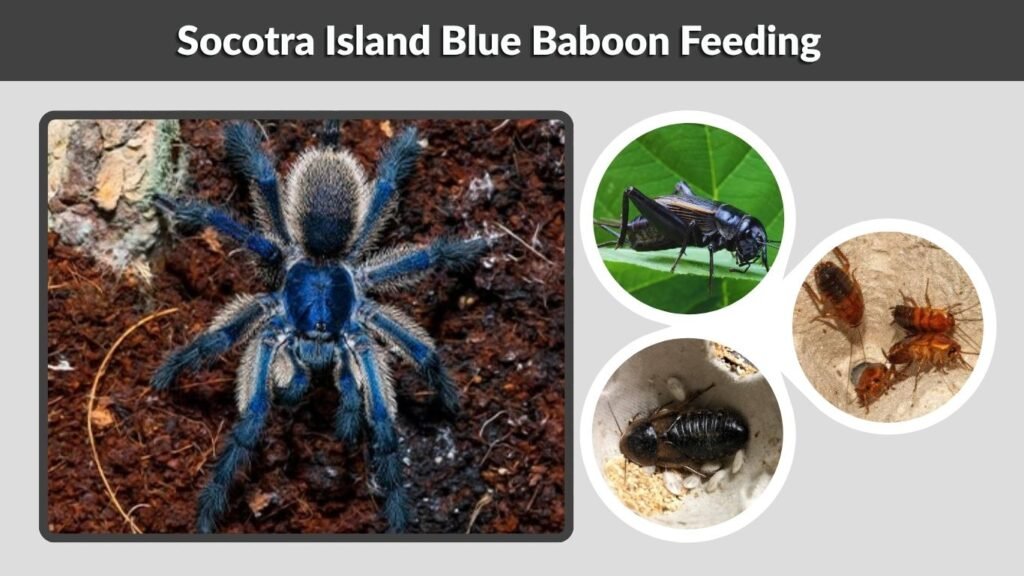
Socotra Island Blue Baboon Tarantulas eat live invertebrates. Their strong feeding response can make them exciting to observe, although prey should be introduced without placing hands inside the enclosure.
Suitable foods include:
- Crickets
- Dubia roaches
- Red runner roaches
- Locusts
- Mealworms
- Superworms
Spiderlings may be fed small prey approximately twice a week. Juveniles can usually eat every five to ten days, while adults often need one appropriately sized meal every seven to fourteen days. Adjust the schedule according to abdomen size and feeding response.
Remove uneaten insects within about 24 hours. This is especially important when the spider is preparing to molt because crickets may attack a soft, vulnerable tarantula.
Mice and other vertebrates are unnecessary. Appropriately sized invertebrates provide a safer and cleaner diet.
Socotra Island Blue Baboon Molting and Refusing Food
A tarantula may stop eating before a molt. It may become less active, remain deep inside its retreat, or seal the burrow entrance with silk and substrate.
Common premolt signs include:
- Refusing prey
- Increased hiding
- Reduced movement
- Heavy webbing
- Closing the burrow
- Darkening of the abdomen
Do not disturb or uncover a hidden spider. Maintain its water supply and remove live feeders. Following a molt, wait until the fangs have hardened and turned completely dark before offering food.
Temperament and Handling
This species is often described as calmer than some other Old World tarantulas, but it remains fast and defensive. A threatened individual may retreat, raise its front legs, strike, or bite.
It lacks the defensive urticating hairs associated with many New World tarantulas. Its principal defenses are speed, threat postures, fangs, and venom.
Handling is never recommended. Maintenance should be performed with long tools, secure catch cups, and a clear plan for preventing escape. The enclosure should be placed somewhere children and pets cannot reach.
Socotra Island Blue Baboon Bite and Venom
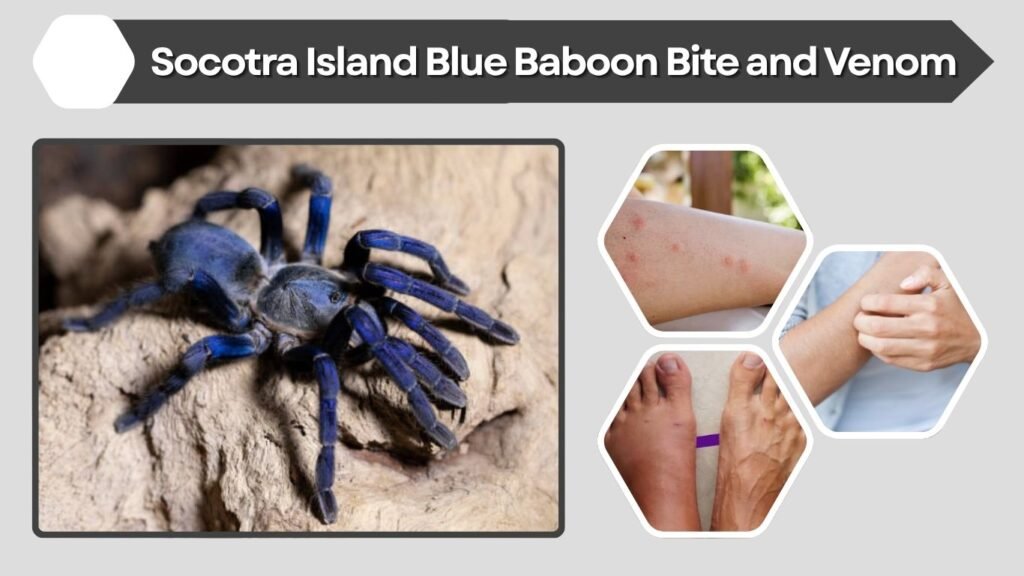
The Socotra Island Blue Baboon is venomous. A published medical case documented a bite that caused tingling around the mouth, generalized muscle cramps, and rhabdomyolysis, a potentially serious breakdown of muscle tissue.
A bite should therefore not be dismissed as harmless. Wash the wound gently, remain calm, and seek prompt medical assessment. Inform the medical team of the exact scientific name and bring a photograph of the spider rather than attempting to transport the animal.
Breathing difficulty, severe pain, muscle spasms, weakness, dark urine, facial swelling, or worsening symptoms require urgent emergency care.
Can Socotra Blue Baboons Live Communally?
This tarantula is famous in the hobby for showing greater tolerance of group living than most tarantula species. Related spiderlings raised together are sometimes kept in communal enclosures where they share web systems and burrows.
However, communal housing is not guaranteed to be peaceful. Competition, stress, molting vulnerability, limited food, and size differences can still lead to injury or cannibalism. Captive-care sources recommend abundant food, multiple retreats, adequate space, and close monitoring.
A communal arrangement also makes maintenance and rehousing considerably more dangerous. New keepers should begin with one specimen rather than attempting a group.
Socotra Island Blue Baboon Lifespan and Growth
This is generally considered a slow- to medium-growing tarantula. Growth rate depends on temperature, feeding, genetics, and sex.
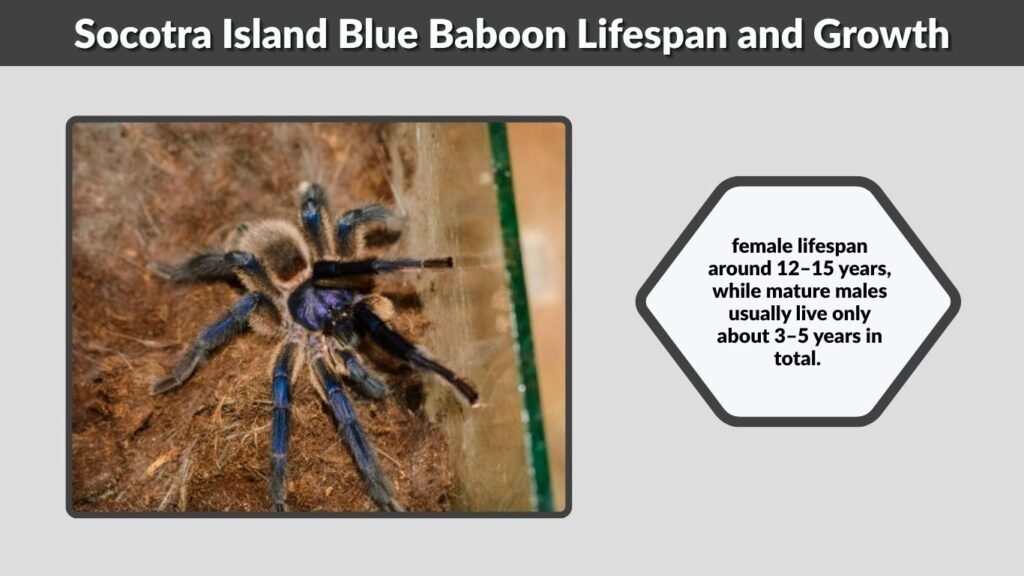
Captive-care estimates commonly place female lifespan around 12–15 years, while mature males usually live only about 3–5 years in total. These figures are husbandry estimates rather than precisely documented limits for every individual.
Mature males become slimmer and develop reproductive structures on their pedipalps. Females remain heavier and generally live much longer. Examining a properly preserved molt is the safest method of determining sex.
Buying a Socotra Island Blue Baboon
Specimens may be sold as spiderlings, juveniles, unsexed individuals, confirmed females, or established communal groups. Price varies according to size, sex, color, availability, and location.
Before purchasing, confirm:
- The scientific name is Monocentropus balfouri
- The specimen is captive-bred
- The seller has a good reputation
- The spider appears well hydrated
- Its abdomen is not shriveled or injured
- The permanent enclosure is ready
- Ownership is legal in your location
A confirmed female typically costs more than an unsexed spiderling because she has a much longer expected lifespan.
FAQs
Is the Socotra Island Blue Baboon suitable for beginners?
No. Its speed, venom, defensive behavior, and escape potential make it better suited to intermediate or advanced keepers. Beginners should gain experience with slower, less defensive species before keeping one.
How big does it get?
A full-grown specimen normally reaches approximately 5–6 inches across the legs. Females usually develop heavier bodies, while mature males become slimmer and more active.
Does it need high humidity?
No. It needs access to moisture but should not be kept in constantly saturated substrate. Provide a water dish, good ventilation, mostly dry surface conditions, and a slightly moist lower layer or corner.
Can it be handled?
Handling is strongly discouraged. Even a seemingly calm individual can suddenly run or bite. Observe it through the enclosure and use long tools for feeding and maintenance.
Why is my tarantula always hiding?
It is a natural burrower. Spending long periods underground is normal, particularly during premolt, after rehousing, or while establishing a webbed retreat. Do not dig it out unless there is an immediate emergency.
