
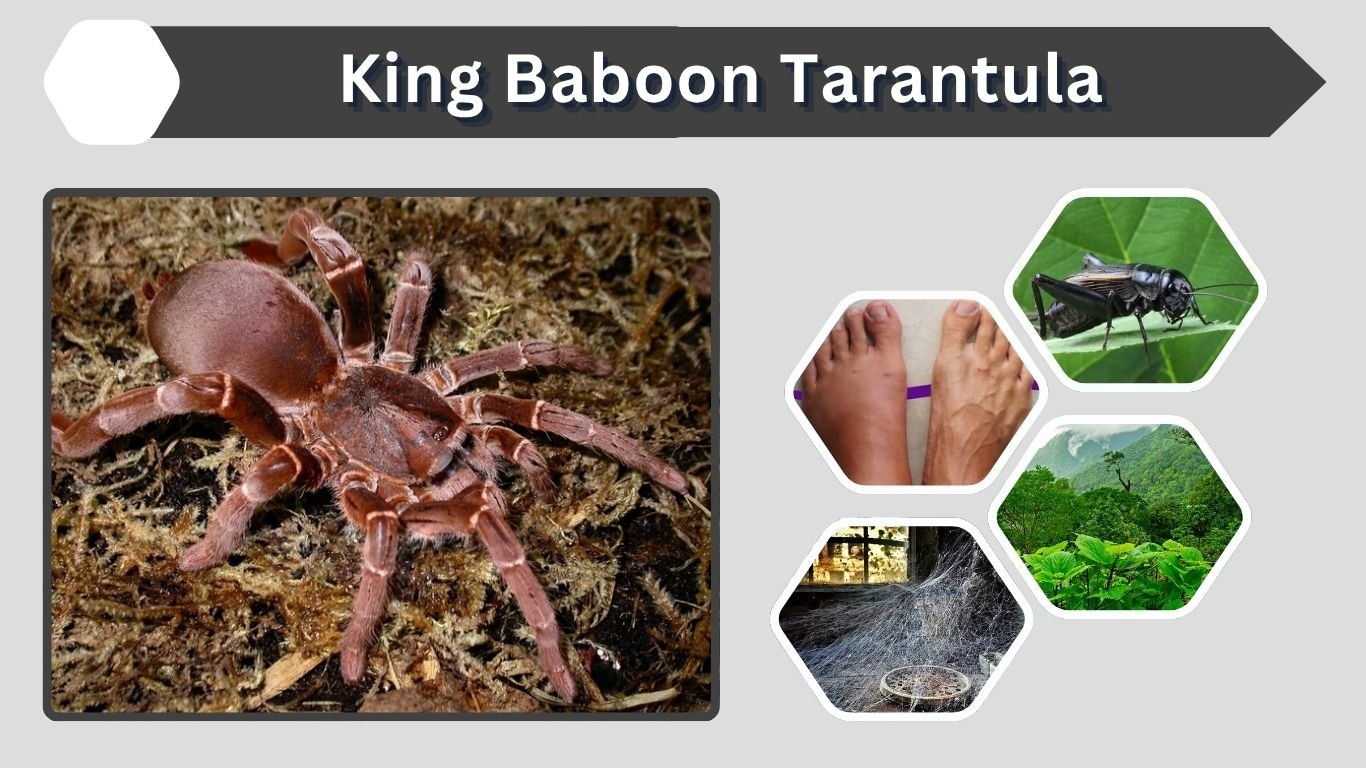
The King Baboon Tarantula (Pelinobius muticus) is a large, heavy-bodied burrowing spider from East Africa. Its rusty orange coloration, thick rear legs, deep tunnel systems, and audible defensive hissing make it one of the most impressive tarantulas in captivity. However, it is fast, highly defensive, and capable of delivering a painful bite. Although its basic environmental needs are manageable, the King Baboon is best suited to experienced keepers who understand Old World tarantula behavior.
King Baboon Tarantula Overview
The accepted scientific name is Pelinobius muticus. The older name Citharischius crawshayi may still appear in books and older pet-trade listings. Its recognized natural distribution includes Kenya and Tanzania.
| Feature | Details |
| Scientific name | Pelinobius muticus |
| Common name | King Baboon Tarantula |
| Family | Theraphosidae |
| Native range | Kenya and Tanzania |
| Lifestyle | Fossorial or burrowing |
| Adult leg span | Approximately 7–9 inches |
| Color | Rusty brown, copper, or orange-brown |
| Temperament | Highly defensive |
| Diet | Insects and other small prey |
| Female lifespan | Approximately 15–25 years or longer |
| Male lifespan | Usually much shorter |
| Care level | Advanced |
King Baboon Tarantula Appearance and Identification
A full-grown King Baboon Tarantula has a powerful body, thick legs, and dense orange-brown hairs. Its rear legs are especially robust because they are adapted for digging and moving soil.
Identification Features
- Rusty orange or reddish-brown coloration
- Heavy, muscular body
- Thick rear legs designed for digging
- Dense covering of short hairs
- Large downward-pointing fangs
- Broad carapace and abdomen
- Extensive webbing around its burrow
- Adult leg span approaching 7–9 inches
Unlike many tarantulas from the Americas, this African species does not possess the familiar defensive urticating abdominal hairs. It relies more heavily on warning displays, stridulation, speed, and biting when threatened. Urticating hairs are primarily associated with New World tarantulas.
Is There a Blue King Baboon Tarantula?
A genuine Pelinobius muticus is normally rusty brown, copper, or orange-brown—not bright blue. “Blue King Baboon” may be an informal or inaccurate trade name applied to another African or Asian tarantula.
Lighting can give a dark King Baboon a slight bluish or purplish reflection, but a strongly blue spider should have its scientific name checked before purchase.
King Baboon Tarantula Size
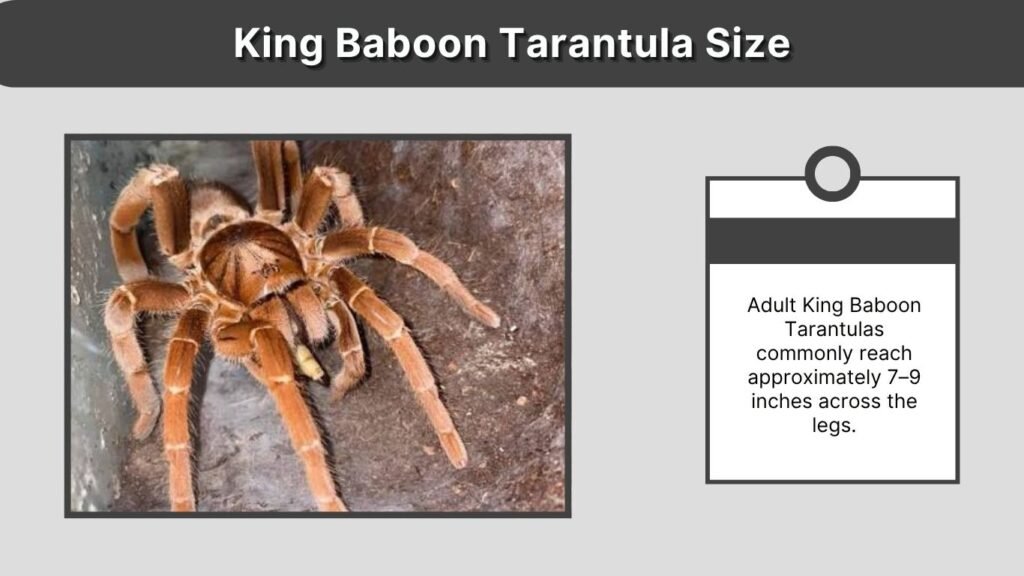
Adult King Baboon Tarantulas commonly reach approximately 7–9 inches across the legs. Their thick bodies can make them appear heavier and more substantial than other tarantulas with similar leg spans. Males may mature at smaller sizes than females.
Growth is relatively slow. A spiderling may require several years to approach maturity, depending on temperature, feeding, genetics, and sex. Feeding heavily does not guarantee healthy rapid growth and can make the abdomen dangerously oversized.
King Baboon Tarantula Natural Habitat and Behavior
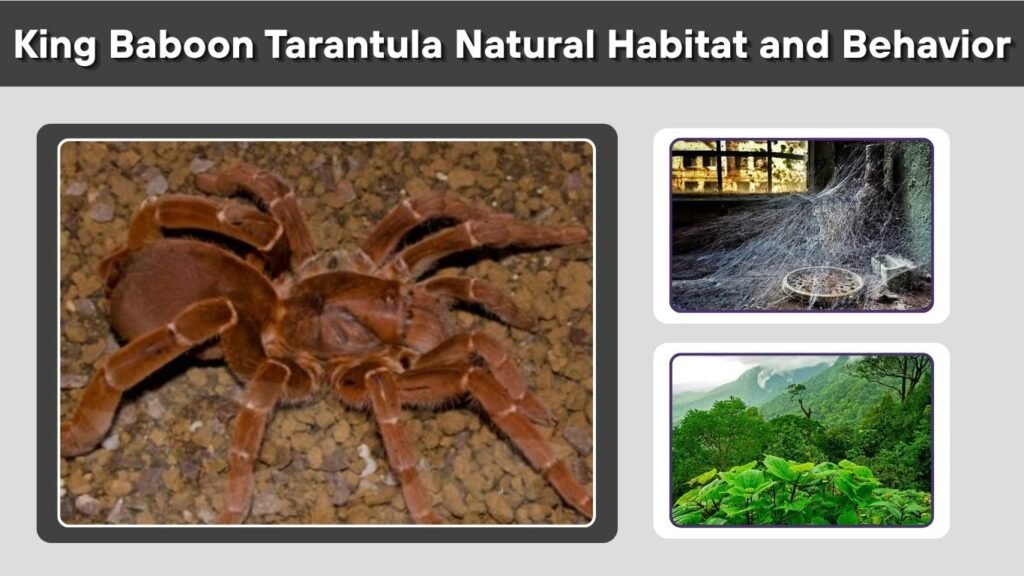
The King Baboon is a deep-burrowing tarantula associated with East African savanna and dry scrub environments. It constructs a silk-lined tunnel where it spends most of its life, emerging mainly to feed, maintain the entrance, or search for a mate.
Its burrow provides:
- Protection from predators
- Stable humidity
- Cooler daytime temperatures
- A secure molting chamber
- A hidden place for ambushing prey
Captive spiders may remain underground for weeks. This is normal behavior and does not necessarily indicate illness.
Temperament and Hissing
King Baboon Tarantulas are famous for their defensive behavior. When disturbed, an individual may raise its front legs, expose its fangs, strike, or retreat rapidly into its burrow.
The “hissing” is a form of stridulation. The spider rubs specialized body structures together to produce an audible rasping or warning sound. The noise is intended to discourage a perceived predator rather than communicate friendliness.
A hissing spider should be left alone. Repeatedly provoking defensive displays causes unnecessary stress and increases the risk of escape or a bite.
King Baboon Tarantula Enclosure
The enclosure should be designed around burrowing rather than visibility. Owners may see only the burrow entrance and occasional feeding activity once the spider becomes established.
Enclosure Setup
An adult needs a secure, well-ventilated terrestrial enclosure with substantially more substrate depth than climbing height. Around 10–14 inches of compactable substrate allows a large specimen to build a stable tunnel. A piece of cork bark partly buried in the soil can serve as a starter burrow.
Include:
- Deep, compactable substrate
- A secure, locking lid
- Cross-ventilation
- A cork-bark starter hide
- A clean water dish
- Adequate floor space
- Minimal unnecessary decorations
Excessive open height should be avoided. A heavy terrestrial tarantula can suffer a fatal abdominal rupture after falling onto a hard object.
Substrate and Moisture
A mixture of pesticide-free topsoil, coconut fiber, and clay-containing material can support stable tunnels. Loose coconut fiber alone may collapse too easily when used in a deep enclosure.
Keep the lower substrate slightly moist while allowing the surface to remain mostly dry. Constantly swampy conditions encourage mold and poor ventilation, while completely dry conditions may cause dehydration or molting problems.
A practical temperature range is approximately 75–82°F. Moderate room temperatures are generally safer than intense direct heating. Heat lamps and heat rocks can dry the enclosure or overheat the spider. Husbandry guides commonly recommend stable warmth, good ventilation, and a permanently available water dish rather than chasing an exact humidity number.
King Baboon Tarantula Diet and Feeding
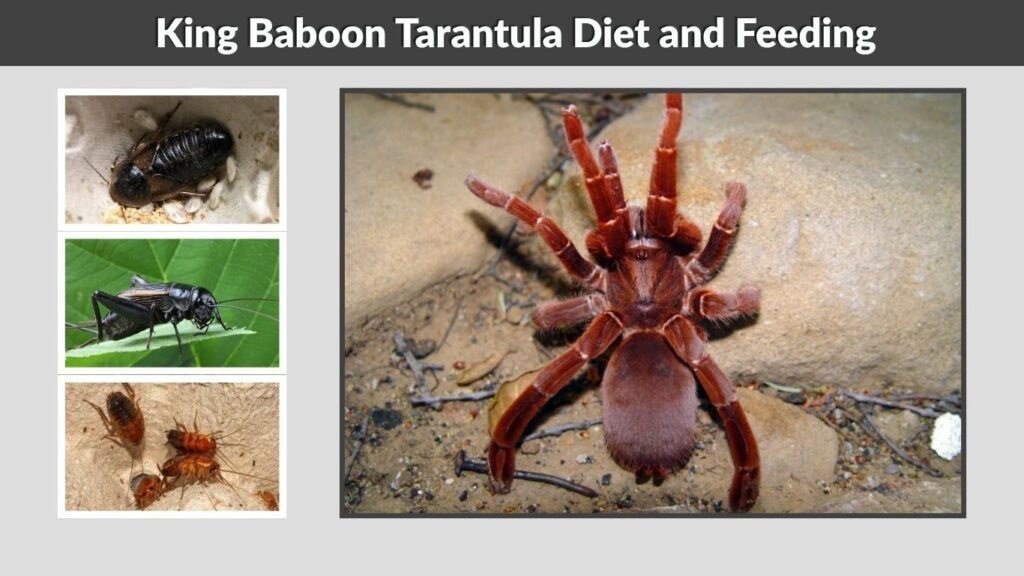
King Baboon Tarantulas eat live invertebrate prey. Suitable feeders include:
- Dubia roaches
- Crickets
- Red runner roaches
- Locusts
- Mealworms
- Superworms
Spiderlings can receive appropriately sized prey once or twice per week. Juveniles may eat every five to seven days, while healthy adults often require feeding only every one or two weeks.
Remove uneaten insects within 24 hours, particularly when the tarantula is preparing to molt. Crickets and other feeders can injure a soft, newly molted spider.
Mice are unnecessary. Large vertebrate prey creates avoidable injury, sanitation, and nutritional risks. A varied insect diet and access to clean water are sufficient.
Molting and Refusing Food
A King Baboon may refuse food before molting or while adjusting to a new enclosure. It may seal its tunnel with soil and webbing for several weeks.
Possible premolt signs include:
- Refusing food
- Reduced activity
- A darker abdomen
- Increased webbing
- Closing the burrow entrance
- A plump abdomen
Never dig up a hidden tarantula simply because it has stopped eating. Keep water available and allow it to emerge naturally. After a molt, wait until the fangs have hardened before feeding—usually at least a week for larger specimens.
King Baboon Tarantula Bite and Venom
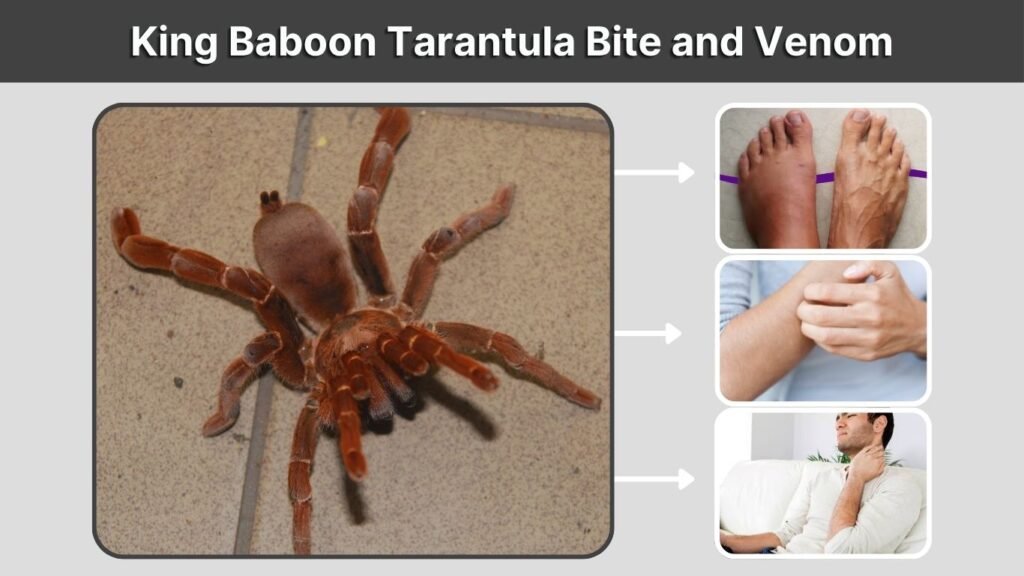
All tarantulas possess venom, but the King Baboon deserves particular caution. Research on Pelinobius muticus venom links it with severe localized pain, swelling, itching, increased sensitivity to pain, and possible muscle cramping following envenomation.
Old World tarantula bites have also caused intense pain and delayed muscle spasms lasting several days in documented cases involving related species. No specific antivenom is routinely available.
Anyone bitten should wash the wound, avoid unsafe home remedies, and contact a medical professional or poison-information service. Severe pain, spreading swelling, breathing difficulty, weakness, vomiting, or muscle cramps require urgent medical assessment.
Handling and Beginner Suitability
The King Baboon should never be handled. It gains no benefit from human contact and may react defensively without prolonged warning.
Maintenance should be performed with long tools, catch cups, secure containers, and a clear plan for containing an escape. Its combination of speed, large fangs, defensive behavior, and medically important venom makes it unsuitable as a first tarantula. Multiple specialist care sources classify the species as appropriate for advanced keepers.
Lifespan and Sex Differences
Females may live approximately 15–25 years, with some captive-care estimates extending beyond that range. Males mature sooner and generally live only a few years after reaching maturity, giving them a much shorter total lifespan.
Sex cannot be determined reliably from coloration. Examining a properly preserved molt is safer and more dependable than attempting to inspect the underside of a live spider.
King Baboon vs. Goliath Birdeater
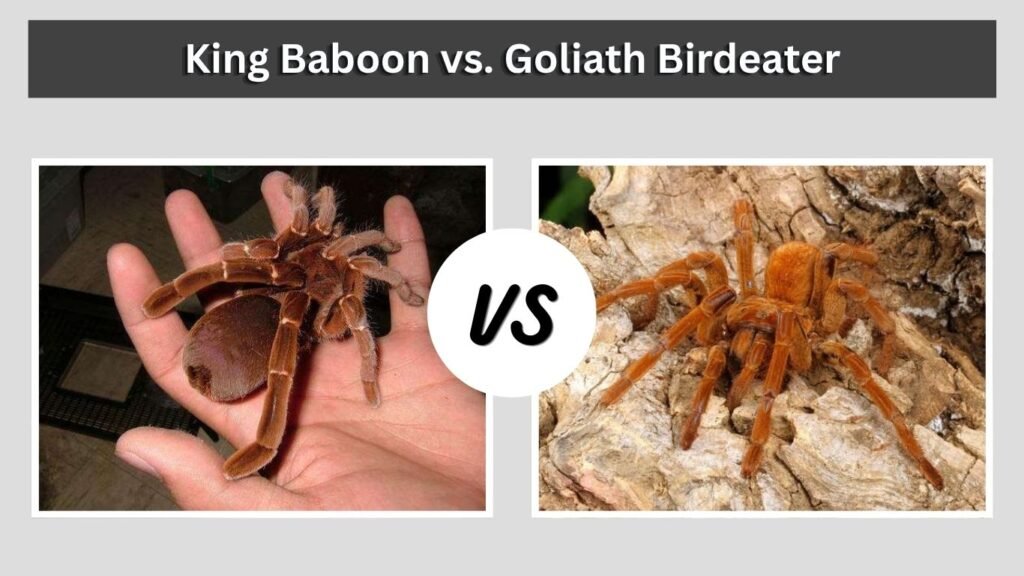
| Feature | King Baboon | Goliath Birdeater |
| Origin | East Africa | Northern South America |
| Lifestyle | Deep burrower | Terrestrial burrow user |
| Maximum span | Around 7–9 inches | Commonly larger |
| Color | Rusty orange-brown | Dark brown |
| Main defense | Stridulation and biting | Urticating hairs and biting |
| Temperament | Highly defensive | Defensive but generally slower |
| Handling | Never recommended | Also not recommended |
The Goliath Birdeater is usually the larger spider, but the King Baboon is often considered more challenging because of its speed, deep-burrowing lifestyle, and defensive response.
Buying a King Baboon Tarantula
Price depends on size, sex, availability, and location. Spiderlings are normally less expensive, while confirmed adult females command much higher prices because of their size and long potential lifespan.
Purchase only a legally kept, captive-bred specimen from a reputable breeder. Confirm the scientific name, inspect the spider’s condition, and prepare the permanent enclosure before it arrives.
FAQs
Is the King Baboon Tarantula poisonous?
It is venomous rather than poisonous. Venom is injected through its fangs during a bite. The bite can cause severe pain and other symptoms, so the species must be treated cautiously.
How big does a King Baboon Tarantula get?
A full-grown specimen may reach approximately 7–9 inches across the legs. Females generally become heavier and live considerably longer than males.
Why does a King Baboon Tarantula hiss?
It produces a stridulating warning sound when it feels threatened. The sound indicates defensiveness and means the spider should not be approached or disturbed further.
How often should it be fed?
Spiderlings may eat once or twice weekly, juveniles about once per week, and adults every one or two weeks. Adjust feeding according to abdomen size, temperature, and molting behavior.
Is a King Baboon Tarantula a good pet?
It can be rewarding for an experienced keeper who enjoys observing burrowing behavior. However, it is reclusive, highly defensive, unsuitable for handling, and not recommended for beginners.
