
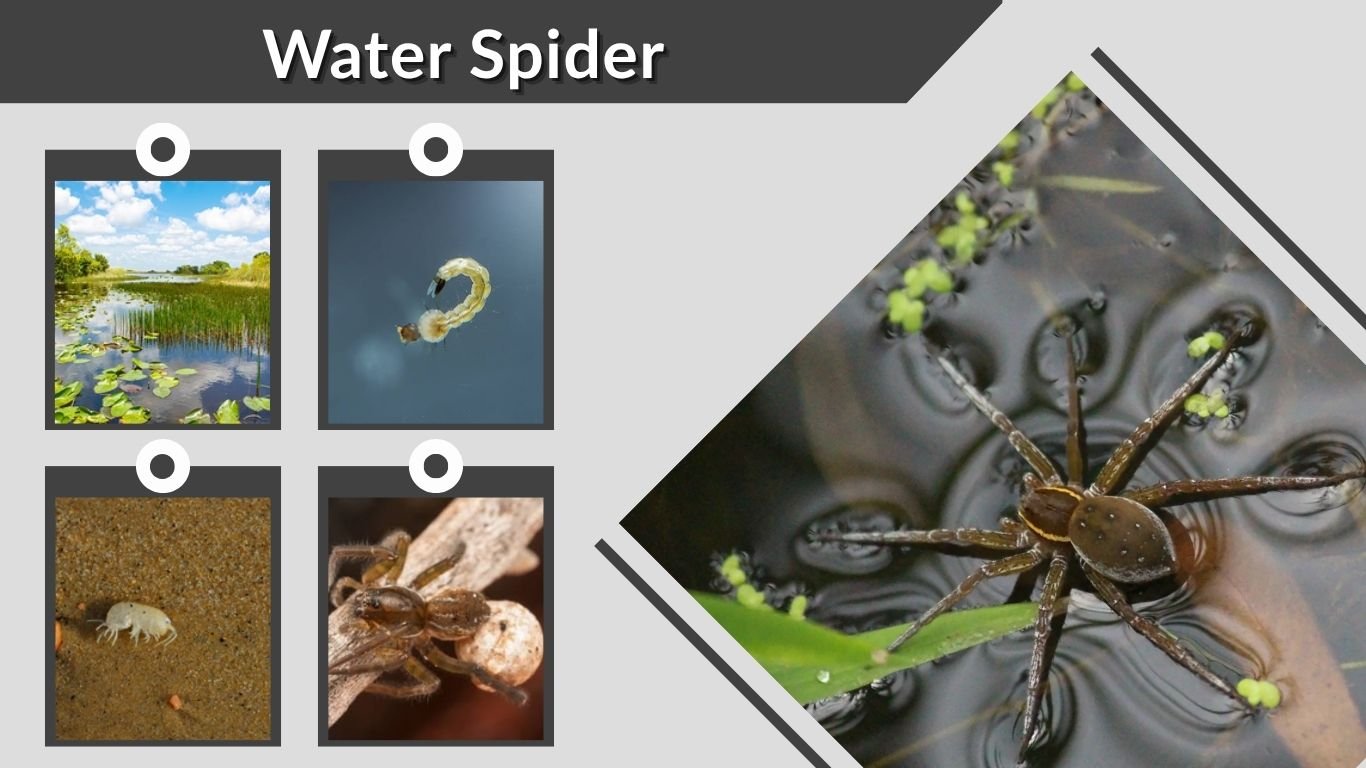
The water spider is an extraordinary arachnid adapted to living almost entirely beneath the surface of freshwater. Also called the diving bell spider, it creates an air-filled silk chamber that functions as a home, hunting shelter, nursery, and underwater breathing station. Unlike spiders that simply walk across water, this species swims, hunts, mates, molts, and raises its young underwater. This article focuses on the animal meaning of “water spider,” including its species, identification, habitat, behavior, and bite.
What Is a Water Spider?
The name water spider most commonly refers to Argyroneta aquatica, a freshwater spider also known as the diving bell spider. It is considered unique because it spends virtually its entire life submerged, although it must obtain atmospheric air from the water’s surface.
| Feature | Description |
| Common names | Water spider, diving bell spider |
| Scientific name | Argyroneta aquatica |
| Family | Cybaeidae |
| Type | Aquatic arachnid |
| Body length | About 7.8–18.7 mm |
| Habitat | Ponds, lakes, marshes and slow streams |
| Diet | Aquatic insects, larvae and crustaceans |
| Distribution | Europe and northern and central Asia |
Scientific sources describe Argyroneta aquatica as an air-breathing spider that constructs a dome-shaped underwater web and fills it with air transported from the surface.
Water Spider Identification
A water spider can be recognized by the following features:
- Brown or reddish-brown head and legs
- Dark, velvety abdomen when outside the water
- Silvery or metallic appearance underwater
- Dense water-repellent hairs on the abdomen
- Long legs suited to swimming and climbing aquatic plants
- An underwater, air-filled silk web attached to vegetation
The spider does not naturally have a silver body. Its metallic appearance is produced by a thin layer of air held against its abdomen by specialized hairs.
Water Spider Size and Appearance
Water spiders are relatively small, although their long legs can make them look larger. Adult body size generally ranges from approximately 7.8 to 18.7 millimeters, or about 0.31 to 0.74 inches, excluding the full spread of the legs.
Male vs. Female Size
Male water spiders may measure approximately 7.8–18.7 mm, while females usually measure about 7.8–13.1 mm. This is unusual because female spiders are larger than males in many other species.
Larger males may move through water more efficiently while hunting or searching for females. They also tend to have longer front legs and a more elongated body. Females devote more energy to maintaining large diving bells used for shelter and egg protection.
Water Spider Habitat
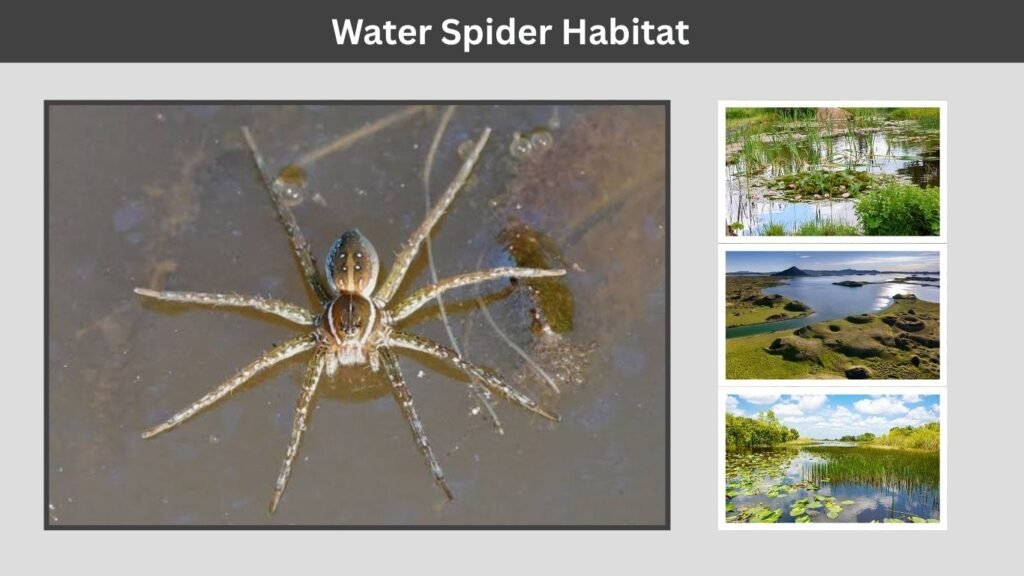
Water spiders inhabit freshwater environments containing enough submerged vegetation to support their silk chambers. They generally prefer quiet water rather than fast-flowing rivers.
Preferred Water Conditions
Common water spider habitats include:
- Vegetated ponds
- Shallow lakes
- Marshes and swamps
- Bogs and wetlands
- Ditches filled with freshwater
- Slow-moving streams
Aquatic plants are essential because the spider attaches its diving bell and surrounding silk lines to stems and leaves. Dense vegetation also provides hiding places and attracts the small animals on which the spider feeds.
Geographic Distribution
The diving bell spider is native mainly to the Palearctic region. Its range extends from northern and central Europe through Siberia and Central Asia. Isolated populations also occur in Japan.
It is not native to North or South America. Spiders called “water spiders” in the Americas are often fishing spiders or other semi-aquatic species rather than Argyroneta aquatica.
How Does a Water Spider Breathe Underwater?
The water spider breathes air rather than extracting oxygen directly through gills. It survives underwater by transporting air from the surface and storing it inside a specially constructed silk chamber.
Building the Diving Bell
The spider begins by spinning a sheet of silk between submerged plants. It then travels to the surface, exposes the rear of its abdomen and collects a bubble of air among its water-repellent hairs.
The spider carries the bubble underwater with its abdomen and rear legs before releasing it beneath the silk. It repeats this process until the web expands into an air-filled dome resembling a small bell.
The Bell Works Like a Physical Gill
The diving bell is more than a simple stored air bubble. Dissolved oxygen from the surrounding water can diffuse into the bell as the spider consumes the oxygen inside. Carbon dioxide produced by the spider dissolves back into the water.
Research indicates that a well-formed bell can supply much of the resting spider’s oxygen. Under suitable conditions, the spider may remain underwater for more than a day before needing to replenish the chamber with fresh surface air.
Water Spider Behavior
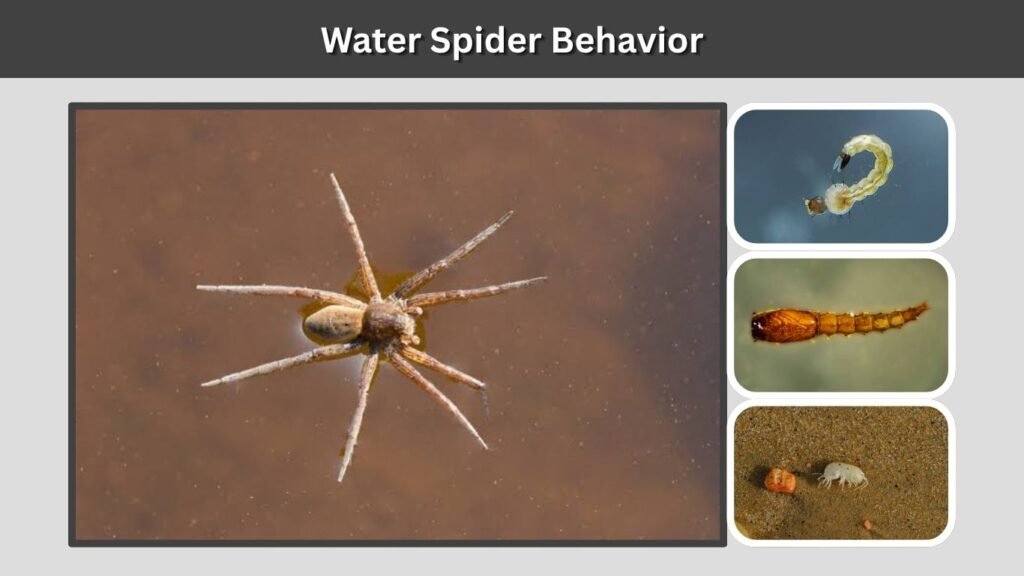
Water spiders are generally solitary and territorial. Each adult normally constructs and occupies its own diving bell, which becomes the center of its activities.
The chamber is used for:
- Resting and hiding
- Eating captured prey
- Molting
- Mating
- Laying and guarding eggs
- Surviving cold winter conditions
Hunting Behavior
Females usually remain inside or close to their diving bells. Silk threads extending from the bell act as underwater trip lines. When an aquatic animal touches one of these threads, the vibrations alert the spider.
The female quickly leaves the chamber, grabs the prey and brings it back to the air-filled bell. Males are generally more active and spend more time swimming through the surrounding vegetation while hunting or searching for mates.
What Do Water Spiders Eat?
Water spiders are carnivorous predators. Their diet may include:
- Mosquito larvae
- Midge larvae
- Water fleas
- Aquatic isopods
- Fairy shrimp
- Small aquatic insects
- Other water spiders
- Occasionally very small fish
Their predatory activity may help control populations of mosquito larvae and other aquatic invertebrates. However, water spiders can also be eaten by fish, frogs, dragonfly larvae and predatory water beetles.
Winter Behavior
In cold climates, water spiders move deeper into the water and construct stronger winter bells. These chambers may be sealed to provide protection during hibernation.
Some males may use empty snail shells as winter shelters. They line the shell with silk, fill it with air and close the entrance before remaining inside during the coldest months.
Reproduction and Life Cycle
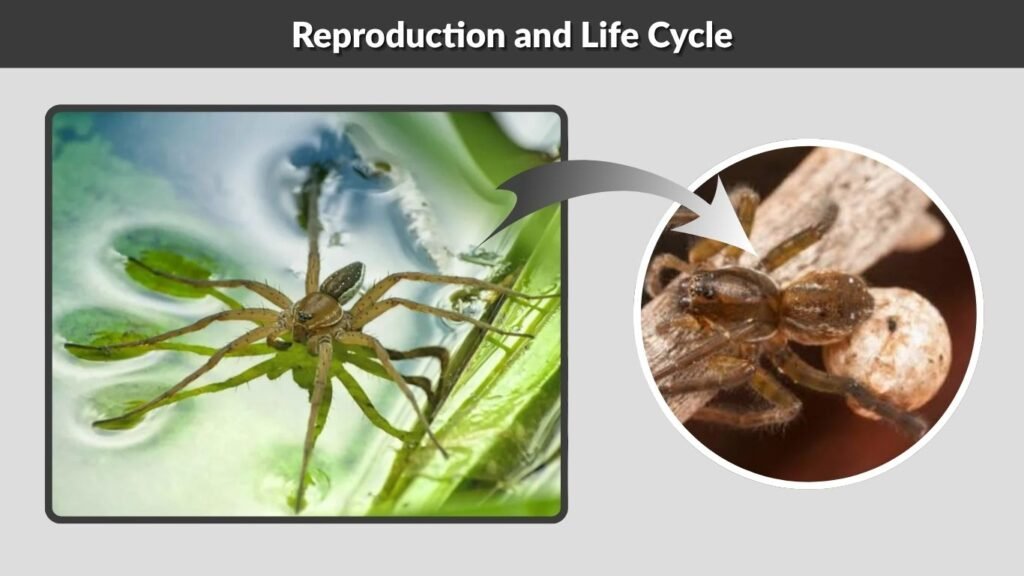
Water spider mating generally occurs from spring through summer. A male leaves his chamber and searches for a female’s bell. After courtship and mating, the female creates a dense egg sac in the upper portion of her chamber.
A single egg sac may contain approximately 50–100 eggs. The female separates the eggs from the lower living section of the bell with a silk partition and guards them until they hatch.
Young spiderlings remain near their mother for approximately two to four weeks before leaving to build their own miniature diving bells. Water spiders have survived for around two years under captive conditions.
Are Water Spiders Dangerous?
Water spiders possess venom for subduing their prey, but they are not regarded as a serious threat to people. They spend their lives in aquatic vegetation and have little reason to interact with humans.
A bite might occur if a spider is trapped, squeezed or handled. Some accounts describe the bite as painful, but verified modern bite information is limited. Avoid picking one up with bare hands, and allow the spider to move away naturally.
Water Spider vs. Fishing Spider
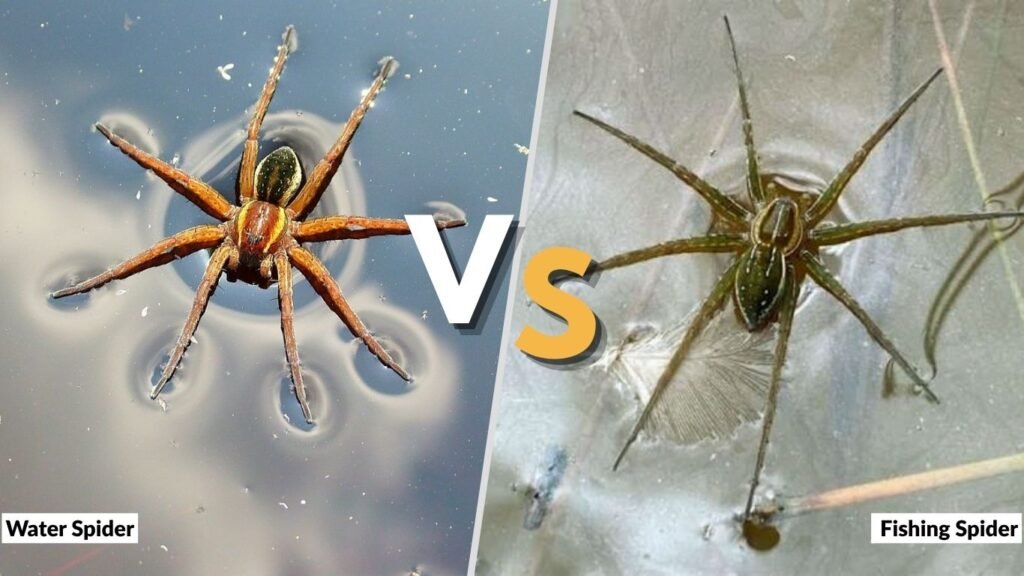
Although both may be found around freshwater, they are different types of spiders.
| Feature | Diving Bell Water Spider | Fishing Spider |
| Main lifestyle | Lives almost entirely underwater | Lives mainly above water |
| Air chamber | Builds a diving bell | Does not build one |
| Movement | Swims underwater | Walks across the surface and dives briefly |
| Distribution | Europe and Asia | Several regions, including North America |
| Typical shelter | Submerged silk chamber | Shoreline vegetation, rocks or trees |
FAQs
Can water spiders live completely underwater?
They spend nearly their entire lives underwater, but they still breathe atmospheric air. They collect air at the surface and carry it down to an underwater silk chamber. Oxygen from the surrounding water also enters the chamber through diffusion.
Why does a water spider look silver?
Tiny air bubbles become trapped among water-repellent hairs covering the spider’s abdomen. Underwater, this air layer reflects light and gives the spider a bright silver or metallic appearance.
Do water spiders make webs?
Yes. They build underwater webs called diving bells. They also produce silk support lines that attach the bell to aquatic plants and detect vibrations produced by nearby prey.
Can a water spider walk on land?
A water spider can survive briefly outside water and move across land, but it is highly adapted to freshwater life. It normally leaves the water only under unusual circumstances or while dispersing between habitats.
Are water spiders aggressive?
They may be territorial toward other water spiders, especially around their diving bells. However, they do not normally chase or attack people. Bites are unlikely unless the spider is handled or physically threatened.
