
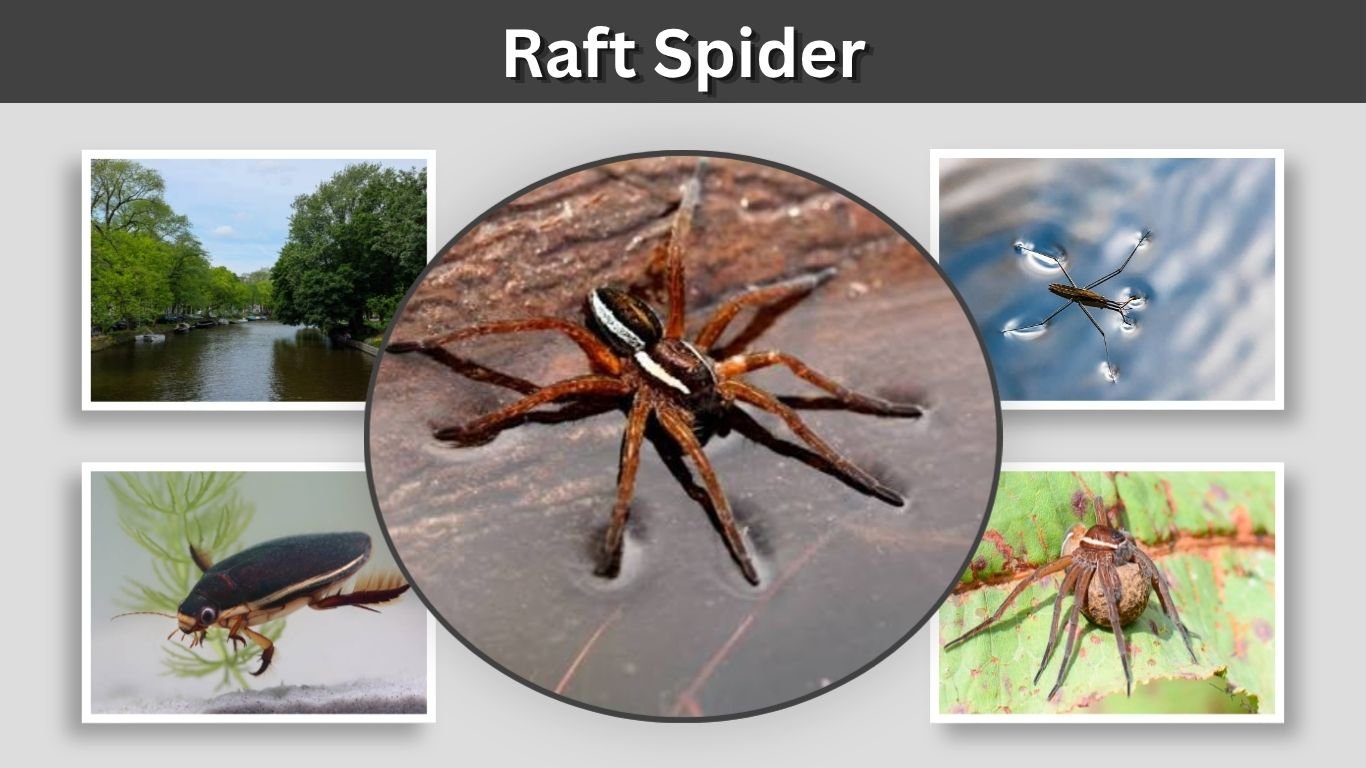
The raft spider is a large semi-aquatic spider known for running across ponds, diving underwater, and capturing prey from the water’s surface. Rather than building a sticky web to trap food, it waits beside the water with its front legs touching the surface. Small vibrations reveal the location of nearby insects, tadpoles, or fish. Two well-known European species are the common raft spider, Dolomedes fimbriatus, and the much rarer fen raft spider, Dolomedes plantarius.
What Is a Raft Spider?
Raft spiders belong to the genus Dolomedes and the nursery web spider family, Pisauridae. They are also called fishing spiders because they live close to freshwater and occasionally capture small vertebrates.
The name “raft spider” usually refers to Dolomedes fimbriatus in Britain and Europe. The closely related Dolomedes plantarius is generally called the fen raft spider. Both species are strongly associated with wetlands, but they differ in habitat preference and conservation status. Britain is home to both species.
| Feature | Raft Spider |
| Scientific genus | Dolomedes |
| Family | Pisauridae |
| Lifestyle | Semi-aquatic |
| Typical color | Dark brown or chocolate brown |
| Body length | Approximately 9–23 mm |
| Leg span | Up to about 7 cm in large females |
| Diet | Insects, aquatic invertebrates, tadpoles and small fish |
| Main habitats | Ponds, fens, bogs, marshes and wet heathlands |
Raft Spider Identification
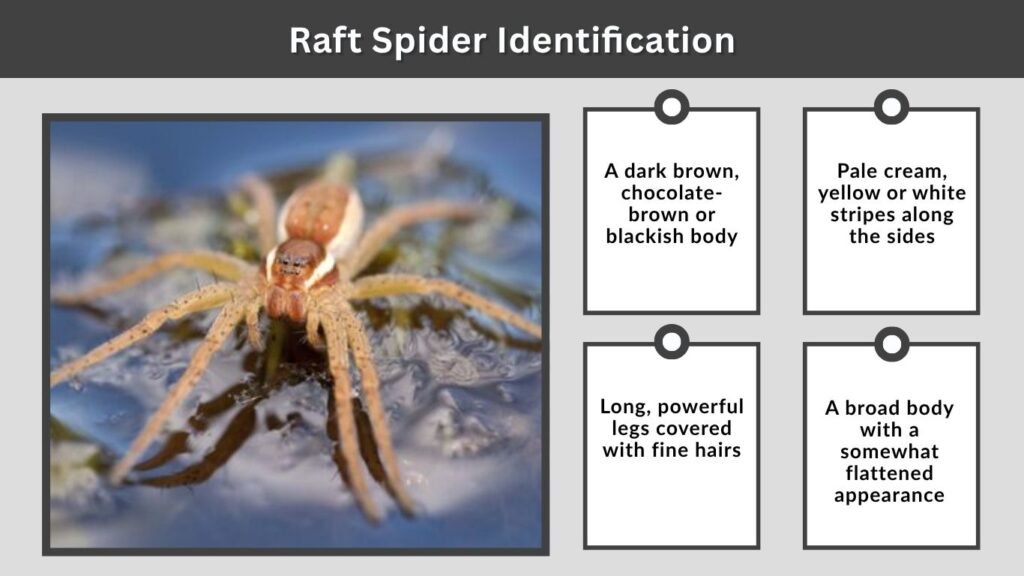
Raft spiders are large, long-legged spiders with bodies adapted for moving across water. Their coloration provides camouflage among reeds, muddy banks and wet vegetation.
Physical Characteristics
A raft spider can usually be recognized by:
- A dark brown, chocolate-brown or blackish body
- Pale cream, yellow or white stripes along the sides
- Long, powerful legs covered with fine hairs
- A broad body with a somewhat flattened appearance
- Eight eyes arranged across the front of the head
- A leg span considerably wider than its body length
The common raft spider normally has distinct pale stripes along both sides of its body. However, individual markings vary, and some spiders may have incomplete or less noticeable stripes.
How Big Is a Raft Spider?
The common raft spider generally has a body length of approximately 9–20 mm, although females of Dolomedes fimbriatus may reach around 22 mm. Adult males are usually smaller, with body lengths of approximately 10–13 mm.
Female fen raft spiders can reach about 23 mm in body length and may span approximately 7 cm from leg to leg. Their long legs make them look much larger than their body measurements suggest.
Male vs. Female Size
Female raft spiders are normally larger and more heavily built than males. Their larger bodies provide space for developing eggs and help them carry their egg sacs.
Males are usually slimmer and more mobile. During the breeding season, they travel around wetland vegetation searching for receptive females.
Raft Spider Habitat
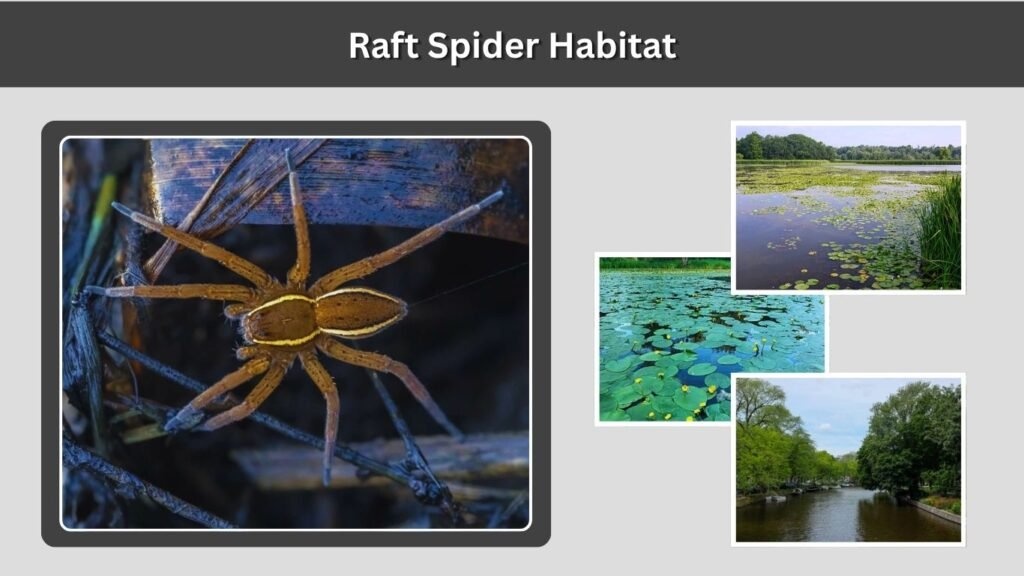
Raft spiders inhabit freshwater wetlands where vegetation grows beside or through the water. Aquatic plants give the spiders places to rest, hunt, hide and attach their nursery webs.
Common habitats include:
- Ponds and pond margins
- Wet heathlands
- Bogs and acidic mires
- Marshes and fens
- Slow-moving canals
- Grazing-marsh ditches
- Shallow lakes
- Areas containing reeds, sedges and rushes
The common raft spider, D. fimbriatus, is often associated with wet heaths, bogs and acidic upland mires. The fen raft spider prefers lowland wetlands containing clean, neutral or alkaline water and structurally complex marginal vegetation.
Where Are Raft Spiders Found?
Raft spiders occur across parts of Europe and northern Asia. In Britain, D. fimbriatus is widespread but relatively scarce and is most likely to be noticed between May and August.
The fen raft spider has a much more restricted distribution. British conservation projects have established additional populations in restored wetlands, particularly around the Norfolk and Suffolk Broads.
How Do Raft Spiders Walk on Water?
Raft spiders use the surface tension of water to support their bodies. Their weight is distributed across eight widely spread legs, while water-repellent hairs help prevent the legs from immediately breaking through the surface.
They can move slowly by rowing with their middle legs or accelerate into a rapid galloping motion when pursuing prey. Fen raft spiders have been recorded reaching surface speeds of approximately 0.75 meters per second. They may also use wind to sail across the water by raising their bodies or legs.
Can Raft Spiders Swim Underwater?
Raft spiders can break through the water’s surface and dive. They commonly move down submerged stems rather than swimming freely because air trapped among their body hairs makes them buoyant.
Underwater, the trapped air can give their bodies a silvery appearance. Diving helps them catch aquatic prey and escape birds, frogs and other predators.
Raft Spider Behavior
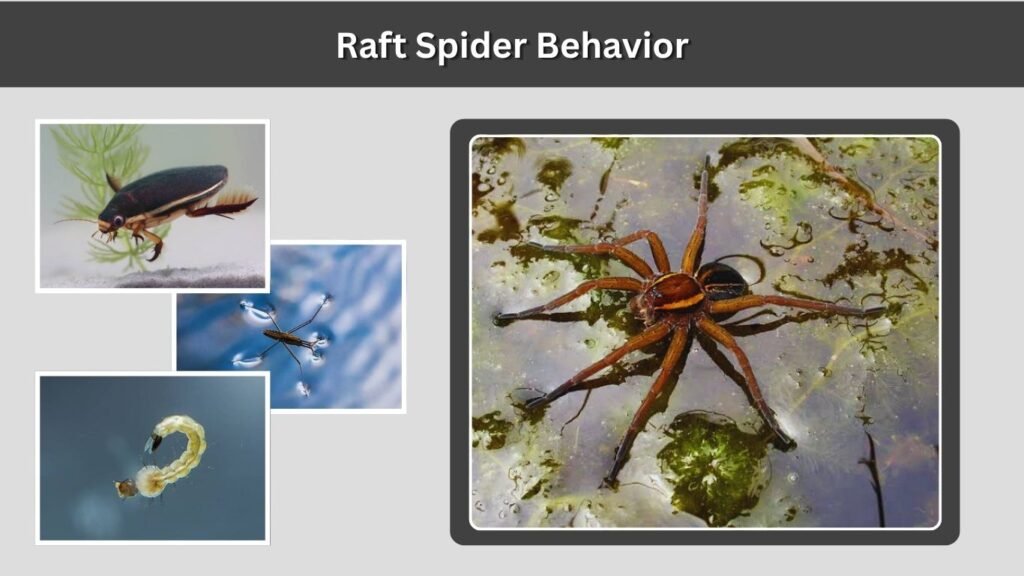
Raft spiders are active hunters rather than traditional web-building predators. They typically wait on floating plants or at the water’s edge with their rear legs supported by vegetation and their front legs resting on the surface.
Fine sensory hairs detect the direction and strength of ripples. When suitable prey approaches, the spider rushes across the surface, grabs it with its legs and injects venom through its fangs.
What Do Raft Spiders Eat?
A raft spider’s diet may include:
- Pond skaters
- Water beetles
- Damselflies
- Dragonflies and their larvae
- Mosquito and midge larvae
- Aquatic spiders
- Terrestrial insects that fall into water
- Tadpoles
- Small fish
Despite their reputation as fish-eating spiders, fish and tadpoles probably make up only a small part of their diet. Most prey consists of aquatic and terrestrial invertebrates.
Reproduction and Nursery Webs
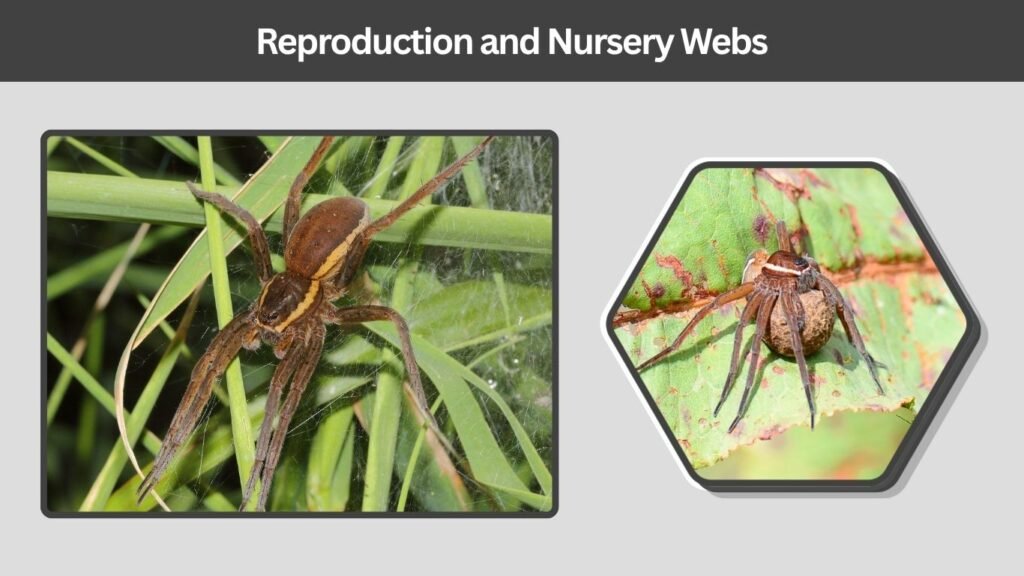
Raft spiders belong to the nursery web spider family because females build protective silk structures for their young. The female first produces a round egg sac and carries it beneath her body using her jaws.
A fen raft spider may carry her egg sac for approximately three weeks. She periodically dips it into water to keep it moist. Shortly before the spiderlings hatch, she attaches the sac inside a large nursery web suspended among vegetation above the water. She remains nearby to guard the young during their earliest stage of life.
Are Raft Spiders Poisonous?
Raft spiders are venomous, not poisonous. Venom is delivered through their fangs to immobilize prey, while poisonous animals cause harm when touched or eaten.
Their venom is effective against insects and small aquatic animals, but raft spiders are not considered dangerous to people. The RSPB describes fen raft spiders as harmless to humans. They are shy and usually dive or run away when disturbed.
Can a Raft Spider Bite?
A raft spider could bite if it were trapped, crushed or handled roughly. However, bites are uncommon because the spider’s normal defensive response is to escape.
Anyone who finds one should avoid picking it up with bare hands. A spider near a pond or wetland should simply be left alone, particularly if it may be a protected fen raft spider.
Fen Raft Spider vs. Common Raft Spider
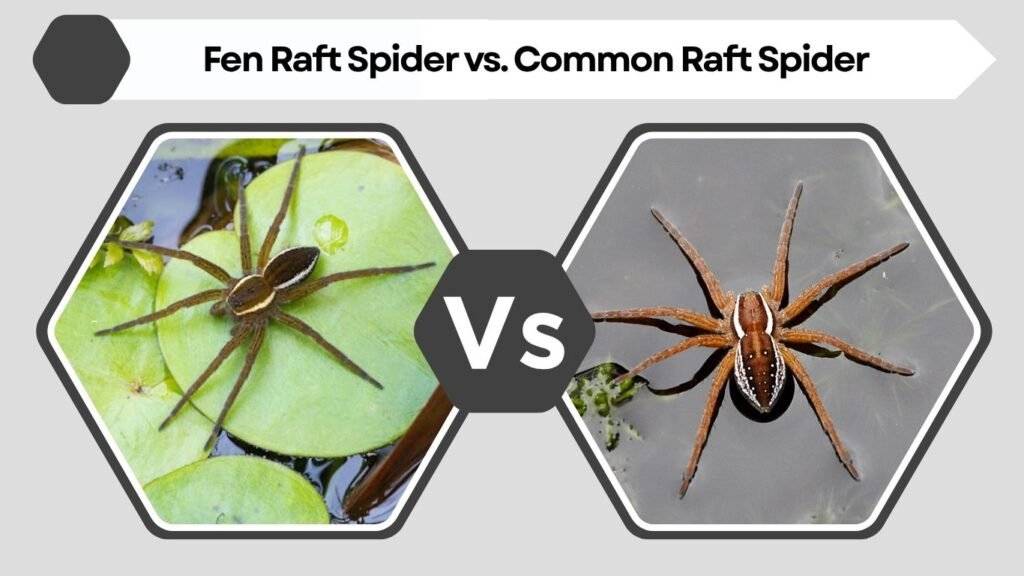
| Feature | Fen Raft Spider | Common Raft Spider |
| Scientific name | Dolomedes plantarius | Dolomedes fimbriatus |
| Main habitat | Fens, canals and grazing-marsh ditches | Wet heaths, bogs and acidic mires |
| Dependence on open water | Strong | Generally lower |
| Maximum body length | About 23 mm | About 22 mm |
| UK status | Rare, Vulnerable and legally protected | Widespread but scarce |
| Typical markings | Brown or black with cream side stripes | Chocolate brown with pale yellow side stripes |
The fen raft spider is globally Red Listed and fully protected under Schedule 5 of Britain’s Wildlife and Countryside Act. It is illegal to deliberately injure, collect, sell or disturb the spiders or damage their habitat without authorization.
FAQs
Are raft spiders found in houses?
Raft spiders are wetland animals and rarely enter homes. They normally remain around ponds, bogs, ditches and marshes where aquatic prey and suitable vegetation are available.
Do raft spiders make webs?
They do not build sticky capture webs. Females produce silk egg sacs and nursery webs that protect their spiderlings. They may also leave silk draglines while moving.
Can a raft spider really catch fish?
Yes. Large raft spiders can capture very small fish and tadpoles. However, most of their diet consists of insects, spiders and other aquatic invertebrates.
What are the predators of raft spiders?
Documented or suspected predators include frogs, birds, fish, wasps and hornets. Young spiderlings are especially vulnerable to insect-eating birds and other wetland predators.
Is the fen raft spider endangered?
The fen raft spider remains classified as Vulnerable and is protected in Britain. Habitat restoration and translocation programs have increased the number of sustainable British populations, but continued wetland protection remains essential.
