
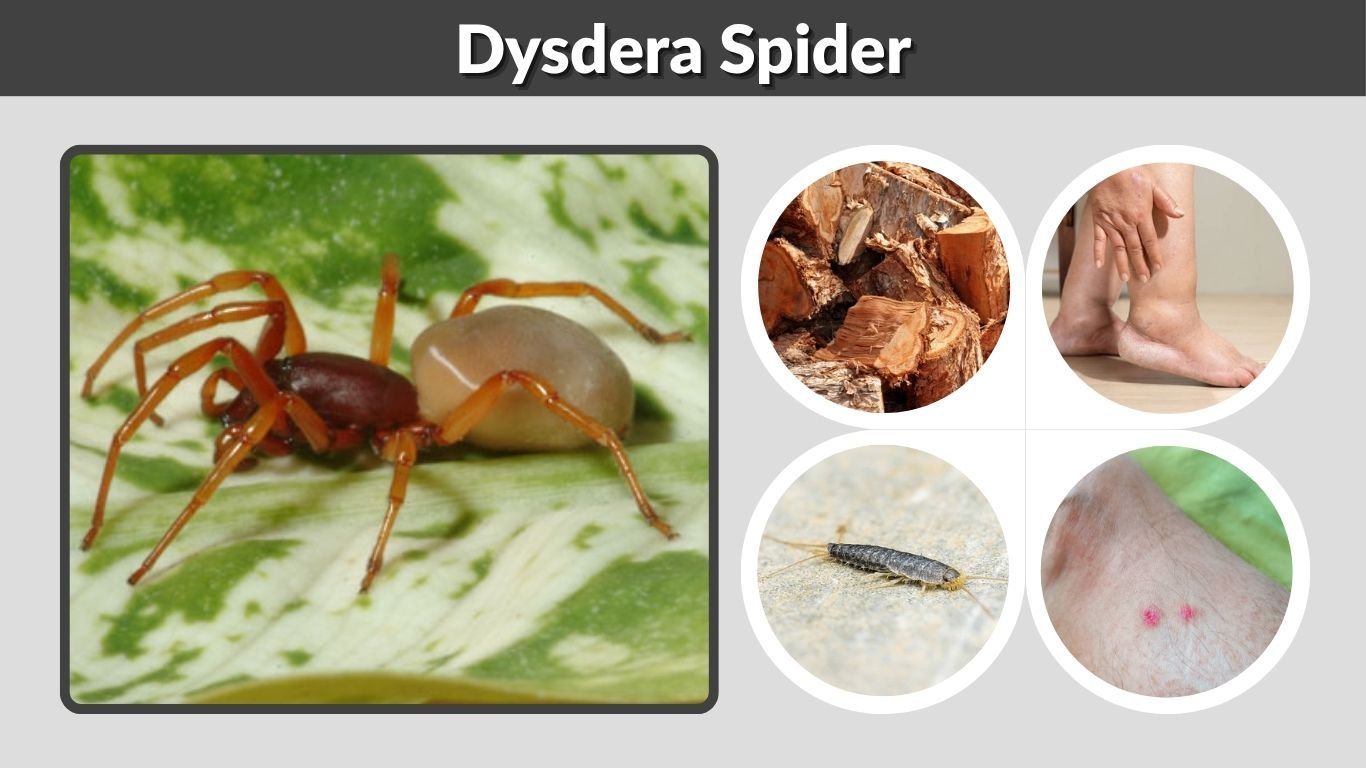
The Dysdera spider, especially Dysdera crocata, is commonly called the woodlouse spider, woodlouse hunter, sowbug spider, or slater-eating spider. Its red body, pale abdomen, and unusually large fangs can make it look dangerous. However, this nocturnal hunter is not considered medically dangerous to humans. It spends most of its life under stones, logs, bricks, and plant pots, where it searches for woodlice and other small invertebrates.
What Is a Dysdera Spider?
Dysdera is a genus of ground-dwelling hunting spiders in the family Dysderidae. The species most frequently encountered around homes and gardens is Dysdera crocata.
Unlike orb-weavers, the woodlouse spider does not construct a sticky web to capture prey. It walks across the ground at night, using its strong jaws and venom to overpower woodlice. During daylight, it normally rests inside a small silk-lined shelter beneath a solid object.
Common Names
Dysdera crocata is known by several names:
- Woodlouse spider
- Woodlouse hunter
- Sowbug spider
- Sowbug killer
- Pillbug hunter
- Slater-eating spider
- Slater spider
These names refer to its habit of hunting woodlice, which are also called sowbugs, pillbugs, or slaters in different regions.
Dysdera Crocata Identification
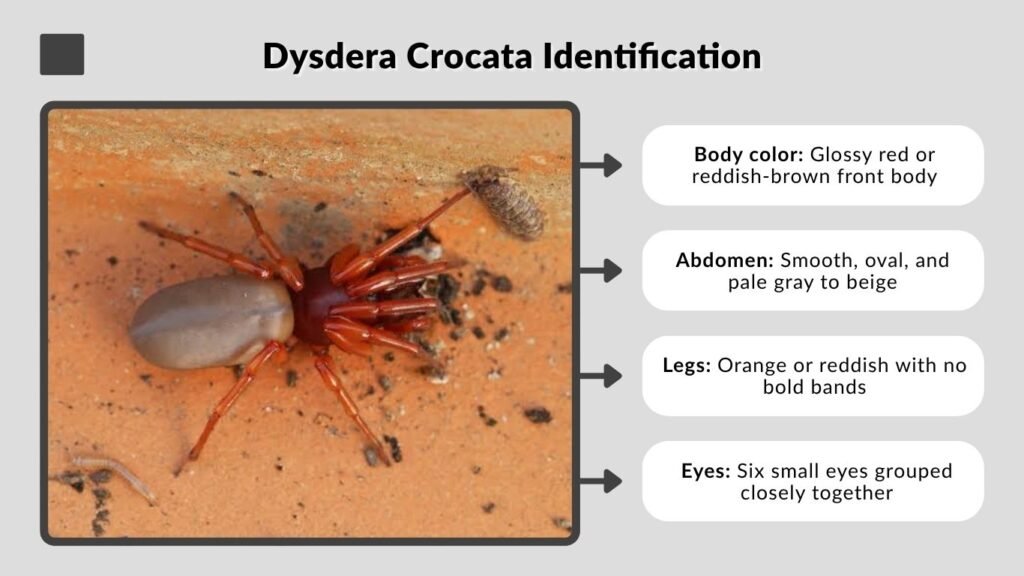
The woodlouse spider has a distinctive two-colored appearance. Its front body and legs are usually reddish-orange or dark reddish-brown, while its abdomen is pale gray, cream, pinkish, or yellow-brown.
Key Identification Features
- Body color: Glossy red or reddish-brown front body
- Abdomen: Smooth, oval, and pale gray to beige
- Legs: Orange or reddish with no bold bands
- Eyes: Six small eyes grouped closely together
- Fangs: Large, forward-projecting chelicerae
- Web: No prey-catching web
- Activity: Mostly active at night
Its oversized jaws are one of the easiest features to recognize. They project forward and are adapted to penetrate the protective body covering of woodlice.
Dysdera Spider Size
Female woodlouse spiders are generally larger than males.
| Spider | Approximate body length |
| Adult female | 11–15 mm |
| Adult male | 9–10 mm |
The measurements refer to the body without including the legs. Although the spider may appear large when its legs are extended, it is still a relatively small ground spider.
Where Do Dysdera Spiders Live?
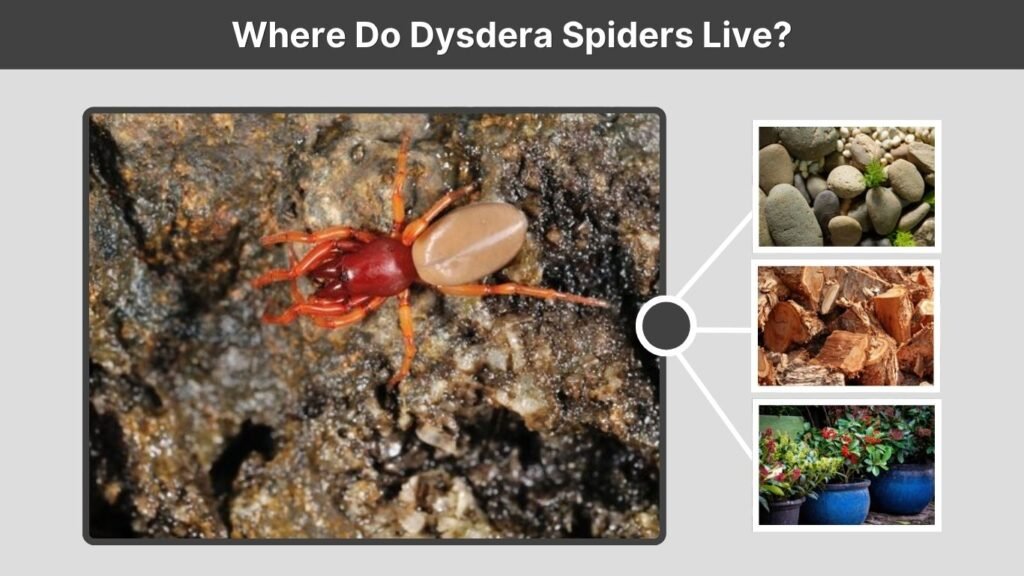
Woodlouse spiders prefer sheltered places where the ground remains moderately humid. These areas usually contain plenty of woodlice and other small prey.
They are commonly found beneath:
- Stones and landscaping rocks
- Logs and loose tree bark
- Bricks and construction materials
- Flowerpots and garden decorations
- Leaf litter and compost
- Boards, outdoor furniture, and debris
During the day, the spider creates a silk-lined retreat under one of these objects. At night, it leaves the shelter and searches for food. It may occasionally enter basements, garages, bathrooms, or ground-level rooms, but it does not normally establish a large indoor infestation.
Dysdera Spiders in the UK
Dysdera crocata is widespread in southern Britain, particularly in gardens, coastal areas, and places containing stones or old brickwork. Its distribution becomes less consistent in northern and upland areas.
A closely related species, Dysdera erythrina, also occurs in Europe but is more frequently associated with natural habitats. Identifying the two species reliably may require examination by an experienced arachnologist.
Dysdera Spiders in the United States
The woodlouse spider originated outside North America but is now established in many parts of the United States. It is especially likely to occur around houses, gardens, greenhouses, and other locations where woodlice are abundant.
A reddish-brown spider found under an Ohio rock or flowerpot could be Dysdera crocata, but color alone is not enough for a reliable identification. Photographs should clearly show the pale abdomen, six-eye arrangement, and large forward-facing jaws.
What Do Dysdera Spiders Eat?
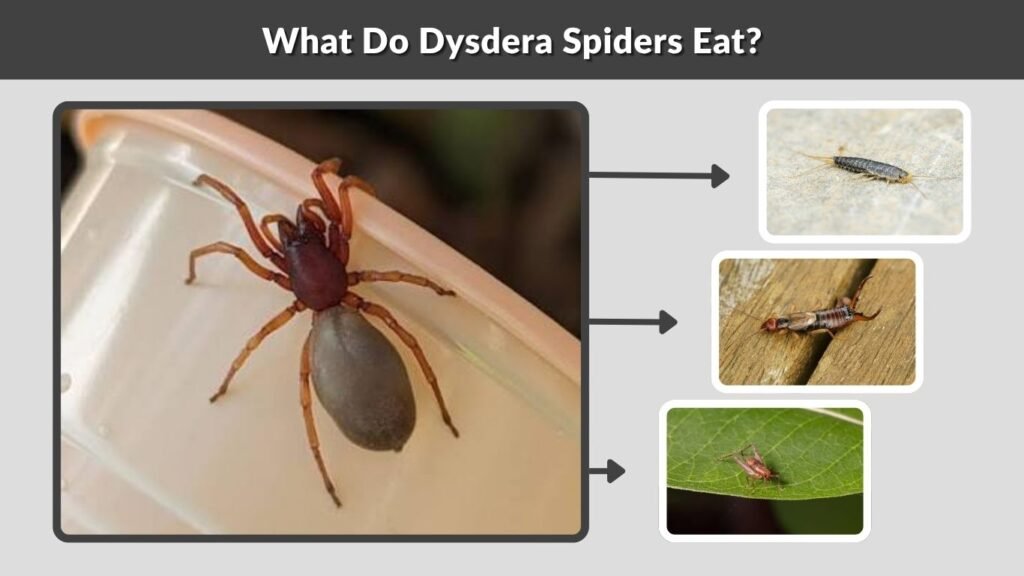
As its common name suggests, the woodlouse hunter primarily preys on woodlice. These crustaceans have hard, segmented bodies that discourage many smaller predators.
The spider’s long jaws allow it to grip a woodlouse and reach softer areas of its body. It injects venom to immobilize the prey before feeding.
It may also capture:
- Silverfish
- Earwigs
- Millipedes
- Small beetles
- Crickets
- Other ground-dwelling invertebrates
Woodlouse spiders are active hunters rather than web trappers. Their silk is mainly used for daytime retreats, molting chambers, and egg sacs.
Is the Dysdera Crocata Spider Poisonous?
The woodlouse spider is not poisonous. Technically, spiders that inject toxins through their fangs are described as venomous rather than poisonous.
Dysdera crocata does possess venom for subduing prey. However, its venom is not considered medically significant to healthy humans. The spider is not known to cause the severe tissue damage or systemic illness associated with medically important spiders.
Claims that a “new deadly Dysdera spider” is spreading across the United States are misleading. The species has been present outside its original range for a long time, and verified bites have produced mild, short-lived symptoms rather than life-threatening poisoning.
Dysdera Crocata Spider Bite
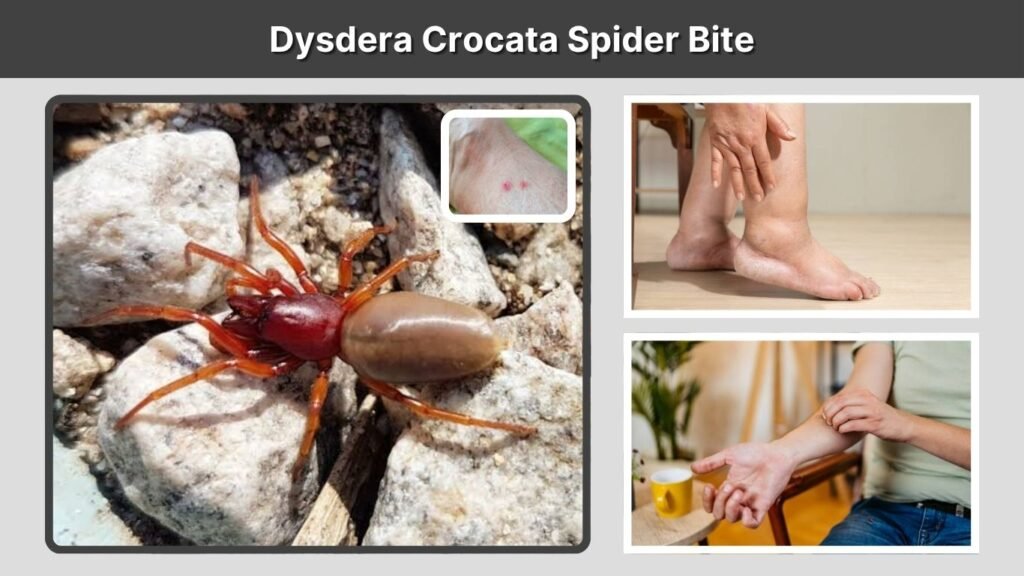
Woodlouse spiders are not aggressive toward people. Most bites happen when a spider is trapped against the skin, handled, or squeezed while someone moves stones, logs, or garden materials.
Because the spider has relatively large fangs, the initial puncture can be noticeable.
Possible Bite Symptoms
A bite may cause:
- Immediate pinching or stinging pain
- A small red mark
- Mild swelling
- Local itching or tenderness
- Temporary discomfort around the puncture
A study of verified Dysdera crocata bites found that the principal symptom was minor pain, usually lasting less than one hour. Much of the discomfort may result from the mechanical puncture produced by the spider’s large fangs rather than serious venom effects.
What to Do After a Bite
Wash the area gently with soap and water. Apply a wrapped cold pack for approximately 10 minutes at a time to help reduce discomfort. Avoid scratching the bite because damaged skin can become infected.
Seek medical attention when pain becomes severe, symptoms continue to worsen, infection develops, or the person experiences breathing difficulty, facial swelling, dizziness, or another sign of a serious allergic reaction.
Female Woodlouse Spider
Female Dysdera crocata spiders are usually larger and have broader, rounder abdomens than males. A mature female may appear especially swollen before producing eggs.
She places her eggs inside a protected silk sac and remains nearby to guard them. The Natural History Museum of Los Angeles County notes that females protect their egg sacs and that the species may live for approximately two to three years.
Males are generally smaller and may have relatively slimmer abdomens. Accurate sex identification often requires examining the pedipalps near the mouth; mature males have enlarged structures at their tips.
Dysdera Crocata vs. Brown Recluse
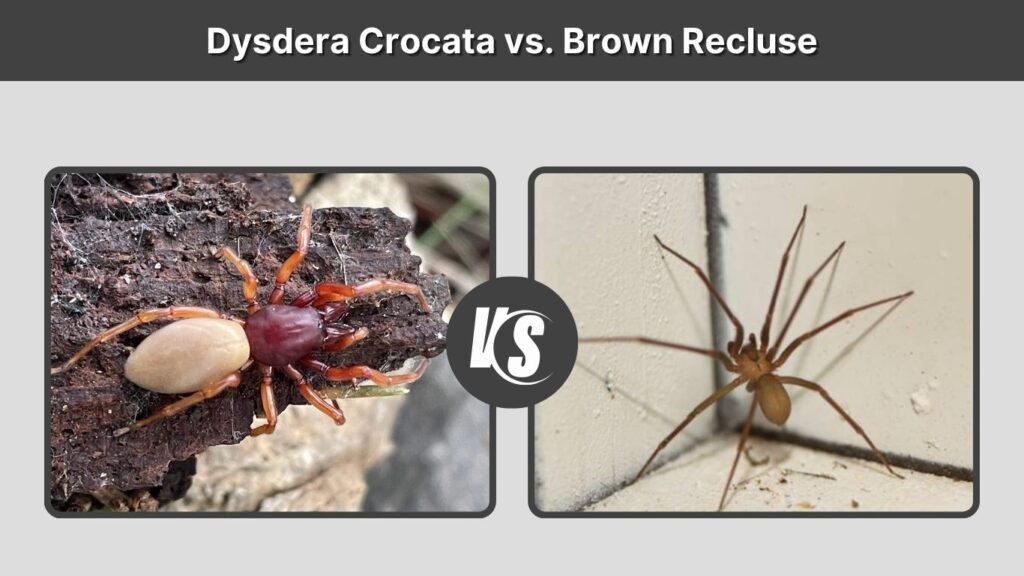
The woodlouse spider is sometimes mistaken for a brown recluse because both may have brownish coloring and wander indoors. However, they have several visible differences.
| Feature | Woodlouse spider | Brown recluse |
| Front body | Red or orange-brown | Light to medium brown |
| Abdomen | Pale gray or cream | Usually plain brown |
| Jaws | Large and prominent | Less visually prominent |
| Eye arrangement | Six eyes in a close group | Six eyes arranged in three pairs |
| Typical location | Under stones and garden objects | Dark, dry, undisturbed indoor spaces |
The red legs, pale abdomen, and large forward-facing jaws strongly suggest a woodlouse spider rather than a brown recluse.
How to Keep Dysdera Spiders Outside
Finding one woodlouse spider does not usually indicate an infestation. Reducing damp hiding places and controlling woodlice will make the property less attractive.
Remove unnecessary boards, bricks, stones, and leaf piles near the foundation. Repair leaking outdoor faucets, improve drainage, and allow damp areas to dry. Seal openings around doors, windows, pipes, and foundation cracks.
When moving garden materials, wear gloves and avoid placing your fingers directly beneath stones or logs. A spider found indoors can usually be captured with a container and released outside away from frequently used areas.
FAQs
Are Dysdera spiders dangerous?
Dysdera spiders are not considered dangerous to humans. They can bite when handled or trapped, and their large fangs may cause temporary pain. Verified bites have generally produced mild, localized symptoms without serious medical complications.
Can a woodlouse spider bite through human skin?
Yes. Its fangs are strong enough to puncture human skin. Nevertheless, bites are uncommon because the spider normally hides or escapes instead of approaching people.
Why are Dysdera spiders red?
Their reddish-orange carapace and legs are natural identification features. The contrasting abdomen is usually cream, gray, pinkish, or light brown, giving the spider its recognizable two-colored appearance.
Do Dysdera spiders live inside houses?
They may wander into basements, garages, bathrooms, or ground-level rooms. However, they normally prefer outdoor shelters containing moisture and woodlice and are not typical permanent house spiders.
Should I kill a woodlouse spider?
Killing it is generally unnecessary. Woodlouse spiders help control woodlice and other small invertebrates. A spider found indoors can be moved outside using a cup and a piece of stiff paper.
