
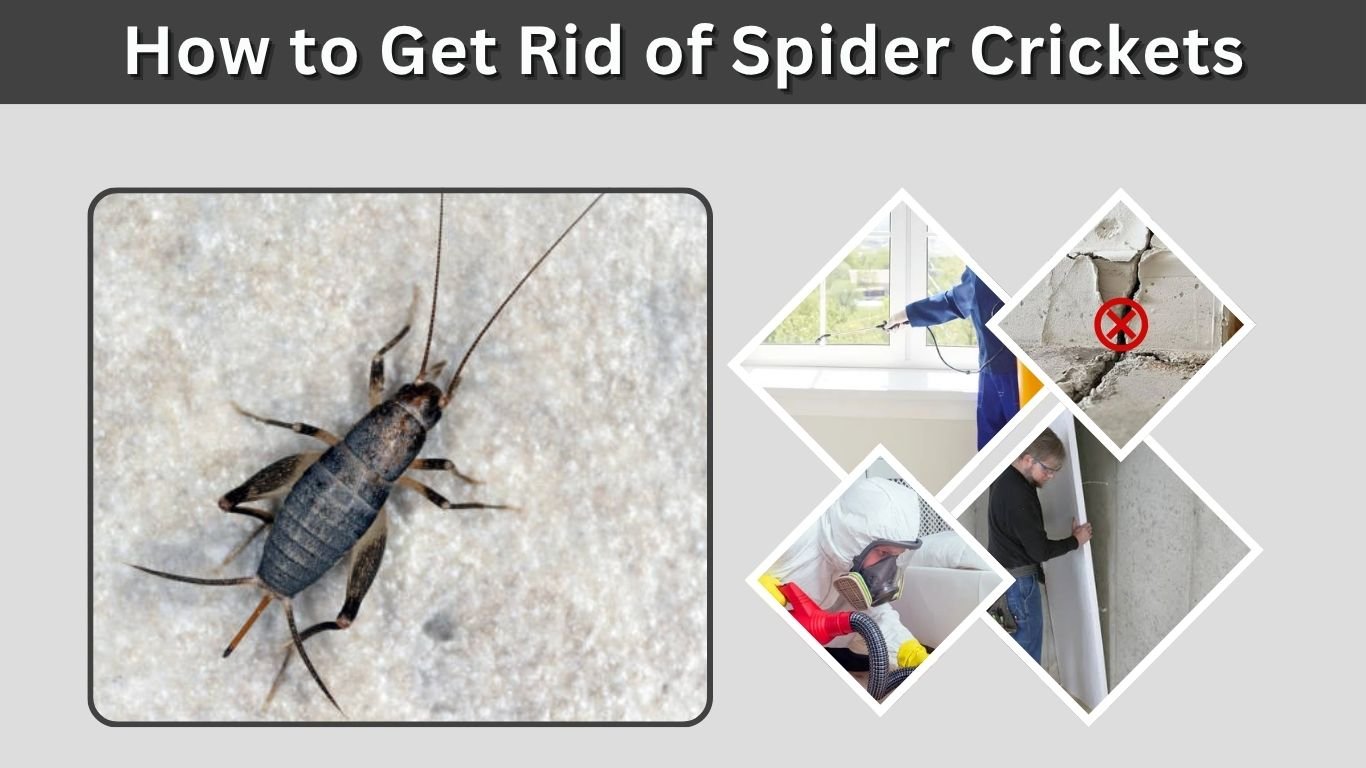
Spider crickets can be unsettling because of their long legs, hunched bodies, and habit of jumping toward people when frightened. Also called camel crickets, cave crickets, or sprickets, these insects prefer dark, cool, and damp places such as basements, crawl spaces, garages, and bathrooms. They are not venomous and do not normally bite, but a large infestation may damage fabrics, cardboard, stored belongings, and indoor plants. The most effective way to get rid of spider crickets is to remove existing insects, reduce moisture, eliminate hiding places, and seal their entrances.
Step 1: Make Sure They Are Spider Crickets
Before beginning treatment, confirm that you are dealing with spider crickets rather than house crickets, cockroaches, or spiders.
Spider crickets are insects despite their spider-like appearance. They are usually tan, brown, or mottled and have a noticeably arched back. Their extremely long hind legs allow them to jump considerable distances.
Spider Cricket Identification
- Brown, tan, or grayish body
- Rounded or hump-shaped back
- Six legs with very long hind legs
- Long, threadlike antennae
- Usually between ½ and 1½ inches long
- Wingless and unable to fly
- Does not produce the familiar chirping of house crickets
- Commonly found in dark and damp spaces
Their sudden jumping is a defensive response. They may appear to jump toward you, but they are generally trying to escape and are not attacking.
Step 2: Find Where the Crickets Are Hiding
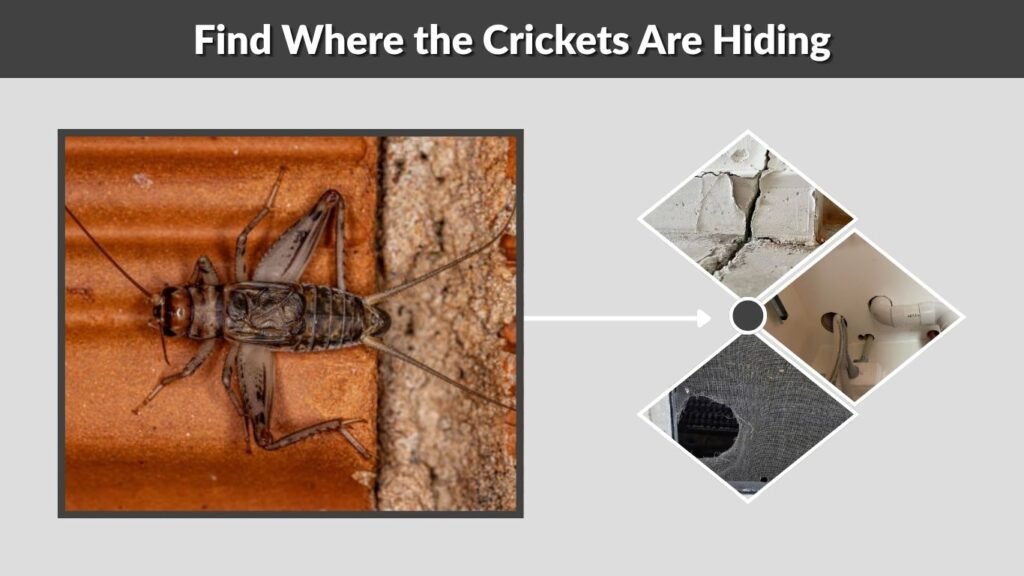
Inspect the house after dark, when spider crickets are most active. Use a flashlight and check places that remain cool, humid, and undisturbed.
Begin with the basement or crawl space, then examine utility rooms, bathrooms, garages, storage closets, and areas around plumbing. Look underneath appliances, shelving, cardboard boxes, sinks, and piles of stored materials.
Spider crickets may enter through:
- Foundation cracks
- Gaps beneath exterior doors
- Damaged window screens
- Crawl-space vents
- Openings around pipes and cables
- Garage-door gaps
- Basement windows
- Unsealed utility entrances
Finding their main hiding area is important because removing only the visible crickets will not prevent more from appearing.
Step 3: Remove the Crickets You Can See
Use a vacuum cleaner to remove visible spider crickets quickly. Vacuum along walls, underneath furniture, behind appliances, and inside corners where they hide.
Empty the vacuum container into a sealed outdoor trash bag immediately afterward. If the vacuum uses a disposable bag, remove and discard it outside.
A container can also be used to capture individual crickets. Place the container over the insect, slide a piece of stiff paper underneath, and release it well away from the house. Avoid crushing spider crickets on carpets because doing so may leave stains.
Step 4: Install Sticky Traps
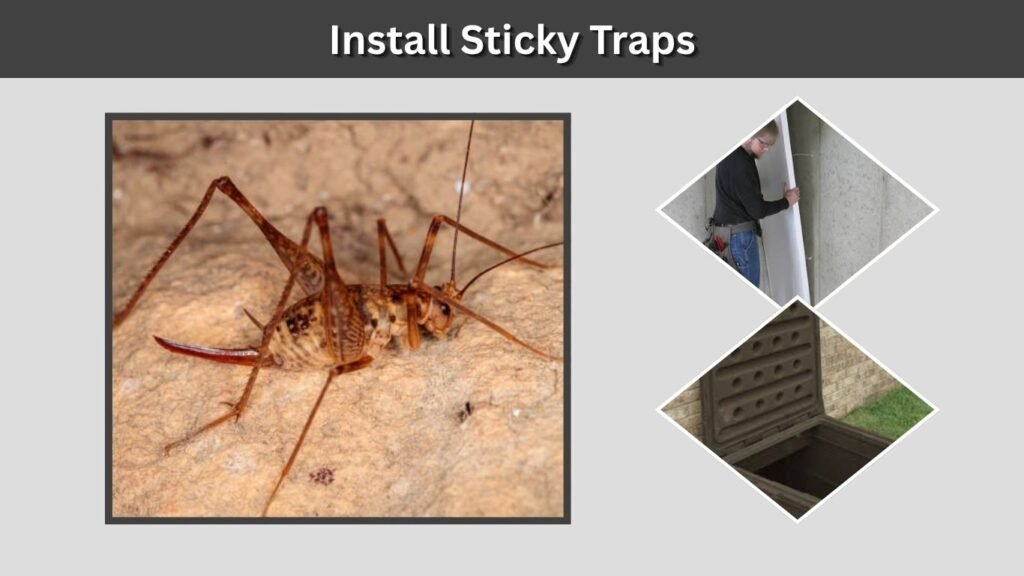
Sticky traps are one of the most useful nonchemical methods for controlling spider crickets. They capture active insects and help reveal where the infestation is concentrated.
Place traps:
- Along basement walls
- In crawl-space entrances
- Behind appliances
- Beneath sinks
- Near floor drains
- Beside storage boxes
- Around suspected entry points
Position traps against walls because spider crickets frequently move along edges rather than crossing open rooms. Check them every few days and replace any that become dusty, wet, or full.
Keep traps where children and pets cannot touch them. University of Minnesota Extension specifically recommends sticky traps and moisture reduction for indoor camel cricket control. University of Minnesota Extension
Step 5: Reduce Indoor Moisture
Moisture control is the most important long-term step. Spider crickets struggle to remain in areas that are consistently dry, so correct the conditions attracting them.
Eliminate Damp Conditions
Repair leaking pipes, dripping faucets, and damaged drains. Check for water entering around basement windows or through foundation cracks. Clean gutters and make sure downspouts carry rainwater away from the foundation.
Run a dehumidifier in damp basements or crawl spaces. Bathroom and laundry-room exhaust fans should vent outdoors and operate whenever those rooms become humid. Improving airflow with fans can also help dry problem areas.
If a crawl space regularly collects water, it may require drainage improvements, a vapor barrier, or professional moisture control. Persistent dampness can attract insects while also encouraging mold and wood damage.
Step 6: Remove Food and Hiding Places
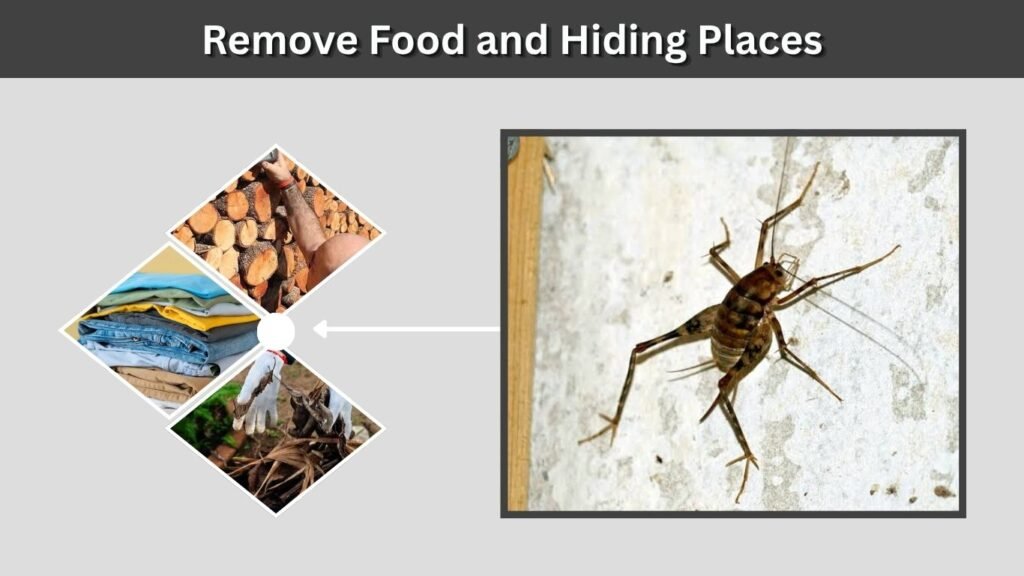
Spider crickets feed on decaying plant material, fungi, dead insects, and various organic materials. Indoors, they may also nibble on paper products, fabrics, carpeting, and stored items.
Remove clutter from infested rooms, especially:
- Cardboard boxes
- Newspaper and paper piles
- Damp firewood
- Old clothing
- Fabric stored on the floor
- Leaves and plant debris
- Empty containers
- Unused furniture
Replace cardboard storage boxes with tightly sealed plastic containers. Keep stored belongings elevated above the floor and leave space between containers and walls. Vacuum dust, insect remains, cobwebs, and organic debris from corners.
Outside, remove leaf piles, logs, stones, boards, and dense vegetation located directly beside the foundation. Store firewood off the ground and several feet away from the house.
Step 7: Seal Cracks and Entry Points
Once the area is clean and dry, prevent new spider crickets from entering.
Use exterior-grade caulk to close small cracks around windows, doorframes, pipes, cables, and the foundation. Install door sweeps beneath exterior and garage doors. Repair torn screens and replace damaged weatherstripping.
Cover necessary vents with suitable insect screening without blocking essential ventilation. Larger foundation openings may need mortar, expanding foam, metal mesh, or professional repair, depending on the location and building material.
Inspect the house during daylight. Light visible through a closed exterior door often indicates a gap large enough for insects to enter.
Step 8: Treat the Outdoor Habitat
Spider crickets normally live outdoors under logs, rocks, mulch, and plant debris. Creating a dry, open border around the foundation makes the area less attractive to them.
Rake away accumulated leaves and avoid placing thick mulch directly against the building. Trim shrubs and groundcover so they do not touch the walls. Correct poorly drained areas and remove objects trapping moisture near the foundation.
Do not leave wet pet food, decaying plants, or organic waste near doors. Close garage and basement doors when they are not being used.
Step 9: Consider Pesticides Only If Necessary
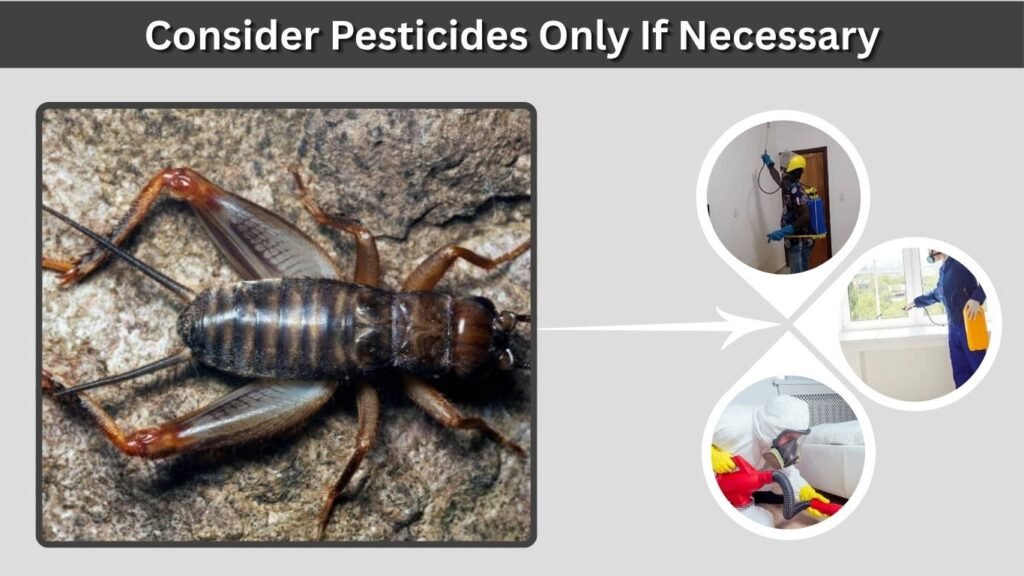
Indoor pesticides are often unnecessary for spider crickets when moisture, clutter, and entry points are properly addressed. Broadly spraying an entire room will not correct the conditions responsible for the infestation.
If nonchemical measures fail, choose a product specifically labeled for indoor cricket control and for the location where it will be applied. Limit treatment to permitted cracks, crevices, or entry points. Never use an outdoor-only pesticide inside the home.
Follow every instruction on the product label. Remove or cover food, ventilate as directed, and keep children and pets away for the period specified. Using extra pesticide will not make the treatment more effective and may create unnecessary risks. U.S. Environmental Protection Agency
Avoid relying on bug bombs or total-release foggers. They may expose living areas unnecessarily while failing to reach crickets hidden inside wall gaps, crawl spaces, and storage areas.
Step 10: Monitor the Area for New Activity
Continue checking sticky traps for at least two to three weeks. Record where crickets are being captured and inspect those areas again for moisture, clutter, or overlooked openings.
Finding one occasional cricket does not necessarily mean that a large infestation remains. However, repeated captures in the same location usually indicate a nearby entrance or damp hiding place.
Repeat vacuuming, maintain the dehumidifier, and replace traps when necessary. Long-term prevention depends more on keeping the building dry and sealed than on continuously applying insecticide.
When to Contact a Pest-Control Professional
Professional assistance may be necessary when spider crickets continue appearing in large numbers despite cleaning, drying, trapping, and sealing efforts.
Consider calling a licensed professional if:
- Crickets are emerging from walls or inaccessible crawl spaces.
- Dozens appear every night.
- The crawl space has standing water or structural damage.
- You cannot locate their entry points.
- Mold, damaged wood, or severe moisture problems are present.
- Safe treatment is difficult because of children, pets, or sensitive household members.
Ask the professional to identify and correct the source of the infestation, not simply spray the visible insects.
FAQs
Are spider crickets dangerous?
Spider crickets are not venomous and are not considered dangerous to people. They generally do not bite or sting. Their main problems are their frightening appearance, unpredictable jumping, contamination of storage spaces, and occasional damage to paper, fabric, or other organic materials.
Why do I have spider crickets in my house?
Spider crickets usually enter because the building offers moisture, darkness, shelter, and food. Leaking pipes, humid basements, cluttered crawl spaces, foundation openings, and wet outdoor debris near the house can all make an infestation more likely.
Will vinegar kill spider crickets?
Direct contact with strong vinegar may harm individual crickets, but vinegar is not a reliable infestation treatment. It does not provide lasting control or prevent other crickets from entering. Vacuuming, sticky traps, moisture reduction, and structural sealing are considerably more effective.
Do spider crickets reproduce inside houses?
They may survive and potentially reproduce in consistently damp, sheltered spaces, although many indoor sightings result from crickets entering from outside. A humid crawl space or basement can support them longer than a dry living area, making moisture control essential.
What is the fastest way to get rid of spider crickets?
Vacuum visible crickets, place sticky traps along walls, and run a dehumidifier in the affected space. Then remove cardboard and clutter, repair water leaks, and seal exterior gaps. This combination provides faster and more lasting control than killing individual crickets alone.
