
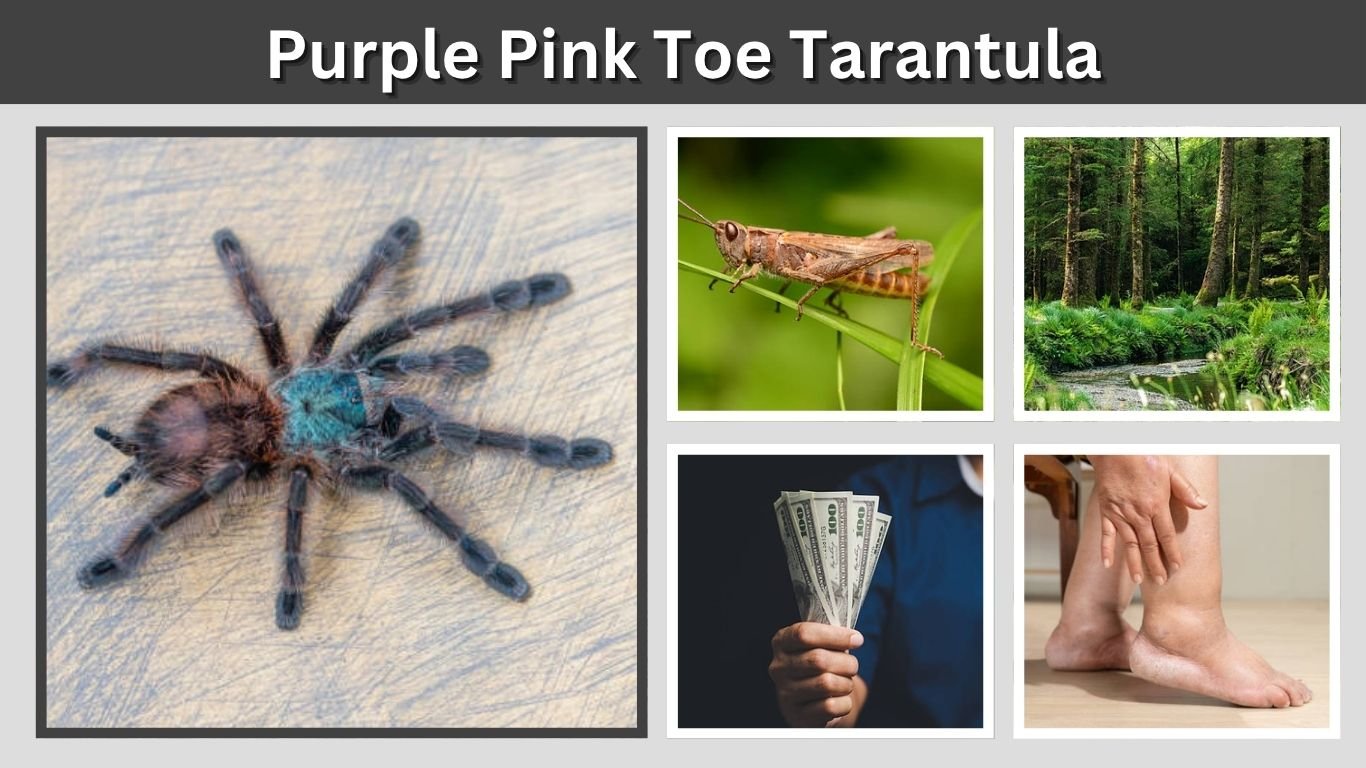
The purple pink toe tarantula is an attractive arboreal species recognized for its dark body, violet-blue iridescence, and pale toe tips. Scientifically named Avicularia purpurea, it is commonly called the Ecuadorian purple pink toe or Ecuador purple tarantula. Although it is not typically considered highly defensive, it can move quickly and requires more careful humidity and ventilation management than many terrestrial tarantulas. Its beautiful appearance and web-building behavior make it an excellent display species for prepared keepers.
Purple Pink Toe Tarantula Quick Facts
| Characteristic | Information |
| Scientific name | Avicularia purpurea |
| Common names | Purple pink toe, Ecuadorian purple tarantula |
| Family | Theraphosidae |
| Native range | Colombia, Ecuador, and Peru |
| Lifestyle | Arboreal |
| Adult size | Medium-sized tarantula |
| Temperament | Usually shy, fast, and defensive when disturbed |
| Diet | Insects and other small invertebrates |
| Keeper level | Beginner to intermediate |
| Housing | Tall, well-ventilated enclosure |
The World Spider Catalog recognizes Avicularia purpurea Kirk, 1990 as a valid species occurring in Colombia, Ecuador, and Peru. The species was originally described from Ecuador, which is why “Ecuadorian purple” remains one of its most widely used common names.
Appearance and Identification
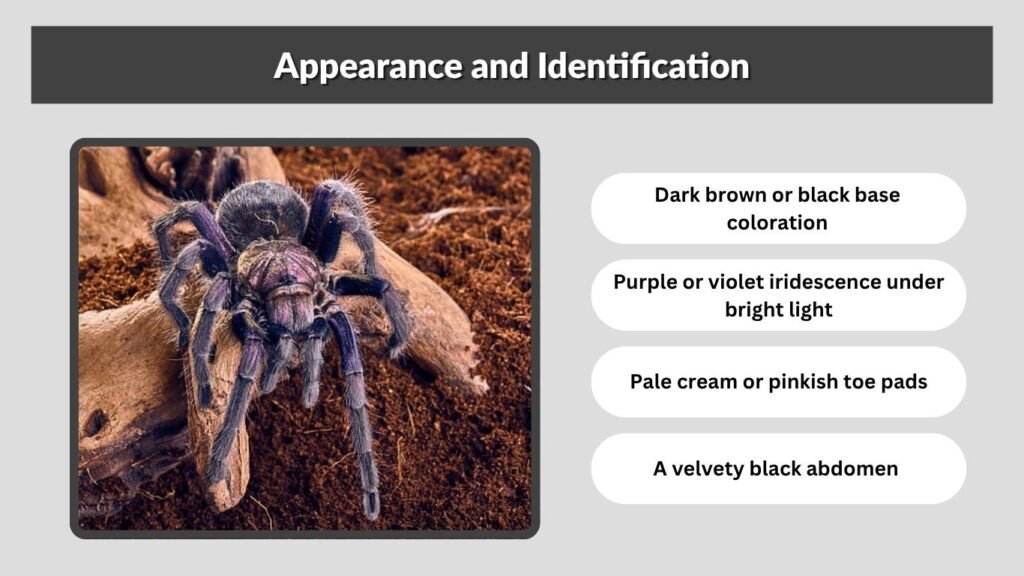
The purple pink toe is best known for the metallic purple sheen visible across its carapace, legs, and pedipalps. The intensity of the color depends on lighting, age, geographic form, and the amount of time since the spider’s last molt.
Identification features
Look for the following characteristics:
- Dark brown or black base coloration
- Purple or violet iridescence under bright light
- Pale cream or pinkish toe pads
- A velvety black abdomen
- Long brown protective hairs on the legs
- A relatively slender arboreal build
- Large foot pads adapted for climbing
Research has identified northern and southern forms. The northern form, associated with Ecuador and Colombia, generally displays a stronger purple shine and darker abdomen. The southern form from northern Peru may have grayer leg hairs, lighter abdominal hairs, and less intense iridescence.
How big does a purple pink toe tarantula get?
The purple pink toe is a medium-sized tarantula. Adult females usually appear heavier and more robust, while mature males become thinner and leggier. Exact dimensions vary among individuals, and sellers may measure spiders differently.
Rather than choosing an enclosure from a single advertised size, keepers should measure the spider’s diagonal leg span and provide enough vertical room for climbing, web construction, and molting.
Male vs female
Adult females usually have broader abdomens and longer potential lifespans. Mature males develop reproductive structures on their pedipalps and may become more active as they search for females.
Body shape alone cannot reliably determine sex, especially in young tarantulas. Examining the inside of a well-preserved molt is usually the most dependable method available to ordinary keepers.
Purple Pink Toe Tarantula Natural Habitat
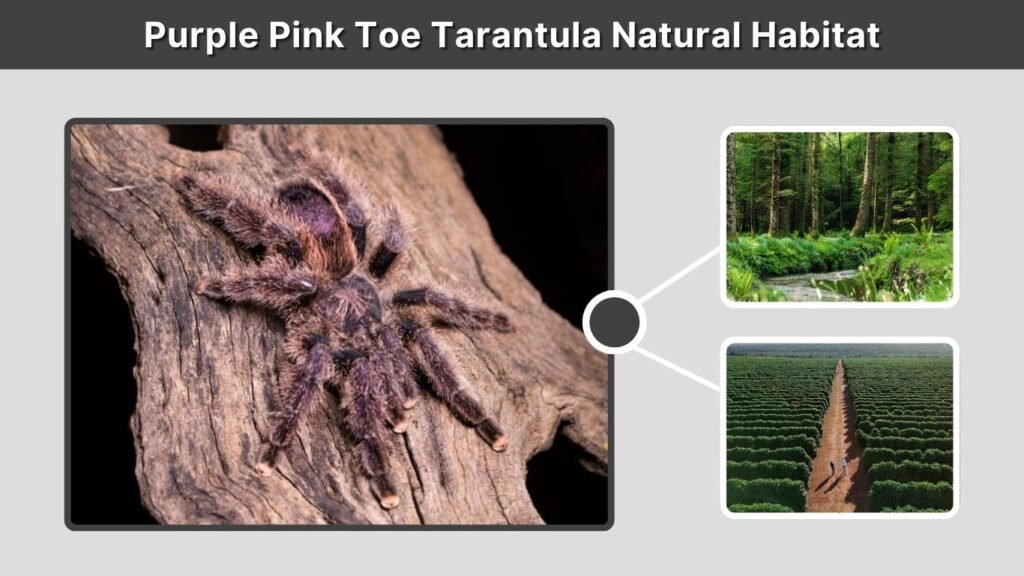
The purple pink toe is an arboreal species associated with the Amazonian regions of western South America. Field observations show that it can occupy mature forest, secondary vegetation, cultivated areas, and even structures near human settlements. One documented juvenile was found approximately three meters above the ground on a tree in the Ecuadorian Amazon.
Arboreal behavior
Unlike terrestrial tarantulas, this species spends much of its time above the ground. It may hide inside tree cavities, behind bark, among vegetation, or within a thick silk retreat attached to vertical surfaces.
In captivity, it frequently builds a web tunnel between upright cork bark, artificial leaves, branches, and enclosure walls. An established tarantula may spend much of the day inside this retreat and emerge after dark.
Purple Pink Toe Tarantula Care
Care should focus on a secure vertical enclosure, strong ventilation, access to clean water, and stable climbing surfaces. Trying to maintain constantly saturated rainforest conditions can create stale air, mold, and other enclosure problems.
Enclosure setup
A suitable enclosure should be taller than it is wide and include:
- Ventilation openings on multiple sides
- A secure front- or side-opening door
- Upright cork bark
- Artificial or live foliage
- Several webbing anchor points
- A shallow substrate layer
- A clean water dish
- An escape-proof lid
Published tarantula husbandry guidance recommends taller enclosures for arboreal species, allowing them to live above ground and benefit from increased ventilation. Side-opening doors are useful because arboreal tarantulas often build their retreats near the top.
Enclosure size
The enclosure should be selected according to the spider’s present size. Spiderlings belong in small vertical containers where they can easily locate prey and water. Juveniles can be upgraded gradually, while adults need a stable arboreal enclosure with enough space to molt safely.
Avoid placing a tiny baby in an oversized display tank. A very large enclosure can make feeding and observation unnecessarily difficult.
Substrate
Add a shallow layer of coconut fiber, chemical-free topsoil, or a suitable soil mixture. This species does not require the deep burrowing substrate needed by many terrestrial tarantulas.
The substrate helps absorb waste, hold decorations securely, and provide limited moisture. It should not remain waterlogged. Wood chips, gravel, scented bedding, and soil containing fertilizers or pesticides should be avoided.
Ventilation and moisture
Cross-ventilation is essential. Air should be able to enter through one side of the enclosure and exit through another rather than relying only on holes in the lid.
Provide a full water dish and add moisture carefully when needed. One corner of the substrate may be lightly dampened, but most of the enclosure should not remain soaked. Condensation, persistent mold, and stagnant odors suggest that the habitat is too wet or poorly ventilated.
The spider’s native environment can be humid, but its elevated lifestyle exposes it to considerably more airflow than would be present inside a closed, wet container. This makes the combination of ventilation and hydration more important than chasing an exact humidity percentage. The relationship between its arboreal habits and elevated silk retreats is documented in field and taxonomic research.
Temperature
Stable household temperatures are generally more important than extreme warmth. Keep the enclosure away from direct sunlight, radiators, air-conditioning vents, and other sources of rapid temperature change.
Never use a heat lamp or hot rock. When additional warmth is necessary, heating the room is generally safer than creating a dangerously hot surface within the enclosure.
Purple Pink Toe Tarantula Feeding
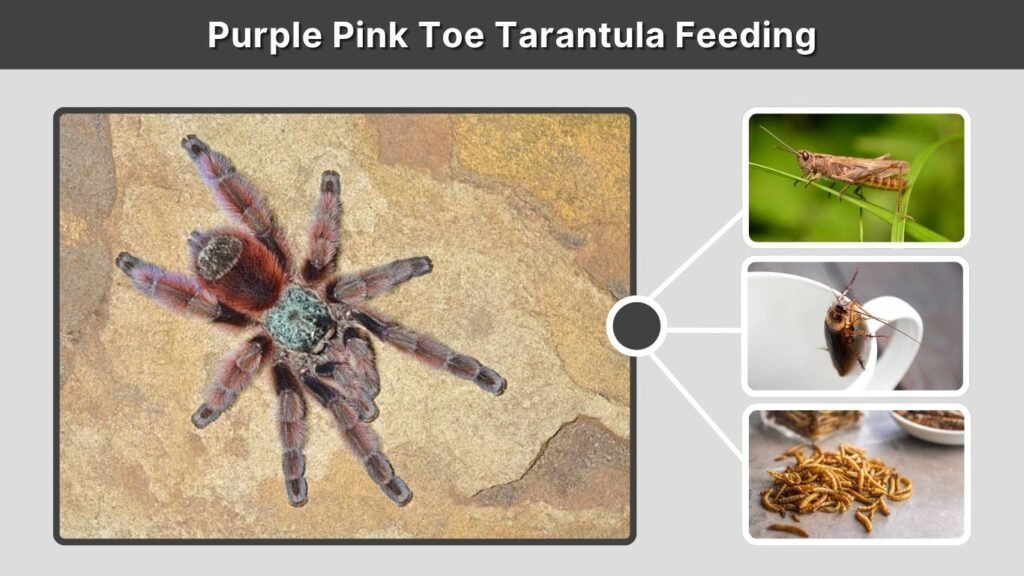
Purple pink toe tarantulas can eat captive-bred insects such as crickets, roaches, mealworms, and appropriately sized larvae. Prey should be small enough for the tarantula to overpower safely.
Young spiders may be offered small meals once or twice per week. Larger juveniles and adults can usually be fed less frequently. Adjust the schedule according to the spider’s body condition rather than trying to force it to eat on fixed days.
Remove uneaten prey, particularly when the tarantula refuses food or appears close to molting.
Temperament and Handling
The purple pink toe is often shy rather than openly aggressive. When threatened, it is more likely to retreat, run, jump, release defensive material, or assume a warning posture. However, individual temperament varies.
Handling is not recommended. Arboreal tarantulas can accelerate suddenly, and an unexpected movement may cause the keeper to drop or injure the spider. Handling also provides no health or social benefit to the tarantula.
Because it can move quickly and requires careful ventilation management, it may suit a well-prepared beginner, but an intermediate keeper will usually find it easier to manage.
Bite, Venom, and Defensive Hairs
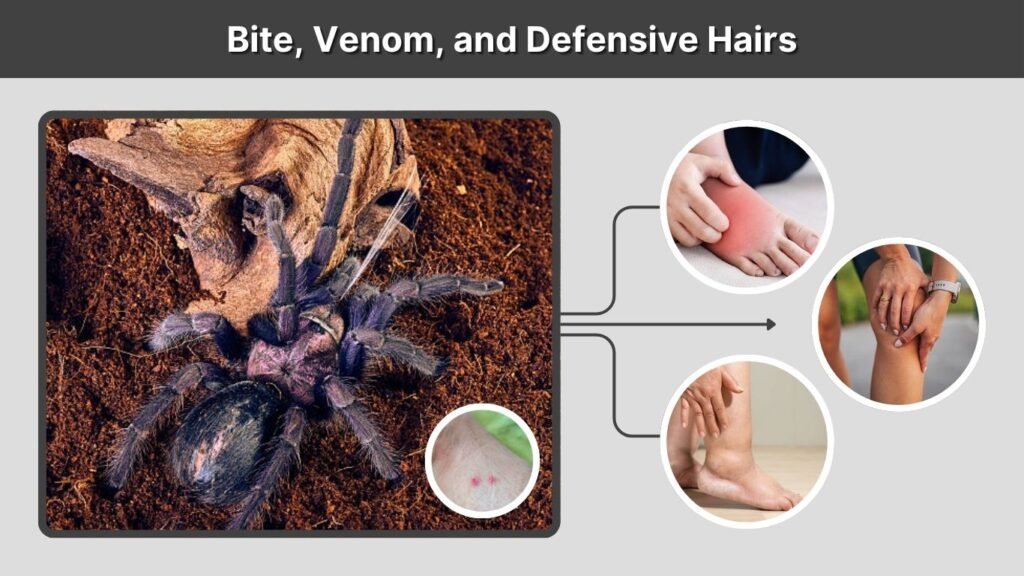
The purple pink toe possesses venom, as all tarantulas do, and can bite when restrained or seriously threatened. A bite may cause puncture wounds, localized pain, redness, or swelling. The effects of this particular species’ venom have not been thoroughly documented in humans.
Avoid touching your face during enclosure maintenance. Tarantula hairs can irritate the skin, and accidental eye exposure may cause prolonged inflammation requiring medical attention. Published medical reports have documented significant eye irritation after exposure to tarantula hairs.
After a bite, wash the wound and seek medical care if pain or swelling worsens, the wound becomes infected, or symptoms such as breathing difficulty, dizziness, or widespread swelling develop.
Purple Pink Toe Tarantula Molting
Before molting, the tarantula may refuse food, become less active, darken in appearance, and seal itself inside its web retreat. It may molt while lying on its back or suspended within webbing.
Remove all live prey once premolt behavior begins. Do not open the retreat or attempt to assist the spider. After molting, wait until its fangs have hardened before feeding again. Larger spiders generally need more recovery time than babies.
Freshly molted purple pink toes often display their strongest violet coloration. The colors may become less intense as the new exoskeleton ages.
Buying a Purple Pink Toe Tarantula
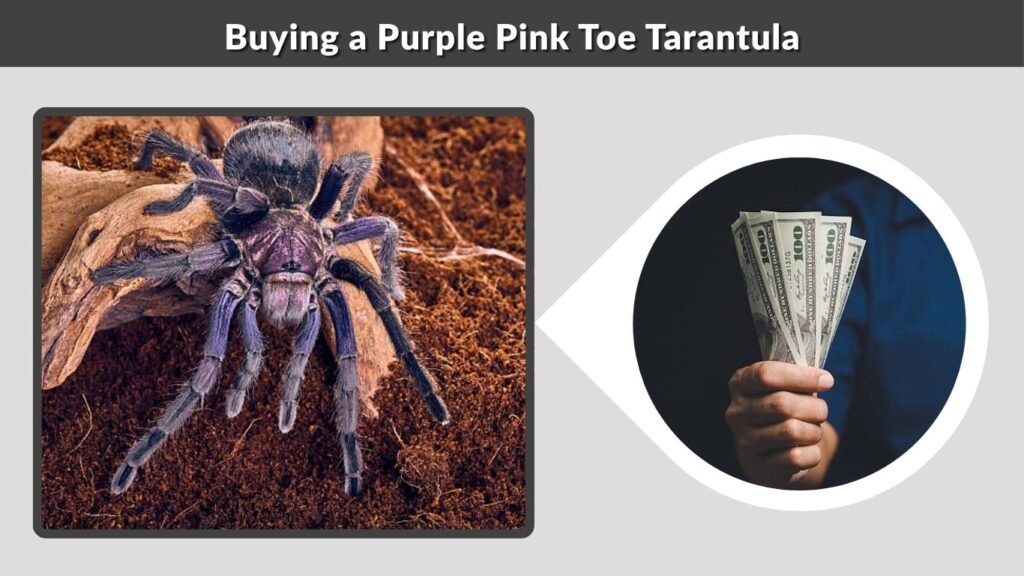
Choose a captive-bred specimen from a responsible breeder or specialist seller. Ask for the scientific name because vague labels such as “purple haze,” “purple tree tarantula,” or “Peruvian purple” may be used for more than one species.
Confirm the spider’s approximate size, feeding history, sex when known, and the seller’s live-arrival policy. Adult females are generally more expensive because they have a longer remaining lifespan and confirmed sex.
Do not assume that every spider sold as a Peru purple pink toe is a different species. The southern form of Avicularia purpurea occurs in northern Peru and may look less intensely purple than northern specimens.
Purple pink toe tarantulas should be housed individually. Keeping several together creates an unnecessary risk of stress, injury, and cannibalism.
FAQs
Are purple pink toe tarantulas good for beginners?
They can suit prepared beginners who understand arboreal enclosure design, ventilation, and safe rehousing. However, their speed and sensitivity to poor enclosure conditions may make them more challenging than hardy terrestrial species. They are often a better choice for beginner-to-intermediate keepers.
Is a purple pink toe tarantula poisonous?
It is venomous rather than poisonous because it delivers venom through its fangs. A bite should be avoided, although this species is not normally considered eager to bite. Handling and unnecessary disturbance increase the possibility of defensive behavior.
How often should a purple pink toe be fed?
Spiderlings can receive small prey once or twice weekly, while juveniles and adults generally need fewer meals. Feeding should depend on abdomen size, growth, and activity. Remove uneaten insects immediately when the tarantula appears to be entering premolt.
Does a purple pink toe need high humidity?
It requires hydration but should not be kept in a constantly wet, poorly ventilated enclosure. A water dish, occasional controlled moisture, and strong cross-ventilation create safer conditions than daily heavy spraying or continuously saturated substrate.
Can you handle a purple pink toe tarantula?
Handling is strongly discouraged. The tarantula can run or jump unexpectedly, creating a risk of escape or a dangerous fall. It may also bite or expose the keeper to irritating hairs when frightened. Observation through the enclosure is safer for both spider and owner.
