
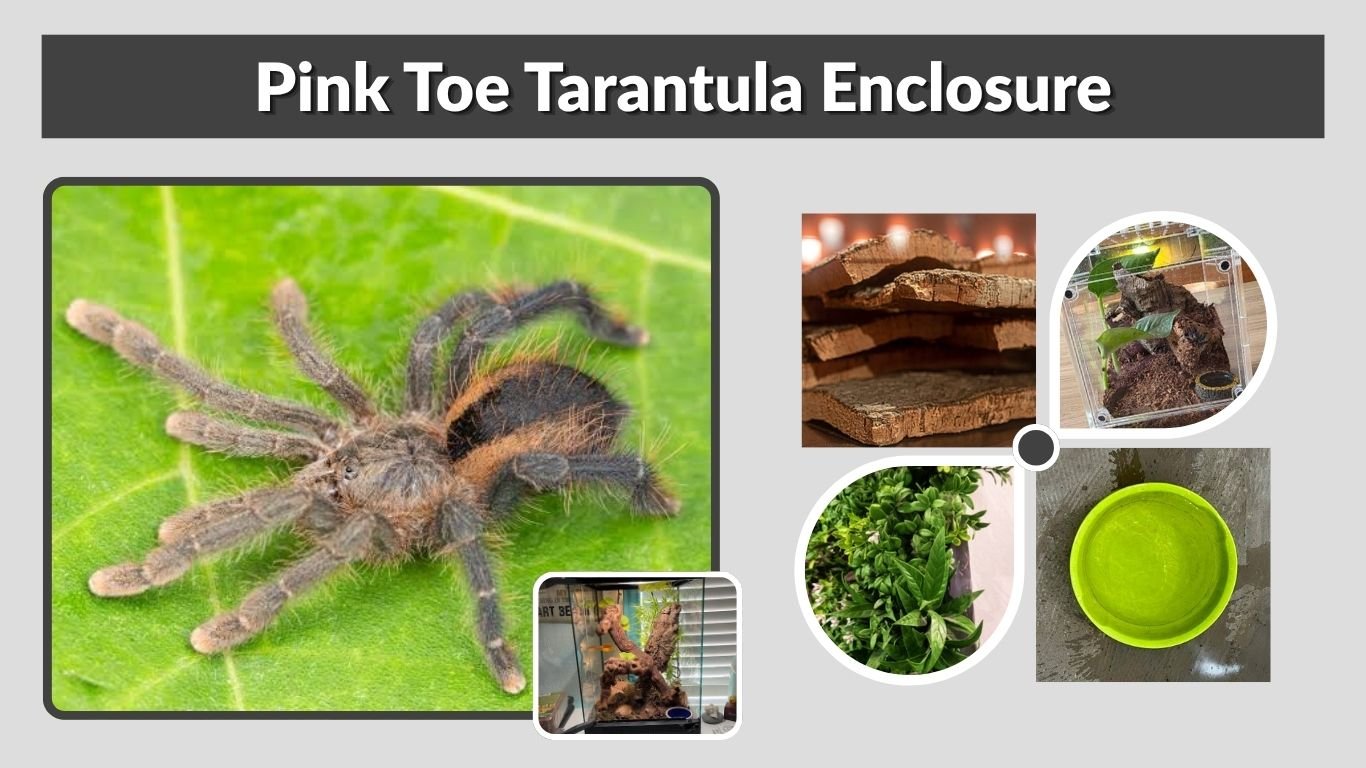
A proper pink toe tarantula enclosure should provide height, strong cross-ventilation, secure climbing surfaces and a sheltered place for web building. Unlike terrestrial tarantulas, pink toes spend most of their time above the ground, so a wide, low tank is unsuitable. The enclosure should be taller than it is wide, but it does not need to resemble a constantly wet rainforest. Fresh airflow, access to water and carefully managed moisture are more important than maintaining a high humidity reading.
What Type of Enclosure Does a Pink Toe Tarantula Need?
The common pink toe tarantula, Avicularia avicularia, is an arboreal species. It naturally prefers elevated surfaces and commonly rests on bark, plants or enclosure walls rather than walking across the substrate. The World Spider Catalog recognizes Avicularia avicularia as a valid species within the genus Avicularia.
Essential enclosure features
The best enclosure should have:
- A vertical or arboreal design
- Ventilation holes on multiple sides
- A secure front- or side-opening door
- Upright cork bark
- Artificial or live plant cover
- Webbing anchor points near the top
- A clean water dish
- An escape-proof lid and door
Front-opening enclosures are particularly convenient because pink toes often create web tunnels near the upper section. Opening a top lid can repeatedly damage the web and disturb the spider.
Acrylic, glass or plastic?
Acrylic, glass and clear plastic containers can all work when properly modified. The material matters less than the enclosure’s proportions, ventilation and security.
Commercial acrylic arboreal enclosures often provide convenient side openings and cross-ventilation. A modified plastic container can also be suitable for a spiderling or juvenile, provided the ventilation holes are smooth, correctly sized and too small for the spider to escape.
Pink Toe Tarantula Enclosure Size
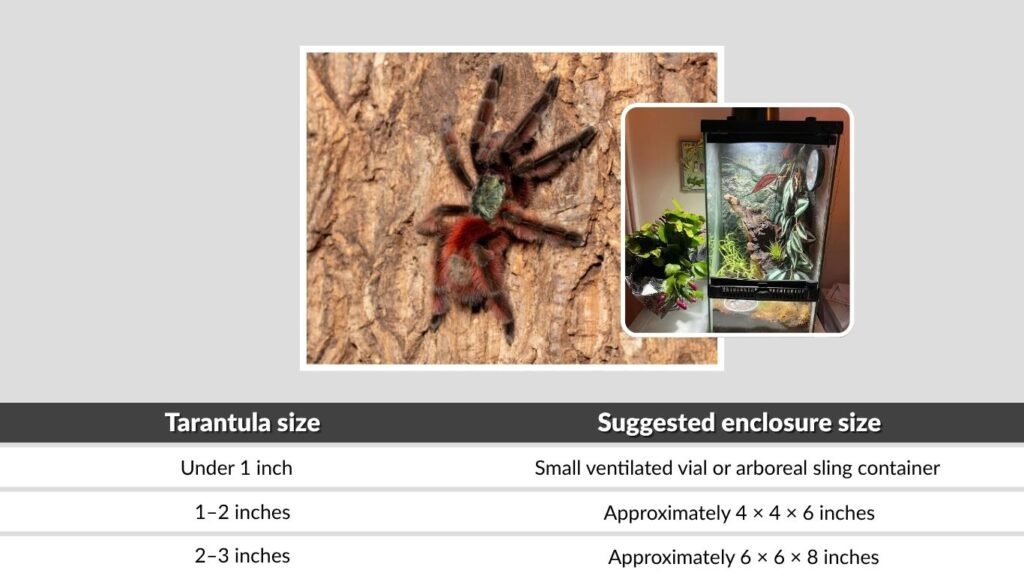
An enclosure should match the tarantula’s current size rather than the size it may eventually reach. A container that is excessively large can make prey harder to locate and may complicate maintenance, while an enclosure that is too small restricts web building and movement.
Adult common pink toes generally develop a leg span of approximately 3.5–5 inches. Individual size varies according to sex, age and locality.
| Tarantula size | Suggested enclosure size |
| Under 1 inch | Small ventilated vial or arboreal sling container |
| 1–2 inches | Approximately 4 × 4 × 6 inches |
| 2–3 inches | Approximately 6 × 6 × 8 inches |
| 3–5 inches | Approximately 8 × 8 × 12 inches or larger |
These measurements are practical examples rather than strict rules. The enclosure should provide enough vertical room for climbing while still allowing the spider to find prey and water easily.
How much height is necessary?
A useful enclosure should provide approximately two to three times the tarantula’s diagonal leg span in usable height. However, the interior should not be left completely empty. Cork bark, foliage and branches allow the spider to move safely between different levels.
Pink toes can jump or move quickly when startled. Therefore, unnecessary open height should be broken up with sturdy decorations to reduce the distance of a possible fall.
When should the enclosure be upgraded?
Move the tarantula to a larger enclosure when it appears cramped, has limited web-building space or can no longer move comfortably around its retreat. Avoid frequent rehousing because it destroys established webbing and causes unnecessary disturbance.
A spiderling does not need an adult enclosure immediately. Gradual upgrades usually make feeding, hydration and observation easier.
How to Set Up a Pink Toe Tarantula Enclosure
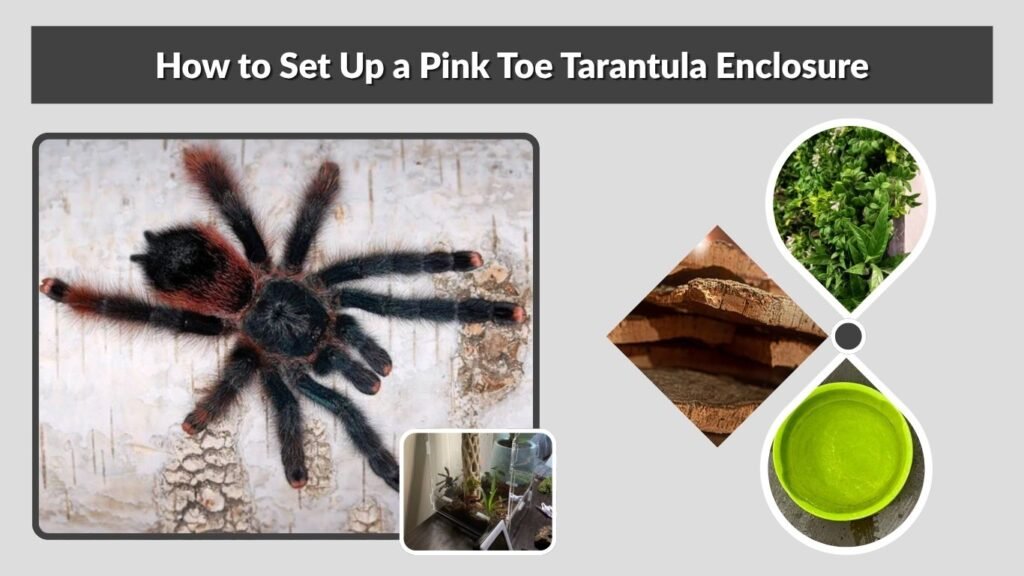
The enclosure should imitate the structure of a tree retreat rather than a ground-level burrow. Every decoration must be stable because the tarantula may climb, web over or hang from it.
Step-by-step setup
- Add approximately 1–2 inches of suitable substrate.
- Position a tall cork-bark slab against the back or side.
- Add artificial foliage around the upper corners.
- Create several webbing anchor points.
- Place a shallow water dish at ground level.
- Confirm that ventilation holes are open and unobstructed.
- Check every door, gap and opening before introducing the spider.
A vertical cork-bark tube or curved slab provides both a climbing surface and a secluded retreat. Leaves and thin branches placed near the bark encourage the tarantula to create a silk tunnel.
Best substrate
Suitable substrate choices include:
- Coconut fiber
- Chemical-free topsoil
- Peat-free soil mixtures
- A blend of topsoil and coconut fiber
Pink toes do not require deep substrate for extensive burrowing. However, a shallow layer absorbs waste, supports decorations and helps manage moisture. Avoid gravel, sand, wood chips, scented materials and soil containing fertilizers or pesticides.
Water dish placement
Keep a clean water dish available at all times. For adults, place it on the substrate where it can be easily removed and cleaned. A small dish can also be attached higher in the enclosure, but it must be firmly secured.
Spiderlings may drink droplets from webbing or enclosure walls, but carefully placed water droplets should supplement rather than replace proper ventilation and appropriate hydration.
Ventilation and Humidity
Ventilation is one of the most important parts of a pink toe tarantula enclosure. Older care advice often emphasized keeping Avicularia enclosures constantly humid, but experienced keepers increasingly recommend fresh airflow, a water dish and controlled moisture instead of stagnant, saturated conditions.
Why cross-ventilation matters
Cross-ventilation means air can enter one side of the enclosure and exit through another. Holes should be placed on opposing sides, ideally at both lower and upper levels.
Top ventilation alone may not move enough air through the lower section. An enclosure with condensation, a sour smell or constantly wet walls may be retaining excessive moisture.
How moist should the enclosure be?
Keep most of the substrate relatively dry while maintaining a full water dish. Occasionally overflow a small amount of water into one corner when additional moisture is needed, allowing that area to dry partially before repeating.
Avoid soaking the entire enclosure or spraying it heavily every day. A wet enclosure combined with weak ventilation can encourage mold, mites and stagnant conditions. Good airflow remains essential whenever moisture is added.
Temperature
Stable room temperatures comfortable for people are generally appropriate. Protect the enclosure from direct sunlight, radiators, air conditioners and sudden temperature changes.
Do not place heat mats underneath an arboreal enclosure. When supplemental warmth is necessary, warm the room rather than creating a dangerously hot surface inside the habitat.
Best Pink Toe Tarantula Enclosure Ideas
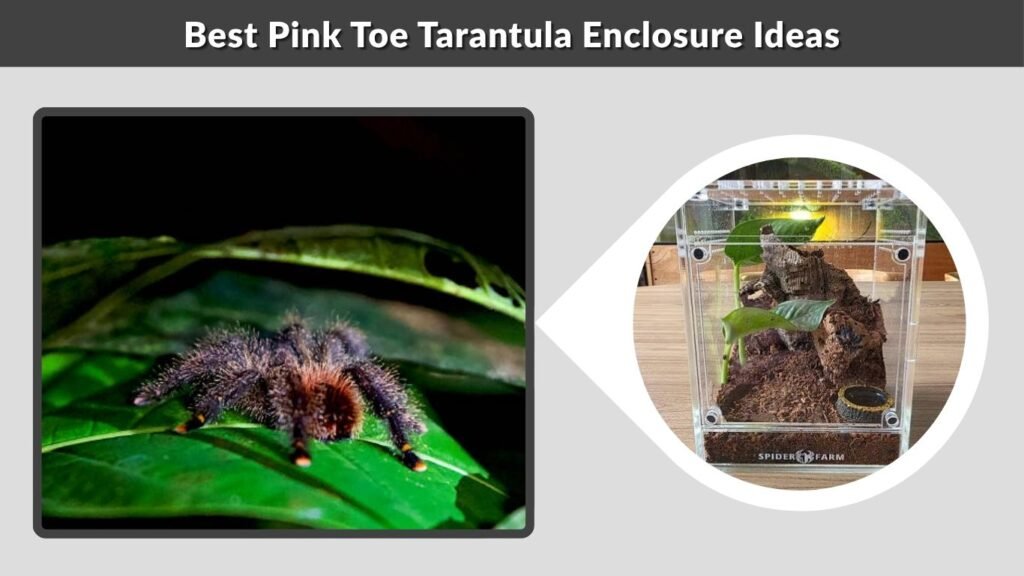
A practical setup can be simple or decorative. The tarantula benefits more from secure structure and good airflow than from an expensive naturalistic display.
Simple cork-bark setup
Place one tall cork-bark slab against the rear wall and add artificial leaves near the upper section. This design is inexpensive, easy to clean and provides plenty of web attachment points.
Naturalistic planted setup
A bioactive-style enclosure may include live plants, leaf litter and springtails. However, live plants often require moisture, so ventilation must remain strong. Avoid allowing the substrate to become continuously waterlogged.
Removable interior setup
Attach artificial foliage and lightweight branches to a removable cork-bark panel. This makes deep cleaning easier because much of the interior can be removed as one piece without dismantling every decoration.
Cleaning a Pink Toe Tarantula Enclosure
Pink toes frequently deposit waste on glass, doors, foliage and bark. Regular spot cleaning is safer and less stressful than repeatedly replacing the entire setup.
Routine cleaning
Remove:
- Uneaten feeder insects
- Feeder remains
- Moldy material
- Visible waste
- Dirty water
- Damaged or unstable decorations
Clean waste from the glass using water and a soft cloth or paper towel. Avoid household cleaners, fragrances, pesticides and chemical disinfectants inside an occupied enclosure.
Deep cleaning
A full substrate replacement is normally needed only when there is persistent mold, a pest problem, flooding or another serious hygiene issue. Established web tunnels are important retreats, so destroying them without a clear reason can stress the spider.
Move the tarantula into a secure temporary container before performing major maintenance.
Common Enclosure Mistakes
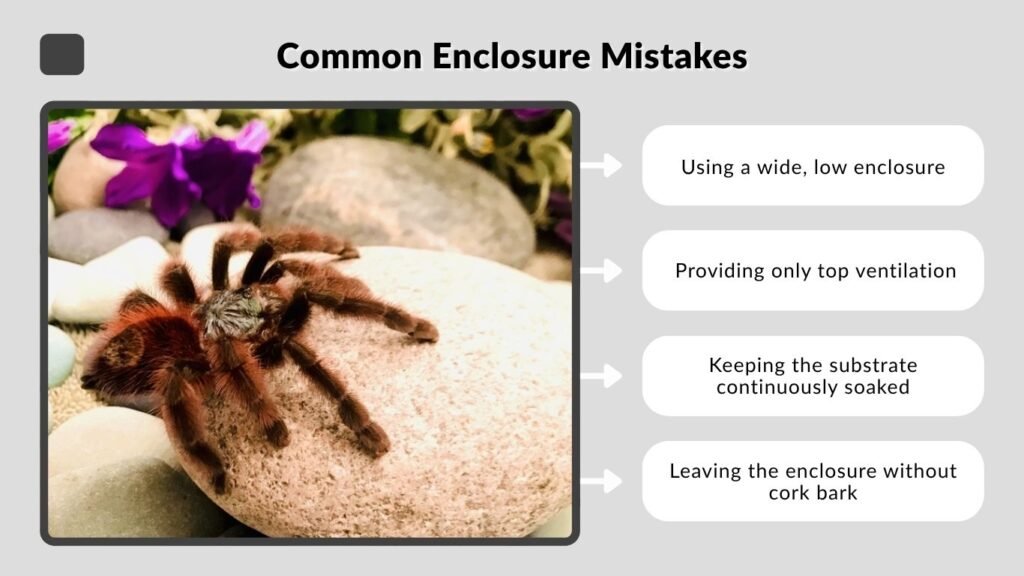
Many problems result from copying a terrestrial setup or trying to maintain excessive humidity.
Avoid these mistakes:
- Using a wide, low enclosure
- Providing only top ventilation
- Keeping the substrate continuously soaked
- Leaving the enclosure without cork bark
- Using an insecure mesh lid
- Placing decorations that can fall
- Blocking the front door with webbing
- Using bright heat lamps
- Housing two tarantulas together
- Handling the tarantula during maintenance
Pink toe tarantulas should be housed individually. A secure enclosure is essential because they are capable climbers and can move surprisingly quickly when disturbed.
Antilles Pink Toe Enclosure
The Antilles pink toe is usually sold under the scientific name Caribena versicolor, not Avicularia avicularia. Although both are arboreal tarantulas requiring vertical space, cork bark, foliage and substantial cross-ventilation, they are different species.
An Antilles pink toe enclosure can follow the same basic structural design: a tall container, multiple ventilation zones, a water dish and plenty of elevated webbing anchors. Juveniles are especially known for constructing extensive silk retreats around cork bark and foliage.
FAQs
What is the best enclosure for a pink toe tarantula?
The best option is a secure, vertically oriented enclosure with extensive cross-ventilation. It should include upright cork bark, foliage, webbing anchors, shallow substrate and a water dish. Front-opening designs are useful because they are less likely to destroy web tunnels near the top.
What size enclosure does an adult pink toe need?
Many adults can be housed comfortably in an enclosure measuring approximately 8 × 8 × 12 inches, although larger specimens may benefit from additional room. Choose the enclosure according to the tarantula’s leg span and provide more usable height than floor space.
Does a pink toe enclosure need high humidity?
It needs access to moisture, but the enclosure should not remain wet and stagnant. A full water dish, occasional controlled moisture and excellent cross-ventilation are generally safer than constant misting. Condensation and permanently soaked substrate often indicate inadequate airflow.
Does a pink toe tarantula need a hide?
Yes. An upright cork-bark tube, curved slab or similar structure gives the tarantula a secure elevated retreat. Add foliage around the upper end so the spider can connect the materials with silk and construct a protected web tunnel.
How often should I clean the enclosure?
Remove waste, prey remains and dirty water whenever noticed. Complete substrate changes should be infrequent and reserved for mold, pests, flooding or serious contamination. Routine spot cleaning preserves the tarantula’s established web and reduces unnecessary disturbance.
