
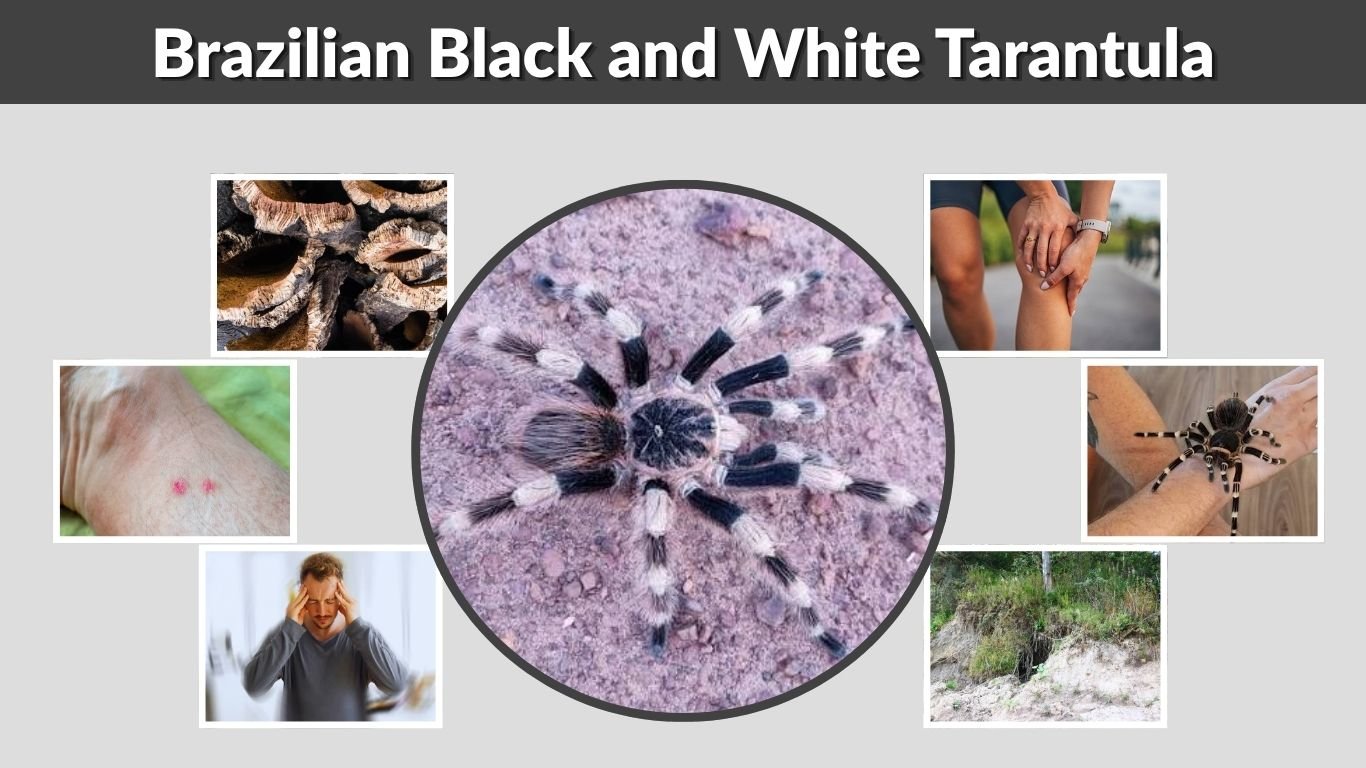
The Brazilian black and white tarantula is a striking terrestrial spider known for its contrasting leg bands, shaggy appearance, rapid growth, and strong feeding response. Scientifically named Nhandu coloratovillosus, it is also called the Brazilian giant black and white tarantula or bombardier tarantula. Although its husbandry is relatively straightforward, its defensive temperament and irritating hairs make it better suited to keepers with some tarantula experience.
Brazilian Black and White Tarantula Quick Facts
This large New World tarantula belongs to the family Theraphosidae. It is primarily kept as a display animal because handling can expose both the keeper and the spider to unnecessary risk.
| Characteristic | Information |
| Scientific name | Nhandu coloratovillosus |
| Common names | Brazilian black and white, bombardier tarantula |
| Native range | Brazil |
| Lifestyle | Terrestrial and opportunistic burrower |
| Adult leg span | Approximately 6–7 inches |
| Temperament | Skittish, defensive and fast-moving |
| Urticating hairs | Yes |
| Diet | Insects and other suitable invertebrate prey |
| Recommended keeper level | Intermediate |
| Female lifespan | Commonly estimated at 10–15 years in captivity |
The accepted scientific name is Nhandu coloratovillosus (Schmidt, 1998). It was originally described under the name Brazilopelma coloratovillosum before being placed in the genus Nhandu.
Brazilian Black and White Tarantula Identification
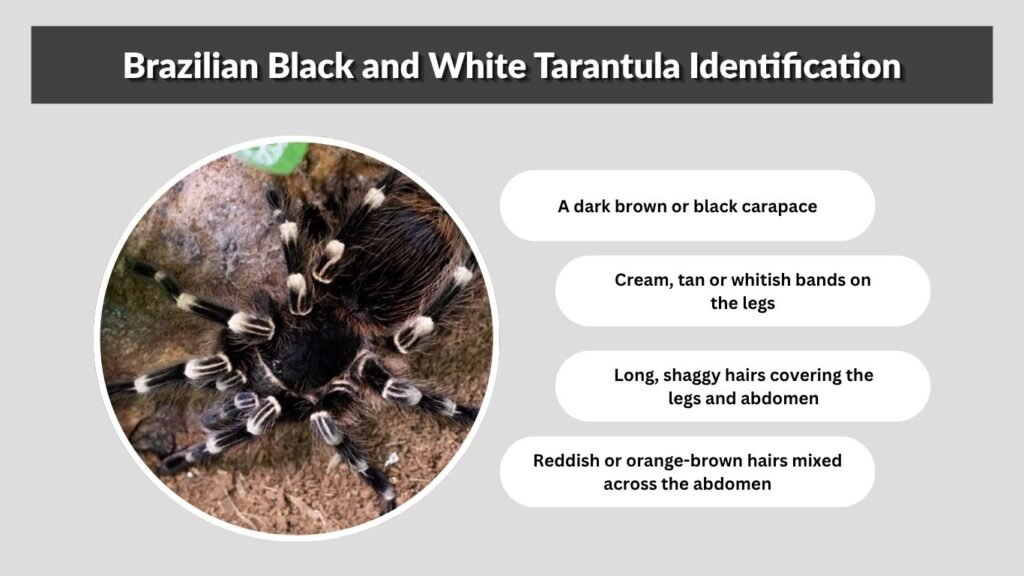
The species is sometimes confused with other striped Brazilian tarantulas. Its shaggy covering of hairs and less sharply defined leg bands help distinguish it from the Brazilian whiteknee.
Color and physical features
Identification features include:
- A dark brown or black carapace
- Cream, tan or whitish bands on the legs
- Long, shaggy hairs covering the legs and abdomen
- Reddish or orange-brown hairs mixed across the abdomen
- A heavy-bodied terrestrial appearance
- Dark feet with contrasting lighter leg sections
Adults usually develop stronger color contrast than young spiderlings. However, coloration can appear different before and after molting, and lighting may make the pale hairs look white, cream, gold or pinkish.
Brazilian black and white tarantula size
Adult females commonly reach a diagonal leg span of approximately 6–7 inches. Males may have a similar leg span but generally become slimmer and leggier after reaching maturity. Individual size depends on sex, genetics, feeding frequency and environmental conditions.
Male versus female
Female Brazilian black and white tarantulas usually have heavier bodies and live considerably longer. Mature males develop reproductive structures, including emboli on their pedipalps, and may develop tibial hooks depending on the species’ anatomy.
Reliable sex determination is normally performed by examining the inside of a well-preserved molt. Estimating sex only from body shape is uncertain, especially with juveniles.
Brazilian Black and White Tarantula Natural Habitat and Behavior
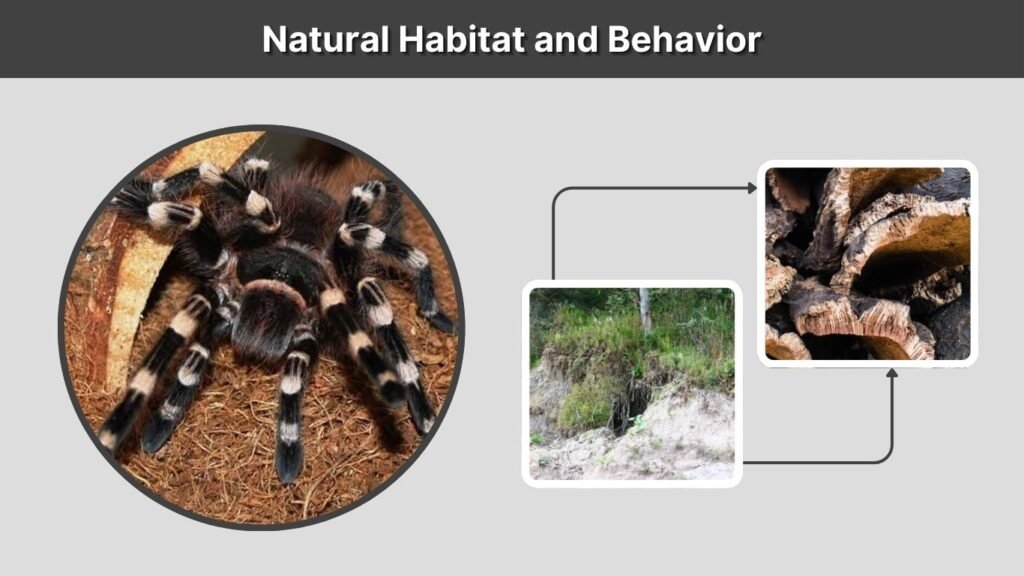
Nhandu coloratovillosus is associated with terrestrial habitats in Brazil, where it can shelter beneath ground cover or occupy shallow burrows. In captivity, it often digs under cork bark or rearranges substrate around its retreat.
Burrowing behavior
This tarantula should be given enough substrate to excavate, even when it spends much of its time in the open. Some individuals construct deep retreats, while others make only a shallow depression beneath a hide.
Burrowing is normal and does not necessarily indicate poor health. A tarantula may also seal its entrance with soil before molting or when it wants to remain undisturbed.
Temperament
The Brazilian black and white tarantula is often described as nervous, defensive and quick to flick urticating hairs. Individual behavior varies, but many specimens react rapidly to disturbance and may run unexpectedly during feeding or enclosure maintenance.
Because of this unpredictability, it is not generally recommended as a first tarantula. It makes a visually impressive display species for keepers who are comfortable working around faster terrestrial spiders.
Brazilian Black and White Tarantula Care
Successful care depends more on a secure enclosure, suitable substrate and access to water than on maintaining an exact humidity percentage.
Enclosure setup
An adult needs a horizontally oriented, escape-proof enclosure with good ventilation. Floor space is more important than height because terrestrial tarantulas can be seriously injured by falling.
The enclosure should contain:
- Several inches of compacted substrate
- A cork-bark or similar ground-level hide
- A clean water dish
- Cross-ventilation
- Limited empty space above the substrate
- Secure openings without dangerous gaps
A useful guideline is to provide floor dimensions several times the spider’s diagonal leg span while keeping climbing height low. Spiderlings should be kept in smaller containers so they can locate prey and water easily.
Substrate and moisture
Coconut fiber, chemical-free topsoil or a suitable soil-based mixture can be used. The substrate should hold a burrow without remaining swampy.
Keep the lower portion slightly moist while allowing much of the surface to become relatively dry. This creates a moisture gradient and reduces the likelihood of stagnant, overly wet conditions. Adequate ventilation is essential because constantly saturated substrate can encourage mold and mites.
Temperature
Normal indoor temperatures comfortable for people are generally suitable. Avoid placing the enclosure in direct sunlight, beside a heater or in an area with major temperature fluctuations.
Heating lamps and hot rocks should never be used. When additional warmth is genuinely necessary, the room should be warmed rather than creating a dangerously hot surface inside the enclosure.
Feeding and water
Juveniles and adults can eat appropriately sized crickets, roaches, mealworms and similar captive-bred feeder insects. Prey should not be larger than the tarantula’s abdomen.
Young spiders can be offered food more frequently, while adults usually require fewer meals. Remove uneaten prey, particularly when the tarantula appears ready to molt. A clean water dish should remain available at all times.
Refusing food is not always a problem. Tarantulas frequently stop eating before a molt, and adults can remain without food for extended periods.
Urticating Hairs, Bite and Venom
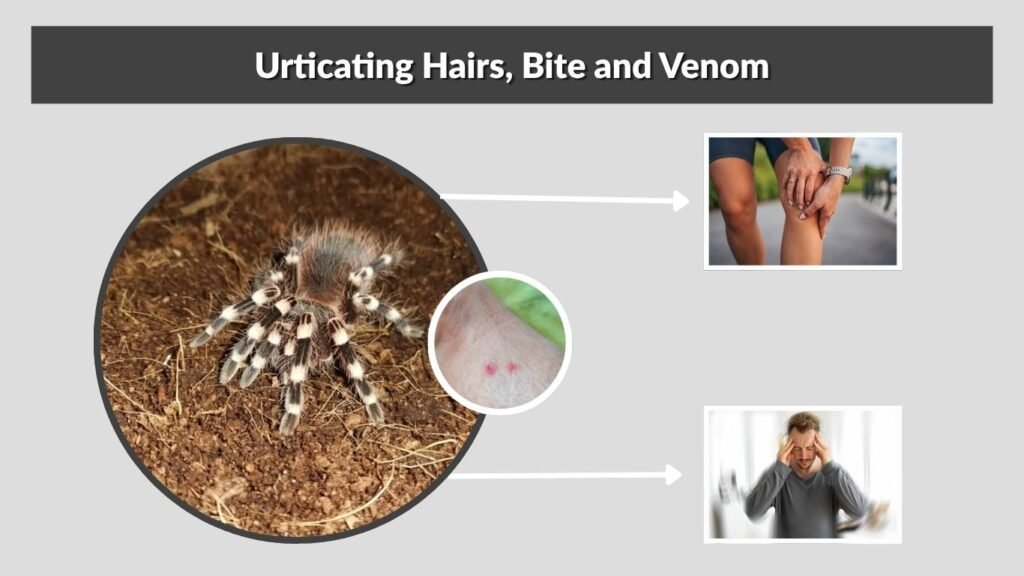
The Brazilian black and white tarantula has two main defensive tools: urticating abdominal hairs and venom delivered through its fangs.
Urticating hairs
This species is known for readily kicking loose hairs toward a perceived threat. These microscopic hairs can cause itching, redness and skin irritation. Eye exposure can be considerably more serious.
Avoid placing your face near the open enclosure. Wear gloves when removing contaminated substrate, avoid rubbing your eyes and wash exposed skin after maintenance. Its tendency to release hairs explains the commonly used name “bombardier tarantula.”
Is its bite dangerous?
A bite may cause puncture wounds, pain, swelling and other localized symptoms. The medical effects of this particular species’ venom are not well characterized, so a bite should not be treated casually.
Wash the area, control bleeding and seek medical advice when symptoms are severe, worsening or accompanied by breathing difficulty, dizziness, widespread swelling or signs of infection. Handling should be avoided because it creates risk without benefiting the tarantula.
Brazilian Black and White Tarantula Lifespan and Molting
Females are commonly reported to live for more than a decade under proper captive conditions, while males have much shorter adult lives. Exact lifespan varies with sex, growth rate, feeding and individual health.
Before molting, the tarantula may refuse food, become inactive, darken in color or close its burrow. During the molt, it usually lies on its back. Do not disturb it or mistake this position for death.
Remove live feeders and wait until the new fangs have hardened before offering another meal. Larger specimens generally require a longer recovery period than spiderlings.
Brazilian Black and White vs Brazilian Whiteknee
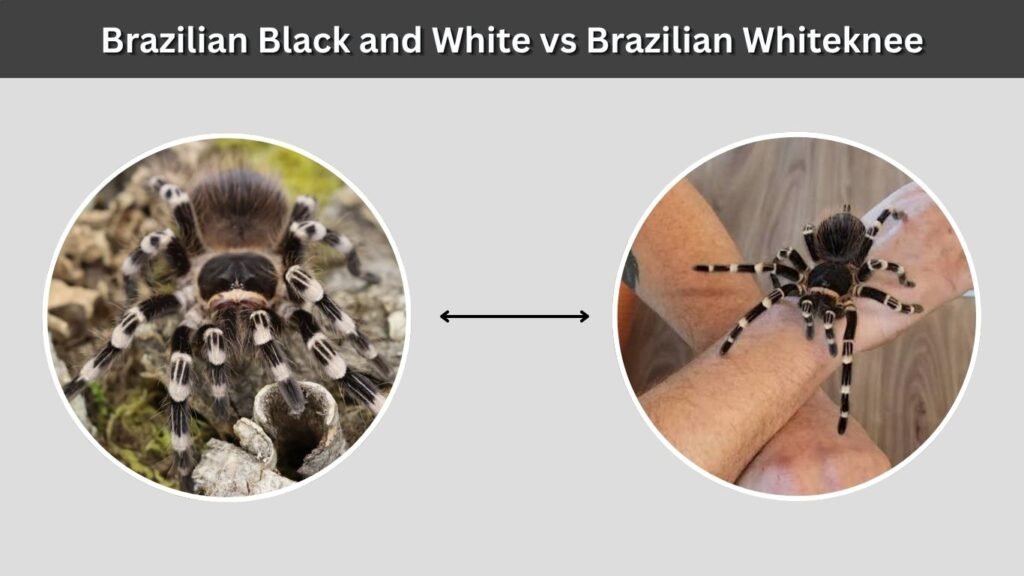
These names are frequently confused, but they refer to different species.
| Feature | Brazilian Black and White | Brazilian Whiteknee |
| Scientific name | Nhandu coloratovillosus | Acanthoscurria geniculata |
| Overall appearance | Shaggy, with mixed cream and brown hairs | Darker body with sharp white knee bands |
| Leg markings | Softer, less-defined banding | Bold, skeletal-looking white bands |
| Genus | Nhandu | Acanthoscurria |
| Urticating hairs | Present | Present |
The Brazilian whiteknee is recognized as Acanthoscurria geniculata, whereas the Brazilian black and white belongs to the genus Nhandu. Scientific names should therefore be checked carefully when purchasing either spider.
Buying a Brazilian Black and White Tarantula
Price depends on the spider’s size, sex, availability and country. Confirm that the seller provides the scientific name, approximate leg span, feeding history and captive-bred status.
Adult females usually cost more because their sex is confirmed and they have a longer expected lifespan. An inexpensive “unsexed” juvenile may develop into a male, so buyers should understand what the label means.
Choose captive-bred animals from responsible sellers, check local ownership and shipping regulations, and never release a pet tarantula outdoors.
FAQs
Is a Brazilian black and white tarantula good for beginners?
It is relatively hardy, but its speed, defensive behavior and frequent use of urticating hairs can challenge an inexperienced keeper. A calmer terrestrial species is usually a better first tarantula. It is more appropriate for someone who already understands safe rehousing and enclosure maintenance.
How large does a Brazilian black and white tarantula grow?
Adults commonly reach approximately 6–7 inches in diagonal leg span. Females usually appear heavier, while mature males are often slimmer with proportionally longer legs. Growth speed and final size can vary among individuals.
Can you handle a Brazilian black and white tarantula?
Handling is not recommended. The spider can move quickly, flick irritating hairs or bite when threatened. A fall from a person’s hand can also rupture its abdomen, making handling dangerous for the tarantula as well as the keeper.
How often should it be fed?
Spiderlings can be offered small meals once or twice per week, while juveniles and adults may eat less frequently. Adjust feeding according to abdomen size and body condition rather than following a rigid schedule. Always remove prey if the spider enters premolt.
Is the Brazilian black and white the same as the whiteknee?
No. The Brazilian black and white is Nhandu coloratovillosus, while the Brazilian whiteknee is Acanthoscurria geniculata. They have similar contrasting leg patterns, but the whiteknee generally has sharper white bands and belongs to a different genus.
