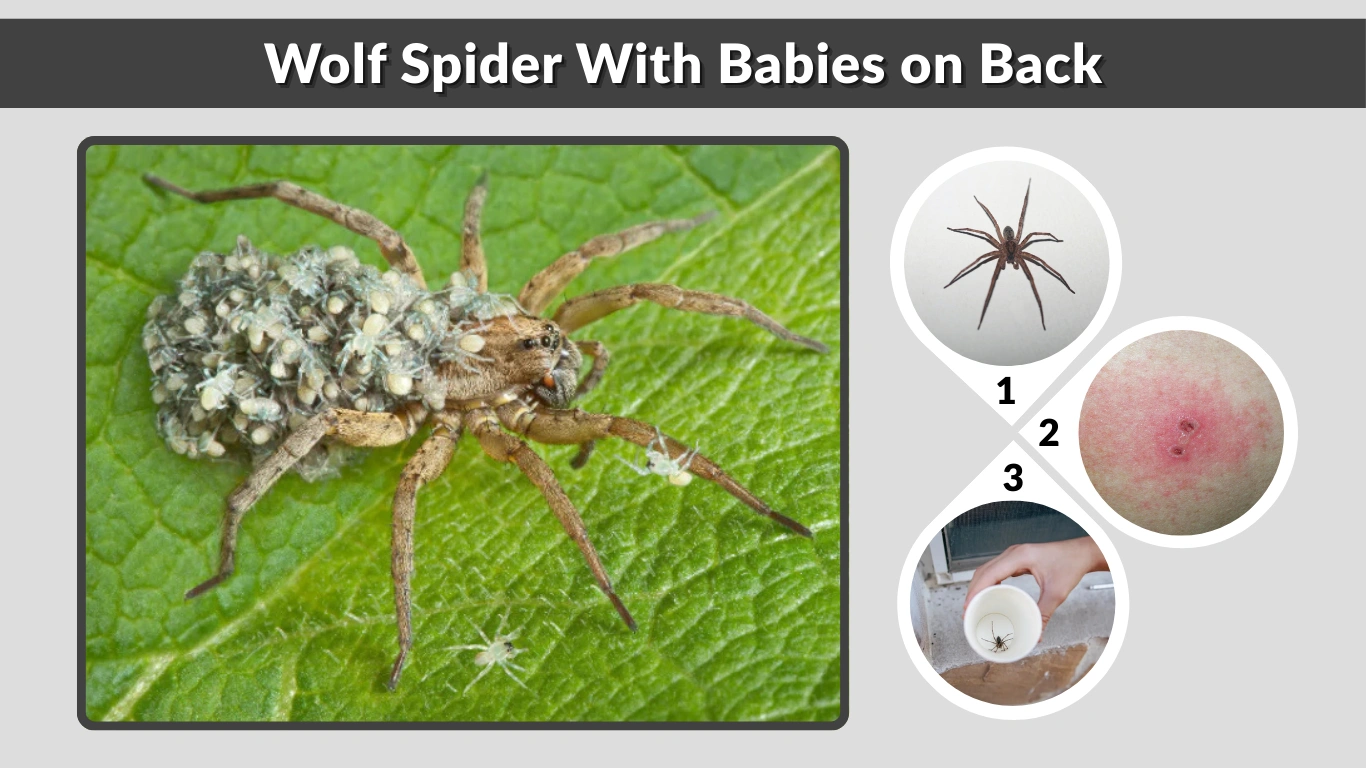
Few sights in the natural world are as startling as a wolf spider covered in dozens of tiny spiders crawling across her back. At first glance, it can look like something out of a horror movie. But in reality, this behavior is one of the most fascinating examples of maternal care in the spider world. Unlike most spiders, wolf spiders are devoted mothers who protect their young in a truly unique way.
In this article, we’ll explore what wolf spiders are, why they carry babies on their backs, what the spiderlings look like, and whether they pose any danger to humans.
What Is a Wolf Spider?
Wolf spiders belong to the family Lycosidae, a large group of ground-dwelling hunting spiders found all over the world. There are more than 2,000 species globally, and they are especially common in North America.
These spiders are known for their strong, hairy bodies and impressive speed. They are usually brown, gray, black, or tan, often with striped or mottled patterns that help them blend into their surroundings. Adult wolf spiders can range in size from about half an inch to over two inches long, including their legs.
Why Do Wolf Spiders Carry Babies on Their Back?
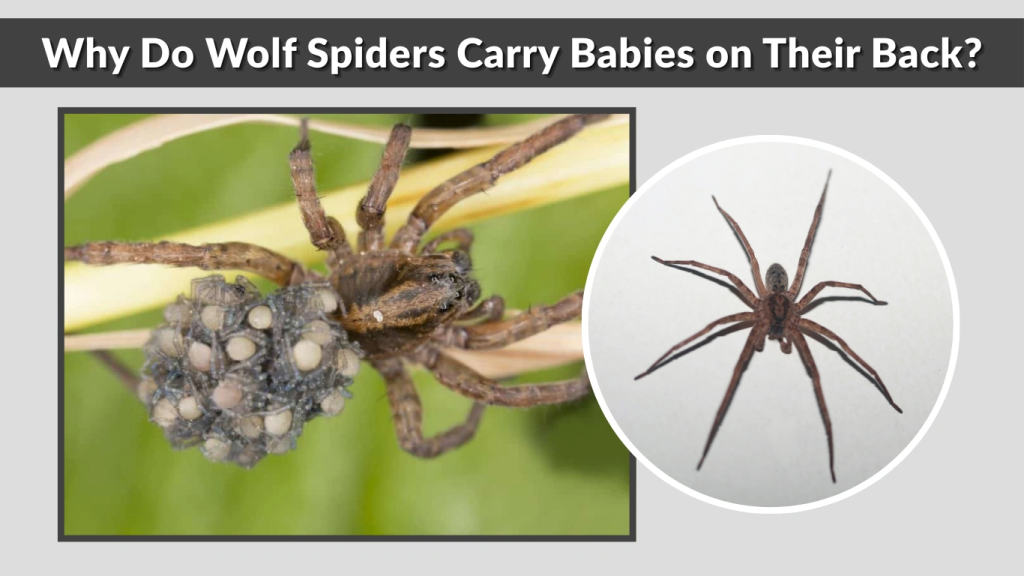
The most remarkable trait of a wolf spider is her maternal behavior. After mating, a female wolf spider produces an egg sac that contains dozens—sometimes over a hundred—eggs. She attaches this round, silk egg sac to her spinnerets at the end of her abdomen and carries it everywhere she goes.
When the eggs hatch, the tiny spiderlings crawl out and climb onto their mother’s back. They cling to her body, often covering her almost completely. She continues to hunt and move around while carrying her young, providing them protection during their most vulnerable stage.
This behavior significantly increases the survival rate of the spiderlings. By staying on their mother’s back, they are less likely to be eaten by predators or harmed by environmental threats. The mother essentially acts as a living shield and transportation system.
The babies typically stay on her back for about one to two weeks. During this time, they undergo their first molt (shedding of their exoskeleton). After molting, they disperse and begin living independently.
What Do Wolf Spider Babies Look Like?
Wolf spider babies, also called spiderlings, look like miniature versions of adult wolf spiders. When they first hatch, they are very small and often lighter in color. As they grow and molt, their coloring darkens and becomes more defined.
A single mother can carry anywhere from 50 to 200 spiderlings, depending on the species. When clustered together, the group may appear as a moving mass on her back. If disturbed, the spiderlings may briefly scatter but often regroup quickly.
Although the sight can be alarming, it is a completely natural and temporary phase in the spider’s life cycle.
Are Wolf Spiders With Babies Dangerous?
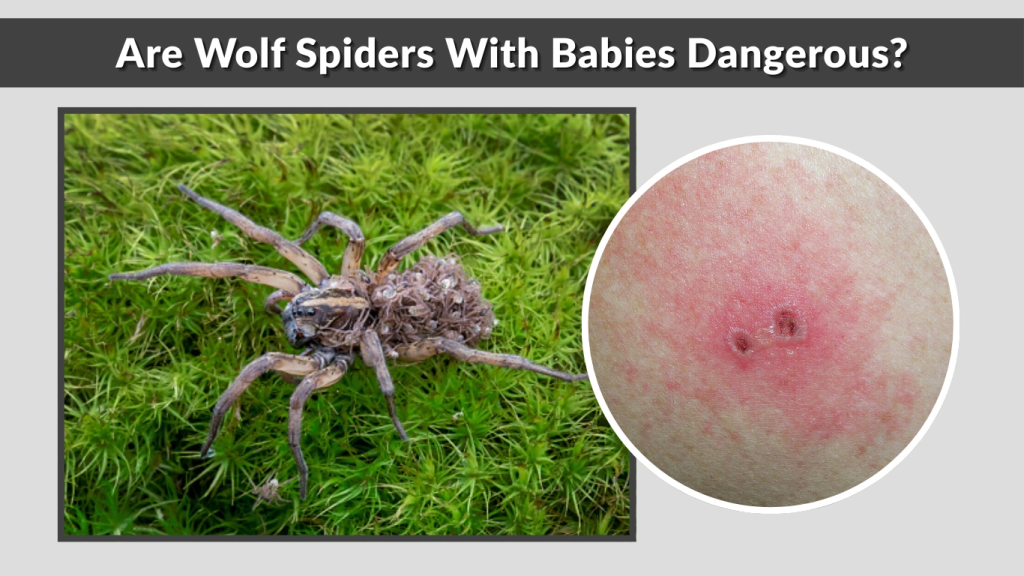
Despite their intimidating appearance, wolf spiders are not aggressive toward humans. They prefer to flee rather than confront anything larger than themselves. However, like most spiders, they may bite if they feel threatened or are accidentally pressed against skin.
A wolf spider bite is typically mild. Symptoms may include temporary pain, redness, slight swelling, or itching. Severe reactions are rare, but anyone experiencing unusual symptoms should seek medical attention.
Even a mother carrying babies is more likely to run away than attack. The presence of spiderlings does not make her more aggressive—it simply makes her more protective.
In most cases, wolf spiders are beneficial creatures. They help control insect populations by feeding on pests such as ants, beetles, and other small bugs.
Why You Might See a Wolf Spider With Babies
Wolf spiders carrying babies are most commonly seen in late spring and summer. This is their peak reproductive season, when eggs hatch and spiderlings begin their brief ride on their mother’s back.
You’re more likely to spot them outdoors in gardens, mulch beds, tall grass, woodpiles, or under rocks. After heavy rain, wolf spiders may move to drier areas, which sometimes brings them closer to homes. Occasionally, they wander indoors through small cracks, gaps under doors, or open windows.
If you see one inside, it’s usually accidental. Wolf spiders do not infest homes in the same way that some pests do. They prefer outdoor environments where they can hunt freely.
Wolf Spider vs. Other Spiders
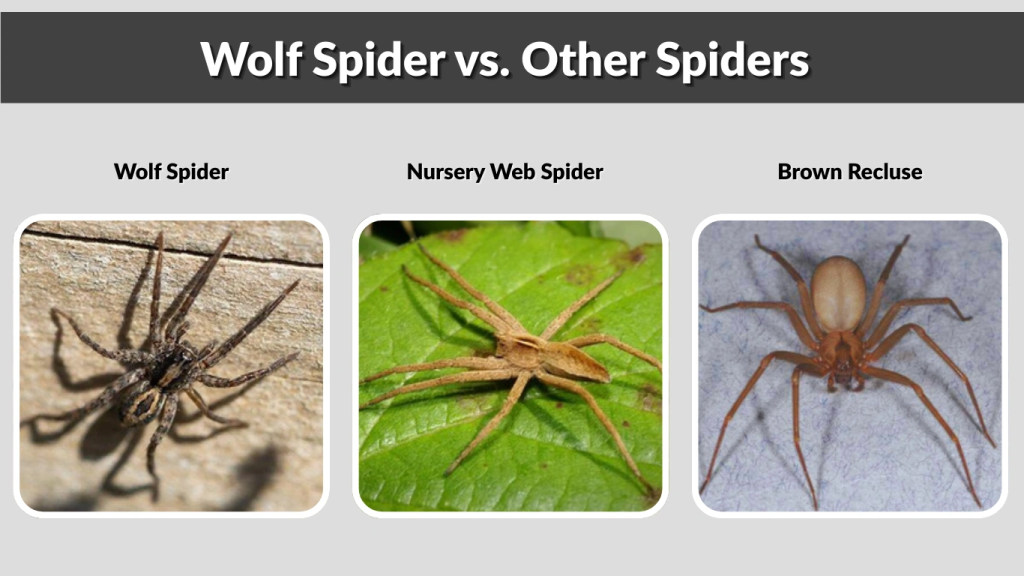
Because of their size and appearance, wolf spiders are often mistaken for other species.
Wolf Spider vs. Nursery Web Spider
Nursery web spiders look similar in size and color. However, nursery web spiders carry their egg sacs in their jaws and later build a protective silk “nursery” for their young. They do not carry spiderlings on their backs. If you see babies riding on a spider, it is almost certainly a wolf spider.
Wolf Spider vs. Brown Recluse
Wolf spiders are sometimes confused with brown recluse spiders, which are venomous. The easiest way to tell them apart is by their eyes. Brown recluses have six eyes arranged in pairs, while wolf spiders have eight eyes in three rows. Wolf spiders also lack the distinct violin-shaped marking seen on brown recluses.
Correct identification is important, especially for safety and peace of mind.
Should You Remove a Wolf Spider With Babies?
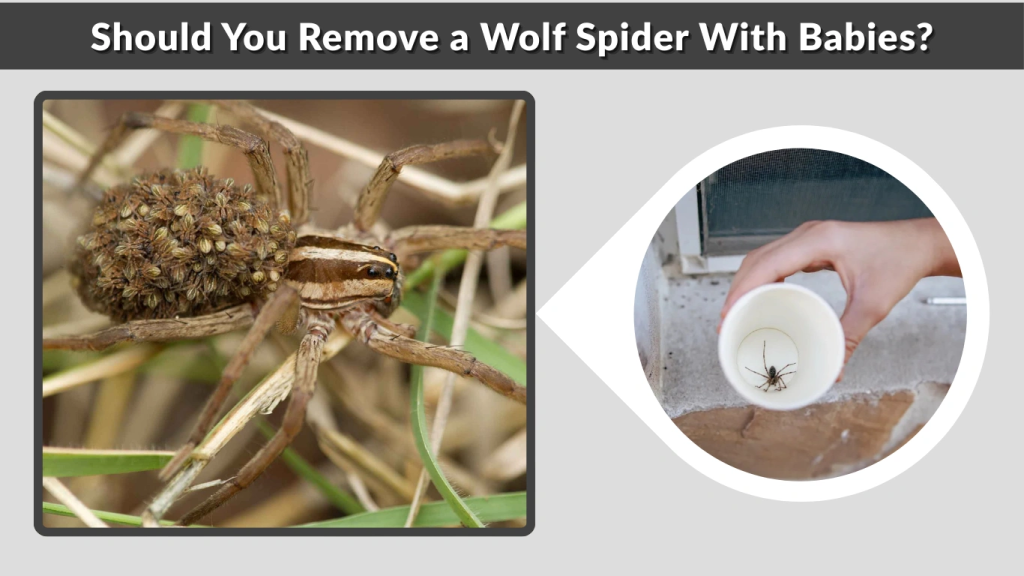
In many cases, it’s best to leave a wolf spider alone—especially outdoors. These spiders are valuable natural pest controllers and help maintain ecological balance by feeding on insects.
If you find one inside your home and prefer to remove it, humane methods work well. The “cup-and-card” method is simple and effective:
- Place a clear cup over the spider.
- Gently slide a stiff piece of paper or cardboard underneath.
- Carry the spider outside and release it away from the house.
Avoid crushing the spider, especially if she is carrying babies. When killed, the spiderlings may scatter, which can be unsettling and unnecessary.
If you notice repeated spider activity indoors, sealing cracks, repairing screens, and reducing clutter can help prevent future encounters. Pest control services are usually only needed in cases of heavy infestation, which is uncommon with wolf spiders.
Interesting Facts About Wolf Spiders
Wolf spiders have several impressive traits beyond their maternal behavior:
- They have excellent eyesight and can see movement clearly.
- Their eyes reflect light at night, sometimes creating a glowing effect when illuminated by a flashlight.
- Some species can run very quickly to chase down prey.
- Certain wolf spiders can survive temporary submersion in water by trapping air around their bodies.
These adaptations make them highly effective hunters and resilient survivors.
Common Myths About Wolf Spiders
There are many misconceptions surrounding wolf spiders, especially when they are seen carrying babies.
Myth: They jump at people.
Wolf spiders may move quickly, but they do not deliberately jump at humans.
Myth: They are extremely venomous.
Their venom is designed to subdue insects, not cause serious harm to people.
Myth: The babies will swarm your home.
Spiderlings disperse naturally and do not remain clustered together for long.