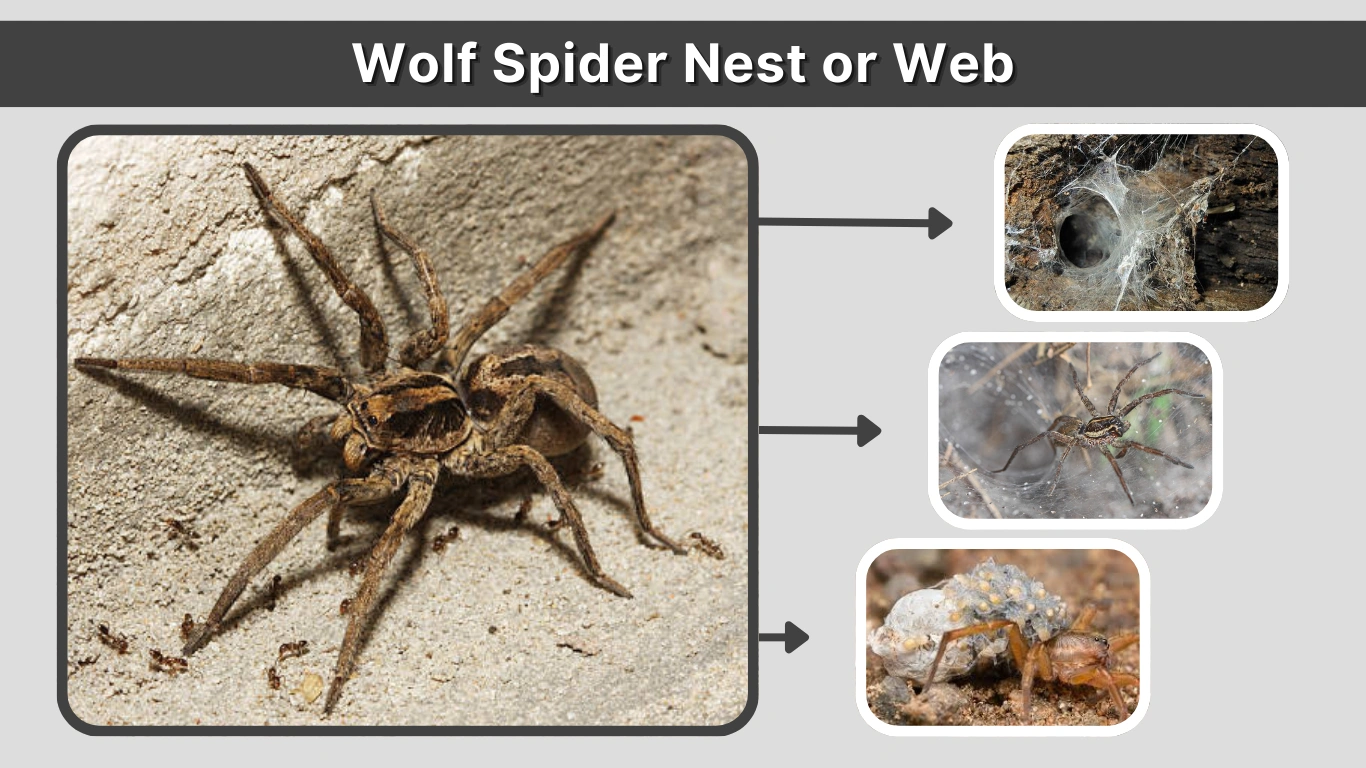
Wolf spiders are often misunderstood because of their large size and fast movements. Many people assume they build big, messy webs like other spiders. However, wolf spiders behave very differently. They do not spin traditional webs to trap prey. Instead, they are active hunters that rely on speed and strong eyesight.
If you are wondering whether wolf spiders have nests or webs, this complete guide explains what they build, where they live, and how to identify their shelters.
Do Wolf Spiders Build Webs?
Unlike orb-weaver spiders that create large circular webs, wolf spiders do not build webs to catch insects. They are ground hunters. They chase and ambush their prey rather than waiting in sticky silk traps.
However, this does not mean wolf spiders never use silk. They produce silk for:
- Lining their burrows
- Creating egg sacs
- Building temporary shelters
- Protecting their young
So while they do not create visible, hanging webs, they still use silk in important ways.
What Is a Wolf Spider Nest?
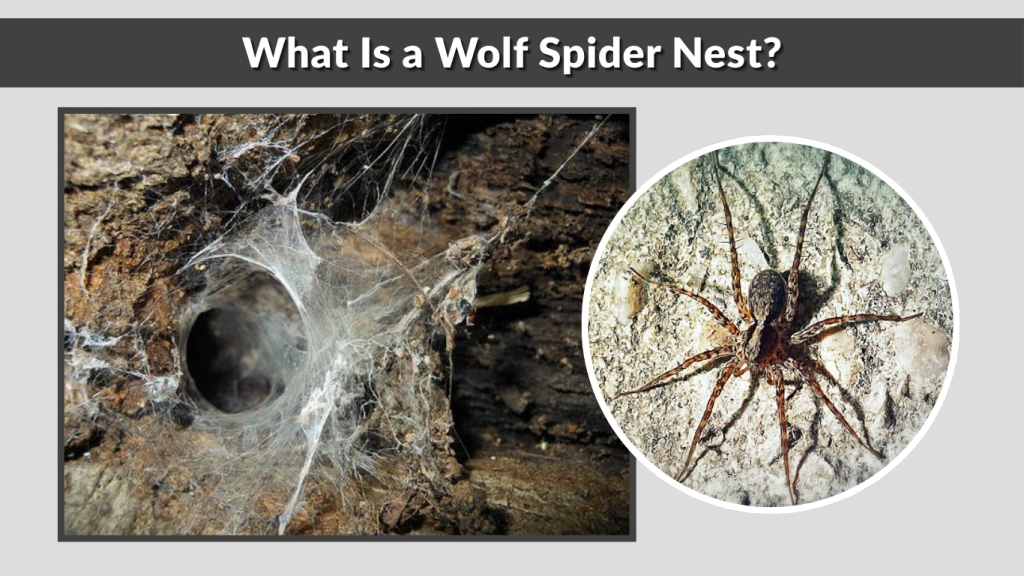
The term “wolf spider nest” usually refers to a burrow or sheltered hiding spot. These spiders prefer ground-level homes rather than elevated web structures.
A wolf spider nest is typically:
- A small hole in the ground
- A burrow lined with silk
- Hidden under rocks, logs, or debris
- Sometimes covered with leaves or grass
The silk lining strengthens the burrow walls and provides protection from predators and weather.
Where Do Wolf Spiders Build Their Nests?
Wolf spiders prefer outdoor environments but can occasionally be found indoors.
Outdoor Locations
Common nesting areas include:
- Gardens and lawns
- Under rocks and stones
- Woodpiles
- Leaf litter
- Mulch beds
- Along fence lines
Some species dig vertical burrows several inches deep.
Indoor Locations
Indoors, wolf spiders usually do not build permanent nests. Instead, they hide in:
- Basements
- Garages
- Closets
- Under furniture
- Storage boxes
Inside homes, they are usually temporary visitors searching for food or shelter.
What Does a Wolf Spider Web Look Like?
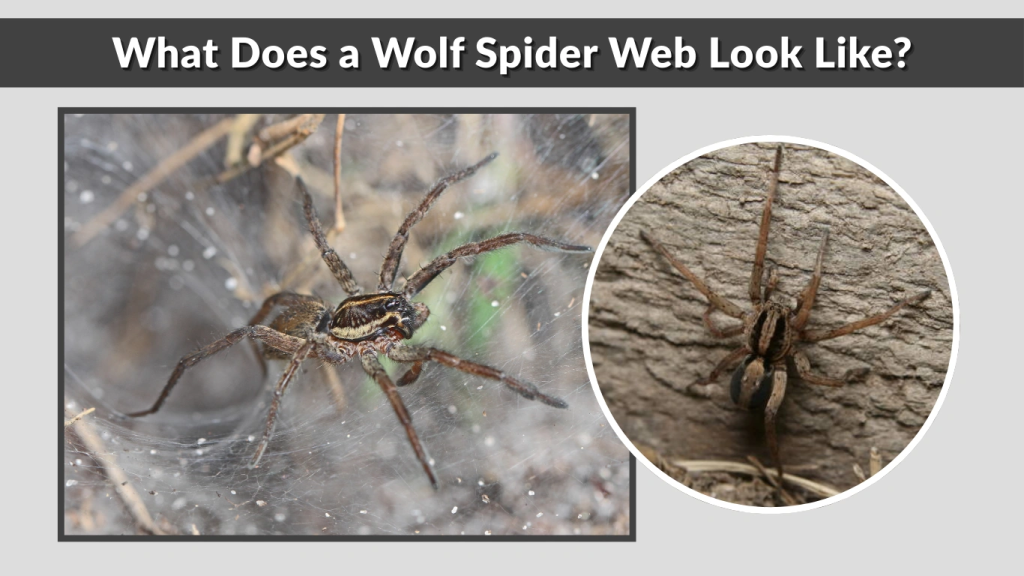
Since wolf spiders do not spin trapping webs, you won’t see large, sticky webs stretched between plants or corners.
Instead, you may notice:
- Thin silk lining inside a ground hole
- A small silk-covered retreat under debris
- Silk draglines along surfaces
- Egg sacs attached to the spider
Their silk structures are subtle and often difficult to spot.
Wolf Spider Burrows Explained
Some wolf spider species are burrowers. These spiders dig holes in soft soil and line them with silk.
A wolf spider burrow may:
- Be about the width of a pencil or finger
- Have a slightly raised rim of soil around the opening
- Be partially covered with leaves or grass
- Extend several inches underground
In dry climates, certain species even build turret-like structures made of soil and silk around the entrance.
Do Wolf Spiders Live in Colonies?
No, wolf spiders are solitary creatures. Each spider lives alone in its own burrow or hiding place.
They do not form colonies like ants or bees. If you notice multiple wolf spiders in one area, it is usually because the environment provides good food and shelter, not because they are nesting together.
Wolf Spider Egg Sacs and Spiderlings
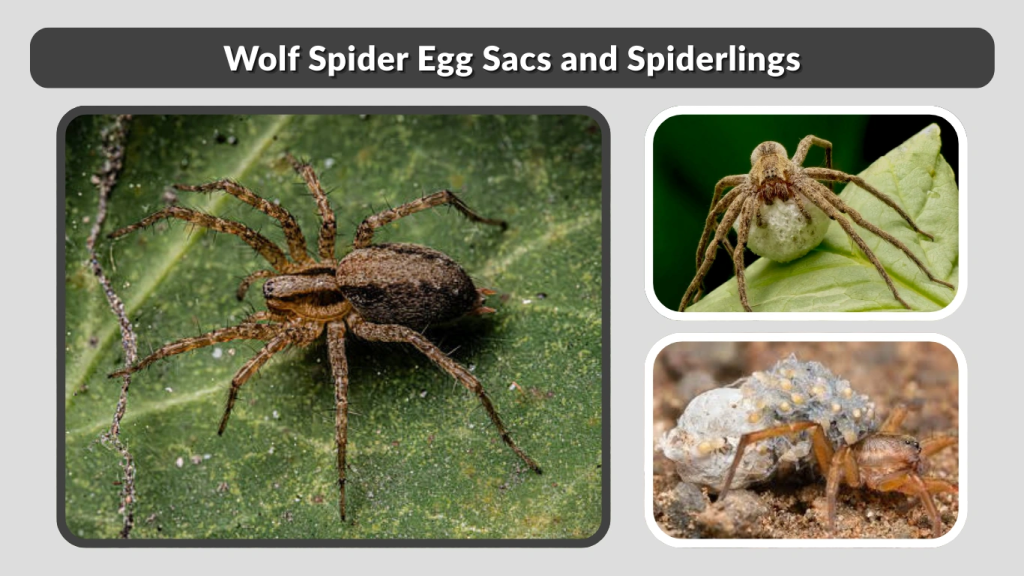
One unique trait of wolf spiders is how they care for their young.
Egg Sacs
Female wolf spiders:
- Spin round, silk egg sacs
- Attach them to their spinnerets (rear end)
- Carry them wherever they go
This behavior is unusual among spiders.
Baby Spiders
After hatching:
- Spiderlings climb onto the mother’s back
- She carries them for several days
- They disperse once mature enough
You may spot a wolf spider covered with tiny baby spiders, which can look alarming but is completely natural.
Are Wolf Spider Nests Dangerous?
Wolf spider nests are generally not dangerous. These spiders are not aggressive and prefer to avoid human contact.
They may bite only if:
- Handled directly
- Trapped against the skin
- Threatened
Most bites cause mild symptoms similar to a bee sting.
How to Identify a Wolf Spider Nest
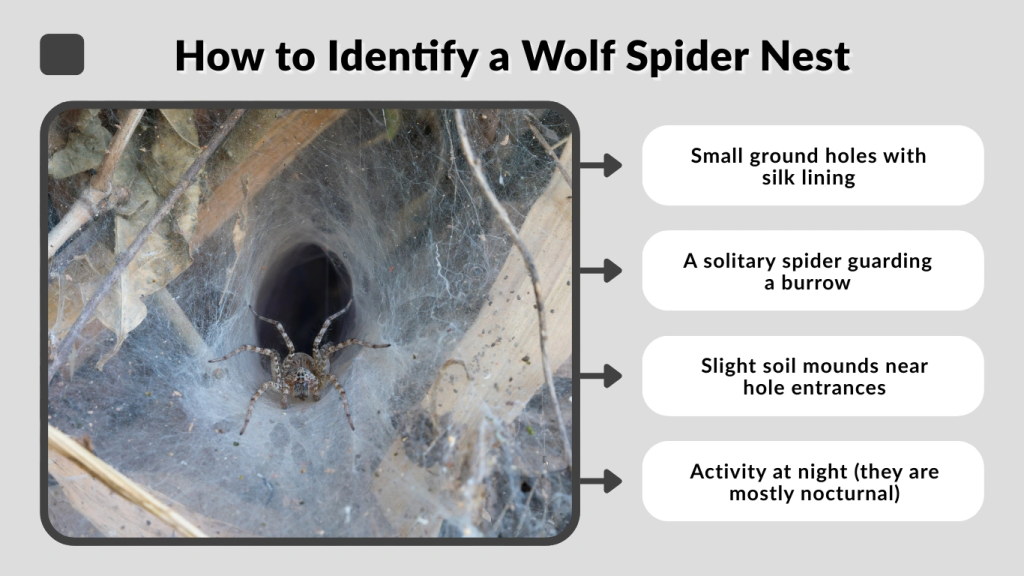
If you suspect a wolf spider nest in your yard, look for:
- Small ground holes with silk lining
- A solitary spider guarding a burrow
- Slight soil mounds near hole entrances
- Activity at night (they are mostly nocturnal)
Shining a flashlight across the lawn at night may reveal reflective eyeshine from wolf spiders.
How to Prevent Wolf Spiders Around Your Home
If you want to reduce wolf spider activity:
Outdoor Prevention
- Remove leaf piles and debris
- Trim tall grass
- Store firewood away from the house
- Seal cracks in foundations
Indoor Prevention
- Install door sweeps
- Repair window screens
- Reduce clutter
- Vacuum regularly
Since wolf spiders hunt insects, reducing other pests also reduces their presence.
Should You Remove a Wolf Spider Nest?
In most cases, removal is unnecessary. Wolf spiders help control insect populations and are considered beneficial.
However, if a nest is located:
- Near entryways
- In high-traffic areas
- Inside your home
You may consider contacting pest control for safe removal.
Avoid pouring chemicals into ground burrows, as this can harm other beneficial organisms and contaminate soil.
FAQs
Do wolf spiders spin webs in houses?
No, wolf spiders do not spin large trapping webs indoors. If you see big webs in corners, they likely belong to a different spider species. Wolf spiders prefer hiding spots rather than visible web structures.
How deep are wolf spider burrows?
Wolf spider burrows can range from a few inches to several inches deep, depending on the species and soil conditions. Some burrows may also have silk-lined walls for added strength and protection.
Can multiple wolf spiders live in one nest?
No, wolf spiders are solitary. Each spider occupies its own burrow or shelter. Seeing multiple spiders nearby usually means the environment supports good hunting conditions.
What attracts wolf spiders to my yard?
Wolf spiders are attracted to areas with plenty of insects, shelter, and ground cover. Leaf litter, mulch, tall grass, and woodpiles provide ideal hiding spots and hunting grounds.