
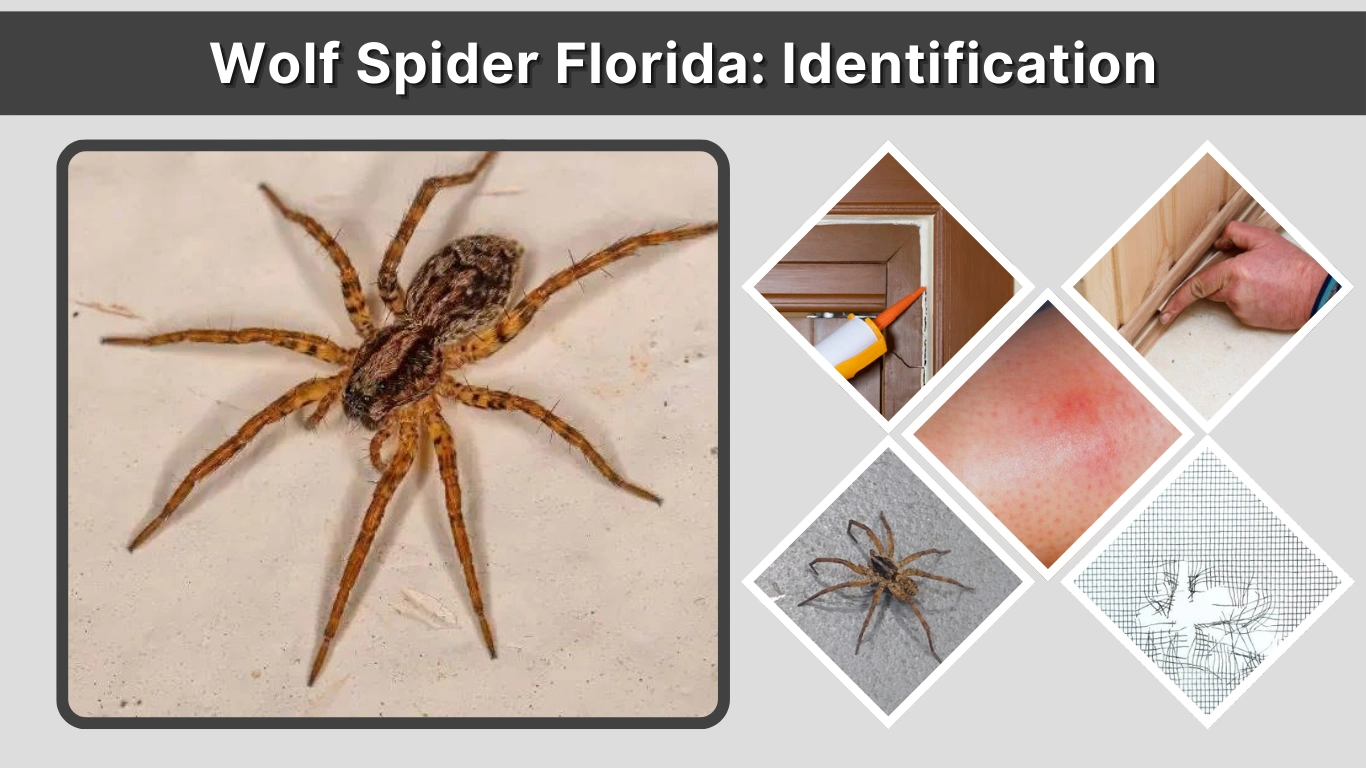
If you’ve spotted a large, fast-moving spider in your yard or home, chances are it could be a wolf spider. Wolf spiders in Florida are common due to the state’s warm climate and abundant insect population. Their size and speed often alarm homeowners, but they are usually harmless. Understanding how to identify a Florida wolf spider, whether it’s dangerous, and why it may enter your home can help you respond calmly and appropriately.
What Is a Wolf Spider in Florida?
A wolf spider is a ground-dwelling hunting spider known for its speed, strong legs, and keen eyesight. Unlike many spiders that build webs to catch prey, wolf spiders actively hunt insects, much like a wolf hunts its prey — which is how they earned their name.
Florida is home to several species of wolf spiders, particularly from the Hogna and Rabidosa genera. These spiders vary in size, but some can grow quite large compared to other common household spiders. Adult wolf spiders in Florida typically range from about ½ inch to over 2 inches in total leg span.
Because of their brown or gray coloring and relatively large size, they are often mistaken for brown recluse spiders or even huntsman spiders. However, wolf spiders have distinct physical features that make them easier to identify once you know what to look for.
How to Identify a Wolf Spider in Florida
Correct identification is important, especially since many large brown spiders are automatically assumed to be dangerous. Fortunately, wolf spiders have several recognizable traits.
Physical Characteristics
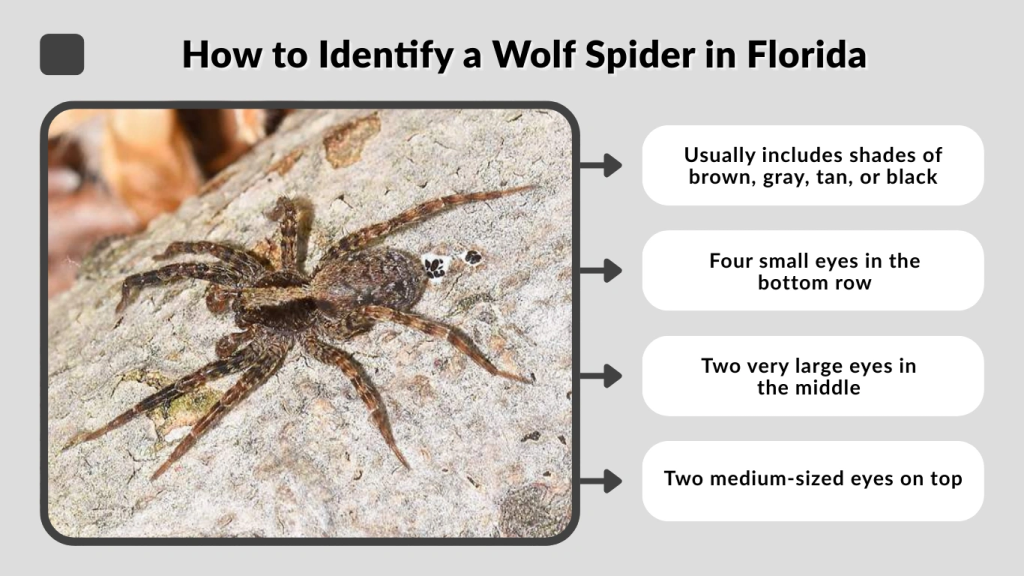
Wolf spiders have a sturdy, somewhat hairy body. Their coloration usually includes shades of brown, gray, tan, or black, often with darker stripes or markings running along the body.
One of the most distinctive features of a wolf spider is its eye arrangement. They have eight eyes arranged in three rows:
- Four small eyes in the bottom row
- Two very large eyes in the middle
- Two medium-sized eyes on top
Those two large central eyes are especially noticeable and reflect light at night. If you shine a flashlight across your lawn after dark, you may see tiny reflective glows — often from wolf spider eyes.
Their legs are thick and strong, built for running rather than climbing smooth vertical surfaces.
Behavior and Movement
Wolf spiders are fast, ground-running hunters. They do not spin webs to trap prey. Instead, they chase and pounce on insects. This behavior often surprises homeowners when a spider suddenly darts across the floor.
They are mostly nocturnal, meaning they are more active at night. During the day, they hide under rocks, leaf litter, mulch, or other ground debris.
A unique trait of female wolf spiders is that they carry their egg sacs attached to the back of their abdomen. After the eggs hatch, the spiderlings climb onto the mother’s back and ride there for a short period. Seeing a spider covered in tiny babies can look alarming, but it is a normal wolf spider behavior.
Where They Are Commonly Found
In Florida, wolf spiders are commonly found in:
- Lawns and landscaped areas
- Garden beds and mulch
- Garages and sheds
- Around foundations
- Near doorways and entry points
Occasionally, they wander indoors while searching for prey or shelter. Inside homes, they are often seen in bathrooms, laundry rooms, or near baseboards where insects are present.
Are Wolf Spiders Dangerous in Florida?
One of the most common concerns homeowners have is whether wolf spiders are dangerous. The good news is that wolf spiders in Florida are not considered medically significant to most people.
Like nearly all spiders, wolf spiders are venomous — but their venom is primarily designed to subdue insects, not harm humans. They are not aggressive and do not seek out people. Most bites happen only when the spider feels threatened, such as when it is trapped against the skin.
Compared to spiders like the black widow, wolf spiders pose a much lower risk. Their bites may be uncomfortable but are rarely serious.
Wolf Spider Bite in Florida: Symptoms and Treatment
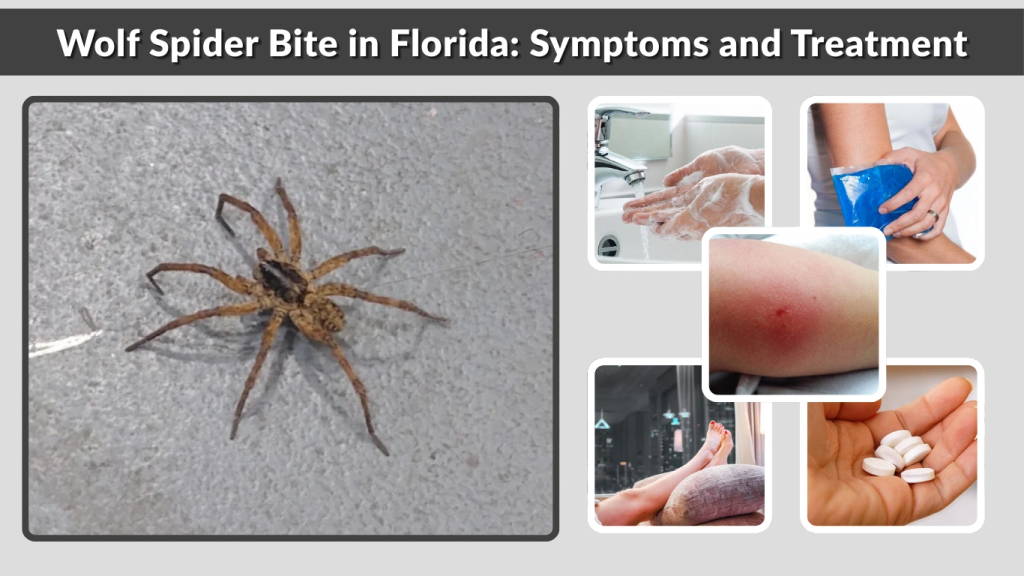
Although uncommon, wolf spider bites can happen. Understanding the symptoms can help ease anxiety.
Common Symptoms
A wolf spider bite typically causes:
- Mild to moderate pain
- Redness at the bite site
- Slight swelling
- Itching
Some people describe the pain as similar to a bee sting. In most cases, symptoms remain localized and resolve within a few days.
Treatment and When to Seek Medical Care
If bitten by a wolf spider, basic first aid is usually sufficient:
- Wash the area with soap and water.
- Apply a cold compress to reduce swelling.
- Use over-the-counter pain relievers or antihistamines if needed.
Medical attention may be necessary if:
- The pain becomes severe
- Signs of infection develop
- You experience an allergic reaction
For most Florida residents, however, wolf spider bites are minor and heal without complications.
Wolf Spider vs Brown Recluse in Florida
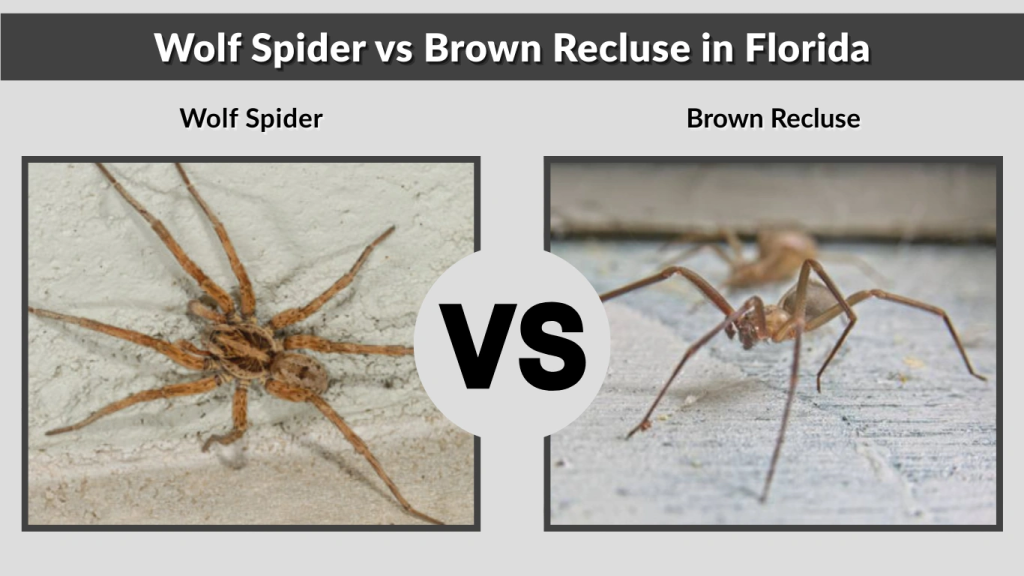
Many Florida homeowners worry that a large brown spider could be a brown recluse. However, true brown recluse spiders are uncommon in most parts of Florida. Misidentification is very common.
The easiest way to tell them apart is by looking at the eyes. A wolf spider has eight eyes arranged in three rows, including two large, forward-facing eyes. A brown recluse, on the other hand, has only six eyes arranged in three pairs.
Body markings also differ. Brown recluse spiders are known for a violin-shaped marking on their back, while wolf spiders typically have striped or mottled patterns. Wolf spiders are also hairier and more robust in appearance.
When it comes to bites, brown recluse bites can cause serious skin damage in rare cases. Wolf spider bites, however, are usually mild and do not result in tissue necrosis. Proper identification can prevent unnecessary panic.
Why Are Wolf Spiders So Common in Florida?
Florida’s climate creates the perfect environment for wolf spiders. Warm temperatures throughout much of the year allow them to remain active longer compared to spiders in colder states.
Another major factor is Florida’s high insect population. Wolf spiders feed on ants, roaches, crickets, beetles, and other small insects. Where insects thrive, wolf spiders follow.
They are most active from spring through fall, especially during the humid summer months. Heavy rains can also drive them indoors as they search for dry shelter. Outdoor lighting that attracts insects may indirectly attract wolf spiders closer to homes.
Landscaping choices such as thick mulch, dense shrubs, and ground cover can also provide ideal hiding spots near foundations.
How to Get Rid of Wolf Spiders in Florida
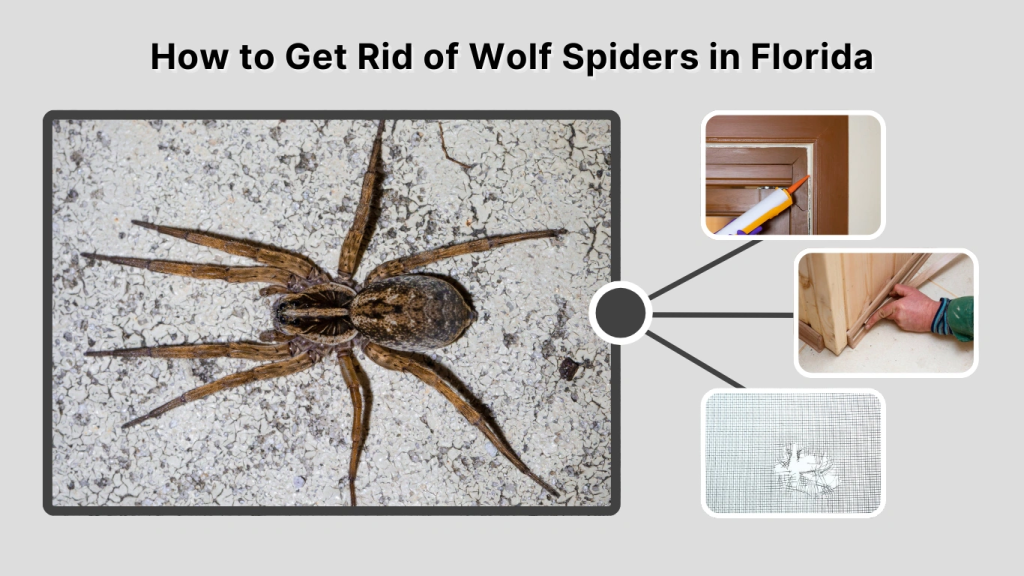
While wolf spiders are generally harmless, many homeowners prefer to reduce their presence indoors.
Prevention Tips
The most effective strategy is prevention. Consider the following steps:
- Seal cracks and gaps around doors and windows
- Install tight-fitting door sweeps
- Repair window screens
- Reduce outdoor lighting that attracts insects
- Keep grass trimmed and shrubs away from the foundation
Removing leaf litter, woodpiles, and excess mulch near the home can significantly reduce hiding spots.
Indoor Control Methods
Inside the home:
- Vacuum regularly, especially along baseboards
- Remove clutter from garages and storage areas
- Use sticky traps to monitor spider activity
Because wolf spiders do not rely on webs, you won’t typically find large web accumulations indoors.
When to Call Pest Control
You may want to contact a pest control professional if:
- You see wolf spiders frequently inside
- Egg sacs or spiderlings appear indoors
- There is a noticeable increase in overall spider activity
Professionals can identify entry points and recommend targeted treatment if necessary.
Are Wolf Spiders Beneficial in Florida?
Despite their intimidating appearance, wolf spiders play an important role in Florida’s ecosystem. They are natural pest controllers and help reduce populations of insects that may damage plants or invade homes.
By feeding on roaches, ants, and other nuisance pests, they provide a form of natural biological control. In outdoor spaces, their presence can actually be beneficial.
For this reason, many experts recommend leaving wolf spiders alone when they are outdoors and not causing problems inside the home.
FAQs
Are wolf spiders poisonous in Florida?
Wolf spiders are venomous, but their venom is not considered dangerous to most people. Bites are rare and typically cause only mild pain, redness, and swelling that resolves within a few days.
How big do wolf spiders get in Florida?
Depending on the species, wolf spiders in Florida can reach up to 2–4 inches in total leg span. Females are usually larger than males and may appear even bigger when carrying egg sacs.
Do wolf spiders jump at people?
Wolf spiders do not intentionally jump at people. However, they may lunge or move quickly when startled. Their fast movements can seem aggressive, but they are simply trying to escape.
What attracts wolf spiders into homes?
Wolf spiders enter homes in search of food, moisture, or shelter. Insect activity, cluttered storage areas, foundation cracks, and heavy outdoor lighting can all increase the likelihood of sightings indoors.
What time of year are wolf spiders most active in Florida?
Wolf spiders are most active from spring through early fall, with peak activity during Florida’s warm and humid summer months. Mild winters may allow them to remain active year-round in some areas.