
Wolf spiders are one of the most commonly encountered spiders in California. Their large size, fast movement, and hairy appearance often cause alarm, especially when they suddenly appear inside homes or garages. Many people mistake them for tarantulas or assume they are dangerous. In reality, wolf spiders are widespread throughout the state and play an important role in controlling insect populations. While their appearance can be intimidating, they are generally not aggressive toward humans. In this guide, you’ll learn how to identify wolf spiders in California, understand their bite risk, and recognize why they sometimes enter homes.
Are Wolf Spiders Common in California?
Yes, wolf spiders are very common across California. The state’s warm climate, varied landscapes, and abundant insect life create ideal conditions for them to thrive. You can find wolf spiders in coastal regions, suburban neighborhoods, the Central Valley, foothills, and even desert environments.
They are particularly active during the spring and summer months when temperatures rise and insect activity increases. During hot, dry periods, wolf spiders may wander indoors while searching for food or cooler shelter. Unlike web-building spiders, wolf spiders actively hunt their prey, which means they are often seen running across the ground rather than sitting in a web.
Homeowners frequently notice them in garages, basements, yards, and near entryways. While their presence can be startling, it does not usually indicate a serious infestation.
How to Identify a Wolf Spider in California
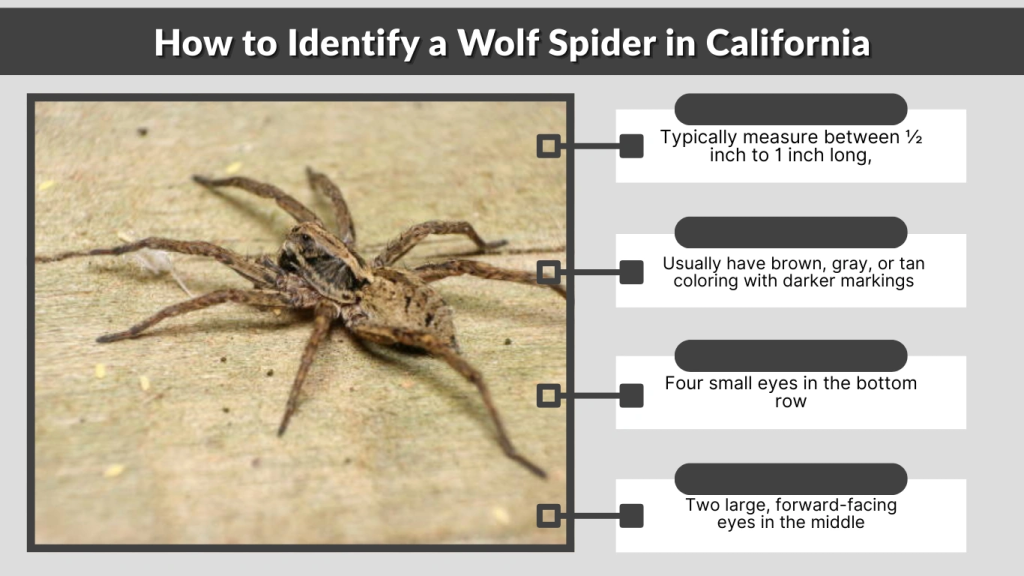
Correct identification is important because wolf spiders are often confused with more concerning species. Fortunately, they have several distinct characteristics that make them easier to recognize.
Size and Physical Characteristics
Wolf spiders are relatively large compared to many household spiders. Their bodies typically measure between ½ inch to 1 inch long, and when including their legs, they can appear much larger. Some species in California may look close to two inches in total leg span.
They usually have brown, gray, or tan coloring with darker markings or stripes that help them blend into soil and leaf litter. Their bodies are covered in fine hairs, giving them a somewhat fuzzy appearance. Their legs are long and strong, built for speed rather than web-spinning.
One of their most distinctive features is their eye arrangement. Wolf spiders have eight eyes positioned in three rows:
- Four small eyes in the bottom row
- Two large, forward-facing eyes in the middle
- Two medium-sized eyes on top
Those large middle eyes often reflect light at night, which can make them appear shiny under a flashlight.
Wolf Spider vs Tarantula in California
Because both spiders are large and hairy, they are often confused. However, there are key differences.
Tarantulas are significantly larger and bulkier, with thicker legs and heavier bodies. They also tend to move more slowly. In California, tarantulas are typically found in rural grasslands and desert areas rather than inside homes.
Wolf spiders, on the other hand, are slimmer and much faster. They dart quickly across floors or soil and are more commonly found around suburban homes. If the spider moves rapidly and appears agile, it is more likely a wolf spider than a tarantula.
Wolf Spider Carrying Babies
One of the most unique identifying traits of wolf spiders is their maternal behavior. Female wolf spiders carry their egg sacs attached to the spinnerets at the rear of their abdomen. After the eggs hatch, the tiny spiderlings climb onto the mother’s back and remain there for a short period.
If you see a spider with dozens of tiny spiders covering its back, it is almost certainly a wolf spider. This behavior is uncommon among most other spider species in California.
Are Wolf Spiders Dangerous?
Despite their intimidating appearance, wolf spiders are not considered dangerous to humans. They are venomous, meaning they use venom to subdue their prey, but their venom is not medically significant to healthy adults.
Wolf spiders are not aggressive and do not seek out humans to bite. Most bites occur only when the spider feels trapped, such as when it is pressed against the skin inside clothing or accidentally handled.
In general, wolf spiders prefer to flee rather than defend themselves. Their fast running ability is their primary defense mechanism. While any spider bite can cause discomfort, wolf spider bites are typically mild and not life-threatening.
Wolf Spider Bite in California: Symptoms & Treatment

Although bites are rare, it is helpful to know what to expect.
What Does a Wolf Spider Bite Look Like?
A wolf spider bite is usually similar to a bee sting. Common symptoms may include:
- Mild redness
- Localized swelling
- Pain or tenderness at the bite site
- Itching
In most cases, symptoms remain mild and improve within a few days. Severe reactions are uncommon but may occur in individuals with allergies or sensitive skin.
How to Treat a Wolf Spider Bite
If you suspect a wolf spider bite, basic first aid is usually sufficient:
- Wash the area with soap and water.
- Apply a cold compress to reduce swelling.
- Use an over-the-counter antihistamine or hydrocortisone cream if itching develops.
- Avoid scratching to prevent infection.
Monitor the bite for signs of worsening redness, warmth, or discharge.
When to See a Doctor
Medical attention may be necessary if you experience:
- Difficulty breathing
- Severe swelling
- Spreading redness
- Fever
- Signs of infection
While serious complications are rare, it is always best to consult a healthcare professional if symptoms worsen or do not improve.
Where Do Wolf Spiders Live in California?
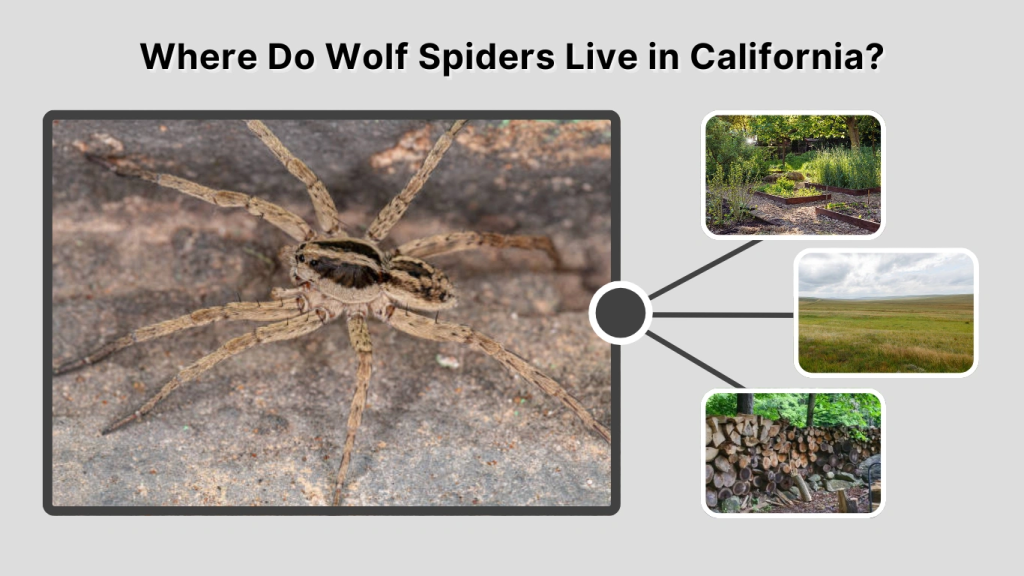
Wolf spiders are highly adaptable and can survive in a wide range of California environments. From coastal regions to dry desert landscapes, they thrive anywhere insects are plentiful.
Outdoor Habitats
Outdoors, wolf spiders typically live:
- In gardens and landscaped yards
- In grassy areas and open fields
- Under rocks, logs, and woodpiles
- In leaf litter or mulch
- Across desert terrain and scrubland
Unlike web-building spiders, wolf spiders do not rely on webs to catch prey. Instead, they hunt on the ground, using speed and strong eyesight to capture insects. Some species dig shallow burrows in soil, while others hide under debris during the day and hunt at night.
Because California has long warm seasons, wolf spiders may remain active for much of the year, especially in southern parts of the state.
Why They Enter Homes
Wolf spiders usually enter homes by accident rather than intention. Common reasons include:
- Searching for insects to hunt
- Escaping extreme outdoor heat
- Seeking shelter during sudden weather changes
- Entering through cracks, gaps, or open doors
Garages, basements, laundry rooms, and ground-level living spaces are the most common indoor locations. Since they do not build webs in corners like many house spiders, they are often spotted running across floors instead.
What Attracts Wolf Spiders to Your Home?
Wolf spiders follow their food source. If your home or yard has a high insect population, it naturally becomes attractive to them.
Several factors may draw wolf spiders closer:
- Outdoor lighting that attracts moths and flying insects
- Unsealed cracks and foundation gaps
- Cluttered storage areas that provide hiding spots
- Moisture-prone areas like crawl spaces
- Thick landscaping or mulch near the foundation
Reducing insect activity is one of the most effective ways to discourage wolf spiders. If their food source disappears, they are less likely to remain nearby.
How to Get Rid of Wolf Spiders in California
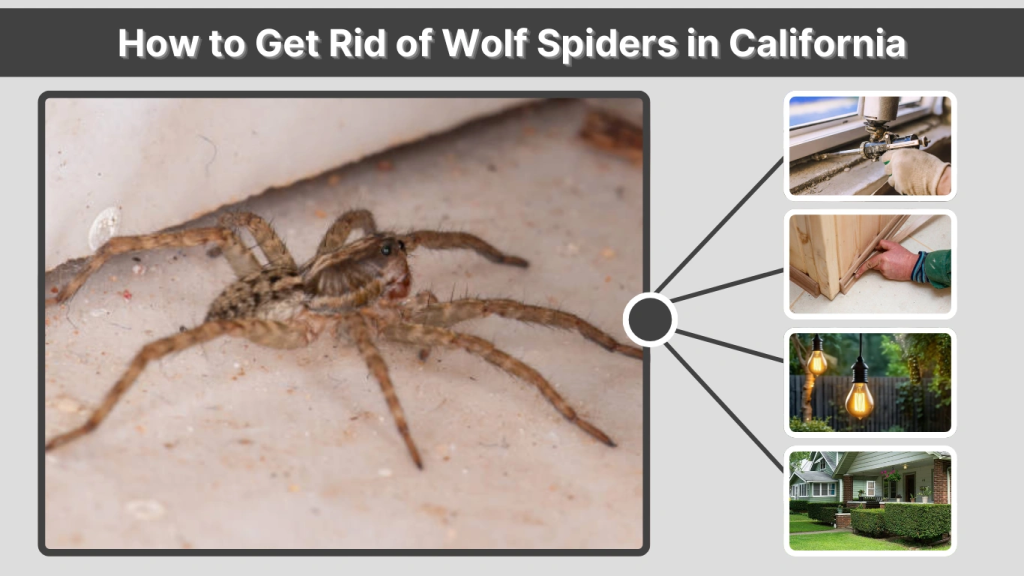
If you find wolf spiders around your home, control typically focuses on prevention rather than heavy pesticide use.
Prevention Tips
Start with simple exclusion and habitat control methods:
- Seal cracks around doors, windows, and foundations
- Install door sweeps and weather stripping
- Reduce outdoor lighting or switch to yellow insect-reducing bulbs
- Keep grass trimmed and bushes away from the house
- Remove woodpiles and debris from exterior walls
- Vacuum regularly in garages and storage spaces
By making your home less attractive to insects, you also reduce spider activity.
Safe Removal Methods
If you encounter a wolf spider indoors, safe removal is straightforward.
- Capture it with a cup and release it outdoors
- Use a vacuum to remove it quickly
- Avoid direct handling
Sticky traps may help monitor spider activity but should be used cautiously, especially in homes with pets.
Because wolf spiders are solitary hunters, seeing one does not usually mean there are many more hiding nearby.
When to Call Pest Control
Professional pest control may be helpful if:
- You see spiders frequently
- There is a noticeable insect infestation
- You are unsure about species identification
- You feel uncomfortable managing the issue yourself
A pest control professional can inspect entry points and recommend targeted treatments. In most California homes, large-scale spider infestations are uncommon.
Wolf Spiders vs Other Dangerous Spiders in California
Understanding the difference between wolf spiders and medically significant spiders can provide peace of mind.
Black widows, which are common in California, have shiny black bodies and a distinct red hourglass marking on the underside of the abdomen. Their bites can be more serious and may require medical attention.
Brown recluse spiders are often feared, but they are rare in California. Many reported sightings are misidentified wolf spiders.
Compared to black widows, wolf spiders are:
- Less venomous
- Not web builders
- Faster and more ground-oriented
- Lacking distinctive warning markings
Correct identification helps avoid unnecessary fear.
FAQs
Are wolf spiders aggressive toward humans?
No, wolf spiders are not aggressive. They prefer to run away when disturbed. Bites typically happen only if the spider feels trapped or threatened, such as when pressed against skin.
Can a wolf spider bite kill you?
Wolf spider bites are not considered life-threatening to healthy adults. Their venom is mild compared to medically significant spiders like black widows.
How big do wolf spiders get in California?
Most wolf spiders measure about ½ to 1 inch in body length, though their leg span can make them appear larger. Some desert species may look close to two inches across.
Do wolf spiders infest homes?
Wolf spiders do not typically infest homes in large numbers. They are solitary hunters. Seeing one indoors usually means it wandered inside accidentally.
What should I do if I find one inside?
Stay calm. Capture it using a cup and release it outside or remove it with a vacuum. Then check for cracks or gaps that may have allowed entry.
Conclusion
Wolf spiders are a common and natural part of California’s ecosystem. While their size and speed can be alarming, they are generally harmless and even beneficial because they help control insect populations. Most encounters occur accidentally, especially during warmer months. By understanding how to identify wolf spiders and taking simple preventive measures, homeowners can reduce unwanted sightings without unnecessary fear. In most cases, these fast-moving hunters are more helpful than harmful.