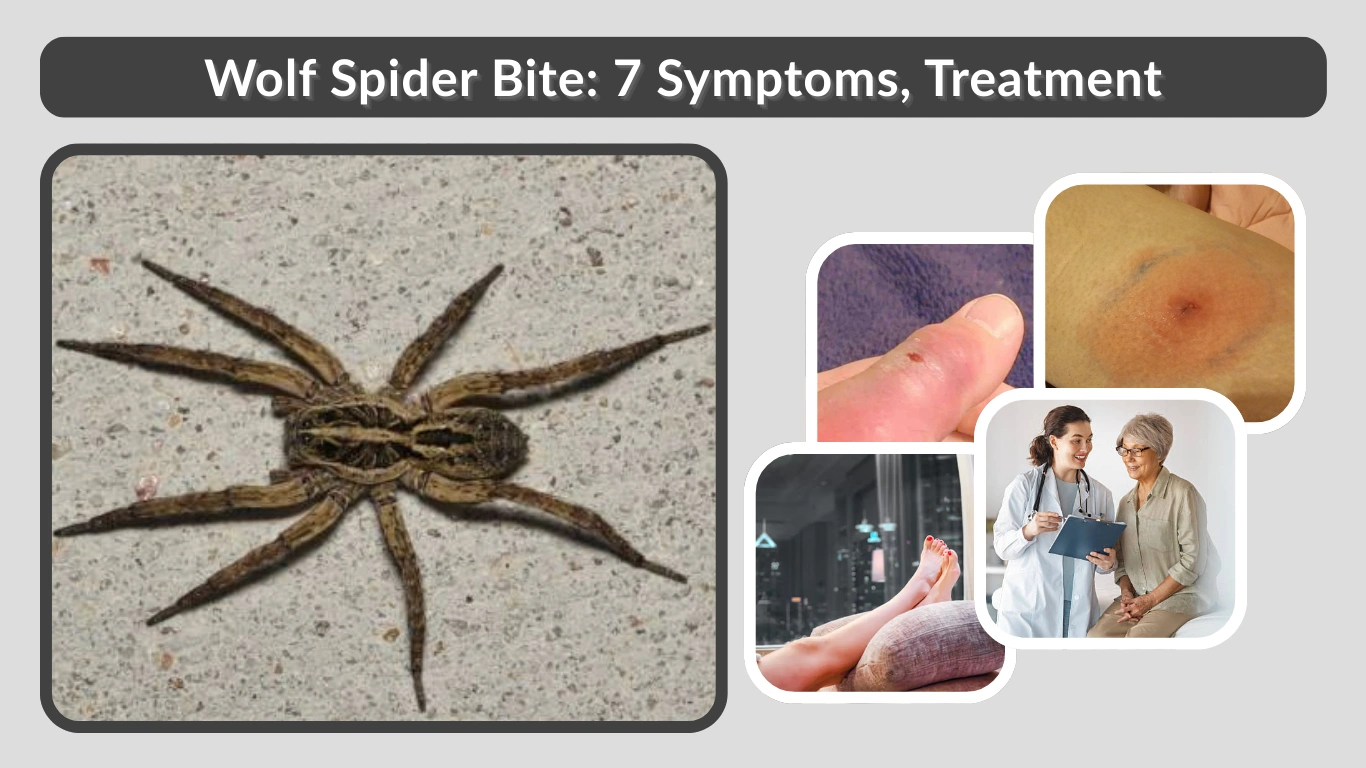
Wolf spiders are large, fast-moving spiders that often frighten people because of their size and appearance. However, despite their intimidating look, wolf spiders are not aggressive and rarely cause serious harm. They typically bite only when they feel threatened or accidentally pressed against the skin.
Most wolf spider bites are mild and similar to a bee sting. Understanding the symptoms can help you manage the bite properly and recognize when medical care is needed. Below are the seven most common wolf spider bite symptoms, along with treatment tips and prevention advice.
What Is a Wolf Spider?
Wolf spiders belong to the Lycosidae family. They do not spin webs to trap prey. Instead, they hunt insects on the ground, especially at night. They are commonly found in gardens, garages, basements, sheds, and under rocks or leaves.
These spiders prefer to avoid humans and will only bite in self-defense.
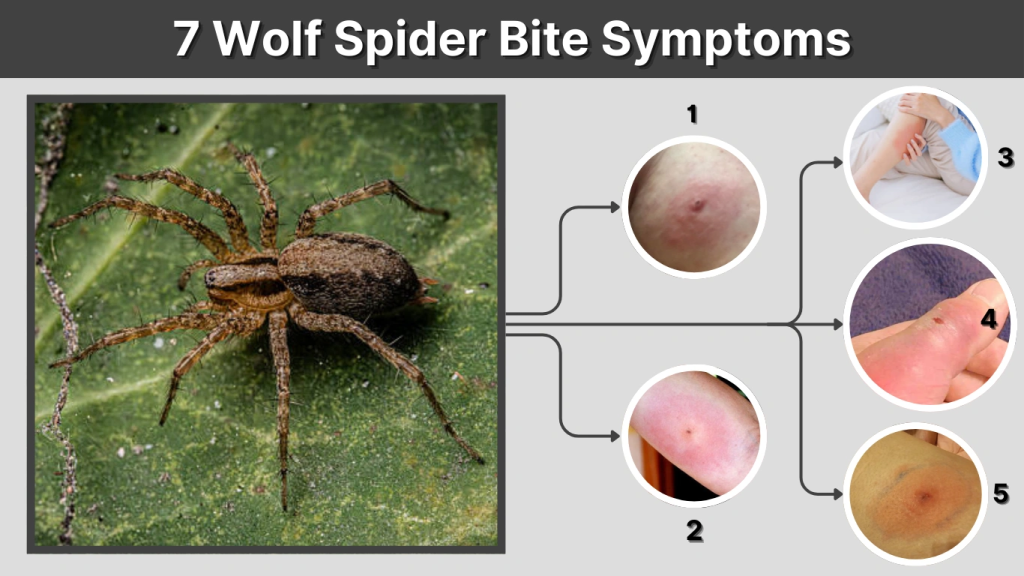
7 Wolf Spider Bite Symptoms
1. Immediate Sharp Pain
The first symptom of a wolf spider bite is usually sudden, sharp pain. Many people describe it as similar to a bee sting. The discomfort begins immediately after the bite and may last for several minutes to a few hours before gradually easing.
Unlike more dangerous spider species, wolf spider venom is not considered medically significant for most people.
2. Redness Around the Bite
Redness is a common reaction. The skin surrounding the bite may appear inflamed and slightly irritated. In most cases, the redness stays localized and does not spread far beyond the bite area.
This redness typically fades within a few days.
3. Mild to Moderate Swelling
Swelling occurs as part of the body’s natural immune response. The affected area may look slightly puffy and feel warm to the touch.
Swelling generally:
- Peaks within 24 hours
- Lasts 1–3 days
- Gradually improves without medical treatment
Applying a cold compress can help reduce swelling.
4. Itching
As the bite begins to heal, itching may develop. This can start several hours after the bite and may last a few days.
Scratching should be avoided because it can:
- Break the skin
- Increase infection risk
- Delay healing
Over-the-counter antihistamines or anti-itch creams may provide relief.
5. Raised Bump or Welts
A small raised bump often forms at the bite site. It may resemble a mosquito bite but can feel firmer or more tender.
Sometimes, you may notice:
- A tiny puncture mark
- Mild firmness under the skin
- Slight tenderness when touched
This bump usually shrinks within a few days.
6. Mild Bruising or Skin Discoloration
In some cases, minor bruising or darker discoloration appears around the bite. This happens when small blood vessels under the skin are slightly damaged.
The discoloration is usually:
- Small and localized
- Temporary
- Gone within a week
Wolf spider bites rarely cause severe tissue damage.
7. Rare Allergic Reaction
Although uncommon, some individuals may experience a stronger allergic response. Seek immediate medical attention if you notice:
- Difficulty breathing
- Swelling of the face, lips, or throat
- Rapid heartbeat
- Severe dizziness
- Widespread rash
These symptoms may indicate anaphylaxis, which requires emergency care.
What Does a Wolf Spider Bite Look Like?
A wolf spider bite usually appears as a small red bump with mild swelling. It may have a visible puncture mark in the center. Unlike brown recluse bites, wolf spider bites typically do not cause skin ulcers or necrosis (tissue death).
If the bite becomes increasingly painful, develops pus, or turns dark in the center, consult a healthcare provider to rule out infection or another condition.
How to Treat a Wolf Spider Bite
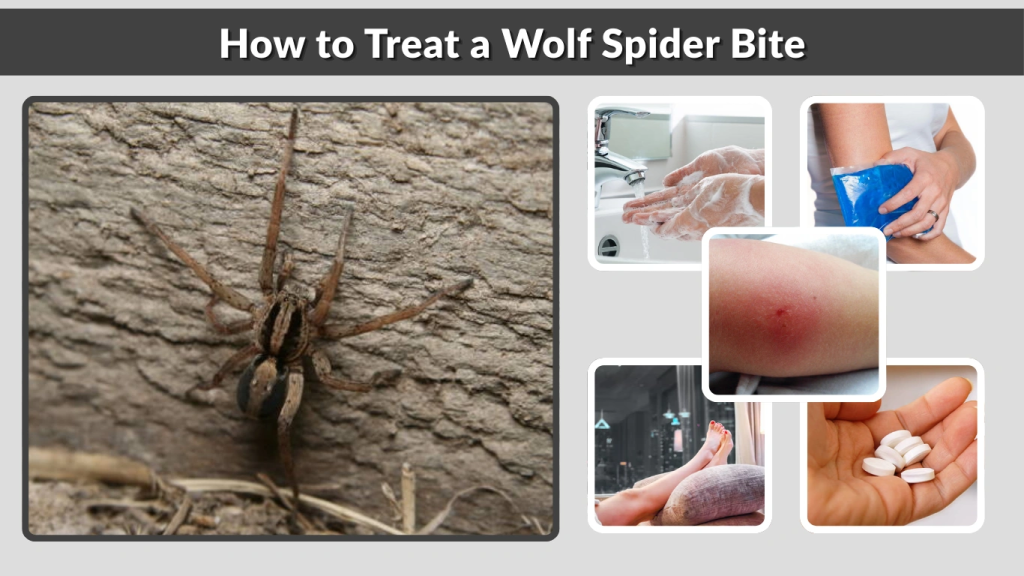
Most wolf spider bites can be treated at home using simple first aid steps.
Clean the Area
Wash the bite with warm water and mild soap to reduce the risk of infection.
Apply a Cold Compress
Place an ice pack wrapped in a cloth on the bite for 10–15 minutes at a time. This helps reduce pain and swelling.
Elevate the Affected Area
If the bite is on an arm or leg, elevating it can help minimize swelling.
Use Over-the-Counter Medications
You may consider:
- Pain relievers such as ibuprofen or acetaminophen
- Antihistamines for itching
- Hydrocortisone cream for inflammation
Always follow dosage instructions carefully.
How Long Do Symptoms Last?
For most people:
- Pain improves within hours
- Redness and swelling fade in 1–3 days
- Mild itching may last up to a week
Complete healing generally occurs within 7–10 days.
When to See a Doctor
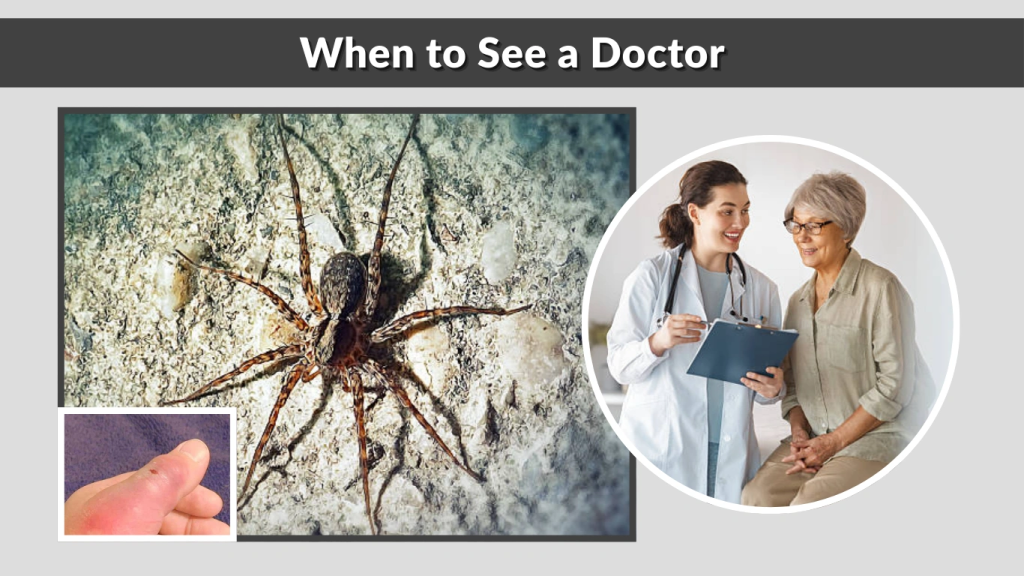
Seek medical attention if:
- Symptoms worsen after 48 hours
- Severe pain develops
- Pus or drainage appears
- Fever occurs
- Red streaks spread from the bite
- Signs of an allergic reaction appear
Sometimes skin infections are mistaken for spider bites, so professional evaluation may be necessary.
How to Prevent Wolf Spider Bites
Preventing bites mainly involves reducing spider exposure.
Around Your Home
- Seal cracks and gaps in doors and windows
- Keep storage areas organized
- Remove woodpiles from near your home
- Reduce outdoor lighting that attracts insects
Personal Protection
- Wear gloves when gardening
- Shake out shoes and clothing before wearing
- Avoid handling spiders
Wolf spiders prefer to escape rather than bite, so simple precautions greatly reduce risk.
FAQs
Are wolf spider bites dangerous?
Wolf spider bites are rarely dangerous. Most cause mild pain, redness, and swelling similar to a bee sting. Serious complications are uncommon, and symptoms typically resolve within a few days with basic home treatment.
Can a wolf spider bite cause necrosis?
No, wolf spider venom does not usually cause tissue death. If a wound becomes ulcerated or develops a black center, it may be another type of spider bite or a bacterial infection that requires medical evaluation.
How can I tell if it was a wolf spider?
It is difficult to confirm a spider bite unless you see the spider. Wolf spider bites typically cause localized pain and mild swelling. Severe or spreading symptoms should be checked by a healthcare professional.
Do wolf spiders chase humans?
Wolf spiders do not intentionally chase people. They may appear to run toward someone while seeking shelter. They bite only when threatened or trapped against the skin.