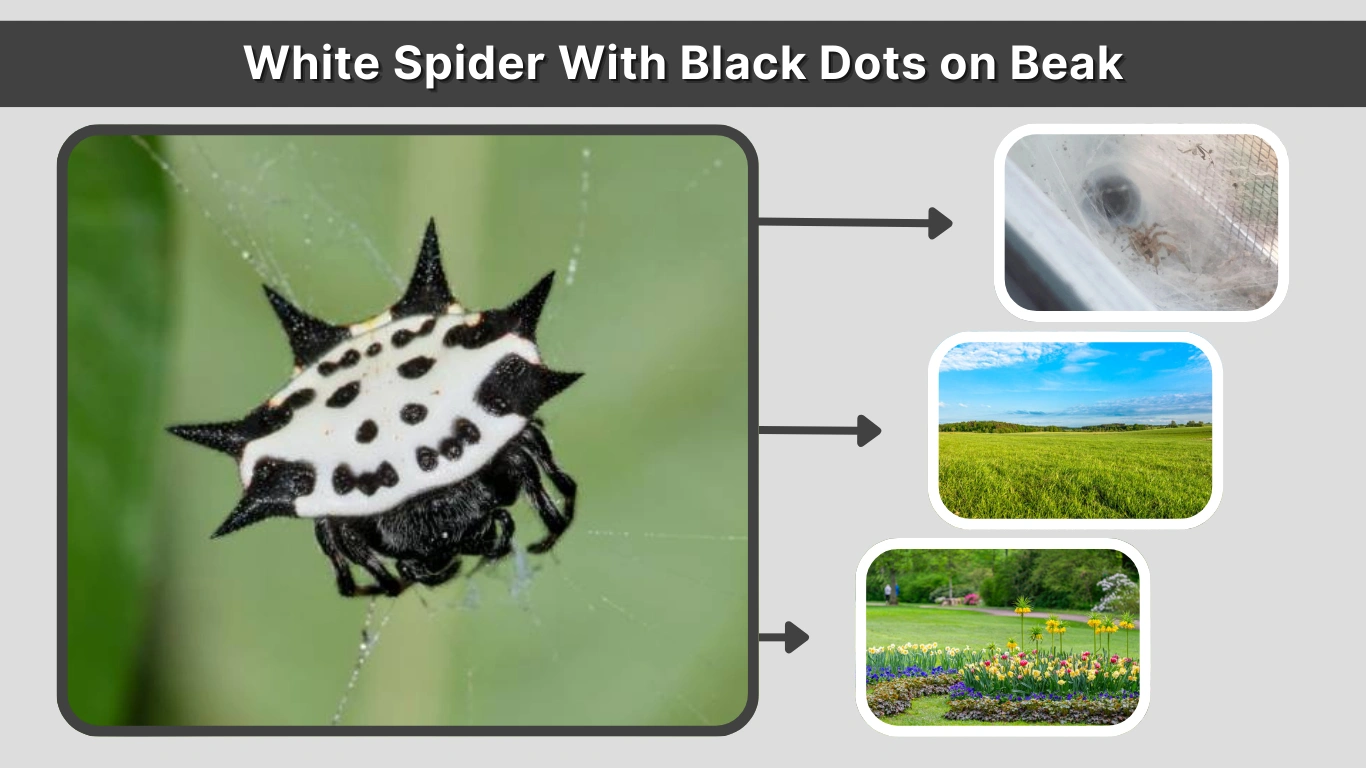
Seeing a white spider with black dots on its back can be startling, especially when the markings look bold or unusual. These patterns appear in several species found across the U.S., Canada, and Europe. Most are harmless and frequently seen in gardens, on flowers, and around homes. Because multiple species can match this description, identifying the correct one depends on body shape, dot pattern, behavior, and where you found it. This guide outlines how to identify them and understand what the markings mean.
Identification
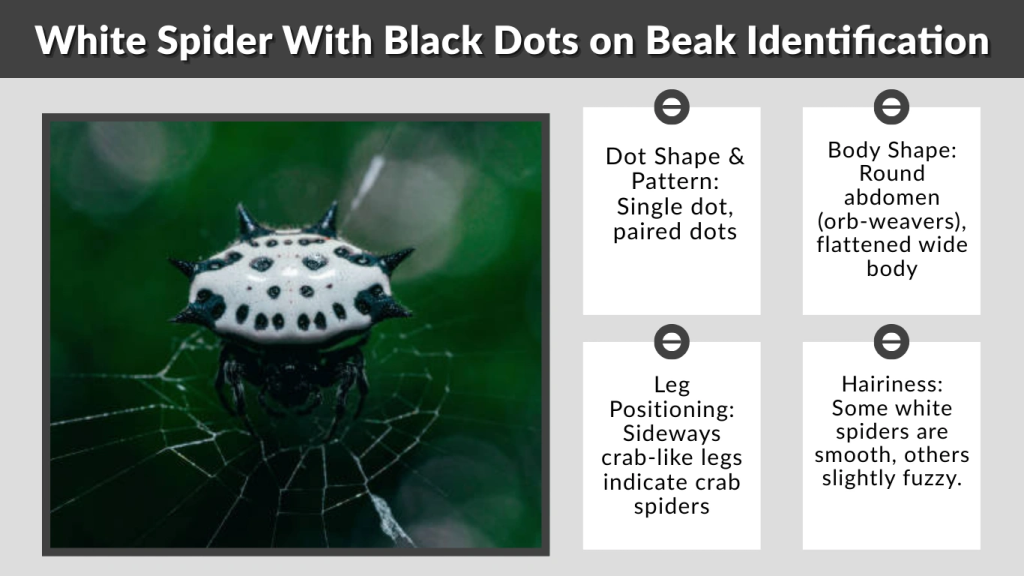
When describing a white spider with black dots on back, these characteristics help narrow down the species:
- Dot Shape & Pattern: Single dot, paired dots, or a symmetrical row of marks.
- Body Shape: Round abdomen (orb-weavers), flattened wide body (crab spiders), or compact furry shape (jumping spiders).
- Leg Positioning: Sideways crab-like legs indicate crab spiders; long spindly legs indicate orb-weavers.
- Hairiness: Some white spiders are smooth, others slightly fuzzy.
- Behavior: Jumping, sitting motionless on flowers, or remaining in webs.
- Eye Pattern: Especially useful for identifying white jumping spider morphs.
These features help distinguish similar-looking species and determine whether the spider is a harmless garden predator or simply a flower ambush species.
Likely Species
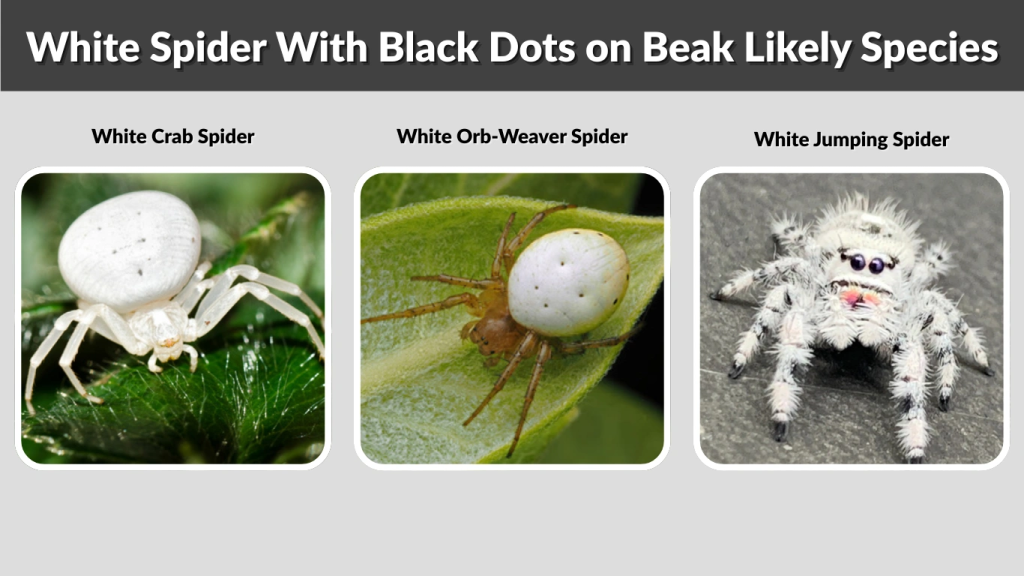
White Crab Spider (Misumena vatia)
The white crab spider is the most common match when someone reports a white spider with black dots on back. These spiders are often found on white or yellow flowers where they ambush bees, flies, and butterflies. Females can change color slowly—from white to yellow—to blend with the flower they sit on. Black spots may appear along the abdomen edges or centerline, especially in mature females.
Their wide, flattened bodies and sideways legs give them a crab-like appearance. They do not build webs; instead, they remain perfectly still, waiting for prey. Despite their predatory lifestyle, they pose no danger to humans.
White Orb-Weaver Spider (Various Neoscona & Araneus Species)
Some orb-weavers—typically brown or tan—can appear white in certain life stages or seasonal conditions. Their abdomen may show distinct black dots, sometimes symmetrically arranged. These dots often become more noticeable on lighter individuals.
If your spider has a round, bulbous abdomen and builds a web, especially a circular wheel-shaped web, it is likely an orb-weaver. They are peaceful garden spiders that rarely leave their webs and retreat if disturbed. The black-dot pattern helps camouflage them against bark or light-colored surfaces.
White Jumping Spider (Pale Morphs of Salticidae)
A less common but possible match is a white jumping spider with contrasting black spots. These spiders have compact bodies, short legs, and fuzzy textures. The black dots usually appear near the center or rear of the abdomen.
Jumping spiders move quickly in small bursts and often turn their heads to look at movement. Their excellent vision and curious behavior make them appear more alert than other spiders. Though they may look intimidating, they are harmless and often beneficial predators.
Size & Growth
The size of a white spider with black dots on back varies by species:
- Crab Spiders: 5–10 mm body length; females can appear much larger.
- Orb-Weavers: 6–20 mm depending on species and season.
- Jumping Spiders: 4–8 mm, typically smaller and chunkier.
Spiders with dots may develop or lose markings as they molt. Juveniles often have fainter dots that darken with each growth stage. Larger, mature females of all species may show the most vivid contrast between white bodies and dark spots.
Behavior & Movement
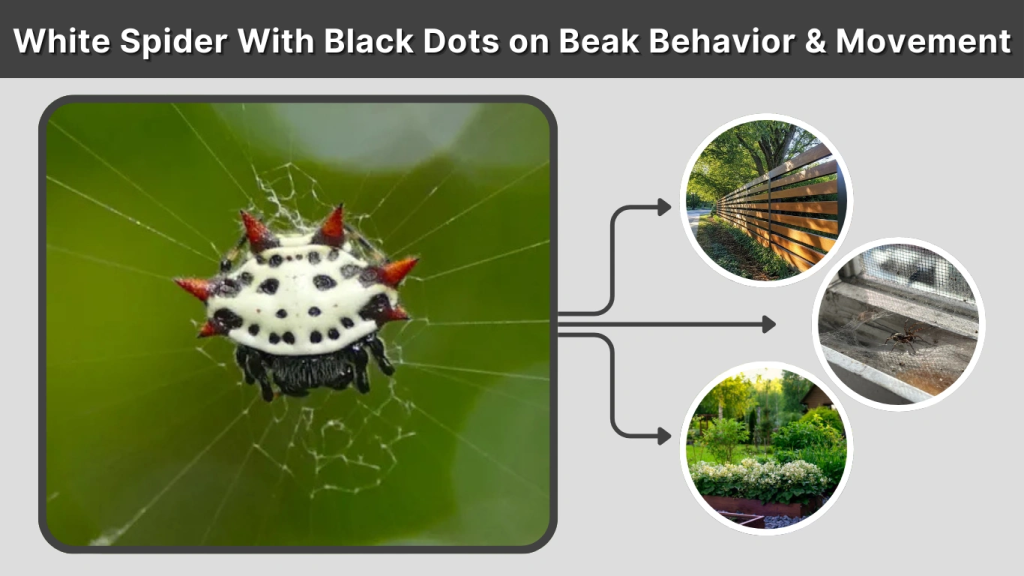
Behavior offers important clues when identifying a white spider with black dots on back. Crab spiders remain motionless for long periods, gripping petals or stems while waiting for prey. Orb-weavers stay centered in their webs at night and hide nearby during the day. Jumping spiders display short, energetic bursts of movement and frequently swivel to face observers. Understanding these behavioral patterns helps you determine whether your spotted white spider ambushes prey, builds webs, or actively explores surfaces.
These behaviors also explain why people commonly see these spiders near windows, gardens, and exterior walls. Light-colored backgrounds make their black-dot pattern more noticeable, especially during mating season when spiders move more frequently in search of partners.
Habitat & Range
A white spider with black dots on back may appear in many regions of North America and parts of Europe. Crab spiders occupy meadows, gardens, flowerbeds, and shrubs, while orb-weavers prefer corners, fences, and porch lights where insects gather. Jumping spiders may wander indoors or explore window sills, siding, and patio furniture.
Because many of these spiders rely on camouflage, you’ll often find them on pale or brightly colored flowers, including daisies, marigolds, roses, and sunflowers. Their range spans from southern states like Texas and Florida to northern regions such as Michigan, Ontario, and British Columbia.
Comparison Table
| Feature | White Crab Spider | White Orb-Weaver | Pale Jumping Spider |
| Body Shape | Flat, wide, crab-like | Round, bulbous abdomen | Compact, fuzzy |
| Dot Pattern | Random or paired | Symmetrical rows | Small central dots |
| Web? | No | Yes, circular web | No web |
| Movement | Still, ambush hunter | Slow, web-bound | Fast, jerky |
| Common Location | Flowers | Gardens, corners | Walls, windows |
Similar Spiders
Several other species can be mistaken for a white spider with black dots on back. White sac spiders may appear pale and smooth but rarely show distinct dot patterns. Cellar spiders can look pale but have extremely long legs and translucent bodies, making them easy to distinguish from crab or orb-weaver spiders. Light-colored lynx spiders sometimes display faint dark speckles, but their elongated bodies set them apart.
Color variations due to molting, age, or environmental factors can cause many spiders to appear whiter than usual. Some orb-weavers temporarily lighten after shedding their skin, creating sharp contrast with existing dark markings until their new exoskeleton fully hardens.
Ecology & Benefits
These spiders play a valuable ecological role. Whether ambush hunters or web builders, they help control pests including flies, mosquitoes, beetles, wasps, and small moths. Crab spiders contribute significantly to pollinator ecosystem balance by preying on insects that damage flowers. Orb-weavers remove flying pests, especially during late summer. Jumping spiders capture ants, gnats, and household pests near windows and patios.
Their presence typically indicates a healthy yard or garden and should be seen as beneficial rather than threatening.
FAQ
What spider is white with black dots on its back?
Most commonly, it is a white crab spider (Misumena vatia), though pale orb-weavers and light-colored jumping spiders can show similar dot patterns. Identification depends on body shape, movement, and whether a web is present.
Are white spiders with black dots poisonous?
No. These spiders are generally harmless to people and pets. Their venom is designed for small insects, not humans, and their bites—if they occur—usually cause only mild, temporary irritation.
Why do some white spiders change color?
Species like crab spiders can slowly shift between white, pale yellow, or greenish tones to blend with their surroundings. This helps them ambush prey more effectively and increases their survival on flowers.
Can these spiders bite humans?
Bites are rare and often accidental. Symptoms include mild redness or slight itching, usually lasting less than a day. Medical attention is only needed if swelling becomes significant or if allergic reactions occur.
Where are white crab spiders commonly found?
They are most common in gardens, meadows, and flowerbeds. You’ll often see them resting on petals of daisies, coneflowers, roses, and other bright blooms where they wait for insects such as bees and butterflies.