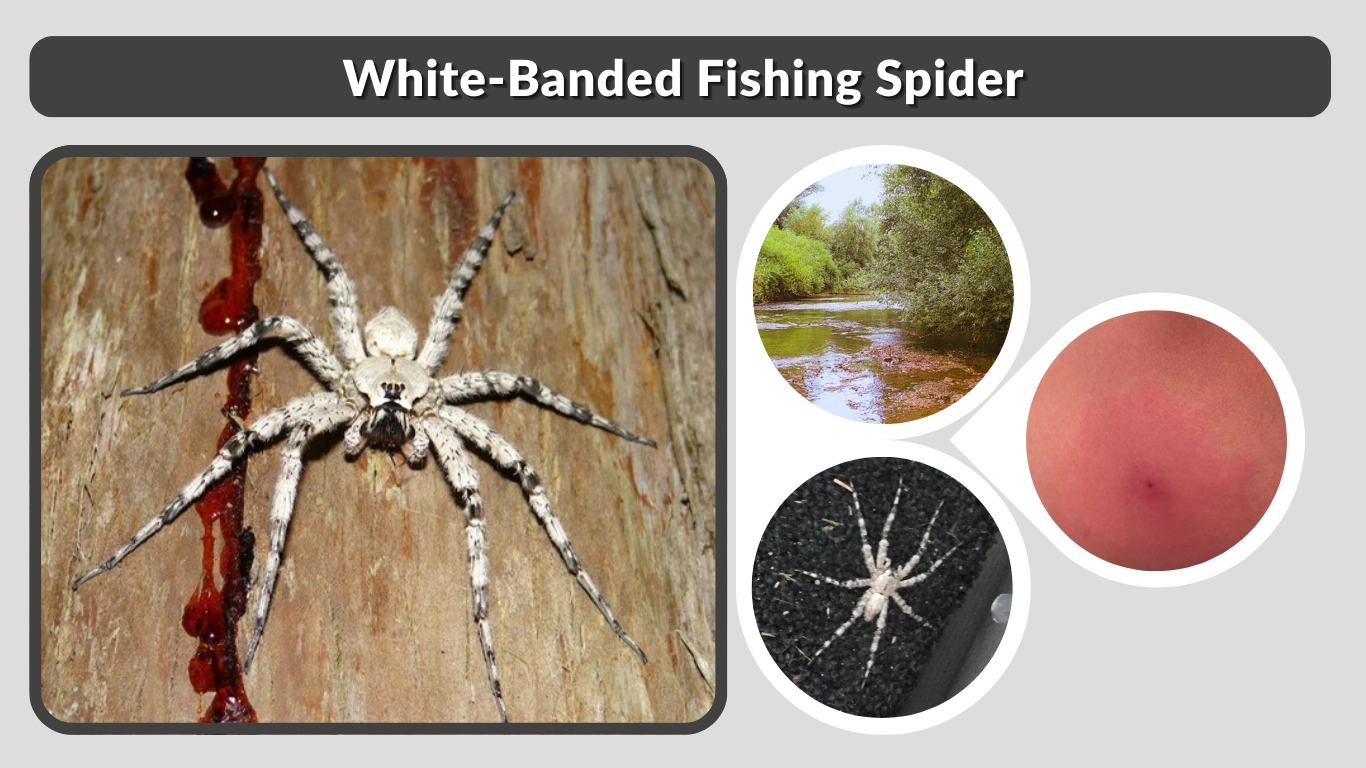
The white-banded fishing spider (Dolomedes albineus) is a large, semi-aquatic spider known for the bold white bands decorating its long legs. Commonly found in the southeastern United States, this species often surprises people due to its size and ability to move across water surfaces. Despite its intimidating appearance, it is generally harmless to humans. Understanding how to identify this spider, where it lives, and how it behaves can help reduce fear and promote appreciation for its ecological role.
What Is the White-Banded Fishing Spider?
The white-banded fishing spider is a member of the Pisauridae family, commonly called nursery web spiders. Its scientific name, Dolomedes albineus, reflects its distinctive pale banding. Unlike typical house spiders, this species is strongly associated with water and wetland habitats.
Fishing spiders are known for their hunting abilities rather than web-building. Instead of spinning large capture webs to trap prey, they actively stalk and ambush insects and small aquatic animals. The white-banded fishing spider stands out within its genus due to the prominent white striping along its legs, which makes identification easier compared to other fishing spider species.
Although it can appear large and intimidating, it plays a beneficial role in controlling insect populations near water sources.
How to Identify a White-Banded Fishing Spider
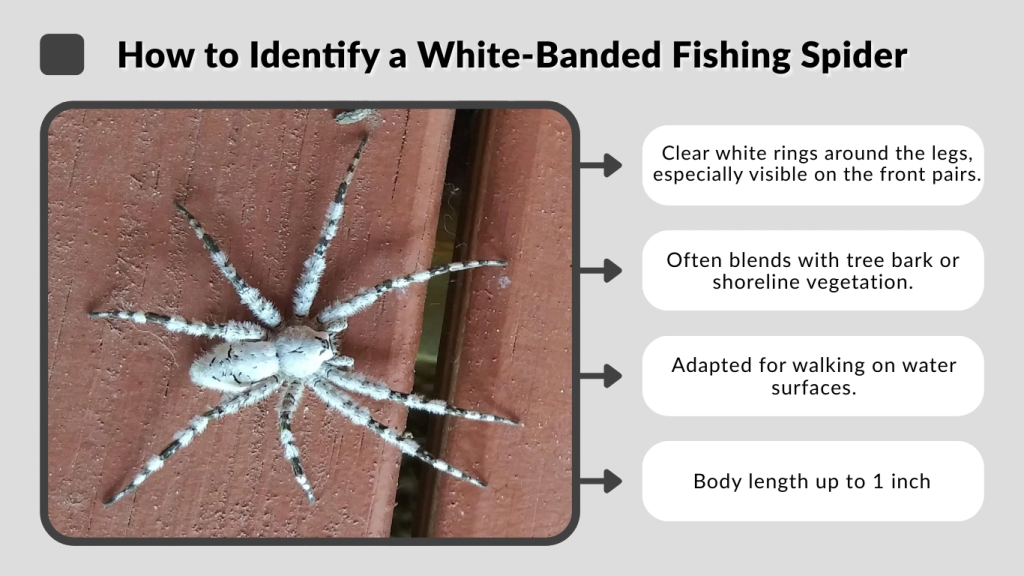
Identifying a white-banded fishing spider (Dolomedes albineus) is easier when you know what to look for. This species has several distinctive physical features that separate it from wolf spiders and other large brown spiders. Its bold leg markings, semi-aquatic habitat, and overall body shape are the most reliable clues. If you spot a large spider near water with noticeable white bands on its legs, there’s a strong chance you’re looking at this species.
Key Identification Features:
- Bold white leg bands – Clear white rings around the legs, especially visible on the front pairs.
- Brown to gray body color – Often blends with tree bark or shoreline vegetation.
- Long, slender legs – Adapted for walking on water surfaces.
- Body length up to 1 inch – Females are noticeably larger than males.
- Leg span up to 3 inches – Makes the spider appear larger than its body size suggests.
- Found near water – Common around ponds, marshes, swamps, and slow-moving streams.
- Active hunter – Rarely seen in large capture webs.
Focusing on these traits—especially the bright white leg banding and waterside habitat—will help you confidently identify a white-banded fishing spider.
Habitat and Geographic Distribution
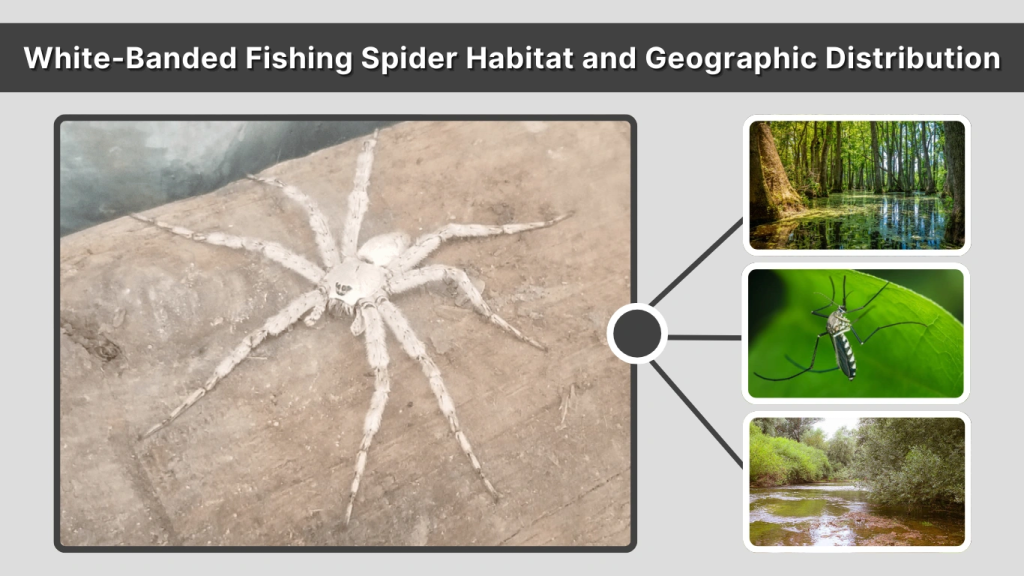
Understanding where the white-banded fishing spider lives can make identification easier and reduce unnecessary concern when encountered outdoors.
Where Are They Found?
The white-banded fishing spider is primarily found in the southeastern United States. Its range includes states such as Florida, Georgia, Alabama, Mississippi, and parts of the Carolinas. Sightings outside this region are uncommon.
Unlike some other fishing spider species that have a broader North American distribution, Dolomedes albineus prefers warmer, humid climates typical of the Southeast.
Preferred Environments
This spider thrives in wetland habitats. Common environments include:
- Swamps
- Marshes
- Pond edges
- Lake shorelines
- Slow-moving streams
They are often seen resting on tree trunks near water or positioned along the shoreline, where they can quickly access prey.
Why Water Is Important
Water plays a crucial role in the survival of the white-banded fishing spider. Unlike web-building spiders that rely on silk traps, this species hunts directly on the water’s surface.
The spider can detect vibrations created by struggling insects or small aquatic animals. Its specialized leg hairs allow it to sense these subtle movements. In addition, the surface tension of the water supports its body weight, enabling it to walk across ponds and streams with surprising ease.
Wet environments also provide protection from predators and ideal locations for egg sac development. By staying close to water, the spider maximizes hunting opportunities while maintaining camouflage among shoreline vegetation.
Behavior and Hunting Techniques
The white-banded fishing spider is an active hunter rather than a web-dependent predator. Instead of spinning large webs to capture prey, it relies on stealth, speed, and sensitivity to vibrations.
One of its most remarkable abilities is walking on water. Thanks to hydrophobic (water-repelling) hairs on its legs, the spider distributes its weight across the surface tension of the water. This allows it to stand, run, or even pivot quickly on ponds and slow-moving streams.
It hunts primarily at night, when insect activity is higher and predators are less active. By resting near the water’s edge, it waits for ripples caused by insects, tadpoles, or even small fish. When vibrations are detected, the spider rushes toward the disturbance and subdues its prey with venom.
Its diet typically includes:
- Aquatic insects
- Mosquitoes
- Dragonflies
- Tadpoles
- Small fish
This adaptable feeding behavior makes it an efficient predator in wetland ecosystems.
Are White-Banded Fishing Spiders Dangerous?
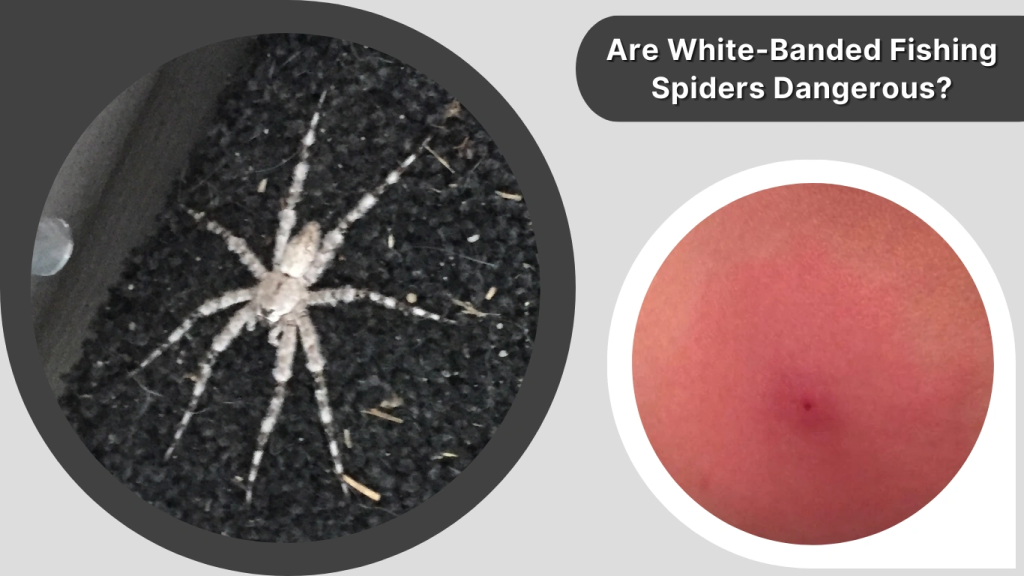
Large spiders often trigger fear, but the white-banded fishing spider is not considered dangerous to humans.
Are They Venomous or Poisonous?
Like most spiders, this species is venomous, meaning it injects venom to immobilize prey. However, it is not poisonous (which would mean harmful when touched or eaten). Its venom is designed for small insects and aquatic animals, not humans.
For people, the venom is generally mild and not medically significant.
What Happens If They Bite?
Bites from white-banded fishing spiders are rare. They typically occur only if the spider is handled, trapped, or accidentally pressed against the skin.
If a bite does happen, symptoms may include:
- Mild localized pain
- Redness
- Slight swelling
These effects are usually comparable to a bee sting and resolve within a short period. Severe reactions are extremely uncommon, though individuals with allergies should always monitor symptoms carefully.
Aggression Level
White-banded fishing spiders are not aggressive. Their first instinct is to flee rather than defend. When approached, they often retreat quickly into vegetation or across the water’s surface.
Understanding their non-aggressive nature can help reduce unnecessary fear when encountering one near ponds or wetlands.
White-Banded Fishing Spider vs. Dark Fishing Spider
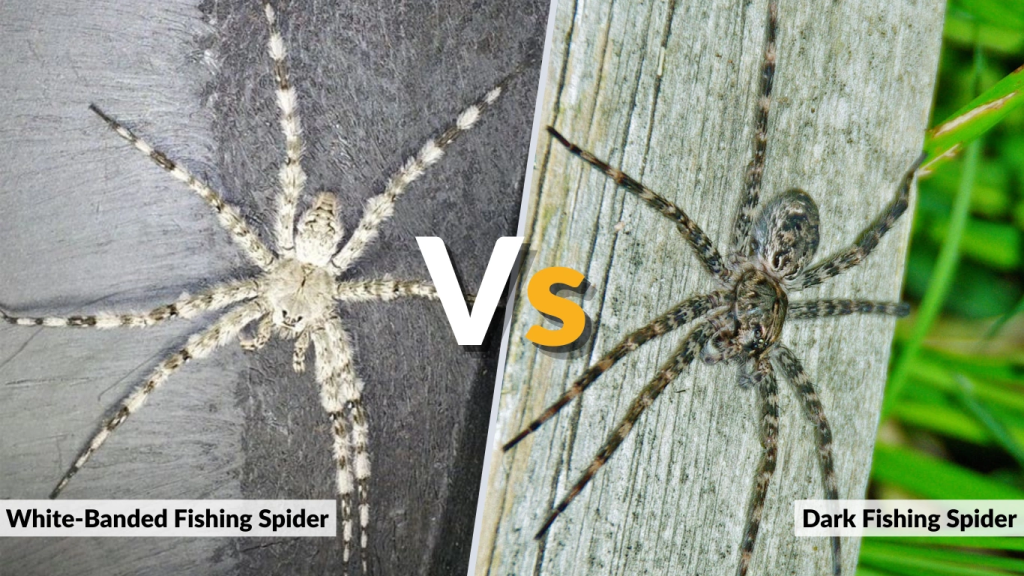
The white-banded fishing spider is sometimes confused with the dark fishing spider (Dolomedes tenebrosus). While they belong to the same genus, there are noticeable differences.
The most obvious distinction is leg patterning. The white-banded fishing spider has bold, clearly visible white bands encircling its legs. In contrast, the dark fishing spider typically has more muted or subtle markings.
Coloration also differs. The white-banded species tends to be lighter brown or gray, while the dark fishing spider is usually deeper brown with darker mottling.
Geographically, the dark fishing spider has a wider distribution across North America, whereas the white-banded species is largely limited to the southeastern United States.
Habitat preferences overlap near water, but dark fishing spiders are more commonly found on buildings and wooded structures away from direct shorelines.
Life Cycle and Reproduction
Reproduction typically occurs during the warmer months. Males actively search for females, which increases visibility during mating season.
After mating, the female produces an egg sac containing dozens or even hundreds of eggs. Unlike many spiders that leave their egg sacs unattended, female fishing spiders carry them attached to their spinnerets.
When the eggs are ready to hatch, the female constructs a protective nursery web among vegetation. She guards this enclosure until the spiderlings emerge.
Young spiders disperse shortly after hatching, beginning independent lives near water. The average lifespan of a white-banded fishing spider is about one to two years, depending on environmental conditions.
Ecological Importance
The white-banded fishing spider plays an important role in wetland ecosystems. As a predator of insects and small aquatic organisms, it helps control mosquito populations and other pest species.
By feeding on insects and serving as prey for birds, amphibians, and reptiles, it forms an important link in the food chain. Its presence often indicates a healthy wetland environment.
Rather than being a threat, this spider contributes to ecological balance and biodiversity.
How to Prevent Encounters Near Your Home
Although they prefer natural wetland habitats, white-banded fishing spiders may occasionally wander near homes located close to water.
To reduce encounters:
- Eliminate standing water near foundations
- Trim vegetation around ponds and shoreline areas
- Seal cracks and gaps in doors or windows
- Reduce outdoor lighting that attracts insects
Because they are beneficial and non-aggressive, relocation is generally preferable to extermination.
FAQs
How big does a white-banded fishing spider get?
Adult females typically reach body lengths of up to 1 inch, with a leg span that can extend around 3 inches. Males are slightly smaller and slimmer. Their long legs often make them appear larger than they truly are.
Can white-banded fishing spiders really walk on water?
Yes, they can walk on water due to water-repelling hairs on their legs. These hairs distribute their weight across surface tension, allowing them to move quickly across ponds and streams while hunting prey.
Do white-banded fishing spiders build webs?
They do not build capture webs to trap prey. Instead, they actively hunt. However, females create protective nursery webs to guard their egg sacs before spiderlings hatch.
Where are white-banded fishing spiders most common?
They are most commonly found in the southeastern United States, especially in swamps, marshes, pond edges, and slow-moving freshwater habitats.
Are white-banded fishing spiders beneficial?
Yes, they help control insect populations, including mosquitoes, and contribute to wetland ecosystem balance. Their presence is typically a sign of a healthy environment.
Conclusion
The white-banded fishing spider is a fascinating semi-aquatic predator known for its distinctive leg banding and impressive water-walking abilities. While its size may seem intimidating, it is generally harmless and plays an important ecological role. Found primarily in southeastern wetlands, this spider contributes to natural pest control and ecosystem balance. Understanding its behavior and habitat can replace fear with appreciation for one of nature’s most skilled shoreline hunters.